

Jazz it up
 |
Description
Book Introduction
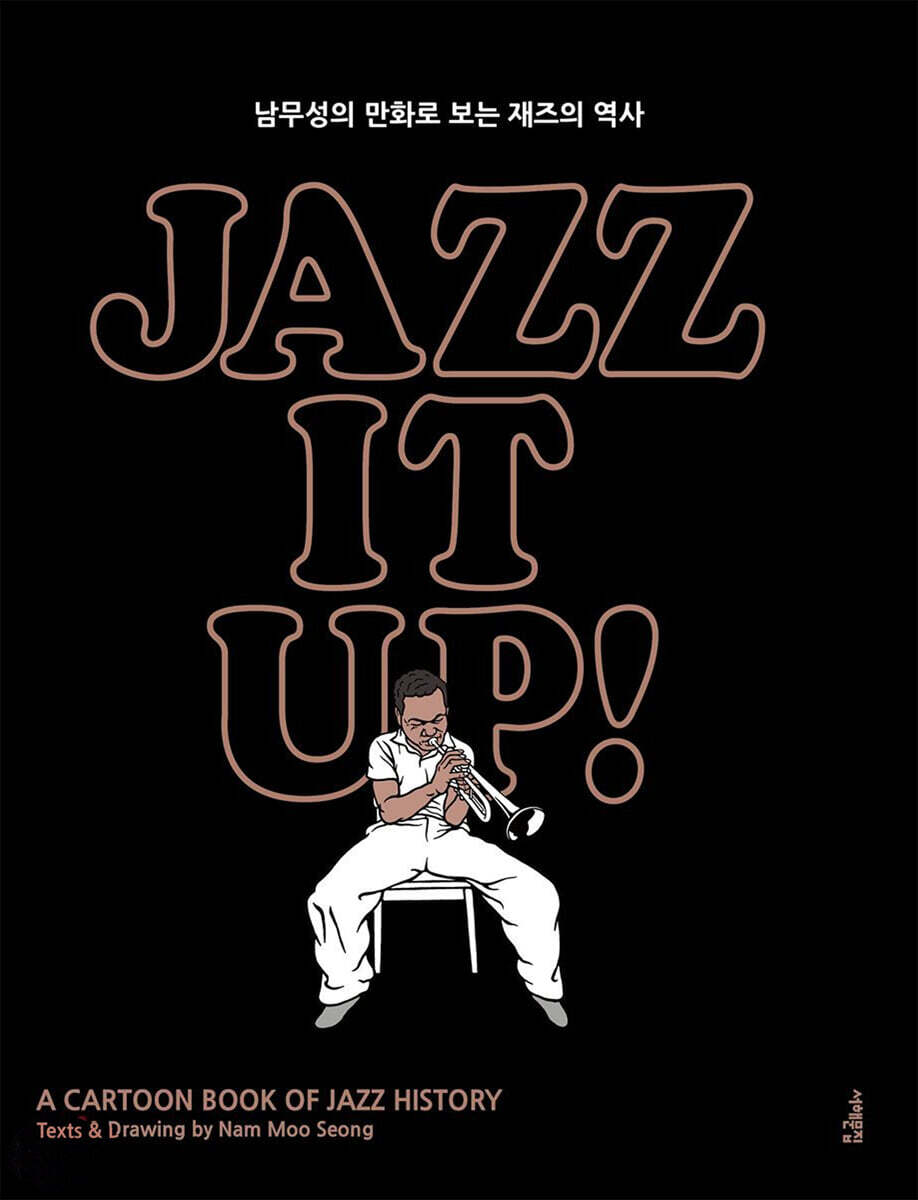
“Jazz is the music of the process and the music of tomorrow.” An entertainment show that saved the souls of oppressed black people Until it becomes music that touches the hearts of people all over the world Drawn in a cheerful and humorous cartoon The Light and Shadow of a Grand 100 Years of Jazz History People often say that the last genre of popular music to listen to is jazz. It is true that the music that provided comfort to the oppressed black people, with its unfamiliar wind instrument-based composition, irregular rhythm, and free improvisation, is not easily accessible to people from other cultures. The author, who was wondering if there was an easy way to promote jazz, unfolded the grand history of jazz, starting in the 1900s, in a humorous and witty cartoon. 《Jazz It Up》, which garnered extraordinary attention in the music and publishing worlds when it was published twice in 2003 and 2004, became a bestseller in the art field, was serialized in a world-renowned Japanese jazz magazine, and was also exported to Japan and Taiwan. After going out of print in 2015, there were constant requests for republication from music lovers and readers, and it was even traded second-hand at two to three times the regular price. After nearly three years of preparation, the author finally re-released Jazz It Up as a '15th Anniversary Special Revised Edition' this year, revising the entire text, redrawing 70% of the illustrations, and adding new content. This book shows how jazz styles such as swing, bebop, cool jazz, hard bop, free jazz, fusion jazz, jazz rock, jazz samba, and contemporary jazz influenced the times, gained the public's love, and experienced differentiation, development, and stagnation, showing their rise and fall. It also introduces the masters who decorated the history of jazz brilliantly, such as Louis Armstrong, Billie Holiday, Charlie Parker, and Miles Davis, their representative works, and dramatic life stories. A humanistic approach was also taken, encompassing world historical phenomena that influenced the development of jazz, including Prohibition, the Great Depression, World Wars I and II, its relationship with modern music, human rights issues, and postmodernism. The author's wit shines through in the parts where the musicians' unique personalities are highlighted and depicted in specific scenes, and the unexpected and hilarious lines are refreshing and exhilarating enough to blow away any burden you might feel when approaching jazz. This will be the best introduction to jazz that anyone can read. |
- You can preview some of the book's contents.
Preview
index
In publishing the revised edition
Recommendation
introduction
PROLOGUE
Chapter 1
The Dawn of Jazz:
1900s-1930s
Louis Armstrong
Bix Beiderbecke
Chicago Jazz
Duke Ellington
Fletcher Henderson
Prohibition
Swing and Benny Goodman
Glenn Miller
Harmony of black and white
What does jazz mean?
The first jazz record
Liar Handy?
Kansas City and Count Basie
Coleman Hawkins and Lester Young
Chapter 2
The Great Transition:
1940s
Heroes of Mintons
Other jazz clubs in New York
Bird and Dizzy
jazz singer
Billie Holiday
Ella Fitzgerald
Sarah Vaughn
Frank Sinatra
Nat King Cole
Bebop musicians
Thelonious Monk
Chapter 3
Modern Jazz Era:
1950s
Cool Jazz
Miles Davis
Monk and Bud Powell
Bird's Death
Hard Bob
Soul Jazz
Blue Note
Newport Reunion
Clifford Brown
Miles Quintet's Marathon Session
A masterpiece from the 1950s
Sonny Rollins
Bill Evans
Billie Holiday's death
Chapter 4
Jazz's Escape in Chaos:
1960s
John Coltrane and Ornette Coleman
Other free jazz musicians
Pros and Cons of Free Jazz
Charles Mingus and Eric Dolphy
Jazz Samba
Jobim
The point of Jobim's music
The unquenchable heat of hard rice
Grant Green's Idle Moments
Dexter Gordon's prime
Bud Powell in Paris
Duke Jordan
Keith Jarrett
Miles Group in the 1960s
jazz rock
Chapter 5
Jazz Fusion:
1970s
Keith Jarrett and ECM Style
The era of fusion jazz
Jaco Pastorius and Weather Report
Chapter 6
Diversification and Self-Reflection in Jazz:
Since the 1980s
Art Blakey was a pianist?
Postmodernism and Jazz
Color Blay
Gil Evans and the Modern Big Band
Stanley Jordan
Sad deaths
The Mystery of Chet Baker's Death
EPILOGUE
Recommendation
introduction
PROLOGUE
Chapter 1
The Dawn of Jazz:
1900s-1930s
Louis Armstrong
Bix Beiderbecke
Chicago Jazz
Duke Ellington
Fletcher Henderson
Prohibition
Swing and Benny Goodman
Glenn Miller
Harmony of black and white
What does jazz mean?
The first jazz record
Liar Handy?
Kansas City and Count Basie
Coleman Hawkins and Lester Young
Chapter 2
The Great Transition:
1940s
Heroes of Mintons
Other jazz clubs in New York
Bird and Dizzy
jazz singer
Billie Holiday
Ella Fitzgerald
Sarah Vaughn
Frank Sinatra
Nat King Cole
Bebop musicians
Thelonious Monk
Chapter 3
Modern Jazz Era:
1950s
Cool Jazz
Miles Davis
Monk and Bud Powell
Bird's Death
Hard Bob
Soul Jazz
Blue Note
Newport Reunion
Clifford Brown
Miles Quintet's Marathon Session
A masterpiece from the 1950s
Sonny Rollins
Bill Evans
Billie Holiday's death
Chapter 4
Jazz's Escape in Chaos:
1960s
John Coltrane and Ornette Coleman
Other free jazz musicians
Pros and Cons of Free Jazz
Charles Mingus and Eric Dolphy
Jazz Samba
Jobim
The point of Jobim's music
The unquenchable heat of hard rice
Grant Green's Idle Moments
Dexter Gordon's prime
Bud Powell in Paris
Duke Jordan
Keith Jarrett
Miles Group in the 1960s
jazz rock
Chapter 5
Jazz Fusion:
1970s
Keith Jarrett and ECM Style
The era of fusion jazz
Jaco Pastorius and Weather Report
Chapter 6
Diversification and Self-Reflection in Jazz:
Since the 1980s
Art Blakey was a pianist?
Postmodernism and Jazz
Color Blay
Gil Evans and the Modern Big Band
Stanley Jordan
Sad deaths
The Mystery of Chet Baker's Death
EPILOGUE
Detailed image
Publisher's Review
Even in the United States, the birthplace of jazz, and Japan, the kingdom of comics, there is no such thing.
An Introduction to Jazz in Comics
The common thread between historian Eric Hobsbawm and novelist Haruki Murakami is jazz.
There is nothing similar
It seems that both of them were famous jazz enthusiasts.
What led them to jazz?
People often say that the last genre of popular music to listen to is jazz.
It is true that the music that provided comfort to the oppressed black people, with its unfamiliar wind instrument-based composition, irregular rhythm, and free improvisation, is not easily accessible to people from other cultures.
Perhaps because of this, some people even refer to jazz as “music to listen to while studying.”
The author, who believed that “jazz is music that you can hear as much as you know,” began to think about ways to promote jazz more easily while working as an editor of a monthly jazz magazine, and chose ‘comics’ as one of the methods.
Thus, in 2003, a book titled “Jazz It Up, 100 Years of Jazz History in Comics,” a “jazz history book made into comics,” was published, something that could not be found not only in the United States, the birthplace of jazz, but also in Japan, a jazz powerhouse and comic kingdom.
This book immediately garnered extraordinary attention from the domestic music scene and jazz enthusiasts, and rose to the top of the art category bestseller list, an unprecedented feat for a book about jazz. It also won the Rookie of the Year and Special Prize at the 2003 Korea Cartoon Awards.
After being serialized in the world-renowned Japanese jazz magazine Swing Journal (2005-2008), it was published as a book by Kodansha in Japan and China Times in Taiwan.
Since then, it has served as an 'introductory book to jazz' that has helped countless people at home and abroad step into the world of jazz.
Returning with a special revised and expanded edition to commemorate the 15th anniversary of publication!
"Jazz It Up," which had been out of print since April 2015, has been re-released in a new edition called "Special Revised and Expanded Edition to Commemorate the 15th Anniversary of Publication" after nearly three years of preparation.
There have been continuous requests for republication, and with the book being sold at two to three times its original price on online second-hand trading sites, the interest of readers and music lovers remains strong, and this book is ready to quench that thirst and become an excellent guide.
This revised edition combines the contents of previously published volumes 1 and 2 of "Jazz It Up," and looks back on the history of jazz since the early 20th century, covering changes in jazz styles, the lives of musicians, jazz-related music theory and terminology, the spirit of the times, and interesting episodes related to music and musicians.
As this is a revised edition that has been published after 15 years, there have been quite a few changes.
By redrawing 70% of the overall picture, the rough drawing style became much softer and more refined.
Another important change is that rough sentences have been refined.
We paid more attention to the harmony between cartoons and information, and we also rewrote parts that were difficult to convey.
A lot of new content has also been added.
While maintaining the broad framework of jazz history, we've created new pages that provide musical evaluations of jazz musicians and highlight their major works.
This can be said to be a meticulous consideration for jazz beginners who are wondering what to listen to first.
We also supplemented information and added new episodes by utilizing the gaps between the text.
Interesting episodes such as 'The First Jazz Record,' 'The Story of WC Handy,' 'The Mystery of Chet Baker's Death,' 'Frank Sinatra,' 'Nat King Cole,' 'Another Jazz Club in New York,' and 'Sonny Clark's Blue Note Album Cover' will lower the barrier to accessing jazz and further increase interest in music and musicians.
The most exciting way to approach jazz: “I didn’t know what you’d like, so I prepared everything.”
Humor and wit too
"Jazz It Up" begins with a brief overview of the origins of jazz before the 20th century, and then, starting in the 1900s, it traces the grand history of jazz by introducing changes in jazz styles and the faces of the great masters over each era.
It shows the rise and fall of jazz styles such as swing, bebop, cool jazz, hard bop, free jazz, fusion jazz, jazz rock, jazz samba, and contemporary jazz, how they influenced the times, gained popularity, differentiated/developed/stagnified, and so on.
And it unfolds with the stories of the masters who adorned the history of jazz, such as Louis Armstrong, Duke Ellington, Billie Holiday, Nat King Cole, Charlie Parker, Miles Davis, Bill Evans, and Keith Jarrett, their representative works, and dramatic life stories, and it shows a humanistic approach that encompasses even the world historical phenomena that influenced the development of jazz, such as Prohibition, the Great Depression, World Wars I and II, its relationship with modern music, human rights issues, and postmodernism.
What is particularly noteworthy is that these contents are depicted in a humorous cartoon.
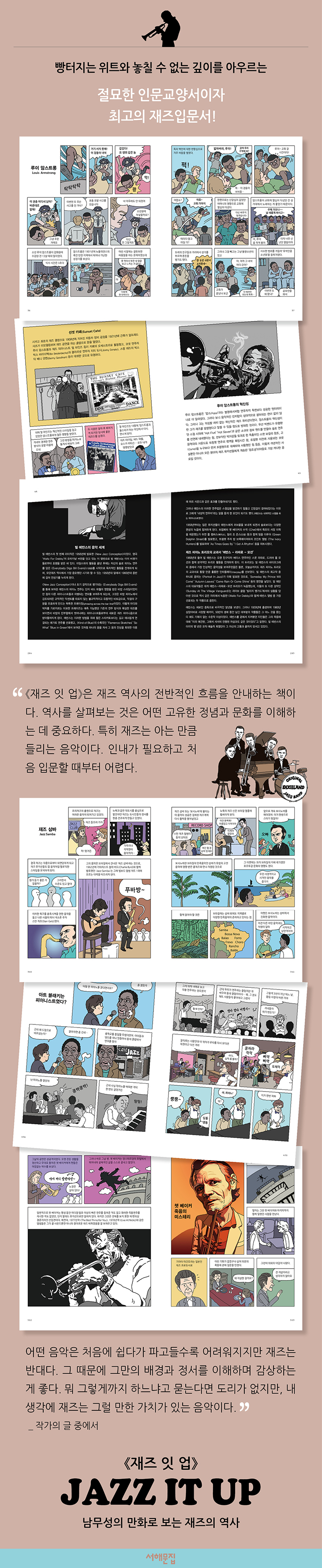
The author's voice leading the story is serious within the square boxes, but the characters speaking and acting within them are very cheerful and humorous.
The author's wit shines through in the parts where the musicians' unique personalities are highlighted and depicted in specific scenes, and the unexpected and hilarious lines are refreshing and exhilarating enough to blow away any burden you might feel when approaching jazz.
A work that only author Nam Moo-seong can do
You can even see the musician's breath and the sound of the instrument!
The author, who has worked in music-related fields throughout his life, including jazz criticism, publishing jazz magazines, producing records, organizing concerts, and producing music-related documentaries, did not have to make any special preparations to fill the contents of this book.
He was a jazz fanatic who collected jazz LPs since high school and worked as a DJ at a jazz club during college. He was also the editor-in-chief of a monthly jazz magazine right before the publication of “Jazz It Up.”
His home and studio were overflowing with jazz-related materials.
Because of that, he was able to provide more detailed and realistic descriptions than anyone else.
When you see Dizzy Gillespie playing the trumpet or Billie Holiday singing, the scenes are so vivid that you feel like they actually played and sang that way.
Also, the onomatopoeia describing the sounds of musical instruments and the appearance of the audience enthusiastic about the performance are imbued with the details that only he can express.
The aging of the musicians from youth to old age is realistically depicted with changes in style, and the tension and conflict between them, situations of friendship and reconciliation, and facial expressions such as joy, sadness, scorn, and disregard within those situations are realistically expressed.
While examining the musical world of great masters, we can also glimpse their sometimes petty and sometimes pitiful human faces. This was possible thanks to the work of author Nam Moo-seong, who has extensive experience and resources from his lifelong work in jazz and music.
Jazz and contemporary history, culture and music... A fascinating introduction to jazz!
And another humanities book!
As with everything in the world, music has also changed with the times and the changing perceptions of the people living in that era.
New Orleans, the birthplace of jazz, had a geographical background as a port city, and the red-light district of New Orleans, where lively music resonated, was also closed due to the outbreak of World War I.
"Jazz It Up" reveals that public perception and trends have changed over the course of modern and contemporary history, and that jazz styles are also an extension of this change.
For example, the emergence of Swing coincided with the period when the world economy, which had been in a slump due to the Great Depression, was showing signs of recovery, and the popularity of Modern Jazz in the 1940s was closely related to the reduction in band size and the tendency toward one-person sentimentality due to World War II.
The deepening of racial conflict and the growth of the civil rights movement in the United States in the 1960s led to rock and roll, which sang of resistance to authority, freedom, and peace. In the jazz field, which was influenced by this, the most unconventional free jazz took the first half of the 1960s by storm.
In this way, reading "Jazz It Up" allows you to trace the major trends of 20th-century modern history, focusing on the United States and Europe, and to gauge the relationship between jazz and literary movements that once dominated the world, such as the avant-garde and modernism.
We also encounter instances of racial discrimination and mental/physical violence suffered by musicians through the lives of the musicians and the changes in jazz, which was the music of oppressed black people.
Appreciating music
When we think of listening to music, the first thing that comes to mind is hearing the sound coming from earphones or speakers.
So what is the purpose of listening to music?
Just as music originated from human life, listening to music is also meant to enrich life.
Jazz It Up tells us that it is possible through jazz.
Jazz It Up asks us to feel the sadness and pain that underlies jazz, and to imagine the free-spirited gem sessions of 52nd Street in New York in the 1940s.
We introduce Miles Davis's incredible passion for constantly pursuing new things, and take you to the miraculous performance of the elderly drummer Art Blakey in Japan in 1990.
While flipping through the bookshelf, someone might be searching for performance videos on YouTube or purchasing music on a music streaming site.
Someone else might find a new jazz book or decide to learn the trumpet.
In this way, 《Jazz It Up》 hopes that readers will take a step closer to jazz, enjoy jazz in various ways, and enrich their lives.
An Introduction to Jazz in Comics
The common thread between historian Eric Hobsbawm and novelist Haruki Murakami is jazz.
There is nothing similar
It seems that both of them were famous jazz enthusiasts.
What led them to jazz?
People often say that the last genre of popular music to listen to is jazz.
It is true that the music that provided comfort to the oppressed black people, with its unfamiliar wind instrument-based composition, irregular rhythm, and free improvisation, is not easily accessible to people from other cultures.
Perhaps because of this, some people even refer to jazz as “music to listen to while studying.”
The author, who believed that “jazz is music that you can hear as much as you know,” began to think about ways to promote jazz more easily while working as an editor of a monthly jazz magazine, and chose ‘comics’ as one of the methods.
Thus, in 2003, a book titled “Jazz It Up, 100 Years of Jazz History in Comics,” a “jazz history book made into comics,” was published, something that could not be found not only in the United States, the birthplace of jazz, but also in Japan, a jazz powerhouse and comic kingdom.
This book immediately garnered extraordinary attention from the domestic music scene and jazz enthusiasts, and rose to the top of the art category bestseller list, an unprecedented feat for a book about jazz. It also won the Rookie of the Year and Special Prize at the 2003 Korea Cartoon Awards.
After being serialized in the world-renowned Japanese jazz magazine Swing Journal (2005-2008), it was published as a book by Kodansha in Japan and China Times in Taiwan.
Since then, it has served as an 'introductory book to jazz' that has helped countless people at home and abroad step into the world of jazz.
Returning with a special revised and expanded edition to commemorate the 15th anniversary of publication!
"Jazz It Up," which had been out of print since April 2015, has been re-released in a new edition called "Special Revised and Expanded Edition to Commemorate the 15th Anniversary of Publication" after nearly three years of preparation.
There have been continuous requests for republication, and with the book being sold at two to three times its original price on online second-hand trading sites, the interest of readers and music lovers remains strong, and this book is ready to quench that thirst and become an excellent guide.
This revised edition combines the contents of previously published volumes 1 and 2 of "Jazz It Up," and looks back on the history of jazz since the early 20th century, covering changes in jazz styles, the lives of musicians, jazz-related music theory and terminology, the spirit of the times, and interesting episodes related to music and musicians.
As this is a revised edition that has been published after 15 years, there have been quite a few changes.
By redrawing 70% of the overall picture, the rough drawing style became much softer and more refined.
Another important change is that rough sentences have been refined.
We paid more attention to the harmony between cartoons and information, and we also rewrote parts that were difficult to convey.
A lot of new content has also been added.
While maintaining the broad framework of jazz history, we've created new pages that provide musical evaluations of jazz musicians and highlight their major works.
This can be said to be a meticulous consideration for jazz beginners who are wondering what to listen to first.
We also supplemented information and added new episodes by utilizing the gaps between the text.
Interesting episodes such as 'The First Jazz Record,' 'The Story of WC Handy,' 'The Mystery of Chet Baker's Death,' 'Frank Sinatra,' 'Nat King Cole,' 'Another Jazz Club in New York,' and 'Sonny Clark's Blue Note Album Cover' will lower the barrier to accessing jazz and further increase interest in music and musicians.
The most exciting way to approach jazz: “I didn’t know what you’d like, so I prepared everything.”
Humor and wit too
"Jazz It Up" begins with a brief overview of the origins of jazz before the 20th century, and then, starting in the 1900s, it traces the grand history of jazz by introducing changes in jazz styles and the faces of the great masters over each era.
It shows the rise and fall of jazz styles such as swing, bebop, cool jazz, hard bop, free jazz, fusion jazz, jazz rock, jazz samba, and contemporary jazz, how they influenced the times, gained popularity, differentiated/developed/stagnified, and so on.
And it unfolds with the stories of the masters who adorned the history of jazz, such as Louis Armstrong, Duke Ellington, Billie Holiday, Nat King Cole, Charlie Parker, Miles Davis, Bill Evans, and Keith Jarrett, their representative works, and dramatic life stories, and it shows a humanistic approach that encompasses even the world historical phenomena that influenced the development of jazz, such as Prohibition, the Great Depression, World Wars I and II, its relationship with modern music, human rights issues, and postmodernism.
What is particularly noteworthy is that these contents are depicted in a humorous cartoon.
The author's voice leading the story is serious within the square boxes, but the characters speaking and acting within them are very cheerful and humorous.
The author's wit shines through in the parts where the musicians' unique personalities are highlighted and depicted in specific scenes, and the unexpected and hilarious lines are refreshing and exhilarating enough to blow away any burden you might feel when approaching jazz.
A work that only author Nam Moo-seong can do
You can even see the musician's breath and the sound of the instrument!
The author, who has worked in music-related fields throughout his life, including jazz criticism, publishing jazz magazines, producing records, organizing concerts, and producing music-related documentaries, did not have to make any special preparations to fill the contents of this book.
He was a jazz fanatic who collected jazz LPs since high school and worked as a DJ at a jazz club during college. He was also the editor-in-chief of a monthly jazz magazine right before the publication of “Jazz It Up.”
His home and studio were overflowing with jazz-related materials.
Because of that, he was able to provide more detailed and realistic descriptions than anyone else.
When you see Dizzy Gillespie playing the trumpet or Billie Holiday singing, the scenes are so vivid that you feel like they actually played and sang that way.
Also, the onomatopoeia describing the sounds of musical instruments and the appearance of the audience enthusiastic about the performance are imbued with the details that only he can express.
The aging of the musicians from youth to old age is realistically depicted with changes in style, and the tension and conflict between them, situations of friendship and reconciliation, and facial expressions such as joy, sadness, scorn, and disregard within those situations are realistically expressed.
While examining the musical world of great masters, we can also glimpse their sometimes petty and sometimes pitiful human faces. This was possible thanks to the work of author Nam Moo-seong, who has extensive experience and resources from his lifelong work in jazz and music.
Jazz and contemporary history, culture and music... A fascinating introduction to jazz!
And another humanities book!
As with everything in the world, music has also changed with the times and the changing perceptions of the people living in that era.
New Orleans, the birthplace of jazz, had a geographical background as a port city, and the red-light district of New Orleans, where lively music resonated, was also closed due to the outbreak of World War I.
"Jazz It Up" reveals that public perception and trends have changed over the course of modern and contemporary history, and that jazz styles are also an extension of this change.
For example, the emergence of Swing coincided with the period when the world economy, which had been in a slump due to the Great Depression, was showing signs of recovery, and the popularity of Modern Jazz in the 1940s was closely related to the reduction in band size and the tendency toward one-person sentimentality due to World War II.
The deepening of racial conflict and the growth of the civil rights movement in the United States in the 1960s led to rock and roll, which sang of resistance to authority, freedom, and peace. In the jazz field, which was influenced by this, the most unconventional free jazz took the first half of the 1960s by storm.
In this way, reading "Jazz It Up" allows you to trace the major trends of 20th-century modern history, focusing on the United States and Europe, and to gauge the relationship between jazz and literary movements that once dominated the world, such as the avant-garde and modernism.
We also encounter instances of racial discrimination and mental/physical violence suffered by musicians through the lives of the musicians and the changes in jazz, which was the music of oppressed black people.
Appreciating music
When we think of listening to music, the first thing that comes to mind is hearing the sound coming from earphones or speakers.
So what is the purpose of listening to music?
Just as music originated from human life, listening to music is also meant to enrich life.
Jazz It Up tells us that it is possible through jazz.
Jazz It Up asks us to feel the sadness and pain that underlies jazz, and to imagine the free-spirited gem sessions of 52nd Street in New York in the 1940s.
We introduce Miles Davis's incredible passion for constantly pursuing new things, and take you to the miraculous performance of the elderly drummer Art Blakey in Japan in 1990.
While flipping through the bookshelf, someone might be searching for performance videos on YouTube or purchasing music on a music streaming site.
Someone else might find a new jazz book or decide to learn the trumpet.
In this way, 《Jazz It Up》 hopes that readers will take a step closer to jazz, enjoy jazz in various ways, and enrich their lives.
GOODS SPECIFICS
- Date of issue: January 29, 2018
- Page count, weight, size: 511 pages | 1,038g | 175*225*30mm
- ISBN13: 9788974839147
- ISBN10: 8974839148
You may also like
카테고리
korean


korean

![GQ KOREA Mark (Monthly): December [2025]](http://librairie.coreenne.fr/cdn/shop/files/8ef265dbbfbf186523ed75ba7319009d.jpg?v=1765340328&width=3840)


