

Pen Sketch Master Collection (Special Hardcover Edition)
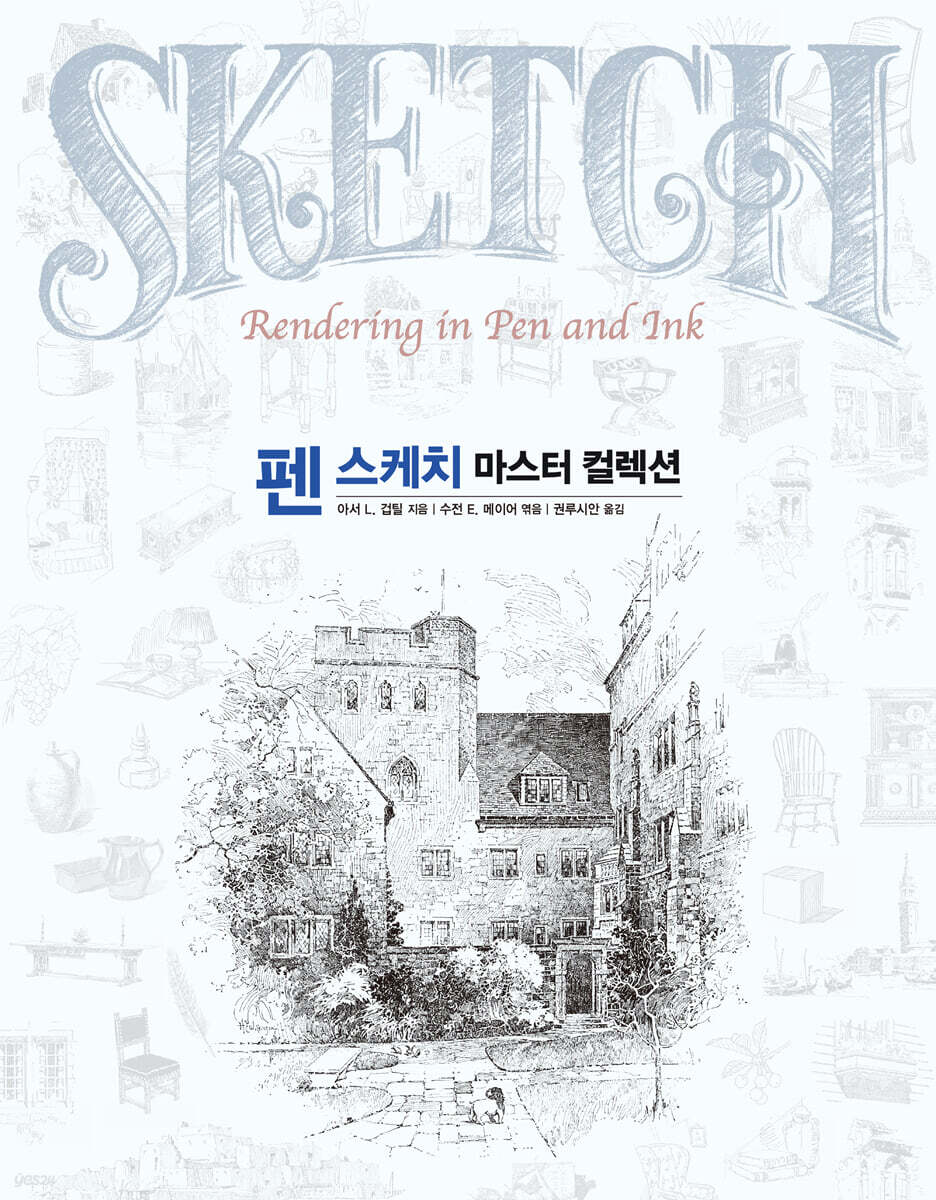 |
Description
Book Introduction
Everything about pen sketching in this one book!
A must-read for art students worldwide since its publication in 1930.
『The Pen Sketch Master Collection』 is a guide to pen sketching that has been a must-read for art students around the world since its first edition was published in 1930.
You can learn how to draw beautiful pen drawings based on solid theory, from materials and tools to shading and detailed depiction techniques.
It contains over 120 high-quality still lifes, architectural works, and nature pen drawings that are worth collecting, providing the pleasure of appreciating excellent works.
Pen drawings are delicate and unique pictures created by combining individual dots and lines.
The lines drawn with a pen are suitable for sharp shape description and precise drawing, and even with a single color, it can richly express all kinds of irregular shapes and textures.
There is no material better than a pen for accurately expressing the details that a brush or other art medium cannot.
This book is a classic in pen sketching, packed with helpful tips and techniques along with numerous examples, and is a must-read for anyone interested in pen drawing and aspiring to become a better artist.
A must-read for art students worldwide since its publication in 1930.
『The Pen Sketch Master Collection』 is a guide to pen sketching that has been a must-read for art students around the world since its first edition was published in 1930.
You can learn how to draw beautiful pen drawings based on solid theory, from materials and tools to shading and detailed depiction techniques.
It contains over 120 high-quality still lifes, architectural works, and nature pen drawings that are worth collecting, providing the pleasure of appreciating excellent works.
Pen drawings are delicate and unique pictures created by combining individual dots and lines.
The lines drawn with a pen are suitable for sharp shape description and precise drawing, and even with a single color, it can richly express all kinds of irregular shapes and textures.
There is no material better than a pen for accurately expressing the details that a brush or other art medium cannot.
This book is a classic in pen sketching, packed with helpful tips and techniques along with numerous examples, and is a must-read for anyone interested in pen drawing and aspiring to become a better artist.
- You can preview some of the book's contents.
Preview
index
Note from the editor
List of authors included in this book
1.
Before you start
The popularity of pen drawings
Limitations of other media
Limitations of the pen
Your own technique
commercial applications
The rest of the features
2.
Materials and tools
quill and reed pen
metal pen
penholder
pen wipes
ink
paper
drawing board
Pushpin
pencil
ruler
eraser
knife
Eraser board
brush or cloth
Red paper
ink bottle holder
3.
First practice with the pen
Don't rush
Tools for practice
Arrangement of supplies
How to hold a pen
A line of uniform thickness
Helpful Exercises
Change pen pressure
curve
4.
Practice adding tone
Studying examples
Applying tones in a straight line
Adding tones in a free way
combination of lines
Special tone
5.
Basic steps for brightness research
Expression of brightness in pen drawing
Creating a brightness chart
Add tone
Gradient (Barim)
6.
Types and Uses of Outlines
Types of outline drawings
To the architectural designer
Emphasize the outline
Object drawn with outlines
Object drawn with highlighted outline
How to draw with outlines
Architecture drawn with outlines
Other Outline Work Case Studies
7.
Things to think about first when it comes to light and shade
Observation and analysis of form
Pick a simple object
Nature flip
Two categories of objects
Study the principles carefully
8.
Drawing with light and shade
Workspace
lighting
Still life
Other tools
Choosing a topic
Topic Analysis
Drawing the subject
verification
Thumb measurement method
Light and shade study
Ink application
techniques
Practical exercises
Relationship between shape and line direction
More practice
Table line
outline
More exercises using straight lines
an object with a round surface
Memory Sketch
texture
color
9.
Draw by gathering objects
Selecting an object
Still life composition
Viewfinder
Triangular composition
Other compositions
Maintain posture
A word for teachers
Light and shade study
Analysis of light and shade practice
finish
Change the topic
stylized or decorative work
balance of light and shade
More still life painting exercises
List of objects suitable for drawing
10.
Basic principles of composition
Why Learn the Principles of Composition
What is composition?
Achieving the goal
Choosing a topic
Unity
balance
center of attention
Emphasis through light and shade
Emphasis through details
Emphasis through contrast
11.
Drawing with photos
Choose a photo
Light and shade study
Pen work
Simple example
Another example
Crop the photo
Recomposing a photo
12.
Studying other authors' works
The ethics of copying
Useful without imitating
Looking beyond the technique
Mistakes beginners often make
Rosenberg, Booth - Artists of Bipolarity
Greek-tone control
Peishoto - delicate treatment
Kent - Bold Handling
Neil - Imaginative Paintings
Flanagan-shaped pen drawing
Gibson, Flagg, Grant - Masters of Technique
Black with Penfield-cotton finish
Clark - Decorative Treatment
Birch-Free Line Work
Cole - Elegant Line Work
13.
Outdoor sketch
Outdoor pen work
Choosing a topic
How to use the viewfinder
Theme composition
The perfection of light and painting
Advice for Architecture Students
Uses for Outdoor Sketching
14.
Landscape elements such as trees
Why study landscape elements?
Learning about trees
Choosing a topic
Topic Analysis
contour
Light and shade
Appropriate technique
Don't neglect your shadows
Shadows that express shapes
clustered trees
Studying the skeleton of a tree
Continue research
The movement of the tree
15.
architectural details
Advice for Architects
Starting from the details
Stone
Brickwork
plaster, concrete
scale board
Your side
roof
eaves, eaves molding
chimney
shadow
window
door
Other factors
16.
architectural rendering
Features of architectural rendering
Preparing for perspective drawing
Preparing for rendering
Determining the direction of light
Setting the tone
How to express brightness
Light and shade arrangement
Final confirmation
About pen techniques
17.
Full building rendering
Light and shade arrangement
Try it yourself
Learning from the work of other artists
Rosenberg-Economic Expression
Contrast using dark colors
Lewis - Control of complex line work
Powers - Handling at will
Price - More radiant in dark colors
Killi - A technique with a purpose
Beers - Showcasing the architect's concept
Di Nardo, Dice - Highlighting the Architecture
Long-air and sunlight
Williamson - Decorative Rendering
McSweeney - Utilizing the Whiteness of Paper
Other drawing designs
Drawing real buildings
non-residential buildings
18.
Large building rendering
Point of view location
eye level or horizon
Plan ahead
auxiliary elements
balance of light and shade
Rendering techniques
Lockwood - Freely Green Rendering
King-Basic Practice
Effinghouse - Theme of Formative Form
Goodbye - complex topic
Wilkinson - Elaborating on the topic
Payshoto - Simplifying Details
Bosworth, Ring - An example showing detailed rendering
19.
Building interior and auxiliary elements
Studying the interior elements of buildings
Difference between inside and outside - light and shade
Difference between inside and outside - auxiliary elements
Difference between inside and outside - texture
Differences between inside and outside - Perspective
Draw each piece of furniture separately
Collect furniture and draw
Rough treatment method
The original light and shade
Placement of areas of interest
sketch
elevation
Pen and Wash
20.
Special techniques
Brush like a pen
Combination of brush and pen
Other uses of black
Split-tipped brush work
Dry brush work
Pen and gray wash
pen and pencil
Sprinkling and dotting
color
colored ink
Practice using color
Prepare the ingredients
The general order of color operations
Watercolor paints like ink
Other coloring media
colored paper
Gallery
Search
List of authors included in this book
1.
Before you start
The popularity of pen drawings
Limitations of other media
Limitations of the pen
Your own technique
commercial applications
The rest of the features
2.
Materials and tools
quill and reed pen
metal pen
penholder
pen wipes
ink
paper
drawing board
Pushpin
pencil
ruler
eraser
knife
Eraser board
brush or cloth
Red paper
ink bottle holder
3.
First practice with the pen
Don't rush
Tools for practice
Arrangement of supplies
How to hold a pen
A line of uniform thickness
Helpful Exercises
Change pen pressure
curve
4.
Practice adding tone
Studying examples
Applying tones in a straight line
Adding tones in a free way
combination of lines
Special tone
5.
Basic steps for brightness research
Expression of brightness in pen drawing
Creating a brightness chart
Add tone
Gradient (Barim)
6.
Types and Uses of Outlines
Types of outline drawings
To the architectural designer
Emphasize the outline
Object drawn with outlines
Object drawn with highlighted outline
How to draw with outlines
Architecture drawn with outlines
Other Outline Work Case Studies
7.
Things to think about first when it comes to light and shade
Observation and analysis of form
Pick a simple object
Nature flip
Two categories of objects
Study the principles carefully
8.
Drawing with light and shade
Workspace
lighting
Still life
Other tools
Choosing a topic
Topic Analysis
Drawing the subject
verification
Thumb measurement method
Light and shade study
Ink application
techniques
Practical exercises
Relationship between shape and line direction
More practice
Table line
outline
More exercises using straight lines
an object with a round surface
Memory Sketch
texture
color
9.
Draw by gathering objects
Selecting an object
Still life composition
Viewfinder
Triangular composition
Other compositions
Maintain posture
A word for teachers
Light and shade study
Analysis of light and shade practice
finish
Change the topic
stylized or decorative work
balance of light and shade
More still life painting exercises
List of objects suitable for drawing
10.
Basic principles of composition
Why Learn the Principles of Composition
What is composition?
Achieving the goal
Choosing a topic
Unity
balance
center of attention
Emphasis through light and shade
Emphasis through details
Emphasis through contrast
11.
Drawing with photos
Choose a photo
Light and shade study
Pen work
Simple example
Another example
Crop the photo
Recomposing a photo
12.
Studying other authors' works
The ethics of copying
Useful without imitating
Looking beyond the technique
Mistakes beginners often make
Rosenberg, Booth - Artists of Bipolarity
Greek-tone control
Peishoto - delicate treatment
Kent - Bold Handling
Neil - Imaginative Paintings
Flanagan-shaped pen drawing
Gibson, Flagg, Grant - Masters of Technique
Black with Penfield-cotton finish
Clark - Decorative Treatment
Birch-Free Line Work
Cole - Elegant Line Work
13.
Outdoor sketch
Outdoor pen work
Choosing a topic
How to use the viewfinder
Theme composition
The perfection of light and painting
Advice for Architecture Students
Uses for Outdoor Sketching
14.
Landscape elements such as trees
Why study landscape elements?
Learning about trees
Choosing a topic
Topic Analysis
contour
Light and shade
Appropriate technique
Don't neglect your shadows
Shadows that express shapes
clustered trees
Studying the skeleton of a tree
Continue research
The movement of the tree
15.
architectural details
Advice for Architects
Starting from the details
Stone
Brickwork
plaster, concrete
scale board
Your side
roof
eaves, eaves molding
chimney
shadow
window
door
Other factors
16.
architectural rendering
Features of architectural rendering
Preparing for perspective drawing
Preparing for rendering
Determining the direction of light
Setting the tone
How to express brightness
Light and shade arrangement
Final confirmation
About pen techniques
17.
Full building rendering
Light and shade arrangement
Try it yourself
Learning from the work of other artists
Rosenberg-Economic Expression
Contrast using dark colors
Lewis - Control of complex line work
Powers - Handling at will
Price - More radiant in dark colors
Killi - A technique with a purpose
Beers - Showcasing the architect's concept
Di Nardo, Dice - Highlighting the Architecture
Long-air and sunlight
Williamson - Decorative Rendering
McSweeney - Utilizing the Whiteness of Paper
Other drawing designs
Drawing real buildings
non-residential buildings
18.
Large building rendering
Point of view location
eye level or horizon
Plan ahead
auxiliary elements
balance of light and shade
Rendering techniques
Lockwood - Freely Green Rendering
King-Basic Practice
Effinghouse - Theme of Formative Form
Goodbye - complex topic
Wilkinson - Elaborating on the topic
Payshoto - Simplifying Details
Bosworth, Ring - An example showing detailed rendering
19.
Building interior and auxiliary elements
Studying the interior elements of buildings
Difference between inside and outside - light and shade
Difference between inside and outside - auxiliary elements
Difference between inside and outside - texture
Differences between inside and outside - Perspective
Draw each piece of furniture separately
Collect furniture and draw
Rough treatment method
The original light and shade
Placement of areas of interest
sketch
elevation
Pen and Wash
20.
Special techniques
Brush like a pen
Combination of brush and pen
Other uses of black
Split-tipped brush work
Dry brush work
Pen and gray wash
pen and pencil
Sprinkling and dotting
color
colored ink
Practice using color
Prepare the ingredients
The general order of color operations
Watercolor paints like ink
Other coloring media
colored paper
Gallery
Search
Detailed image

Publisher's Review
Draw beautiful pictures with a pen!
A classic in pen sketching and a must-read for art students worldwide!
Among the various art media, the pen is the most appropriate tool for expressing the delicate and unique feeling that 'line' provides.
Pen drawings allow for a richer range of expressions than the number of lines drawn on paper.
By adjusting the strength of the pen lines, you can create strong contrasts and utilize various expressive techniques to create a more unique painting than any other.
『Pen Sketch Master Collection』 introduces the pen sketching method using a dip pen, which is a pen with a nib inserted into the pen holder.
A dip pen is a pen that uses the tip of the pen lightly dipped in ink. It is good for expressing fluid and delicate expressions, and the color of the ink itself is well expressed.
It is also a popular art medium for those who do pen drawing and calligraphy because it is easy to control the strength of the lines.
Dip pens can be an unfamiliar tool for beginners, but once you get the hang of it, you'll be able to create sketches filled with rich lines.
Additionally, since this book explains in detail the overall method and content of drawing pen drawings rather than focusing solely on techniques, it is also helpful for drawing with a regular pen instead of a dip pen or drawing an underdrawing for coloring.
The pen sketch bible recommended by pen drawing enthusiasts around the world!
This book is based on Susan E.'s book, Drawing with Pen and Ink, published in 1930.
This book is a Korean translation of 『Rendering in Pen and Ink』, newly compiled by Meyer and published in 1997.
Author Arthur L.
As an artist, architectural renderer, architect, teacher, and writer, Guptill has published numerous art textbooks in pen and ink, as well as oil, watercolor, and pencil.
It explains pen drawing techniques from basic to expert level with example pictures in an easy-to-understand way, making it useful for beginners who are new to pen drawing as well as experienced artists.
Before starting pen drawing, we will look at the materials and tools of pen drawing and cover in detail how to express tone, outline, light and shade, and composition.
First, practice light and shade and composition with basic shapes such as spheres and squares, and learn how to draw simple still lifes.
You will then complete a variety of sketches with a pen, including how to draw from photographs, how to draw outdoors, and how to depict landscape elements such as buildings, trees, and people, as well as the interiors of buildings.
Master pen sketching in one book!
We present over 200 examples of basic pen drawings and over 120 colorful pen and ink drawings by masters of pen sketching.
Delicate yet beautiful pen drawings are a pleasure to appreciate and serve as excellent reference material.
By adding detailed analysis of the drawings, artists, illustrators, architects, and others can build a basic knowledge of pen drawing and utilize it in various ways.
A widely read and exemplary guide for over half a century, The Pen Sketching Master Collection is a must-read for anyone beginning to draw with pen.
Let's enjoy the art of pen and ink that spans the ages through this book.
Your artistic sense will become richer and sharper as you follow the leisurely flowing pen lines.
A classic in pen sketching and a must-read for art students worldwide!
Among the various art media, the pen is the most appropriate tool for expressing the delicate and unique feeling that 'line' provides.
Pen drawings allow for a richer range of expressions than the number of lines drawn on paper.
By adjusting the strength of the pen lines, you can create strong contrasts and utilize various expressive techniques to create a more unique painting than any other.
『Pen Sketch Master Collection』 introduces the pen sketching method using a dip pen, which is a pen with a nib inserted into the pen holder.
A dip pen is a pen that uses the tip of the pen lightly dipped in ink. It is good for expressing fluid and delicate expressions, and the color of the ink itself is well expressed.
It is also a popular art medium for those who do pen drawing and calligraphy because it is easy to control the strength of the lines.
Dip pens can be an unfamiliar tool for beginners, but once you get the hang of it, you'll be able to create sketches filled with rich lines.
Additionally, since this book explains in detail the overall method and content of drawing pen drawings rather than focusing solely on techniques, it is also helpful for drawing with a regular pen instead of a dip pen or drawing an underdrawing for coloring.
The pen sketch bible recommended by pen drawing enthusiasts around the world!
This book is based on Susan E.'s book, Drawing with Pen and Ink, published in 1930.
This book is a Korean translation of 『Rendering in Pen and Ink』, newly compiled by Meyer and published in 1997.
Author Arthur L.
As an artist, architectural renderer, architect, teacher, and writer, Guptill has published numerous art textbooks in pen and ink, as well as oil, watercolor, and pencil.
It explains pen drawing techniques from basic to expert level with example pictures in an easy-to-understand way, making it useful for beginners who are new to pen drawing as well as experienced artists.
Before starting pen drawing, we will look at the materials and tools of pen drawing and cover in detail how to express tone, outline, light and shade, and composition.
First, practice light and shade and composition with basic shapes such as spheres and squares, and learn how to draw simple still lifes.
You will then complete a variety of sketches with a pen, including how to draw from photographs, how to draw outdoors, and how to depict landscape elements such as buildings, trees, and people, as well as the interiors of buildings.
Master pen sketching in one book!
We present over 200 examples of basic pen drawings and over 120 colorful pen and ink drawings by masters of pen sketching.
Delicate yet beautiful pen drawings are a pleasure to appreciate and serve as excellent reference material.
By adding detailed analysis of the drawings, artists, illustrators, architects, and others can build a basic knowledge of pen drawing and utilize it in various ways.
A widely read and exemplary guide for over half a century, The Pen Sketching Master Collection is a must-read for anyone beginning to draw with pen.
Let's enjoy the art of pen and ink that spans the ages through this book.
Your artistic sense will become richer and sharper as you follow the leisurely flowing pen lines.
GOODS SPECIFICS
- Publication date: October 29, 2019
- Page count, weight, size: 256 pages | 1,126g | 215*275*22mm
- ISBN13: 9788972215998
- ISBN10: 8972215996
You may also like
카테고리
korean


korean

![GQ KOREA Mark (Monthly): December [2025]](http://librairie.coreenne.fr/cdn/shop/files/8ef265dbbfbf186523ed75ba7319009d.jpg?v=1765340328&width=3840)


