

Attachment relics
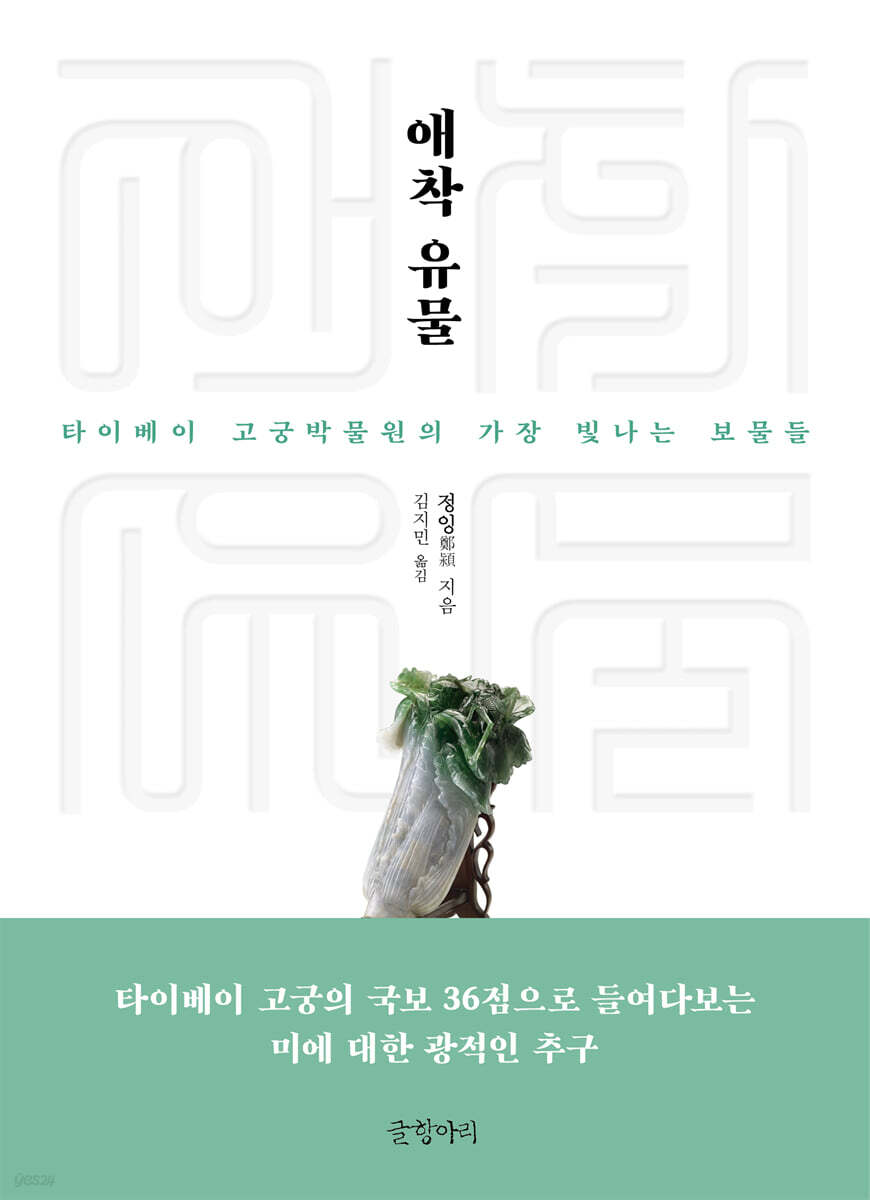 |
Description
Book Introduction
When you gaze at a relic, the relic gazes at you.
A Maniacal Pursuit of Beauty Through 36 National Treasures at the Taipei National Palace Museum
Artifacts that survived air raids, collapses, night shifts, and bombings
Travel the world, collect, and discover hidden treasures in famous mountains.
What story, history, and art history does each artifact encapsulate?
Until everyday life becomes as excellent as a relic
There is a book that can tell you that if you want to appreciate and interpret relics, you have to do it like this person.
This is Jeong-ing's 『Attachment Artifact』.
He is demonstrating outstanding talent in discernment, interpretation, commentary, and writing.
The author, who majored in classical Chinese literature, teaches students at a medical school.
But three days is a long time, so I go to the Taipei Palace Museum with them.
As the thresholds and shoe soles wore down, my knowledge and love for relics deepened, leading me to write a 500-page book introducing a total of 36 treasures.
The author presents a full-color commentary on the artifacts, detailing the historical strata, diversifying the interpretation, and enriching the text.
The concept of the book is borrowed from the Emperors' Dabogeuk.
The Dabogyeok was a drawer-type storage box where emperors collected, organized, classified, and stored their treasured relics.
The author says that he will put a total of 36 relics in the readers' Dabokgeuk like their emperor.
The author's selection criteria are trustworthy, having traveled frantically to see domestic and international ceramics and kiln sites, been captivated by the mere sight of fragments, and delved into the artistic imagery of the time, combining history and literature.
The author's distinctiveness lies, firstly, in turning back the clock and going back to the time when the artifact was created.
All 36 points created incomparable beauty in the slow flow of time.
Second, he has the skill to dramatize and unfold contemporary scenes into a drama.
This is the result of the combined mobilization of the senses of smell, hearing, sight, and touch.
Third, the ability to see things is trained.
In other words, he possesses the ability to appreciate relics and find meaning in them rather than just looking at them with his eyes.
Fourth, it has excellent linguistic aesthetics and emotional evocation.
For example, sentences like ‘It feels like blue spring water has entered my field of vision, and my mind becomes calm’ written after seeing Yeoyo shine.
The author's mind is not only a mirror that reflects the relics, but also a mirror that reflects the minds of the readers (viewers), and comes to us in language that corresponds to the relics.
One of the most notable features of this book is its writing style.
The author opens the reader's heart with the utmost sincerity in using polite language, and each paragraph bears the fruit of a sweet style.
While honorifics are often seen as a tool for approaching readers in an easy and friendly manner, the author faithfully bridges the gap between historical figures and modern readers by incorporating a sense of reverence for the creators and collectors of artifacts into his writing style.
This elevates the reader's daily life to the level of excellence and nobility that the history of relics holds.
A Maniacal Pursuit of Beauty Through 36 National Treasures at the Taipei National Palace Museum
Artifacts that survived air raids, collapses, night shifts, and bombings
Travel the world, collect, and discover hidden treasures in famous mountains.
What story, history, and art history does each artifact encapsulate?
Until everyday life becomes as excellent as a relic
There is a book that can tell you that if you want to appreciate and interpret relics, you have to do it like this person.
This is Jeong-ing's 『Attachment Artifact』.
He is demonstrating outstanding talent in discernment, interpretation, commentary, and writing.
The author, who majored in classical Chinese literature, teaches students at a medical school.
But three days is a long time, so I go to the Taipei Palace Museum with them.
As the thresholds and shoe soles wore down, my knowledge and love for relics deepened, leading me to write a 500-page book introducing a total of 36 treasures.
The author presents a full-color commentary on the artifacts, detailing the historical strata, diversifying the interpretation, and enriching the text.
The concept of the book is borrowed from the Emperors' Dabogeuk.
The Dabogyeok was a drawer-type storage box where emperors collected, organized, classified, and stored their treasured relics.
The author says that he will put a total of 36 relics in the readers' Dabokgeuk like their emperor.
The author's selection criteria are trustworthy, having traveled frantically to see domestic and international ceramics and kiln sites, been captivated by the mere sight of fragments, and delved into the artistic imagery of the time, combining history and literature.
The author's distinctiveness lies, firstly, in turning back the clock and going back to the time when the artifact was created.
All 36 points created incomparable beauty in the slow flow of time.
Second, he has the skill to dramatize and unfold contemporary scenes into a drama.
This is the result of the combined mobilization of the senses of smell, hearing, sight, and touch.
Third, the ability to see things is trained.
In other words, he possesses the ability to appreciate relics and find meaning in them rather than just looking at them with his eyes.
Fourth, it has excellent linguistic aesthetics and emotional evocation.
For example, sentences like ‘It feels like blue spring water has entered my field of vision, and my mind becomes calm’ written after seeing Yeoyo shine.
The author's mind is not only a mirror that reflects the relics, but also a mirror that reflects the minds of the readers (viewers), and comes to us in language that corresponds to the relics.
One of the most notable features of this book is its writing style.
The author opens the reader's heart with the utmost sincerity in using polite language, and each paragraph bears the fruit of a sweet style.
While honorifics are often seen as a tool for approaching readers in an easy and friendly manner, the author faithfully bridges the gap between historical figures and modern readers by incorporating a sense of reverence for the creators and collectors of artifacts into his writing style.
This elevates the reader's daily life to the level of excellence and nobility that the history of relics holds.
- You can preview some of the book's contents.
Preview
index
Recommendation
I was so captivated and excited while listening to that story that I didn't know what to do. _Luo Yijun
preface
I would like to put the most shining treasures of the Taipei National Palace Museum in your Dabo-geuk.
1.
Yeoyo Celadon Amethyst Bowl | The Always Sunny Sky in My Heart
2.
Korean Food | Su Dongpo is the greatest of all the literary figures of all time.
3.
A jade warrior | Dancing softly on the delicate jade water
4.
Calculating Haengryodo | Finding Humanity's Place Between Heaven and Earth
5.
The most beautiful woman in the palace
6.
Why Why Why Are You Sleeping | Shining White Like Snow
7.
Gunyo | The Aesthetics of Darkness
8.
Southern Song Guan Yao | My Beauty and Sorrow
9.
Song In-seo's Room | A Room of One's Own
10.
Mogongjeong | A treasure that protects the nation
11.
Dangin Palace Map | The sun and moon rising over Bongnae Palace will last forever
12.
The Ming Emperor's Travels | Is this a dream? Is this reality?
13.
Jejulmungo | The best of the remaining Anjinkyungche in the world
14.
The Emperor's Toy Box
15.
From Cheonghwa to Tuchae
16.
Kangxi Enameled Porcelain | The Best of the Qing Court
17.
Yongjeong Enameled Porcelain | Poetry, Calligraphy, Painting, and Seals, Venus and Ukyeong
18.
Qianlong Enameled Porcelain | Splendid Scenes
19.
Nam Hoon Jeon Do-sang | Let's see the certification shot
20.
Jo Chun-do | Beautiful and charming
21.
Hwarangdo | I walk through the alleys carrying a hundred items.
22.
Jade and White Chakra | Jeweled Flower
23.
A Love Letter that Transcends Time and Space
24.
Buchunsan Geodo | Eternal Landscape
25.
Yongseuljaedo | An empty pavilion speaks praise
26.
Grip | Unit of measurement
27.
Southern Song landscape painting | The wind blows through me, and I feel as if I'm sitting in a warm spring breeze.
28.
"Calculation Petition" | If you cultivate your mind and contemplate the Way, you can travel a thousand miles, even if you lie down or sit and look at a painting.
29.
A long-held, gilded bronze statue of a Qing court resident | A very fine piece
30.
Han Gung Chunhyo | Flowing Song of Pleasure
31.
Ming Dynasty Lacquerware | Building Dreams
32.
From gifts to merchandise, and even the party itself
33.
From Moon Jin-myeong to Moon Jin-hyeong | Everyday Life in Sosidae
34.
Cheonhyang Ganam | As hard as gold and as warm as jade
35.
Guguimok | Wangmong, a fantasy that portrays reality
36.
A Refreshing Snow Festival Invitation | Sonata in a Dream
I was so captivated and excited while listening to that story that I didn't know what to do. _Luo Yijun
preface
I would like to put the most shining treasures of the Taipei National Palace Museum in your Dabo-geuk.
1.
Yeoyo Celadon Amethyst Bowl | The Always Sunny Sky in My Heart
2.
Korean Food | Su Dongpo is the greatest of all the literary figures of all time.
3.
A jade warrior | Dancing softly on the delicate jade water
4.
Calculating Haengryodo | Finding Humanity's Place Between Heaven and Earth
5.
The most beautiful woman in the palace
6.
Why Why Why Are You Sleeping | Shining White Like Snow
7.
Gunyo | The Aesthetics of Darkness
8.
Southern Song Guan Yao | My Beauty and Sorrow
9.
Song In-seo's Room | A Room of One's Own
10.
Mogongjeong | A treasure that protects the nation
11.
Dangin Palace Map | The sun and moon rising over Bongnae Palace will last forever
12.
The Ming Emperor's Travels | Is this a dream? Is this reality?
13.
Jejulmungo | The best of the remaining Anjinkyungche in the world
14.
The Emperor's Toy Box
15.
From Cheonghwa to Tuchae
16.
Kangxi Enameled Porcelain | The Best of the Qing Court
17.
Yongjeong Enameled Porcelain | Poetry, Calligraphy, Painting, and Seals, Venus and Ukyeong
18.
Qianlong Enameled Porcelain | Splendid Scenes
19.
Nam Hoon Jeon Do-sang | Let's see the certification shot
20.
Jo Chun-do | Beautiful and charming
21.
Hwarangdo | I walk through the alleys carrying a hundred items.
22.
Jade and White Chakra | Jeweled Flower
23.
A Love Letter that Transcends Time and Space
24.
Buchunsan Geodo | Eternal Landscape
25.
Yongseuljaedo | An empty pavilion speaks praise
26.
Grip | Unit of measurement
27.
Southern Song landscape painting | The wind blows through me, and I feel as if I'm sitting in a warm spring breeze.
28.
"Calculation Petition" | If you cultivate your mind and contemplate the Way, you can travel a thousand miles, even if you lie down or sit and look at a painting.
29.
A long-held, gilded bronze statue of a Qing court resident | A very fine piece
30.
Han Gung Chunhyo | Flowing Song of Pleasure
31.
Ming Dynasty Lacquerware | Building Dreams
32.
From gifts to merchandise, and even the party itself
33.
From Moon Jin-myeong to Moon Jin-hyeong | Everyday Life in Sosidae
34.
Cheonhyang Ganam | As hard as gold and as warm as jade
35.
Guguimok | Wangmong, a fantasy that portrays reality
36.
A Refreshing Snow Festival Invitation | Sonata in a Dream
Detailed image

Into the book
The map of the wanderings resembled the outline of a large goose with its wings spread wide across the lines of longitude and latitude.
Every point, every wave, every swing, every slap was accompanied by an air raid, a collapse, a night move, and a bombing.
The national treasure that the first generation of palace guards risked their lives to protect has finally set foot in Taipei.
Like a grand symphony with a magnificent introduction, the extraordinary value of the Taipei Palace Museum's collection is established.
They were the exemplars of their time, played with and manipulated by past kings.
Among them were refined products that the emperor could not obtain even after trying hard to obtain them, had to travel the world to collect them, and were hidden in famous mountains before being passed on to the world.
Every artifact has its own story, its own history, its own condensed art history.
It's as if cultural history was woven using the technique of woven silk.
--- p.20
Why do the chief and the meticulous study lead people to a state of "retaining what they've observed from the outside, replaying it over and over again, forgetting even the erosion and entering a state of pure confession"? --- p.27
At this moment, imagine that we have entered the porcelain exhibition area of the Taipei National Palace Museum.
The first thing that catches your eye is the stillness.
As we slowly walk along the exhibition hall, an ivory-colored stillness appears, and a sense of stability comes into our hearts.
It feels incredibly warm and secure, like when my mother stroked my hair as a child, or like holding a piece of Hetian white jade in my hand.
Let's keep moving forward.
At first glance, it seems like a blue spring has come into our sight, and our hearts become calm.
This is the girl.
“Create this color in the blue sky after the rain, where the clouds have cleared.” A blue sky that looks like it has been washed clean after a shower.
The color of the sky is the purest blue that appears after the white clouds have slightly dispersed.
Yeoyo Pilse·Yeonhwaonwan… … Next, the Yeoyo Suseonbun, the only one in the world called ‘no pattern’, appears before us.
The moment I face this, the surging frenzy in my heart and the roaring, gushing sound of the torrent all subside.
There is a vast distance of a thousand years between the Northern Song Dynasty and today.
This appearance of Su-seon-bun was even ordered by Aesin Gak-ra Yun Jin, when he was still the Fourth Prince, to be painted on a folding screen in his favorite reading room, Simryu Dokseodang.
And now, this water fountain sits quietly in the exhibition hall of the Taipei Palace Museum, gazing at us.
A thousand years have passed in the blink of an eye, yet the human world remains at peace.
--- p.33
If pure white and shiny Jeongyo porcelain was the first to lead the aesthetic trend of the Song Dynasty, then it was followed by sky blue Yeo porcelain and clear and clean Yongcheon porcelain.
And although it was not included in the ranks of the five most famous kilns of the Song Dynasty by the Ming and Qing literati, there is a type of porcelain that has its own unique style and characteristics and continues to be popular to this day.
It is famous for its teacups, commonly called Geonyo in the ceramics industry, and is generally called 'Geonjan'.
To deeply understand 'Geonjan', we must transcend time and space.
Let's put down the tea leaves around us and take a time machine to the Tang Dynasty and the Five Dynasties and Ten Kingdoms period.
It's like going back to the era of 'boiled tea' from 'bubble tea'.
--- p.106~107
Somehow, the Southern Song official kilns before our eyes always had distinct, angular lines beneath the soft, beautiful blue and green of the sky.
This is different from the other Yeo-yo Su-seon-bun we admired together, which had a soft bend that was difficult to discern with the naked eye even on the slanted edges.
Because Southern Song Dynasty kilns were born with the sadness of history.
Guan-yo has had a dignified character since birth, as it shouldered the historical responsibility of replacing the bronze ceremonial vessels.
--- p.124
However, I like the difficult-to-grasp rim, protruding lines, and curved doors of Southern Song official kilns the most.
They did not lose their original color even after applying multiple layers of glaze, and the original color became more visible as time passed.
Just as the sky is round and the earth is square under the soft and gentle colors, just as the outside is soft and the inside is strong, just as the literati's harmonious but uncluttered prayers are, they are the lines of our own character that we have always kept and cherished in our hearts.
--- p.126
As the book progresses through the latter half of "My Question," the signs of revision and erasure become more frequent, the handwriting becomes more chaotic, and sorrowful phrases are repeated several times.
Towards the end of the text, the handwriting becomes closer to cursive.
The upright and dignified figure of An Jin-gyeong suddenly collapses and falls to his knees, as if he has nowhere to hide his immense sorrow and no strength to bear it.
Coming here, a fact suddenly comes to mind.
By the way, An Jin-gyeong took Jang Wook, the herbal saint, as her teacher.
(…) The writing style was round, powerful, yet fluent, and he completed the sentence in one breath with concentrated mind.
Watching the text's suggestions and sudden gestures, and the ink changing from a deep black to a dry gray, brings tears to my eyes.
An Jin-kyung completely forgot the flag he had raised.
Every point, every wave, every swing, every slap was accompanied by an air raid, a collapse, a night move, and a bombing.
The national treasure that the first generation of palace guards risked their lives to protect has finally set foot in Taipei.
Like a grand symphony with a magnificent introduction, the extraordinary value of the Taipei Palace Museum's collection is established.
They were the exemplars of their time, played with and manipulated by past kings.
Among them were refined products that the emperor could not obtain even after trying hard to obtain them, had to travel the world to collect them, and were hidden in famous mountains before being passed on to the world.
Every artifact has its own story, its own history, its own condensed art history.
It's as if cultural history was woven using the technique of woven silk.
--- p.20
Why do the chief and the meticulous study lead people to a state of "retaining what they've observed from the outside, replaying it over and over again, forgetting even the erosion and entering a state of pure confession"? --- p.27
At this moment, imagine that we have entered the porcelain exhibition area of the Taipei National Palace Museum.
The first thing that catches your eye is the stillness.
As we slowly walk along the exhibition hall, an ivory-colored stillness appears, and a sense of stability comes into our hearts.
It feels incredibly warm and secure, like when my mother stroked my hair as a child, or like holding a piece of Hetian white jade in my hand.
Let's keep moving forward.
At first glance, it seems like a blue spring has come into our sight, and our hearts become calm.
This is the girl.
“Create this color in the blue sky after the rain, where the clouds have cleared.” A blue sky that looks like it has been washed clean after a shower.
The color of the sky is the purest blue that appears after the white clouds have slightly dispersed.
Yeoyo Pilse·Yeonhwaonwan… … Next, the Yeoyo Suseonbun, the only one in the world called ‘no pattern’, appears before us.
The moment I face this, the surging frenzy in my heart and the roaring, gushing sound of the torrent all subside.
There is a vast distance of a thousand years between the Northern Song Dynasty and today.
This appearance of Su-seon-bun was even ordered by Aesin Gak-ra Yun Jin, when he was still the Fourth Prince, to be painted on a folding screen in his favorite reading room, Simryu Dokseodang.
And now, this water fountain sits quietly in the exhibition hall of the Taipei Palace Museum, gazing at us.
A thousand years have passed in the blink of an eye, yet the human world remains at peace.
--- p.33
If pure white and shiny Jeongyo porcelain was the first to lead the aesthetic trend of the Song Dynasty, then it was followed by sky blue Yeo porcelain and clear and clean Yongcheon porcelain.
And although it was not included in the ranks of the five most famous kilns of the Song Dynasty by the Ming and Qing literati, there is a type of porcelain that has its own unique style and characteristics and continues to be popular to this day.
It is famous for its teacups, commonly called Geonyo in the ceramics industry, and is generally called 'Geonjan'.
To deeply understand 'Geonjan', we must transcend time and space.
Let's put down the tea leaves around us and take a time machine to the Tang Dynasty and the Five Dynasties and Ten Kingdoms period.
It's like going back to the era of 'boiled tea' from 'bubble tea'.
--- p.106~107
Somehow, the Southern Song official kilns before our eyes always had distinct, angular lines beneath the soft, beautiful blue and green of the sky.
This is different from the other Yeo-yo Su-seon-bun we admired together, which had a soft bend that was difficult to discern with the naked eye even on the slanted edges.
Because Southern Song Dynasty kilns were born with the sadness of history.
Guan-yo has had a dignified character since birth, as it shouldered the historical responsibility of replacing the bronze ceremonial vessels.
--- p.124
However, I like the difficult-to-grasp rim, protruding lines, and curved doors of Southern Song official kilns the most.
They did not lose their original color even after applying multiple layers of glaze, and the original color became more visible as time passed.
Just as the sky is round and the earth is square under the soft and gentle colors, just as the outside is soft and the inside is strong, just as the literati's harmonious but uncluttered prayers are, they are the lines of our own character that we have always kept and cherished in our hearts.
--- p.126
As the book progresses through the latter half of "My Question," the signs of revision and erasure become more frequent, the handwriting becomes more chaotic, and sorrowful phrases are repeated several times.
Towards the end of the text, the handwriting becomes closer to cursive.
The upright and dignified figure of An Jin-gyeong suddenly collapses and falls to his knees, as if he has nowhere to hide his immense sorrow and no strength to bear it.
Coming here, a fact suddenly comes to mind.
By the way, An Jin-gyeong took Jang Wook, the herbal saint, as her teacher.
(…) The writing style was round, powerful, yet fluent, and he completed the sentence in one breath with concentrated mind.
Watching the text's suggestions and sudden gestures, and the ink changing from a deep black to a dry gray, brings tears to my eyes.
An Jin-kyung completely forgot the flag he had raised.
--- p.178~179
Publisher's Review
Breaking through the white predicament by seeing the colors swirling in the margins
May your ditches and ponds also be dyed in dark and rich colors.
Among the relics of the Taipei National Palace Museum, the one the author considers the best is the 'Northern Song Ru ware Celadon Water Tomb with No Pattern'.
Let's look at a description of this work.
“Its beauty lies in its low, oval form, its four pedestals supporting the base, and its stable pedestal.
Its beauty lies in the soft, blue-green color of the glaze applied to the entire vessel, and in the subtle pinkish hue that appears in the thinly applied glaze at the edges.
The entire vessel is clean and patternless, so the clouds are light and the wind is like a gentle blue sky, as if a refined aesthetic was brought from the Song Dynasty through a passage of time.
(…) The craftsmen, with the attitude of going crazy, added agate powder to the glaze to reveal a subtle pink luster.
The wide-mouthed, serrated shape of the succulent is just the right height to perfectly showcase the towering, light green veins of the leaves.”
The viewer's eyes usually first perceive the shape and color of the artifact, feeling a sense of beauty or sadness from it, and then research and interpret the literature on the technique of the work and the history it contains.
As someone who has seen more artifacts from the Taipei Palace Museum than anyone else, the author teaches us how to look at artifacts deeply.
For example, it guides you through the simple, white-hued Jeongyo of the Song Dynasty, where material and science made great strides, the ice-like and jade-like Ruyo celadon, and even the official kilns of the Southern Song Dynasty, all in one go, making you realize, “This is the era of Song Minglihak!”
By applying the Neo-Confucianism's ideas of tranquility, studying things, and moderation to aesthetics, and making even the courage to live so simple, it teaches us how to observe things and realize the Way.
It gently guides you with the hope of securing your own path and visiting the museum even on snowy days, while also painting your ditch and large pond with thick ink and heavy colors.
For example, after seeing the colors flowing through the margins of Emperor Yongzheng's porcelain, he meticulously explored the direction of Chinese aesthetics over the course of three generations of emperors, overcoming the predicament of white.
The entire book evokes a leisurely atmosphere, with bamboo in front of a window, a landscape painting hanging inside, a bronze tripod placed on the table, and chrysanthemums placed in a vase made of official kiln wood amidst the scent of agarwood.
Relics are like longing.
If you look closely, the times and stories you experienced will be revealed.
For example, the password that communicated between heaven and earth is revealed in the jade bell of Yangju.
The condensed time is released as a narrative in the jade warrior dancing on the delicate jade water, the Tang Sancai knight woman as spirited as a man, the refreshing Yeoja porcelain like the blue sky after the rain, and the Yongzheng enamel landscape bowl with the golden and red seal of Xuying.
In this way, each and every one of the author's self and each and every one of the giant landscape paintings he looked at allows us to regain peace of mind and listen to his voice.
Emperor, the artistic director who torments and encourages himself
The Taipei Palace Museum was established thanks to the emperors who had a great sense of beauty and the ability to collect artifacts.
Among them, the relics collected by the three emperors of the Qing Dynasty, Kangxi, Yongzheng, and Qianlong, were moved from the mainland to Taiwan after the Manchurian Incident and are now shining brightly at the Taipei Palace Museum.
Each of these has its own story, a history of art condensed with history.
The three emperors demonstrated their skills as artistic directors beyond politics and administration.
The emperor's aesthetic sense guides the artistic achievements of a dynasty and a generation.
The Emperor's tastes may be fastidious or narrow-minded, but in the long river of time, all this becomes a special scenery on the riverbank.
For example, all of Emperor Yongzheng's achievements came from strict discipline.
He slept only four hours a day and meticulously supervised the production of the crafts he was asked to create.
Thus, the blood and flesh of the Qing Dynasty lives on in these relics, and the details are exquisite.
Emperor Yongzheng's orders were meticulous in encompassing all contradictions.
“The style must be refined.” “The style must be elegant.” “The skeleton must be sleek.” “The skeleton must be refined.” “Pay attention to even the smallest details.” Although he was an emperor whose evaluations were divided, he had the finest craftsmen write and paint his relics.
These craftsmen mastered all four arts perfectly: poetry, calligraphy, painting, and seals.
The fact that Yongzheng took the lead in the production of the official kiln ware means that he was involved in everything from the elements of the screen to the color arrangement.
Kangxi was generous, his son Yongzheng followed the path of a literati, and his grandson Qianlong continued this tradition while also displaying ingenious ideas.
But among these three emperors, the real protagonist is Emperor Qianlong.
The author calls him "Orabeoni Rong," "Elder Rong," and "Injanggwang," and reveals how excellent a court artistic director Qianlong was.
Qianlong, who wanted to follow in the footsteps of his father Yongzheng and achieve the style of an era, was able to demonstrate overwhelming skill thanks to the pressure and encouragement he put on himself.
This is the very implementation of the 'icing on the cake' law.
Moreover, he left traces wherever he went, from the design of the palace to the interior spaces of the palace, and each and every one of them was filled with his own artistic talent.
For example, in the "Buchunsan Geodo", traces of plains and seals were left in fifty-five places.
During the Manchurian Incident, when the Japanese military's artillery was increasingly concentrated, the relics that had flowed one by one into the Forbidden City's palaces through the river of time were put into boxes one by one and returned to the world.
From then on, the artifacts in 13,427 boxes and 64 loads set out on the greatest adventure in history, crossing mountains, rivers, and seas.
Meanwhile, 369 pieces of enamel-clad porcelain from the three dynasties of Kangxi, Yongzheng, and Qianlong were moved to the National Palace Museum in Taiwan without any hesitation.
***
Each artifact and story in this book is like a drawer.
The author explains these with sincerity, love, and affection.
As you open each drawer, your readers will also begin to develop a fanatical pursuit of beauty.
As the brilliant and eternal light of 4,000 or 5,000 years ago seeps in quietly.
May your ditches and ponds also be dyed in dark and rich colors.
Among the relics of the Taipei National Palace Museum, the one the author considers the best is the 'Northern Song Ru ware Celadon Water Tomb with No Pattern'.
Let's look at a description of this work.
“Its beauty lies in its low, oval form, its four pedestals supporting the base, and its stable pedestal.
Its beauty lies in the soft, blue-green color of the glaze applied to the entire vessel, and in the subtle pinkish hue that appears in the thinly applied glaze at the edges.
The entire vessel is clean and patternless, so the clouds are light and the wind is like a gentle blue sky, as if a refined aesthetic was brought from the Song Dynasty through a passage of time.
(…) The craftsmen, with the attitude of going crazy, added agate powder to the glaze to reveal a subtle pink luster.
The wide-mouthed, serrated shape of the succulent is just the right height to perfectly showcase the towering, light green veins of the leaves.”
The viewer's eyes usually first perceive the shape and color of the artifact, feeling a sense of beauty or sadness from it, and then research and interpret the literature on the technique of the work and the history it contains.
As someone who has seen more artifacts from the Taipei Palace Museum than anyone else, the author teaches us how to look at artifacts deeply.
For example, it guides you through the simple, white-hued Jeongyo of the Song Dynasty, where material and science made great strides, the ice-like and jade-like Ruyo celadon, and even the official kilns of the Southern Song Dynasty, all in one go, making you realize, “This is the era of Song Minglihak!”
By applying the Neo-Confucianism's ideas of tranquility, studying things, and moderation to aesthetics, and making even the courage to live so simple, it teaches us how to observe things and realize the Way.
It gently guides you with the hope of securing your own path and visiting the museum even on snowy days, while also painting your ditch and large pond with thick ink and heavy colors.
For example, after seeing the colors flowing through the margins of Emperor Yongzheng's porcelain, he meticulously explored the direction of Chinese aesthetics over the course of three generations of emperors, overcoming the predicament of white.
The entire book evokes a leisurely atmosphere, with bamboo in front of a window, a landscape painting hanging inside, a bronze tripod placed on the table, and chrysanthemums placed in a vase made of official kiln wood amidst the scent of agarwood.
Relics are like longing.
If you look closely, the times and stories you experienced will be revealed.
For example, the password that communicated between heaven and earth is revealed in the jade bell of Yangju.
The condensed time is released as a narrative in the jade warrior dancing on the delicate jade water, the Tang Sancai knight woman as spirited as a man, the refreshing Yeoja porcelain like the blue sky after the rain, and the Yongzheng enamel landscape bowl with the golden and red seal of Xuying.
In this way, each and every one of the author's self and each and every one of the giant landscape paintings he looked at allows us to regain peace of mind and listen to his voice.
Emperor, the artistic director who torments and encourages himself
The Taipei Palace Museum was established thanks to the emperors who had a great sense of beauty and the ability to collect artifacts.
Among them, the relics collected by the three emperors of the Qing Dynasty, Kangxi, Yongzheng, and Qianlong, were moved from the mainland to Taiwan after the Manchurian Incident and are now shining brightly at the Taipei Palace Museum.
Each of these has its own story, a history of art condensed with history.
The three emperors demonstrated their skills as artistic directors beyond politics and administration.
The emperor's aesthetic sense guides the artistic achievements of a dynasty and a generation.
The Emperor's tastes may be fastidious or narrow-minded, but in the long river of time, all this becomes a special scenery on the riverbank.
For example, all of Emperor Yongzheng's achievements came from strict discipline.
He slept only four hours a day and meticulously supervised the production of the crafts he was asked to create.
Thus, the blood and flesh of the Qing Dynasty lives on in these relics, and the details are exquisite.
Emperor Yongzheng's orders were meticulous in encompassing all contradictions.
“The style must be refined.” “The style must be elegant.” “The skeleton must be sleek.” “The skeleton must be refined.” “Pay attention to even the smallest details.” Although he was an emperor whose evaluations were divided, he had the finest craftsmen write and paint his relics.
These craftsmen mastered all four arts perfectly: poetry, calligraphy, painting, and seals.
The fact that Yongzheng took the lead in the production of the official kiln ware means that he was involved in everything from the elements of the screen to the color arrangement.
Kangxi was generous, his son Yongzheng followed the path of a literati, and his grandson Qianlong continued this tradition while also displaying ingenious ideas.
But among these three emperors, the real protagonist is Emperor Qianlong.
The author calls him "Orabeoni Rong," "Elder Rong," and "Injanggwang," and reveals how excellent a court artistic director Qianlong was.
Qianlong, who wanted to follow in the footsteps of his father Yongzheng and achieve the style of an era, was able to demonstrate overwhelming skill thanks to the pressure and encouragement he put on himself.
This is the very implementation of the 'icing on the cake' law.
Moreover, he left traces wherever he went, from the design of the palace to the interior spaces of the palace, and each and every one of them was filled with his own artistic talent.
For example, in the "Buchunsan Geodo", traces of plains and seals were left in fifty-five places.
During the Manchurian Incident, when the Japanese military's artillery was increasingly concentrated, the relics that had flowed one by one into the Forbidden City's palaces through the river of time were put into boxes one by one and returned to the world.
From then on, the artifacts in 13,427 boxes and 64 loads set out on the greatest adventure in history, crossing mountains, rivers, and seas.
Meanwhile, 369 pieces of enamel-clad porcelain from the three dynasties of Kangxi, Yongzheng, and Qianlong were moved to the National Palace Museum in Taiwan without any hesitation.
***
Each artifact and story in this book is like a drawer.
The author explains these with sincerity, love, and affection.
As you open each drawer, your readers will also begin to develop a fanatical pursuit of beauty.
As the brilliant and eternal light of 4,000 or 5,000 years ago seeps in quietly.
GOODS SPECIFICS
- Date of issue: November 14, 2025
- Format: Guide to book binding methods for four-sided binding
- Page count, weight, size: 484 pages | 734g | 145*200*30mm
- ISBN13: 9791169094474
You may also like
카테고리
korean


korean

![GQ KOREA Mark (Monthly): December [2025]](http://librairie.coreenne.fr/cdn/shop/files/8ef265dbbfbf186523ed75ba7319009d.jpg?v=1765340328&width=3840)


