

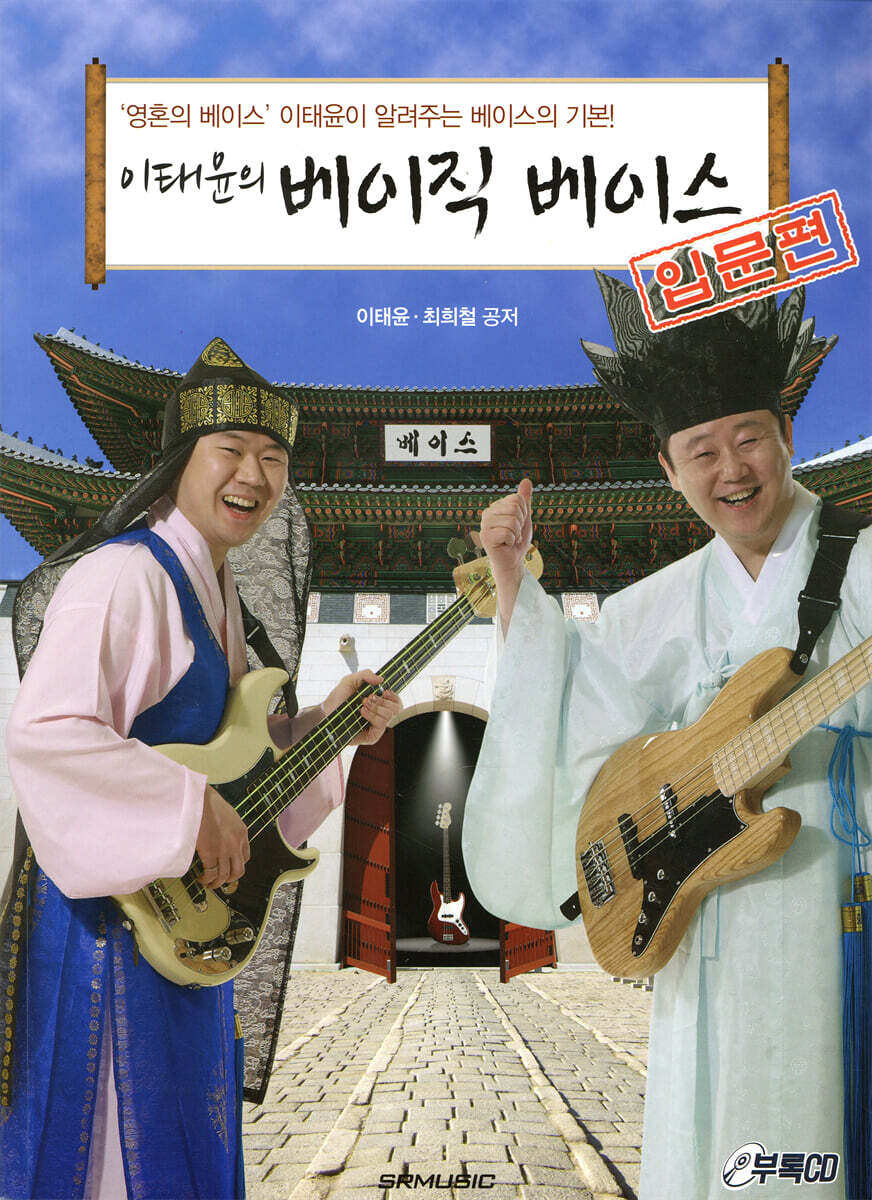
Lee Tae-yoon's Basic Bass Introduction
 |
Description
Book Introduction
Compared to the previous work, 'Lee Tae-yoon's Basic Bass', this work provides easier-to-understand and systematic explanations and examples, allowing you to solidify your foundation in bass playing.
Just by following the practice phrases in the book, you can naturally acquire the basics of each performance method, and the 'Performance Points', which explain the practice tips and precautions for each phrase, are structured in such an easy and fun way that readers will feel like they are receiving private lessons.
Unlike existing textbooks, the examples included on the CD are arranged to blend in with other instruments, so you can enjoy practicing itself.
This is a must-have textbook for all bassists, from beginners just starting out on the bass to intermediate players who want to re-examine their basic skills.
Just by following the practice phrases in the book, you can naturally acquire the basics of each performance method, and the 'Performance Points', which explain the practice tips and precautions for each phrase, are structured in such an easy and fun way that readers will feel like they are receiving private lessons.
Unlike existing textbooks, the examples included on the CD are arranged to blend in with other instruments, so you can enjoy practicing itself.
This is a must-have textbook for all bassists, from beginners just starting out on the bass to intermediate players who want to re-examine their basic skills.
- You can preview some of the book's contents.
Preview
index
Chapter 1 - Basic Bass Knowledge
About 1-1 base
1-2 Before playing
Break Time - Choosing an Introductory Instrument
Chapter 2 - Basic Exercises
2-1 Making a sound - Open string picking
2-2 Rest Play - Open String Mute
2-3 Left Hand Fingering (1) - How to Press the Strings
2-4 Left Hand Fingering (2) - Practice with fingers 1 and 4
2-5 Left Hand Fingering (3) - Practice with fingers 1, 2, 3, and 4
2-6 Dual-Hand Training (1) - Triad
2-7 Two-Hand Training (2) - Sevens Code
2-8 Two-Hand Training (3) - 6th Interval
2-9 Two-Hand Training (4) - Octave Interval
2-10 Left Hand Training - Rolling
2-11 Right Hand Training - Raking
2-12 Peak Picking (1) - Down & Up Picking
2-13 Peak Picking (2) - Hut Picking
Break time - finger length
Chapter 3 - Technique Practice
3-1 Hammering On
3-2 Pulling Off
3-3 slide
3-4 glissandos
3-5 staccato, tenuto
3-6 Mute Picking
3-7 Thumb picking
3-8 half mute
3-9 harmonics
3-10 vibrato
Break Time - Why You Should Practice Slowly
Chapter 4 - Rhythm Practice
4-1 Rhythm Training (1) - 8 Beats
4-2 8-bit① - Rock
4-3 8-bit② - Basic pattern
4-4 8-beat③ - Rock and Roll
4-5 8-beat④ - Bossa Nova
4-6 Rhythm Training (2) - 16 beats
4-7 16 bits① - Basic pattern
4-8 16 beats② - dotted eighth note + sixteenth note
4-9 16-beat③ - Finger Punk
4-10 Rhythm Training (3) - Triplets
4-11 Rhythm with a triplet feel (1) - Shuffle
4-12 Triplet Feeling Rhythm (2) - 6/8 time signature
Break Time - Tips for Setting the Tone
Chapter 5 - Slap Bass
5-1 Thumb Slap
5-2 Thumb Slap Rhythm Training (1)
5-3 Thumb Slap Rhythm Training (2)
5-4 pop
5-5 combination of thumb slap and pop
5-6 Mute Slap
5-7 Frequently used slap patterns
Break Time - For Effective and Rich Ensemble Playing
Chapter 6 - Working Base
6-1 Working Base
6-2 Sequential progression of code tones (1)
6-3 Sequential progression of code tones (2)
6-4 code change
6-5 approach
Break Time - Regarding Instrument Monitors for Stage Performances
Chapter 7 - Instrument Management and Equipment Utilization
7-1 Instrument Maintenance
7-2 string
7-3 Electronics
7-4 Using amplifiers and effects
About 1-1 base
1-2 Before playing
Break Time - Choosing an Introductory Instrument
Chapter 2 - Basic Exercises
2-1 Making a sound - Open string picking
2-2 Rest Play - Open String Mute
2-3 Left Hand Fingering (1) - How to Press the Strings
2-4 Left Hand Fingering (2) - Practice with fingers 1 and 4
2-5 Left Hand Fingering (3) - Practice with fingers 1, 2, 3, and 4
2-6 Dual-Hand Training (1) - Triad
2-7 Two-Hand Training (2) - Sevens Code
2-8 Two-Hand Training (3) - 6th Interval
2-9 Two-Hand Training (4) - Octave Interval
2-10 Left Hand Training - Rolling
2-11 Right Hand Training - Raking
2-12 Peak Picking (1) - Down & Up Picking
2-13 Peak Picking (2) - Hut Picking
Break time - finger length
Chapter 3 - Technique Practice
3-1 Hammering On
3-2 Pulling Off
3-3 slide
3-4 glissandos
3-5 staccato, tenuto
3-6 Mute Picking
3-7 Thumb picking
3-8 half mute
3-9 harmonics
3-10 vibrato
Break Time - Why You Should Practice Slowly
Chapter 4 - Rhythm Practice
4-1 Rhythm Training (1) - 8 Beats
4-2 8-bit① - Rock
4-3 8-bit② - Basic pattern
4-4 8-beat③ - Rock and Roll
4-5 8-beat④ - Bossa Nova
4-6 Rhythm Training (2) - 16 beats
4-7 16 bits① - Basic pattern
4-8 16 beats② - dotted eighth note + sixteenth note
4-9 16-beat③ - Finger Punk
4-10 Rhythm Training (3) - Triplets
4-11 Rhythm with a triplet feel (1) - Shuffle
4-12 Triplet Feeling Rhythm (2) - 6/8 time signature
Break Time - Tips for Setting the Tone
Chapter 5 - Slap Bass
5-1 Thumb Slap
5-2 Thumb Slap Rhythm Training (1)
5-3 Thumb Slap Rhythm Training (2)
5-4 pop
5-5 combination of thumb slap and pop
5-6 Mute Slap
5-7 Frequently used slap patterns
Break Time - For Effective and Rich Ensemble Playing
Chapter 6 - Working Base
6-1 Working Base
6-2 Sequential progression of code tones (1)
6-3 Sequential progression of code tones (2)
6-4 code change
6-5 approach
Break Time - Regarding Instrument Monitors for Stage Performances
Chapter 7 - Instrument Management and Equipment Utilization
7-1 Instrument Maintenance
7-2 string
7-3 Electronics
7-4 Using amplifiers and effects
GOODS SPECIFICS
- Date of publication: April 20, 2012
- Pages, weight, size: 144 pages | 550g | 222*303*20mm
- ISBN13: 9788997185146
- ISBN10: 8997185144
You may also like
카테고리
korean


korean

![GQ KOREA Mark (Monthly): December [2025]](http://librairie.coreenne.fr/cdn/shop/files/8ef265dbbfbf186523ed75ba7319009d.jpg?v=1765340328&width=3840)


