

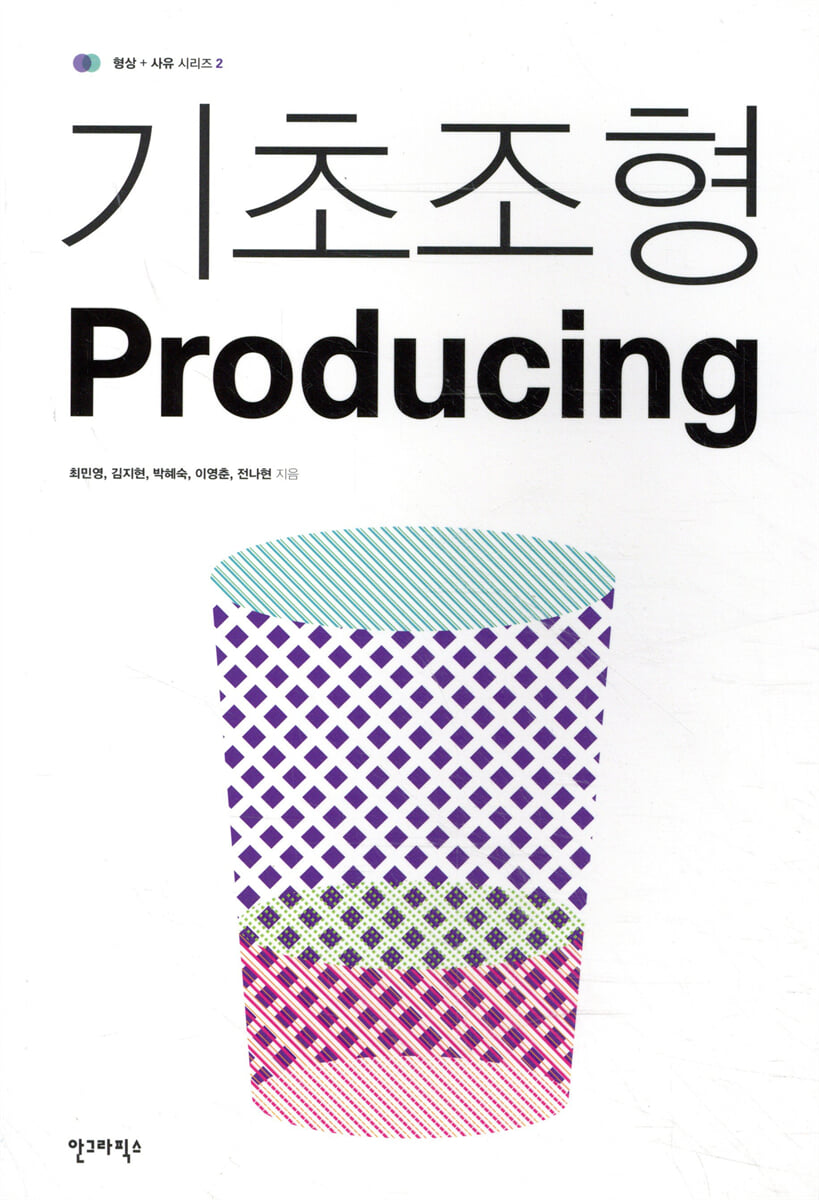
Basic Design Producing
 |
Description
Book Introduction
This book explores the process of creating sculptures by understanding materials and ingredients, concretizing sculptures, and creating sculptures.
It is based on examples of education and works being conducted in various fields of visual arts, such as visual design, media design, product design, interaction design, furniture design, and fashion design.
Chapter 1 covers the exploration and characteristics of various materials that can be easily accessed in basic formative practice, such as paper, plastic, wood, fashion materials, letters, digital images, color, layers, and movement time, as a preparatory step for creating a form.
In particular, creative formative experiments are possible by expanding the scope of material exploration to include not only material materials but also immaterial materials required for digital formative work.
Chapter 2 covers the various experiments in formative research and the development process of 'Producing', from analysis of formative trends to the concretization of concepts, production and experimentation of formative works by field, and implementation of formative principles.
In particular, by making full use of the materials linked to Chapter 1, we have ensured a connection between material exploration and formative production, and have presented various practice tasks and cases that allow for the exploration of formative principles during the production process.
Chapter 3 covers practical, field-oriented approaches used in various fields of design.
In addition to the specialized knowledge of plastic production in each field of furniture, fashion, products, and visual communication, the connection of interrelated materials, the combination and mixing of styles, and new directions of plastic experiments were covered, and in-depth plastic exploration tasks were proposed.
Chapter 4 explores new attempts and opportunities in the production of art that combine various art fields such as eco-friendly design, technology, new materials, interaction, and playful design.
These case studies and multifaceted approaches suggest new possibilities for developing trends and practical approaches, and allow for discussion of the potential for diverse applications.
It is based on examples of education and works being conducted in various fields of visual arts, such as visual design, media design, product design, interaction design, furniture design, and fashion design.
Chapter 1 covers the exploration and characteristics of various materials that can be easily accessed in basic formative practice, such as paper, plastic, wood, fashion materials, letters, digital images, color, layers, and movement time, as a preparatory step for creating a form.
In particular, creative formative experiments are possible by expanding the scope of material exploration to include not only material materials but also immaterial materials required for digital formative work.
Chapter 2 covers the various experiments in formative research and the development process of 'Producing', from analysis of formative trends to the concretization of concepts, production and experimentation of formative works by field, and implementation of formative principles.
In particular, by making full use of the materials linked to Chapter 1, we have ensured a connection between material exploration and formative production, and have presented various practice tasks and cases that allow for the exploration of formative principles during the production process.
Chapter 3 covers practical, field-oriented approaches used in various fields of design.
In addition to the specialized knowledge of plastic production in each field of furniture, fashion, products, and visual communication, the connection of interrelated materials, the combination and mixing of styles, and new directions of plastic experiments were covered, and in-depth plastic exploration tasks were proposed.
Chapter 4 explores new attempts and opportunities in the production of art that combine various art fields such as eco-friendly design, technology, new materials, interaction, and playful design.
These case studies and multifaceted approaches suggest new possibilities for developing trends and practical approaches, and allow for discussion of the potential for diverse applications.
- You can preview some of the book's contents.
Preview
index
1.
ingredient
paper
Type of paper
Characteristics of paper
plastic
What is plastic?
General purpose plastics
engineering plastics
thermosetting resin
tree
Types of trees
Properties of wood
Wood processing
typography
Letters as design materials
Elements that create the expression of letters
digital
Digital images as materials
digital image
Visual Effects Components
Fashion
Characteristics of fashion materials
Range of fashion materials
2.
quest
Design trends and global trends
The concept of design trends
Global Trend Trend
Execution strategies based on design trend themes
Form and function
Exploration of Surfaces and Forms
Basic Design Producing Assignment
Shape Exploration
Basic Design Producing Assignment
Functional exploration
Basic Design Producing Assignment
structure
rescue exercise
Basic Design Producing Assignment
visual communication
Associative images from lines
Basic Design Producing Assignment
Information hierarchy = visual hierarchy
Basic Design Producing Assignment
Harmonious contrast
Meaning is form
Basic Design Producing Assignment
Telling a story in a hierarchical manner
Basic Design Producing Assignment
Motion Design
space
Basic Design Producing Assignment
hour
Basic Design Producing Assignment
Fashion trends
Fashion trend information
Fashion material planning and design cases by theme
Knitwear design
3.
experiment
furniture design
How to design furniture
Material Form and Product Hacking
Product Hacking
Media
Digital image production process
Compositing using layers
Basic Design Producing Assignment
Basic Design Producing Assignment
Basic Design Producing Assignment
Basic Design Producing Assignment
Basic Design Producing Assignment
A formative approach to fashion
Fashion sculptures using paper and other materials
Fashion sculpture using muslin artwork
Fashion design production process using natural dye materials
Contour drawing using sawing
4.
future
playful approach
Interactive Prototyping
Interaction Design and Prototyping
Basic Design Producing Assignment
Interactive and Tangible
Changes in video presentation methods
Changes in the target audience for video screenings
Eco-friendly design
Ecology + Technology
High-tech fashion
new materials
References
List of illustrations
Search
ingredient
paper
Type of paper
Characteristics of paper
plastic
What is plastic?
General purpose plastics
engineering plastics
thermosetting resin
tree
Types of trees
Properties of wood
Wood processing
typography
Letters as design materials
Elements that create the expression of letters
digital
Digital images as materials
digital image
Visual Effects Components
Fashion
Characteristics of fashion materials
Range of fashion materials
2.
quest
Design trends and global trends
The concept of design trends
Global Trend Trend
Execution strategies based on design trend themes
Form and function
Exploration of Surfaces and Forms
Basic Design Producing Assignment
Shape Exploration
Basic Design Producing Assignment
Functional exploration
Basic Design Producing Assignment
structure
rescue exercise
Basic Design Producing Assignment
visual communication
Associative images from lines
Basic Design Producing Assignment
Information hierarchy = visual hierarchy
Basic Design Producing Assignment
Harmonious contrast
Meaning is form
Basic Design Producing Assignment
Telling a story in a hierarchical manner
Basic Design Producing Assignment
Motion Design
space
Basic Design Producing Assignment
hour
Basic Design Producing Assignment
Fashion trends
Fashion trend information
Fashion material planning and design cases by theme
Knitwear design
3.
experiment
furniture design
How to design furniture
Material Form and Product Hacking
Product Hacking
Media
Digital image production process
Compositing using layers
Basic Design Producing Assignment
Basic Design Producing Assignment
Basic Design Producing Assignment
Basic Design Producing Assignment
Basic Design Producing Assignment
A formative approach to fashion
Fashion sculptures using paper and other materials
Fashion sculpture using muslin artwork
Fashion design production process using natural dye materials
Contour drawing using sawing
4.
future
playful approach
Interactive Prototyping
Interaction Design and Prototyping
Basic Design Producing Assignment
Interactive and Tangible
Changes in video presentation methods
Changes in the target audience for video screenings
Eco-friendly design
Ecology + Technology
High-tech fashion
new materials
References
List of illustrations
Search
Publisher's Review
Basic shape, not foundation
The 21st century, which we welcomed with mixed feelings of anticipation and anxiety, has already passed its tenth year.
At this point, let's look back at the meaning of 'foundation'.
What exactly is the "foundation"? This is defined as "base" and "root."
That is, it is seen as the most important element, method, and thought.
The meaning of basic form may be interpreted in various ways, but in this study, it is interpreted and performed as ‘basic and fundamental form practice.’
When examining the process of creative activity, it begins with the 'thoughts' of the creative practitioner, and if the practitioner has a 'philosophy' about creative activity, its value increases even more.
Therefore, the proposition of formative thinking is of utmost importance, and this takes precedence over technique and expressive methods.
The term 'basic design' does not refer to a concept used in the introductory stage of the design process.
‘The most basic thinking’ is an essential element that everyone who deals with art must think about and create.
Design should not stop at superficial effects, but should contain a deeper and more meaningful philosophy.
What is needed in design is to cultivate ‘deep philosophy’ and ‘reflective thinking.’
I would like to call this the 'basic idea' of designers.
outline
Design and plastic arts are constantly evolving in step with technological and cultural advancements, and various plastic experiments are being conducted to embody new concepts and ideas.
The process of modern plastic arts consists of the generation of ideas, the concretization of form and function, and the evaluation and communication of the realized sculpture.
This book is the second in the basic plastic arts 'Shape + Thought' series, and its purpose is to introduce and examine the process and methodology of 'Producing', which is the stage of implementation and materialization of plastic arts.
While designers and artists explore creative thinking and ideas through 'Basic Design Thinking,' 'Basic Design Producing' involves understanding materials and ingredients, concretizing designs, and exploring the process of creating designs.
This will inspire new ideas and provide a communication medium for various people involved.
The production of forms is understood as a core stage for experimenting and exploring ideas, not simply as 'producing' in the sense of making, but as a comprehensive system of concept exploration, experimentation, and interaction.
This book is based on examples of education and works being conducted in various fields of visual arts, including visual design, media design, product design, interaction design, furniture design, and fashion design.
In particular, it introduces materials and methods of creating sculptures that are familiar to other fields of art in an integrated manner rather than listing them, and the mutual understanding and application of sculpture work provides valuable insight into the development of creative sculptures through fusion.
The boundaries of the plastic arts are becoming blurred, and materials and production techniques once confined to a single specialty are now being utilized in other fields.
A creative approach to sculpting begins with examining familiar materials and methods from a different perspective and applying them in various ways, thereby acquiring the fundamental principles of sculpting.
The process of creating a sculpture has several limitations and restrictions due to its technical and instrumental nature.
Therefore, exciting creative forms will become possible through the process of applying and experiencing various methods different from the existing ones.
Above all, what is noteworthy about this book is that it covers everything from the exploration of materials and materials to specific methods of formative experimentation.
By conveying the exploration of materials currently being explored in education, industry, and the field, application examples of various basic forms, and methodologies of production processes, students can understand how existing materials and approaches to the production of technical forms are adopted in each field. They can also acquire experiential principles of form by providing examples of various tasks that allow for creative experimentation.
It also introduces the principles and methods of new formative production that will become issues in the near future, thereby inspiring and exploring the formative arts and covering new directions for formative exploration that can be applied progressively.
What I found most important about this book was that it presented and integrated a wealth of knowledge on the production of sculptures and methods for experimenting with them, enabling readers to practice creative expression.
The 21st century, which we welcomed with mixed feelings of anticipation and anxiety, has already passed its tenth year.
At this point, let's look back at the meaning of 'foundation'.
What exactly is the "foundation"? This is defined as "base" and "root."
That is, it is seen as the most important element, method, and thought.
The meaning of basic form may be interpreted in various ways, but in this study, it is interpreted and performed as ‘basic and fundamental form practice.’
When examining the process of creative activity, it begins with the 'thoughts' of the creative practitioner, and if the practitioner has a 'philosophy' about creative activity, its value increases even more.
Therefore, the proposition of formative thinking is of utmost importance, and this takes precedence over technique and expressive methods.
The term 'basic design' does not refer to a concept used in the introductory stage of the design process.
‘The most basic thinking’ is an essential element that everyone who deals with art must think about and create.
Design should not stop at superficial effects, but should contain a deeper and more meaningful philosophy.
What is needed in design is to cultivate ‘deep philosophy’ and ‘reflective thinking.’
I would like to call this the 'basic idea' of designers.
outline
Design and plastic arts are constantly evolving in step with technological and cultural advancements, and various plastic experiments are being conducted to embody new concepts and ideas.
The process of modern plastic arts consists of the generation of ideas, the concretization of form and function, and the evaluation and communication of the realized sculpture.
This book is the second in the basic plastic arts 'Shape + Thought' series, and its purpose is to introduce and examine the process and methodology of 'Producing', which is the stage of implementation and materialization of plastic arts.
While designers and artists explore creative thinking and ideas through 'Basic Design Thinking,' 'Basic Design Producing' involves understanding materials and ingredients, concretizing designs, and exploring the process of creating designs.
This will inspire new ideas and provide a communication medium for various people involved.
The production of forms is understood as a core stage for experimenting and exploring ideas, not simply as 'producing' in the sense of making, but as a comprehensive system of concept exploration, experimentation, and interaction.
This book is based on examples of education and works being conducted in various fields of visual arts, including visual design, media design, product design, interaction design, furniture design, and fashion design.
In particular, it introduces materials and methods of creating sculptures that are familiar to other fields of art in an integrated manner rather than listing them, and the mutual understanding and application of sculpture work provides valuable insight into the development of creative sculptures through fusion.
The boundaries of the plastic arts are becoming blurred, and materials and production techniques once confined to a single specialty are now being utilized in other fields.
A creative approach to sculpting begins with examining familiar materials and methods from a different perspective and applying them in various ways, thereby acquiring the fundamental principles of sculpting.
The process of creating a sculpture has several limitations and restrictions due to its technical and instrumental nature.
Therefore, exciting creative forms will become possible through the process of applying and experiencing various methods different from the existing ones.
Above all, what is noteworthy about this book is that it covers everything from the exploration of materials and materials to specific methods of formative experimentation.
By conveying the exploration of materials currently being explored in education, industry, and the field, application examples of various basic forms, and methodologies of production processes, students can understand how existing materials and approaches to the production of technical forms are adopted in each field. They can also acquire experiential principles of form by providing examples of various tasks that allow for creative experimentation.
It also introduces the principles and methods of new formative production that will become issues in the near future, thereby inspiring and exploring the formative arts and covering new directions for formative exploration that can be applied progressively.
What I found most important about this book was that it presented and integrated a wealth of knowledge on the production of sculptures and methods for experimenting with them, enabling readers to practice creative expression.
GOODS SPECIFICS
- Date of issue: May 30, 2011
- Page count, weight, size: 308 pages | 624g | 160*230*30mm
- ISBN13: 9788970595832
- ISBN10: 897059583X
You may also like
카테고리
korean


korean

![GQ KOREA Mark (Monthly): December [2025]](http://librairie.coreenne.fr/cdn/shop/files/8ef265dbbfbf186523ed75ba7319009d.jpg?v=1765340328&width=3840)


