

Othello
 |
Description
Book Introduction
One of Shakespeare's four most modern tragedies of all time
A fateful tragedy brought about by the doubts and blind illusions hidden within human beings.
The pinnacle of world literature, still performed to this day
“Oh, General, beware of jealousy! It is
“It is a blue-eyed monster that laughs at and devours its victims.”
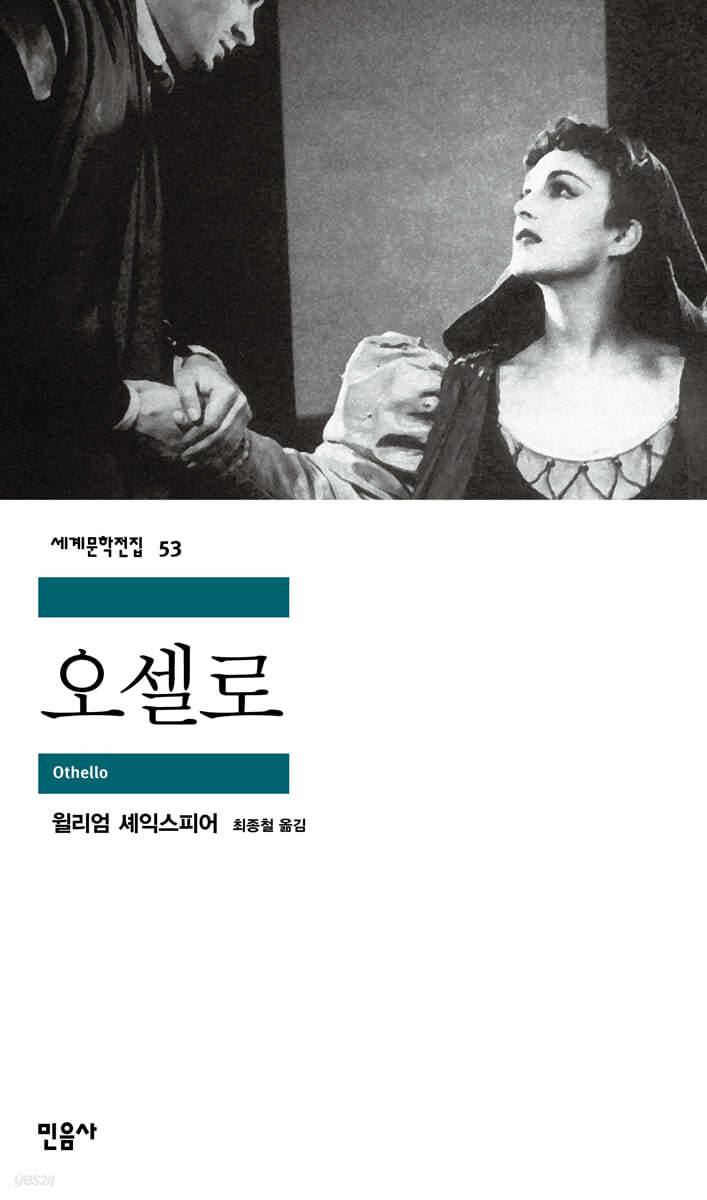
Othello, the black general of Venice, falls in love with Desdemona, the daughter of Brabancho, the elder of the duchy.
Her father disapproves of their relationship because Othello is black, but they eventually marry.
At that time, a Turkish fleet invades the island of Cyprus, and Othello leaves with his wife to defend the island.
Meanwhile, Iago, a subordinate who was jealous of Othello despite being trusted by him, harbors resentment over Cassio taking away his coveted position as adjutant, and makes Othello believe that Desdemona is having an affair with Cassio.
Othello, deceived by Iago, is blinded by jealousy and kills Desdemona.
Othello, who eventually finds out that everything was a plot by his subordinates, takes his own life out of guilt.
One of Shakespeare's four major tragedies and one of the most frequently performed plays to this day, it deals with the tragic catastrophe caused by misunderstandings arising from the gap between reality and appearance.
It is a timelessly modern masterpiece, encompassing many themes and diverse interpretations, including trust and honor, patriarchal politics and racial issues.
Although there are numerous existing translations, Professor Choi Jong-cheol's translation is significant in that the translator, a Shakespeare specialist, preserved the original text's verse format as much as possible.
A fateful tragedy brought about by the doubts and blind illusions hidden within human beings.
The pinnacle of world literature, still performed to this day
“Oh, General, beware of jealousy! It is
“It is a blue-eyed monster that laughs at and devours its victims.”
Othello, the black general of Venice, falls in love with Desdemona, the daughter of Brabancho, the elder of the duchy.
Her father disapproves of their relationship because Othello is black, but they eventually marry.
At that time, a Turkish fleet invades the island of Cyprus, and Othello leaves with his wife to defend the island.
Meanwhile, Iago, a subordinate who was jealous of Othello despite being trusted by him, harbors resentment over Cassio taking away his coveted position as adjutant, and makes Othello believe that Desdemona is having an affair with Cassio.
Othello, deceived by Iago, is blinded by jealousy and kills Desdemona.
Othello, who eventually finds out that everything was a plot by his subordinates, takes his own life out of guilt.
One of Shakespeare's four major tragedies and one of the most frequently performed plays to this day, it deals with the tragic catastrophe caused by misunderstandings arising from the gap between reality and appearance.
It is a timelessly modern masterpiece, encompassing many themes and diverse interpretations, including trust and honor, patriarchal politics and racial issues.
Although there are numerous existing translations, Professor Choi Jong-cheol's translation is significant in that the translator, a Shakespeare specialist, preserved the original text's verse format as much as possible.
- You can preview some of the book's contents.
Preview
Publisher's Review
Shakespeare scholar Professor Choi Jong-cheol's first attempt at translating poetry
Shakespeare's plays are in verse.
And the rhyme is different depending on the character's status, role, and emotional state.
The dialogue of a noble and upright person is in verse, but that of a lowly person or a person of confused mind is in rhythmless prose.
Professor Choi Jong-cheol recognized the importance of Shakespeare's intentions and focused his efforts on preserving his style.
Comparing the lines of Othello and Iago, who are high-ranking officials in the government, the following is true:
Othello, let your shining swords be gathered, lest they rust in the night dew.
Sir, it would be better if you gave orders with your age rather than with weapons.
(Act 1, Scene 2) Iago (The Governor) That guy is grabbing her palm.
Yeah, good job, whisper.
Because with such a small spider web, you can catch a big fly like Casio.
Yes, you must smile at her, for she will use your manners as bait to lure you.
(Act 2, Scene 1)
In other words, Othello's lines adhere to the basic rhythm of 3/4, while limiting the number of characters per line to 16.
(Of course, to avoid unnaturalness that occurs during translation, the number of characters was increased to 18.) English has stress, so the distinction between poetry and prose is clear, and the author's intention is clearly expressed.
The reason Shakespeare is called a 'magician of language' is because he made amazing use of the most natural rhythm in English, 'iamb pentameter' (five stressed syllables next to one unstressed syllable, no rhyme used).
Therefore, it is not easy to preserve Shakespeare's language when putting a translated work on stage.
Professor Choi Jong-cheol fully understood this point and brought the charm of Shakespeare's language to life in Korean. In this respect, he can be said to be the first Shakespeare scholar to fully translate the 'Four Great Tragedies'.
In other words, the format was adopted to preserve the rhythm of the original text as much as possible, while selecting vocabulary appropriate for a modern stage script.
The most performed work of all time, the pinnacle of world literature.
Shakespeare's works were, above all, plays for the stage.
Therefore, as he wrote the work with the dialogue in mind, Professor Choi Jong-cheol focused on maximizing the dramatic effect that Shakespeare intended in this work, unlike previous translations that were unsuitable for theatrical performance.
The greatness of Shakespeare's plays lies above all in their poetic musicality.
However, due to the fundamental differences between English and Korean, there was no attempt to preserve this musicality in existing translations.
Professor Choi Jong-cheol believes that the musicality of Shakespeare's works is not a problem that can be solved by forcibly creating instruments that we do not have, but that the true essence of his music is conveyed when we play it on instruments that we already have.
In particular, the reason Professor Choi Jong-cheol judged the 3·4·3·4 rhythm to be the most suitable is because the number of letters in those fourteen letters is similar to the number of letters in the words in Shakespeare's '5 steps'.
In other words, we are certain that the amount of sound and meaning that a person can most comfortably convey in one breath in one line is similar in English and Korean.
Also, the reason for frequently changing word order is to avoid monotony caused by sentences in Korean mostly ending with '-da' or '-yo'.
Shakespeare's four major tragedies: the most modern of all time
Along with Hamlet, King Lear, and Macbeth, Othello is one of Shakespeare's four major tragedies and is therefore another major axis for studying Shakespeare's works and the plays of his time.
What makes Othello different from the other three tragedies is the role of Iago.
King Claudius in Hamlet, the unfaithful daughters in King Lear, and the ghosts in Macbeth are all evil in their own way, but they do not enjoy the devil-like role as Iago does.
Iago is the key figure in forming the plot, directly connected to all the other characters, and is especially the one who brings out the essence hidden within Othello.
In this work, the gap between what is visible, that is, reality and appearance, forms the most important theme, and Professor Choi Jong-cheol's "Commentary on the Work" explains this well.
In addition, it contains many themes and various interpretations, such as trust and honor, patriarchal political situations, and racial issues.
Shakespeare's plays are in verse.
And the rhyme is different depending on the character's status, role, and emotional state.
The dialogue of a noble and upright person is in verse, but that of a lowly person or a person of confused mind is in rhythmless prose.
Professor Choi Jong-cheol recognized the importance of Shakespeare's intentions and focused his efforts on preserving his style.
Comparing the lines of Othello and Iago, who are high-ranking officials in the government, the following is true:
Othello, let your shining swords be gathered, lest they rust in the night dew.
Sir, it would be better if you gave orders with your age rather than with weapons.
(Act 1, Scene 2) Iago (The Governor) That guy is grabbing her palm.
Yeah, good job, whisper.
Because with such a small spider web, you can catch a big fly like Casio.
Yes, you must smile at her, for she will use your manners as bait to lure you.
(Act 2, Scene 1)
In other words, Othello's lines adhere to the basic rhythm of 3/4, while limiting the number of characters per line to 16.
(Of course, to avoid unnaturalness that occurs during translation, the number of characters was increased to 18.) English has stress, so the distinction between poetry and prose is clear, and the author's intention is clearly expressed.
The reason Shakespeare is called a 'magician of language' is because he made amazing use of the most natural rhythm in English, 'iamb pentameter' (five stressed syllables next to one unstressed syllable, no rhyme used).
Therefore, it is not easy to preserve Shakespeare's language when putting a translated work on stage.
Professor Choi Jong-cheol fully understood this point and brought the charm of Shakespeare's language to life in Korean. In this respect, he can be said to be the first Shakespeare scholar to fully translate the 'Four Great Tragedies'.
In other words, the format was adopted to preserve the rhythm of the original text as much as possible, while selecting vocabulary appropriate for a modern stage script.
The most performed work of all time, the pinnacle of world literature.
Shakespeare's works were, above all, plays for the stage.
Therefore, as he wrote the work with the dialogue in mind, Professor Choi Jong-cheol focused on maximizing the dramatic effect that Shakespeare intended in this work, unlike previous translations that were unsuitable for theatrical performance.
The greatness of Shakespeare's plays lies above all in their poetic musicality.
However, due to the fundamental differences between English and Korean, there was no attempt to preserve this musicality in existing translations.
Professor Choi Jong-cheol believes that the musicality of Shakespeare's works is not a problem that can be solved by forcibly creating instruments that we do not have, but that the true essence of his music is conveyed when we play it on instruments that we already have.
In particular, the reason Professor Choi Jong-cheol judged the 3·4·3·4 rhythm to be the most suitable is because the number of letters in those fourteen letters is similar to the number of letters in the words in Shakespeare's '5 steps'.
In other words, we are certain that the amount of sound and meaning that a person can most comfortably convey in one breath in one line is similar in English and Korean.
Also, the reason for frequently changing word order is to avoid monotony caused by sentences in Korean mostly ending with '-da' or '-yo'.
Shakespeare's four major tragedies: the most modern of all time
Along with Hamlet, King Lear, and Macbeth, Othello is one of Shakespeare's four major tragedies and is therefore another major axis for studying Shakespeare's works and the plays of his time.
What makes Othello different from the other three tragedies is the role of Iago.
King Claudius in Hamlet, the unfaithful daughters in King Lear, and the ghosts in Macbeth are all evil in their own way, but they do not enjoy the devil-like role as Iago does.
Iago is the key figure in forming the plot, directly connected to all the other characters, and is especially the one who brings out the essence hidden within Othello.
In this work, the gap between what is visible, that is, reality and appearance, forms the most important theme, and Professor Choi Jong-cheol's "Commentary on the Work" explains this well.
In addition, it contains many themes and various interpretations, such as trust and honor, patriarchal political situations, and racial issues.
GOODS SPECIFICS
- Date of issue: September 30, 2001
- Page count, weight, size: 246 pages | 335g | 132*225*20mm
- ISBN13: 9788937460531
- ISBN10: 893746053X
You may also like
카테고리
korean


korean

![GQ KOREA Mark (Monthly): December [2025]](http://librairie.coreenne.fr/cdn/shop/files/8ef265dbbfbf186523ed75ba7319009d.jpg?v=1765340328&width=3840)


