

Ballet, Go to the Art Museum
 |
Description
Book Introduction
Every moment of ballet captured by the famous painter,
And surrounding 'Swan Lake' and 'Giselle'
A beautiful and cruel story begins!
A book that unfolds in a panoramic manner every moment of ballet, born to Catherine de Medici, raised in the Palace of Versailles of Louis XIV, and blossoming brilliantly in the Russian imperial court.
Along with the history of ballet, the book tells the story of 15 keywords, including famous ballet works such as "Swan Lake" and "Giselle," immortal ballerinas and ballet dancers such as Anna Pavlova and Vaclav Nijinsky, and the Vaganova teaching method that introduced science to ballet, along with beautiful famous paintings on the subject of ballet.
What was it about ballet that captivated such luminaries as Edgar Degas, the "Painter of Ballerinas," as well as Toulouse-Lautrec and Édouard Manet? This humanistic ballet guide reveals everything you need to know about ballet, with moments captured through the unique perspectives of artists from France, Russia, Germany, Denmark, Sweden, the United States, and Ireland.
And surrounding 'Swan Lake' and 'Giselle'
A beautiful and cruel story begins!
A book that unfolds in a panoramic manner every moment of ballet, born to Catherine de Medici, raised in the Palace of Versailles of Louis XIV, and blossoming brilliantly in the Russian imperial court.
Along with the history of ballet, the book tells the story of 15 keywords, including famous ballet works such as "Swan Lake" and "Giselle," immortal ballerinas and ballet dancers such as Anna Pavlova and Vaclav Nijinsky, and the Vaganova teaching method that introduced science to ballet, along with beautiful famous paintings on the subject of ballet.
What was it about ballet that captivated such luminaries as Edgar Degas, the "Painter of Ballerinas," as well as Toulouse-Lautrec and Édouard Manet? This humanistic ballet guide reveals everything you need to know about ballet, with moments captured through the unique perspectives of artists from France, Russia, Germany, Denmark, Sweden, the United States, and Ireland.
- You can preview some of the book's contents.
Preview
index
PROLOGUE - To love ballet is… …
ACT 1.
The stage opens
Chapter 1.
Lily in black mourning dress gives birth to ballet
- Catherine de Medici, the 'Mother of Ballet', and the first ballet, "Ballet comique de la Reine"
* Italian dance culture that became the birthplace of ballet
Chapter 2.
The elegant and brutal revenge drama of the 'Sun King'
Louis XIV, the 'first ballet star' who used ballet to strengthen absolute power
* Louis XIV's contribution to ballet
Chapter 3.
And the ballerina became a fairy
- Ballerina Marie Taglioni and the romantic ballet "La Sylphide"
* Auguste Bournonville's "La Sylphide"
Chapter 4.
The man's brush following the ballerina
- Edgar Degas, the painter who left behind numerous paintings featuring ballerinas
* Ballet movements as seen through Degas' sketches
Chapter 5.
Cabaret, Ballet Beyond the Red Curtain
- Paris's 'Belle Époque', ballet, and the painter Toulouse-Lautrec
* The story of the opera house, where ballet is performed
Chapter 6.
Peter the Great's Cabriolet, Empress Anna's Imperial Ballet School
- How was the Russian Empire of Ballet born?
* How to distinguish between romantic and classical ballet and tips for appreciating them
Chapter 7.
Where did the swans on the lake fly from?
- Beyond the ballet "Swan Lake," in search of the origins of the "swan" legend and romance.
* Clowns in Ballet and Their European Origins
ACT 2.
The stars dance
Chapter 8.
A Tribute to the Ballerina, "Giselle"
-Carlotta Grigi, the 19th-century ballerina who was the 'first Giselle'
* Stepanov notation
* An aesthetic gaze toward ballerinas
Chapter 9.
Tsar on Stage, Marius Petipa
- Classical choreographer called the 'father of Russian ballet'
* Balletman, on the border between national art and elite art
Chapter 10.
How Ballet Became a Brand of the Times
- Diaghilev and the Ballets Russes, the revolutionaries behind the scenes
* The great legacy of the Ballets Russes
Chapter 11.
Swan Dance, Swan Dream
- Anna Pavlova, the legendary ballerina, and "The Dying Swan"
* The evolution of pointe shoes
Chapter 12.
Ten years of brilliant glory, thirty years of terrible darkness
- Legendary ballet dancer Vaclav Nijinsky
* Nijinsky's sister Nijinska
Chapter 13.
The Vaganova Method: The Birth of a Ballet Textbook
- Vaganova's ballet teaching method, which scientifically designed physical training
* World famous ballet schools
Chapter 14.
The Body of Ballet: The Power of the 'Cor de Ballet'
- The charm of military service and the tears shed secretly on stage
* Dancer's rank
Chapter 15.
Esmeralda's tambourine, Kitri's fan
- In search of exotic tastes and aesthetics of representation in ballet
* History of Korean creative ballet
Americas
List of illustrations in the main text
ACT 1.
The stage opens
Chapter 1.
Lily in black mourning dress gives birth to ballet
- Catherine de Medici, the 'Mother of Ballet', and the first ballet, "Ballet comique de la Reine"
* Italian dance culture that became the birthplace of ballet
Chapter 2.
The elegant and brutal revenge drama of the 'Sun King'
Louis XIV, the 'first ballet star' who used ballet to strengthen absolute power
* Louis XIV's contribution to ballet
Chapter 3.
And the ballerina became a fairy
- Ballerina Marie Taglioni and the romantic ballet "La Sylphide"
* Auguste Bournonville's "La Sylphide"
Chapter 4.
The man's brush following the ballerina
- Edgar Degas, the painter who left behind numerous paintings featuring ballerinas
* Ballet movements as seen through Degas' sketches
Chapter 5.
Cabaret, Ballet Beyond the Red Curtain
- Paris's 'Belle Époque', ballet, and the painter Toulouse-Lautrec
* The story of the opera house, where ballet is performed
Chapter 6.
Peter the Great's Cabriolet, Empress Anna's Imperial Ballet School
- How was the Russian Empire of Ballet born?
* How to distinguish between romantic and classical ballet and tips for appreciating them
Chapter 7.
Where did the swans on the lake fly from?
- Beyond the ballet "Swan Lake," in search of the origins of the "swan" legend and romance.
* Clowns in Ballet and Their European Origins
ACT 2.
The stars dance
Chapter 8.
A Tribute to the Ballerina, "Giselle"
-Carlotta Grigi, the 19th-century ballerina who was the 'first Giselle'
* Stepanov notation
* An aesthetic gaze toward ballerinas
Chapter 9.
Tsar on Stage, Marius Petipa
- Classical choreographer called the 'father of Russian ballet'
* Balletman, on the border between national art and elite art
Chapter 10.
How Ballet Became a Brand of the Times
- Diaghilev and the Ballets Russes, the revolutionaries behind the scenes
* The great legacy of the Ballets Russes
Chapter 11.
Swan Dance, Swan Dream
- Anna Pavlova, the legendary ballerina, and "The Dying Swan"
* The evolution of pointe shoes
Chapter 12.
Ten years of brilliant glory, thirty years of terrible darkness
- Legendary ballet dancer Vaclav Nijinsky
* Nijinsky's sister Nijinska
Chapter 13.
The Vaganova Method: The Birth of a Ballet Textbook
- Vaganova's ballet teaching method, which scientifically designed physical training
* World famous ballet schools
Chapter 14.
The Body of Ballet: The Power of the 'Cor de Ballet'
- The charm of military service and the tears shed secretly on stage
* Dancer's rank
Chapter 15.
Esmeralda's tambourine, Kitri's fan
- In search of exotic tastes and aesthetics of representation in ballet
* History of Korean creative ballet
Americas
List of illustrations in the main text
Detailed image
Into the book
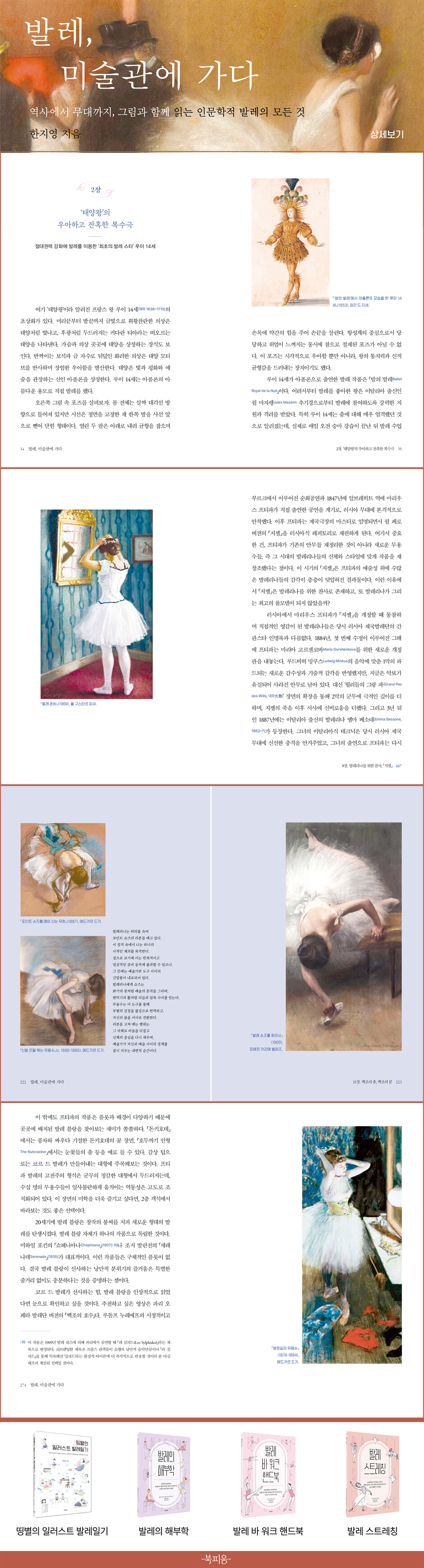
There is a saying that 'ballet was born in Italy, blossomed in France, and matured in Russia', and at the center of the birth and blossoming of ballet was a woman.
Catherine de' Medici (1519-1589, reigned 1547-1559), from the Italian Medici family.
The French pronunciation of Medici is Medicis.
She married Henri de Valois, Duke of Orléans, who later became King Henry II of France, in 1533 and became Queen of France.
Her achievements during her 40-year reign as Empress Dowager, if summarized in one sentence, were that she was 'the greatest contributor to bringing the intellectual world of the Italian Renaissance, including its academics and arts, to France.'
--- p.17
The ballet in which Louis XIV appeared as Apollo was "Ballet Royal de la Nuit."
The king, who had loved ballet since childhood, received strong support and encouragement to participate in ballet from Italian Cardinal Jules Mazarin.
Louis XIV, in particular, was known to be very strict about dancing, and in fact, after his morning riding lessons, he took ballet lessons every day, paying great attention to the accuracy of the various steps.
Numerically speaking, he is said to have practiced ballet for 2 hours every day for 27 years, so he is a very diligent king who showed an extraordinary love for ballet.
He made his ballet debut at the age of 13 in 1651 and made a strong impression two years later with "Ballet de la Nuit."
As a result, the history of ballet today records Louis XIV as the first ballet star.
This is the first time that a king, not a professional dancer, has taken to the stage and achieved both popular stardom and artistic authority.
--- p.35-36
Marie Taglioni didn't just have a good sense of time and character.
She, too, worked desperately to bring this fairy to life, meticulously studying the quality of her light movements, as if her feet were barely touching the ground.
She was not just a fairy, but an air spirit, and she danced like the wind, invisible but palpable.
Taglioni's dancing style was so impressive that at the time, a light, floating dance technique similar to hers was called 'Taglionizer'.
And this technique has become established as a ballet tradition.
Today, it is called 'Ballon', which means light jumping and soft landing.
--- p.65
Peter the Great not only took fencing and dancing lessons himself, but also believed that Russians should be able to move and dance like Europeans.
To this end, he carried out comprehensive reforms, including wearing Western-style clothing, removing beards, revising the calendar, establishing a new year, launching newspapers, and establishing universities, and he also made dancing and etiquette conditions for entering high society.
He founded a new European-style city called St. Petersburg, and the Peterhof Palace was modeled after the Palace of Versailles in France.
Peter the Great held court balls and even appeared on stage himself.
He also ordered his courtiers who did not know French to learn French and dance, and attendance at banquets became an obligation for nobles.
According to contemporary accounts, “the Tsar performed a cabriole so magnificent that it would have amazed the best dancers in Europe.”
Catherine de' Medici (1519-1589, reigned 1547-1559), from the Italian Medici family.
The French pronunciation of Medici is Medicis.
She married Henri de Valois, Duke of Orléans, who later became King Henry II of France, in 1533 and became Queen of France.
Her achievements during her 40-year reign as Empress Dowager, if summarized in one sentence, were that she was 'the greatest contributor to bringing the intellectual world of the Italian Renaissance, including its academics and arts, to France.'
--- p.17
The ballet in which Louis XIV appeared as Apollo was "Ballet Royal de la Nuit."
The king, who had loved ballet since childhood, received strong support and encouragement to participate in ballet from Italian Cardinal Jules Mazarin.
Louis XIV, in particular, was known to be very strict about dancing, and in fact, after his morning riding lessons, he took ballet lessons every day, paying great attention to the accuracy of the various steps.
Numerically speaking, he is said to have practiced ballet for 2 hours every day for 27 years, so he is a very diligent king who showed an extraordinary love for ballet.
He made his ballet debut at the age of 13 in 1651 and made a strong impression two years later with "Ballet de la Nuit."
As a result, the history of ballet today records Louis XIV as the first ballet star.
This is the first time that a king, not a professional dancer, has taken to the stage and achieved both popular stardom and artistic authority.
--- p.35-36
Marie Taglioni didn't just have a good sense of time and character.
She, too, worked desperately to bring this fairy to life, meticulously studying the quality of her light movements, as if her feet were barely touching the ground.
She was not just a fairy, but an air spirit, and she danced like the wind, invisible but palpable.
Taglioni's dancing style was so impressive that at the time, a light, floating dance technique similar to hers was called 'Taglionizer'.
And this technique has become established as a ballet tradition.
Today, it is called 'Ballon', which means light jumping and soft landing.
--- p.65
Peter the Great not only took fencing and dancing lessons himself, but also believed that Russians should be able to move and dance like Europeans.
To this end, he carried out comprehensive reforms, including wearing Western-style clothing, removing beards, revising the calendar, establishing a new year, launching newspapers, and establishing universities, and he also made dancing and etiquette conditions for entering high society.
He founded a new European-style city called St. Petersburg, and the Peterhof Palace was modeled after the Palace of Versailles in France.
Peter the Great held court balls and even appeared on stage himself.
He also ordered his courtiers who did not know French to learn French and dance, and attendance at banquets became an obligation for nobles.
According to contemporary accounts, “the Tsar performed a cabriole so magnificent that it would have amazed the best dancers in Europe.”
--- p.120~121
Publisher's Review
Heavenly Art, Descending to Us
Ballet, just hearing it makes my heart flutter.
However, we have felt a sense of awe rather than intimacy when looking at the ballerinas in the paintings of Edgar Degas, the 'painter of ballerinas.'
For a long time, ballet was considered a 'tall' genre, a celestial art form too distant for earthly humans to approach.
But now, with Korean dancers like Park Sae-eun (Paris Opera Ballet), Kim Ki-min (Mariinsky Ballet), and Jeon Min-cheol (Mariinsky Ballet) standing tall as the world's best dancers, and the powerful yet elegant movements of ballet dancers on the popular TV program "Stage Fighter (Stepa)" receiving explosive responses, the status of ballet is expanding significantly.
Also, in this era where people value a life of loving and nurturing themselves, the number of people who learn ballet as a hobby and become captivated by its charm is increasing day by day.
When you love, you start to want to know.
The same goes for ballet.
I'm curious about the process through which ballet was born, how it evolved into what it is today, and who contributed to its development.
It also makes you curious about the history and meaning behind the dancers' elegant movements and splendid stage, why swans dance on the lake, and how ballerinas' white tutus came to be.
Born to Catherine de Medici and raised by Louis XIV
"Ballet, Going to the Art Museum" is a humanistic ballet textbook that instantly answers these questions.
From history to the stage, we have selected 15 of the most interesting and essential topics related to ballet and developed a story about them.
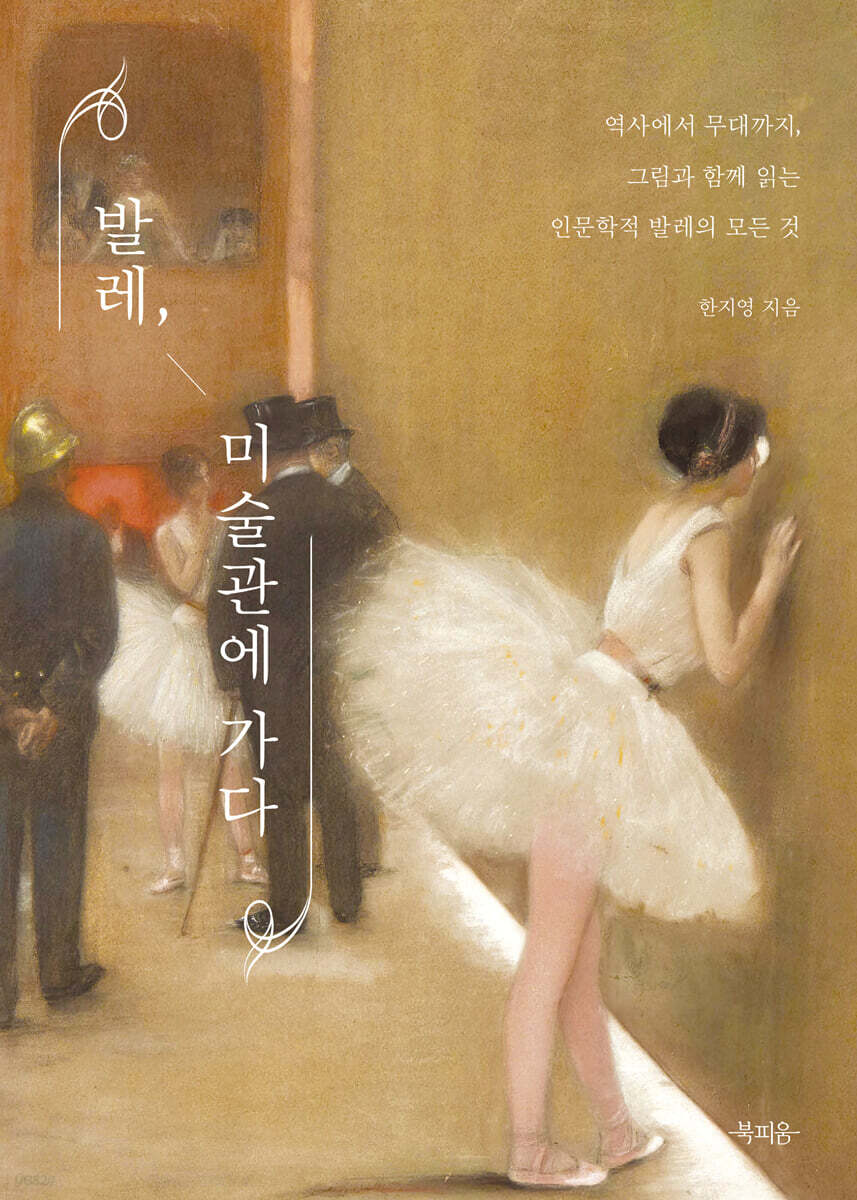
Another unique feature of "Ballet Goes to the Art Museum" is the 170 or so famous paintings that capture moments of ballet.
Through the works of masters such as Edgar Degas, Toulouse-Lautrec, and Édouard Manet, you can enjoy a wealth of ballet scenes captured in famous paintings, including the beautiful appearance of ballerinas on stage, the fierce appearance backstage, the harsh lessons, and sometimes even the exhausting and difficult appearances.
『Ballet Goes to the Art Museum』 is composed of two acts, like a ballet performance.
Act 1, 'The Stage Opens', traces the flow of history from the birth to establishment of ballet.
Following the eventful life of Catherine de Medici, the 'Mother of Ballet', and the 'Ballet comique de la Reine', which is considered the first ballet, the story of Louis XIV, the Sun King, who successfully achieved his political goal of strengthening France's absolute monarchy through ballet, continues.
It also tells the story of the fate of Romantic female dancers who had to become "airy-like" fairies after "La Sylphide," which opened the curtain on Romantic ballet, and the behind-the-scenes story of the creation of the classical ballet system and works brought about by the reform policies of the Russian Empire pursued by Peter the Great.
Act 2, 'Stars Dancing', tells the story of the ballet piece and the people on stage.
Anna Pavlova, the ballerina who became an eternal legend with her immortal masterpiece, "The Dying Swan," and Vaclav Nijinsky, the genius ballet dancer who was buried in the short 10 years of glory and the long 30 years of suffering.
And, we take a close look at the existence of the anonymous stars who existed to make the star dancers on stage shine, the genius choreographers behind them, and the Eastern culture (Orientalism) that has been incorporated into ballet.
The chapter on 'Corps de Ballet' is particularly moving.
Although it is overshadowed by the dazzling solo variations and pas de deux of the leading dancers who take the spotlight, the real body of ballet is the corps de ballet.
The stories of the sweat and tears they shed to show perfect harmony on stage, and the dreams of unknown dancers, change the way we view ballet.
The final chapter, which deals with exotic tastes in ballet, is also interesting.
By following the evolution and content expansion of ballet, such as the Spanish dance of "Don Quixote," the Indian atmosphere of "La Bayadère," and the character dance of "The Nutcracker," you can expand your understanding of the European perspectives and Orientalism of the time that are reflected in ballet works.
Each chapter's text is accompanied by a tip box to help you understand ballet.
It is full of small but interesting information, such as how to distinguish between romantic and classical ballet, the history of opera houses where ballet is performed, the dancers' class system, famous ballet schools around the world, and the history of Korean creative ballet.
Drawing ballet again in front of Degas's painting
"Ballet, Going to the Art Museum" is a book that will captivate both those who are new to ballet and those who have already fallen in love with it.
Even those unfamiliar with ballet will find themselves drawn into the story that traces the birth and evolution of ballet through myths, legends, literature, and history.
For those familiar with ballet, it offers a fresh and deeper perspective on the ballet pieces and the artists behind them, providing an intellectual foundation for a deeper appreciation of the pieces.
When waiting for the curtain to rise at a ballet performance, or standing in front of a painting by Degas or Lautrec in an art museum, the experience will be much richer if you recall a passage from "Ballet Goes to the Museum."
And ballet will come to us anew not as a distant, celestial art, but as a living, breathing humanities right next to us.
Ballet, just hearing it makes my heart flutter.
However, we have felt a sense of awe rather than intimacy when looking at the ballerinas in the paintings of Edgar Degas, the 'painter of ballerinas.'
For a long time, ballet was considered a 'tall' genre, a celestial art form too distant for earthly humans to approach.
But now, with Korean dancers like Park Sae-eun (Paris Opera Ballet), Kim Ki-min (Mariinsky Ballet), and Jeon Min-cheol (Mariinsky Ballet) standing tall as the world's best dancers, and the powerful yet elegant movements of ballet dancers on the popular TV program "Stage Fighter (Stepa)" receiving explosive responses, the status of ballet is expanding significantly.
Also, in this era where people value a life of loving and nurturing themselves, the number of people who learn ballet as a hobby and become captivated by its charm is increasing day by day.
When you love, you start to want to know.
The same goes for ballet.
I'm curious about the process through which ballet was born, how it evolved into what it is today, and who contributed to its development.
It also makes you curious about the history and meaning behind the dancers' elegant movements and splendid stage, why swans dance on the lake, and how ballerinas' white tutus came to be.
Born to Catherine de Medici and raised by Louis XIV
"Ballet, Going to the Art Museum" is a humanistic ballet textbook that instantly answers these questions.
From history to the stage, we have selected 15 of the most interesting and essential topics related to ballet and developed a story about them.
Another unique feature of "Ballet Goes to the Art Museum" is the 170 or so famous paintings that capture moments of ballet.
Through the works of masters such as Edgar Degas, Toulouse-Lautrec, and Édouard Manet, you can enjoy a wealth of ballet scenes captured in famous paintings, including the beautiful appearance of ballerinas on stage, the fierce appearance backstage, the harsh lessons, and sometimes even the exhausting and difficult appearances.
『Ballet Goes to the Art Museum』 is composed of two acts, like a ballet performance.
Act 1, 'The Stage Opens', traces the flow of history from the birth to establishment of ballet.
Following the eventful life of Catherine de Medici, the 'Mother of Ballet', and the 'Ballet comique de la Reine', which is considered the first ballet, the story of Louis XIV, the Sun King, who successfully achieved his political goal of strengthening France's absolute monarchy through ballet, continues.
It also tells the story of the fate of Romantic female dancers who had to become "airy-like" fairies after "La Sylphide," which opened the curtain on Romantic ballet, and the behind-the-scenes story of the creation of the classical ballet system and works brought about by the reform policies of the Russian Empire pursued by Peter the Great.
Act 2, 'Stars Dancing', tells the story of the ballet piece and the people on stage.
Anna Pavlova, the ballerina who became an eternal legend with her immortal masterpiece, "The Dying Swan," and Vaclav Nijinsky, the genius ballet dancer who was buried in the short 10 years of glory and the long 30 years of suffering.
And, we take a close look at the existence of the anonymous stars who existed to make the star dancers on stage shine, the genius choreographers behind them, and the Eastern culture (Orientalism) that has been incorporated into ballet.
The chapter on 'Corps de Ballet' is particularly moving.
Although it is overshadowed by the dazzling solo variations and pas de deux of the leading dancers who take the spotlight, the real body of ballet is the corps de ballet.
The stories of the sweat and tears they shed to show perfect harmony on stage, and the dreams of unknown dancers, change the way we view ballet.
The final chapter, which deals with exotic tastes in ballet, is also interesting.
By following the evolution and content expansion of ballet, such as the Spanish dance of "Don Quixote," the Indian atmosphere of "La Bayadère," and the character dance of "The Nutcracker," you can expand your understanding of the European perspectives and Orientalism of the time that are reflected in ballet works.
Each chapter's text is accompanied by a tip box to help you understand ballet.
It is full of small but interesting information, such as how to distinguish between romantic and classical ballet, the history of opera houses where ballet is performed, the dancers' class system, famous ballet schools around the world, and the history of Korean creative ballet.
Drawing ballet again in front of Degas's painting
"Ballet, Going to the Art Museum" is a book that will captivate both those who are new to ballet and those who have already fallen in love with it.
Even those unfamiliar with ballet will find themselves drawn into the story that traces the birth and evolution of ballet through myths, legends, literature, and history.
For those familiar with ballet, it offers a fresh and deeper perspective on the ballet pieces and the artists behind them, providing an intellectual foundation for a deeper appreciation of the pieces.
When waiting for the curtain to rise at a ballet performance, or standing in front of a painting by Degas or Lautrec in an art museum, the experience will be much richer if you recall a passage from "Ballet Goes to the Museum."
And ballet will come to us anew not as a distant, celestial art, but as a living, breathing humanities right next to us.
GOODS SPECIFICS
- Date of issue: December 10, 2025
- Page count, weight, size: 304 pages | 422g | 150*210*19mm
- ISBN13: 9791198762993
- ISBN10: 1198762993
You may also like
카테고리
korean


korean

![GQ KOREA Mark (Monthly): December [2025]](http://librairie.coreenne.fr/cdn/shop/files/8ef265dbbfbf186523ed75ba7319009d.jpg?v=1765340328&width=3840)


