

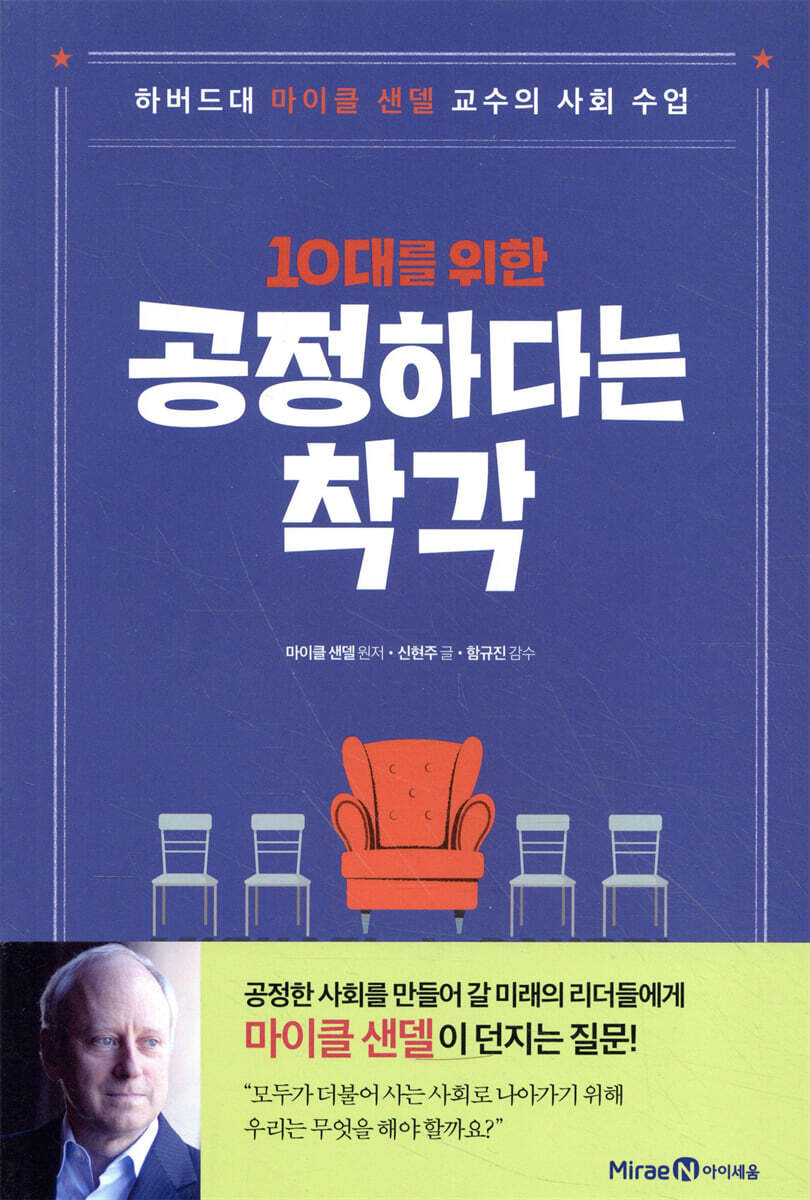
The illusion of fairness for teenagers
 |
Description
Book Introduction
Michael Sandel, who asked us what justice is, This time, I'm asking about 'fairness'. What do you think a fair society is? During the COVID-19 pandemic, the crisis facing humanity divided people into winners and losers. Some people have turned the crisis into an opportunity to make more money, while others have found their lives more difficult amid the crisis. As the gap between rich and poor grows more severe, not only our society but the world has come to yearn for a "fair society." A society where anyone, regardless of their innate status or circumstances, can be rewarded according to their ability if they work hard was considered the ideal society we should strive for. But Michael Sandel questions whether such a society is truly just, and whether the fairness we believe in can truly make this society a better one. The belief in meritocracy, which believes that social goods such as wealth, fame, and power should be distributed according to ability, is widespread in our society. People believe that a society where anyone can succeed if they work hard and where those with ability can enjoy more is a good place. “If opportunities are equal, we can create an equal society.” “If you work hard, you can climb higher.” Michael Sandel poses questions we haven’t considered about these common beliefs that have given people hope. |
- You can preview some of the book's contents.
Preview
index
Author's Note: Ask the world a question! 6
The more accurate the reviewer's comments are, the more fair they become.
Entering 10
1.
Is money a skill? 12
(The Illusion of Fairness - Introduction, College Admissions and Meritocracy)
2.
2016: What's the public's choice? 20
(The Illusion of Fairness - Chapter 1: Winners and Losers)
3.
30 Ways to Explain the Gap Between Rich and Poor
(The Illusion of Fairness - Chapter 1: Winners and Losers)
4.
By God, by power 40
(The Illusion of Fairness - Chapter 2: "Greatness is Greatness" - A Brief History of Merit-Based Morality)
5.
Are you qualified enough? 48
(The Illusion of Fairness - Chapter 2: "Greatness is Greatness" - A Brief History of Merit-Based Morality)
6.
"Just do it," is that right? 56
(Included in Chapter 3 of "The Illusion of Fairness" - How to Package Social Ascension in Words)
7.
Is education the only answer? 64
(The Illusion of Fairness - Chapter 4: The Ultimate Exemptive Prejudice: Academic Credentialism)
8.
Smart's Pitfalls 72
(The Illusion of Fairness - Chapter 4: The Ultimate Exemptive Prejudice: Academic Credentialism)
9.
Do you need a degree to get into politics? 82
(The Illusion of Fairness - Chapter 4: The Ultimate Exemptive Prejudice: Academic Credentialism)
10.
How to Solve the Climate Crisis 92
(The Illusion of Fairness - Chapter 4: The Ultimate Exemptive Prejudice: Academic Credentialism)
11.
What country would you like to live in? 100
(Included in Chapter 5, The Ethics of Success, "The Illusion of Fairness")
12.
Virtual Forum "Markets and Meritocracy" 110
(Included in Chapter 5, The Ethics of Success, "The Illusion of Fairness")
13.
Michael Young and Meritocracy 122
(Included in Chapter 5, The Ethics of Success, "The Illusion of Fairness")
14.
The Money-Following College Entrance Exam 130
(The Illusion of Fairness - Chapter 6: Universities as "Talent Selection Machines")
15.
Wounded Victors 140
(The Illusion of Fairness - Chapter 6: Universities as "Talent Selection Machines")
16.
Lottery for successful applicants 148
(The Illusion of Fairness - Chapter 6: Universities as "Talent Selection Machines")
17.
Death at the End of Despair 158
(The Illusion of Fairness - Chapter 7: The Dignity of Work)
18.
The Maker and the Taker 168
(The Illusion of Fairness - Chapter 7: The Dignity of Work)
19.
Ability and the Common Good 176
(The Illusion of Fairness - Conclusion, Ability, and the Common Good)
Search 184
The more accurate the reviewer's comments are, the more fair they become.
Entering 10
1.
Is money a skill? 12
(The Illusion of Fairness - Introduction, College Admissions and Meritocracy)
2.
2016: What's the public's choice? 20
(The Illusion of Fairness - Chapter 1: Winners and Losers)
3.
30 Ways to Explain the Gap Between Rich and Poor
(The Illusion of Fairness - Chapter 1: Winners and Losers)
4.
By God, by power 40
(The Illusion of Fairness - Chapter 2: "Greatness is Greatness" - A Brief History of Merit-Based Morality)
5.
Are you qualified enough? 48
(The Illusion of Fairness - Chapter 2: "Greatness is Greatness" - A Brief History of Merit-Based Morality)
6.
"Just do it," is that right? 56
(Included in Chapter 3 of "The Illusion of Fairness" - How to Package Social Ascension in Words)
7.
Is education the only answer? 64
(The Illusion of Fairness - Chapter 4: The Ultimate Exemptive Prejudice: Academic Credentialism)
8.
Smart's Pitfalls 72
(The Illusion of Fairness - Chapter 4: The Ultimate Exemptive Prejudice: Academic Credentialism)
9.
Do you need a degree to get into politics? 82
(The Illusion of Fairness - Chapter 4: The Ultimate Exemptive Prejudice: Academic Credentialism)
10.
How to Solve the Climate Crisis 92
(The Illusion of Fairness - Chapter 4: The Ultimate Exemptive Prejudice: Academic Credentialism)
11.
What country would you like to live in? 100
(Included in Chapter 5, The Ethics of Success, "The Illusion of Fairness")
12.
Virtual Forum "Markets and Meritocracy" 110
(Included in Chapter 5, The Ethics of Success, "The Illusion of Fairness")
13.
Michael Young and Meritocracy 122
(Included in Chapter 5, The Ethics of Success, "The Illusion of Fairness")
14.
The Money-Following College Entrance Exam 130
(The Illusion of Fairness - Chapter 6: Universities as "Talent Selection Machines")
15.
Wounded Victors 140
(The Illusion of Fairness - Chapter 6: Universities as "Talent Selection Machines")
16.
Lottery for successful applicants 148
(The Illusion of Fairness - Chapter 6: Universities as "Talent Selection Machines")
17.
Death at the End of Despair 158
(The Illusion of Fairness - Chapter 7: The Dignity of Work)
18.
The Maker and the Taker 168
(The Illusion of Fairness - Chapter 7: The Dignity of Work)
19.
Ability and the Common Good 176
(The Illusion of Fairness - Conclusion, Ability, and the Common Good)
Search 184
Detailed image

Publisher's Review
Michael Sandel, who asked us what justice is,
This time, I'm asking about 'fairness'.
What do you think a fair society is?
During the COVID-19 pandemic, the crisis facing humanity divided people into winners and losers.
Some people have turned the crisis into an opportunity to make more money, while others have found their lives more difficult amid the crisis.
As the gap between rich and poor grows more severe, not only our society but the world has come to yearn for a "fair society."
A society where anyone, regardless of their innate status or circumstances, can be rewarded according to their ability if they work hard was considered the ideal society we should strive for.
But Michael Sandel questions whether such a society is truly just, and whether the fairness we believe in can truly make this society a better one.
The belief in meritocracy, which believes that social goods such as wealth, fame, and power should be distributed according to ability, is widespread in our society.
People believe that a society where anyone can succeed if they work hard and where those with ability can enjoy more is a good place.
“If opportunities are equal, we can create an equal society.” “If you work hard, you can climb higher.” Michael Sandel poses questions we haven’t considered about these common beliefs that have given people hope.
Can we transform an unequal society into one of equality simply by providing equal opportunities? We must consider whether it's fair to assume that students who have the opportunity to study harder and invest more resources in their studies can take the same exams as those who don't.
In fact, on the SAT, the college entrance exam in the United States, students from wealthy families score higher than those from poor families.
What about the belief that anyone can rise to the top through hard work? While some people achieve success through hard work, not every athlete who trains hard wins a gold medal, and not every hardest worker earns the highest wages.
Moreover, the belief that hard work can lead to success often leads people to view poverty as the fault of those who don't work hard.
On the other hand, wealthy people believe that they are compensated according to their abilities.
But think about it.
Whether the success of successful people was possible solely through their abilities.
Aren't the talents of successful people, the environment in which they can develop those talents, and the society in which those talents are highly valued, all things that were not achieved through their own efforts, but rather by chance and good fortune?
Michael Young, who first used the term meritocracy, worried that rather than eliminating inequalities in our society, meritocracy would create new inequalities based on ability.
I thought that if people believed that they were rewarded differently according to their abilities and took it for granted, then the rich would not feel pity for the poor.
Think about the state of our society today.
Are we living in a different society than Michael Young feared?
Dear teenagers, who will create a just society, what must we do to move toward a society where everyone lives together? As you read "The Illusion of Fairness for Teenagers," and seek your own answers to the questions Michael Sandel poses, you will discover the path we must take.
Let's find a way together to move toward a society where no one rejects, hates, or despises one another.
A long and fierce battle
The competition to enter a prestigious university!
Why do you want to go to a prestigious university?
There's a reason why today's school-aged teenagers should be interested in "The Illusion of Fairness for Teens."
In a society where meritocracy is emphasized, when evaluating people, their academic background is often considered more important than their actual abilities or skills.
This is called 'academicism'.
Often, we only care about whether a person has a good or bad education, rather than whether he or she is truly qualified to do the job or what role he or she plays in the community.
Just as in the United States today, students in our country also work tirelessly to get into better universities.
Parents are also obsessed with sending their children to better schools.
If you graduate from a prestigious university, you will be recognized as someone with outstanding abilities, and your chances of getting a high-paying job after graduation will increase.
However, students who are forced into competition during this entrance exam process are likely to suffer great emotional wounds, whether they fail or succeed.
Moreover, because they are so focused on competing with each other, they grow up without developing a sense of community as members of this society.
"The Illusion of Fairness for Teens" asks students preparing for and going through the college entrance exam process whether this competition is truly fair, and if not, why not?
And it makes us ponder how the members of this society can live in solidarity rather than competition, and through this, create a common good that benefits both our society and its members.
Can we be happy simply by entering a prestigious university, achieving success and reaching the top of the competition, or securing a high-paying job? Through "The Illusion of Fairness for Teenagers," we will reflect on why we need to rediscover the sense of community we've forgotten amidst competition. Together, we will consider what efforts we should make for the public good and find solutions.
Then, you will surely be able to move towards a happier tomorrow than yesterday, when you were standing in the midst of fierce competition.
Even difficult concepts are made easy and fun!
Add examples, pictures and diagrams to help you understand
Meet The Illusion of Fairness, reborn for teenagers.
The Illusion of Fairness by world-renowned scholar Michael Sandel is a must-read book in these times when 'fairness' is emphasized.
Although I think it would be nice to read it with interest, it is true that I hesitate a little when I actually have a thick book in front of me.
《The Illusion of Fairness for Teens》 is a book that explains concepts that may be difficult to understand in an easy-to-understand way for teens, focusing on the events and materials covered in the original book 《The Illusion of Fairness》.
However, rather than simply imparting knowledge on given topics, we made it possible for students to think about the problems and solutions of the topic on their own.
The figures and diagrams accompanying the text help you intuitively understand concepts and explanations that are difficult to grasp at a glance.
"The Illusion of Fairness for Teens" will serve as a guide for teens who are beginning to take an interest in various issues in our society, helping them read and find answers on their own.
It will also serve as a stepping stone to approach the original work, “The Illusion of Fairness,” with a lighter heart.
This time, I'm asking about 'fairness'.
What do you think a fair society is?
During the COVID-19 pandemic, the crisis facing humanity divided people into winners and losers.
Some people have turned the crisis into an opportunity to make more money, while others have found their lives more difficult amid the crisis.
As the gap between rich and poor grows more severe, not only our society but the world has come to yearn for a "fair society."
A society where anyone, regardless of their innate status or circumstances, can be rewarded according to their ability if they work hard was considered the ideal society we should strive for.
But Michael Sandel questions whether such a society is truly just, and whether the fairness we believe in can truly make this society a better one.
The belief in meritocracy, which believes that social goods such as wealth, fame, and power should be distributed according to ability, is widespread in our society.
People believe that a society where anyone can succeed if they work hard and where those with ability can enjoy more is a good place.
“If opportunities are equal, we can create an equal society.” “If you work hard, you can climb higher.” Michael Sandel poses questions we haven’t considered about these common beliefs that have given people hope.
Can we transform an unequal society into one of equality simply by providing equal opportunities? We must consider whether it's fair to assume that students who have the opportunity to study harder and invest more resources in their studies can take the same exams as those who don't.
In fact, on the SAT, the college entrance exam in the United States, students from wealthy families score higher than those from poor families.
What about the belief that anyone can rise to the top through hard work? While some people achieve success through hard work, not every athlete who trains hard wins a gold medal, and not every hardest worker earns the highest wages.
Moreover, the belief that hard work can lead to success often leads people to view poverty as the fault of those who don't work hard.
On the other hand, wealthy people believe that they are compensated according to their abilities.
But think about it.
Whether the success of successful people was possible solely through their abilities.
Aren't the talents of successful people, the environment in which they can develop those talents, and the society in which those talents are highly valued, all things that were not achieved through their own efforts, but rather by chance and good fortune?
Michael Young, who first used the term meritocracy, worried that rather than eliminating inequalities in our society, meritocracy would create new inequalities based on ability.
I thought that if people believed that they were rewarded differently according to their abilities and took it for granted, then the rich would not feel pity for the poor.
Think about the state of our society today.
Are we living in a different society than Michael Young feared?
Dear teenagers, who will create a just society, what must we do to move toward a society where everyone lives together? As you read "The Illusion of Fairness for Teenagers," and seek your own answers to the questions Michael Sandel poses, you will discover the path we must take.
Let's find a way together to move toward a society where no one rejects, hates, or despises one another.
A long and fierce battle
The competition to enter a prestigious university!
Why do you want to go to a prestigious university?
There's a reason why today's school-aged teenagers should be interested in "The Illusion of Fairness for Teens."
In a society where meritocracy is emphasized, when evaluating people, their academic background is often considered more important than their actual abilities or skills.
This is called 'academicism'.
Often, we only care about whether a person has a good or bad education, rather than whether he or she is truly qualified to do the job or what role he or she plays in the community.
Just as in the United States today, students in our country also work tirelessly to get into better universities.
Parents are also obsessed with sending their children to better schools.
If you graduate from a prestigious university, you will be recognized as someone with outstanding abilities, and your chances of getting a high-paying job after graduation will increase.
However, students who are forced into competition during this entrance exam process are likely to suffer great emotional wounds, whether they fail or succeed.
Moreover, because they are so focused on competing with each other, they grow up without developing a sense of community as members of this society.
"The Illusion of Fairness for Teens" asks students preparing for and going through the college entrance exam process whether this competition is truly fair, and if not, why not?
And it makes us ponder how the members of this society can live in solidarity rather than competition, and through this, create a common good that benefits both our society and its members.
Can we be happy simply by entering a prestigious university, achieving success and reaching the top of the competition, or securing a high-paying job? Through "The Illusion of Fairness for Teenagers," we will reflect on why we need to rediscover the sense of community we've forgotten amidst competition. Together, we will consider what efforts we should make for the public good and find solutions.
Then, you will surely be able to move towards a happier tomorrow than yesterday, when you were standing in the midst of fierce competition.
Even difficult concepts are made easy and fun!
Add examples, pictures and diagrams to help you understand
Meet The Illusion of Fairness, reborn for teenagers.
The Illusion of Fairness by world-renowned scholar Michael Sandel is a must-read book in these times when 'fairness' is emphasized.
Although I think it would be nice to read it with interest, it is true that I hesitate a little when I actually have a thick book in front of me.
《The Illusion of Fairness for Teens》 is a book that explains concepts that may be difficult to understand in an easy-to-understand way for teens, focusing on the events and materials covered in the original book 《The Illusion of Fairness》.
However, rather than simply imparting knowledge on given topics, we made it possible for students to think about the problems and solutions of the topic on their own.
The figures and diagrams accompanying the text help you intuitively understand concepts and explanations that are difficult to grasp at a glance.
"The Illusion of Fairness for Teens" will serve as a guide for teens who are beginning to take an interest in various issues in our society, helping them read and find answers on their own.
It will also serve as a stepping stone to approach the original work, “The Illusion of Fairness,” with a lighter heart.
GOODS SPECIFICS
- Publication date: June 10, 2022
- Page count, weight, size: 184 pages | 358g | 152*225*14mm
- ISBN13: 9791168412040
- ISBN10: 1168412048
- KC Certification: Certification Type: Conformity Confirmation
You may also like
카테고리
korean


korean

![GQ KOREA Mark (Monthly): December [2025]](http://librairie.coreenne.fr/cdn/shop/files/8ef265dbbfbf186523ed75ba7319009d.jpg?v=1765340328&width=3840)


