

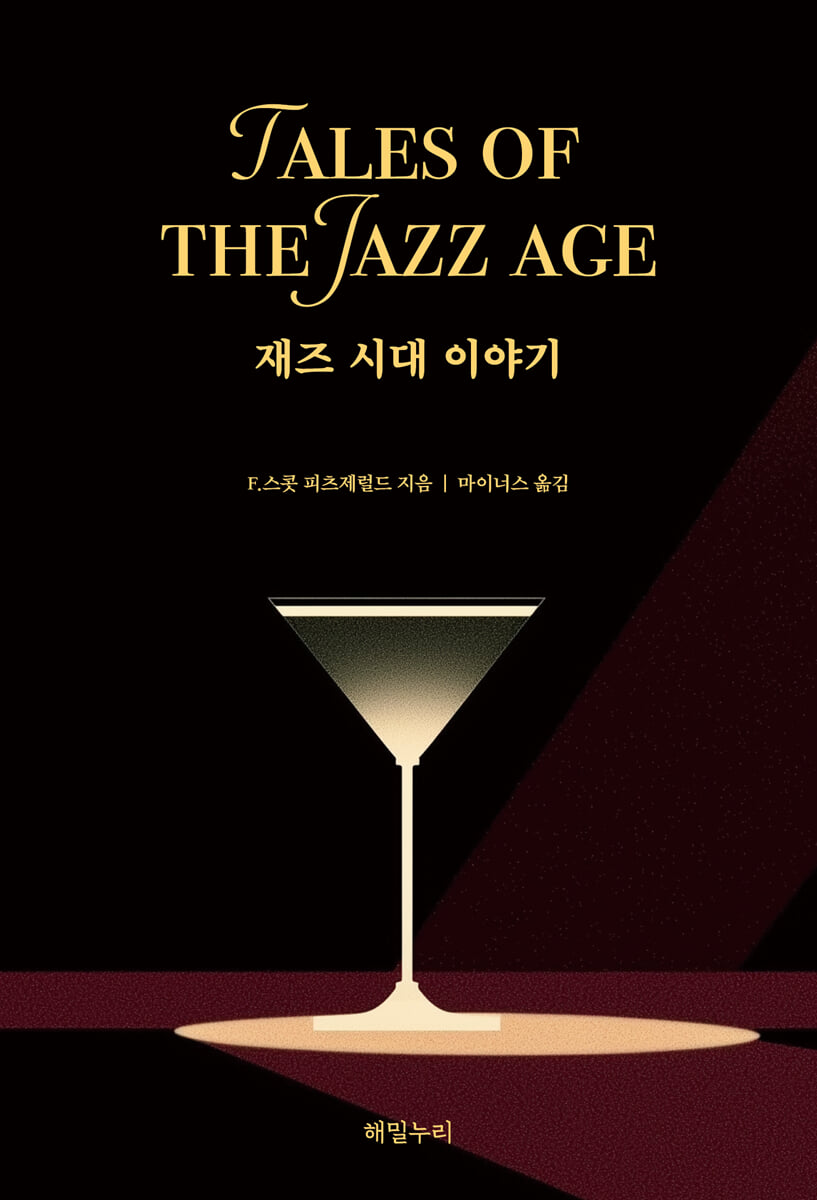
Tales of the Jazz Age
 |
Description
Book Introduction
『Tales of the Jazz Age』 by F.
Scott Fitzgerald's short story collection published in 1922, is a work that records the sentiment of an era that he himself named "The Jazz Age."
After World War I, America was filled with unprecedented prosperity and optimism.
The city lights stayed on all night, and people drank, laughed, and danced secretly even in the shadow of Prohibition.
The youth of this period freed themselves from the burden of tradition and surrendered themselves to the rhythm of freedom and emotion.
Fitzgerald captured their appearance as vividly as the improvisational beats of jazz music.
This collection of short stories features characters he himself called "self-portraits of the jazz age."
"The Jelly-Bean" portrays the American South, torn between tradition and decay, through the lens of a lazy and dissolute Southern youth.
"The Curious Case of Benjamin Button" reveals the irony of life through a man born out of time, and contains Fitzgerald's signature satire and sadness.
In addition, "May Day" depicts the chaos of post-war American society and the anxiety of the younger generation, and "The Diamond as Big as the Ritz" depicts the futility of the nouveau riche class inflated with desire and vanity.
For Fitzgerald, the Jazz Age was not simply a backdrop, but a rhythm and a spirit.
In his view, jazz was a symbol of freedom and pleasure, but at the same time, it was another name for sadness and emptiness.
This collection of short stories is a record of that very duality.
These stories, which capture the emptiness in glamour, the futility behind laughter, and the dazzling anxiety of youth, are the prototype of Fitzgerald's literature, which led to The Great Gatsby, and a portrait of early 20th-century America.
"Tales of the Jazz Age" is still vivid today.
The rhythm of that era has stopped, but the echoes of youthful fervor and futility still resonate in our lives today.
Scott Fitzgerald's short story collection published in 1922, is a work that records the sentiment of an era that he himself named "The Jazz Age."
After World War I, America was filled with unprecedented prosperity and optimism.
The city lights stayed on all night, and people drank, laughed, and danced secretly even in the shadow of Prohibition.
The youth of this period freed themselves from the burden of tradition and surrendered themselves to the rhythm of freedom and emotion.
Fitzgerald captured their appearance as vividly as the improvisational beats of jazz music.
This collection of short stories features characters he himself called "self-portraits of the jazz age."
"The Jelly-Bean" portrays the American South, torn between tradition and decay, through the lens of a lazy and dissolute Southern youth.
"The Curious Case of Benjamin Button" reveals the irony of life through a man born out of time, and contains Fitzgerald's signature satire and sadness.
In addition, "May Day" depicts the chaos of post-war American society and the anxiety of the younger generation, and "The Diamond as Big as the Ritz" depicts the futility of the nouveau riche class inflated with desire and vanity.
For Fitzgerald, the Jazz Age was not simply a backdrop, but a rhythm and a spirit.
In his view, jazz was a symbol of freedom and pleasure, but at the same time, it was another name for sadness and emptiness.
This collection of short stories is a record of that very duality.
These stories, which capture the emptiness in glamour, the futility behind laughter, and the dazzling anxiety of youth, are the prototype of Fitzgerald's literature, which led to The Great Gatsby, and a portrait of early 20th-century America.
"Tales of the Jazz Age" is still vivid today.
The rhythm of that era has stopped, but the echoes of youthful fervor and futility still resonate in our lives today.
index
The Last Flappers 7
Jelly Bean 9
Camel's Back 43
Mayday 87
Porcelain and Pink 169
Fantasy 187
Diamond 189 as big as the Ritz Hotel
The Curious Case of Benjamin Button 253
Tarquin 295 of Chiefside
Oh, Lucette Witch! 309
Unclassified Masterpieces 359
The Grain of Happiness 361
Mr. Iki 397
Mountain Girl Jemina 409
Translator's Note 418
Jelly Bean 9
Camel's Back 43
Mayday 87
Porcelain and Pink 169
Fantasy 187
Diamond 189 as big as the Ritz Hotel
The Curious Case of Benjamin Button 253
Tarquin 295 of Chiefside
Oh, Lucette Witch! 309
Unclassified Masterpieces 359
The Grain of Happiness 361
Mr. Iki 397
Mountain Girl Jemina 409
Translator's Note 418
Detailed image

Into the book
Despite this, Clark and Jim's friendship, though loose, continued in a clear form.
That afternoon, Clark's old Ford slowed down beside Jim as he walked along the sidewalk and, without warning, invited him to a country club party.
The reason why that impulse arose was as difficult to explain as why Jim accepted the offer.
For Jim, it was probably a mixture of unconscious boredom and a slightly fearful sense of adventure.
And now, Jim was mulling it over.
He placed his long legs on the stone blocks above the pavement, tapped the stones with his toes, and hummed a song in a low, hoarse voice.
The stone rocked up and down to the rhythm.
“There is a queen named Jin living in Jellybean Village.
She is the queen of jelly beans.
I love dice and always treat them with kindness.
“There’s no way I’ll be able to treat her roughly.” He stopped singing and kicked a stone with his foot, shaking the sidewalk.
“Fuck,” he muttered.
They will all be gathered there.
Judging by the old crowd, the white house that had been sold long ago, and the portrait of an officer in gray uniform that hung over the fireplace, Jim should have been one of them too.
But the group grew into a tight-knit group over the years, just as the girls' skirts grew longer each year and the boys' trousers suddenly dropped to their ankles one day.
In that intimate society where everyone could communicate by just calling each other's names, in that small world woven together by forgotten first loves, Jim was a complete outsider.
A person who hangs out with poor white people.
Men knew him, but always treated him with a hint of superiority.
There are three, or at most four, girls he greets by taking off his hat.
That was all.
--- pp.13-14 From "Jelly Bean"
Betty Medill loved him.
And I didn't love again.
I was having such a happy life that I didn't want to take the definite step of getting married.
Their secret engagement had already lasted so long that it seemed like it might collapse at any moment.
Warburton, a small man who knew their circumstances well, urged Perry on.
“Be superhuman to her! Get a marriage license and go to Medill’s house.
“Tell me to marry you right now, or end it forever!”
--- p.45 From "The Camel's Back"
The war ended in victory, and the streets of the victorious nations were lined with triumphal arches, and white, red, and rose-colored flowers were scattered, dyeing them in jubilation.
Throughout the long spring days, returning soldiers marched down the main road to the sound of drums and the cheerful, resonant sound of brass instruments.
Meanwhile, the merchants and clerks stopped their bickering and calculating, crowded to the windows, and with pale faces gazed solemnly at the passing troops.
The city was more dazzling than ever.
It was thanks to the abundance brought about by the victorious war.
Merchants from the South and West flocked with their families to enjoy grand banquets and splendid performances.
They bought for the women net bags of fur and gold thread, slippers of various colors embroidered with silk, silver, rose-colored satin, and gold thread, in preparation for the next winter.
--- p.88 From "May Day"
Lois: (startled) Oh, I'm sorry.
I didn't know you were here.
Julie: Hello.
I'm having a small concert right now -
Lois: (Interrupting) Why didn't you lock the door?
Julie: Wasn't it locked?
Lois: Of course.
Do you think I broke through the door?
Julie: I thought you were the one who picked the lock, dear sister.
Lois: You're so careless.
Julie: No, I'm happy.
Like a garbage man's dog.
And now I'm having a small concert.
Lois: (stiffly) Grow up!
Julie: (Waving her pink arm and pointing around the room) You know how sound bounces off the walls? When you sing in the bathtub, it creates a beautiful echo.
It's a really sweet effect.
Should I sing you a song?
Lois: I wish you'd come out soon.
Julie: (Shakes her head as if thinking) I can't rush it.
This is my kingdom now, holy sister.
Lois: Why do you call me that?
Julie: Because you're right next to 'Cleanliness'.
Don't throw anything, please!
Lois: When will it be over?
Julie: (thinks for a moment) At least 15 minutes, at most 25 minutes.
Lois: Please.
Can't you finish it in 10 minutes?
--- pp.172-173 From "Porcelain and Pink"
He was enjoying himself as much as he could.
Youth is both a happiness and a lack of being able to remain in the present.
We always live our lives comparing the day before us with the bright future painted within us.
Flowers and gold, girls and starlight, they were all like prophecies, foreshadowing the incomparable fantasy of youth that he could never reach, but always dreamed of.
--- p.212 From "A Diamond as Big as the Ritz Hotel"
I don't intend to go into detail about Benjamin Button's life between the ages of twelve and twenty-one.
It would be sufficient to record that those were times of 'normal negative growth.'
By the time he was eighteen, Benjamin was as erect as a fifty-year-old man.
The hair volume increased and the color changed to dark gray.
His gait was firm, and his voice no longer had the old man's tremor, but a healthy baritone.
Then his father sent him to Connecticut.
It was to make me take the Yale University entrance exam.
Benjamin passed the exam and was enrolled as a freshman.
--- pp.267 From "The Curious Case of Benjamin Button"
At that moment, he raised his head at the sound of a low “Ha!”
The one with the silent footsteps (Soft Shoes) had already opened the upper lid and was looking down into the room below.
The elven face was distorted, half in disgust, half in cynicism.
“They cut off my head along with my helmet,” he whispered.
“But we two, Wessel, are really clever men.” “You damned bastard!” Wessel cried out.
“I knew you were a piece of shit, but I can tell just from hearing half of this story.
You are a cheap scoundrel.
“I want to break your skull with a club right now.” Soft Shoes blinked at him, then finally replied calmly.
“Anyway, it’s really hard to maintain dignity in this position.”
--- p.304 From "Tarquin of Chiefside"
She usually sat in the chair by the window, but sometimes she leaned back in the long armchair next to the lamp.
And he would often lean back and smoke a cigarette, and Merlin would always be mesmerized by the graceful movements of his arms and fingertips.
One time she stood by the window and looked at the moon.
The stray moonlight poured into the yard, transforming the ashtrays and clotheslines into silver buckets and giant spiderwebs.
At that time, Merlin was eating cottage cheese with sugar and milk in a place with a clear view of the window, but in his haste to grab the curtain cord, he accidentally spilled the cheese on his lap.
Cold milk and sugar granules stained his trousers, and he was sure she had seen him.
Sometimes Caroline had guests come to visit her.
Men in tailored suits stood with their hats and coats draped over their arms, talking to her, bowing politely, and then disappearing with her into the light.
It was clearly on the way to a play or a ball.
Other young men came over, smoked cigarettes and tried to say something to her.
She sat in a side chair by the window, looking at them earnestly, or in a long armchair by the lamp.
The figure was truly beautiful, young, and mysterious beyond recognition.
Merlin enjoyed these visits.
Some men liked it, others could tolerate it reluctantly.
But there were one or two that I couldn't stand.
One man in particular, who came most often - the one with black hair, a black goatee, and a pitch-black soul - looked somehow familiar, but Merlin could never quite figure out who he was.
However, this does not mean that Merlin's life was "entirely tied up in this romance he created."
It wasn't even the "happiest time" of his day.
He never “rescued” Caroline from anyone’s clutches, nor did he marry her.
Something much stranger happened.
That strange thing will unfold from now on in this article.
--- pp.312-313 From "Oh, Lucette Witch!"
And he added:
“There must be more than a few men who would be crazy to take care of her.” And indeed, that was the case.
Here and there, men approached her.
It started with hope and ended with awe.
There was no love in her heart.
But, strangely enough, only the love for 'life' remained.
It was a love that extended from a piece of bread given to a homeless person on the street to a butcher who gave her cheap meat.
Other forms of love were already sealed.
It was buried somewhere inside the corpse, always with its head turned towards the light, motionless like a compass needle.
He just waited silently for the last wave to hit his heart.
That afternoon, Clark's old Ford slowed down beside Jim as he walked along the sidewalk and, without warning, invited him to a country club party.
The reason why that impulse arose was as difficult to explain as why Jim accepted the offer.
For Jim, it was probably a mixture of unconscious boredom and a slightly fearful sense of adventure.
And now, Jim was mulling it over.
He placed his long legs on the stone blocks above the pavement, tapped the stones with his toes, and hummed a song in a low, hoarse voice.
The stone rocked up and down to the rhythm.
“There is a queen named Jin living in Jellybean Village.
She is the queen of jelly beans.
I love dice and always treat them with kindness.
“There’s no way I’ll be able to treat her roughly.” He stopped singing and kicked a stone with his foot, shaking the sidewalk.
“Fuck,” he muttered.
They will all be gathered there.
Judging by the old crowd, the white house that had been sold long ago, and the portrait of an officer in gray uniform that hung over the fireplace, Jim should have been one of them too.
But the group grew into a tight-knit group over the years, just as the girls' skirts grew longer each year and the boys' trousers suddenly dropped to their ankles one day.
In that intimate society where everyone could communicate by just calling each other's names, in that small world woven together by forgotten first loves, Jim was a complete outsider.
A person who hangs out with poor white people.
Men knew him, but always treated him with a hint of superiority.
There are three, or at most four, girls he greets by taking off his hat.
That was all.
--- pp.13-14 From "Jelly Bean"
Betty Medill loved him.
And I didn't love again.
I was having such a happy life that I didn't want to take the definite step of getting married.
Their secret engagement had already lasted so long that it seemed like it might collapse at any moment.
Warburton, a small man who knew their circumstances well, urged Perry on.
“Be superhuman to her! Get a marriage license and go to Medill’s house.
“Tell me to marry you right now, or end it forever!”
--- p.45 From "The Camel's Back"
The war ended in victory, and the streets of the victorious nations were lined with triumphal arches, and white, red, and rose-colored flowers were scattered, dyeing them in jubilation.
Throughout the long spring days, returning soldiers marched down the main road to the sound of drums and the cheerful, resonant sound of brass instruments.
Meanwhile, the merchants and clerks stopped their bickering and calculating, crowded to the windows, and with pale faces gazed solemnly at the passing troops.
The city was more dazzling than ever.
It was thanks to the abundance brought about by the victorious war.
Merchants from the South and West flocked with their families to enjoy grand banquets and splendid performances.
They bought for the women net bags of fur and gold thread, slippers of various colors embroidered with silk, silver, rose-colored satin, and gold thread, in preparation for the next winter.
--- p.88 From "May Day"
Lois: (startled) Oh, I'm sorry.
I didn't know you were here.
Julie: Hello.
I'm having a small concert right now -
Lois: (Interrupting) Why didn't you lock the door?
Julie: Wasn't it locked?
Lois: Of course.
Do you think I broke through the door?
Julie: I thought you were the one who picked the lock, dear sister.
Lois: You're so careless.
Julie: No, I'm happy.
Like a garbage man's dog.
And now I'm having a small concert.
Lois: (stiffly) Grow up!
Julie: (Waving her pink arm and pointing around the room) You know how sound bounces off the walls? When you sing in the bathtub, it creates a beautiful echo.
It's a really sweet effect.
Should I sing you a song?
Lois: I wish you'd come out soon.
Julie: (Shakes her head as if thinking) I can't rush it.
This is my kingdom now, holy sister.
Lois: Why do you call me that?
Julie: Because you're right next to 'Cleanliness'.
Don't throw anything, please!
Lois: When will it be over?
Julie: (thinks for a moment) At least 15 minutes, at most 25 minutes.
Lois: Please.
Can't you finish it in 10 minutes?
--- pp.172-173 From "Porcelain and Pink"
He was enjoying himself as much as he could.
Youth is both a happiness and a lack of being able to remain in the present.
We always live our lives comparing the day before us with the bright future painted within us.
Flowers and gold, girls and starlight, they were all like prophecies, foreshadowing the incomparable fantasy of youth that he could never reach, but always dreamed of.
--- p.212 From "A Diamond as Big as the Ritz Hotel"
I don't intend to go into detail about Benjamin Button's life between the ages of twelve and twenty-one.
It would be sufficient to record that those were times of 'normal negative growth.'
By the time he was eighteen, Benjamin was as erect as a fifty-year-old man.
The hair volume increased and the color changed to dark gray.
His gait was firm, and his voice no longer had the old man's tremor, but a healthy baritone.
Then his father sent him to Connecticut.
It was to make me take the Yale University entrance exam.
Benjamin passed the exam and was enrolled as a freshman.
--- pp.267 From "The Curious Case of Benjamin Button"
At that moment, he raised his head at the sound of a low “Ha!”
The one with the silent footsteps (Soft Shoes) had already opened the upper lid and was looking down into the room below.
The elven face was distorted, half in disgust, half in cynicism.
“They cut off my head along with my helmet,” he whispered.
“But we two, Wessel, are really clever men.” “You damned bastard!” Wessel cried out.
“I knew you were a piece of shit, but I can tell just from hearing half of this story.
You are a cheap scoundrel.
“I want to break your skull with a club right now.” Soft Shoes blinked at him, then finally replied calmly.
“Anyway, it’s really hard to maintain dignity in this position.”
--- p.304 From "Tarquin of Chiefside"
She usually sat in the chair by the window, but sometimes she leaned back in the long armchair next to the lamp.
And he would often lean back and smoke a cigarette, and Merlin would always be mesmerized by the graceful movements of his arms and fingertips.
One time she stood by the window and looked at the moon.
The stray moonlight poured into the yard, transforming the ashtrays and clotheslines into silver buckets and giant spiderwebs.
At that time, Merlin was eating cottage cheese with sugar and milk in a place with a clear view of the window, but in his haste to grab the curtain cord, he accidentally spilled the cheese on his lap.
Cold milk and sugar granules stained his trousers, and he was sure she had seen him.
Sometimes Caroline had guests come to visit her.
Men in tailored suits stood with their hats and coats draped over their arms, talking to her, bowing politely, and then disappearing with her into the light.
It was clearly on the way to a play or a ball.
Other young men came over, smoked cigarettes and tried to say something to her.
She sat in a side chair by the window, looking at them earnestly, or in a long armchair by the lamp.
The figure was truly beautiful, young, and mysterious beyond recognition.
Merlin enjoyed these visits.
Some men liked it, others could tolerate it reluctantly.
But there were one or two that I couldn't stand.
One man in particular, who came most often - the one with black hair, a black goatee, and a pitch-black soul - looked somehow familiar, but Merlin could never quite figure out who he was.
However, this does not mean that Merlin's life was "entirely tied up in this romance he created."
It wasn't even the "happiest time" of his day.
He never “rescued” Caroline from anyone’s clutches, nor did he marry her.
Something much stranger happened.
That strange thing will unfold from now on in this article.
--- pp.312-313 From "Oh, Lucette Witch!"
And he added:
“There must be more than a few men who would be crazy to take care of her.” And indeed, that was the case.
Here and there, men approached her.
It started with hope and ended with awe.
There was no love in her heart.
But, strangely enough, only the love for 'life' remained.
It was a love that extended from a piece of bread given to a homeless person on the street to a butcher who gave her cheap meat.
Other forms of love were already sealed.
It was buried somewhere inside the corpse, always with its head turned towards the light, motionless like a compass needle.
He just waited silently for the last wave to hit his heart.
--- pp.388-389 From "The Resentment of Happiness"
Publisher's Review
"The Jazz Age" is a portrait of the brilliant and perilous era of America after World War I.
The Jazz Age was the name of a dazzling period of brilliance that rocked America for just over a decade, from the end of the war in 1918 until the Great Depression struck in 1929.
Intoxicated by the excitement of victory and economic prosperity, the United States moved at a different pace than before.
The city lights stayed on all night, and people drank, laughed, and danced secretly even in the shadow of Prohibition.
The younger generation is shedding the weight of tradition and seeking new rhythms and freedom.
The most powerful language symbolizing that era was ‘jazz.’
Jazz, which originated from black music and spread to white society, was not just music, but a language representing the emotions of a generation.
It contained improvisational rhythms, intense emotions, and a challenge to suppressed norms.
People learned freedom through jazz, and, as Fitzgerald said, “America’s first youth era” began.
The city prospered, and consumption and pleasure became the norm.
Cars, radios, movies, diamonds, cocktails? Everything symbolized desire and speed.
At the center of it all were young women known as 'flappers'.
With their short hair, short skirts, cigarettes in their hands, and free-spirited smiles, they were icons of a new era.
But the freedom they symbolized was simultaneously emptiness and anxiety.
The Jazz Age was glorious, but that glory always carried a layer of sadness.
Fitzgerald was the writer who captured this era more accurately than anyone else.
He simultaneously observed the opulence and decadence of the Jazz Age, meticulously portraying the passion and romance of youth, and the loss that comes at its end.
In Tales of the Jazz Age (1922), he gave a name to the era in which he lived, and in The Great Gatsby (1925), he recorded the dreams and decadence of that era in literature.
This dazzling era ended with the Great Depression of 1929.
The sudden economic collapse plunged a generation that had been filled with pleasure and romance into silence.
Fitzgerald later wrote in his memoir, Echoes of the Jazz Age:
“The jazz era is over.
“People don’t laugh anymore.”
For him, the Jazz Age was not simply the name of a period.
It was the pinnacle of youth and the prelude to decadence, a portrait of a generation still searching for beauty amidst the sound of crumbling ideals.
Fitzgerald's style resembles the improvisation of jazz.
The sentences flow like a dance, but their ending always reaches a quiet sadness.
For him, jazz was not just music, but the rhythm of the times and a metaphor for human existence.
Fitzgerald heard both the passion of youth and the futility of humanity in the beat of jazz.
So his sentences always have a double resonance.
Laughter is both joy and despair, and love comes with the face of passion, but soon leaves behind the shadow of loss.
"Tales from the Jazz Age" is the book in which Fitzgerald's world comes to life most vividly, illuminating both the ecstatic light of the Jazz Age and the human truth contained within it.
For him, jazz was not just a background, but the rhythm of a generation, a refrain of nihilism amidst its brilliance.
Youth was brilliant, but that brilliance always carried the premonition of collapse.
The Jazz Age was the name of a dazzling period of brilliance that rocked America for just over a decade, from the end of the war in 1918 until the Great Depression struck in 1929.
Intoxicated by the excitement of victory and economic prosperity, the United States moved at a different pace than before.
The city lights stayed on all night, and people drank, laughed, and danced secretly even in the shadow of Prohibition.
The younger generation is shedding the weight of tradition and seeking new rhythms and freedom.
The most powerful language symbolizing that era was ‘jazz.’
Jazz, which originated from black music and spread to white society, was not just music, but a language representing the emotions of a generation.
It contained improvisational rhythms, intense emotions, and a challenge to suppressed norms.
People learned freedom through jazz, and, as Fitzgerald said, “America’s first youth era” began.
The city prospered, and consumption and pleasure became the norm.
Cars, radios, movies, diamonds, cocktails? Everything symbolized desire and speed.
At the center of it all were young women known as 'flappers'.
With their short hair, short skirts, cigarettes in their hands, and free-spirited smiles, they were icons of a new era.
But the freedom they symbolized was simultaneously emptiness and anxiety.
The Jazz Age was glorious, but that glory always carried a layer of sadness.
Fitzgerald was the writer who captured this era more accurately than anyone else.
He simultaneously observed the opulence and decadence of the Jazz Age, meticulously portraying the passion and romance of youth, and the loss that comes at its end.
In Tales of the Jazz Age (1922), he gave a name to the era in which he lived, and in The Great Gatsby (1925), he recorded the dreams and decadence of that era in literature.
This dazzling era ended with the Great Depression of 1929.
The sudden economic collapse plunged a generation that had been filled with pleasure and romance into silence.
Fitzgerald later wrote in his memoir, Echoes of the Jazz Age:
“The jazz era is over.
“People don’t laugh anymore.”
For him, the Jazz Age was not simply the name of a period.
It was the pinnacle of youth and the prelude to decadence, a portrait of a generation still searching for beauty amidst the sound of crumbling ideals.
Fitzgerald's style resembles the improvisation of jazz.
The sentences flow like a dance, but their ending always reaches a quiet sadness.
For him, jazz was not just music, but the rhythm of the times and a metaphor for human existence.
Fitzgerald heard both the passion of youth and the futility of humanity in the beat of jazz.
So his sentences always have a double resonance.
Laughter is both joy and despair, and love comes with the face of passion, but soon leaves behind the shadow of loss.
"Tales from the Jazz Age" is the book in which Fitzgerald's world comes to life most vividly, illuminating both the ecstatic light of the Jazz Age and the human truth contained within it.
For him, jazz was not just a background, but the rhythm of a generation, a refrain of nihilism amidst its brilliance.
Youth was brilliant, but that brilliance always carried the premonition of collapse.
GOODS SPECIFICS
- Date of issue: November 13, 2025
- Page count, weight, size: 424 pages | 128*188*26mm
- ISBN13: 9791175052062
- ISBN10: 117505206X
You may also like
카테고리
korean


korean

![ELLE 엘르 스페셜 에디션 A형 : 12월 [2025]](http://librairie.coreenne.fr/cdn/shop/files/b8e27a3de6c9538896439686c6b0e8fb.jpg?v=1766436872&width=3840)


