

A small ball shot by a dwarf
 |
Description
Book Introduction
"The Little Ball Shot by a Dwarf," considered a classic of modern Korean literature, depicts the lives of urban workers in the 1970s, symbolized by the dwarf.
Twelve stories were included, from [Blade] in 1975 to [The Thorn Fish Coming into My Net] and [Epilogue] in 1978, and are evaluated for their excellent combination of reality and aesthetics, including short, fast-paced sentences, beautiful writing style, and fantastic techniques.
In February 2024, sales exceeded 1.5 million copies (325 printings).
The revised edition features a new format and cover, and some words and sentences have been refined to conform to today's notation.
In addition to the commentary by literary critics Kim Byeong-ik and Woo Chan-je, which was previously published, we have included a new article by Lee Mun-yeong, a journalist and writer who has spent a long time with the author.
Twelve stories were included, from [Blade] in 1975 to [The Thorn Fish Coming into My Net] and [Epilogue] in 1978, and are evaluated for their excellent combination of reality and aesthetics, including short, fast-paced sentences, beautiful writing style, and fantastic techniques.
In February 2024, sales exceeded 1.5 million copies (325 printings).
The revised edition features a new format and cover, and some words and sentences have been refined to conform to today's notation.
In addition to the commentary by literary critics Kim Byeong-ik and Woo Chan-je, which was previously published, we have included a new article by Lee Mun-yeong, a journalist and writer who has spent a long time with the author.
- You can preview some of the book's contents.
Preview
index
Author's Note: An Age of Destruction, False Hope, and Contempt
Möbius strip
knife
space travel
A small ball shot by a dwarf
On the overpass
Orbital rotation
Machine City
The cost of living for the Eun-gang Labor Family
God is also at fault
Mr. Klein's bottle
A thornfish coming into my net
Epilogue
A Story of Shame - Lee Moon-young
The Ultimate Beauty of Conflict, the Poetics of Chaosmos - Woo Chan-je
Conflicting Worldviews and Aesthetics - Kim Byeong-ik
Möbius strip
knife
space travel
A small ball shot by a dwarf
On the overpass
Orbital rotation
Machine City
The cost of living for the Eun-gang Labor Family
God is also at fault
Mr. Klein's bottle
A thornfish coming into my net
Epilogue
A Story of Shame - Lee Moon-young
The Ultimate Beauty of Conflict, the Poetics of Chaosmos - Woo Chan-je
Conflicting Worldviews and Aesthetics - Kim Byeong-ik
Into the book
The same thing is happening again now, but what I couldn't stand the most back then was 'evil' pretending to be 'good'.
Evil became charity, hope, truth, and justice.
--- p.9, from the author's note
My 'Dwarf Series' faced several crises after its publication, but it survived and was passed on to readers, just as I had initially promised.
I feel that this work is nearing completion thanks to the readers who have continued to follow it.
If I just think about this, I might be a happy 'writer'.
But as I talk about the past, my heart still feels heavy.
When we needed a revolution, we didn't have one.
So we are not growing.
As many countries in the Third World have experienced, revolution in our land has been held back by small setbacks and minor improvements in the old regime.
We are witnesses to it.
--- p.12, from the author's note
People called my father a dwarf.
People saw it right.
My father was a dwarf.
Unfortunately, people were only right in seeing the father.
Nothing else was right.
I can always say with confidence that they are wrong, on the five of us - my father, mother, Youngho, Younghee, and me.
My expression 'everything' includes 'the lives of my family of five.'
People who live in heaven don't need to think about hell.
But our family of five lived in hell and thought of heaven.
There isn't a single day that goes by that I don't think about heaven.
Because everyday life was boring.
Our life was like a war.
We lost every day in that war.
--- p.93, from “The Little Ball Shot by the Dwarf”
The president often used the word recession.
He and his staff used the word recession to hide the various forms of oppression they were using against us.
Otherwise, he talked about working hard and then sharing the wealth equally between labor and management.
But the hope he spoke of meant nothing to us.
Instead of that hope, we wanted to see a suitable dish of dried pollack on our factory table.
--- p.122, from “The Little Ball Shot by the Dwarf”
What is violence? Violence isn't just bullets, batons, or fists.
It is also violence to leave infants starving in the corners of our cities.
When a leader lives a comfortable life, he forgets the suffering of human beings.
So their talk of sacrifice becomes nothing but hypocrisy.
I think the exploitation and barbarism of the past were rather honest.
--- p.125, from “The Little Ball Shot by the Dwarf”
A slow, ahh ...
“Don’t cry, Younghee,” my older brother said.
“Please don’t cry.
Who would listen?”
I couldn't stop crying.
“Aren’t you angry, big brother?”
“I told you to stop.”
“Kill the villain who calls my father a dwarf.”
"okay.
“I’ll kill you.”
“Kill him.”
"okay.
please."
"please."
--- p.161, from “The Little Ball Shot by the Dwarf”
The poor father returned without accomplishing anything.
The body was decomposed into half a handful of ashes in the crematorium, and Youngho and I stood by the water's edge and cried as we watched our mother scatter the ashes.
It was the moment when the troublemaker father disappeared into inorganic matter.
My father suffered from the moment he was born.
Just because my father's body was small, it doesn't mean his life was small.
My father died and was freed from the pain that was greater than his body.
--- p.245, from “God is also at fault”
In the world my father dreamed of, love is what is forced upon us.
Work with love and raise your children with love.
Make it rain with love, make it balance with love, make the wind blow with love and make it stay on the stem of the little water parsley flower.
--- p.246, from “God is also at fault”
They had the illusion that they were creating paradise.
Even if they build paradise, I thought it would belong to them, not to us.
They will not give us the key to the gate to paradise.
They will throw us outside paradise, next to a rotting garbage heap.
Evil became charity, hope, truth, and justice.
--- p.9, from the author's note
My 'Dwarf Series' faced several crises after its publication, but it survived and was passed on to readers, just as I had initially promised.
I feel that this work is nearing completion thanks to the readers who have continued to follow it.
If I just think about this, I might be a happy 'writer'.
But as I talk about the past, my heart still feels heavy.
When we needed a revolution, we didn't have one.
So we are not growing.
As many countries in the Third World have experienced, revolution in our land has been held back by small setbacks and minor improvements in the old regime.
We are witnesses to it.
--- p.12, from the author's note
People called my father a dwarf.
People saw it right.
My father was a dwarf.
Unfortunately, people were only right in seeing the father.
Nothing else was right.
I can always say with confidence that they are wrong, on the five of us - my father, mother, Youngho, Younghee, and me.
My expression 'everything' includes 'the lives of my family of five.'
People who live in heaven don't need to think about hell.
But our family of five lived in hell and thought of heaven.
There isn't a single day that goes by that I don't think about heaven.
Because everyday life was boring.
Our life was like a war.
We lost every day in that war.
--- p.93, from “The Little Ball Shot by the Dwarf”
The president often used the word recession.
He and his staff used the word recession to hide the various forms of oppression they were using against us.
Otherwise, he talked about working hard and then sharing the wealth equally between labor and management.
But the hope he spoke of meant nothing to us.
Instead of that hope, we wanted to see a suitable dish of dried pollack on our factory table.
--- p.122, from “The Little Ball Shot by the Dwarf”
What is violence? Violence isn't just bullets, batons, or fists.
It is also violence to leave infants starving in the corners of our cities.
When a leader lives a comfortable life, he forgets the suffering of human beings.
So their talk of sacrifice becomes nothing but hypocrisy.
I think the exploitation and barbarism of the past were rather honest.
--- p.125, from “The Little Ball Shot by the Dwarf”
A slow, ahh ...
“Don’t cry, Younghee,” my older brother said.
“Please don’t cry.
Who would listen?”
I couldn't stop crying.
“Aren’t you angry, big brother?”
“I told you to stop.”
“Kill the villain who calls my father a dwarf.”
"okay.
“I’ll kill you.”
“Kill him.”
"okay.
please."
"please."
--- p.161, from “The Little Ball Shot by the Dwarf”
The poor father returned without accomplishing anything.
The body was decomposed into half a handful of ashes in the crematorium, and Youngho and I stood by the water's edge and cried as we watched our mother scatter the ashes.
It was the moment when the troublemaker father disappeared into inorganic matter.
My father suffered from the moment he was born.
Just because my father's body was small, it doesn't mean his life was small.
My father died and was freed from the pain that was greater than his body.
--- p.245, from “God is also at fault”
In the world my father dreamed of, love is what is forced upon us.
Work with love and raise your children with love.
Make it rain with love, make it balance with love, make the wind blow with love and make it stay on the stem of the little water parsley flower.
--- p.246, from “God is also at fault”
They had the illusion that they were creating paradise.
Even if they build paradise, I thought it would belong to them, not to us.
They will not give us the key to the gate to paradise.
They will throw us outside paradise, next to a rotting garbage heap.
--- p.255, from “God is also at fault”
Publisher's Review
Another record in Korean literary history
"The Little Ball Shot by a Dwarf" sells over 1.5 million copies.
The sales of 『The Little Ball Shot by a Dwarf』 (hereafter referred to as 『The Little Ball Shot by a Dwarf』), a representative classic of modern Korean literature, have exceeded 1.5 million copies.
There have been several Korean literary works that have sold over 1.5 million copies, but these were largely influenced by mass media exposure, such as advertisements, large-scale campaigns on TV programs, and the authors' appearances on television.
The publication of 1.5 million copies of 『Nansogong』 is even more surprising because it was achieved without any such promotion.
Moreover, in the publishing world where it is common for bestselling novels to sell hundreds of thousands of copies a year and then disappear within a few years, the fact that this book has maintained steady sales for 46 years since its first publication in 1978 is an event that can be said to prove the literary and social value of this book.
A revised edition of "Nansogong" was published to commemorate the author's anniversary of passing on December 25, 2022, after 1.5 million copies were published.
The revised edition features a new format and cover, and some words and sentences have been refined to conform to today's notation.
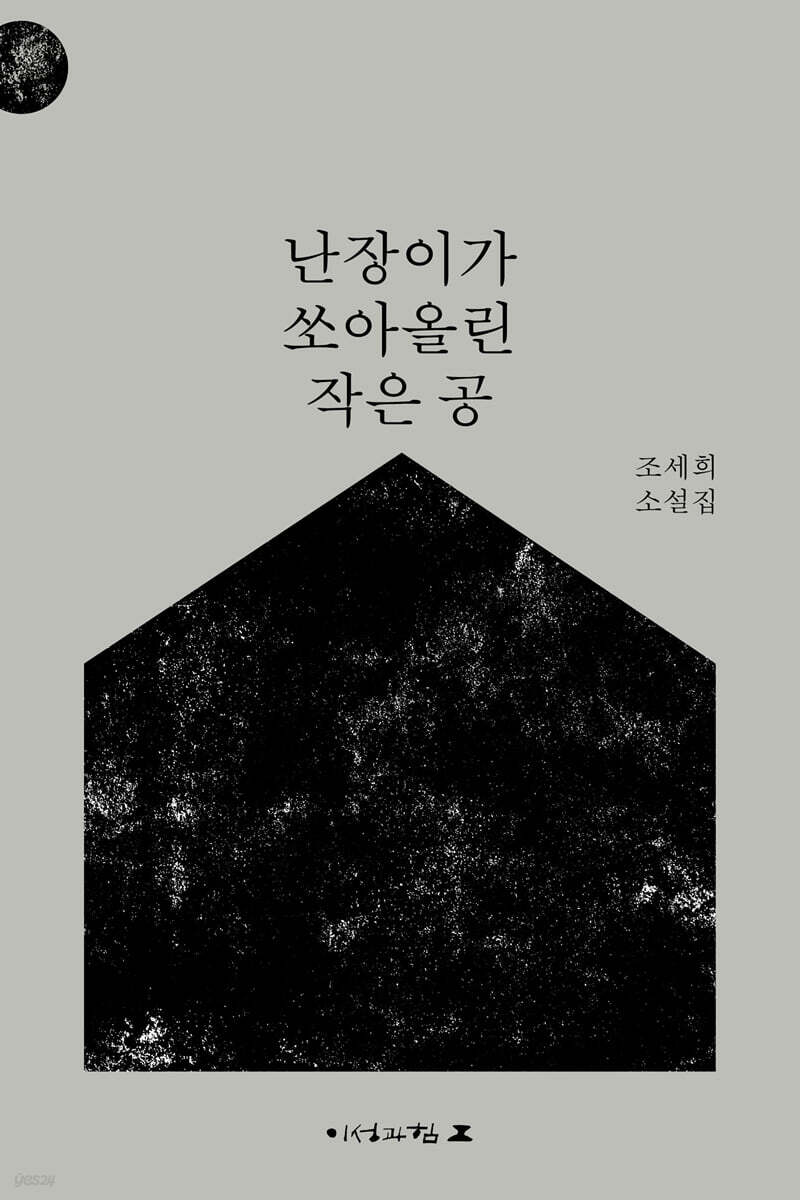
The shapes drawn on the cover of the revised edition remind us of the 'house in Haengbok-dong, Nakwon-gu' where the dwarf family lived before it was demolished, and the 'brick factory', a symbolic place for the dwarfs, and the circle in the upper left corner of the cover is reminiscent of the 'ball' or the 'moon' that the dwarfs wanted to reach.
As Younghee says, “Our life is gray,” the gray cover expresses the bleak reality of the family of the dwarf.
The three essays included with the work help us better understand the literary and social significance of this book in light of the times.
In addition to the commentary by literary critic Kim Byeong-ik (1978) and Woo Chan-je (1997), this revised edition includes an article by Lee Mun-yeong, a journalist and writer who has worked with the author for a long time.
Lee Mun-yeong's "A Story of Shame," which reflects on the life he chose during a long period of silence, when he distanced himself from the literary world, the public, and the media and did not engage in creative activities, will be a meaningful piece for readers who are still reading "Nansogong."
The author hoped that the work would somehow survive and be passed on to readers.
I waited for the time when 『Nansogong』 would no longer be read.
One day, someone would wake up and someone would be arrested, and someone who was arrested first would be dying in a solitary confinement cell, and workers would be beaten and dragged away like animals, in other words, in the 'knife' time when basic human rights were being destroyed, I wrote with a small 'pen' in a small notebook, and I thought that although each of these works is just a small lump, no matter what happens, they must 'endure destruction' and survive as a story of warm love and suffering blood to be delivered to the readers.
―Author's Note, pp. 10–11
As written in the “Author’s Note,” at the time of writing, an important goal was to ensure that the writing survived the sword of the Yushin dictatorship, which was “an era of destruction, false hope, contempt, and tyranny.”
Just as the author had hoped, 『Nansogong』 has lived on and been passed down to readers since its first publication in 1978.
However, as the lifespan of 『Nansogong』 grew longer, the author's wishes changed.
In an interview with a media outlet to commemorate the 100th printing, the author said this.
“I wrote ‘Nansogong’ in the 1970s, a time of martial law and emergency measures, because I felt a desperate need to put up a ‘warning sign’ in our lives that were being driven to the edge of a cliff.
“It is a great joy for an author to have a work surpass 100 editions, but I hope that a time will come when ‘Nansogong’ will no longer be needed.” (Interview with Kyunghyang Shinmun, June 1996)
Nearly 30 years have passed since then, but that time has not yet arrived.
Because, as Younghee felt, “our life is still gray.”
The reason why 『Nansogong』 is still read, contrary to the author's wishes, can be found in Lee Mun-yeong's "A Story about Shame."
Even while 『Nansogong』 was being printed for 300 years and selling 1 million copies, the Nanjangi business continued to prosper from generation to generation.
His father, a dwarf descendant of slaves, fell to his death while trying to pick the moon from a brick factory chimney.
Younghee, the daughter who played the guitar with a broken string in front of pansies, entered a textile factory and became a factory worker after her father's death.
Yeong-hee's daughter and son have become irregular and dispatched workers, jobs that didn't exist in their mother's time, and they are hanging on the chimney that their grandfather climbed and staging a sit-in protest.
Whether it was back then, when “all I could think about was how to run machines at low wages while sitting at my desk” (“Even God Has His Own Faults”), or now that increasing the workweek to 69 hours has become a “reform,” the lives of the dwarves, instead of improving, are becoming more fragmented, competing for the degree of instability.
As industry undergoes its fourth revolution, and the vast world is compressed into the palm of one's hand, poverty, which is not included in the sophisticated inequality called "fairness" and "ability," has become an object of disgust.
The “shadeless world” continues to gallop today, leaving the dwarves in the chimney.
―“A Story of Shame,” p. 374
Key records of 『Nansogong』
First published by Munhak-kwa-Jiseongsa in June 1978
100th printing in 1996
Reason and Power first published in July 2000
2005 200th printing
1 million copies in 2007
300th printing in 2017
325th printing, 1.5 million copies, February 2024
"The Little Ball Shot by a Dwarf" sells over 1.5 million copies.
The sales of 『The Little Ball Shot by a Dwarf』 (hereafter referred to as 『The Little Ball Shot by a Dwarf』), a representative classic of modern Korean literature, have exceeded 1.5 million copies.
There have been several Korean literary works that have sold over 1.5 million copies, but these were largely influenced by mass media exposure, such as advertisements, large-scale campaigns on TV programs, and the authors' appearances on television.
The publication of 1.5 million copies of 『Nansogong』 is even more surprising because it was achieved without any such promotion.
Moreover, in the publishing world where it is common for bestselling novels to sell hundreds of thousands of copies a year and then disappear within a few years, the fact that this book has maintained steady sales for 46 years since its first publication in 1978 is an event that can be said to prove the literary and social value of this book.
A revised edition of "Nansogong" was published to commemorate the author's anniversary of passing on December 25, 2022, after 1.5 million copies were published.
The revised edition features a new format and cover, and some words and sentences have been refined to conform to today's notation.
The shapes drawn on the cover of the revised edition remind us of the 'house in Haengbok-dong, Nakwon-gu' where the dwarf family lived before it was demolished, and the 'brick factory', a symbolic place for the dwarfs, and the circle in the upper left corner of the cover is reminiscent of the 'ball' or the 'moon' that the dwarfs wanted to reach.
As Younghee says, “Our life is gray,” the gray cover expresses the bleak reality of the family of the dwarf.
The three essays included with the work help us better understand the literary and social significance of this book in light of the times.
In addition to the commentary by literary critic Kim Byeong-ik (1978) and Woo Chan-je (1997), this revised edition includes an article by Lee Mun-yeong, a journalist and writer who has worked with the author for a long time.
Lee Mun-yeong's "A Story of Shame," which reflects on the life he chose during a long period of silence, when he distanced himself from the literary world, the public, and the media and did not engage in creative activities, will be a meaningful piece for readers who are still reading "Nansogong."
The author hoped that the work would somehow survive and be passed on to readers.
I waited for the time when 『Nansogong』 would no longer be read.
One day, someone would wake up and someone would be arrested, and someone who was arrested first would be dying in a solitary confinement cell, and workers would be beaten and dragged away like animals, in other words, in the 'knife' time when basic human rights were being destroyed, I wrote with a small 'pen' in a small notebook, and I thought that although each of these works is just a small lump, no matter what happens, they must 'endure destruction' and survive as a story of warm love and suffering blood to be delivered to the readers.
―Author's Note, pp. 10–11
As written in the “Author’s Note,” at the time of writing, an important goal was to ensure that the writing survived the sword of the Yushin dictatorship, which was “an era of destruction, false hope, contempt, and tyranny.”
Just as the author had hoped, 『Nansogong』 has lived on and been passed down to readers since its first publication in 1978.
However, as the lifespan of 『Nansogong』 grew longer, the author's wishes changed.
In an interview with a media outlet to commemorate the 100th printing, the author said this.
“I wrote ‘Nansogong’ in the 1970s, a time of martial law and emergency measures, because I felt a desperate need to put up a ‘warning sign’ in our lives that were being driven to the edge of a cliff.
“It is a great joy for an author to have a work surpass 100 editions, but I hope that a time will come when ‘Nansogong’ will no longer be needed.” (Interview with Kyunghyang Shinmun, June 1996)
Nearly 30 years have passed since then, but that time has not yet arrived.
Because, as Younghee felt, “our life is still gray.”
The reason why 『Nansogong』 is still read, contrary to the author's wishes, can be found in Lee Mun-yeong's "A Story about Shame."
Even while 『Nansogong』 was being printed for 300 years and selling 1 million copies, the Nanjangi business continued to prosper from generation to generation.
His father, a dwarf descendant of slaves, fell to his death while trying to pick the moon from a brick factory chimney.
Younghee, the daughter who played the guitar with a broken string in front of pansies, entered a textile factory and became a factory worker after her father's death.
Yeong-hee's daughter and son have become irregular and dispatched workers, jobs that didn't exist in their mother's time, and they are hanging on the chimney that their grandfather climbed and staging a sit-in protest.
Whether it was back then, when “all I could think about was how to run machines at low wages while sitting at my desk” (“Even God Has His Own Faults”), or now that increasing the workweek to 69 hours has become a “reform,” the lives of the dwarves, instead of improving, are becoming more fragmented, competing for the degree of instability.
As industry undergoes its fourth revolution, and the vast world is compressed into the palm of one's hand, poverty, which is not included in the sophisticated inequality called "fairness" and "ability," has become an object of disgust.
The “shadeless world” continues to gallop today, leaving the dwarves in the chimney.
―“A Story of Shame,” p. 374
Key records of 『Nansogong』
First published by Munhak-kwa-Jiseongsa in June 1978
100th printing in 1996
Reason and Power first published in July 2000
2005 200th printing
1 million copies in 2007
300th printing in 2017
325th printing, 1.5 million copies, February 2024
GOODS SPECIFICS
- Date of issue: February 15, 2024
- Page count, weight, size: 416 pages | 140*210*30mm
- ISBN13: 9788995151228
- ISBN10: 8995151226
You may also like
카테고리
korean


korean

![ELLE 엘르 스페셜 에디션 A형 : 12월 [2025]](http://librairie.coreenne.fr/cdn/shop/files/b8e27a3de6c9538896439686c6b0e8fb.jpg?v=1766436872&width=3840)


