

Gentleman of Moscow
 |
Description
Book Introduction
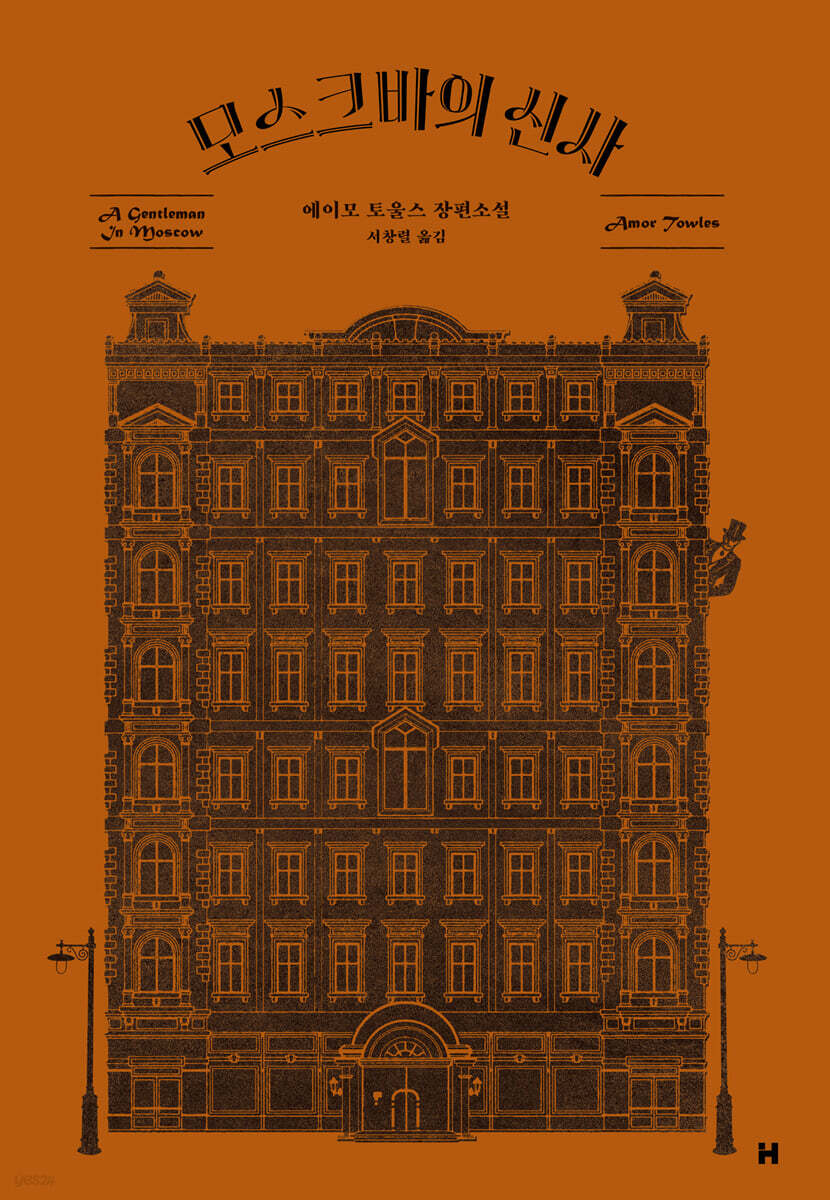
Russia in the 1920s after two revolutions, An old-time aristocrat imprisoned for life at the Metropole Hotel The Elegant Survival of Count Rostov The New York Times long-time bestseller, "A Gentleman in Moscow," recommended by former US President Barack Obama in 2017, has been published by Hyundae Munhak. A Gentleman in Moscow is the second novel by American author Amor Towles. It was highly praised for its ability to successfully combine a classical literary style with a modern and sophisticated atmosphere and charming characters, and was a huge success following his debut work, Rules of Civility. Towles's deep understanding of the times, his faith in humanity, and his storyteller's ingenious imagination captivated readers, solidifying his position as a bestselling author. In A Gentleman in Moscow, Amor Towles wittily satirizes a dark era and brings out the hidden romance of the era through the precious day of one individual, Count Alexander Rostov. As a count well-versed in history, philosophy, literature, and art, his days are filled with rich topics of conversation. And the story that comes together from that day carefully illuminates the beautiful parts of an era that historical events or dramatic narratives often overlook. The books by Dostoevsky, Tolstoy, Chekhov, and Dickens that fill the Count's attic bookshelves show where his elegance comes from. Here, stories of fine wine and cuisine, ballet and film stimulate the imagination of the times while providing a rich source of reading material. In "A Gentleman in Moscow," ordinary hotel commotion connects with historical events, and fleeting characters and objects play important roles, completing a grand narrative. Beautiful descriptions, elaborate compositions reminiscent of a mystery, and a feast of timeless masterpieces offer readers an intellectual delight. |
- You can preview some of the book's contents.
Preview
index
Volume 1
1922
Ambassador · 21
English Catholic Church washed ashore · 36
Reservation · 54
Acquaintance · 66
Anyway… … · 81
Here and There · 89
Rally · 106
Archaeology · 125
Christmas Season · 143
Volume 2
1923
Actress, Ghost, Hive · 175
Behind the Scenes · 207
1924
Unknown · 211
1926
Hello · 236
1930 · 275
Arachne's Technique · 277
Afternoon Secret Meeting · 305
Alliance · 324
Absinthe · 339
Appendix 361
1938
Arrival · 363
Adaptation · 374
Rise, Fall · 392
Appendix 432
1946 · 433
Commotion, Response, Incident · 438
Appendix 496
Volume 4
1950
Adagio, Andante,
Allegro · 507
1952
America · 532
1953
The Apostle and the Apostate · 536
Volume 5
1954
Applause and Cheers · 595
Achilles on the Battlefield · 610
Hello · 619
Adulthood · 629
Announcement · 638
Anecdotes · 649
Affiliate · 660
Enemy Confrontation (and Forgiveness) · 665
Climax · 682
After that
After that… … · 701
Sometimes · 714
Translator's Note · 719
1922
Ambassador · 21
English Catholic Church washed ashore · 36
Reservation · 54
Acquaintance · 66
Anyway… … · 81
Here and There · 89
Rally · 106
Archaeology · 125
Christmas Season · 143
Volume 2
1923
Actress, Ghost, Hive · 175
Behind the Scenes · 207
1924
Unknown · 211
1926
Hello · 236
1930 · 275
Arachne's Technique · 277
Afternoon Secret Meeting · 305
Alliance · 324
Absinthe · 339
Appendix 361
1938
Arrival · 363
Adaptation · 374
Rise, Fall · 392
Appendix 432
1946 · 433
Commotion, Response, Incident · 438
Appendix 496
Volume 4
1950
Adagio, Andante,
Allegro · 507
1952
America · 532
1953
The Apostle and the Apostate · 536
Volume 5
1954
Applause and Cheers · 595
Achilles on the Battlefield · 610
Hello · 619
Adulthood · 629
Announcement · 638
Anecdotes · 649
Affiliate · 660
Enemy Confrontation (and Forgiveness) · 665
Climax · 682
After that
After that… … · 701
Sometimes · 714
Translator's Note · 719
Into the book
Alexander Ilyich Rostov, considering all your testimony, we can only conclude that the brilliant soul who wrote the poem "Where Is It Now?" has succumbed irretrievably to the corruption of his own class and now poses a threat to the very ideals he once espoused.
Based on this, it would be appropriate for us to remove you from this room and imprison you.
But there are those among the party's senior officials who place you in the category of pre-revolutionary heroes.
So the committee's opinion is that you should go back to that hotel you love so much.
But make no mistake.
If you take even one step outside the Metropole Hotel, you will be shot.
--- p.17
“Dear friends,” said the Count.
“You are probably wondering about today’s events.
As you know, I was invited to the Kremlin for an interview.
There, a few of the current regime's officials, all of whom had grown handsome beards, decided that I should be sentenced to spend the rest of my life in one place for the crime of being born into the nobility.
That place is… … this hotel.”
In response to the cheers of the three guests, the count shook hands with each of them, thanking them for their friendship and expressing his sincere gratitude.
“Come in, come in,” said the Count.
--- p.33
Across Teatralnaya Square, the Bolshoi Theatre was lit up from the roof of its entrance hall to its gables.
As usual, the Bolsheviks, dressed like the cast of [La Bohème], were huddled together between the columns, trying to take advantage of the warm night air.
Suddenly the lights in the lobby flickered.
The men kicked out their cigarettes and then walked inside, arm in arm with the women who had come with them.
But just as the last visitor was about to disappear through the doorway, a taxi pulled up beside the curb, the door swung open, and a woman in red ran up the stairs, her skirt hem lifted by her hand.
Nina, who had been leaning forward, squinted her eyes, cupping her palms against the glass.
“How nice it would be if I were there and that lady were here,” Nina sighed.
But, the count thought to himself.
They say that every human being has a certain amount of sadness.
--- p.101
“Friends, I think we can agree that a new era has begun.
The age of steel has truly begun.
We now have the ability to build power plants, build skyscrapers, and build airplanes.”
Mishika turned her face towards the count.
“Have you ever seen the Shukhovskaya broadcasting tower?”
The count had never seen it.
“It’s a truly beautiful building, Sasha.
It is a 160-meter-tall conical steel structure.
Through it, we can broadcast the latest news and information – and even the tender melodies of Tchaikovsky – to every home within 100 miles.
And Russian morality is also not keeping pace with the development and assistance of these individual things.
“In our time we will witness the end of ignorance, the end of oppression, and the emergence of humanity.”
Mishika stopped and waved her hands in the air.
“‘Then what about poetry?’ ‘What about writing?’ People will ask that.
Well, I can confidently say that it is also aligning with the assistance.
In the past, writing was made of bronze and iron, but now it is made of steel.
Poetry is no longer an art that focuses on four-line verse, strong and weak meter, or elaborate rhetoric.
Our poetry has become an art of action.
Our poetry will march boldly across the continents and carry music to the stars!
--- p.140
“Actually, there is one apple we haven’t tried.”
The actress raised an eyebrow.
It was a bewitching looking eyebrow.
"which?"
“According to local folklore, somewhere deep in the forest, there is a tree that bears apples as black as coal.
But if you find that tree and eat its fruit, you can start a new life.”
The count took a generous sip of Montrachet, satisfied that he had managed to conjure up this little folk tale from his past memories.
“And you?” the actress asked.
“What do you mean?”
“If you find an apple hidden in the forest, will you eat it?”
The count put his glass down on the table and shook his head.
“There is definitely something appealing about the idea of starting life anew.
“But how could I give up my home, my sister, and the memories of my school days?” the Count continued, pointing to the table.
“How can I give up this memory?”
Anna Urbanova put her napkin down on her plate, pushed back her chair, stood up, walked around the table to the Count, grabbed him by the collar, and kissed him.
--- p.196
With its brick arched entrance and cool, dark interior, the wine cellar of the Metropole Hotel evoked the gloomy beauty of an underground cemetery.
However, instead of sarcophagi carved with figures of saints, there were shelves stacked high with wine bottles lining the far end of the cellar.
This place was filled with a huge collection of Cabernet, Chardonnay, Riesling, Syrah, Port and Madeira wines.
These were the wines of the century that crossed the European continent.
All together, it seemed like it would be almost ten thousand bottles.
But none of those wine bottles had labels.
“What is this!” the Count exclaimed in surprise.
Andrey nodded with a gloomy face.
“Someone objected to Comrade Theodorov, the People's Commissar for Food, arguing that the existence of a wine list was contrary to the ideals of the revolution.
It is a symbol of the privilege of the aristocracy, the weakness of the intelligentsia, and the predatory pricing of speculators.”
“That’s ridiculous.”
Andrey, who usually doesn't shrug, did it for the second time in an hour.
“So they held a meeting, took a vote, and gave orders.
From now on, Boyarsky will sell all its wines at a single price, categorized as red or white.”
--- p.230~231
“Let me tell you what convenience is,” he said after a moment.
“Sleep until noon and then have someone bring you breakfast on a tray.
Canceling an appointment right before the scheduled time.
By having a carriage waiting in front of the door of one party hall, you can immediately move to another party hall by simply speaking.
Avoiding marriage and postponing having children when young.
These are the ultimate conveniences, Anna.
I once had it all.
But in the end, what mattered most to me was the discomfort.”
--- p.555
“Looking back, I realize that at every turning point in history, there are people who play important roles.
But that doesn't mean only people like Napoleon who changed the course of history.
The people I'm talking about here are the men and women who appear at every crucial crossroads in the evolution of art, commerce, or thought.
As if 'life' sometimes called them out to help it carry out its own purpose.
Sophie, since I was born, life has only once placed me in a special place at a special time.
This is the day your mother brought you to this hotel lobby.
“Even if you offered me the position of Tsar ruling all of Russia instead of the time I was in this hotel, I would never accept it.”
Based on this, it would be appropriate for us to remove you from this room and imprison you.
But there are those among the party's senior officials who place you in the category of pre-revolutionary heroes.
So the committee's opinion is that you should go back to that hotel you love so much.
But make no mistake.
If you take even one step outside the Metropole Hotel, you will be shot.
--- p.17
“Dear friends,” said the Count.
“You are probably wondering about today’s events.
As you know, I was invited to the Kremlin for an interview.
There, a few of the current regime's officials, all of whom had grown handsome beards, decided that I should be sentenced to spend the rest of my life in one place for the crime of being born into the nobility.
That place is… … this hotel.”
In response to the cheers of the three guests, the count shook hands with each of them, thanking them for their friendship and expressing his sincere gratitude.
“Come in, come in,” said the Count.
--- p.33
Across Teatralnaya Square, the Bolshoi Theatre was lit up from the roof of its entrance hall to its gables.
As usual, the Bolsheviks, dressed like the cast of [La Bohème], were huddled together between the columns, trying to take advantage of the warm night air.
Suddenly the lights in the lobby flickered.
The men kicked out their cigarettes and then walked inside, arm in arm with the women who had come with them.
But just as the last visitor was about to disappear through the doorway, a taxi pulled up beside the curb, the door swung open, and a woman in red ran up the stairs, her skirt hem lifted by her hand.
Nina, who had been leaning forward, squinted her eyes, cupping her palms against the glass.
“How nice it would be if I were there and that lady were here,” Nina sighed.
But, the count thought to himself.
They say that every human being has a certain amount of sadness.
--- p.101
“Friends, I think we can agree that a new era has begun.
The age of steel has truly begun.
We now have the ability to build power plants, build skyscrapers, and build airplanes.”
Mishika turned her face towards the count.
“Have you ever seen the Shukhovskaya broadcasting tower?”
The count had never seen it.
“It’s a truly beautiful building, Sasha.
It is a 160-meter-tall conical steel structure.
Through it, we can broadcast the latest news and information – and even the tender melodies of Tchaikovsky – to every home within 100 miles.
And Russian morality is also not keeping pace with the development and assistance of these individual things.
“In our time we will witness the end of ignorance, the end of oppression, and the emergence of humanity.”
Mishika stopped and waved her hands in the air.
“‘Then what about poetry?’ ‘What about writing?’ People will ask that.
Well, I can confidently say that it is also aligning with the assistance.
In the past, writing was made of bronze and iron, but now it is made of steel.
Poetry is no longer an art that focuses on four-line verse, strong and weak meter, or elaborate rhetoric.
Our poetry has become an art of action.
Our poetry will march boldly across the continents and carry music to the stars!
--- p.140
“Actually, there is one apple we haven’t tried.”
The actress raised an eyebrow.
It was a bewitching looking eyebrow.
"which?"
“According to local folklore, somewhere deep in the forest, there is a tree that bears apples as black as coal.
But if you find that tree and eat its fruit, you can start a new life.”
The count took a generous sip of Montrachet, satisfied that he had managed to conjure up this little folk tale from his past memories.
“And you?” the actress asked.
“What do you mean?”
“If you find an apple hidden in the forest, will you eat it?”
The count put his glass down on the table and shook his head.
“There is definitely something appealing about the idea of starting life anew.
“But how could I give up my home, my sister, and the memories of my school days?” the Count continued, pointing to the table.
“How can I give up this memory?”
Anna Urbanova put her napkin down on her plate, pushed back her chair, stood up, walked around the table to the Count, grabbed him by the collar, and kissed him.
--- p.196
With its brick arched entrance and cool, dark interior, the wine cellar of the Metropole Hotel evoked the gloomy beauty of an underground cemetery.
However, instead of sarcophagi carved with figures of saints, there were shelves stacked high with wine bottles lining the far end of the cellar.
This place was filled with a huge collection of Cabernet, Chardonnay, Riesling, Syrah, Port and Madeira wines.
These were the wines of the century that crossed the European continent.
All together, it seemed like it would be almost ten thousand bottles.
But none of those wine bottles had labels.
“What is this!” the Count exclaimed in surprise.
Andrey nodded with a gloomy face.
“Someone objected to Comrade Theodorov, the People's Commissar for Food, arguing that the existence of a wine list was contrary to the ideals of the revolution.
It is a symbol of the privilege of the aristocracy, the weakness of the intelligentsia, and the predatory pricing of speculators.”
“That’s ridiculous.”
Andrey, who usually doesn't shrug, did it for the second time in an hour.
“So they held a meeting, took a vote, and gave orders.
From now on, Boyarsky will sell all its wines at a single price, categorized as red or white.”
--- p.230~231
“Let me tell you what convenience is,” he said after a moment.
“Sleep until noon and then have someone bring you breakfast on a tray.
Canceling an appointment right before the scheduled time.
By having a carriage waiting in front of the door of one party hall, you can immediately move to another party hall by simply speaking.
Avoiding marriage and postponing having children when young.
These are the ultimate conveniences, Anna.
I once had it all.
But in the end, what mattered most to me was the discomfort.”
--- p.555
“Looking back, I realize that at every turning point in history, there are people who play important roles.
But that doesn't mean only people like Napoleon who changed the course of history.
The people I'm talking about here are the men and women who appear at every crucial crossroads in the evolution of art, commerce, or thought.
As if 'life' sometimes called them out to help it carry out its own purpose.
Sophie, since I was born, life has only once placed me in a special place at a special time.
This is the day your mother brought you to this hotel lobby.
“Even if you offered me the position of Tsar ruling all of Russia instead of the time I was in this hotel, I would never accept it.”
--- p.656~657
Publisher's Review
In a time when one had to change to meet the demands of the times to survive,
Stories of people with an 'inner light' that cannot be hidden.
In 1922 Russia, after the Bolshevik Revolution, 33-year-old Count Alexander Rostov is sentenced to life imprisonment, under the threat of execution if he leaves his residence at the Metropol Hotel in Moscow.
An era of the people, where new laws and promises replace old customs and become the driving force for progress, and where every individual must transform themselves for a brighter future.
The count, who barely escaped the turmoil of the times by being recognized for his past achievements of writing poetry in support of the revolution, is stripped of all privileges of nobility, including moving from the suite where he had been living to the servants' attic.
However, the Count, an 'outcast' who was pushed to a corner of the times, does not despair or succumb to his circumstances, but carefully observes what is happening around him and adapts.
Armed with his refined tastes, rich knowledge, humor, and wit, the Metropole Hotel is like a vast territory where he can pioneer a new life.
A playmate to a little lady, a secret lover of a famous actor, a tutor to a high-ranking Communist Party official, a head waiter at the Boyarsky restaurant, a key participant in suspicious kitchen gatherings, and a staunch supporter of his daughter Sophia… … Armed with a refined and elegant demeanor and human charm, he connects deeply with people regardless of age, gender, nationality, or social status, and becomes a friend through his heart.
And the more he tries to protect them, the more the Count's role in the hotel grows.
In response to his efforts, those who do not lose their way in the great flow of history expand their world to pursue their dreams.
An elaborate work of art created from fact and fiction
The count's extraordinary daily life becomes an intimate history.
The author came up with the idea of a story about a man trapped in a huge hotel while visiting a hotel in Geneva on a business trip in 2009.
And I sketched the novel by connecting it to the actual history of house arrest in Tsarist Russia.
The 1920s Metropole Hotel depicted by Towles is a place where elegant music always plays and guests are greeted by polite and courteous staff.
In fact, at that time, the Metropol Hotel was a place of diplomacy for Soviet Russia to interact with various European countries, and it had a special purpose of promoting the regime's health to the outside world, a place where luxurious cuisine, high-quality drinks, and the best service were provided to guests.
And it was a special place where the surveillance of the secret police and the affluent daily life coexisted, a place at the heart of history but where different times flowed inside and outside.
The author combines the uniqueness of the Metropol Hotel with a deep understanding of post-revolutionary Russia and the allure of the fictional character Count Alexander Rostov to create a story that sounds more authentic than actual history.
In that the story takes place in a place that is at the heart of reality yet escapes its harshness, "A Gentleman in Moscow" is reminiscent of Wes Anderson's film "The Grand Budapest Hotel."
It reminds me of Steven Spielberg's film [The Terminal] in that the space where everyone comes and goes is a microcosm of the world for one person, and it also reminds me of the novels Robinson Crusoe and The Count of Monte Cristo in that one must constantly fight against the external environment and internal loneliness.
Like these masterpieces that left a strong impression through their visuals and stories, the story surrounding Count Rostov is both realistic and fantastical.
"A Gentleman in Moscow" tells the story of how the count "survived" in a new and harsh environment, but it doesn't stop there; it asks the reader the question, "How should we live?"
And just as the great works of literature that enriched our spirits did, it provides an opportunity to breathe with the public and reflect on the meaning of life.
Towles tells the Count that 'it is not necessarily those like Napoleon who changed the course of history that are important in history, but rather the ordinary men and women who appear at every important crossroads in the evolution of art, commerce, and thought who are special.'
It also reminds us that just like wine, whose taste and value remain unchanged even after the label is removed, and just like countless stories that continue to be told into the distant future even after books are burned, people also possess an 'inner light' that cannot be easily extinguished.
Count Rostov, who has cast aside the veneer of aristocracy and regrets about the past, and adapts to his given circumstances with grace and wisdom, is a Renaissance-like, whole person rarely found in modern literature.
As Towles stated, "I hope this book, written with nostalgia and affection for the old days, will be one that anyone can relate to and freely imagine," "A Gentleman in Moscow" is loved by many readers.
It became a bestseller immediately after its publication, receiving favorable reviews for simultaneously evoking exotic mystery and nostalgia for the past, and continued its popularity in 2017, the following year, with enthusiastic support from readers, librarians, and book clubs.
By the end of that year, it had achieved even greater success than its predecessor, being recommended as a 'Book of the Year' by several media outlets, including The Times and The Washington Post, and by former US President Barack Obama.
As of the first half of 2018, "A Gentleman in Moscow" has sold over 1.1 million copies in the United States alone, and has remained on the New York Times bestseller list for 58 weeks.
Additionally, it has been published in 30 countries and is preparing to meet readers around the world, and is being adapted into a drama with actor Kenneth Branagh producing and starring.
A great novel that shows that even the cruelty of the times cannot erase the beauty and memories of true love.
Filled with the charm, wisdom, and philosophical insight of one man, this book will provide endless enjoyment to the reader.
_[Kirkus Review]
It evokes nostalgia for the golden age in which Tolstoy and Turgenev lived.
It is as ornate and delicate as the 'Fabergé Egg', a treasure of the 19th century Russian imperial family.
A novel that constantly explores what true life is, in a time when survival itself was a great feat.
_[Oprah Magazine]
How welcome is Towles' novel, with its sophisticated structure and the elegance of a bygone era, for us living in today's rough and tumble times! "A Gentleman in Moscow" allows us to rediscover the noble, humane attitude we've lost.
_[Washington Post]
"A Gentleman in Moscow" aims to captivate readers rather than be "an axe to break the frozen sea within us."
A charming and elegant novel that is easy to read.
National Public Radio
The protagonist, Count Rostov, is a wonderful literary creation.
He is classy and intelligent, yet also surprisingly quirky and spiteful.
Although he is in a state of retirement and dressed in shabby clothes, he does not lose his dignity.
Even if only in his own mind he will always be a count.
_[Seattle Weekly]
An unforgettable portrait of history, sculpted by imagination.
_[Booklist]
Stories of people with an 'inner light' that cannot be hidden.
In 1922 Russia, after the Bolshevik Revolution, 33-year-old Count Alexander Rostov is sentenced to life imprisonment, under the threat of execution if he leaves his residence at the Metropol Hotel in Moscow.
An era of the people, where new laws and promises replace old customs and become the driving force for progress, and where every individual must transform themselves for a brighter future.
The count, who barely escaped the turmoil of the times by being recognized for his past achievements of writing poetry in support of the revolution, is stripped of all privileges of nobility, including moving from the suite where he had been living to the servants' attic.
However, the Count, an 'outcast' who was pushed to a corner of the times, does not despair or succumb to his circumstances, but carefully observes what is happening around him and adapts.
Armed with his refined tastes, rich knowledge, humor, and wit, the Metropole Hotel is like a vast territory where he can pioneer a new life.
A playmate to a little lady, a secret lover of a famous actor, a tutor to a high-ranking Communist Party official, a head waiter at the Boyarsky restaurant, a key participant in suspicious kitchen gatherings, and a staunch supporter of his daughter Sophia… … Armed with a refined and elegant demeanor and human charm, he connects deeply with people regardless of age, gender, nationality, or social status, and becomes a friend through his heart.
And the more he tries to protect them, the more the Count's role in the hotel grows.
In response to his efforts, those who do not lose their way in the great flow of history expand their world to pursue their dreams.
An elaborate work of art created from fact and fiction
The count's extraordinary daily life becomes an intimate history.
The author came up with the idea of a story about a man trapped in a huge hotel while visiting a hotel in Geneva on a business trip in 2009.
And I sketched the novel by connecting it to the actual history of house arrest in Tsarist Russia.
The 1920s Metropole Hotel depicted by Towles is a place where elegant music always plays and guests are greeted by polite and courteous staff.
In fact, at that time, the Metropol Hotel was a place of diplomacy for Soviet Russia to interact with various European countries, and it had a special purpose of promoting the regime's health to the outside world, a place where luxurious cuisine, high-quality drinks, and the best service were provided to guests.
And it was a special place where the surveillance of the secret police and the affluent daily life coexisted, a place at the heart of history but where different times flowed inside and outside.
The author combines the uniqueness of the Metropol Hotel with a deep understanding of post-revolutionary Russia and the allure of the fictional character Count Alexander Rostov to create a story that sounds more authentic than actual history.
In that the story takes place in a place that is at the heart of reality yet escapes its harshness, "A Gentleman in Moscow" is reminiscent of Wes Anderson's film "The Grand Budapest Hotel."
It reminds me of Steven Spielberg's film [The Terminal] in that the space where everyone comes and goes is a microcosm of the world for one person, and it also reminds me of the novels Robinson Crusoe and The Count of Monte Cristo in that one must constantly fight against the external environment and internal loneliness.
Like these masterpieces that left a strong impression through their visuals and stories, the story surrounding Count Rostov is both realistic and fantastical.
"A Gentleman in Moscow" tells the story of how the count "survived" in a new and harsh environment, but it doesn't stop there; it asks the reader the question, "How should we live?"
And just as the great works of literature that enriched our spirits did, it provides an opportunity to breathe with the public and reflect on the meaning of life.
Towles tells the Count that 'it is not necessarily those like Napoleon who changed the course of history that are important in history, but rather the ordinary men and women who appear at every important crossroads in the evolution of art, commerce, and thought who are special.'
It also reminds us that just like wine, whose taste and value remain unchanged even after the label is removed, and just like countless stories that continue to be told into the distant future even after books are burned, people also possess an 'inner light' that cannot be easily extinguished.
Count Rostov, who has cast aside the veneer of aristocracy and regrets about the past, and adapts to his given circumstances with grace and wisdom, is a Renaissance-like, whole person rarely found in modern literature.
As Towles stated, "I hope this book, written with nostalgia and affection for the old days, will be one that anyone can relate to and freely imagine," "A Gentleman in Moscow" is loved by many readers.
It became a bestseller immediately after its publication, receiving favorable reviews for simultaneously evoking exotic mystery and nostalgia for the past, and continued its popularity in 2017, the following year, with enthusiastic support from readers, librarians, and book clubs.
By the end of that year, it had achieved even greater success than its predecessor, being recommended as a 'Book of the Year' by several media outlets, including The Times and The Washington Post, and by former US President Barack Obama.
As of the first half of 2018, "A Gentleman in Moscow" has sold over 1.1 million copies in the United States alone, and has remained on the New York Times bestseller list for 58 weeks.
Additionally, it has been published in 30 countries and is preparing to meet readers around the world, and is being adapted into a drama with actor Kenneth Branagh producing and starring.
A great novel that shows that even the cruelty of the times cannot erase the beauty and memories of true love.
Filled with the charm, wisdom, and philosophical insight of one man, this book will provide endless enjoyment to the reader.
_[Kirkus Review]
It evokes nostalgia for the golden age in which Tolstoy and Turgenev lived.
It is as ornate and delicate as the 'Fabergé Egg', a treasure of the 19th century Russian imperial family.
A novel that constantly explores what true life is, in a time when survival itself was a great feat.
_[Oprah Magazine]
How welcome is Towles' novel, with its sophisticated structure and the elegance of a bygone era, for us living in today's rough and tumble times! "A Gentleman in Moscow" allows us to rediscover the noble, humane attitude we've lost.
_[Washington Post]
"A Gentleman in Moscow" aims to captivate readers rather than be "an axe to break the frozen sea within us."
A charming and elegant novel that is easy to read.
National Public Radio
The protagonist, Count Rostov, is a wonderful literary creation.
He is classy and intelligent, yet also surprisingly quirky and spiteful.
Although he is in a state of retirement and dressed in shabby clothes, he does not lose his dignity.
Even if only in his own mind he will always be a count.
_[Seattle Weekly]
An unforgettable portrait of history, sculpted by imagination.
_[Booklist]
GOODS SPECIFICS
- Date of publication: June 22, 2018
- Page count, weight, size: 724 pages | 800g | 138*205*40mm
- ISBN13: 9788972758945
- ISBN10: 8972758949
You may also like
카테고리
korean


korean

![ELLE 엘르 스페셜 에디션 A형 : 12월 [2025]](http://librairie.coreenne.fr/cdn/shop/files/b8e27a3de6c9538896439686c6b0e8fb.jpg?v=1766436872&width=3840)


