

Anthology of first editions and above
 |
Description
Book Introduction
Poet Lee Sang, a pioneer of Korean surrealist literature
A collection of works commemorating the 90th anniversary of his debut has been published!
A single collection of works by a genius poet ahead of his time.
A collection of works by Lee Sang, who pioneered self-conscious literature with experimental poetry and unique grammar, titled "Lee Sang Selected Works."
“Sang has never written a poem in ink.
He squeezed his own blood vessels and wrote the blood oath of the times.
Having lost the prize, I feel like time has suddenly stepped back half a century. - Kim Ki-rim, Memories of the Late Lee Sang
Lee Sang was the first experimental modernist in Korean literature and pioneered the development of self-conscious literature in Korea.
Although he published numerous works, he did not publish a single book during his lifetime.
Kim Ki-rim, who also mourned Lee Sang's death with poetry, personally published a single collection of Lee Sang's works, "Lee Sang Anthology," in 1949.
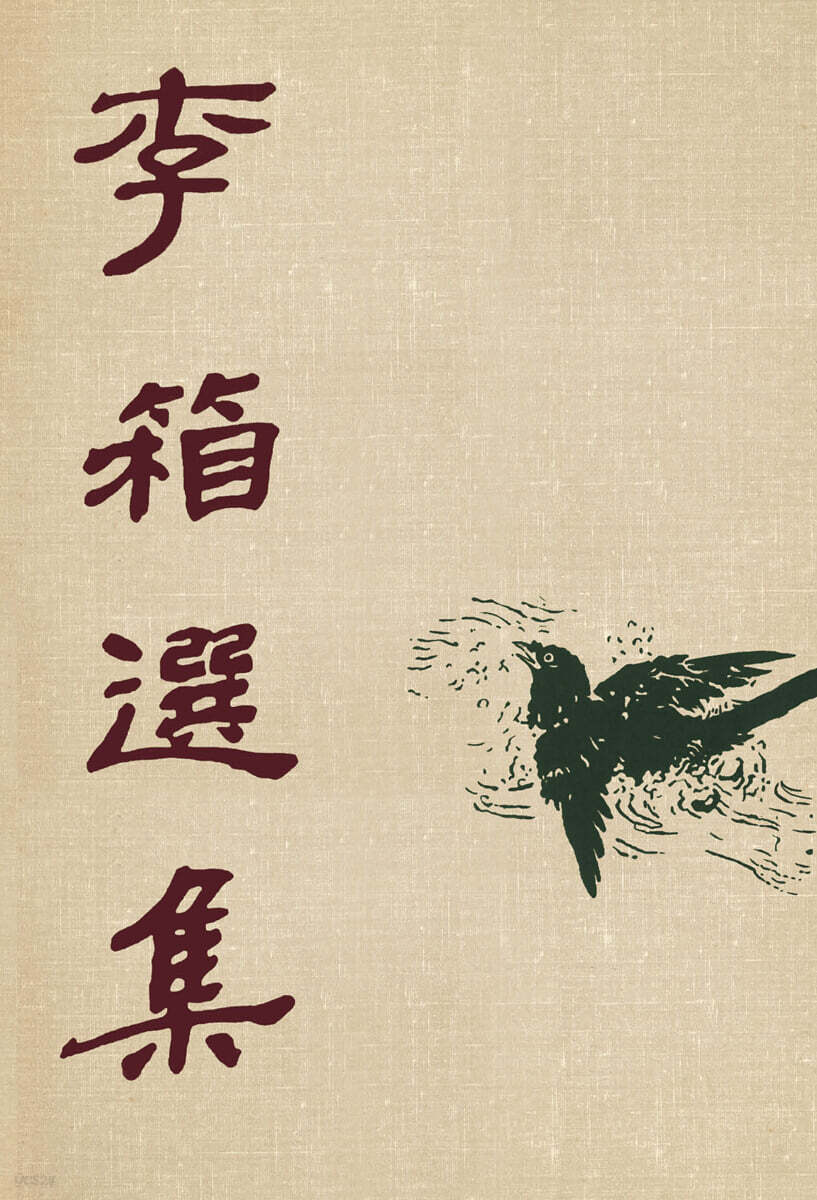
This first edition of “Lee Sang Anthology” published by The Story was produced by borrowing the original cover design of the first edition published by Baekyangdang in 1949.
The text has been edited to conform to Korean spelling rules for readers' convenience, but the original text has been preserved as much as possible so that the meaning of the poem is not damaged.
Occasionally, footnotes are provided to help readers understand words that are no longer in use or difficult Chinese characters.
This collection of works includes a preface written by Kim Ki-rim himself, and includes the novel “Wings,” the poem “Five Senses,” and the essay “Record of Fear,” which are representative works of poet Yi Sang, who debuted in 1931 with the publication of “Strange Reversible Reaction” in the journal “Chosun and Architecture.”
This is the only collection of Lee Sang's works where you can see all of his works, including poetry, novels, and essays, all in one place.
Lee Sang dealt with escapism and surrealism in his own unique style that did not follow existing grammar.
Although the genius author Lee Sang passed away young, his works, which were ahead of their time, still remain with us and receive much attention and love.
A collection of works commemorating the 90th anniversary of his debut has been published!
A single collection of works by a genius poet ahead of his time.
A collection of works by Lee Sang, who pioneered self-conscious literature with experimental poetry and unique grammar, titled "Lee Sang Selected Works."
“Sang has never written a poem in ink.
He squeezed his own blood vessels and wrote the blood oath of the times.
Having lost the prize, I feel like time has suddenly stepped back half a century. - Kim Ki-rim, Memories of the Late Lee Sang
Lee Sang was the first experimental modernist in Korean literature and pioneered the development of self-conscious literature in Korea.
Although he published numerous works, he did not publish a single book during his lifetime.
Kim Ki-rim, who also mourned Lee Sang's death with poetry, personally published a single collection of Lee Sang's works, "Lee Sang Anthology," in 1949.
This first edition of “Lee Sang Anthology” published by The Story was produced by borrowing the original cover design of the first edition published by Baekyangdang in 1949.
The text has been edited to conform to Korean spelling rules for readers' convenience, but the original text has been preserved as much as possible so that the meaning of the poem is not damaged.
Occasionally, footnotes are provided to help readers understand words that are no longer in use or difficult Chinese characters.
This collection of works includes a preface written by Kim Ki-rim himself, and includes the novel “Wings,” the poem “Five Senses,” and the essay “Record of Fear,” which are representative works of poet Yi Sang, who debuted in 1931 with the publication of “Strange Reversible Reaction” in the journal “Chosun and Architecture.”
This is the only collection of Lee Sang's works where you can see all of his works, including poetry, novels, and essays, all in one place.
Lee Sang dealt with escapism and surrealism in his own unique style that did not follow existing grammar.
Although the genius author Lee Sang passed away young, his works, which were ahead of their time, still remain with us and receive much attention and love.
index
Preface - The appearance and art of the ideal
creation
Wings / Bongbyeolgi (逢別記) / Jijuhoesi (??}會豕)
city
Crow's Eye View / Jeongsik / Ikdan / Soyeongwije / Flower Tree / Such Poems / 1933.
6. 1 / Paper monument / Mirror
premier
Records of Fear / Medicinal Water / Paradise Lost / Kim Yu-jeong / 19th Century Style / Boredom
About the author
Author's chronology
creation
Wings / Bongbyeolgi (逢別記) / Jijuhoesi (??}會豕)
city
Crow's Eye View / Jeongsik / Ikdan / Soyeongwije / Flower Tree / Such Poems / 1933.
6. 1 / Paper monument / Mirror
premier
Records of Fear / Medicinal Water / Paradise Lost / Kim Yu-jeong / 19th Century Style / Boredom
About the author
Author's chronology
Into the book
13 children are running down the road.
(The road is a dead end.)
The first child is said to be scary.
Even the second child is scary, you say.
Even the third child is scary, you say.
Even the fourth child is scary, you say.
Even the fifth child is scary.
Even the sixth child is scary.
Even the seventh child is scary.
Even the 8th child is scary.
Even the 9th child is scary.
Even the 10th child is scary.
The 11th child is said to be scary.
Even the 12th child is said to be scary.
Even the 13th child is said to be scary.
The 13 children were just a bunch of scared children and frightened children. (It would have been better if there were no other circumstances.)
It's okay if one of them is a scary child.
It's okay if two of them are scary kids.
It would be nice if two of the children among them were scared children.
Even if one of them is a scared child, that's fine.
(Even a narrow alley is suitable.)
It's okay if 13 kids don't run down the road.
(The road is a dead end.)
The first child is said to be scary.
Even the second child is scary, you say.
Even the third child is scary, you say.
Even the fourth child is scary, you say.
Even the fifth child is scary.
Even the sixth child is scary.
Even the seventh child is scary.
Even the 8th child is scary.
Even the 9th child is scary.
Even the 10th child is scary.
The 11th child is said to be scary.
Even the 12th child is said to be scary.
Even the 13th child is said to be scary.
The 13 children were just a bunch of scared children and frightened children. (It would have been better if there were no other circumstances.)
It's okay if one of them is a scary child.
It's okay if two of them are scary kids.
It would be nice if two of the children among them were scared children.
Even if one of them is a scared child, that's fine.
(Even a narrow alley is suitable.)
It's okay if 13 kids don't run down the road.
--- From "The Five Senses, Issue 1"
GOODS SPECIFICS
- Date of issue: March 28, 2025
- Page count, weight, size: 184 pages | 128*188*20mm
- ISBN13: 9791194591368
- ISBN10: 1194591361
You may also like
카테고리
korean


korean

![GQ KOREA Mark (Monthly): December [2025]](http://librairie.coreenne.fr/cdn/shop/files/8ef265dbbfbf186523ed75ba7319009d.jpg?v=1765340328&width=3840)


