

KOREAN CULTURE DICTIONARY Welcome! Is this your first time with Korean culture?
 |
Description
Book Introduction
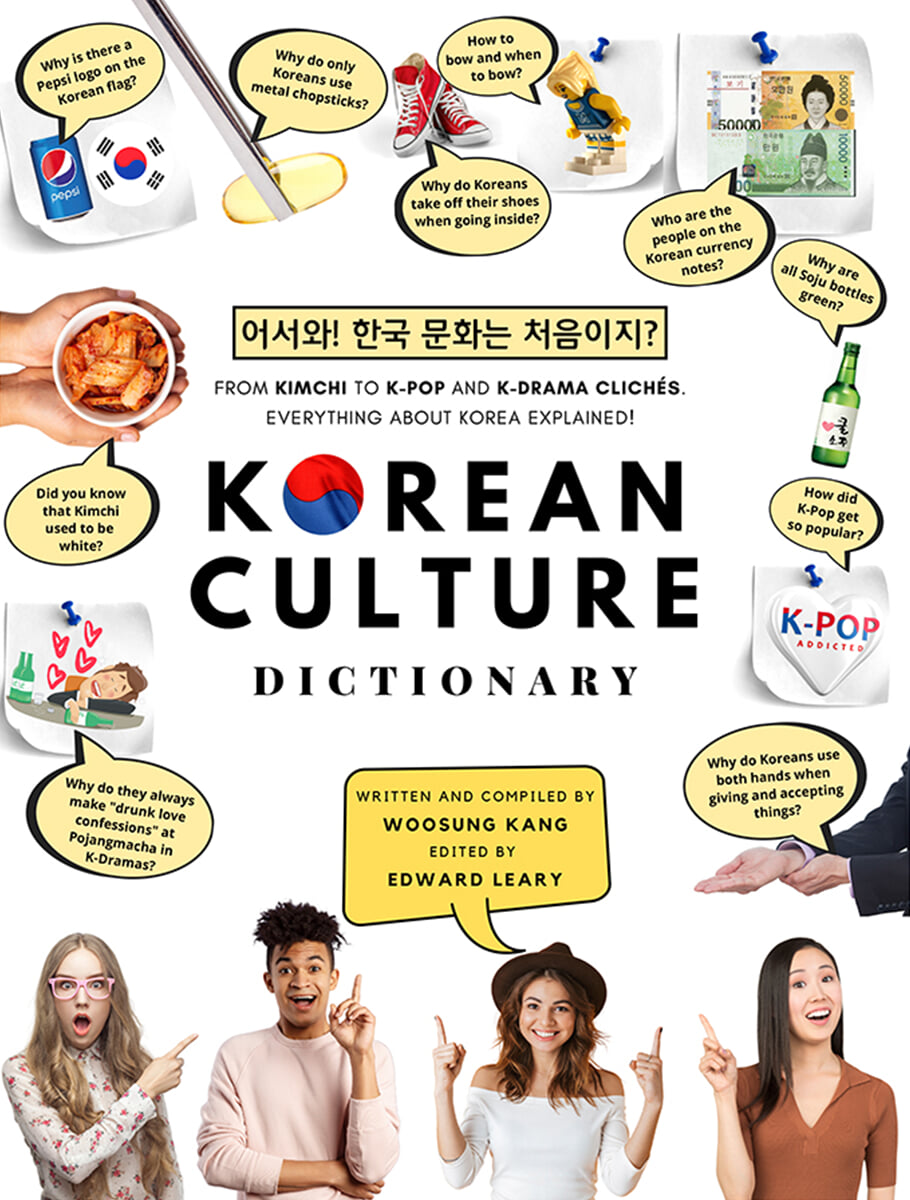
"Why are all Korean names three-letter?" "Why are all soju bottles green?" How should you respond when a foreign friend asks you these questions? The author of the Amazon hit "K-Pop Dictionary" has created a "Korean Culture Guide" for foreigners! This book, which explains everything about Korean culture in easy-to-understand English, makes a perfect gift for foreigners interested in Korea, and it's also a useful resource for introducing Korea to the world.
From now on, don't panic and hand this book to your foreign friends! Seeing them nod in agreement will put an end to your worries!
From now on, don't panic and hand this book to your foreign friends! Seeing them nod in agreement will put an end to your worries!
index
PREFACE
HOW TO USE THIS BOOK
GET TO KNOW THE FLAG
UNDERSTANDING KOREAN NAMES
THE LANGUAGE
KIMCHI - THE KOREAN SOUL FOOD
YUGYO - THE IDEOLOGY OF THE KOREAN PEOPLE
WHAT DO KOREANS EAT?
DINING IN KOREA
DRINKING IN KOREA
WORKING IN KOREA
EDUCATION IN KOREA
FUN AND QUIRKY KOREAN SUPERSTITIONS AND BELIEFS
SPOOKY KOREAN SUPERSTITIONS AND BELIEFS
ODD QUESTIONS AND COMPLIMENTS
DEATH AND AFTERLIFE
KOREAN FUNERAL - HOW KOREANS SAY GOODBYE
JESA - REMEMBERING AND HONORING THE ANCESTORS
TYING THE KNOT - WEDDINGS IN KOREA
SPECIAL DAYS AND OFFICIAL HOLIDAYS IN KOREA
NEW YEARS DAY AND CHUSEOK
HANBOK - THE TRADITIONAL KOREAN CLOTHES
THE KOREAN LIFESTYLE
KOREAN HISTORY - HIGHLIGHTS AND TIMELINE
KOREAN WAR
LOST IN TRANSLATION
KOREA IN THE DIGITAL ERA
SPORTS
PLACES AND THINGS
HALLYU THE KOREAN WAVE
HOW TO USE THIS BOOK
GET TO KNOW THE FLAG
UNDERSTANDING KOREAN NAMES
THE LANGUAGE
KIMCHI - THE KOREAN SOUL FOOD
YUGYO - THE IDEOLOGY OF THE KOREAN PEOPLE
WHAT DO KOREANS EAT?
DINING IN KOREA
DRINKING IN KOREA
WORKING IN KOREA
EDUCATION IN KOREA
FUN AND QUIRKY KOREAN SUPERSTITIONS AND BELIEFS
SPOOKY KOREAN SUPERSTITIONS AND BELIEFS
ODD QUESTIONS AND COMPLIMENTS
DEATH AND AFTERLIFE
KOREAN FUNERAL - HOW KOREANS SAY GOODBYE
JESA - REMEMBERING AND HONORING THE ANCESTORS
TYING THE KNOT - WEDDINGS IN KOREA
SPECIAL DAYS AND OFFICIAL HOLIDAYS IN KOREA
NEW YEARS DAY AND CHUSEOK
HANBOK - THE TRADITIONAL KOREAN CLOTHES
THE KOREAN LIFESTYLE
KOREAN HISTORY - HIGHLIGHTS AND TIMELINE
KOREAN WAR
LOST IN TRANSLATION
KOREA IN THE DIGITAL ERA
SPORTS
PLACES AND THINGS
HALLYU THE KOREAN WAVE
Publisher's Review
Author Kang Woo-sung, who has been active in promoting Korean culture while living in New York, has been involved in various activities. In 2016, he published “K-Pop Dictionary,” which collected new words and buzzwords that foreigners find difficult to understand, such as “daebak” (대박) and “ajae gag,” and explained them in an easy-to-understand way, which drew an explosive response from foreign readers.
Afterwards, I became aware of the problem of an absolute lack of materials that introduce Korean culture correctly and accurately, despite the surge in interest in Korea due to the 'global Korean Wave' craze. After much deliberation to find a solution, I finally came up with this work that I have been working on for a long time.
To help foreign readers understand, he has included various photos and illustrations, and QR codes that allow readers to watch related videos directly on YouTube. He also includes a list of must-see Korean dramas and movies, which shows his passion for introducing Korean culture to the world a little better.
Along with this, it introduces interesting episodes that foreigners experienced while living in Korea and explains cultural similarities and differences, making readers nod their heads.
Just as the previous "K-Pop Dictionary" did, this "Korean Culture Dictionary" is a book of a kind that has never been seen before, and I have no doubt that it will be of help to many who wish to learn about Korea and faithfully fulfill its role in introducing Korean culture to the world.
Before reading this book, you've probably had moments of curiosity about Korean culture.
Why does the Korean flag look like it has a Pepsi logo? Why do so many Korean kids share the same last names? Kim, Lee, and Park? If you're a K-Drama fan who watches variety shows too, your fascination with Korea may have grown even deeper.
What does Korea actually mean? Who are the people on Korean banknotes? Why do Koreans love kimchi so much? and why with everything?
Koreans also have their own way of figuring out each other.
Forget small talk; they often ask your age or even blood type.
(Yes, blood type! Some still believe it reveals personality?Type A perfectionists, Type O easygoing.) And now it's all about MBTI?from ENFP to ISTJ, it can even hint at workplace or dating compatibility.
You might also wonder why you suddenly become a year (or two) older upon arriving in Korea.
Why all the drama in street tent bars (pojangmacha)? How do Koreans drink so much soju from those infamous green bottles? And, of course, the 2020s question: Why is K-pop so insanely popular?
(Hint: it's not just BTS? NewJeans, Stray Kids, LE SSERAFIM, and a wave of global idols are leading the charge.
And yes, what does “Gangnam Style” even mean?)
If you've seen Squid Game or Parasite, you know Korean entertainment is not just catchy? It's deep, emotional, and brutally honest.
Even animation is joining the trend with shows like K-Pop Demon Hunters, blending Korean pop culture with global storytelling.
When you get lost in translation, a dictionary or app can help? but cultural gaps aren't that easy.
You might guess right once, but miss the why behind Korea's customs and behaviors.
No matter who you are? a K-Pop or K-Drama fan, an expat, a study-abroad student, or a second-generation gyopo? you no longer need to stay puzzled by the quirks that make Korea, well, Korea.
This book covers over 350 essential topics and FAQs, organized into 27 categories, exploring Korea through the Five Ws (Who, What, When, Where, Why) and How.
By the end, you'll understand Korea? from history and values to food, slang, and modern trends.
You'll also finally know why Koreans sit on the floor, why pouring with one hand is rude, and why K-Dramas' hidden cues make so much sense.
After reading, dramas, movies, and K-Pop lyrics will feel completely different?and you'll spot the cliches before they happen!
Next time you hang out with a Korean friend, you can casually impress them? like explaining why people tap the neck of a soju bottle or why to turn away when drinking with elders.
And if someone says you have a “small face,” you’ll know proudly reply: “Thank you!”
Now, let's start with a perfect first example of Korean culture? the famous “Ppali Ppali” mindset.
Hurry up and start reading!
Afterwards, I became aware of the problem of an absolute lack of materials that introduce Korean culture correctly and accurately, despite the surge in interest in Korea due to the 'global Korean Wave' craze. After much deliberation to find a solution, I finally came up with this work that I have been working on for a long time.
To help foreign readers understand, he has included various photos and illustrations, and QR codes that allow readers to watch related videos directly on YouTube. He also includes a list of must-see Korean dramas and movies, which shows his passion for introducing Korean culture to the world a little better.
Along with this, it introduces interesting episodes that foreigners experienced while living in Korea and explains cultural similarities and differences, making readers nod their heads.
Just as the previous "K-Pop Dictionary" did, this "Korean Culture Dictionary" is a book of a kind that has never been seen before, and I have no doubt that it will be of help to many who wish to learn about Korea and faithfully fulfill its role in introducing Korean culture to the world.
Before reading this book, you've probably had moments of curiosity about Korean culture.
Why does the Korean flag look like it has a Pepsi logo? Why do so many Korean kids share the same last names? Kim, Lee, and Park? If you're a K-Drama fan who watches variety shows too, your fascination with Korea may have grown even deeper.
What does Korea actually mean? Who are the people on Korean banknotes? Why do Koreans love kimchi so much? and why with everything?
Koreans also have their own way of figuring out each other.
Forget small talk; they often ask your age or even blood type.
(Yes, blood type! Some still believe it reveals personality?Type A perfectionists, Type O easygoing.) And now it's all about MBTI?from ENFP to ISTJ, it can even hint at workplace or dating compatibility.
You might also wonder why you suddenly become a year (or two) older upon arriving in Korea.
Why all the drama in street tent bars (pojangmacha)? How do Koreans drink so much soju from those infamous green bottles? And, of course, the 2020s question: Why is K-pop so insanely popular?
(Hint: it's not just BTS? NewJeans, Stray Kids, LE SSERAFIM, and a wave of global idols are leading the charge.
And yes, what does “Gangnam Style” even mean?)
If you've seen Squid Game or Parasite, you know Korean entertainment is not just catchy? It's deep, emotional, and brutally honest.
Even animation is joining the trend with shows like K-Pop Demon Hunters, blending Korean pop culture with global storytelling.
When you get lost in translation, a dictionary or app can help? but cultural gaps aren't that easy.
You might guess right once, but miss the why behind Korea's customs and behaviors.
No matter who you are? a K-Pop or K-Drama fan, an expat, a study-abroad student, or a second-generation gyopo? you no longer need to stay puzzled by the quirks that make Korea, well, Korea.
This book covers over 350 essential topics and FAQs, organized into 27 categories, exploring Korea through the Five Ws (Who, What, When, Where, Why) and How.
By the end, you'll understand Korea? from history and values to food, slang, and modern trends.
You'll also finally know why Koreans sit on the floor, why pouring with one hand is rude, and why K-Dramas' hidden cues make so much sense.
After reading, dramas, movies, and K-Pop lyrics will feel completely different?and you'll spot the cliches before they happen!
Next time you hang out with a Korean friend, you can casually impress them? like explaining why people tap the neck of a soju bottle or why to turn away when drinking with elders.
And if someone says you have a “small face,” you’ll know proudly reply: “Thank you!”
Now, let's start with a perfect first example of Korean culture? the famous “Ppali Ppali” mindset.
Hurry up and start reading!
GOODS SPECIFICS
- Date of issue: November 11, 2025
- Page count, weight, size: 260 pages | 188*257*20mm
- ISBN13: 9791193438305
- ISBN10: 1193438306
You may also like
카테고리
korean


korean

![GQ KOREA Mark (Monthly): December [2025]](http://librairie.coreenne.fr/cdn/shop/files/8ef265dbbfbf186523ed75ba7319009d.jpg?v=1765340328&width=3840)


