

awakened capitalism
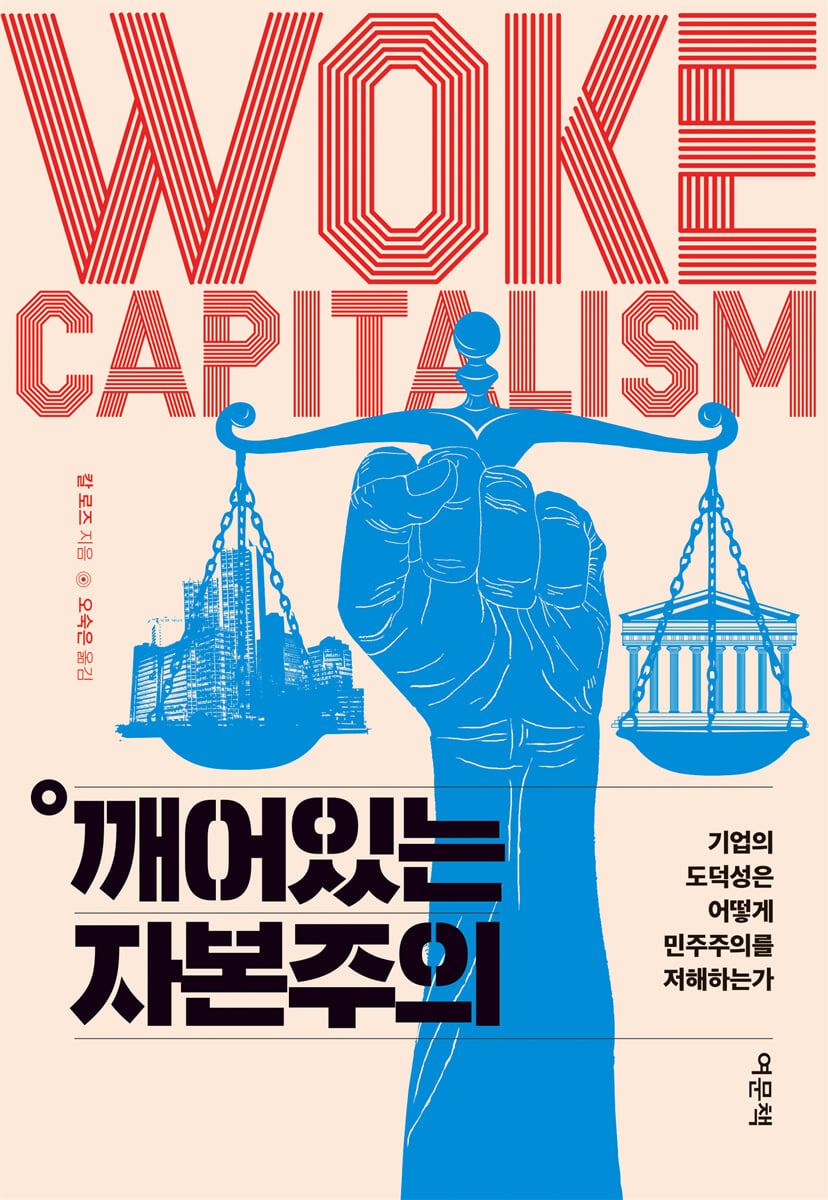 |
Description
Book Introduction
What's the problem with 'woke capitalism'?
The word 'woke' originally had a positive meaning.
The word 'woke', which refers to "a state of being socially and politically conscious" and "alert to racial and social discrimination and injustice," was first used by African Americans and has become so established in mainstream language that it was included in the Oxford English Dictionary in 2017.
However, the word has since acquired a completely opposite meaning, increasingly referring to someone who “pretends to have a false, superficial, and politically correct morality” rather than someone who is “conscious of and wary of social injustice.”
Author Professor Carl Rose persuasively explains how the word 'woke' underwent this semantic shift, examining liberal democracy and neoliberalism.
Are you a "woke person"? Do you find being "woke" cool or pretentious? It can be a bit disconcerting to be suddenly asked this question.
Because the meaning of the word 'awake' is completely reversed, it is confusing which meaning to emphasize.
Why did this situation arise?
Professor Rose laments that the present age is “truly a rich man’s world.”
He diagnoses that after World War II, extreme greed, excess, and wealth inequality brought about by industrial capitalism had become excessive, and this was somewhat alleviated by progressive social reforms, but with the rise of corporate capitalism, abbreviated as neoliberalism, income and wealth inequality has become much more severe than before, and the danger of plutocracy is deepening by the day.
In fact, today in the United States, Warren Buffett, Bill Gates, and Jeff Bezos have as much personal wealth as the bottom half of the population, and this inequality is growing worse by the day.
The combined net worth of America's wealthiest people is now more than 20 times higher than it was in the early 1980s.
Widening inequality is already a global phenomenon.
It is a well-known fact that the top 1 percent of the world's population owns nearly half of the world's wealth.
The author argues that the liberal democratic promise of shared prosperity that characterized the postwar period has effectively ended, particularly as global inequality has grown increasingly severe over the past four decades.
“Today, the bottom half of the world’s population owns less than 1 percent of the world’s wealth.
(Omitted) It is truly a world for the rich.
As the UN report assesses, this unjust situation is an affront to democracy itself” (p. 287).
The word 'woke' originally had a positive meaning.
The word 'woke', which refers to "a state of being socially and politically conscious" and "alert to racial and social discrimination and injustice," was first used by African Americans and has become so established in mainstream language that it was included in the Oxford English Dictionary in 2017.
However, the word has since acquired a completely opposite meaning, increasingly referring to someone who “pretends to have a false, superficial, and politically correct morality” rather than someone who is “conscious of and wary of social injustice.”
Author Professor Carl Rose persuasively explains how the word 'woke' underwent this semantic shift, examining liberal democracy and neoliberalism.
Are you a "woke person"? Do you find being "woke" cool or pretentious? It can be a bit disconcerting to be suddenly asked this question.
Because the meaning of the word 'awake' is completely reversed, it is confusing which meaning to emphasize.
Why did this situation arise?
Professor Rose laments that the present age is “truly a rich man’s world.”
He diagnoses that after World War II, extreme greed, excess, and wealth inequality brought about by industrial capitalism had become excessive, and this was somewhat alleviated by progressive social reforms, but with the rise of corporate capitalism, abbreviated as neoliberalism, income and wealth inequality has become much more severe than before, and the danger of plutocracy is deepening by the day.
In fact, today in the United States, Warren Buffett, Bill Gates, and Jeff Bezos have as much personal wealth as the bottom half of the population, and this inequality is growing worse by the day.
The combined net worth of America's wealthiest people is now more than 20 times higher than it was in the early 1980s.
Widening inequality is already a global phenomenon.
It is a well-known fact that the top 1 percent of the world's population owns nearly half of the world's wealth.
The author argues that the liberal democratic promise of shared prosperity that characterized the postwar period has effectively ended, particularly as global inequality has grown increasingly severe over the past four decades.
“Today, the bottom half of the world’s population owns less than 1 percent of the world’s wealth.
(Omitted) It is truly a world for the rich.
As the UN report assesses, this unjust situation is an affront to democracy itself” (p. 287).
index
Chapter 1: The Problem of Awake Capitalism
Chapter 2 Corporate Populists
Chapter 3: The Reversal of Awakeness
Chapter 4: Capitalism Awakens
Chapter 5 Shareholder Priority
Chapter 6: The Wolf in Disguise
Chapter 7: Not everything that glitters is green
Chapter 8: CEO Activist
Chapter 9: The Race to Awakening
Chapter 10: Racial Capitalism and Conscious Capitalism
Chapter 11: The Best of the Awake Company
Chapter 12 When the Right Hand Gives
Chapter 13: Awakening to Conscious Capitalism
Acknowledgements
Americas and References
Search
Chapter 2 Corporate Populists
Chapter 3: The Reversal of Awakeness
Chapter 4: Capitalism Awakens
Chapter 5 Shareholder Priority
Chapter 6: The Wolf in Disguise
Chapter 7: Not everything that glitters is green
Chapter 8: CEO Activist
Chapter 9: The Race to Awakening
Chapter 10: Racial Capitalism and Conscious Capitalism
Chapter 11: The Best of the Awake Company
Chapter 12 When the Right Hand Gives
Chapter 13: Awakening to Conscious Capitalism
Acknowledgements
Americas and References
Search
Into the book
What distinguishes today's enlightened capitalism from the social responsibility of corporations of the past is that it is not simply about maintaining legitimacy, preventing rebellion, or preventing preemptive regulation.
It is intended to directly take control of democracy, both ideologically and practically.
--- p.130
When private companies take over public functions, no matter how ethically packaged, the takeover is a fast track to the end of democracy and the rise of a new plutocracy in which the wealthy, unelected, rule the country.
It would be easy to dismiss [Larry] Fink as a lone wolf, either in the way he pursues his woke agenda or in the way he leverages that agenda to further his own organization's power and interests.
But this is far from the truth.
Pink serves as a kind of ambassador for a more general expansion of woke capitalism.
--- p.148
Simply put, trickle-down economics is bullshit.
Empirical studies have shown that the direction of actual income transfers is the opposite, from the poor to the rich.
Woke capitalism is largely an anxious response to this, an attempt to paint corporations in a pink-tinted ethical light, lest the excessive inequality it produces spark an angry mob bent on destroying capitalism.
--- p.151
What FairTaxMark points out is that not paying taxes isn't just a way to gain unfair advantages.
On the one hand, it is also a strategy to secure power and control over business competitors.
--- p.168
When private individuals and corporations begin to directly provide public goods and take responsibility for solving public problems, enlightened capitalism expands this plutocracy.
This difference is precisely the core of the serious danger that woke capitalism poses to democracy.
(Omitted) Bezos is representative of a more general trend in capitalism, where the ultra-wealthy present themselves as saviors of the system they have centrally created and that has brought them billions of dollars.
--- p.176~177
Capitalism did not arise as a complete break with feudalism.
Rather, capitalism, while still based on the exploitation of racially distinct groups, has expanded race-based economic activity and inequality in other directions.
According to Robinson, slavery represented the extreme of racial capitalism, “slave labor persisted for more than three hundred years after the dawn of modern capitalism, supplementing wage labor, debt bondage, serfdom, and other forms of forced labor.” Capitalism is about conflicts of interest and exploitation along racial lines as well as class lines.
--- p.243
Today's enlightened capitalism is (omitted) a version of Carnegie's doctrine updated for the political pretensions of the 21st century.
--- p.286
The defining characteristic of awakened capitalism is the absence of fundamental change.
This is a system that allows wealth and prosperity to flow to the rich, deepening inequality worldwide while reinforcing itself with corporate claims of justice.
This also means that companies have become less honest than they were in the heyday of "greed is good" corporate governance.
--- p.303
True change comes from democratic action, not from corporate efforts alone.
We must now abandon the idea that corporate organizations, originally economic actors, can somehow lead the way to a more politically just, equitable, and sustainable world.
Democratic politics is based on the ultimate belief that people have the right to govern themselves.
Politics must be reaffirmed as paramount, and the economy must be relegated to secondary status.
With the rise of enlightened capitalism, we have witnessed the opposite trend reach a dangerous climax, as capitalist corporations increasingly encroach on the moral and political lives of citizens.
--- p.305
If there's a central message to this book, it's that woke capitalism isn't just a ruse designed to maintain the unequal status quo.
It is also an appeal to resist awakened capitalism and not to be fooled.
It is intended to directly take control of democracy, both ideologically and practically.
--- p.130
When private companies take over public functions, no matter how ethically packaged, the takeover is a fast track to the end of democracy and the rise of a new plutocracy in which the wealthy, unelected, rule the country.
It would be easy to dismiss [Larry] Fink as a lone wolf, either in the way he pursues his woke agenda or in the way he leverages that agenda to further his own organization's power and interests.
But this is far from the truth.
Pink serves as a kind of ambassador for a more general expansion of woke capitalism.
--- p.148
Simply put, trickle-down economics is bullshit.
Empirical studies have shown that the direction of actual income transfers is the opposite, from the poor to the rich.
Woke capitalism is largely an anxious response to this, an attempt to paint corporations in a pink-tinted ethical light, lest the excessive inequality it produces spark an angry mob bent on destroying capitalism.
--- p.151
What FairTaxMark points out is that not paying taxes isn't just a way to gain unfair advantages.
On the one hand, it is also a strategy to secure power and control over business competitors.
--- p.168
When private individuals and corporations begin to directly provide public goods and take responsibility for solving public problems, enlightened capitalism expands this plutocracy.
This difference is precisely the core of the serious danger that woke capitalism poses to democracy.
(Omitted) Bezos is representative of a more general trend in capitalism, where the ultra-wealthy present themselves as saviors of the system they have centrally created and that has brought them billions of dollars.
--- p.176~177
Capitalism did not arise as a complete break with feudalism.
Rather, capitalism, while still based on the exploitation of racially distinct groups, has expanded race-based economic activity and inequality in other directions.
According to Robinson, slavery represented the extreme of racial capitalism, “slave labor persisted for more than three hundred years after the dawn of modern capitalism, supplementing wage labor, debt bondage, serfdom, and other forms of forced labor.” Capitalism is about conflicts of interest and exploitation along racial lines as well as class lines.
--- p.243
Today's enlightened capitalism is (omitted) a version of Carnegie's doctrine updated for the political pretensions of the 21st century.
--- p.286
The defining characteristic of awakened capitalism is the absence of fundamental change.
This is a system that allows wealth and prosperity to flow to the rich, deepening inequality worldwide while reinforcing itself with corporate claims of justice.
This also means that companies have become less honest than they were in the heyday of "greed is good" corporate governance.
--- p.303
True change comes from democratic action, not from corporate efforts alone.
We must now abandon the idea that corporate organizations, originally economic actors, can somehow lead the way to a more politically just, equitable, and sustainable world.
Democratic politics is based on the ultimate belief that people have the right to govern themselves.
Politics must be reaffirmed as paramount, and the economy must be relegated to secondary status.
With the rise of enlightened capitalism, we have witnessed the opposite trend reach a dangerous climax, as capitalist corporations increasingly encroach on the moral and political lives of citizens.
--- p.305
If there's a central message to this book, it's that woke capitalism isn't just a ruse designed to maintain the unequal status quo.
It is also an appeal to resist awakened capitalism and not to be fooled.
--- p.312
Publisher's Review
Corporate deception to hijack democracy
The threat to democracy is becoming a reality worldwide.
The world political order is also in a very chaotic state.
Even in the United States, billionaires, armed with their enormous wealth, are blatantly interfering in real-world politics, raising deep concerns.
In this situation, Professor Rose takes on the role of a "warning light for awakened capitalism" and persuasively explains the nature of the problem and countermeasures, centered on various real-life examples.
The enlightened capitalism that Professor Rose talks about in this book is primarily about corporate power (with no intention of criticizing corporate behavior itself).
In his view, the very essence of enlightened capitalism is dangerous because it breaks the chain that has long connected liberal democracy and capitalism, allowing corporations to continue their path to global domination, both economically and politically.
Moreover, “woke capitalism, although disguised as progressive, is fundamentally and primarily tied to long-term corporate interests.
Moreover, even very other-centered programs that seem at first glance to demonstrate corporate generosity, when examined more closely, are revealed to be corporate attempts to draw all members and institutions of society into their web of self-interest.” (pp. 129-130) In short, if we take enlightened capitalism superficially and lightly, the very foundation of democracy could collapse.
Is woke capitalism a case of corporate collusion with the left, or is it a case of corporations co-opting the cause of progress to build a far more powerful and influential corporate capitalist system?
The above sentence is a question often raised by conservative critics.
Whatever the answer, the progressive, liberationist politics that have long encouraged people to be awake are now threatened, their cause reversed, in a world that prioritizes economic gain over political beliefs grounded in justice and equality. The harsh reality is that even the democratic activities of social activists are being unwittingly co-opted by woke capitalism.
The author's warning that awakened capitalism is the strategy of large corporations (or capitalists) to cloud citizens' judgment by fanning individuals' desires and obsessions with wealth, blurring the distinction between the political and economic spheres, and framing progressive political causes as fatigue and hypocrisy, or by appropriating their values, ultimately seizing political power is shocking, if not chilling.
Just by looking at the problems with the Gillette and Nike ads that the author cites as examples in this book, we can quickly realize how serious and difficult this problem is.
Because this isn't just a problem for American consumers.
Gillette, which had maintained the slogan “The Best a Man Can Get” for over 30 years since the 1980s, changed its advertising slogan to “The Best a Man Can Get” starting in 2019.
This marked a shift from emphasizing the typical Western masculinity that triumphs in the competition of life to criticizing the “toxic masculinity” reminiscent of left-wing feminism.
At first glance, it seems like they were trying to actively spread their message by reflecting the trends of the times, but if you look closely, they were simply trying to make more money by following the 'market trend'.
Therefore, it is neither something to be praised from a progressive perspective, nor something to be excited about as a misandry and anti-male advertisement from a conservative perspective.
Nike, also famous for the slogan "Just Do It" and the incredible success of the Air Jordan series featuring basketball legend Michael Jordan, is a representative company that spends a lot of money on advertising to strengthen its identity as a "progressive leader of enlightened capitalism" while neutralizing its image as a "profiteer in a sweatshop."
A third critical perspective that transcends left-right conflict
The debate surrounding the nature of business is not only very old, but it continues to confuse us.
First, the libertarian left holds that corporations should genuinely and properly support the broad interests of society rather than focusing solely on shareholders.
Second, the traditional right holds that corporations should be purely economic entities and should not directly intervene in social and political issues.
This book, on the other hand, takes a third position.
In other words, corporate participation in progressive politics, contrary to what may appear on the surface, is not only detrimental to democracy but also hinders progressive progress.
Therefore, to maintain a critical perspective on awakened capitalism, one must be able to ignore its progressive political views.
Recognizing the reality of awakened capitalism means not being easily fooled into thinking that a fundamental shift has occurred in the core interests of capitalist enterprises, which they are willing or able to pursue.
The real impact of woke capitalism isn't about left-wing activism winning the support of big business.
Rather, it has the effect of ensuring that no fundamental reforms take place in the dominant neoliberal world order, which deepens inequality, fosters fascist populism, and allows the climate crisis to accelerate.
So, Professor Rose's diagnosis is that it is more dangerous.
“Socialism is based on a fundamental questioning of the injustices that capitalism creates and promotes, whereas enlightened capitalism, linked to progressive politics, fails to recognize these injustices.
“Although the notion of being woke is associated with left-wing progressive politics, for the woke capitalist there is no necessary contradiction between justice and capitalism” (p. 217).
The Duality of Billionaire Charity and Aggressive Tax Avoidance
Among several key capitalists who built enormous industrial empires in late 19th-century America, Andrew Carnegie stands out as one of the most effective examples of combining industrial wealth with social philanthropy.
Carnegie was one of the "robber barons" who emerged after the American Civil War, but his essay "The Gospel of Wealth" still has a powerful influence.
According to the author, Carnegie, considered the richest man in history, had a net worth of $321 billion today, which pales in comparison to Jeff Bezos' $200 billion.
Carnegie, who feared that the nature and scale of the severe inequality created by 19th-century industrial capitalism could easily lead to new forms of extreme conflict, believed that in order to maintain this system of inequality, measures were needed to "harmonize" the relationship between those who benefited from this system and the workers, and he developed an international network of foundations, funds, and research institutes that would use his wealth for charitable purposes.
Since then, his faithful disciples have continued to make news with their active charity work and enormous donations.
But there is a very ironic truth hidden here.
In a list of corporate tax evaders filled with international giants whose names are widely known, Jeff Bezos' Amazon ranks as the "worst offender."
Unlike Bezos, who was named the "top philanthropist" for donating enormous sums of money to various causes, including $10 billion, which is equivalent to the amount invested by the entire U.S. government to fight climate change, Amazon, which he founded, is the most aggressively tax-evading company.
Professor Rose analyzes Carnegie's "Gospel of Wealth" and concludes:
“In Carnegie’s world, capitalists should be kings.
(Omitted) At the heart of Carnegie's philanthropy, and the sentiment alive in conscious capitalism today, is the idea that the rich have the right to decide what constitutes the public good.
“Carnegie’s idea is a very undemocratic one, assuming that a benevolent plutocracy is the ideal political system.” (p. 282)
The philanthropy of the wealthy is merely a means to morally justify extreme inequality.
Therefore, we must now move beyond the naive notion that their donations and philanthropy are “generous gifts” and instead embrace them as “the silver coin of betrayal paid in exchange for the end of democracy.”
And we must actively resist the harsh reality that those who seek to destroy democracy and establish plutocracy desire permanent inequality, and that enlightened capitalism only reinforces this inequality through the political influence and moralizing control of corporations themselves.
The threat to democracy is becoming a reality worldwide.
The world political order is also in a very chaotic state.
Even in the United States, billionaires, armed with their enormous wealth, are blatantly interfering in real-world politics, raising deep concerns.
In this situation, Professor Rose takes on the role of a "warning light for awakened capitalism" and persuasively explains the nature of the problem and countermeasures, centered on various real-life examples.
The enlightened capitalism that Professor Rose talks about in this book is primarily about corporate power (with no intention of criticizing corporate behavior itself).
In his view, the very essence of enlightened capitalism is dangerous because it breaks the chain that has long connected liberal democracy and capitalism, allowing corporations to continue their path to global domination, both economically and politically.
Moreover, “woke capitalism, although disguised as progressive, is fundamentally and primarily tied to long-term corporate interests.
Moreover, even very other-centered programs that seem at first glance to demonstrate corporate generosity, when examined more closely, are revealed to be corporate attempts to draw all members and institutions of society into their web of self-interest.” (pp. 129-130) In short, if we take enlightened capitalism superficially and lightly, the very foundation of democracy could collapse.
Is woke capitalism a case of corporate collusion with the left, or is it a case of corporations co-opting the cause of progress to build a far more powerful and influential corporate capitalist system?
The above sentence is a question often raised by conservative critics.
Whatever the answer, the progressive, liberationist politics that have long encouraged people to be awake are now threatened, their cause reversed, in a world that prioritizes economic gain over political beliefs grounded in justice and equality. The harsh reality is that even the democratic activities of social activists are being unwittingly co-opted by woke capitalism.
The author's warning that awakened capitalism is the strategy of large corporations (or capitalists) to cloud citizens' judgment by fanning individuals' desires and obsessions with wealth, blurring the distinction between the political and economic spheres, and framing progressive political causes as fatigue and hypocrisy, or by appropriating their values, ultimately seizing political power is shocking, if not chilling.
Just by looking at the problems with the Gillette and Nike ads that the author cites as examples in this book, we can quickly realize how serious and difficult this problem is.
Because this isn't just a problem for American consumers.
Gillette, which had maintained the slogan “The Best a Man Can Get” for over 30 years since the 1980s, changed its advertising slogan to “The Best a Man Can Get” starting in 2019.
This marked a shift from emphasizing the typical Western masculinity that triumphs in the competition of life to criticizing the “toxic masculinity” reminiscent of left-wing feminism.
At first glance, it seems like they were trying to actively spread their message by reflecting the trends of the times, but if you look closely, they were simply trying to make more money by following the 'market trend'.
Therefore, it is neither something to be praised from a progressive perspective, nor something to be excited about as a misandry and anti-male advertisement from a conservative perspective.
Nike, also famous for the slogan "Just Do It" and the incredible success of the Air Jordan series featuring basketball legend Michael Jordan, is a representative company that spends a lot of money on advertising to strengthen its identity as a "progressive leader of enlightened capitalism" while neutralizing its image as a "profiteer in a sweatshop."
A third critical perspective that transcends left-right conflict
The debate surrounding the nature of business is not only very old, but it continues to confuse us.
First, the libertarian left holds that corporations should genuinely and properly support the broad interests of society rather than focusing solely on shareholders.
Second, the traditional right holds that corporations should be purely economic entities and should not directly intervene in social and political issues.
This book, on the other hand, takes a third position.
In other words, corporate participation in progressive politics, contrary to what may appear on the surface, is not only detrimental to democracy but also hinders progressive progress.
Therefore, to maintain a critical perspective on awakened capitalism, one must be able to ignore its progressive political views.
Recognizing the reality of awakened capitalism means not being easily fooled into thinking that a fundamental shift has occurred in the core interests of capitalist enterprises, which they are willing or able to pursue.
The real impact of woke capitalism isn't about left-wing activism winning the support of big business.
Rather, it has the effect of ensuring that no fundamental reforms take place in the dominant neoliberal world order, which deepens inequality, fosters fascist populism, and allows the climate crisis to accelerate.
So, Professor Rose's diagnosis is that it is more dangerous.
“Socialism is based on a fundamental questioning of the injustices that capitalism creates and promotes, whereas enlightened capitalism, linked to progressive politics, fails to recognize these injustices.
“Although the notion of being woke is associated with left-wing progressive politics, for the woke capitalist there is no necessary contradiction between justice and capitalism” (p. 217).
The Duality of Billionaire Charity and Aggressive Tax Avoidance
Among several key capitalists who built enormous industrial empires in late 19th-century America, Andrew Carnegie stands out as one of the most effective examples of combining industrial wealth with social philanthropy.
Carnegie was one of the "robber barons" who emerged after the American Civil War, but his essay "The Gospel of Wealth" still has a powerful influence.
According to the author, Carnegie, considered the richest man in history, had a net worth of $321 billion today, which pales in comparison to Jeff Bezos' $200 billion.
Carnegie, who feared that the nature and scale of the severe inequality created by 19th-century industrial capitalism could easily lead to new forms of extreme conflict, believed that in order to maintain this system of inequality, measures were needed to "harmonize" the relationship between those who benefited from this system and the workers, and he developed an international network of foundations, funds, and research institutes that would use his wealth for charitable purposes.
Since then, his faithful disciples have continued to make news with their active charity work and enormous donations.
But there is a very ironic truth hidden here.
In a list of corporate tax evaders filled with international giants whose names are widely known, Jeff Bezos' Amazon ranks as the "worst offender."
Unlike Bezos, who was named the "top philanthropist" for donating enormous sums of money to various causes, including $10 billion, which is equivalent to the amount invested by the entire U.S. government to fight climate change, Amazon, which he founded, is the most aggressively tax-evading company.
Professor Rose analyzes Carnegie's "Gospel of Wealth" and concludes:
“In Carnegie’s world, capitalists should be kings.
(Omitted) At the heart of Carnegie's philanthropy, and the sentiment alive in conscious capitalism today, is the idea that the rich have the right to decide what constitutes the public good.
“Carnegie’s idea is a very undemocratic one, assuming that a benevolent plutocracy is the ideal political system.” (p. 282)
The philanthropy of the wealthy is merely a means to morally justify extreme inequality.
Therefore, we must now move beyond the naive notion that their donations and philanthropy are “generous gifts” and instead embrace them as “the silver coin of betrayal paid in exchange for the end of democracy.”
And we must actively resist the harsh reality that those who seek to destroy democracy and establish plutocracy desire permanent inequality, and that enlightened capitalism only reinforces this inequality through the political influence and moralizing control of corporations themselves.
GOODS SPECIFICS
- Date of issue: November 3, 2025
- Page count, weight, size: 376 pages | 486g | 145*210*18mm
- ISBN13: 9791124088005
You may also like
카테고리
korean


korean

![GQ KOREA Mark (Monthly): December [2025]](http://librairie.coreenne.fr/cdn/shop/files/8ef265dbbfbf186523ed75ba7319009d.jpg?v=1765340328&width=3840)


