

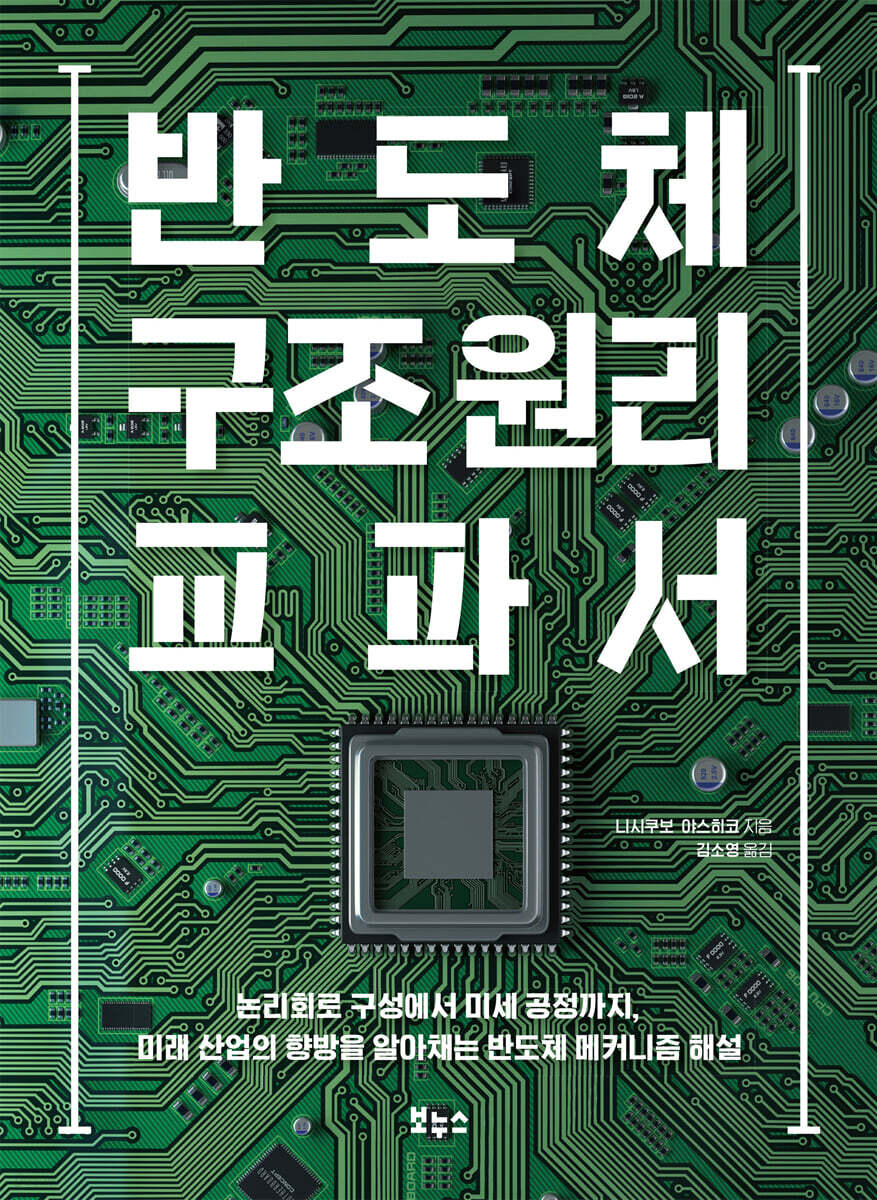
Semiconductor Structure Principles Textbook
 |
Description
Book Introduction
This is a book on semiconductor mechanisms explained directly by engineers.
It covers the structure, principles, and manufacturing processes of semiconductors from a thorough technical perspective, and clearly explains key concepts.
It is explained easily using diagrams and graphs, making it suitable for beginners and those interested in the industry.
The book begins with an explanation of semiconductor devices such as ICs and LSIs, and examines the overall mechanisms required for semiconductor manufacturing, from the basic principles of logic gate manufacturing to the specific LSI development and manufacturing processes.
A balanced look at how the world's leading manufacturers actually make semiconductors.
It covers the structure, principles, and manufacturing processes of semiconductors from a thorough technical perspective, and clearly explains key concepts.
It is explained easily using diagrams and graphs, making it suitable for beginners and those interested in the industry.
The book begins with an explanation of semiconductor devices such as ICs and LSIs, and examines the overall mechanisms required for semiconductor manufacturing, from the basic principles of logic gate manufacturing to the specific LSI development and manufacturing processes.
A balanced look at how the world's leading manufacturers actually make semiconductors.
- You can preview some of the book's contents.
Preview
index
Preface : The Amazing Journey of Semiconductor Technology, Advancing Towards Nanoscale Miniaturization
Chapter 1 What is a Semiconductor?
Understanding the basic properties you absolutely must know
1-1 General characteristics of semiconductors
1-2 What is the difference between a conductor and an insulator?
1-3 Semiconductor's Dual Personality
1-4 What is silicon, a semiconductor material?
1-5 Depending on the type of impurity, it becomes a P-type semiconductor or an N-type semiconductor.
1-6 Energy structure of N-type semiconductor and P-type semiconductor
1-7 How to make a silicon wafer, a substrate equipped with an LSI
Chapter 2 What are IC and LSI?
Types and Applications of LSI
2-1 What is LSI, which realizes high-performance electronic devices?
2-2 How is LSI configured on a silicon wafer?
2-3 What types of LSI are there?
2-4 How would you classify LSIs by function?
2-5 Memory Types
2-6 What types of custom-made ASICs are there?
2-7 What's inside a microcomputer?
2-8 All functions integrated into a single chip, developing into a system LSI.
2-9 System LSI-equipped devices ① Mobile phones
2-10 System LSI-equipped devices ② Digital cameras
In addition to column ICs and LSIs, there are many other types of semiconductors.
Chapter 3 Basic Operation of Semiconductor Devices
Learn the basic principles of transistors
3-1 PN junction is the basis of semiconductors
3-2 What is a diode that transmits current in one direction?
3-3 Basic principles of transistors, what is a bipolar transistor?
3-4 What is a MOS transistor, the basic component of LSI?
3-5 What is the most commonly used CMOS?
3-6 How does memory DRAM work and what is its basic structure?
3-7 What is flash memory used in mobile devices?
3-8 DRAM, universal memory that carries the next generation of flash
Chapter 4 Principles of Digital Circuits
Understand how to calculate
4-1 What is the difference between analog and digital?
4-2 The Basics of Digital Processing: What is Binary?
4-3 Basics of LSI Logic Circuits: What is Boolean Algebra?
4-4 What are the basic logic gates used in LSI?
Converting from 4-5 logic gates to binary
4-6 How to add (adder) in digital circuits?
4-7 How to subtract (subtract) in a digital circuit?
4-8 Other Major Digital Basic Circuits
Chapter 5 Development and Design of LSI
What is the design process?
5-1 From LSI development planning to product development
5-2 Functional Design
5-3 Logic Design
5-4 Layout/Mask Design
5-5 Circuit Design
5-6 photomask
5-7 Latest Design Technology Trends
5-8 LSI Electrical Characteristics Defect Analysis Evaluation and Shipment Test Method
Chapter 6: All Processes of LSI Manufacturing
How are silicon chips made?
6-1 All processes for making semiconductors
6-2 Cleaning technology and cleaning device
6-3 Tabernacle Technology and Types of Tabernacles
6-4 How is the thin film formed?
6-5 What is lithography technology for microfabrication?
6-6 What is the exposure technology that determines the limits of transistor dimensions?
6-7 What is etching in 3D micromachining?
6-8 What is the impurity diffusion process?
6-9 Metal wiring connecting semiconductor elements
Understanding the Manufacturing Process of 6-10 CMOS Inverters
① Ion implantation into the P-well area in the PW photomask
② Heat treatment is performed to expand the P-well area.
③ Creating an AR (Active Region) area
④ Formation of insulating separation film (SiO2 with LOCOS structure)
⑤ Create polysilicon and use a POLY mask to create the gate and polysilicon wiring of the MOS transistor.
⑥ Masking areas other than the PMOS area with a PD photomask
⑦ P-type impurity (boron) diffusion
⑧ Masking areas other than the NMOS area with an ND photomask
⑨ Impurity diffusion of N-type impurities (phosphorus)
⑩ Create an interlayer insulating film and drill a contact hole
⑪ Metal wiring with METAL photomask
⑫ Create a protective shield
Column Cleanroom
Column: Actual Number of Photomasks Used and Their Price
Chapter 7: Post-processing and mounting technology in LSI manufacturing
From packaging to inspection and shipping
7-1 From packaging the silicon chip to inspection and shipment
7-2 There are many types of package shapes.
7-3 What kind of package is BGA or CSP?
SIP, which mounts multiple 7-4 chips in the same package
3D mounting technology using 7-5 through-hole electrode TSV
7-6 Further evolving high-density packaging technology
Chapter 8 Representative Semiconductor Devices
Light-emitting diodes, semiconductor lasers, image sensors, and power semiconductors
8-1 Basic Principles of Optical Semiconductors
8-2 The emergence of white LEDs as lighting fixtures
8-3 Image sensor integrating a large number of photodiodes
8-4 Semiconductor lasers that enabled high-speed communications networks
8-5 High-definition long-term recorder enabled by blue laser
8-6 Power semiconductors that contribute to saving electrical energy
8-7 IC card is a microcomputer
8-8 Wireless Communication IC Tags That Change the Structure of Distribution Management
Chapter 9: The Future of Semiconductor Miniaturization
Smaller, faster, more efficient
What are the limits of transistor miniaturization?
9-2 Miniaturization accelerates the performance of electronic devices.
References
Search
Chapter 1 What is a Semiconductor?
Understanding the basic properties you absolutely must know
1-1 General characteristics of semiconductors
1-2 What is the difference between a conductor and an insulator?
1-3 Semiconductor's Dual Personality
1-4 What is silicon, a semiconductor material?
1-5 Depending on the type of impurity, it becomes a P-type semiconductor or an N-type semiconductor.
1-6 Energy structure of N-type semiconductor and P-type semiconductor
1-7 How to make a silicon wafer, a substrate equipped with an LSI
Chapter 2 What are IC and LSI?
Types and Applications of LSI
2-1 What is LSI, which realizes high-performance electronic devices?
2-2 How is LSI configured on a silicon wafer?
2-3 What types of LSI are there?
2-4 How would you classify LSIs by function?
2-5 Memory Types
2-6 What types of custom-made ASICs are there?
2-7 What's inside a microcomputer?
2-8 All functions integrated into a single chip, developing into a system LSI.
2-9 System LSI-equipped devices ① Mobile phones
2-10 System LSI-equipped devices ② Digital cameras
In addition to column ICs and LSIs, there are many other types of semiconductors.
Chapter 3 Basic Operation of Semiconductor Devices
Learn the basic principles of transistors
3-1 PN junction is the basis of semiconductors
3-2 What is a diode that transmits current in one direction?
3-3 Basic principles of transistors, what is a bipolar transistor?
3-4 What is a MOS transistor, the basic component of LSI?
3-5 What is the most commonly used CMOS?
3-6 How does memory DRAM work and what is its basic structure?
3-7 What is flash memory used in mobile devices?
3-8 DRAM, universal memory that carries the next generation of flash
Chapter 4 Principles of Digital Circuits
Understand how to calculate
4-1 What is the difference between analog and digital?
4-2 The Basics of Digital Processing: What is Binary?
4-3 Basics of LSI Logic Circuits: What is Boolean Algebra?
4-4 What are the basic logic gates used in LSI?
Converting from 4-5 logic gates to binary
4-6 How to add (adder) in digital circuits?
4-7 How to subtract (subtract) in a digital circuit?
4-8 Other Major Digital Basic Circuits
Chapter 5 Development and Design of LSI
What is the design process?
5-1 From LSI development planning to product development
5-2 Functional Design
5-3 Logic Design
5-4 Layout/Mask Design
5-5 Circuit Design
5-6 photomask
5-7 Latest Design Technology Trends
5-8 LSI Electrical Characteristics Defect Analysis Evaluation and Shipment Test Method
Chapter 6: All Processes of LSI Manufacturing
How are silicon chips made?
6-1 All processes for making semiconductors
6-2 Cleaning technology and cleaning device
6-3 Tabernacle Technology and Types of Tabernacles
6-4 How is the thin film formed?
6-5 What is lithography technology for microfabrication?
6-6 What is the exposure technology that determines the limits of transistor dimensions?
6-7 What is etching in 3D micromachining?
6-8 What is the impurity diffusion process?
6-9 Metal wiring connecting semiconductor elements
Understanding the Manufacturing Process of 6-10 CMOS Inverters
① Ion implantation into the P-well area in the PW photomask
② Heat treatment is performed to expand the P-well area.
③ Creating an AR (Active Region) area
④ Formation of insulating separation film (SiO2 with LOCOS structure)
⑤ Create polysilicon and use a POLY mask to create the gate and polysilicon wiring of the MOS transistor.
⑥ Masking areas other than the PMOS area with a PD photomask
⑦ P-type impurity (boron) diffusion
⑧ Masking areas other than the NMOS area with an ND photomask
⑨ Impurity diffusion of N-type impurities (phosphorus)
⑩ Create an interlayer insulating film and drill a contact hole
⑪ Metal wiring with METAL photomask
⑫ Create a protective shield
Column Cleanroom
Column: Actual Number of Photomasks Used and Their Price
Chapter 7: Post-processing and mounting technology in LSI manufacturing
From packaging to inspection and shipping
7-1 From packaging the silicon chip to inspection and shipment
7-2 There are many types of package shapes.
7-3 What kind of package is BGA or CSP?
SIP, which mounts multiple 7-4 chips in the same package
3D mounting technology using 7-5 through-hole electrode TSV
7-6 Further evolving high-density packaging technology
Chapter 8 Representative Semiconductor Devices
Light-emitting diodes, semiconductor lasers, image sensors, and power semiconductors
8-1 Basic Principles of Optical Semiconductors
8-2 The emergence of white LEDs as lighting fixtures
8-3 Image sensor integrating a large number of photodiodes
8-4 Semiconductor lasers that enabled high-speed communications networks
8-5 High-definition long-term recorder enabled by blue laser
8-6 Power semiconductors that contribute to saving electrical energy
8-7 IC card is a microcomputer
8-8 Wireless Communication IC Tags That Change the Structure of Distribution Management
Chapter 9: The Future of Semiconductor Miniaturization
Smaller, faster, more efficient
What are the limits of transistor miniaturization?
9-2 Miniaturization accelerates the performance of electronic devices.
References
Search
Detailed image

Publisher's Review
How Semiconductor Technology Shapes the Future
The latest technologies and trends that break through technological limitations
HBM · EUV exposure · TSV · Micro etching
When Intel created the world's first civilian microprocessor, the 4004, the process rule (the smallest unit specified in the manufacturing process) was 10 μm (micrometer).
1 μm is 0.001 mm), and 2,300 transistors were used.
Nowadays, billions of transistors are integrated into a single chip through a 3nm (nanometer, 1nm is 0.001μm) miniaturization process.
Since the full-scale semiconductor industry began in the 1970s, semiconductor chips have faithfully followed Moore's Law, which states that the number of transistors doubles approximately every two years. Despite pessimistic assessments that this has now reached its limit, efforts to improve chip performance continue.
Semiconductor technology continues to advance and overcome technological challenges.
《Semiconductor Structure Principles Textbook》 introduces the basic structure and principles of semiconductors, taking into account the characteristics and current status of the semiconductor technology field, and also organizes the latest technology trends and future technology prospects.
First, in the design section, we introduce mainstream trends such as C language-based design technology, layout design considering timing, IP reuse design, and design for easy manufacturing. In the manufacturing section, we introduce EUV exposure equipment, microwave etching equipment, and the latest mounting technology.
Readers who closely follow semiconductor-related news may be particularly interested in the packaging technology covered in Chapter 7 of this book.
We introduce SIP and TSV (through-side via) technologies, which stack multiple chips in a single package. These technologies have recently been attracting much attention as competition in artificial intelligence, especially large-scale language models, intensifies.
Training large-scale language models requires a huge number of GPUs, and the high-performance memory used for these, HBM, is manufactured using stacking technology.
The leader in this field is SK Hynix, which has been mass producing HBM3, a 12-layer DRAM, since April 2023.
In the textbook "Semiconductor Structure Principles," we introduce how 3D mounting technology using TSV technology achieves high density, miniaturization, high speed, low power consumption, and high functionality, along with the manufacturing process.
You can understand from a technical perspective why people are paying attention to this technology.
In addition, we introduce next-generation memory technologies such as F-RAM and R-RAM, and even look into the future of universal memory.
Samsung Electronics, SK Hynix, and TSMC
How the World's Best Companies Make Semiconductors
Understanding from logic circuit configuration to manufacturing process
《Semiconductor Structure Principles Textbook》 is an introductory book to semiconductor technology that will satisfy all your questions about semiconductors and satisfy your intellectual curiosity.
This book, written by a professor with a background in semiconductor development engineering, examines semiconductors from a thorough technical perspective and introduces related knowledge.
The book summarizes the vast knowledge of semiconductors by selecting key concepts and using various diagrams and graphs to provide easy and quick explanations.
Thanks to this, anyone can gain a general understanding of the structure, operating principles, and manufacturing process of semiconductors.
This book is open to everyone.
It will be useful for those who are curious about the semiconductor industry for investment purposes, beginners who are starting to study semiconductors for the first time, and those who want to work for a semiconductor company for the first time.
We will explain the principles by which the world's top semiconductor manufacturers, including Samsung Electronics, Hynix, TSMC, and Intel, make semiconductors.
The author has taken great care to structure the book so that it covers a wide range of semiconductor knowledge in a balanced way, while also naturally progressing from basic to advanced.
Briefly, the book begins by introducing the properties of a material called a semiconductor.
After that, the identity and use of IC (integrated circuit) and LSI (large-scale integrated circuit) are explained, and the operating principles of semiconductor elements and digital circuits are explained.
The book aims to provide a thorough understanding of semiconductors from a technical perspective, from the ground up, at a level that is accessible to the general public. Therefore, it covers the basic principles of creating logic gates using binary and Boolean algebra, and also introduces how LSIs are planned and developed, as well as the specific manufacturing process.
This book allows readers to move beyond abstract and superficial understanding and grasp the beginning and end of semiconductors from a concrete technological perspective in the shortest possible time.
Easy and quick explanation from a professor with an engineering background
A technical textbook that reveals the true face of semiconductor technology.
The author predicts that miniaturization technology is continuing to develop and that 1nm-level miniaturization will be realized within 10 years.
It also introduces a technology that realizes a transistor using only one or a few atoms, although the feasibility is still slim.
Current DRAM memory stores one bit by charging and discharging about 100,000 electrons in a capacitor, but memory made with this technology can store one bit with one or a few electrons.
Therefore, it is expected that if this technology can be realized, it will bring about a revolution as the power consumption can be reduced by about 1/100,000.
Another strength of the book is that the author's expertise, gained through decades of experience as a semiconductor engineer, is reflected throughout the book.
The semiconductor industry began to emerge in the 1970s.
From then on, the author worked in the semiconductor manufacturing field and witnessed firsthand the dazzling advancements in technology.
He is currently working as a company representative on the front lines and is trying to keep up with semiconductor technology trends.
At the same time, he taught students at a university and published several books on semiconductors.
As this book was written by a professor with extensive field experience and background as an engineer, it serves as a useful guide for those who want to learn semiconductor technology from the basics.
Semiconductors: The Key to Understanding the World
Beyond core technologies, we explore future technologies.
Semiconductors are called the rice of modern industry.
The semiconductor chip is a super component that shows the best versatility and performance to the point that there is no place where it is not used.
As the US and China compete for hegemony, the semiconductor industry naturally becomes a major issue, and the US has brought major semiconductor manufacturers' factories into the country with the aim of reviving its own semiconductor industry, causing conflicts here and there.
For this reason, it is no exaggeration to say that understanding semiconductors is now like understanding the world.
From how the electronic devices around us work to how global politics and economics work, semiconductors have become the key to understanding the world.
Let's build up our knowledge of semiconductors, a core part of modern culture, with this book that captures the core of semiconductor technology and its future prospects from an engineer's perspective.
Your perspective on and understanding of the world will improve a little.
The latest technologies and trends that break through technological limitations
HBM · EUV exposure · TSV · Micro etching
When Intel created the world's first civilian microprocessor, the 4004, the process rule (the smallest unit specified in the manufacturing process) was 10 μm (micrometer).
1 μm is 0.001 mm), and 2,300 transistors were used.
Nowadays, billions of transistors are integrated into a single chip through a 3nm (nanometer, 1nm is 0.001μm) miniaturization process.
Since the full-scale semiconductor industry began in the 1970s, semiconductor chips have faithfully followed Moore's Law, which states that the number of transistors doubles approximately every two years. Despite pessimistic assessments that this has now reached its limit, efforts to improve chip performance continue.
Semiconductor technology continues to advance and overcome technological challenges.
《Semiconductor Structure Principles Textbook》 introduces the basic structure and principles of semiconductors, taking into account the characteristics and current status of the semiconductor technology field, and also organizes the latest technology trends and future technology prospects.
First, in the design section, we introduce mainstream trends such as C language-based design technology, layout design considering timing, IP reuse design, and design for easy manufacturing. In the manufacturing section, we introduce EUV exposure equipment, microwave etching equipment, and the latest mounting technology.
Readers who closely follow semiconductor-related news may be particularly interested in the packaging technology covered in Chapter 7 of this book.
We introduce SIP and TSV (through-side via) technologies, which stack multiple chips in a single package. These technologies have recently been attracting much attention as competition in artificial intelligence, especially large-scale language models, intensifies.
Training large-scale language models requires a huge number of GPUs, and the high-performance memory used for these, HBM, is manufactured using stacking technology.
The leader in this field is SK Hynix, which has been mass producing HBM3, a 12-layer DRAM, since April 2023.
In the textbook "Semiconductor Structure Principles," we introduce how 3D mounting technology using TSV technology achieves high density, miniaturization, high speed, low power consumption, and high functionality, along with the manufacturing process.
You can understand from a technical perspective why people are paying attention to this technology.
In addition, we introduce next-generation memory technologies such as F-RAM and R-RAM, and even look into the future of universal memory.
Samsung Electronics, SK Hynix, and TSMC
How the World's Best Companies Make Semiconductors
Understanding from logic circuit configuration to manufacturing process
《Semiconductor Structure Principles Textbook》 is an introductory book to semiconductor technology that will satisfy all your questions about semiconductors and satisfy your intellectual curiosity.
This book, written by a professor with a background in semiconductor development engineering, examines semiconductors from a thorough technical perspective and introduces related knowledge.
The book summarizes the vast knowledge of semiconductors by selecting key concepts and using various diagrams and graphs to provide easy and quick explanations.
Thanks to this, anyone can gain a general understanding of the structure, operating principles, and manufacturing process of semiconductors.
This book is open to everyone.
It will be useful for those who are curious about the semiconductor industry for investment purposes, beginners who are starting to study semiconductors for the first time, and those who want to work for a semiconductor company for the first time.
We will explain the principles by which the world's top semiconductor manufacturers, including Samsung Electronics, Hynix, TSMC, and Intel, make semiconductors.
The author has taken great care to structure the book so that it covers a wide range of semiconductor knowledge in a balanced way, while also naturally progressing from basic to advanced.
Briefly, the book begins by introducing the properties of a material called a semiconductor.
After that, the identity and use of IC (integrated circuit) and LSI (large-scale integrated circuit) are explained, and the operating principles of semiconductor elements and digital circuits are explained.
The book aims to provide a thorough understanding of semiconductors from a technical perspective, from the ground up, at a level that is accessible to the general public. Therefore, it covers the basic principles of creating logic gates using binary and Boolean algebra, and also introduces how LSIs are planned and developed, as well as the specific manufacturing process.
This book allows readers to move beyond abstract and superficial understanding and grasp the beginning and end of semiconductors from a concrete technological perspective in the shortest possible time.
Easy and quick explanation from a professor with an engineering background
A technical textbook that reveals the true face of semiconductor technology.
The author predicts that miniaturization technology is continuing to develop and that 1nm-level miniaturization will be realized within 10 years.
It also introduces a technology that realizes a transistor using only one or a few atoms, although the feasibility is still slim.
Current DRAM memory stores one bit by charging and discharging about 100,000 electrons in a capacitor, but memory made with this technology can store one bit with one or a few electrons.
Therefore, it is expected that if this technology can be realized, it will bring about a revolution as the power consumption can be reduced by about 1/100,000.
Another strength of the book is that the author's expertise, gained through decades of experience as a semiconductor engineer, is reflected throughout the book.
The semiconductor industry began to emerge in the 1970s.
From then on, the author worked in the semiconductor manufacturing field and witnessed firsthand the dazzling advancements in technology.
He is currently working as a company representative on the front lines and is trying to keep up with semiconductor technology trends.
At the same time, he taught students at a university and published several books on semiconductors.
As this book was written by a professor with extensive field experience and background as an engineer, it serves as a useful guide for those who want to learn semiconductor technology from the basics.
Semiconductors: The Key to Understanding the World
Beyond core technologies, we explore future technologies.
Semiconductors are called the rice of modern industry.
The semiconductor chip is a super component that shows the best versatility and performance to the point that there is no place where it is not used.
As the US and China compete for hegemony, the semiconductor industry naturally becomes a major issue, and the US has brought major semiconductor manufacturers' factories into the country with the aim of reviving its own semiconductor industry, causing conflicts here and there.
For this reason, it is no exaggeration to say that understanding semiconductors is now like understanding the world.
From how the electronic devices around us work to how global politics and economics work, semiconductors have become the key to understanding the world.
Let's build up our knowledge of semiconductors, a core part of modern culture, with this book that captures the core of semiconductor technology and its future prospects from an engineer's perspective.
Your perspective on and understanding of the world will improve a little.
GOODS SPECIFICS
- Date of issue: December 5, 2023
- Page count, weight, size: 280 pages | 608g | 172*235*17mm
- ISBN13: 9788964946619
You may also like
카테고리
korean


korean

![GQ KOREA Mark (Monthly): December [2025]](http://librairie.coreenne.fr/cdn/shop/files/8ef265dbbfbf186523ed75ba7319009d.jpg?v=1765340328&width=3840)


