

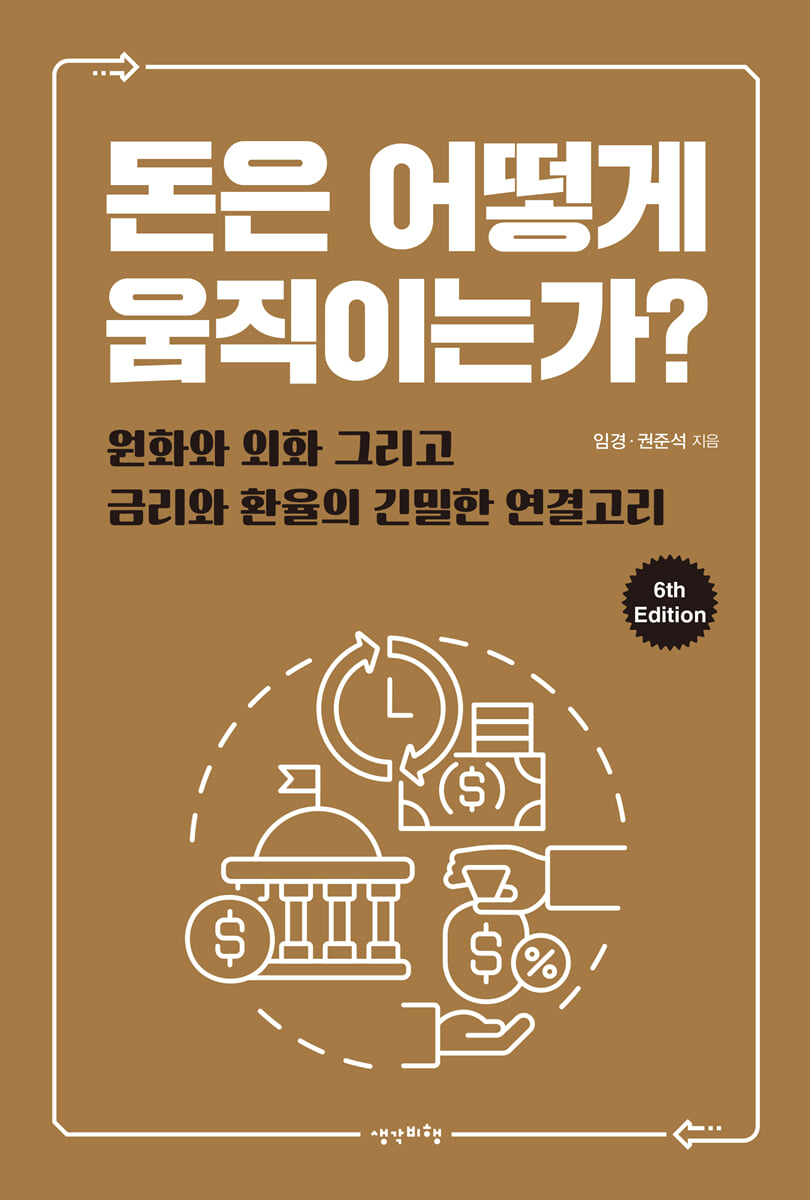
How does money move?
 |
Description
Book Introduction
Facing inflation after the COVID-19 pandemic
Read the movement of money in the global financial and economic environment!
In 2020, the world faced an unexpected challenge: COVID-19.
I was able to experience once again that economic factors are not the only factors that influence the economy.
It was predicted that COVID-19, which began to spread in earnest in China in January 2020, would remain a localized problem.
However, COVID-19 spread to various parts of the world, including Europe and the Middle East, and people were gripped by fear.
The global economy has been hit hard by the COVID-19 pandemic, which has forced borders to close and restricted movement.
Stock prices plummeted and U.S. Treasury yields soared.
As the trend of seeking safe assets became more evident, the preference for the US dollar increased.
Based on the experience gained during the global financial crisis, governments and central banks around the world were able to quickly respond to these real economic shocks and financial market volatility, achieving a degree of stability.
However, as a result of the policy fallout (unprecedented monetary easing) to overcome the COVID-19 crisis, the world is experiencing inflation for the first time in 40 years.
How Money Moves [6th Edition] reflects the rapidly changing global economic and financial situation.
Team Leader Kwon Jun-seok, who has been a co-author since the 5th edition, was responsible for conducting an in-depth analysis of the impact of COVID-19 on the stability of the financial system through financial markets and the real economy at the Financial Stability Bureau of the Bank of Korea.
Based on that experience, I explained in an easy-to-understand manner what policies our government implemented to overcome the COVID-19 crisis, what problems these policies caused, and what could happen to the flow of money in the future.
Additionally, the tables and graphs have been completely revised with recent data to facilitate easy understanding of the book's theme, "The flow of the Korean won and foreign currencies, and the link between exchange rates and interest rates."
Read the movement of money in the global financial and economic environment!
In 2020, the world faced an unexpected challenge: COVID-19.
I was able to experience once again that economic factors are not the only factors that influence the economy.
It was predicted that COVID-19, which began to spread in earnest in China in January 2020, would remain a localized problem.
However, COVID-19 spread to various parts of the world, including Europe and the Middle East, and people were gripped by fear.
The global economy has been hit hard by the COVID-19 pandemic, which has forced borders to close and restricted movement.
Stock prices plummeted and U.S. Treasury yields soared.
As the trend of seeking safe assets became more evident, the preference for the US dollar increased.
Based on the experience gained during the global financial crisis, governments and central banks around the world were able to quickly respond to these real economic shocks and financial market volatility, achieving a degree of stability.
However, as a result of the policy fallout (unprecedented monetary easing) to overcome the COVID-19 crisis, the world is experiencing inflation for the first time in 40 years.
How Money Moves [6th Edition] reflects the rapidly changing global economic and financial situation.
Team Leader Kwon Jun-seok, who has been a co-author since the 5th edition, was responsible for conducting an in-depth analysis of the impact of COVID-19 on the stability of the financial system through financial markets and the real economy at the Financial Stability Bureau of the Bank of Korea.
Based on that experience, I explained in an easy-to-understand manner what policies our government implemented to overcome the COVID-19 crisis, what problems these policies caused, and what could happen to the flow of money in the future.
Additionally, the tables and graphs have been completely revised with recent data to facilitate easy understanding of the book's theme, "The flow of the Korean won and foreign currencies, and the link between exchange rates and interest rates."
- You can preview some of the book's contents.
Preview
index
Preface_ Where are we and where are we going?
MON Money Flow
LECTURE 1 Topic
LECTURE 2 The Nature of Money
1.
Transformers: Money in a Different Form
2.
Two transformations in time and space
LECTURE 3 Why Money Moves
1.
Trust Me: Speculation Based on Prospects
2.
Exploiting the Niche: Arbitrage
3.
Transferring risk: hedging
4.
Sharing the Risk?: The Pitfalls of Risk Diversification
5.
Change it to suit me: Exchange of conditions
6.
First thing to do: Ensure availability of funds.
7.
Going to Gangnam with friends: Herd behavior
8.
Bigger Wins: Enlargement
LECTURE 4 The Flow of Money Across Borders
1.
The way money flows in and out
2.
Our country's foreign position
3.
In the end, there is money left over or not enough
LECTURE 5: The Flow of Foreign Currency within the Border
1.
Exchange Korean Won for foreign currency
2.
Borrowing and lending foreign currency
3.
Selling and buying, borrowing and lending
LECTURE 6 The main flow of Wonhwa
1.
The name and calculation of money
2.
Where did the money go and how much did it cost?
3.
The speed at which money flows
Q&A
TUE exchange rates, interest rates and links
LECTURE 7 Price Movement and the Playground
1.
The power of supply and demand
2.
Exchange rates and exchange rate systems
3.
Interest rates and bond markets
LECTURE 8 The Relationship Between Foreign Currency Flows and Exchange Rates
1.
What causes exchange rates to fluctuate?
2.
What impact do exchange rate fluctuations have?
LECTURE 9 The Relationship Between Won Flow and Interest Rates
1.
What causes interest rates to fluctuate?
2.
What impact do interest rate changes have?
LECTURE 10 Understanding the Trinity
1.
Is the Trinity possible?
2.
Theory of the Three Nos of Unity and the Choice of Policy Combinations
3.
Previous research on the theory of the three inconsistencies
4.
Criticism and Rebuttal
Q&A
WED money regulation
LECTURE 11 Money Flow and Control
1.
The complex flow of linked transactions
2.
Control of quantity and flow
LECTURE 12 Controlling the Won
1.
Multipurpose Dam Water Gate: Amount of Funds
2.
Dropping anchor: benchmark interest rate
3.
Three Weapons: Traditional Monetary Policy Tools
4.
A New Weapon: Unconventional Monetary Policy Tools
LECTURE 13 Foreign Currency Control
1.
Foreign currency inflows and outflows and regulations
2.
Macroeconomic policy tools
3.
Macroprudential policy tools
4.
National emergency fund
5.
Foreign debt management
6.
Inter-Central Bank Currency Swap
Q&A
Lessons from the THU Financial Crisis and New Changes
LECTURE 14 What is a financial crisis?
1.
Lessons from history
2.
Classification of crises
3.
Speculative attack
LECTURE 15 Korea's Foreign Exchange Crisis
1.
The Second Korean War
2.
Take out the gold ring
LECTURE 16: The Global Financial Crisis
1.
From Mortgage to the World
2.
Launch a helicopter
3.
Exit strategy
LECTURE 17 The Global Financial Crisis in Korea and Major Emerging Market Countries
1.
Whale and shrimp
2.
Protect your foreign exchange
LECTURE 18 COVID-19: A Benevolent Solution vs. The Predicament of a Greater Crisis
1.
Spend money to save money
2.
The Aftereffects of Monetary Policy: The Revenge of Inflation
3.
The flow of money changes direction
LECTURE 19: The World After the COVID-19 Pandemic
1.
How long will high interest rates last?
2.
Where will the money go?
3.
Will Soaring Debt Threaten Financial Stability?
Q&A
Linked operation of FRI monetary policy and foreign exchange policy
LECTURE 20 Linked Policy Challenges
1.
Three axes for connection
2.
Securing independence in monetary policy
3.
Flexible operation of exchange rate policy
4.
Response of macroprudential policies
LECTURE 21: Exploring Policy Combinations
1.
Where is the ship's rudder?
2.
Choosing a basic system
3.
Let's do well as usual
4.
Policy Transformer
LECTURE22 Summary
Q&A
Conclusion: Know the forest to see the trees, and know the trees to see the forest.
References
Search
MON Money Flow
LECTURE 1 Topic
LECTURE 2 The Nature of Money
1.
Transformers: Money in a Different Form
2.
Two transformations in time and space
LECTURE 3 Why Money Moves
1.
Trust Me: Speculation Based on Prospects
2.
Exploiting the Niche: Arbitrage
3.
Transferring risk: hedging
4.
Sharing the Risk?: The Pitfalls of Risk Diversification
5.
Change it to suit me: Exchange of conditions
6.
First thing to do: Ensure availability of funds.
7.
Going to Gangnam with friends: Herd behavior
8.
Bigger Wins: Enlargement
LECTURE 4 The Flow of Money Across Borders
1.
The way money flows in and out
2.
Our country's foreign position
3.
In the end, there is money left over or not enough
LECTURE 5: The Flow of Foreign Currency within the Border
1.
Exchange Korean Won for foreign currency
2.
Borrowing and lending foreign currency
3.
Selling and buying, borrowing and lending
LECTURE 6 The main flow of Wonhwa
1.
The name and calculation of money
2.
Where did the money go and how much did it cost?
3.
The speed at which money flows
Q&A
TUE exchange rates, interest rates and links
LECTURE 7 Price Movement and the Playground
1.
The power of supply and demand
2.
Exchange rates and exchange rate systems
3.
Interest rates and bond markets
LECTURE 8 The Relationship Between Foreign Currency Flows and Exchange Rates
1.
What causes exchange rates to fluctuate?
2.
What impact do exchange rate fluctuations have?
LECTURE 9 The Relationship Between Won Flow and Interest Rates
1.
What causes interest rates to fluctuate?
2.
What impact do interest rate changes have?
LECTURE 10 Understanding the Trinity
1.
Is the Trinity possible?
2.
Theory of the Three Nos of Unity and the Choice of Policy Combinations
3.
Previous research on the theory of the three inconsistencies
4.
Criticism and Rebuttal
Q&A
WED money regulation
LECTURE 11 Money Flow and Control
1.
The complex flow of linked transactions
2.
Control of quantity and flow
LECTURE 12 Controlling the Won
1.
Multipurpose Dam Water Gate: Amount of Funds
2.
Dropping anchor: benchmark interest rate
3.
Three Weapons: Traditional Monetary Policy Tools
4.
A New Weapon: Unconventional Monetary Policy Tools
LECTURE 13 Foreign Currency Control
1.
Foreign currency inflows and outflows and regulations
2.
Macroeconomic policy tools
3.
Macroprudential policy tools
4.
National emergency fund
5.
Foreign debt management
6.
Inter-Central Bank Currency Swap
Q&A
Lessons from the THU Financial Crisis and New Changes
LECTURE 14 What is a financial crisis?
1.
Lessons from history
2.
Classification of crises
3.
Speculative attack
LECTURE 15 Korea's Foreign Exchange Crisis
1.
The Second Korean War
2.
Take out the gold ring
LECTURE 16: The Global Financial Crisis
1.
From Mortgage to the World
2.
Launch a helicopter
3.
Exit strategy
LECTURE 17 The Global Financial Crisis in Korea and Major Emerging Market Countries
1.
Whale and shrimp
2.
Protect your foreign exchange
LECTURE 18 COVID-19: A Benevolent Solution vs. The Predicament of a Greater Crisis
1.
Spend money to save money
2.
The Aftereffects of Monetary Policy: The Revenge of Inflation
3.
The flow of money changes direction
LECTURE 19: The World After the COVID-19 Pandemic
1.
How long will high interest rates last?
2.
Where will the money go?
3.
Will Soaring Debt Threaten Financial Stability?
Q&A
Linked operation of FRI monetary policy and foreign exchange policy
LECTURE 20 Linked Policy Challenges
1.
Three axes for connection
2.
Securing independence in monetary policy
3.
Flexible operation of exchange rate policy
4.
Response of macroprudential policies
LECTURE 21: Exploring Policy Combinations
1.
Where is the ship's rudder?
2.
Choosing a basic system
3.
Let's do well as usual
4.
Policy Transformer
LECTURE22 Summary
Q&A
Conclusion: Know the forest to see the trees, and know the trees to see the forest.
References
Search
Publisher's Review
After the foreign exchange crisis, global financial crisis, and COVID-19 pandemic,
Where are we and where should we go?
Our country endured difficult times, including the second Korean War in 1997 and the global financial crisis in 2008, but we wisely overcame the COVID-19 pandemic.
But as a result, like other countries, it is experiencing inflation that it has not experienced in a long time.
The moment we let our guard down, our economy could fall into the abyss.
To make stable investments, you must remain vigilant in the ever-changing global financial and economic environment.
"How Money Moves" [6th Edition] begins with the reasons why money moves and covers topics such as exchange rates and interest rates, money flow and control, financial crises, exchange rates, and foreign exchange policy, all in a simple and fun way.
It shows how money flows and prices fluctuate unusually in times of financial crisis and explains economic crises based on two factors: vulnerabilities and triggers.
Meanwhile, the COVID-19 pandemic provides answers to numerous questions, including how other countries, particularly the United States and the European Union, overcame the crisis, what problems arose during the process, the current state of the global financial economy, and how money movements will unfold in the future.
Considering Korea's economic and financial environment, which is inevitably sensitive to changes in the global financial economy, this book will provide financial institutions, corporations, and those interested in investment with a broad perspective and information on the "movement of money."
Where are we and where should we go?
Our country endured difficult times, including the second Korean War in 1997 and the global financial crisis in 2008, but we wisely overcame the COVID-19 pandemic.
But as a result, like other countries, it is experiencing inflation that it has not experienced in a long time.
The moment we let our guard down, our economy could fall into the abyss.
To make stable investments, you must remain vigilant in the ever-changing global financial and economic environment.
"How Money Moves" [6th Edition] begins with the reasons why money moves and covers topics such as exchange rates and interest rates, money flow and control, financial crises, exchange rates, and foreign exchange policy, all in a simple and fun way.
It shows how money flows and prices fluctuate unusually in times of financial crisis and explains economic crises based on two factors: vulnerabilities and triggers.
Meanwhile, the COVID-19 pandemic provides answers to numerous questions, including how other countries, particularly the United States and the European Union, overcame the crisis, what problems arose during the process, the current state of the global financial economy, and how money movements will unfold in the future.
Considering Korea's economic and financial environment, which is inevitably sensitive to changes in the global financial economy, this book will provide financial institutions, corporations, and those interested in investment with a broad perspective and information on the "movement of money."
GOODS SPECIFICS
- Date of issue: January 22, 2024
- Page count, weight, size: 576 pages | 152*225*35mm
- ISBN13: 9791192745206
- ISBN10: 1192745205
You may also like
카테고리
korean


korean

![GQ KOREA Mark (Monthly): December [2025]](http://librairie.coreenne.fr/cdn/shop/files/8ef265dbbfbf186523ed75ba7319009d.jpg?v=1765340328&width=3840)


