![Meanwhile, Korea No. 17 [2025]](http://librairie.coreenne.fr/cdn/shop/files/dc19e4cc2e8d692a2120fe5a0f299a32.jpg?v=1765377268&width=3840)

Meanwhile, Korea No. 17 [2025]
 |
Description
Book Introduction
In search of Korea's pride
From K-pop to K-food and K-content, Korea is receiving attention and recognition from around the world.
How do Koreans view this? With so many concerns, from low birth rates and the world's highest suicide rate to deepening political conflict, "Han-gan" suggests exploring Korea's true strengths.
Because I can only criticize properly after I have sincerely talked about the good points.
In preparation for the special issue of "Korea," "Hanbyun" conducted a survey asking, "What does Korea mean to me?", and over 600 readers responded.
For respondents, Korea is a frustrating place, but rather than leaving, it is an object of love and hate that they would rather fix.
To find a way to live well here in 'Korea', we look at familiar history and people in an unfamiliar way and read old textbooks in a new way.
From K-pop to K-food and K-content, Korea is receiving attention and recognition from around the world.
How do Koreans view this? With so many concerns, from low birth rates and the world's highest suicide rate to deepening political conflict, "Han-gan" suggests exploring Korea's true strengths.
Because I can only criticize properly after I have sincerely talked about the good points.
In preparation for the special issue of "Korea," "Hanbyun" conducted a survey asking, "What does Korea mean to me?", and over 600 readers responded.
For respondents, Korea is a frustrating place, but rather than leaving, it is an object of love and hate that they would rather fix.
To find a way to live well here in 'Korea', we look at familiar history and people in an unfamiliar way and read old textbooks in a new way.
- You can preview some of the book's contents.
Preview
index
Publishing 'Korea' and Conversing in Korea
Kim Jong-in's democracy above and below
Absub Zaul's magazine "Dialogue"
Kim Ji-hyun, Korea, Women, Literature
Kim Ik-gyun's Chunhyang's Swing Song
Korean History Read in the Gaps of Young-i
Kang Bo-ra: K-Food without the “K”
What do you think of the most boring city?
Oh Seung-hee's struggle for recognition in South Korea
Shim Ah-jeong, the Vietnam War is upon us now.
A survey
References
List of past issues
Kim Jong-in's democracy above and below
Absub Zaul's magazine "Dialogue"
Kim Ji-hyun, Korea, Women, Literature
Kim Ik-gyun's Chunhyang's Swing Song
Korean History Read in the Gaps of Young-i
Kang Bo-ra: K-Food without the “K”
What do you think of the most boring city?
Oh Seung-hee's struggle for recognition in South Korea
Shim Ah-jeong, the Vietnam War is upon us now.
A survey
References
List of past issues
Into the book
"What is democracy? In Korean history, democracy has been a value and culture forged from both the bottom up and the top down."
--- Kim Jong-in, "Democracy from Above and Below"
"Is the dichotomous line between 'resistance and domination' a narrow, precarious space that divides friend from foe? Reading "Dialogue" reveals that such an imaginary boundary actually has a broader scope."
--- Absub Zaul, "The Magazine "Dialogue"
“There is an invisible hierarchy and order at work in the repetition of formalities.
From doubts and reflections about him
“The standard for the ‘Korean Women’s Literature Anthology’ has been established.”
--- Kim Ji-hyun, "Korea, Women, Literature"
“Above all, ‘Recommendation’ is a song of liberation.
'Cheonchu(韆)' is a Chinese character that means 'swing' and 'sa(詞)' means 'song', so it can be said to be 'swing song' that enjoys the joy of liberation.
This poem has a subtitle, ‘Chunhyang’s Words (一)’.
“Isn’t it hip to say ‘Chunhyang’s first diary’ bursting out in celebration of liberation?”
--- Kim Ik-gyun, "Chunhyang's Swing Song"
“You have to write 100 so that when it burns, there is at least 1 left.
To be exact, there is more than 1 left.
And the process of reading history would be to estimate the 99 through the remaining 1.”
--- Young-i's "Korean History in the Gaps"
“K-food is not a unique branch of food culture, but rather a cultural product that is constantly being adjusted by users within the mediascape.
Therefore, rather than hastily defining the internal and external perspectives on K-food in Korean society, it is important to actively observe changes.
It's also worth considering taking full advantage of the Korean society's love of food and passion for discovering new things."
--- Kang Bo-ra, "K-Food Without the 'K'"
“Boring city is the discourse of local media.
Seoul, where major media outlets are located, is not mentioned as a boring city, and naturally, there was no reason for the central newspapers or broadcasters to be interested in the term boring city.”
--- Choi Jeong "What's so great about a boring city?"
“The efforts to have Korea’s existence, authority, and value recognized constitute Korea’s history and are the key to understanding the present and predicting the future.
As I search for this key, I meet a foreigner
“All activities that promote Korea’s national interests within the context of diplomacy are diplomacy.”
--- Oh Seung-hee, "South Korea's Struggle for Recognition"
“What R told me wasn’t a tale of bravery told at a veterans’ association or testimony in court, but the story of his life and the Vietnam War that persisted in his body and mind even after the war.”
--- Kim Jong-in, "Democracy from Above and Below"
"Is the dichotomous line between 'resistance and domination' a narrow, precarious space that divides friend from foe? Reading "Dialogue" reveals that such an imaginary boundary actually has a broader scope."
--- Absub Zaul, "The Magazine "Dialogue"
“There is an invisible hierarchy and order at work in the repetition of formalities.
From doubts and reflections about him
“The standard for the ‘Korean Women’s Literature Anthology’ has been established.”
--- Kim Ji-hyun, "Korea, Women, Literature"
“Above all, ‘Recommendation’ is a song of liberation.
'Cheonchu(韆)' is a Chinese character that means 'swing' and 'sa(詞)' means 'song', so it can be said to be 'swing song' that enjoys the joy of liberation.
This poem has a subtitle, ‘Chunhyang’s Words (一)’.
“Isn’t it hip to say ‘Chunhyang’s first diary’ bursting out in celebration of liberation?”
--- Kim Ik-gyun, "Chunhyang's Swing Song"
“You have to write 100 so that when it burns, there is at least 1 left.
To be exact, there is more than 1 left.
And the process of reading history would be to estimate the 99 through the remaining 1.”
--- Young-i's "Korean History in the Gaps"
“K-food is not a unique branch of food culture, but rather a cultural product that is constantly being adjusted by users within the mediascape.
Therefore, rather than hastily defining the internal and external perspectives on K-food in Korean society, it is important to actively observe changes.
It's also worth considering taking full advantage of the Korean society's love of food and passion for discovering new things."
--- Kang Bo-ra, "K-Food Without the 'K'"
“Boring city is the discourse of local media.
Seoul, where major media outlets are located, is not mentioned as a boring city, and naturally, there was no reason for the central newspapers or broadcasters to be interested in the term boring city.”
--- Choi Jeong "What's so great about a boring city?"
“The efforts to have Korea’s existence, authority, and value recognized constitute Korea’s history and are the key to understanding the present and predicting the future.
As I search for this key, I meet a foreigner
“All activities that promote Korea’s national interests within the context of diplomacy are diplomacy.”
--- Oh Seung-hee, "South Korea's Struggle for Recognition"
“What R told me wasn’t a tale of bravery told at a veterans’ association or testimony in court, but the story of his life and the Vietnam War that persisted in his body and mind even after the war.”
--- From Shim Ah-jeong's "The Vietnam War for Us Now"
Publisher's Review
Reading familiar textbooks in a new way
Seeing historical figures in an unfamiliar way
With the presidential election approaching after three years of impeachment following the declaration of martial law on December 3, the opening article of the "Korea" issue is "Democracy Above and Below," by historian Kim Jeong-in, which presents the genealogy of Korean democracy.
The story of the reformists and the Donghak Peasant Revolutionary Army, who advocated for the introduction of a constitutional monarchy during the Korean Empire, shows that Korean democracy is not a theory imported from the West, but rather “a history created together by the people and reformists.”
Absub Zaul, a translator and political scientist, introduces the magazine Dialogue, which attempted to establish a rational public forum for the people during the state-led modernization of the 1960s and 1970s.
How to calmly communicate and negotiate with those with different political leanings.
This is the core question of 《One Side》, which faces a Korea split in two after 'that day'.
We also look at Korean society today through the female characters in Korean literature.
Editor Kim Ji-hyun's "Korea, Women, Literature" is an editorial review of the "Anthology of Korean Women's Literature," which reflects on the masculine and nationalistic history of literature and establishes a standard for the history of women's literature.
Korean literature scholar Kim Ik-gyun's "Chunhyang's Swing Song" rereads Seo Jeong-ju's poem "Recommendation" and separates the character of Chunhyang from "chastity" and connects it to "liberation."
When we reexamine masculinity in literature with women's literature at the center and ponder the poems while setting aside nationalism, we see a space for dialogue that is not sucked into "gender conflict."
Other Koreans
Where and how do you live?
Korea, which I do not agree with
How should I understand this?
Even though we live in the same country, Koreans are all different depending on their gender, age, occupation, and place of residence.
How do I and other Koreans live? In "Reading Korean History Through the Gaps," author Young-i illuminates the lives of transgender people, often overlooked in Korean history and literature.
Even in a reality like “a pile of ashes,” the lives of trans women are recorded, and some of them survive and are passed down.
Media culture researcher Kang Bo-ra and cultural researcher Choi Jeong-eun suggest that we show affection for the place where we live.
“K-Food without the “K”” shows how Korean culture is functioning in the world through ‘K-Food.’
For Koreans who worry about what to eat for lunch every day, this book offers an objective perspective on food culture so they can enjoy it without being overwhelmed by the food images that dominate social media or tired of fast-paced trends.
"What's so great about a boring city?" analyzes the discourse on the "boring city" formed mainly by local media and presents a counter-discourse.
Stories from regions that don't converge on 'boring' give us the courage to confront complex local issues.
Let's broaden our perspective and place Korea within the context of international relations, next to other countries.
Diplomatic studies researcher Oh Seung-hee's "South Korea's Struggle for Recognition" examines the changing relationship between South Korea and its neighbors, including Japan, China, and North Korea, through the concept of the struggle for recognition.
Let's imagine the diplomacy of "mutual recognition" that Korea, a cultural powerhouse, must pursue, in a different position than it was in 1905, when it lost its sovereignty, and in 1965, when it reestablished diplomatic relations with Japan.
Independent researcher Shim A-jeong's "The Vietnam War for Us Now" asks what the Vietnam War means to Koreans in 2025.
How should we understand the injustices of Korean history that I disagree with? This is the final piece, a proposal to "share our contemporary concerns" as we confront the wrongs already committed and the victims who are present.
A new generation of humanities magazines, "Hanpyeon"
Even in an age of constant flow of images, thoughts begin with a single word and are concluded with a single word.
The humanities magazine "Hanpyeon," launched in 2020, produces meaning by weaving together individual pieces of writing.
At Minumsa, young editors who create philosophy and literature textbooks request manuscripts, and young researchers in the humanities and social sciences write the articles.
This is to enable authors and readers to share the joy of solving problems here and now through a medium that is shorter than a book and easier than a thesis.
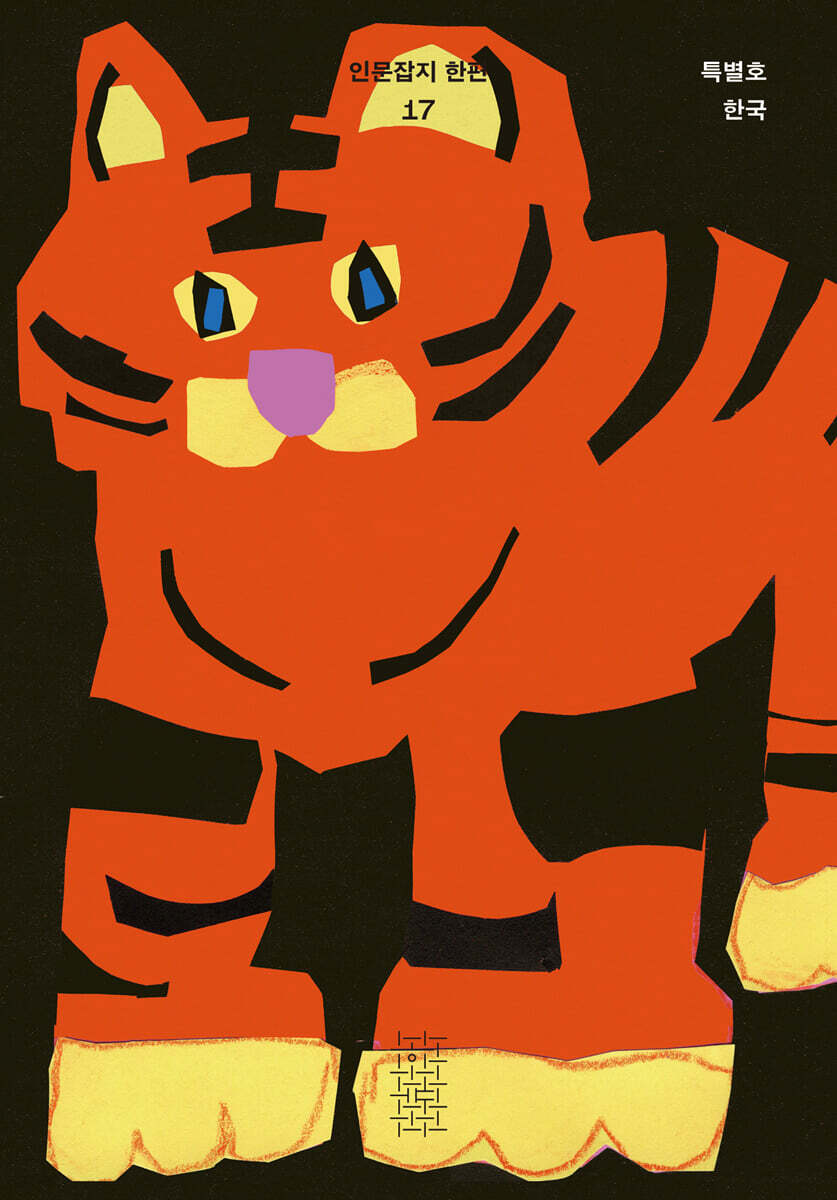
Meanwhile, the illustration used on the cover of Issue 17 of 'Korea' is "Go Wild: Animal Card" by artist Gaae.
The paper tiger with its eyes wide open and the bear's posture as if preparing for change show Korea's momentum moving forward.
The humanities magazine 《Hanpyeon》 is published three times a year, in January, May, and September, and continues with the theme of 'generation', 'influencer', 'fantasy', 'animal', 'work', 'authority', 'addiction', 'content', 'appearance', 'university', 'platform', 'friendship', 'home', 'rest', 'independence', 'humor', 'Korea', and 'festival' in September 2025.
Seeing historical figures in an unfamiliar way
With the presidential election approaching after three years of impeachment following the declaration of martial law on December 3, the opening article of the "Korea" issue is "Democracy Above and Below," by historian Kim Jeong-in, which presents the genealogy of Korean democracy.
The story of the reformists and the Donghak Peasant Revolutionary Army, who advocated for the introduction of a constitutional monarchy during the Korean Empire, shows that Korean democracy is not a theory imported from the West, but rather “a history created together by the people and reformists.”
Absub Zaul, a translator and political scientist, introduces the magazine Dialogue, which attempted to establish a rational public forum for the people during the state-led modernization of the 1960s and 1970s.
How to calmly communicate and negotiate with those with different political leanings.
This is the core question of 《One Side》, which faces a Korea split in two after 'that day'.
We also look at Korean society today through the female characters in Korean literature.
Editor Kim Ji-hyun's "Korea, Women, Literature" is an editorial review of the "Anthology of Korean Women's Literature," which reflects on the masculine and nationalistic history of literature and establishes a standard for the history of women's literature.
Korean literature scholar Kim Ik-gyun's "Chunhyang's Swing Song" rereads Seo Jeong-ju's poem "Recommendation" and separates the character of Chunhyang from "chastity" and connects it to "liberation."
When we reexamine masculinity in literature with women's literature at the center and ponder the poems while setting aside nationalism, we see a space for dialogue that is not sucked into "gender conflict."
Other Koreans
Where and how do you live?
Korea, which I do not agree with
How should I understand this?
Even though we live in the same country, Koreans are all different depending on their gender, age, occupation, and place of residence.
How do I and other Koreans live? In "Reading Korean History Through the Gaps," author Young-i illuminates the lives of transgender people, often overlooked in Korean history and literature.
Even in a reality like “a pile of ashes,” the lives of trans women are recorded, and some of them survive and are passed down.
Media culture researcher Kang Bo-ra and cultural researcher Choi Jeong-eun suggest that we show affection for the place where we live.
“K-Food without the “K”” shows how Korean culture is functioning in the world through ‘K-Food.’
For Koreans who worry about what to eat for lunch every day, this book offers an objective perspective on food culture so they can enjoy it without being overwhelmed by the food images that dominate social media or tired of fast-paced trends.
"What's so great about a boring city?" analyzes the discourse on the "boring city" formed mainly by local media and presents a counter-discourse.
Stories from regions that don't converge on 'boring' give us the courage to confront complex local issues.
Let's broaden our perspective and place Korea within the context of international relations, next to other countries.
Diplomatic studies researcher Oh Seung-hee's "South Korea's Struggle for Recognition" examines the changing relationship between South Korea and its neighbors, including Japan, China, and North Korea, through the concept of the struggle for recognition.
Let's imagine the diplomacy of "mutual recognition" that Korea, a cultural powerhouse, must pursue, in a different position than it was in 1905, when it lost its sovereignty, and in 1965, when it reestablished diplomatic relations with Japan.
Independent researcher Shim A-jeong's "The Vietnam War for Us Now" asks what the Vietnam War means to Koreans in 2025.
How should we understand the injustices of Korean history that I disagree with? This is the final piece, a proposal to "share our contemporary concerns" as we confront the wrongs already committed and the victims who are present.
A new generation of humanities magazines, "Hanpyeon"
Even in an age of constant flow of images, thoughts begin with a single word and are concluded with a single word.
The humanities magazine "Hanpyeon," launched in 2020, produces meaning by weaving together individual pieces of writing.
At Minumsa, young editors who create philosophy and literature textbooks request manuscripts, and young researchers in the humanities and social sciences write the articles.
This is to enable authors and readers to share the joy of solving problems here and now through a medium that is shorter than a book and easier than a thesis.
Meanwhile, the illustration used on the cover of Issue 17 of 'Korea' is "Go Wild: Animal Card" by artist Gaae.
The paper tiger with its eyes wide open and the bear's posture as if preparing for change show Korea's momentum moving forward.
The humanities magazine 《Hanpyeon》 is published three times a year, in January, May, and September, and continues with the theme of 'generation', 'influencer', 'fantasy', 'animal', 'work', 'authority', 'addiction', 'content', 'appearance', 'university', 'platform', 'friendship', 'home', 'rest', 'independence', 'humor', 'Korea', and 'festival' in September 2025.
GOODS SPECIFICS
- Date of issue: May 19, 2025
- Page count, weight, size: 204 pages | 127*182*20mm
- ISBN13: 9788937491733
- ISBN10: 8937491737
You may also like
카테고리
korean


korean

![GQ KOREA Mark (Monthly): December [2025]](http://librairie.coreenne.fr/cdn/shop/files/8ef265dbbfbf186523ed75ba7319009d.jpg?v=1765340328&width=3840)


