![NewPhilosopher (Quarterly): Vol. 25 [2024]](http://librairie.coreenne.fr/cdn/shop/files/f4a731468b814121efc0b2e6720f0f56.jpg?v=1765378423&width=3840)

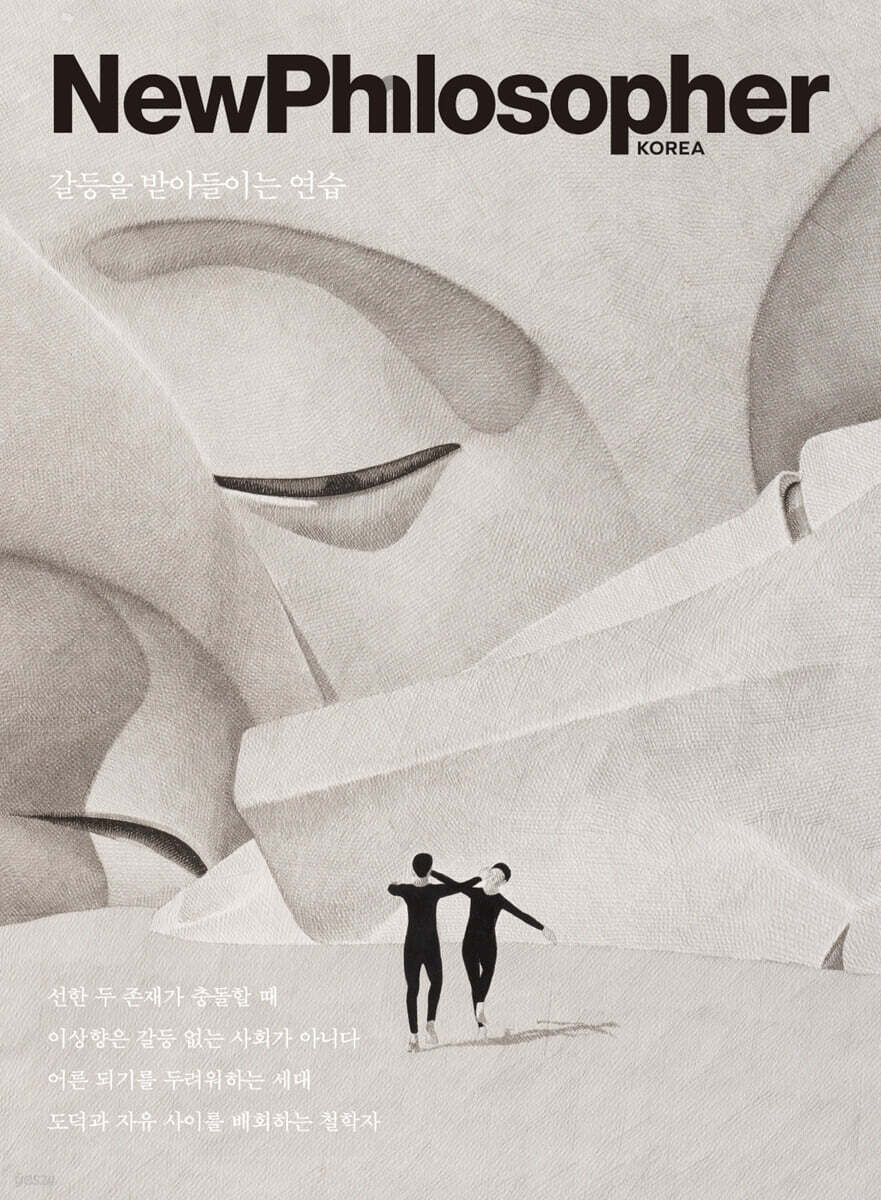
NewPhilosopher (Quarterly): Vol. 25 [2024]
 |
Description
Book Introduction
Life philosophy magazine "New Philosopher" vol. 25: Practice Accepting Conflict The situation of 'conflict', which the two philosophers Schopenhauer and Nietzsche had in common, is a reality that we all face every moment of our lives, like air. Schopenhauer said, "You cannot find peace unless you tame your inner conflict," and Nietzsche acknowledged that life is a long struggle, but he also revealed that an individual can grow thanks to that conflict. Conflict here does not simply mean a dispute between two opposing beings. It is an expression that encompasses not only the 'internal conflict' that each person experiences within themselves, but also the conflict that arises between two beings with different thoughts and positions, such as families, generations, men and women, and nations. Conflicts can end in a brief moment of deliberation, but they can also lead to a wide range of outcomes, including armed conflicts that claim countless lives. "The New Philosopher" contains a stark portrayal of various conflicts, from the conflicts of choice to those of relationships, and the philosophers' heartfelt suggestions for wisely embracing them. |
- You can preview some of the book's contents.
Preview
index
8 _ News from Nowhere
14 _ Intro _ Nietzsche, who embraced conflict wholeheartedly _ Antonia Case
16 _ Opinion _ Life is a war _ Patrick Stokes
24 _ Family _ When Two Good Beings Collide _ Marina Benjamin
30 _ Feature _ A Mother's Identity Struggle _ Clarissa Seebeck Montefiore
36 _ Ethics _ A Philosopher Who Wanders Between Morality and Freedom _ Tom Chatfield
42 _ Generation _ The Generation Afraid of Growing Up _ Antonia Case
56 _ Philosophy _ You are no different from them _ Mariana Alessandri
66 _ Artis _ The Aesthetics of Conflict _ Kim Dae-hyun
78 _ History _ The Boring Age That History Ends _ André Dao
86 _ Discussion _ Discuss enough, often, and fearlessly _ Nigel Warburton
94 _ Society _ Lonely and Shabby, Cruel and Ugly _ Matthew Beard
100 _ Interview _ Utopia is not a society without conflict _ Steven Scultetti
112 _ Illustration _ Moments of Contrast Expressed in Light and Shadow _ Owen Gent
120 _ Difference _ Harness the Power of Difference _ Mysha Cherry
130 _ Art _ Are we trapped in a trap of our own making? _ Barbara Richa
138 _ Classics _ “How do revolutions occur?” _ Aristotle
148 _ Fight _ The Ultimate Challenge _ Gian Galland
150 _ Space and _ Seeing the pain beyond the greenhouse _ Im and
158 _ Thinking in pictures _ The art of dreaming _ Park Bona
166 _ A novel read by a poet _ Life between lightness and heaviness _ Heo Yeon
174 _ Our library
14 _ Intro _ Nietzsche, who embraced conflict wholeheartedly _ Antonia Case
16 _ Opinion _ Life is a war _ Patrick Stokes
24 _ Family _ When Two Good Beings Collide _ Marina Benjamin
30 _ Feature _ A Mother's Identity Struggle _ Clarissa Seebeck Montefiore
36 _ Ethics _ A Philosopher Who Wanders Between Morality and Freedom _ Tom Chatfield
42 _ Generation _ The Generation Afraid of Growing Up _ Antonia Case
56 _ Philosophy _ You are no different from them _ Mariana Alessandri
66 _ Artis _ The Aesthetics of Conflict _ Kim Dae-hyun
78 _ History _ The Boring Age That History Ends _ André Dao
86 _ Discussion _ Discuss enough, often, and fearlessly _ Nigel Warburton
94 _ Society _ Lonely and Shabby, Cruel and Ugly _ Matthew Beard
100 _ Interview _ Utopia is not a society without conflict _ Steven Scultetti
112 _ Illustration _ Moments of Contrast Expressed in Light and Shadow _ Owen Gent
120 _ Difference _ Harness the Power of Difference _ Mysha Cherry
130 _ Art _ Are we trapped in a trap of our own making? _ Barbara Richa
138 _ Classics _ “How do revolutions occur?” _ Aristotle
148 _ Fight _ The Ultimate Challenge _ Gian Galland
150 _ Space and _ Seeing the pain beyond the greenhouse _ Im and
158 _ Thinking in pictures _ The art of dreaming _ Park Bona
166 _ A novel read by a poet _ Life between lightness and heaviness _ Heo Yeon
174 _ Our library
Detailed image

Into the book
Sometimes the gravity of the present is so strong, and the desires of the present are so important.
Even if, looking at it comprehensively, it leads to bad results.
But if we look at this situation as a conflict between two people, we can briefly restore fairness.
Instead of thinking, "I'll definitely regret this decision tomorrow," what if you thought, "This decision will harm that person in the future?" As with other conflict resolution strategies, empathy may be key here.
---From "News from Nowhere"
If you want to leave, then leave.
But one thing to keep in mind is that the first one to leave is the loser.
I don't think conflict is bad or wrong.
In fact, conflict is more of a solution than a problem in marriage.
Especially if it stems from a shared desire to improve the situation.
As Robert Frost wrote in Memoirs, “The most beautiful thing in the world is…the collision of two good interests.”
---From "When Two Good Beings Collide _ Marina Benjamin"
But pregnancy made me feel like I was the only one in the world responsible for my child, and that caused me a terrible sense of loneliness, and sometimes fear.
In short, my life was no longer my own.
Figuring out where my life ends and my daughter's begins was a biological question before it was a philosophical one.
---From "A Mother's Identity Struggle _ Clarissa Seebeck Montefiore"
“Question every action.
“When you ask yourself, ‘Why are they doing that?’, first look at yourself.” Rather than habitually reacting with, ‘I would never do that’ when attacked, think about the bad things you have done in the past.
Self-reflection is a means of feeling “empathy, not anger or rage.”
It's worth trying to find common ground between ourselves and those who sabotage us.
You will feel much better.
---From "You are no different from them _ Mariana Alessandri"
A desirable approach would be to first acknowledge that conflict is an inevitable part of human existence, carefully examine the background of the conflict, and then transform it into a form of competition.
However, we must recognize how difficult this is, because true competition is based on shared values and shared ethics agreed upon by members of a community.
---From "Utopia is not a society without conflict _ Interview with Steven Scultetti"
Lord saw power in acknowledging 'real differences'.
Differences do not divide us.
Rather, it is “our unwillingness to recognize those differences, and our unwillingness to deal effectively with the discord that arises from ignoring and stigmatizing those differences” that divides us.
Even if, looking at it comprehensively, it leads to bad results.
But if we look at this situation as a conflict between two people, we can briefly restore fairness.
Instead of thinking, "I'll definitely regret this decision tomorrow," what if you thought, "This decision will harm that person in the future?" As with other conflict resolution strategies, empathy may be key here.
---From "News from Nowhere"
If you want to leave, then leave.
But one thing to keep in mind is that the first one to leave is the loser.
I don't think conflict is bad or wrong.
In fact, conflict is more of a solution than a problem in marriage.
Especially if it stems from a shared desire to improve the situation.
As Robert Frost wrote in Memoirs, “The most beautiful thing in the world is…the collision of two good interests.”
---From "When Two Good Beings Collide _ Marina Benjamin"
But pregnancy made me feel like I was the only one in the world responsible for my child, and that caused me a terrible sense of loneliness, and sometimes fear.
In short, my life was no longer my own.
Figuring out where my life ends and my daughter's begins was a biological question before it was a philosophical one.
---From "A Mother's Identity Struggle _ Clarissa Seebeck Montefiore"
“Question every action.
“When you ask yourself, ‘Why are they doing that?’, first look at yourself.” Rather than habitually reacting with, ‘I would never do that’ when attacked, think about the bad things you have done in the past.
Self-reflection is a means of feeling “empathy, not anger or rage.”
It's worth trying to find common ground between ourselves and those who sabotage us.
You will feel much better.
---From "You are no different from them _ Mariana Alessandri"
A desirable approach would be to first acknowledge that conflict is an inevitable part of human existence, carefully examine the background of the conflict, and then transform it into a form of competition.
However, we must recognize how difficult this is, because true competition is based on shared values and shared ethics agreed upon by members of a community.
---From "Utopia is not a society without conflict _ Interview with Steven Scultetti"
Lord saw power in acknowledging 'real differences'.
Differences do not divide us.
Rather, it is “our unwillingness to recognize those differences, and our unwillingness to deal effectively with the discord that arises from ignoring and stigmatizing those differences” that divides us.
---From "Harness the Power of Difference _ Maisha Cherry"
Publisher's Review
Life is war anyway
_ To all those who struggle throughout their lives with countless choices and relationships
Until now, "New Philosopher" has rejected a standardized analysis of a given proposition, and has focused on a "broad perspective" that, while in some ways value-neutral, more precisely, encompasses both positive and negative values.
In this issue, in line with this direction, we will explore the diverse meanings presented by various authors under the theme of "conflict," as well as the unbiased philosophical judgments they offer.
We are constantly in conflict.
Conflict with family, conflict with society.
People conflict with people, groups conflict with groups, companies conflict with companies, countries conflict with countries, and even humans conflict with animals.
Another suffering is that of never being able to reconcile with one's ego and continuing to fight alone for a long time, hating oneself.
However, what all authors, with different materials and perspectives, have in common is that they should 'welcome conflict.'
If you cannot reach the level of welcoming conflict, I urge you to at least adopt an attitude of life that 'accepts conflict.'
Although these two philosophers suffered equally from the Nazi invasion, one believes that "we must oppose war, which threatens ethics," while the other interprets it as "ethics itself, like war, threatening life."
Even in the way each individual accepts the reality of the intense conflict called battle, the philosophy they accept is so different.
The world of conflict explored in the book sketches multiple realities.
A mother who experiences a conflict of identity as her ego is split in two during the process of giving birth and raising a child; a couple who are two good beings who intuit the inevitable worsening of their relationship and the future of divorce; and the agony of a philosopher who wanders around not knowing where to raise his hand between 'free will' and 'morality'... ... Even though the reasons are all different, we encounter philosophical solutions that accept and resolve them.
Conflict is an essential element in helping us become better people.
If we do not have the opportunity to confront it, if we do not have the opportunity to exercise the will to power, we will not be able to reach our highest potential.
As Nietzsche famously said, “What doesn’t kill me makes me stronger.” (Page 15)
When two good beings collide
- Starting with 'how to deal with conflict' rather than 'resolving conflict'
Robert Frost, the poet who was loved for his numerous poems, wrote the following lines in his Memoirs:
“The most beautiful thing in the world is the clash of two good interests.”
Author Marina Benjamin brings up the above passage when discussing marital conflict.
Even if the conflict between a couple is caused by the fault of one or both partners, most of the time, both entities clash as they each present their own ideals.
But the poet Frost calls this bitter conflict 'the most beautiful thing in the world.'
This is not because conflict is bad or wrong.
In fact, conflict is more of a solution than a serious problem in marriage.
This is especially positive because it stems from everyone's desire to improve the situation between the two people.
Author Clarissa Montefiori is a mother of two young children.
From the moment the new life took root in my womb, I felt extreme fear as much as the brilliance of life.
In this world, the reality that only you are responsible for this life brings about extreme loneliness and fear.
However, after giving birth, she finds herself helpless and collapsing in the face of hormonal changes, changes in her body, and changes in her identity. The protagonist, who used to live only under her own name, finds her daily life confusing as she is now called 'someone's mother.'
A mother and writer who faced a conflict of self that arose not from conflict with others but from her own changed life confesses this.
It is a call to embrace the changes in my life, to not forget my past self, and to remember that I am an individual human being with my own desires.
Alison Hempsey, a former therapist and now a wellness instructor, recommends that when you find yourself thinking, "I should do this," ask yourself, "Do I want to do this?" and "Is there a reason to do it?"
The thought that one “should” do something carries with it feelings of guilt or shame, and is closer to “a decision made because of the pressure of being what one thinks one “should” be.”
(Page 34)
A society without conflict cannot be an ideal.
- 'Conflict' is a theoretical word, not a negative word.
The subject of this issue's interview is Professor Stephen Scultetti, a researcher of ancient political philosophy.
His main research area is to trace the views of ancient philosophers on human conflict, particularly the debates of Aristotle and the Stoics on conflict in human relationships.
He speaks confidently.
“I came to realize that conflict is not simply a lack or opposition of something, but a concept in itself that must be theorized.”
Professor Scultetti says that after redefining the concept of 'conflict' as mentioned above, the direction of thinking had to change, and the fundamental differences between the meanings of war and political strife, or debate and competition, became clear.
Conflict is not a hateful word that must be avoided unconditionally, but rather a human activity that operates according to its own meaning, rules, and logic.
He summarizes it as follows:
“The worst mistake people make is to regard a conflict-free society as an ideal, and therefore to interpret every conflict as a sign of war.
“This is a shortcut to disaster.”
The artist featured in this issue is Kim Dae-hyun, a proud Korean artist.
He, who works under the stage name 'Munassi', asserts that the theme of all his creative works is probably 'conflict'.
The theme of internal conflict expressed in his work is revealed through the two or three characters who appear in his work, each with different desires within themselves.
“Sometimes people want help from others, but at the same time they don’t want to be helped.
He loves and hates at the same time, and on the one hand he thinks of death, while on the other he reveals a strong will to live.
“These contradictory thoughts and feelings are what make us human.”
(Page 69)
_ To all those who struggle throughout their lives with countless choices and relationships
Until now, "New Philosopher" has rejected a standardized analysis of a given proposition, and has focused on a "broad perspective" that, while in some ways value-neutral, more precisely, encompasses both positive and negative values.
In this issue, in line with this direction, we will explore the diverse meanings presented by various authors under the theme of "conflict," as well as the unbiased philosophical judgments they offer.
We are constantly in conflict.
Conflict with family, conflict with society.
People conflict with people, groups conflict with groups, companies conflict with companies, countries conflict with countries, and even humans conflict with animals.
Another suffering is that of never being able to reconcile with one's ego and continuing to fight alone for a long time, hating oneself.
However, what all authors, with different materials and perspectives, have in common is that they should 'welcome conflict.'
If you cannot reach the level of welcoming conflict, I urge you to at least adopt an attitude of life that 'accepts conflict.'
Although these two philosophers suffered equally from the Nazi invasion, one believes that "we must oppose war, which threatens ethics," while the other interprets it as "ethics itself, like war, threatening life."
Even in the way each individual accepts the reality of the intense conflict called battle, the philosophy they accept is so different.
The world of conflict explored in the book sketches multiple realities.
A mother who experiences a conflict of identity as her ego is split in two during the process of giving birth and raising a child; a couple who are two good beings who intuit the inevitable worsening of their relationship and the future of divorce; and the agony of a philosopher who wanders around not knowing where to raise his hand between 'free will' and 'morality'... ... Even though the reasons are all different, we encounter philosophical solutions that accept and resolve them.
Conflict is an essential element in helping us become better people.
If we do not have the opportunity to confront it, if we do not have the opportunity to exercise the will to power, we will not be able to reach our highest potential.
As Nietzsche famously said, “What doesn’t kill me makes me stronger.” (Page 15)
When two good beings collide
- Starting with 'how to deal with conflict' rather than 'resolving conflict'
Robert Frost, the poet who was loved for his numerous poems, wrote the following lines in his Memoirs:
“The most beautiful thing in the world is the clash of two good interests.”
Author Marina Benjamin brings up the above passage when discussing marital conflict.
Even if the conflict between a couple is caused by the fault of one or both partners, most of the time, both entities clash as they each present their own ideals.
But the poet Frost calls this bitter conflict 'the most beautiful thing in the world.'
This is not because conflict is bad or wrong.
In fact, conflict is more of a solution than a serious problem in marriage.
This is especially positive because it stems from everyone's desire to improve the situation between the two people.
Author Clarissa Montefiori is a mother of two young children.
From the moment the new life took root in my womb, I felt extreme fear as much as the brilliance of life.
In this world, the reality that only you are responsible for this life brings about extreme loneliness and fear.
However, after giving birth, she finds herself helpless and collapsing in the face of hormonal changes, changes in her body, and changes in her identity. The protagonist, who used to live only under her own name, finds her daily life confusing as she is now called 'someone's mother.'
A mother and writer who faced a conflict of self that arose not from conflict with others but from her own changed life confesses this.
It is a call to embrace the changes in my life, to not forget my past self, and to remember that I am an individual human being with my own desires.
Alison Hempsey, a former therapist and now a wellness instructor, recommends that when you find yourself thinking, "I should do this," ask yourself, "Do I want to do this?" and "Is there a reason to do it?"
The thought that one “should” do something carries with it feelings of guilt or shame, and is closer to “a decision made because of the pressure of being what one thinks one “should” be.”
(Page 34)
A society without conflict cannot be an ideal.
- 'Conflict' is a theoretical word, not a negative word.
The subject of this issue's interview is Professor Stephen Scultetti, a researcher of ancient political philosophy.
His main research area is to trace the views of ancient philosophers on human conflict, particularly the debates of Aristotle and the Stoics on conflict in human relationships.
He speaks confidently.
“I came to realize that conflict is not simply a lack or opposition of something, but a concept in itself that must be theorized.”
Professor Scultetti says that after redefining the concept of 'conflict' as mentioned above, the direction of thinking had to change, and the fundamental differences between the meanings of war and political strife, or debate and competition, became clear.
Conflict is not a hateful word that must be avoided unconditionally, but rather a human activity that operates according to its own meaning, rules, and logic.
He summarizes it as follows:
“The worst mistake people make is to regard a conflict-free society as an ideal, and therefore to interpret every conflict as a sign of war.
“This is a shortcut to disaster.”
The artist featured in this issue is Kim Dae-hyun, a proud Korean artist.
He, who works under the stage name 'Munassi', asserts that the theme of all his creative works is probably 'conflict'.
The theme of internal conflict expressed in his work is revealed through the two or three characters who appear in his work, each with different desires within themselves.
“Sometimes people want help from others, but at the same time they don’t want to be helped.
He loves and hates at the same time, and on the one hand he thinks of death, while on the other he reveals a strong will to live.
“These contradictory thoughts and feelings are what make us human.”
(Page 69)
GOODS SPECIFICS
- Date of issue: January 3, 2024
- Page count, weight, size: 176 pages | 180*245*20mm
- ISBN13: 9772586476005
- ISBN10: 25864769
You may also like
카테고리
korean


korean

![GQ KOREA Mark (Monthly): December [2025]](http://librairie.coreenne.fr/cdn/shop/files/8ef265dbbfbf186523ed75ba7319009d.jpg?v=1765340328&width=3840)


