![NewPhilosopher (Quarterly): Vol. 24 [2023]](http://librairie.coreenne.fr/cdn/shop/files/a2ef2eae8d9311f9a24ba8c3dd352719.jpg?v=1765378492&width=3840)

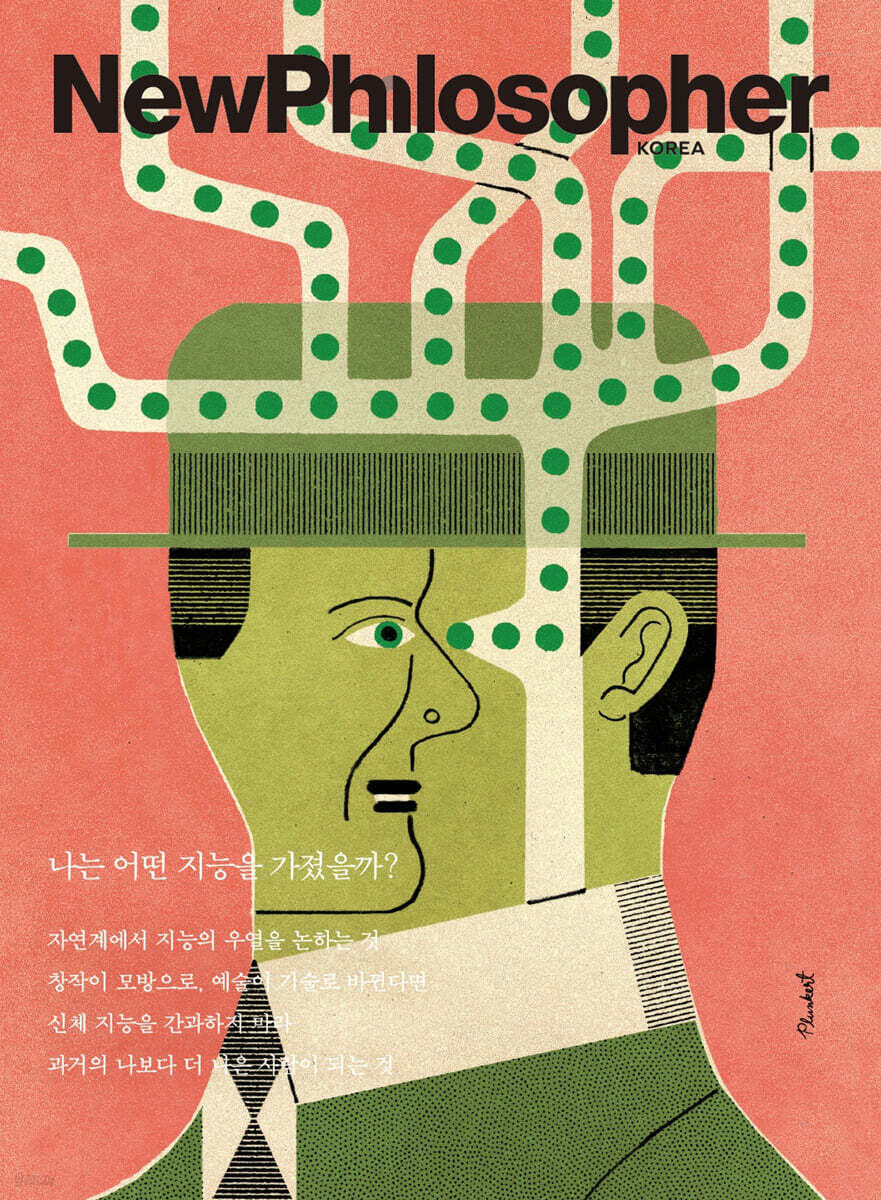
NewPhilosopher (Quarterly): Vol. 24 [2023]
 |
Description
Book Introduction
Life philosophy magazine "New Philosopher"
vol.
24: What kind of intelligence do I have?
There is a Sumerian proverb that says, 'Strength cannot keep up with intelligence.'
It is a common belief among ancient humans and modern humans alike that the brilliance of the brain is superior to physical strength.
But can "intelligence" here be measured by the so-called IQ, or intelligence quotient? And is the only type of intelligence expressed in the human brain—mathematical intelligence, the ability to quickly recognize patterns in formulas and changes in shapes—the only type? Furthermore, in an era where artificial intelligence permeates every corner of the globe, replacing human labor, will human intelligence lose its place?
This issue of "New Philosopher" explores the scientific and social conventions and biases surrounding the word "intelligence," and offers various suggestions for broadening awareness and developing intelligence.
vol.
24: What kind of intelligence do I have?
There is a Sumerian proverb that says, 'Strength cannot keep up with intelligence.'
It is a common belief among ancient humans and modern humans alike that the brilliance of the brain is superior to physical strength.
But can "intelligence" here be measured by the so-called IQ, or intelligence quotient? And is the only type of intelligence expressed in the human brain—mathematical intelligence, the ability to quickly recognize patterns in formulas and changes in shapes—the only type? Furthermore, in an era where artificial intelligence permeates every corner of the globe, replacing human labor, will human intelligence lose its place?
This issue of "New Philosopher" explores the scientific and social conventions and biases surrounding the word "intelligence," and offers various suggestions for broadening awareness and developing intelligence.
- You can preview some of the book's contents.
Preview
index
8 _ News from Nowhere
16 _ Intro _ Will the future really be filled only with machines? _ Antonia Case
18 _ Society _ The Real Reason We Fear AI _ Patrick Stokes
26 _ Opinion _ Artificial Intelligence That We Desire as Much as We Fear _ Clarissa Seebeck Montefiore
36 _ Animal _ The debate on superiority of intelligence in nature _ Marina Benjamin
44 _ Curiosity _ Achievement = Ability × Effort _ Antonia Case
52 _ Art _ If creation turns into imitation, and art into technology _ Pablo Auladel
62 _ Emotion _ A person with a great emotional head _ Mariana Alessandri
70 _ Person _ The day AI's personality is recognized _ André Dao
78 _ Technology _ The Illusions of the Data World _ Tom Chatfield
86 _ Ability _ Don't Overlook Physical Intelligence _ Nigel Warburton
92 _ Feature _ A Future Stolen by Humanoids _ Antonia Case
100_ Relationship_ Things Only Humans Can Do_ Mysha Cherry
108 _ Artist _ When Artists Survive the Age of Robots _ David Plunkert
118 _ Interview _ The Era of Soft Skills, Not IQ _ Howard Gardner
136 _ Computer _ Until the Digital Computer Gained Thought _ Alan Turing
144 _ Flourish _ Becoming a better person than you were _ Antonia Case
154 _ Aesop's fables _ The Crow and the Jar
156 _ Thinking in Pictures _ Faces that became landscapes _ Park Bona
164 _ Novels read by poets _ Great classics are ultimately about great questions _ Heo Yeon
172 _ Space and _ Art Museum of Infinite Desire _ Im and I
182 _ Our Library
16 _ Intro _ Will the future really be filled only with machines? _ Antonia Case
18 _ Society _ The Real Reason We Fear AI _ Patrick Stokes
26 _ Opinion _ Artificial Intelligence That We Desire as Much as We Fear _ Clarissa Seebeck Montefiore
36 _ Animal _ The debate on superiority of intelligence in nature _ Marina Benjamin
44 _ Curiosity _ Achievement = Ability × Effort _ Antonia Case
52 _ Art _ If creation turns into imitation, and art into technology _ Pablo Auladel
62 _ Emotion _ A person with a great emotional head _ Mariana Alessandri
70 _ Person _ The day AI's personality is recognized _ André Dao
78 _ Technology _ The Illusions of the Data World _ Tom Chatfield
86 _ Ability _ Don't Overlook Physical Intelligence _ Nigel Warburton
92 _ Feature _ A Future Stolen by Humanoids _ Antonia Case
100_ Relationship_ Things Only Humans Can Do_ Mysha Cherry
108 _ Artist _ When Artists Survive the Age of Robots _ David Plunkert
118 _ Interview _ The Era of Soft Skills, Not IQ _ Howard Gardner
136 _ Computer _ Until the Digital Computer Gained Thought _ Alan Turing
144 _ Flourish _ Becoming a better person than you were _ Antonia Case
154 _ Aesop's fables _ The Crow and the Jar
156 _ Thinking in Pictures _ Faces that became landscapes _ Park Bona
164 _ Novels read by poets _ Great classics are ultimately about great questions _ Heo Yeon
172 _ Space and _ Art Museum of Infinite Desire _ Im and I
182 _ Our Library
Detailed image
Into the book
Canadian psychologist Gordon Pennycook studied why smart people are so easily fooled by outrageous ideas.
He believes that believing in conspiracy theories leads to an over-reliance on intuition and a lack of reflection.
It's about feeling disgusted or suspicious and intuitively thinking you've figured something out.
Since this can happen to anyone at any time, a little research will easily show you if what I found out is correct.
However, if you fall into what's called "myside bias"—evaluating evidence based on pre-existing prejudices (only seeking information that aligns with your worldview)—you can lose critical thinking. Even people with high IQs and intelligence can fall prey to myside bias, just like anyone else.
---p.13 From "News from Nowhere"
They sing of the freedom of the human spirit and the unique genius of overflowing imagination, but upon closer inspection, these songs, like the humorous texts we request from AI bots, may be the product of predetermined algorithms. The real reason AI is so unsettling—the underlying anxiety we feel—is not the idea that machines bound by rules will replace us.
Perhaps what is eerie is that AI subtly shows that humans are not as free as machines.
---p.23 From "The Real Reason We Fear AI _ Patrick Stokes"
“Today, AI systems are competing with humans across a wide range of domains, so we must ask ourselves:
"Shall we allow our information channels to be flooded with machine-generated propaganda and lies? Shall we continue to develop inhuman beings whose computational power and intelligence will surpass our own, ultimately replacing and rendering us obsolete? Shall we risk losing control of our civilization?"
---p.30 From “The Artificial Intelligence That Makes Us Desire the More We Fear It _ Clarice Seebeck Montefiore”
“I realized that if you do something over and over again, things that were never natural to you become second nature.
“I learned that I have the ability to do it, but that ability doesn’t come overnight.”
---p.48 From “Achievement = Ability × Effort _ Antonia Case”
In a situation where perceptions of professional creators, including writers, artists, and musicians, are already dire and distorted, the emergence of AI is exacerbating the damage.
The ridiculous educational philosophies that prioritize emotions, the TV shows that say anyone can be an artist, the absurd education in schools that respect emotions and allow everything by saying things like “everyone is creative and has an artist inside them” have created an absurd and unfair view of artists for the past several decades.
Now that AI is open to everyone in the form of fun games, this absurd democratization will become widespread.
---p.60 From “If Creation Turns into Imitation, and Art into Technology _ Interview with Pablo Auladel”
Anyone can improve their intelligence as long as they live an active life without developing dementia.
You can try to improve your intelligence itself, or you can use other intelligences to achieve equivalent results.
For example, you can use linguistic intelligence to improve spatial intelligence or interpersonal intelligence.
What is commonly called "wisdom" is likely the result of emphasizing interpersonal intelligence and self-reflective intelligence, and I want to improve this type of intelligence.
He believes that believing in conspiracy theories leads to an over-reliance on intuition and a lack of reflection.
It's about feeling disgusted or suspicious and intuitively thinking you've figured something out.
Since this can happen to anyone at any time, a little research will easily show you if what I found out is correct.
However, if you fall into what's called "myside bias"—evaluating evidence based on pre-existing prejudices (only seeking information that aligns with your worldview)—you can lose critical thinking. Even people with high IQs and intelligence can fall prey to myside bias, just like anyone else.
---p.13 From "News from Nowhere"
They sing of the freedom of the human spirit and the unique genius of overflowing imagination, but upon closer inspection, these songs, like the humorous texts we request from AI bots, may be the product of predetermined algorithms. The real reason AI is so unsettling—the underlying anxiety we feel—is not the idea that machines bound by rules will replace us.
Perhaps what is eerie is that AI subtly shows that humans are not as free as machines.
---p.23 From "The Real Reason We Fear AI _ Patrick Stokes"
“Today, AI systems are competing with humans across a wide range of domains, so we must ask ourselves:
"Shall we allow our information channels to be flooded with machine-generated propaganda and lies? Shall we continue to develop inhuman beings whose computational power and intelligence will surpass our own, ultimately replacing and rendering us obsolete? Shall we risk losing control of our civilization?"
---p.30 From “The Artificial Intelligence That Makes Us Desire the More We Fear It _ Clarice Seebeck Montefiore”
“I realized that if you do something over and over again, things that were never natural to you become second nature.
“I learned that I have the ability to do it, but that ability doesn’t come overnight.”
---p.48 From “Achievement = Ability × Effort _ Antonia Case”
In a situation where perceptions of professional creators, including writers, artists, and musicians, are already dire and distorted, the emergence of AI is exacerbating the damage.
The ridiculous educational philosophies that prioritize emotions, the TV shows that say anyone can be an artist, the absurd education in schools that respect emotions and allow everything by saying things like “everyone is creative and has an artist inside them” have created an absurd and unfair view of artists for the past several decades.
Now that AI is open to everyone in the form of fun games, this absurd democratization will become widespread.
---p.60 From “If Creation Turns into Imitation, and Art into Technology _ Interview with Pablo Auladel”
Anyone can improve their intelligence as long as they live an active life without developing dementia.
You can try to improve your intelligence itself, or you can use other intelligences to achieve equivalent results.
For example, you can use linguistic intelligence to improve spatial intelligence or interpersonal intelligence.
What is commonly called "wisdom" is likely the result of emphasizing interpersonal intelligence and self-reflective intelligence, and I want to improve this type of intelligence.
---p.130 From “The Era of Soft Skills, Not IQ _ Interview with Howard Gardner”
Publisher's Review
The Story of "Human Intelligence": A Need for More in the Age of "AI"
For us, the word intelligence has become a word that is judged as a superior-lower or inferior-lower, or is accepted as a numerical value from an IQ test.
In other words, it is accepting only one conclusion about one's own intelligence or the intelligence of others without considering various perspectives.
But is that really true? Do the numbers revealed by IQ tests truly demonstrate the "full range of intelligence" the human brain possesses? The ability to rotate a 3D object 180 degrees or the information processing speed to quickly identify patterns in multiple numbers don't fully measure the boundless power of human intelligence.
In this issue of "New Philosopher," we take a look back at the fundamental nature of human intelligence in a world where the influence of AI and ChatGPT is being demonstrated daily.
Above all, it conveys the reasonable perception that human intelligence is not the ability to process speed observed in IQ tests, but rather is expressed in various ways, such as through emotions for some, physical abilities, empathy, and interpersonal skills.
Canadian psychologist Keith Stanovich explains in his book that “there are many people who have sufficiently high IQs but are unable to think systematically and act rationally.”
The rational behavior he speaks of refers to behavior that seeks to achieve life's goals by using the best possible means, and this is likely to be the behavior of a person who has excellent overall intelligence, not just a simple IQ, but is displayed throughout life.
The ability to control the intensity of the counting and hand tremors to play the guitar, rather than just practicing, and the ability to run to the back of the tennis court and hit a topspin from a seemingly impossible position are all possible because of an exceptionally developed physical intelligence.
Meanwhile, emotional intelligence, recently referred to as 'emotional agility', also accounts for a large part of human intelligence.
Peter Sellavey defined emotional intelligence as "the social intelligence that allows us to observe and discern our own and others' emotions and use that information to guide our thoughts and actions."
In this way, the world of intelligence becomes more diverse and categorized, and individual characteristics will be formed depending on how much of each intelligence is at work in a person's life.
Intelligence is not judged by the superiority of one way or another.
Rational thinking skills help you direct your life in the direction you want.
But IQ isn't a measure of rationality. IQ tests don't assess how efficient, effective, or wise a person's decision-making is... Stanovich's conclusion is this:
“One of the reasons so many people suffer from rationality disorders is that, for various reasons, people overestimate the thinking skills measured by IQ tests and underestimate other crucial cognitive abilities, such as rational thinking.” (p. 9)
It's no longer the era of single intelligence, but the era of multiple intelligences.
- Interview with Howard Gardner, founder of the theory of multiple intelligences.
The interview with Harvard professor and world-renowned psychologist Howard Gardner is a highlight of this issue.
He said there are many different types of human intelligence, and that most people possess some degree of all of these different abilities or intelligences.
This challenge, first posed by Howard Gardner in the early 1980s, was bound to be met with considerable resistance in the psychology community, as intelligence was perceived as a single type.
Since IQ tests were the source of income and interest in quantitative psychology at the time, his argument that human intelligence should be recognized in various types and ways was unlikely to be welcomed.
The tests we have used so far, which only give people a test paper and pencil and require them to solve problems within a limited time, cannot properly assess a person's multiple intelligences.
For example, if you want to know who has bodily (kinesthetic) intelligence, you should watch them dance, handle a ball, and learn new sports.
If you want to know if someone has interpersonal skills, you need to observe them talking and interacting with others for a few days.
In other words, it is a field that cannot be understood in a short period of time.
According to his explanation, the ability of a legal scholar to reason through complex cases while dealing with language can be judged to some extent by an IQ test that measures language and logical ability.
But how can we determine the skills necessary for a great salesperson? They likely require proactive door-to-door salesmanship, the art of writing advertising copy, and the wisdom to persuade people to spend. These skills, of course, cannot be assessed through an IQ test.
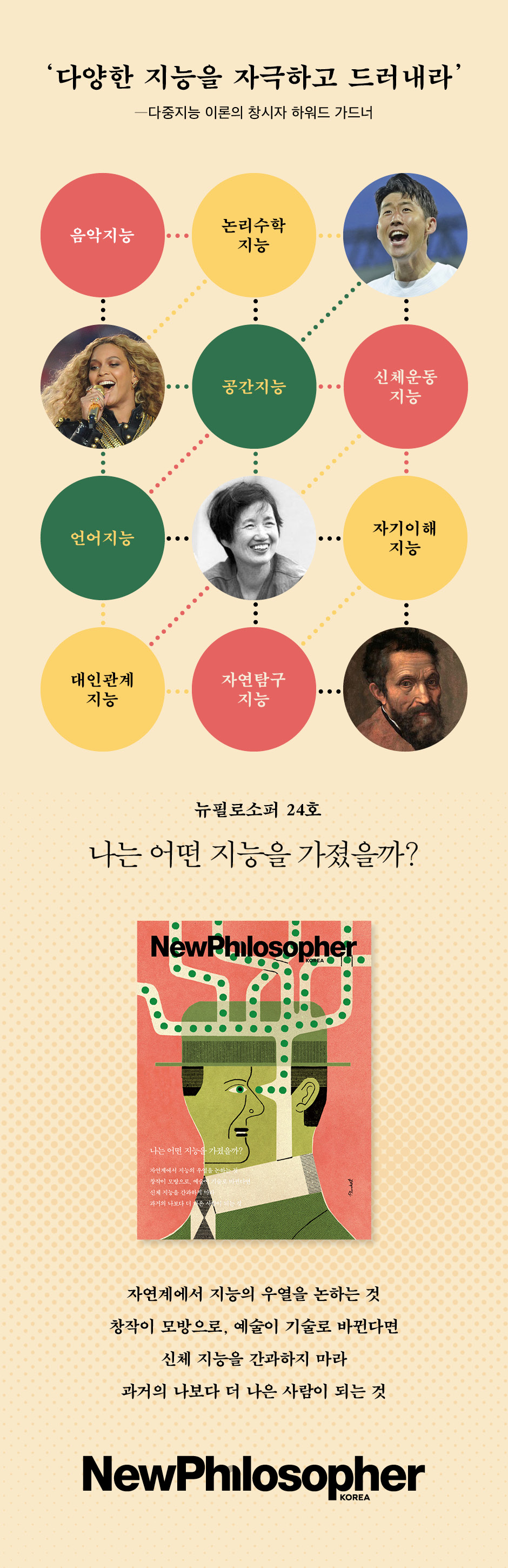
Howard Gardner classified intelligence into seven types: linguistic intelligence, logical-mathematical intelligence, musical intelligence, bodily-kinesthetic intelligence, visual-spatial intelligence, interpersonal intelligence, and intrapersonal intelligence.
A more appropriate way to define the complex and multifaceted being that is human would be to determine a person's intelligence by looking at which intelligences are prominent and which are somewhat lacking for each individual.
“I don’t care what intelligence you have.
“I am more interested in whether you use that intelligence positively and favorably.” (Page 123)
When dealing with a future dominated by artificial intelligence, human wisdom will be used.
- In the midst of the onslaught of information and imitation that AI will create
In a 2014 op-ed for The Independent, Stephen Hawking said, “The development of artificial intelligence will be the greatest event in human history.
“Unfortunately, if we don’t learn to avoid the dangers of artificial intelligence, it could be the end of humanity,” he warned.
In this issue of "New Philosopher," which discusses human intelligence, it is difficult not to mention artificial intelligence, or AI, in this era where its scope is expanding.
We were confident that no matter how much machines increase mass productivity, they would never be able to replicate human language and reasoning abilities. But now, we have entered an era where we must deal with the enormous amount of information and text that ChatGPT is churning out.
Developing more advanced artificial intelligence has become humanity's primary focus rather than studying human intelligence.
Now we have reached a point where we can neither stop nor avoid this.
The two illustrators interviewed in the book fear a future where, rather than reading text and drawing illustrations with pure human creativity, countless famous paintings and existing imagery will be stored in data, and countless illustrations will be mass-produced and supplied at low prices, “like meat coming out of a meat grinder.”
This is why human intelligence, which deals with artificial intelligence, must move beyond the issues of technology and commerce and toward universal human ethics.
It must be expanded into the realm of wisdom, not intelligence.
Stuart Russell, a computer science professor at the University of California, Berkeley, along with Apple co-founder Steve Wozniak and Tesla CEO Elon Musk, have urged all relevant research labs to halt development of AI more powerful than GPT-4 until common AI safety protocols are developed.
Russell says:
"Should we continue to develop inhuman beings whose computational power and intelligence will surpass ours, ultimately replacing and rendering us obsolete? Should we risk losing control of our civilization?"
Experts continue to argue that the reason humans have been able to dominate the world is because of their intelligence, and that it is inconsistent to believe that we can develop an intelligence stronger than humans and control it.
Along with the diverse stories about human intelligence, this issue also includes several stories that point out the practical problems and uncertain future of artificial intelligence.
For us, the word intelligence has become a word that is judged as a superior-lower or inferior-lower, or is accepted as a numerical value from an IQ test.
In other words, it is accepting only one conclusion about one's own intelligence or the intelligence of others without considering various perspectives.
But is that really true? Do the numbers revealed by IQ tests truly demonstrate the "full range of intelligence" the human brain possesses? The ability to rotate a 3D object 180 degrees or the information processing speed to quickly identify patterns in multiple numbers don't fully measure the boundless power of human intelligence.
In this issue of "New Philosopher," we take a look back at the fundamental nature of human intelligence in a world where the influence of AI and ChatGPT is being demonstrated daily.
Above all, it conveys the reasonable perception that human intelligence is not the ability to process speed observed in IQ tests, but rather is expressed in various ways, such as through emotions for some, physical abilities, empathy, and interpersonal skills.
Canadian psychologist Keith Stanovich explains in his book that “there are many people who have sufficiently high IQs but are unable to think systematically and act rationally.”
The rational behavior he speaks of refers to behavior that seeks to achieve life's goals by using the best possible means, and this is likely to be the behavior of a person who has excellent overall intelligence, not just a simple IQ, but is displayed throughout life.
The ability to control the intensity of the counting and hand tremors to play the guitar, rather than just practicing, and the ability to run to the back of the tennis court and hit a topspin from a seemingly impossible position are all possible because of an exceptionally developed physical intelligence.
Meanwhile, emotional intelligence, recently referred to as 'emotional agility', also accounts for a large part of human intelligence.
Peter Sellavey defined emotional intelligence as "the social intelligence that allows us to observe and discern our own and others' emotions and use that information to guide our thoughts and actions."
In this way, the world of intelligence becomes more diverse and categorized, and individual characteristics will be formed depending on how much of each intelligence is at work in a person's life.
Intelligence is not judged by the superiority of one way or another.
Rational thinking skills help you direct your life in the direction you want.
But IQ isn't a measure of rationality. IQ tests don't assess how efficient, effective, or wise a person's decision-making is... Stanovich's conclusion is this:
“One of the reasons so many people suffer from rationality disorders is that, for various reasons, people overestimate the thinking skills measured by IQ tests and underestimate other crucial cognitive abilities, such as rational thinking.” (p. 9)
It's no longer the era of single intelligence, but the era of multiple intelligences.
- Interview with Howard Gardner, founder of the theory of multiple intelligences.
The interview with Harvard professor and world-renowned psychologist Howard Gardner is a highlight of this issue.
He said there are many different types of human intelligence, and that most people possess some degree of all of these different abilities or intelligences.
This challenge, first posed by Howard Gardner in the early 1980s, was bound to be met with considerable resistance in the psychology community, as intelligence was perceived as a single type.
Since IQ tests were the source of income and interest in quantitative psychology at the time, his argument that human intelligence should be recognized in various types and ways was unlikely to be welcomed.
The tests we have used so far, which only give people a test paper and pencil and require them to solve problems within a limited time, cannot properly assess a person's multiple intelligences.
For example, if you want to know who has bodily (kinesthetic) intelligence, you should watch them dance, handle a ball, and learn new sports.
If you want to know if someone has interpersonal skills, you need to observe them talking and interacting with others for a few days.
In other words, it is a field that cannot be understood in a short period of time.
According to his explanation, the ability of a legal scholar to reason through complex cases while dealing with language can be judged to some extent by an IQ test that measures language and logical ability.
But how can we determine the skills necessary for a great salesperson? They likely require proactive door-to-door salesmanship, the art of writing advertising copy, and the wisdom to persuade people to spend. These skills, of course, cannot be assessed through an IQ test.
Howard Gardner classified intelligence into seven types: linguistic intelligence, logical-mathematical intelligence, musical intelligence, bodily-kinesthetic intelligence, visual-spatial intelligence, interpersonal intelligence, and intrapersonal intelligence.
A more appropriate way to define the complex and multifaceted being that is human would be to determine a person's intelligence by looking at which intelligences are prominent and which are somewhat lacking for each individual.
“I don’t care what intelligence you have.
“I am more interested in whether you use that intelligence positively and favorably.” (Page 123)
When dealing with a future dominated by artificial intelligence, human wisdom will be used.
- In the midst of the onslaught of information and imitation that AI will create
In a 2014 op-ed for The Independent, Stephen Hawking said, “The development of artificial intelligence will be the greatest event in human history.
“Unfortunately, if we don’t learn to avoid the dangers of artificial intelligence, it could be the end of humanity,” he warned.
In this issue of "New Philosopher," which discusses human intelligence, it is difficult not to mention artificial intelligence, or AI, in this era where its scope is expanding.
We were confident that no matter how much machines increase mass productivity, they would never be able to replicate human language and reasoning abilities. But now, we have entered an era where we must deal with the enormous amount of information and text that ChatGPT is churning out.
Developing more advanced artificial intelligence has become humanity's primary focus rather than studying human intelligence.
Now we have reached a point where we can neither stop nor avoid this.
The two illustrators interviewed in the book fear a future where, rather than reading text and drawing illustrations with pure human creativity, countless famous paintings and existing imagery will be stored in data, and countless illustrations will be mass-produced and supplied at low prices, “like meat coming out of a meat grinder.”
This is why human intelligence, which deals with artificial intelligence, must move beyond the issues of technology and commerce and toward universal human ethics.
It must be expanded into the realm of wisdom, not intelligence.
Stuart Russell, a computer science professor at the University of California, Berkeley, along with Apple co-founder Steve Wozniak and Tesla CEO Elon Musk, have urged all relevant research labs to halt development of AI more powerful than GPT-4 until common AI safety protocols are developed.
Russell says:
"Should we continue to develop inhuman beings whose computational power and intelligence will surpass ours, ultimately replacing and rendering us obsolete? Should we risk losing control of our civilization?"
Experts continue to argue that the reason humans have been able to dominate the world is because of their intelligence, and that it is inconsistent to believe that we can develop an intelligence stronger than humans and control it.
Along with the diverse stories about human intelligence, this issue also includes several stories that point out the practical problems and uncertain future of artificial intelligence.
GOODS SPECIFICS
- Date of issue: October 5, 2023
- Page count, weight, size: 184 pages | 180*245*20mm
- ISBN13: 9772586476005
- ISBN10: 25864769
You may also like
카테고리
korean


korean

![GQ KOREA Mark (Monthly): December [2025]](http://librairie.coreenne.fr/cdn/shop/files/8ef265dbbfbf186523ed75ba7319009d.jpg?v=1765340328&width=3840)


