![NewPhilosopher (Quarterly): Vol.23 [2023]](http://librairie.coreenne.fr/cdn/shop/files/1413c03ca4ac6ed713dd44e71093b604.jpg?v=1765378561&width=3840)

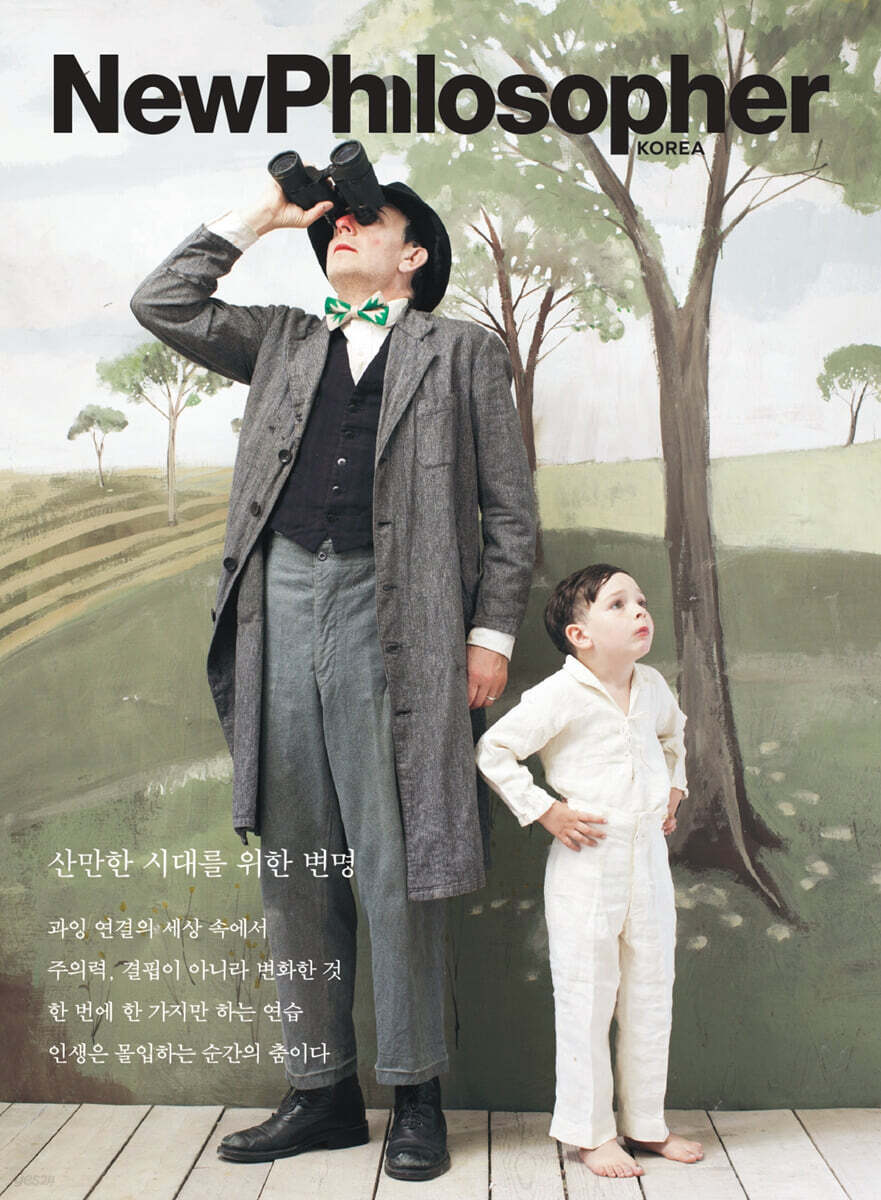
NewPhilosopher (Quarterly): Vol.23 [2023]
 |
Description
Book Introduction
Life philosophy magazine "New Philosopher"
vol.
23: An Apology for a Distracted Age
“If you think about it, life itself is just one big bundle of distractions.” This is how Australian philosopher Antonia Case concludes about distractions.
Unlike the characteristic of distraction that was classified as a personal tendency or personality, the single sentence that life itself is made up of distraction may seem like an exaggeration, but if we think about how we live our lives experiencing 'moments of losing focus' that come several times a day, the definition of 'a life filled with distraction' may not be so wrong.
In the 23rd issue of "New Philosopher," we find philosophical and realistic suggestions for modern people who must constantly face the air of "distraction" that unfolds at every moment in an era of smart devices overflowing with endless information, noise, and notifications.
vol.
23: An Apology for a Distracted Age
“If you think about it, life itself is just one big bundle of distractions.” This is how Australian philosopher Antonia Case concludes about distractions.
Unlike the characteristic of distraction that was classified as a personal tendency or personality, the single sentence that life itself is made up of distraction may seem like an exaggeration, but if we think about how we live our lives experiencing 'moments of losing focus' that come several times a day, the definition of 'a life filled with distraction' may not be so wrong.
In the 23rd issue of "New Philosopher," we find philosophical and realistic suggestions for modern people who must constantly face the air of "distraction" that unfolds at every moment in an era of smart devices overflowing with endless information, noise, and notifications.
- You can preview some of the book's contents.
Preview
index
4_ Editor's Letter
8 _ News from Nowhere
16 _ Intro _ Listening to the Sound of Distraction _ Antonia Case
20_ Relationship _ The Magic of Distraction _ Nigel Warburton
26 _ Opinion _ The Courage to Delete Social Media _ Clarissa Seebeck Montefiore
34 _ Interview _ Focusing in a World Where Immersion is Difficult _ James M.
Lang
50_ Habit_ How to Use Distractions_ Antonia Case
56 _ Attention _ In a world of overconnection _ Maggie Jackson
62 _ Curiosity _ Da Vinci, the boundary between curiosity and distraction _ DBC Pierre
70 _ Artist _ Comfort in a Fake World _ Paolo Ventura
80 _ Psychology _ Such a precious time of dreaming _ Marina Benjamin
88 _ Interview _ Attention, Not a Deficiency, But a Change _ Stefan van der Stickel
104 _ Technology _ How to distinguish between 'signal' and 'noise' _ André Dao
112 _ Philosophy _ Life is a dance of immersive moments _ Tom Chatfield
120 _ Feature _ If you don't want to live like scattered light _ Antonia Case
128 _ Philosophy _ Don't look, just see _ Patrick Stokes
134 _ Column _ One-at-a-time Practice _ Jacqueline Winspear
142 _ Interview _ Is the War Against Distraction Always a Loss? _ Jamie Criner
148 _ Society _ Smartphones in the Medical Field _ Tiger Roholt
156 _ A novel read by a poet _ “Was I the only one who was sincere?” _ Heo Yeon
164 _ Im Yirang's space _ 7J and 14 hours and 30 minutes _ Im Yirang
172 _ Thinking in Pictures _ A Young Painter's Sincerity _ Park Bona
178 _ Our Library
8 _ News from Nowhere
16 _ Intro _ Listening to the Sound of Distraction _ Antonia Case
20_ Relationship _ The Magic of Distraction _ Nigel Warburton
26 _ Opinion _ The Courage to Delete Social Media _ Clarissa Seebeck Montefiore
34 _ Interview _ Focusing in a World Where Immersion is Difficult _ James M.
Lang
50_ Habit_ How to Use Distractions_ Antonia Case
56 _ Attention _ In a world of overconnection _ Maggie Jackson
62 _ Curiosity _ Da Vinci, the boundary between curiosity and distraction _ DBC Pierre
70 _ Artist _ Comfort in a Fake World _ Paolo Ventura
80 _ Psychology _ Such a precious time of dreaming _ Marina Benjamin
88 _ Interview _ Attention, Not a Deficiency, But a Change _ Stefan van der Stickel
104 _ Technology _ How to distinguish between 'signal' and 'noise' _ André Dao
112 _ Philosophy _ Life is a dance of immersive moments _ Tom Chatfield
120 _ Feature _ If you don't want to live like scattered light _ Antonia Case
128 _ Philosophy _ Don't look, just see _ Patrick Stokes
134 _ Column _ One-at-a-time Practice _ Jacqueline Winspear
142 _ Interview _ Is the War Against Distraction Always a Loss? _ Jamie Criner
148 _ Society _ Smartphones in the Medical Field _ Tiger Roholt
156 _ A novel read by a poet _ “Was I the only one who was sincere?” _ Heo Yeon
164 _ Im Yirang's space _ 7J and 14 hours and 30 minutes _ Im Yirang
172 _ Thinking in Pictures _ A Young Painter's Sincerity _ Park Bona
178 _ Our Library
Detailed image

Into the book
Blaise Pascal said:
“All human misfortune comes from one thing: the inability to sit quietly in a room.”
It makes sense to add the condition 'without consuming information' to this sentence from the French philosopher.
Pascal was acutely aware of the human tendency to think and to be extremely reluctant to be left alone.
So he also said this.
“Humans, unable to solve death, misery, and ignorance, decided not to think about such things in order to become happy.”
---p.10 From "News from Nowhere"
Social media releases dopamine, also known as the "happy drug," into our brains, but its effects don't last long.
That's why you don't feel satisfied even if you keep posting photos, getting likes, and gaining new followers.
We are constantly searching for the next stimulus.
Some studies have even shown that the brains of social media addicts resemble those of drug and gambling addicts.
---p.28 From “The Courage to Delete Social Media _ Clarissa Seebeck Montefiore”
First, you need to know what's going on.
We need to understand what research says about why we often feel so distracted and whether all this technology is designed to exacerbate our problems.
… …Finally, you need to maximize the time you focus your attention.
Think about when you really focused during the day, and at the end of that day when you were so focused, you felt like, “Wow, I really got a lot done today.
I want you to remember feelings like “I feel good.”
The more this happens, the more distraction will lose its power and recede.
---p.45 "Focusing in a World Where Immersion is Difficult _ James M.
Among "Lang"
People with good concentration are said to experience relatively less fear, irritation, and sadness in their daily lives, and this result may be partly due to their ability to divert attention from the negative aspects of life.
On the other hand, people with attention deficits have difficulty feeling "flow," the sense of fulfillment that comes from pouring all your energy into solving a problem.
Without the conductor of attention, the symphony orchestra played by the brain would degenerate into dissonance.
---p.58 From "In a World of Over-Connection _ Maggie Jackson"
Since distractions are essential for maintaining long-term concentration, we need to be more proactive about accepting them.
Sometimes you need to let your brain's attentional networks loose.
However, most people still do things that require attention even while they are resting.
This could be going on social media or taking a walk outside while listening to a podcast.
I feel that I absolutely must have time to let my thoughts wander during the day.
This is because distraction allows the attentional network to re-energize, further enhancing focus.
---p.97 From “Attention, Not a Deficiency, But a Change _ Stefan van der Stickel”
Although this is a rare scenario that can only be imagined on a 14 and a half hour flight, in a society where first class is at the front of the plane and economy class is at the back, the desire to continue heading forward is unlikely to subside easily.
Because everyone wants to be more comfortable, in better condition, and go further.
How much of a carbon footprint will I leave on this flight, choosing business class over economy? How much more will I spend because of the seat I earned? Was it worth wasting all the miles I worked so hard to earn? I feel my heart becoming more complex, filled with questions that no one can answer.
“All human misfortune comes from one thing: the inability to sit quietly in a room.”
It makes sense to add the condition 'without consuming information' to this sentence from the French philosopher.
Pascal was acutely aware of the human tendency to think and to be extremely reluctant to be left alone.
So he also said this.
“Humans, unable to solve death, misery, and ignorance, decided not to think about such things in order to become happy.”
---p.10 From "News from Nowhere"
Social media releases dopamine, also known as the "happy drug," into our brains, but its effects don't last long.
That's why you don't feel satisfied even if you keep posting photos, getting likes, and gaining new followers.
We are constantly searching for the next stimulus.
Some studies have even shown that the brains of social media addicts resemble those of drug and gambling addicts.
---p.28 From “The Courage to Delete Social Media _ Clarissa Seebeck Montefiore”
First, you need to know what's going on.
We need to understand what research says about why we often feel so distracted and whether all this technology is designed to exacerbate our problems.
… …Finally, you need to maximize the time you focus your attention.
Think about when you really focused during the day, and at the end of that day when you were so focused, you felt like, “Wow, I really got a lot done today.
I want you to remember feelings like “I feel good.”
The more this happens, the more distraction will lose its power and recede.
---p.45 "Focusing in a World Where Immersion is Difficult _ James M.
Among "Lang"
People with good concentration are said to experience relatively less fear, irritation, and sadness in their daily lives, and this result may be partly due to their ability to divert attention from the negative aspects of life.
On the other hand, people with attention deficits have difficulty feeling "flow," the sense of fulfillment that comes from pouring all your energy into solving a problem.
Without the conductor of attention, the symphony orchestra played by the brain would degenerate into dissonance.
---p.58 From "In a World of Over-Connection _ Maggie Jackson"
Since distractions are essential for maintaining long-term concentration, we need to be more proactive about accepting them.
Sometimes you need to let your brain's attentional networks loose.
However, most people still do things that require attention even while they are resting.
This could be going on social media or taking a walk outside while listening to a podcast.
I feel that I absolutely must have time to let my thoughts wander during the day.
This is because distraction allows the attentional network to re-energize, further enhancing focus.
---p.97 From “Attention, Not a Deficiency, But a Change _ Stefan van der Stickel”
Although this is a rare scenario that can only be imagined on a 14 and a half hour flight, in a society where first class is at the front of the plane and economy class is at the back, the desire to continue heading forward is unlikely to subside easily.
Because everyone wants to be more comfortable, in better condition, and go further.
How much of a carbon footprint will I leave on this flight, choosing business class over economy? How much more will I spend because of the seat I earned? Was it worth wasting all the miles I worked so hard to earn? I feel my heart becoming more complex, filled with questions that no one can answer.
---p.170 From “7J and 14 hours and 30 minutes _ Im Yirang”
Publisher's Review
Wisdom and Advice for a Generation Where Distraction Is Everyday Life
A few years ago, there was a psychology experiment.
It was an experiment where subjects were placed in a room with an electric shock device and left alone.
What's surprising is that most of the subjects shocked themselves after about 12 minutes of being left alone.
This experiment shows that humans would rather try external stimulation than stay in one place alone and lose themselves in thought.
In other words, it has been confirmed that the human brain is a being that cannot help but move towards distraction and stimulation rather than concentration and stagnation.
This issue of New Philosopher focuses on the keyword ‘distraction.’
If you look at the dictionary definition of 'distraction', it means 'something that interferes with concentration', but it also means 'something that cools the head'.
It may seem ironic that a single word carries both negative and positive connotations, but after reading the various thoughts on distraction contained in "The New Philosopher," you will realize that the emotion of distraction actually possesses both beneficial and detrimental aspects.
It is difficult to deny that the popularization of smart devices has led to a universal change in human nature: distraction.
Not only is there the constant buzz of notifications and the temptation of social media to constantly check other people's daily lives and thoughts, but the viewing time for a single video is also steadily decreasing, to the point where videos longer than 5 minutes are no longer popular.
Smart device developers will continue to come up with ideas to keep consumers holding onto their smart devices as often and for as long as possible.
This has already been proven by the way short-form videos, which are under a minute long, are becoming huge winners in terms of views, and the way they make viewers scroll endlessly on one screen.
The authors of "New Philosopher" urge that if we have already entered an age of "distraction," that is, an age in which we have access to a vast amount of information but have become short on ultimate immersion and concentration, then we should not lose the minimal amount of time we have left to focus in our lives.
The era of smart devices is inevitable, but we have no choice but to make an effort to unplug and find some time for ourselves.
“What can I do to increase mindfulness and reduce distraction in my life?” My answer is… …to maximize opportunities for flow and enjoy as many focused moments in life as possible.
So don't worry too much about occasionally looking at your phone, standing in line, or sprawling on the couch at the end of the day.
However, you must definitely have time during the day to focus your attention.
(Page 38)
If distractions cannot be avoided, minimal immersion is essential.
While the degree of distraction and concentration will certainly vary from person to person, each person at some point in their life, or at some time of the day, will undoubtedly have to contend with the enemy of distraction.
Whether you're a student preparing for an exam, an audience listening to a boring lecture, or an office worker facing a deadline due tomorrow, you can't avoid the onslaught of distractions that mercilessly disrupt your ability to focus at the very moment you need to.
American philosopher George Santayana defined distraction as “an alien force that hinders the human will to exercise freedom of its own free will.”
Distraction was seen as an external attack, not a personality trait.
However, the characteristic of distraction sometimes changes its clothes to 'distraction' or 'attention diversion' and serves a beneficial purpose for humans.
Just as an accident can occur when you focus on one thing without looking around, the human power of 'distraction' allows you to avoid danger by constantly looking around and sensing your surroundings.
Just as work requires rest, the power of distraction, which allows us to shift our attention to other thoughts and actions, is also essential when we focus on one problem.
However, it is important to utilize the feeling of distraction to one's own advantage, and even if we fully embrace the characteristics of modern life that make it inevitable to tolerate a certain amount of distraction, time for concentration and immersion is still absolutely and essential for humans.
The authors of "The New Philosopher" urge us to dedicate at least a small amount of time each day to focus, remembering that it is the act of focus that ultimately advances both us as individuals and the world.
Although Europe has a relatively liberal educational climate, the Netherlands is currently embroiled in a heated debate over how to regulate smartphones and social media.
It's certainly not easy, but the battle against distraction will be a constant throughout our lives, knowing that we must not give too much of our lives to the quiet, yet all-too-frequent, forces of distraction.
Humanity has always been surrounded by too much information… … The brain has to select information, and this selection is called ‘attention.’
What has changed from the past is that the competition for people's attention has become incredibly fierce.
Attention is allocated to only one location at a time.
This means that in order to convey a message to someone, you must first attract their attention.
Unlike before, countless people and businesses have realized this, and the ease of access to devices people always have close at hand, such as smartphones, laptops, and tablets, makes it much more effective at capturing their attention.
(Page 90)
The world of prose serialized by domestic writers
- Time to read essays by poets, artists, and musicians
Starting with this issue, New Philosopher will begin publishing prose by Korean writers.
Unlike the writings of foreign authors who fill pages with a single topic, the prose of domestic authors aims to deliver honest essays in a serial format in their own unique field, where they can most enjoy and confidently express themselves.
Through the pages they unfold, readers will be able to encounter more colorful and relatable emotional stories written by Korean authors, in addition to the subject and philosophy of the issue.
Heo Yeon, a poet who won the Contemporary Literature Award and currently works as a reporter for Maeil Business Newspaper, meets readers through the series “Novels Read by Poets” with an attitude of insight and factual delivery that encompasses both poetry and non-fiction.
In this issue, we bring the renowned work [The Stranger] by Albert Camus to readers through the author's unique interpretation and reading of the world, rather than through anyone else's critique.
Contemporary artist Park Bona, who combines video and performance to create works that embody human narratives, will present a meaningful time of 'thinking through pictures' with the basic context of 'how art views and expresses the world.'
In Park Bona's writing, we can see the process by which an artist's sincerity is calmly implemented in his or her personal daily life and in his or her work.
Lim Irang, who plays bass guitar and creates music in the band 'Dear Cloud', is also an essayist who has already written three essays in addition to his main job as a musician.
His descriptions and detailed reflections on the various places and spaces where he left his footprints will provide a warm and relaxing reading experience.
A few years ago, there was a psychology experiment.
It was an experiment where subjects were placed in a room with an electric shock device and left alone.
What's surprising is that most of the subjects shocked themselves after about 12 minutes of being left alone.
This experiment shows that humans would rather try external stimulation than stay in one place alone and lose themselves in thought.
In other words, it has been confirmed that the human brain is a being that cannot help but move towards distraction and stimulation rather than concentration and stagnation.
This issue of New Philosopher focuses on the keyword ‘distraction.’
If you look at the dictionary definition of 'distraction', it means 'something that interferes with concentration', but it also means 'something that cools the head'.
It may seem ironic that a single word carries both negative and positive connotations, but after reading the various thoughts on distraction contained in "The New Philosopher," you will realize that the emotion of distraction actually possesses both beneficial and detrimental aspects.
It is difficult to deny that the popularization of smart devices has led to a universal change in human nature: distraction.
Not only is there the constant buzz of notifications and the temptation of social media to constantly check other people's daily lives and thoughts, but the viewing time for a single video is also steadily decreasing, to the point where videos longer than 5 minutes are no longer popular.
Smart device developers will continue to come up with ideas to keep consumers holding onto their smart devices as often and for as long as possible.
This has already been proven by the way short-form videos, which are under a minute long, are becoming huge winners in terms of views, and the way they make viewers scroll endlessly on one screen.
The authors of "New Philosopher" urge that if we have already entered an age of "distraction," that is, an age in which we have access to a vast amount of information but have become short on ultimate immersion and concentration, then we should not lose the minimal amount of time we have left to focus in our lives.
The era of smart devices is inevitable, but we have no choice but to make an effort to unplug and find some time for ourselves.
“What can I do to increase mindfulness and reduce distraction in my life?” My answer is… …to maximize opportunities for flow and enjoy as many focused moments in life as possible.
So don't worry too much about occasionally looking at your phone, standing in line, or sprawling on the couch at the end of the day.
However, you must definitely have time during the day to focus your attention.
(Page 38)
If distractions cannot be avoided, minimal immersion is essential.
While the degree of distraction and concentration will certainly vary from person to person, each person at some point in their life, or at some time of the day, will undoubtedly have to contend with the enemy of distraction.
Whether you're a student preparing for an exam, an audience listening to a boring lecture, or an office worker facing a deadline due tomorrow, you can't avoid the onslaught of distractions that mercilessly disrupt your ability to focus at the very moment you need to.
American philosopher George Santayana defined distraction as “an alien force that hinders the human will to exercise freedom of its own free will.”
Distraction was seen as an external attack, not a personality trait.
However, the characteristic of distraction sometimes changes its clothes to 'distraction' or 'attention diversion' and serves a beneficial purpose for humans.
Just as an accident can occur when you focus on one thing without looking around, the human power of 'distraction' allows you to avoid danger by constantly looking around and sensing your surroundings.
Just as work requires rest, the power of distraction, which allows us to shift our attention to other thoughts and actions, is also essential when we focus on one problem.
However, it is important to utilize the feeling of distraction to one's own advantage, and even if we fully embrace the characteristics of modern life that make it inevitable to tolerate a certain amount of distraction, time for concentration and immersion is still absolutely and essential for humans.
The authors of "The New Philosopher" urge us to dedicate at least a small amount of time each day to focus, remembering that it is the act of focus that ultimately advances both us as individuals and the world.
Although Europe has a relatively liberal educational climate, the Netherlands is currently embroiled in a heated debate over how to regulate smartphones and social media.
It's certainly not easy, but the battle against distraction will be a constant throughout our lives, knowing that we must not give too much of our lives to the quiet, yet all-too-frequent, forces of distraction.
Humanity has always been surrounded by too much information… … The brain has to select information, and this selection is called ‘attention.’
What has changed from the past is that the competition for people's attention has become incredibly fierce.
Attention is allocated to only one location at a time.
This means that in order to convey a message to someone, you must first attract their attention.
Unlike before, countless people and businesses have realized this, and the ease of access to devices people always have close at hand, such as smartphones, laptops, and tablets, makes it much more effective at capturing their attention.
(Page 90)
The world of prose serialized by domestic writers
- Time to read essays by poets, artists, and musicians
Starting with this issue, New Philosopher will begin publishing prose by Korean writers.
Unlike the writings of foreign authors who fill pages with a single topic, the prose of domestic authors aims to deliver honest essays in a serial format in their own unique field, where they can most enjoy and confidently express themselves.
Through the pages they unfold, readers will be able to encounter more colorful and relatable emotional stories written by Korean authors, in addition to the subject and philosophy of the issue.
Heo Yeon, a poet who won the Contemporary Literature Award and currently works as a reporter for Maeil Business Newspaper, meets readers through the series “Novels Read by Poets” with an attitude of insight and factual delivery that encompasses both poetry and non-fiction.
In this issue, we bring the renowned work [The Stranger] by Albert Camus to readers through the author's unique interpretation and reading of the world, rather than through anyone else's critique.
Contemporary artist Park Bona, who combines video and performance to create works that embody human narratives, will present a meaningful time of 'thinking through pictures' with the basic context of 'how art views and expresses the world.'
In Park Bona's writing, we can see the process by which an artist's sincerity is calmly implemented in his or her personal daily life and in his or her work.
Lim Irang, who plays bass guitar and creates music in the band 'Dear Cloud', is also an essayist who has already written three essays in addition to his main job as a musician.
His descriptions and detailed reflections on the various places and spaces where he left his footprints will provide a warm and relaxing reading experience.
GOODS SPECIFICS
- Date of issue: July 3, 2023
- Page count, weight, size: 180 pages | 180*245*20mm
- ISBN13: 9772586476005
- ISBN10: 25864769
You may also like
카테고리
korean


korean

![GQ KOREA Mark (Monthly): December [2025]](http://librairie.coreenne.fr/cdn/shop/files/8ef265dbbfbf186523ed75ba7319009d.jpg?v=1765340328&width=3840)


