![NewPhilosopher (Quarterly): Vol. 12 [2020]](http://librairie.coreenne.fr/cdn/shop/files/5a5441326270afed52a57de312c4bef1.jpg?v=1765411914&width=3840)

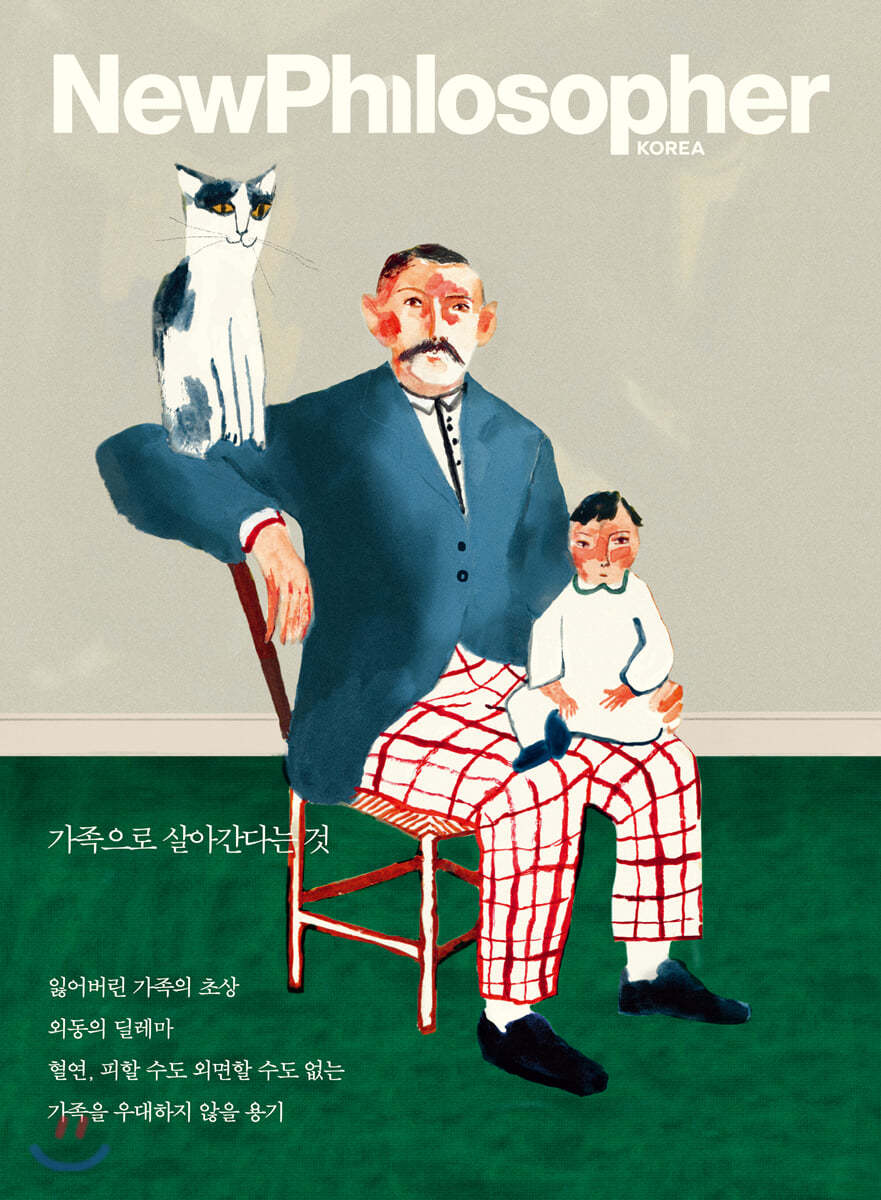
NewPhilosopher (Quarterly): Vol. 12 [2020]
 |
Description
Book Introduction
Lifestyle philosophy magazine 『New Philosopher』 No. 12
_ “Living as a family”
A cliché, but still worth considering: family.
In fact, family has long been a cliche.
Families are breaking up for countless reasons, and the younger generation is being denied the opportunity to form families due to anxiety about the future.
The term "N-po generation", which refers to those who give up on dating, marriage, pregnancy, and childcare, is not used for nothing.
The increasing number of single-person households in Korea and around the world may be a self-portrait of the breakdown of the family.
Still, family is worth reconsidering.
This is because we have lived within that fence so far, we are living within that fence now, and our lives will continue to be lived within that fence in the future.
Family is supposed to be the closest relationship, but sometimes it can become a relationship that stabs each other in the heart.
Rich people have their relationships ruined because of money, and the common people turn away from small grievances as they become exaggerated.
Why does family always have to be like that?
Of course, the world is full of loving couples and happy families.
But they too experience moments of little creaks.
So, perhaps that is why Tolstoy wrote the first sentence of Anna Karenina like this.
“All happy families are alike; every unhappy family is unhappy in its own way.”
_ “Living as a family”
A cliché, but still worth considering: family.
In fact, family has long been a cliche.
Families are breaking up for countless reasons, and the younger generation is being denied the opportunity to form families due to anxiety about the future.
The term "N-po generation", which refers to those who give up on dating, marriage, pregnancy, and childcare, is not used for nothing.
The increasing number of single-person households in Korea and around the world may be a self-portrait of the breakdown of the family.
Still, family is worth reconsidering.
This is because we have lived within that fence so far, we are living within that fence now, and our lives will continue to be lived within that fence in the future.
Family is supposed to be the closest relationship, but sometimes it can become a relationship that stabs each other in the heart.
Rich people have their relationships ruined because of money, and the common people turn away from small grievances as they become exaggerated.
Why does family always have to be like that?
Of course, the world is full of loving couples and happy families.
But they too experience moments of little creaks.
So, perhaps that is why Tolstoy wrote the first sentence of Anna Karenina like this.
“All happy families are alike; every unhappy family is unhappy in its own way.”
- You can preview some of the book's contents.
Preview
index
8 News from Nowhere
16 Feature _ Becoming a Part of the Family _ Tom Chatfield
22 Feature _ Blood Ties, Which Cannot Be Avoided or Ignored _ André Dao
28 Interview _ Portrait of a Lost Family _ Dario Mitidieri
46 Comic _ Schopenhauer and Mother _ Corey Moller
50 Feature _ The Beginning and End of a Family Quarrel _ Antonia Case
Feature 58 _ “Leave the second-best bed to your wife” _ Patrick Stokes
Feature 64 _ The Courage to Not Prefer Family _ Tim Dean
76 Feature _ Children Make Us Gods _ Mariana Alessandri
82 Feature _ The Only Child's Dilemma Marina _ Benjamin
90 Feature _ Family Secret _ Nigel Warburton
96 Feature _ The Private Lives of Philosopher Fathers _ Warren Ward
106 Interview _ Parental Rights and Responsibilities _ Joseph Millum
122 Reading the Classics _ Hyogyeong
130 Classic Readings _ The World of the Married _ John Stuart Mill
136 6 thinkers _ Family
138 Coaching _ Why do some parents split up and live with other people? _ Matthew Beard
144 Our Library
Column 146 _ Living with Robots _ Maggie Jackson
152 Classic Readings _ Who is your closest family member? _ Lev Nikolayevich Tolstoy
160 Interview _ My Life Philosophy: 13 Questions, 13 Answers _ Kim Hee-kyung
16 Feature _ Becoming a Part of the Family _ Tom Chatfield
22 Feature _ Blood Ties, Which Cannot Be Avoided or Ignored _ André Dao
28 Interview _ Portrait of a Lost Family _ Dario Mitidieri
46 Comic _ Schopenhauer and Mother _ Corey Moller
50 Feature _ The Beginning and End of a Family Quarrel _ Antonia Case
Feature 58 _ “Leave the second-best bed to your wife” _ Patrick Stokes
Feature 64 _ The Courage to Not Prefer Family _ Tim Dean
76 Feature _ Children Make Us Gods _ Mariana Alessandri
82 Feature _ The Only Child's Dilemma Marina _ Benjamin
90 Feature _ Family Secret _ Nigel Warburton
96 Feature _ The Private Lives of Philosopher Fathers _ Warren Ward
106 Interview _ Parental Rights and Responsibilities _ Joseph Millum
122 Reading the Classics _ Hyogyeong
130 Classic Readings _ The World of the Married _ John Stuart Mill
136 6 thinkers _ Family
138 Coaching _ Why do some parents split up and live with other people? _ Matthew Beard
144 Our Library
Column 146 _ Living with Robots _ Maggie Jackson
152 Classic Readings _ Who is your closest family member? _ Lev Nikolayevich Tolstoy
160 Interview _ My Life Philosophy: 13 Questions, 13 Answers _ Kim Hee-kyung
Detailed image

Into the book
We can't turn back time.
The past may leave traces, but it will disappear and become the past.
This is the most cliché expression to describe the passage of time, but it is difficult to simply ignore the resonance of love and loss that arises through the magic of time as my family grows.
Caring for a new life is a process of reexamining one's own experiences.
Through this process, we come to realize how imperfect and frequently changing identity is.
--- p.
20
I tried not to be overprotective of my daughter, but it was very difficult.
It is our children who train us as parents, who teach us when and how to give up and give in.
I only had one chance to learn that it might be better to let things go for a while.
Fortunately, my daughter is generous.
Meanwhile, my daughter has observed the adult world more closely than her peers surrounded by siblings.
And we all understand that we have flaws.
--- p.
87
I think parental rights can be relatively limited.
Fundamental parental rights include the right to goods produced in the course of performing parental duties, or the right to maintain and enjoy a relationship with one's children.
That is, parents can involve their children in activities they deem valuable.
But that doesn't mean you can sacrifice your child's quality of life to provide activities that are valuable to you.
--- p.
112
If you serve your mother as you serve your father, you will be able to love them both equally.
If you serve your king as you serve your father, you will honor both equally.
For this reason, mothers are primarily loved, and wages are primarily respected, but both are given to fathers.
Therefore, serving the king with filial piety is loyalty, and serving one's superiors with respect is obedience.
If you are loyal and obedient when serving your superiors, you can keep your salary and position, and observe the ancestral rites.
This is the filial piety of a scholar.
--- p.
124
In the future, we may fall into an even deeper fascination with robots.
Just like I did a long time ago.
But let's not get excited.
We need to understand more deeply and ask more serious questions about the costs and benefits of living with this amazing invention.
Only then can we begin to answer one of the most important dilemmas facing society today: when will robots take our hand and when will they let go?
The past may leave traces, but it will disappear and become the past.
This is the most cliché expression to describe the passage of time, but it is difficult to simply ignore the resonance of love and loss that arises through the magic of time as my family grows.
Caring for a new life is a process of reexamining one's own experiences.
Through this process, we come to realize how imperfect and frequently changing identity is.
--- p.
20
I tried not to be overprotective of my daughter, but it was very difficult.
It is our children who train us as parents, who teach us when and how to give up and give in.
I only had one chance to learn that it might be better to let things go for a while.
Fortunately, my daughter is generous.
Meanwhile, my daughter has observed the adult world more closely than her peers surrounded by siblings.
And we all understand that we have flaws.
--- p.
87
I think parental rights can be relatively limited.
Fundamental parental rights include the right to goods produced in the course of performing parental duties, or the right to maintain and enjoy a relationship with one's children.
That is, parents can involve their children in activities they deem valuable.
But that doesn't mean you can sacrifice your child's quality of life to provide activities that are valuable to you.
--- p.
112
If you serve your mother as you serve your father, you will be able to love them both equally.
If you serve your king as you serve your father, you will honor both equally.
For this reason, mothers are primarily loved, and wages are primarily respected, but both are given to fathers.
Therefore, serving the king with filial piety is loyalty, and serving one's superiors with respect is obedience.
If you are loyal and obedient when serving your superiors, you can keep your salary and position, and observe the ancestral rites.
This is the filial piety of a scholar.
--- p.
124
In the future, we may fall into an even deeper fascination with robots.
Just like I did a long time ago.
But let's not get excited.
We need to understand more deeply and ask more serious questions about the costs and benefits of living with this amazing invention.
Only then can we begin to answer one of the most important dilemmas facing society today: when will robots take our hand and when will they let go?
--- p.
151
151
Publisher's Review
Nepotism is engraved in human DNA.
Issue 12 of 『New Philosopher』 explores the family of our time under the theme of “Living as a Family.”
The authors each add their own stories to the age-old topic of family, approaching the discourse on family that our society must consider.
In [The Only Child's Dilemma], author Marina Benjamin tells the story of her struggles raising an only daughter.
He shows clear traces of his mother's struggles to figure out how to help her daughter live as herself without being overprotective.
In the process, she confesses that her daughter was the one who “trained her husband and herself as parents” and “taught them when and how to give up and give in.”
This is a text that has enough lessons to teach us in today's world where parents treat their children as possessions and are overprotective.
“I tried not to be overprotective of my daughter, but it was very difficult.
It is our children who train us as parents, who teach us when and how to give up and give in.
I only had one chance to learn that it might be better to let things go for a while.
Fortunately, my daughter is generous.
Meanwhile, my daughter has observed the adult world more closely than her peers surrounded by siblings.
And we all understand that we have flaws.”
Philosopher Tim Dean beautifully illustrates our perverse attachment to family in The Courage to Not Be Family-Friendly.
In the past, popes often appointed their nephews to important positions.
Because they could not marry or have children, there was no one to whom they could pass down their power and wealth.
Tim Dean shows how this practice has resurfaced today, revealing how the term "nepotism"—the act of supporting family and friends for personal gain—has been transformed.
“Of course, when we use this term today, the privileges are not limited to nephews and nieces.
From making your child mow the lawn and giving him an allowance, to placing your beloved offspring in a high-ranking position at a large corporation, to holding a nation in your hands for generations like a political powerhouse, nepotism is found everywhere in our society.
Perhaps such practices are engraved in human genes.”
These customs, which are “engraved in human genes,” are actually more common in Korea.
In Korea, it is still common for people to be appointed to certain positions based on blood ties, regional ties, school ties, etc.
The phrase, "Are we the ones who are the others?", which we thought had disappeared, comes back like a ghost every election season.
No, you wouldn't know how many things in our daily lives are intertwined in this way.
Team Teen warns the world as follows:
“The practice persists throughout society, from corporations to politics to elite educational institutions.
… … It takes great courage for parents to not give their children (or nephews) any advantage.”
Portrait of a refugee who lost his family
One of the most eye-catching sections of the 12th issue of 『New Philosopher』 is an interview and photographs by photographer Dario Mitidieri titled [Portraits of a Lost Family].
Dario took photographs of people who lost their families during the Syrian civil war and are living in refugee camps in Lebanon.
Although they are dressed in their best clothes, there is no joy on their faces.
It's because of the empty chair.
It's a place where someone should be sitting, but now they're not with their family.
“We also met children who were born in refugee camps and knew nothing else about life there.
In a situation where everyone had lost something, our photos were a microcosm of the tragedy, condensing the stories of refugees and those who had lost their families.
“If you visit Jordan, you will see another million refugees there and hear similar stories of loss.”
Dario asks for attention to Syrian refugees, who are becoming forgotten people in the world.
The refugees in the camp are stuck in a situation where they can't do anything.
They can't go back home, and they don't have money to go anywhere else.
I don't even have the money to get a passport, and no matter where I go, there's no one who will accept me.
In that sense, the people in the refugee camp are in a desperate situation with no way out.
It's a situation where you literally can't go anywhere.
They just exist there, forgotten by the people of the world.
The future is shrouded in darkness, with no way of knowing what lies even an inch ahead.
The situation is no different for Syrian refugees who have left the camps and are living in Istanbul and other places.
Because they live in extreme poverty in the city center and have no hope for the future.
Photographer Dario also asks people to pay attention to teenagers wandering the streets around the world.
Because one of the biggest victims of broken families is teenagers who wander the streets.
“I tried to capture the social stigma and finger-pointing that comes with being pregnant from their perspective.
As with any work documenting a phenomenon, as I learned about them, I gained a deeper understanding of the stories behind their pregnancies—the reasons they came to have children.
It is usually associated with poor parenting, serious family problems, alcohol-related abuse, and parental divorce.
Those children did not simply get pregnant accidentally while 'having fun'.
“There is a clear social problem behind this.”
If it is a clear social problem, then everyone should step forward and raise awareness and rebuild it.
Dario sums up the answer with the words, “I don’t want to sound cliche, but honestly, family is everything.”
Because this is a problem that started within the family, it is even more important to find a solution within the family.
The cliche question of family
In [Living with Robots], social critic Maggie Jackson emphasizes the need to establish a relationship with robots, which are becoming new members of the family.
Robots are no longer rare creatures confined to laboratories. Thanks to advances in AI technology, robots designed to empathize with humans are increasingly taking on the roles of team members, tutors, and helpers.
The important thing is that before we can even begin to determine who will benefit from robots, we must first be clear about what we want from these mechanical creatures, both now and in the future.
It is meaningless to indiscriminately create robots just for human convenience.
This is why some roboticists worry that if robots with human-like charm are developed, people will avoid responsibility for each other.
If robots were to appear to help the elderly maintain emotional bonds, their families would easily abandon their roles, and at that very moment, the bonds with family, and even human identity, would collapse.
“In the future, we may fall into a deeper fascination with robots.
Just like I did a long time ago.
But let's not get excited.
We need to understand more deeply and ask more serious questions about the costs and benefits of living with this amazing invention.
Only then can we begin to answer one of the most important dilemmas facing society today: when will robots take our hand and when will they let go?”
We live in an era where single-person households are on the rise and people are giving up on dating, marriage, pregnancy, and childcare.
The more this happens, the more we need to look back at the meaning of family.
This is because we need to expand our imagination to imagine what kind of family we are facing and what kind of family will come before us, rather than a family in the traditional sense.
Let's think together about what we can answer to that cliche question about family.
Issue 12 of 『New Philosopher』 explores the family of our time under the theme of “Living as a Family.”
The authors each add their own stories to the age-old topic of family, approaching the discourse on family that our society must consider.
In [The Only Child's Dilemma], author Marina Benjamin tells the story of her struggles raising an only daughter.
He shows clear traces of his mother's struggles to figure out how to help her daughter live as herself without being overprotective.
In the process, she confesses that her daughter was the one who “trained her husband and herself as parents” and “taught them when and how to give up and give in.”
This is a text that has enough lessons to teach us in today's world where parents treat their children as possessions and are overprotective.
“I tried not to be overprotective of my daughter, but it was very difficult.
It is our children who train us as parents, who teach us when and how to give up and give in.
I only had one chance to learn that it might be better to let things go for a while.
Fortunately, my daughter is generous.
Meanwhile, my daughter has observed the adult world more closely than her peers surrounded by siblings.
And we all understand that we have flaws.”
Philosopher Tim Dean beautifully illustrates our perverse attachment to family in The Courage to Not Be Family-Friendly.
In the past, popes often appointed their nephews to important positions.
Because they could not marry or have children, there was no one to whom they could pass down their power and wealth.
Tim Dean shows how this practice has resurfaced today, revealing how the term "nepotism"—the act of supporting family and friends for personal gain—has been transformed.
“Of course, when we use this term today, the privileges are not limited to nephews and nieces.
From making your child mow the lawn and giving him an allowance, to placing your beloved offspring in a high-ranking position at a large corporation, to holding a nation in your hands for generations like a political powerhouse, nepotism is found everywhere in our society.
Perhaps such practices are engraved in human genes.”
These customs, which are “engraved in human genes,” are actually more common in Korea.
In Korea, it is still common for people to be appointed to certain positions based on blood ties, regional ties, school ties, etc.
The phrase, "Are we the ones who are the others?", which we thought had disappeared, comes back like a ghost every election season.
No, you wouldn't know how many things in our daily lives are intertwined in this way.
Team Teen warns the world as follows:
“The practice persists throughout society, from corporations to politics to elite educational institutions.
… … It takes great courage for parents to not give their children (or nephews) any advantage.”
Portrait of a refugee who lost his family
One of the most eye-catching sections of the 12th issue of 『New Philosopher』 is an interview and photographs by photographer Dario Mitidieri titled [Portraits of a Lost Family].
Dario took photographs of people who lost their families during the Syrian civil war and are living in refugee camps in Lebanon.
Although they are dressed in their best clothes, there is no joy on their faces.
It's because of the empty chair.
It's a place where someone should be sitting, but now they're not with their family.
“We also met children who were born in refugee camps and knew nothing else about life there.
In a situation where everyone had lost something, our photos were a microcosm of the tragedy, condensing the stories of refugees and those who had lost their families.
“If you visit Jordan, you will see another million refugees there and hear similar stories of loss.”
Dario asks for attention to Syrian refugees, who are becoming forgotten people in the world.
The refugees in the camp are stuck in a situation where they can't do anything.
They can't go back home, and they don't have money to go anywhere else.
I don't even have the money to get a passport, and no matter where I go, there's no one who will accept me.
In that sense, the people in the refugee camp are in a desperate situation with no way out.
It's a situation where you literally can't go anywhere.
They just exist there, forgotten by the people of the world.
The future is shrouded in darkness, with no way of knowing what lies even an inch ahead.
The situation is no different for Syrian refugees who have left the camps and are living in Istanbul and other places.
Because they live in extreme poverty in the city center and have no hope for the future.
Photographer Dario also asks people to pay attention to teenagers wandering the streets around the world.
Because one of the biggest victims of broken families is teenagers who wander the streets.
“I tried to capture the social stigma and finger-pointing that comes with being pregnant from their perspective.
As with any work documenting a phenomenon, as I learned about them, I gained a deeper understanding of the stories behind their pregnancies—the reasons they came to have children.
It is usually associated with poor parenting, serious family problems, alcohol-related abuse, and parental divorce.
Those children did not simply get pregnant accidentally while 'having fun'.
“There is a clear social problem behind this.”
If it is a clear social problem, then everyone should step forward and raise awareness and rebuild it.
Dario sums up the answer with the words, “I don’t want to sound cliche, but honestly, family is everything.”
Because this is a problem that started within the family, it is even more important to find a solution within the family.
The cliche question of family
In [Living with Robots], social critic Maggie Jackson emphasizes the need to establish a relationship with robots, which are becoming new members of the family.
Robots are no longer rare creatures confined to laboratories. Thanks to advances in AI technology, robots designed to empathize with humans are increasingly taking on the roles of team members, tutors, and helpers.
The important thing is that before we can even begin to determine who will benefit from robots, we must first be clear about what we want from these mechanical creatures, both now and in the future.
It is meaningless to indiscriminately create robots just for human convenience.
This is why some roboticists worry that if robots with human-like charm are developed, people will avoid responsibility for each other.
If robots were to appear to help the elderly maintain emotional bonds, their families would easily abandon their roles, and at that very moment, the bonds with family, and even human identity, would collapse.
“In the future, we may fall into a deeper fascination with robots.
Just like I did a long time ago.
But let's not get excited.
We need to understand more deeply and ask more serious questions about the costs and benefits of living with this amazing invention.
Only then can we begin to answer one of the most important dilemmas facing society today: when will robots take our hand and when will they let go?”
We live in an era where single-person households are on the rise and people are giving up on dating, marriage, pregnancy, and childcare.
The more this happens, the more we need to look back at the meaning of family.
This is because we need to expand our imagination to imagine what kind of family we are facing and what kind of family will come before us, rather than a family in the traditional sense.
Let's think together about what we can answer to that cliche question about family.
GOODS SPECIFICS
- Date of issue: October 5, 2020
- Page count, weight, size: 160 pages | 448g | 180*245*11mm
- ISBN13: 2593509326002
You may also like
카테고리
korean


korean

![GQ KOREA Mark (Monthly): December [2025]](http://librairie.coreenne.fr/cdn/shop/files/8ef265dbbfbf186523ed75ba7319009d.jpg?v=1765340328&width=3840)


