![NewPhilosopher (Quarterly): Vol.9 [2020]](http://librairie.coreenne.fr/cdn/shop/files/c0274bf99bd21b7739a57af1ca71bc5f.jpg?v=1765412126&width=3840)

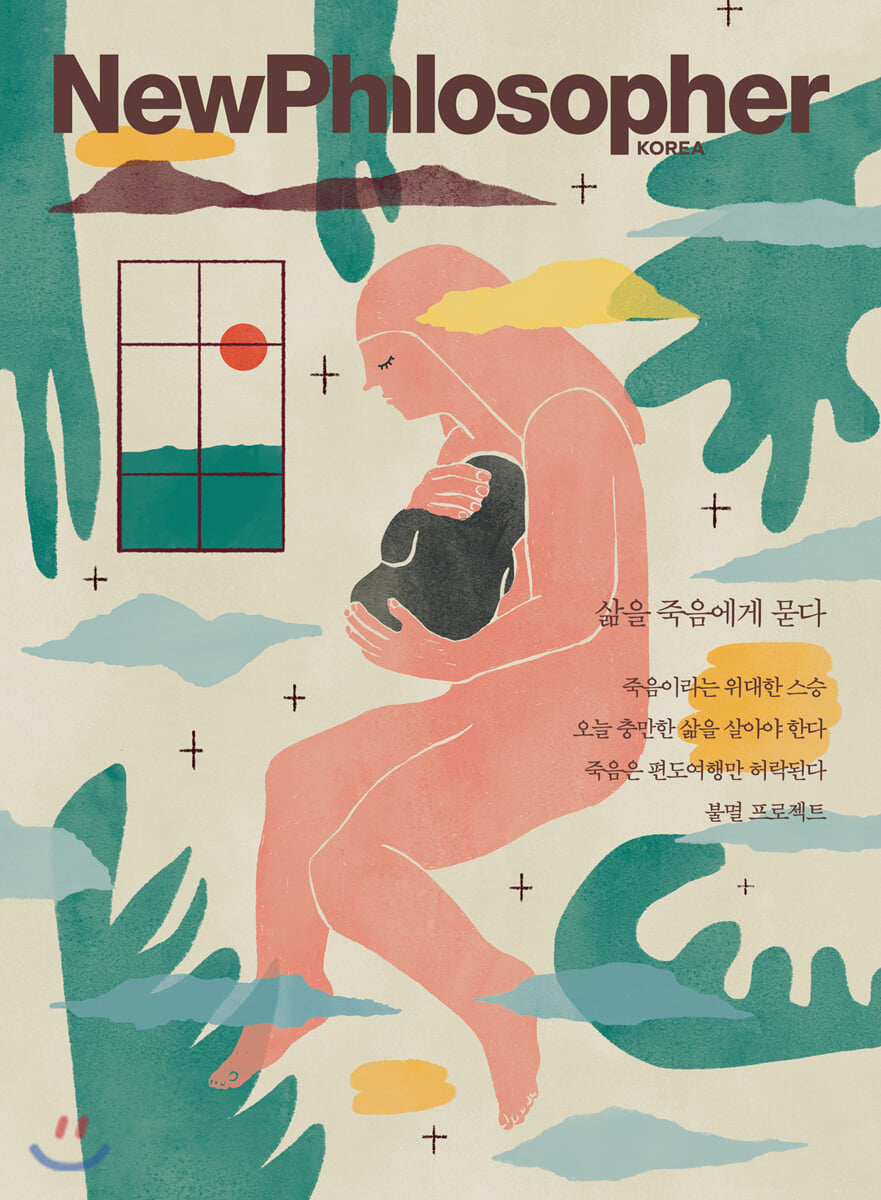
NewPhilosopher (Quarterly): Vol.9 [2020]
 |
Description
index
10 News from Nowhere
Feature 18 _ Death, the Great Teacher _ Tim Dean
26 Interview _ Life and Death _ Klaus Bo
48 Comic _ The Wrath of the Sea _ Corey Moller
Feature 52 _ Imagination, more than philosophy, teaches us how to die well _ Tom Chatfield
58 Feature _ What is a 'Good Death' _ Clarissa Seebeck Montefiore
68 Feature _ Is there an afterlife? _ Mariana Alessandri
74 Feature _ Death is a one-way trip only _ Patrick Stokes
90 Interview _ You Must Live a Full Life Today _ Sue Black
106 Feature _ A World Where Death Is on Display _ Tiffany Jenkins
114 Feature _ The Death of a Philosopher _ Nigel Warburton
122 Feature _ The Immortal Project _ Marina Benjamin
130 Classic Readings _ There is great happiness in death _ Seneca
136 Classic Reading _ Old Man and Death _ Aesop's Fables
140 6 thinkers _ Death
142 Coaching _ What does it feel like to die? _ Matthew Beard
146 Our Library
148 Essay _ The Great Extinction of Our Time _ Charles Foster
156 Interview _ My Life Philosophy: 13 Questions, 13 Answers _ Richard Jones
Feature 18 _ Death, the Great Teacher _ Tim Dean
26 Interview _ Life and Death _ Klaus Bo
48 Comic _ The Wrath of the Sea _ Corey Moller
Feature 52 _ Imagination, more than philosophy, teaches us how to die well _ Tom Chatfield
58 Feature _ What is a 'Good Death' _ Clarissa Seebeck Montefiore
68 Feature _ Is there an afterlife? _ Mariana Alessandri
74 Feature _ Death is a one-way trip only _ Patrick Stokes
90 Interview _ You Must Live a Full Life Today _ Sue Black
106 Feature _ A World Where Death Is on Display _ Tiffany Jenkins
114 Feature _ The Death of a Philosopher _ Nigel Warburton
122 Feature _ The Immortal Project _ Marina Benjamin
130 Classic Readings _ There is great happiness in death _ Seneca
136 Classic Reading _ Old Man and Death _ Aesop's Fables
140 6 thinkers _ Death
142 Coaching _ What does it feel like to die? _ Matthew Beard
146 Our Library
148 Essay _ The Great Extinction of Our Time _ Charles Foster
156 Interview _ My Life Philosophy: 13 Questions, 13 Answers _ Richard Jones
Detailed image
.jpg)
Into the book
All methods for extending life only try to extend the very end of life.
Everyone talks about extending lifespan from 80 to 100 or from 100 to 150, but they don't talk about extending the earlier years, such as the physical peak in one's 20s or the intellectual peak in one's 40s.
What if we extended the teenage years by another decade or so and observed what kind of misconduct adolescents engage in? Or what if we extended childhood, a time of both joy and pain (for parents)? Why shouldn't we extend childhood by another decade? There's something that shouldn't be left out of any discussion about extending life.
Rather than simply focusing on the number of years we spend on Earth, we should look at the quality of that time—what we do with it.
---From "News from Nowhere _ A Long and Short Life"
If you don't believe the religious people or scientists who say that eternal life is just around the corner, your job is to face the finiteness of life, not to ignore it.
According to a line of philosophical thought that has continued through Martin Heidegger, denying the finitude of life renders it meaningless and false.
This is precisely why eternal life is not so pleasant.
If we are to remain in this world forever anyway, there is no meaning in giving up or choosing something.
You end up doing things that are just fun and worthless instead of things that are worthwhile but difficult, and you lose the ability to focus wholeheartedly on whatever you do.
---From "Life is Too Short _ Oliver Burkeman"
After all, dissection is a gift from the dead.
However, this deceased person is very different from the deceased person who requires forensic examination.
No deceased person who needed to be examined forensically was ever permitted to be dissected.
In fact, it was the investigative agency that requested the investigation of the deceased for a special purpose.
This is what it means to say that dead people can be grouped into different categories.
The first time I walked into an autopsy room where a deceased person had explicitly given permission for their body to be dissected, I couldn't even breathe properly and thought, 'This is something I will never experience again.'
The first encounter with a deceased person who had explicitly given permission for dissection was an overwhelming and burdensome experience.
---From "You Must Live a Full Life Today _ Sue Black"
We all should be able to make that choice.
Assisted suicide should be an option for terminally ill patients who have little hope of survival and are in so much pain and weakness that death is preferable.
It takes courage to choose such a death, so we should respect such actions rather than lament them.
Montaigne wrote that to philosophize is to learn how to die.
I would like to add this:
To philosophize is also to learn 'when' to die.
---From "The Death of a Philosopher _ Nigel Warburton"
We are destined to live in constant fear, drifting here and there on the waves, sometimes colliding with each other or sometimes being shipwrecked.
For those who sail these stormy seas, having to fend off every gust with their whole body, the only refuge is death.
So don't be sad that your brother got some rest.
He was finally free, finally safe, finally eternal.
… … He is now enjoying himself, freely roaming the endless sky.
He left this miserable, lowly earth and soared to the heights where souls freed from the bonds of the flesh are welcomed into his happy embrace.
He is now wandering there, immersed in the utmost bliss, enjoying all the blessings of nature.
So you're mistaken! Your brother hasn't lost the light of day; he's gained a more permanent light.
The path my brother took is ultimately the path we all must take.
Everyone talks about extending lifespan from 80 to 100 or from 100 to 150, but they don't talk about extending the earlier years, such as the physical peak in one's 20s or the intellectual peak in one's 40s.
What if we extended the teenage years by another decade or so and observed what kind of misconduct adolescents engage in? Or what if we extended childhood, a time of both joy and pain (for parents)? Why shouldn't we extend childhood by another decade? There's something that shouldn't be left out of any discussion about extending life.
Rather than simply focusing on the number of years we spend on Earth, we should look at the quality of that time—what we do with it.
---From "News from Nowhere _ A Long and Short Life"
If you don't believe the religious people or scientists who say that eternal life is just around the corner, your job is to face the finiteness of life, not to ignore it.
According to a line of philosophical thought that has continued through Martin Heidegger, denying the finitude of life renders it meaningless and false.
This is precisely why eternal life is not so pleasant.
If we are to remain in this world forever anyway, there is no meaning in giving up or choosing something.
You end up doing things that are just fun and worthless instead of things that are worthwhile but difficult, and you lose the ability to focus wholeheartedly on whatever you do.
---From "Life is Too Short _ Oliver Burkeman"
After all, dissection is a gift from the dead.
However, this deceased person is very different from the deceased person who requires forensic examination.
No deceased person who needed to be examined forensically was ever permitted to be dissected.
In fact, it was the investigative agency that requested the investigation of the deceased for a special purpose.
This is what it means to say that dead people can be grouped into different categories.
The first time I walked into an autopsy room where a deceased person had explicitly given permission for their body to be dissected, I couldn't even breathe properly and thought, 'This is something I will never experience again.'
The first encounter with a deceased person who had explicitly given permission for dissection was an overwhelming and burdensome experience.
---From "You Must Live a Full Life Today _ Sue Black"
We all should be able to make that choice.
Assisted suicide should be an option for terminally ill patients who have little hope of survival and are in so much pain and weakness that death is preferable.
It takes courage to choose such a death, so we should respect such actions rather than lament them.
Montaigne wrote that to philosophize is to learn how to die.
I would like to add this:
To philosophize is also to learn 'when' to die.
---From "The Death of a Philosopher _ Nigel Warburton"
We are destined to live in constant fear, drifting here and there on the waves, sometimes colliding with each other or sometimes being shipwrecked.
For those who sail these stormy seas, having to fend off every gust with their whole body, the only refuge is death.
So don't be sad that your brother got some rest.
He was finally free, finally safe, finally eternal.
… … He is now enjoying himself, freely roaming the endless sky.
He left this miserable, lowly earth and soared to the heights where souls freed from the bonds of the flesh are welcomed into his happy embrace.
He is now wandering there, immersed in the utmost bliss, enjoying all the blessings of nature.
So you're mistaken! Your brother hasn't lost the light of day; he's gained a more permanent light.
The path my brother took is ultimately the path we all must take.
---From "Reading the Classics _ There is great happiness in death _ Seneca"
Publisher's Review
“Rather than ignoring the fear of death, we must face it head on.”
Along with ‘life’, ‘death’ has also been a long-standing theme in philosophy.
Because almost everyone, past or present, is afraid of death.
The ancient Greek philosopher Socrates considered death to be “like a dreamless sleep,” and the poet and philosopher Lucretius, who was also well-versed in science, argued that “for man there is no difference between the time before his birth and the eternity that will come after his death.”
Meanwhile, film director Woody Allen wittily expressed the modern people's perception of death with the words, "I'm not afraid of dying, but I don't want to be there when it happens."
Death is always present in life, but few people live their lives aware of it.
When you are young, death is something that happens in the distant future, and when you are old, you try hard to ignore it.
The fear of missing out on the joys of life—the radiant daily life, the people we love, and all that it offers—is a major factor in turning away from death.
However, rather than ignoring those fears, we must face them head-on to enjoy a fulfilling life, emphasizes Jan Borg, editor-in-chief of the Australian edition of The New Philosopher.
“The fear of death ultimately stems from the fear of missing out on all possibilities: our daily lives, the people around us, and even the progress and happiness of life.
But the world doesn't stop when we die.
Even after our existence is gone, time will continue to flow and history will continue.
Ultimately, we must be able to face our fears head on rather than ignore them.”
The power to overcome death
The 9th issue of New Philosopher, “Asking Death About Life,” focuses on the other side of life, namely, “death,” which stands in opposition to life.
In fact, death is a subject of concern to all humans, yet it is often completely ignored.
Because death itself is ‘something to be feared.’
Death is bound to be a source of fear for many people because no one who has ever lived has ever experienced it, and so there are no records left of what it is like.
In the age of 100, the dream of extending life may be humanity's last resort to escape the fear of death.
Philosopher Tim Dean writes in “Death: The Great Teacher,” “Death is nothing to us.
Moreover, he says, “If we can be free from the fear of death, we can also be free from the fear of life.”
In order to live a good life, we must escape the fear of death.
He emphasizes the value of death, the other side of life, with the following words:
“When we talk about death, we can bring out the deepest fears and desires buried in our hearts, and reveal our most intense passions and terrors.
This allows us to reflect on the relationships that form the foundation of our existence and re-adjust our priorities in life.”
Tim Dean argues that living a reflective life is the wisest way to understand death.
In the same vein, philosopher of technology Tom Chatfield emphasizes that imagination has a superior power over philosophy when it comes to thinking about death.
What is important is that the source of that imagination is none other than ‘love.’
“Let’s imagine.
The world we missed, and the world we will never see.
Imagination, rather than philosophy, teaches us better how to die.
That's something a poet can do better than a philosopher.
Or, more precisely, imagination is what teaches us how to think, how to see other people's lives as they are, and how to love our children, regardless of what we want for them.”
He emphasizes that all of us who are going to die must be led by love.
Love is something that is “learned, practiced, and passed on,” and it emphasizes that “obliging one another to love” is the way to overcome death together.
“Of course, love alone is not enough.
Because nothing will ever be enough.
Yet love is the first and last thing we have.”
A world where death is on display
The interest in death in New Philosopher No. 9 does not remain on a personal level but expands to become a social issue.
In [A World Where Death Is on Display], author Tiffany Jenkins strongly criticizes the indiscriminate commercialization of death.
“TV, newspapers, the internet—we are surrounded by videos and photos of death, including aid workers and journalists beheaded by terrorist groups and the drowned bodies of Syrian refugees found lying on the shores of Bodrum.”
According to him, death has now become a kind of event.
Any representation of death, whether real or fictional, in the media or art contributes to voyeurism.
This phenomenon creates room for death to be considered a 'show' rather than a way to have a deeper discussion about it.
This is especially true in modern society, where the social function of religion is declining.
Tiffany Jenkins raises fundamental questions about the way modern people think and contemplate death, saying, “Instead of displaying death, we need to address the existential issues that finite life raises.”
Nigel Warburton, editor of The New Philosopher, uses the example of a senior philosopher to argue for the necessity of 'assisted suicide'.
He emphasizes that the right to “end one’s life with the assistance of a person who reasonably believes that one’s health is deteriorating and one’s pain is increasing to the point where one is losing control” should be guaranteed.
“We should all be able to make that choice.
Assisted suicide should be an option for terminally ill patients who have little hope of survival and are in so much pain and weakness that death is preferable.
It takes courage to choose such a death, so we should respect such actions rather than lament them.
Montaigne wrote that to philosophize is to learn how to die.
I would like to add this:
“To philosophize is also to learn ‘when’ to die.”
“Living today is the best preparation for death.”
The 9th issue of New Philosopher contains interviews with two people.
[Life and Death], an interview with Danish photographer Klaus Bo, who has been conducting the 'Dead and Alive Project' exploring death since 2010, is a unique space that conveys the diverse ways people around the world deal with death.
The life of the Toraja people in Indonesia, who treat the corpse as a "sick person" and live with it in their homes until it is physically dead (after a few days or years) and until it is buried, is shocking in some ways, but it is a vivid example of how death is always with us.
Klaus Boehm affirms death as “a natural ending and a natural part of life,” and his photographs of the unique funeral traditions of various peoples around the world are also worth noting.
[Live a Full Life Today], an interview with Professor Sue Black of Lancaster University's Department of Forensic Anthropology, discusses the countless deaths she encountered at disaster sites and her approach to dealing with them.
What Sue Black realized while facing countless deaths was the truth about 'life'.
He responds to the interviewer's comment that he hopes many people will have a different perspective on death, thinking of it not as something terrible that happens when life ends, but as a time to look back on what they have accomplished during that time.
“If you focus too much on death, you miss out on many things, including the benefits of life.
If I were to die tonight, I would have to think about how I would spend my day.
If you change your outlook on life like this, your life will be fuller, and you will have far fewer regrets when you face death.
Regrets on your deathbed are a terrible waste of time.
No one ever regrets 'I should have done more'.
That will never happen.
If you ever feel like you might regret it, it means you need to spend more time with your family now.
So, if you think you might regret something, you should do it right now.
There is one more important thing.
You have to live hard.
As my grandmother always said, there is so much time in the coffin, but so little time on earth.
If you think you might die tomorrow, you really have to live today to the fullest.”
Death is the flip side of life.
Maybe life is the other side of death.
In that sense, life and death, death and life, can only truly be one.
Seneca said, “He who thinks too much about how to live long will never live peacefully.”
It would be advice to accept death as it is and focus on life.
Remember that the best way to prepare for death, which will come someday, is to live today.
Along with ‘life’, ‘death’ has also been a long-standing theme in philosophy.
Because almost everyone, past or present, is afraid of death.
The ancient Greek philosopher Socrates considered death to be “like a dreamless sleep,” and the poet and philosopher Lucretius, who was also well-versed in science, argued that “for man there is no difference between the time before his birth and the eternity that will come after his death.”
Meanwhile, film director Woody Allen wittily expressed the modern people's perception of death with the words, "I'm not afraid of dying, but I don't want to be there when it happens."
Death is always present in life, but few people live their lives aware of it.
When you are young, death is something that happens in the distant future, and when you are old, you try hard to ignore it.
The fear of missing out on the joys of life—the radiant daily life, the people we love, and all that it offers—is a major factor in turning away from death.
However, rather than ignoring those fears, we must face them head-on to enjoy a fulfilling life, emphasizes Jan Borg, editor-in-chief of the Australian edition of The New Philosopher.
“The fear of death ultimately stems from the fear of missing out on all possibilities: our daily lives, the people around us, and even the progress and happiness of life.
But the world doesn't stop when we die.
Even after our existence is gone, time will continue to flow and history will continue.
Ultimately, we must be able to face our fears head on rather than ignore them.”
The power to overcome death
The 9th issue of New Philosopher, “Asking Death About Life,” focuses on the other side of life, namely, “death,” which stands in opposition to life.
In fact, death is a subject of concern to all humans, yet it is often completely ignored.
Because death itself is ‘something to be feared.’
Death is bound to be a source of fear for many people because no one who has ever lived has ever experienced it, and so there are no records left of what it is like.
In the age of 100, the dream of extending life may be humanity's last resort to escape the fear of death.
Philosopher Tim Dean writes in “Death: The Great Teacher,” “Death is nothing to us.
Moreover, he says, “If we can be free from the fear of death, we can also be free from the fear of life.”
In order to live a good life, we must escape the fear of death.
He emphasizes the value of death, the other side of life, with the following words:
“When we talk about death, we can bring out the deepest fears and desires buried in our hearts, and reveal our most intense passions and terrors.
This allows us to reflect on the relationships that form the foundation of our existence and re-adjust our priorities in life.”
Tim Dean argues that living a reflective life is the wisest way to understand death.
In the same vein, philosopher of technology Tom Chatfield emphasizes that imagination has a superior power over philosophy when it comes to thinking about death.
What is important is that the source of that imagination is none other than ‘love.’
“Let’s imagine.
The world we missed, and the world we will never see.
Imagination, rather than philosophy, teaches us better how to die.
That's something a poet can do better than a philosopher.
Or, more precisely, imagination is what teaches us how to think, how to see other people's lives as they are, and how to love our children, regardless of what we want for them.”
He emphasizes that all of us who are going to die must be led by love.
Love is something that is “learned, practiced, and passed on,” and it emphasizes that “obliging one another to love” is the way to overcome death together.
“Of course, love alone is not enough.
Because nothing will ever be enough.
Yet love is the first and last thing we have.”
A world where death is on display
The interest in death in New Philosopher No. 9 does not remain on a personal level but expands to become a social issue.
In [A World Where Death Is on Display], author Tiffany Jenkins strongly criticizes the indiscriminate commercialization of death.
“TV, newspapers, the internet—we are surrounded by videos and photos of death, including aid workers and journalists beheaded by terrorist groups and the drowned bodies of Syrian refugees found lying on the shores of Bodrum.”
According to him, death has now become a kind of event.
Any representation of death, whether real or fictional, in the media or art contributes to voyeurism.
This phenomenon creates room for death to be considered a 'show' rather than a way to have a deeper discussion about it.
This is especially true in modern society, where the social function of religion is declining.
Tiffany Jenkins raises fundamental questions about the way modern people think and contemplate death, saying, “Instead of displaying death, we need to address the existential issues that finite life raises.”
Nigel Warburton, editor of The New Philosopher, uses the example of a senior philosopher to argue for the necessity of 'assisted suicide'.
He emphasizes that the right to “end one’s life with the assistance of a person who reasonably believes that one’s health is deteriorating and one’s pain is increasing to the point where one is losing control” should be guaranteed.
“We should all be able to make that choice.
Assisted suicide should be an option for terminally ill patients who have little hope of survival and are in so much pain and weakness that death is preferable.
It takes courage to choose such a death, so we should respect such actions rather than lament them.
Montaigne wrote that to philosophize is to learn how to die.
I would like to add this:
“To philosophize is also to learn ‘when’ to die.”
“Living today is the best preparation for death.”
The 9th issue of New Philosopher contains interviews with two people.
[Life and Death], an interview with Danish photographer Klaus Bo, who has been conducting the 'Dead and Alive Project' exploring death since 2010, is a unique space that conveys the diverse ways people around the world deal with death.
The life of the Toraja people in Indonesia, who treat the corpse as a "sick person" and live with it in their homes until it is physically dead (after a few days or years) and until it is buried, is shocking in some ways, but it is a vivid example of how death is always with us.
Klaus Boehm affirms death as “a natural ending and a natural part of life,” and his photographs of the unique funeral traditions of various peoples around the world are also worth noting.
[Live a Full Life Today], an interview with Professor Sue Black of Lancaster University's Department of Forensic Anthropology, discusses the countless deaths she encountered at disaster sites and her approach to dealing with them.
What Sue Black realized while facing countless deaths was the truth about 'life'.
He responds to the interviewer's comment that he hopes many people will have a different perspective on death, thinking of it not as something terrible that happens when life ends, but as a time to look back on what they have accomplished during that time.
“If you focus too much on death, you miss out on many things, including the benefits of life.
If I were to die tonight, I would have to think about how I would spend my day.
If you change your outlook on life like this, your life will be fuller, and you will have far fewer regrets when you face death.
Regrets on your deathbed are a terrible waste of time.
No one ever regrets 'I should have done more'.
That will never happen.
If you ever feel like you might regret it, it means you need to spend more time with your family now.
So, if you think you might regret something, you should do it right now.
There is one more important thing.
You have to live hard.
As my grandmother always said, there is so much time in the coffin, but so little time on earth.
If you think you might die tomorrow, you really have to live today to the fullest.”
Death is the flip side of life.
Maybe life is the other side of death.
In that sense, life and death, death and life, can only truly be one.
Seneca said, “He who thinks too much about how to live long will never live peacefully.”
It would be advice to accept death as it is and focus on life.
Remember that the best way to prepare for death, which will come someday, is to live today.
GOODS SPECIFICS
- Date of issue: January 5, 2020
- Page count, weight, size: 156 pages | 432g | 180*245*20mm
- ISBN13: 2585741207003
You may also like
카테고리
korean


korean

![GQ KOREA Mark (Monthly): December [2025]](http://librairie.coreenne.fr/cdn/shop/files/8ef265dbbfbf186523ed75ba7319009d.jpg?v=1765340328&width=3840)


