![Magazine B (Monthly): May [2017]](http://librairie.coreenne.fr/cdn/shop/files/6a89e9d77dfb5ced9f1cb4e5f094b365.jpg?v=1765412895&width=3840)

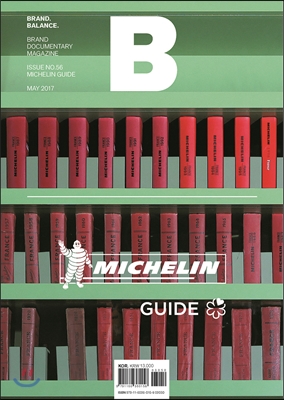
Magazine B (Monthly): May [2017]
 |
Description
index
02 Intro
08 Editor's Letter
12 Headline
Global media coverage of Michelin Guide-related issues by major period
14 Feed
Michelin-starred restaurants discovered on Instagram
16 Opinions
Food critic Frank Pineravaru
20 A Table at Le Grand Vefour
Le Grand Béfour, a French restaurant showcasing the essence of haute cuisine
30 A Table at Nakamura
Nakamura, a kaiseki restaurant that presents cooking as a comprehensive art form
40 Special Journey
A special tasting menu featuring signature dishes from Michelin-starred chefs.
44 Opinions
Michelin-starred chef Tim Laue
48 Trends of the Decade
Gourmet trends of the past decade, highlighted by six keywords.
60 Counter-scene
As the gastronomy landscape expands, diverse perspectives emerge in the form of businesses.
70 Opinions
E-Mart Lifestyle Creative Director Kim Beom-su
74 A Moveable Feast
Travel destinations remembered through food
84 Second Thoughts
Restaurant review media are expanding both online and offline.
90 A New Gourmet Route
Four Foodies Share Their New Culinary Adventures
104 Brand Story
The Birth and History of Michelin
112 Guide
Michelin Guide User Manual
116 Inspectors
Michelin's hidden masters, the evaluators
120 Origin
Michelin Tire and Bibendum Character Story
122 Inside Job
The voices of the insiders who create the guide
124 Ups and Downs
The buzz and gossip surrounding Michelin stars
126 Figures
Numbers that demonstrate the scale and influence of the Michelin Guide.
128 Outro
08 Editor's Letter
12 Headline
Global media coverage of Michelin Guide-related issues by major period
14 Feed
Michelin-starred restaurants discovered on Instagram
16 Opinions
Food critic Frank Pineravaru
20 A Table at Le Grand Vefour
Le Grand Béfour, a French restaurant showcasing the essence of haute cuisine
30 A Table at Nakamura
Nakamura, a kaiseki restaurant that presents cooking as a comprehensive art form
40 Special Journey
A special tasting menu featuring signature dishes from Michelin-starred chefs.
44 Opinions
Michelin-starred chef Tim Laue
48 Trends of the Decade
Gourmet trends of the past decade, highlighted by six keywords.
60 Counter-scene
As the gastronomy landscape expands, diverse perspectives emerge in the form of businesses.
70 Opinions
E-Mart Lifestyle Creative Director Kim Beom-su
74 A Moveable Feast
Travel destinations remembered through food
84 Second Thoughts
Restaurant review media are expanding both online and offline.
90 A New Gourmet Route
Four Foodies Share Their New Culinary Adventures
104 Brand Story
The Birth and History of Michelin
112 Guide
Michelin Guide User Manual
116 Inspectors
Michelin's hidden masters, the evaluators
120 Origin
Michelin Tire and Bibendum Character Story
122 Inside Job
The voices of the insiders who create the guide
124 Ups and Downs
The buzz and gossip surrounding Michelin stars
126 Figures
Numbers that demonstrate the scale and influence of the Michelin Guide.
128 Outro
Detailed image

Publisher's Review
Magazine <B> is an ad-free monthly magazine that introduces one well-balanced brand from around the world each month, discovered from JOH's perspective.
A serious yet readable magazine for everyone interested in brands, from brand executives contemplating new business ventures to those seeking to develop a sense of branding.
This is the fifty-sixth issue of the magazine, “B.”
Every time I plan a trip, there's something I always make a resolution to.
The idea is to empty your mind and enjoy complete rest.
I always fail at this resolution.
The reason is that when something new, unique, or impressive comes along, a 'professional spirit' is triggered that cannot be overlooked.
Especially when it comes to food, compromise is not easily reached.
With limited time to travel and a long list of restaurants to visit, you might end up having to eat five or six meals a day.
I think this is a 'happy pain' that not only I, but anyone who has gone on a culinary journey, experiences.
In this way, food moves the body and mind willingly, amplifies the senses, and furthermore, allows us to share this experience with many others.
I believe that good food, or gastronomy, goes beyond the level of a well-cooked dish; it is the entire culture of enjoying it.
The brand we will introduce this time is the Michelin Guide, which is considered to have led the popularization of gastronomy.
The Michelin Guide, a restaurant rating guide that awards stars to the world's best restaurants, surprisingly has a history of over 100 years.
Starting with an informative guide created in 1900 to promote automobile travel by the Michelin brothers, who ran a tire manufacturing company in a small French town, the Michelin brothers introduced a full-fledged star rating system in 1933 and have been conducting restaurant reviews based on strict internal standards ever since.
Since its inception, the Michelin Guide
It has long been considered the "bible" of culinary travel, and many chefs eagerly await the annual Michelin Guide star ratings like students preparing for their university entrance exams.
Restaurants that have received the highest rating of 3 stars are often considered meccas for gastronomy.
What's interesting is that this unprecedented authority has been maintained unwaveringly by a tire manufacturing company that is far removed from the food service industry.
This is a rather unusual business, considering that most restaurant review outlets are affiliated with food-related magazines, associations, or food and beverage brands.
To produce the guides, they hire their own evaluators, keep their identities completely hidden, and even pay for their travel expenses and meals at prestigious restaurants.
Paradoxically, it is the neutrality established outside the realm of critics' personal reputations or self-conscious media that has made their attitude toward gastronomy pure.
The Michelin Guide's rigorous evaluations and continuous investment in them have also contributed greatly to the development of gastronomy culture.
Just as Korean films reached their peak in the early and mid-2000s, they also experienced the growth of critical acclaim.
Magazine B also focused on the Michelin Guide as a medium that permeates the flow and development of modern gastronomy.
Consumers visit Michelin-starred restaurants and become more open to culinary experiences, not just their taste buds, while chefs continue to train to earn or maintain their star ratings.
There are also those who express negative views during this process.
Rather than focusing on the originality of each dish, the chef's energy is consumed by presenting Michelin-worthy results, and the standards are based on French thinking.
Some people call this gastronomy elitism.
However, it is undeniable that after the Michelin Guide demonstrated the possibility of creating a gastronomic index through its annual reviews, diverse experiments related to food culture blossomed in that soil.
Even if it is a reaction.
The Michelin Guides published in London, San Francisco, and Asia over the past two to three years reflect this evolving culinary world.
Restaurants that serve Nordic cuisine, as well as cuisines from remote areas like Peru, Sri Lanka, and New Zealand, as well as street food that is far from fancy tableware or dishes, are making their mark.
Seeing so many evaluations and controversies over just one Michelin Guide makes me think that food is truly a complex culture.
It is a technique for handling ingredients, an art that demonstrates the chef's talent, and a service that welcomes those who visit the restaurant.
Looking at the current state of affairs, where traditional reviews like the Michelin Guide are still alive and well, while at the same time, new perspectives are actively discussed on various platforms, it is tempting to speculate that the future growth engine may lie in food culture.
Even if it's not a fine dining restaurant somewhere in Europe, we should strive to find and experience "food so unique that it's worth traveling for."
Because it may be an investment for productive value beyond personal luxury.
Editor-in-Chief Park Eun-seong
A serious yet readable magazine for everyone interested in brands, from brand executives contemplating new business ventures to those seeking to develop a sense of branding.
This is the fifty-sixth issue of the magazine, “B.”
Every time I plan a trip, there's something I always make a resolution to.
The idea is to empty your mind and enjoy complete rest.
I always fail at this resolution.
The reason is that when something new, unique, or impressive comes along, a 'professional spirit' is triggered that cannot be overlooked.
Especially when it comes to food, compromise is not easily reached.
With limited time to travel and a long list of restaurants to visit, you might end up having to eat five or six meals a day.
I think this is a 'happy pain' that not only I, but anyone who has gone on a culinary journey, experiences.
In this way, food moves the body and mind willingly, amplifies the senses, and furthermore, allows us to share this experience with many others.
I believe that good food, or gastronomy, goes beyond the level of a well-cooked dish; it is the entire culture of enjoying it.
The brand we will introduce this time is the Michelin Guide, which is considered to have led the popularization of gastronomy.
The Michelin Guide, a restaurant rating guide that awards stars to the world's best restaurants, surprisingly has a history of over 100 years.
Starting with an informative guide created in 1900 to promote automobile travel by the Michelin brothers, who ran a tire manufacturing company in a small French town, the Michelin brothers introduced a full-fledged star rating system in 1933 and have been conducting restaurant reviews based on strict internal standards ever since.
Since its inception, the Michelin Guide
It has long been considered the "bible" of culinary travel, and many chefs eagerly await the annual Michelin Guide star ratings like students preparing for their university entrance exams.
Restaurants that have received the highest rating of 3 stars are often considered meccas for gastronomy.
What's interesting is that this unprecedented authority has been maintained unwaveringly by a tire manufacturing company that is far removed from the food service industry.
This is a rather unusual business, considering that most restaurant review outlets are affiliated with food-related magazines, associations, or food and beverage brands.
To produce the guides, they hire their own evaluators, keep their identities completely hidden, and even pay for their travel expenses and meals at prestigious restaurants.
Paradoxically, it is the neutrality established outside the realm of critics' personal reputations or self-conscious media that has made their attitude toward gastronomy pure.
The Michelin Guide's rigorous evaluations and continuous investment in them have also contributed greatly to the development of gastronomy culture.
Just as Korean films reached their peak in the early and mid-2000s, they also experienced the growth of critical acclaim.
Magazine B also focused on the Michelin Guide as a medium that permeates the flow and development of modern gastronomy.
Consumers visit Michelin-starred restaurants and become more open to culinary experiences, not just their taste buds, while chefs continue to train to earn or maintain their star ratings.
There are also those who express negative views during this process.
Rather than focusing on the originality of each dish, the chef's energy is consumed by presenting Michelin-worthy results, and the standards are based on French thinking.
Some people call this gastronomy elitism.
However, it is undeniable that after the Michelin Guide demonstrated the possibility of creating a gastronomic index through its annual reviews, diverse experiments related to food culture blossomed in that soil.
Even if it is a reaction.
The Michelin Guides published in London, San Francisco, and Asia over the past two to three years reflect this evolving culinary world.
Restaurants that serve Nordic cuisine, as well as cuisines from remote areas like Peru, Sri Lanka, and New Zealand, as well as street food that is far from fancy tableware or dishes, are making their mark.
Seeing so many evaluations and controversies over just one Michelin Guide makes me think that food is truly a complex culture.
It is a technique for handling ingredients, an art that demonstrates the chef's talent, and a service that welcomes those who visit the restaurant.
Looking at the current state of affairs, where traditional reviews like the Michelin Guide are still alive and well, while at the same time, new perspectives are actively discussed on various platforms, it is tempting to speculate that the future growth engine may lie in food culture.
Even if it's not a fine dining restaurant somewhere in Europe, we should strive to find and experience "food so unique that it's worth traveling for."
Because it may be an investment for productive value beyond personal luxury.
Editor-in-Chief Park Eun-seong
GOODS SPECIFICS
- Date of issue: May 10, 2017
- Page count, weight, size: 140 pages | 170*240*20mm
- ISBN13: 9791160360158
- ISBN10: 1160360154
You may also like
카테고리
korean


korean

![GQ KOREA Mark (Monthly): December [2025]](http://librairie.coreenne.fr/cdn/shop/files/8ef265dbbfbf186523ed75ba7319009d.jpg?v=1765340328&width=3840)


