

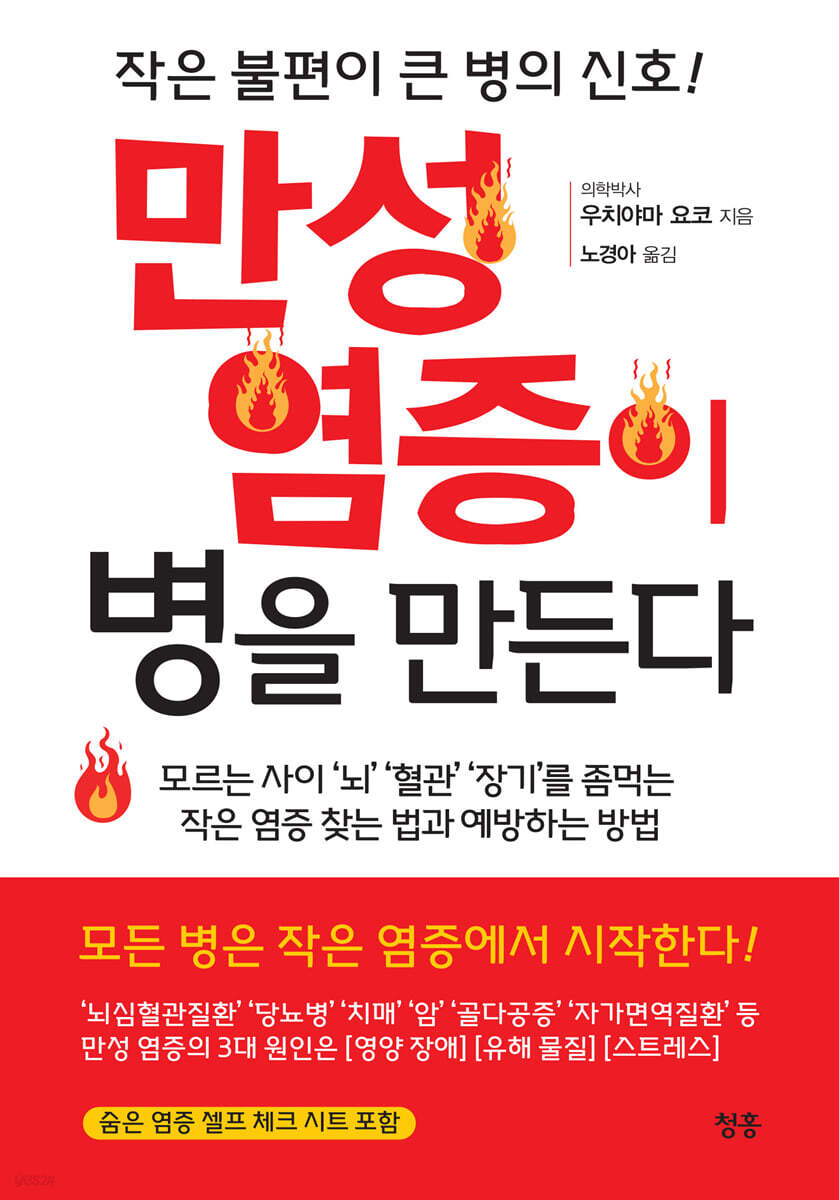
Chronic inflammation causes disease
 |
Description
Book Introduction
What is chronic inflammation hidden throughout the body?
Inflammation accelerates aging
Aging worsens inflammation
As you age, your constitution changes.
When genetics, infection, or strong stress overlap
Inflammation can easily occur due to various stimuli
Our understanding of inflammation has changed over the past 25 years.
'Depression', 'dementia', 'cancer', 'myocardial infarction and cerebral infarction', 'chronic headaches', 'unexplained tiredness', 'fibromyalgia', 'getting tired quickly', 'decreased cognitive function', 'knee discomfort', 'stiff joints and muscles', 'decreased endurance', 'strange feeling in the lower back', 'brain fog', etc. Perhaps the cause of all these symptoms is chronic inflammation.
Osteoporosis also occurs when bone density decreases due to inflammation, not calcium deficiency.
So, if you see signs of osteoporosis, you should treat the inflammation rather than taking calcium.
However, antidepressants or painkillers are often prescribed for these chronic problems.
Treating only the symptoms without any fundamental treatment or countermeasures will not improve the problem.
These days, common sense in the medical world is also gradually changing.
Even in the case of whether or not an illness occurs, it is believed that the internal problems of the person who caused the illness have a greater influence than the substances or microorganisms believed to be the cause.
It is true that simply supplementing deficient nutrients, killing the microorganisms causing the infection with medicine, and immediately excreting the excessive accumulated substances can actually burden people with chronic symptoms and worsen their symptoms.
Inflammation is a biological response that destroys pathogens and unnecessary substances that have invaded the body and disposes of waste.
So we absolutely need “inflammation,” and if it doesn’t work properly, we’re in trouble.
However, the inflammation that occurs to remove waste inside and outside cells or to move unnecessary substances can also damage our body or tissues.
For example, when bacteria enter the body, neutrophils, among white blood cells, become active and engulf the bacteria, releasing granules.
These granules contain free radicals such as active oxygen and nitric oxide, various proteins, enzymes, etc.
Neutrophils use these substances to destroy the cell membranes of pathogens and debris, harvesting and processing proteins.
It is at this very moment that one's own tissues or cells can also be damaged.
Recently, medical professionals have also been rethinking the relationship between chronic inflammation and disease.
In particular, the idea that periodontitis is closely related to diabetes and arteriosclerosis is widely accepted.
However, not many people pay attention to other inflammation or allergic reactions.
Again, long-term physical problems or illnesses are not easily cured by treating the symptoms alone.
It is important to find the root cause and address it.
And a large proportion of these root causes is chronic inflammation.
This book covers chronic inflammation, which is often overlooked, and hidden inflammation that can be discovered on your own.
Inflammation accelerates aging
Aging worsens inflammation
As you age, your constitution changes.
When genetics, infection, or strong stress overlap
Inflammation can easily occur due to various stimuli
Our understanding of inflammation has changed over the past 25 years.
'Depression', 'dementia', 'cancer', 'myocardial infarction and cerebral infarction', 'chronic headaches', 'unexplained tiredness', 'fibromyalgia', 'getting tired quickly', 'decreased cognitive function', 'knee discomfort', 'stiff joints and muscles', 'decreased endurance', 'strange feeling in the lower back', 'brain fog', etc. Perhaps the cause of all these symptoms is chronic inflammation.
Osteoporosis also occurs when bone density decreases due to inflammation, not calcium deficiency.
So, if you see signs of osteoporosis, you should treat the inflammation rather than taking calcium.
However, antidepressants or painkillers are often prescribed for these chronic problems.
Treating only the symptoms without any fundamental treatment or countermeasures will not improve the problem.
These days, common sense in the medical world is also gradually changing.
Even in the case of whether or not an illness occurs, it is believed that the internal problems of the person who caused the illness have a greater influence than the substances or microorganisms believed to be the cause.
It is true that simply supplementing deficient nutrients, killing the microorganisms causing the infection with medicine, and immediately excreting the excessive accumulated substances can actually burden people with chronic symptoms and worsen their symptoms.
Inflammation is a biological response that destroys pathogens and unnecessary substances that have invaded the body and disposes of waste.
So we absolutely need “inflammation,” and if it doesn’t work properly, we’re in trouble.
However, the inflammation that occurs to remove waste inside and outside cells or to move unnecessary substances can also damage our body or tissues.
For example, when bacteria enter the body, neutrophils, among white blood cells, become active and engulf the bacteria, releasing granules.
These granules contain free radicals such as active oxygen and nitric oxide, various proteins, enzymes, etc.
Neutrophils use these substances to destroy the cell membranes of pathogens and debris, harvesting and processing proteins.
It is at this very moment that one's own tissues or cells can also be damaged.
Recently, medical professionals have also been rethinking the relationship between chronic inflammation and disease.
In particular, the idea that periodontitis is closely related to diabetes and arteriosclerosis is widely accepted.
However, not many people pay attention to other inflammation or allergic reactions.
Again, long-term physical problems or illnesses are not easily cured by treating the symptoms alone.
It is important to find the root cause and address it.
And a large proportion of these root causes is chronic inflammation.
This book covers chronic inflammation, which is often overlooked, and hidden inflammation that can be discovered on your own.
index
introduction
Chapter 1
Checklist for Finding the Cause of Long-Term Discomfort
A checklist to help you find the root cause
Symptoms and conditions highly related to chronic inflammation of the intestines
Symptoms and conditions highly associated with [chronic inflammation of the pharynx and oral cavity]
Symptoms and conditions highly related to chronic skin inflammation
Symptoms and conditions highly associated with [chronic inflammation of the musculoskeletal system]
Symptoms and conditions highly associated with [chronic brain inflammation]
Symptoms and conditions highly related to [nutritional disorders]
Symptoms and situations highly related to [harmful substances]
Symptoms and situations highly related to 【stress】
Chapter 2
What is chronic inflammation hidden throughout the body?
'Invisible inflammation' harms health and causes disease.
Inflammation is a protective response from the body, but it becomes a headache when it becomes chronic.
The relationship between chronic inflammation and immunity
Let's focus on the 'body problems' that cause chronic inflammation.
Inflammation due to aging
Cells also release inflammatory substances.
Chapter 3
Chronic Inflammation Causes to Consider and How to Treat Them
Let's find the cause of the body problem
1.
Chronic Inflammation of the Intestine
When the ‘barrier function’ is weakened due to intestinal inflammation,
Sugar, chemicals, and undigested food cause inflammation in the intestines.
'Leaky gut' causes 'vascular leaks' and 'brain leaks'
A simple diet prevents inflammation.
The effects of supplements such as prebiotics and herbal medicine
2.
Chronic inflammation of the pharynx and oral cavity
Chronic inflammation of the throat is gaining attention.
Breathe through your nose, not your mouth.
If you thoroughly improve your lifestyle, minor cavities will heal on their own.
3.
Chronic skin inflammation
Strengthen the skin barrier function
★How to prevent harmful substances from penetrating the skin★
Hormones that have a major impact on inflammation
4.
Musculoskeletal Inflammation
The effects of muscle weakness and skeletal distortion
The effects of massage and acupuncture treatment
5.
Brain inflammation
As inflammation in each area worsens, inflammation also occurs in the brain.
In addition to Leaky Brain, inflammation occurs in the brain.
Prions, which are produced in the body, cause inflammation in the brain.
The relationship between electromagnetic waves and chronic inflammation
The effects of blue light on the brain
Chapter 4
Main causes and approaches to chronic inflammation
Nutritional Disorders
There are approximately 20,000 enzymes in our bodies that are essential for biological activities.
Modern diets promote enzyme waste.
Let's eat foods that are easy to digest and the ingredients themselves.
Cooking methods include raw, steamed, boiled, and baked.
Consume minerals little by little through soup or water.
Supplements can break the vicious cycle of mineral deficiency.
Precautions when taking calcium supplements
You can conserve enzymes by eating a diet appropriate to the climate and season.
Enzymes decrease rapidly from the age of 30 to 40.
【Harmful substances】
Let's be aware of what hazardous substances are around us.
Small considerations reduce poison
The Risks of Genetically Modified Foods
Eliminate harmful substances using the four principles of detoxification.
【stress】
Hypertonicity of the sympathetic nervous system, the nerves for fight or flight
Change your mindset and manage stress in a way that works for you.
Let's build a body that can withstand stress with a good night's sleep.
Relieves stress by regulating the autonomic nervous system
Release oxytocin by doing something you enjoy.
To improve chronic inflammation
Chapter 5
Improve various problems with a diet that suits your body.
diverse diet
Ketogenic and low-carb diets are different.
Extremely restricting carbohydrates can be detrimental to your health.
Extreme carbohydrate restriction leads to muscle loss, insomnia, and depression.
Brown rice is nutritious, but can be harmful if consumed incorrectly.
Is vegetarianism really healthy?
I started being a vegetarian because I couldn't digest meat.
Chapter 6
Causes, Diagnosis, and Improvement of Chronic Inflammation
A case where symptoms were improved by identifying the cause of chronic inflammation and changing lifestyle habits.
- Eliminates abscesses in the root area that occur after long-term dental treatment
A woman in her 70s who dramatically improved her rheumatoid arthritis.
A man in his 50s who overcame adjustment difficulties and returned to work after improving his chronic tonsillitis.
A man in his 40s who improved his atopic dermatitis and resolved his chronic fatigue.
A woman in her 20s who developed mold in her intestines after living in a moldy house.
A 5-year-old boy's autism improved by improving intestinal inflammation.
- A woman in her 30s who developed post-nasal drip due to zinc deficiency.
A woman in her 70s who had trouble with 'protein powder' after exercise.
A woman in her 40s who found that eating almonds to improve her health was the cause of her headaches.
A woman in her 30s whose depression relapsed due to news and a vegetarian diet that did not suit her.
A woman in her 60s who suffered from constipation due to dairy products consumed for intestinal health.
A man in his 50s who felt fatigued and depressed due to extreme carbohydrate restriction.
[Cases where harmful substances and stress cause various problems]
A woman in her 30s with worsening asthma due to new house syndrome and a 4-year-old boy with worsening developmental disabilities
A woman in her 50s whose diet was a source of stress
A man in his 50s whose stress was caused by his boss and partner.
A man in his 40s coped with work stress by changing his mindset.
A man in his late 30s who experienced various problems due to over-reliance on supplements.
A vicious cycle of symptoms and medications that started with a mild infection
Why does the problem get complicated?
The first doctor to treat chronic symptoms is yourself.
Basic tips for treating long-term problems
Reviews
References
Chapter 1
Checklist for Finding the Cause of Long-Term Discomfort
A checklist to help you find the root cause
Symptoms and conditions highly related to chronic inflammation of the intestines
Symptoms and conditions highly associated with [chronic inflammation of the pharynx and oral cavity]
Symptoms and conditions highly related to chronic skin inflammation
Symptoms and conditions highly associated with [chronic inflammation of the musculoskeletal system]
Symptoms and conditions highly associated with [chronic brain inflammation]
Symptoms and conditions highly related to [nutritional disorders]
Symptoms and situations highly related to [harmful substances]
Symptoms and situations highly related to 【stress】
Chapter 2
What is chronic inflammation hidden throughout the body?
'Invisible inflammation' harms health and causes disease.
Inflammation is a protective response from the body, but it becomes a headache when it becomes chronic.
The relationship between chronic inflammation and immunity
Let's focus on the 'body problems' that cause chronic inflammation.
Inflammation due to aging
Cells also release inflammatory substances.
Chapter 3
Chronic Inflammation Causes to Consider and How to Treat Them
Let's find the cause of the body problem
1.
Chronic Inflammation of the Intestine
When the ‘barrier function’ is weakened due to intestinal inflammation,
Sugar, chemicals, and undigested food cause inflammation in the intestines.
'Leaky gut' causes 'vascular leaks' and 'brain leaks'
A simple diet prevents inflammation.
The effects of supplements such as prebiotics and herbal medicine
2.
Chronic inflammation of the pharynx and oral cavity
Chronic inflammation of the throat is gaining attention.
Breathe through your nose, not your mouth.
If you thoroughly improve your lifestyle, minor cavities will heal on their own.
3.
Chronic skin inflammation
Strengthen the skin barrier function
★How to prevent harmful substances from penetrating the skin★
Hormones that have a major impact on inflammation
4.
Musculoskeletal Inflammation
The effects of muscle weakness and skeletal distortion
The effects of massage and acupuncture treatment
5.
Brain inflammation
As inflammation in each area worsens, inflammation also occurs in the brain.
In addition to Leaky Brain, inflammation occurs in the brain.
Prions, which are produced in the body, cause inflammation in the brain.
The relationship between electromagnetic waves and chronic inflammation
The effects of blue light on the brain
Chapter 4
Main causes and approaches to chronic inflammation
Nutritional Disorders
There are approximately 20,000 enzymes in our bodies that are essential for biological activities.
Modern diets promote enzyme waste.
Let's eat foods that are easy to digest and the ingredients themselves.
Cooking methods include raw, steamed, boiled, and baked.
Consume minerals little by little through soup or water.
Supplements can break the vicious cycle of mineral deficiency.
Precautions when taking calcium supplements
You can conserve enzymes by eating a diet appropriate to the climate and season.
Enzymes decrease rapidly from the age of 30 to 40.
【Harmful substances】
Let's be aware of what hazardous substances are around us.
Small considerations reduce poison
The Risks of Genetically Modified Foods
Eliminate harmful substances using the four principles of detoxification.
【stress】
Hypertonicity of the sympathetic nervous system, the nerves for fight or flight
Change your mindset and manage stress in a way that works for you.
Let's build a body that can withstand stress with a good night's sleep.
Relieves stress by regulating the autonomic nervous system
Release oxytocin by doing something you enjoy.
To improve chronic inflammation
Chapter 5
Improve various problems with a diet that suits your body.
diverse diet
Ketogenic and low-carb diets are different.
Extremely restricting carbohydrates can be detrimental to your health.
Extreme carbohydrate restriction leads to muscle loss, insomnia, and depression.
Brown rice is nutritious, but can be harmful if consumed incorrectly.
Is vegetarianism really healthy?
I started being a vegetarian because I couldn't digest meat.
Chapter 6
Causes, Diagnosis, and Improvement of Chronic Inflammation
A case where symptoms were improved by identifying the cause of chronic inflammation and changing lifestyle habits.
- Eliminates abscesses in the root area that occur after long-term dental treatment
A woman in her 70s who dramatically improved her rheumatoid arthritis.
A man in his 50s who overcame adjustment difficulties and returned to work after improving his chronic tonsillitis.
A man in his 40s who improved his atopic dermatitis and resolved his chronic fatigue.
A woman in her 20s who developed mold in her intestines after living in a moldy house.
A 5-year-old boy's autism improved by improving intestinal inflammation.
- A woman in her 30s who developed post-nasal drip due to zinc deficiency.
A woman in her 70s who had trouble with 'protein powder' after exercise.
A woman in her 40s who found that eating almonds to improve her health was the cause of her headaches.
A woman in her 30s whose depression relapsed due to news and a vegetarian diet that did not suit her.
A woman in her 60s who suffered from constipation due to dairy products consumed for intestinal health.
A man in his 50s who felt fatigued and depressed due to extreme carbohydrate restriction.
[Cases where harmful substances and stress cause various problems]
A woman in her 30s with worsening asthma due to new house syndrome and a 4-year-old boy with worsening developmental disabilities
A woman in her 50s whose diet was a source of stress
A man in his 50s whose stress was caused by his boss and partner.
A man in his 40s coped with work stress by changing his mindset.
A man in his late 30s who experienced various problems due to over-reliance on supplements.
A vicious cycle of symptoms and medications that started with a mild infection
Why does the problem get complicated?
The first doctor to treat chronic symptoms is yourself.
Basic tips for treating long-term problems
Reviews
References
Detailed image

Into the book
When tissues containing pain receptors that sense pain become inflamed, a symptom called 'pain' occurs.
However, if there is chronic inflammation in tissues that do not have pain receptors, such as the brain, mental symptoms such as decreased brain endurance or depression occur without pain.
Because neither the intestinal epithelial cells nor the vascular endothelial cells have pain receptors, symptoms appear only after intestinal inflammation and arteriosclerosis become very severe.
It is well known that the intestines function as a barrier, but not only the intestines but also the brain, lungs, blood vessels, and vagina have barrier functions.
However, if this barrier breaks down, foreign substances can enter the body and cause inflammation.
If we don't fix the barriers, the same thing will happen again.
One factor that can interfere with this physical barrier function is allergies.
This is because mast cells involved in allergic reactions release histamine, which impairs barrier function.
--- p.33
There's one more thing to know about inflammation.
Previously, inflammation was caused by pathogens such as bacteria, viruses, foreign substances, etc.
It was considered a phenomenon that occurred as the body reacted to ‘external factors’ such as harmful substances.
It was thought that immune cells only react when defending against external factors.
However, as mentioned earlier, inflammation occurs without external factors.
There are various substances inside the cells of our body.
Among them, some are safe when inside the cell and harmful when outside the cell.
For example, when the body is twisted, the force is not distributed symmetrically from left to right, but is biased to one side, causing blood flow to stagnate. When oxygen is not supplied to this stagnant area (where pressure is applied, swelling is applied, or knots are present) or waste products accumulate, the cells secrete substances that are harmful to the body.
--- p.46
Once inflammation occurs in the intestines, the balance of intestinal flora is disrupted, starting a vicious cycle in which inflammation worsens.
Gut microbes break down nutrients like minerals into more absorbable forms and produce essential vitamins, hormones, enzymes, and more.
Therefore, when the intestinal flora is disrupted due to intestinal inflammation, digestion becomes poor and there is a deficiency of vitamins, minerals, hormones, and enzymes.
Therefore, immune function is not well regulated, which delays resolution of inflammation and tissue recovery.
The intestines are where 80% of the body's lymphocytes are gathered, and are also called the center of immunity.
So when intestinal inflammation occurs, the immune function is weakened and the inflammation becomes more likely to last longer.
When the intestines become inflamed, there are so many harmful effects that it can cause various problems in the body.
If you had a lot of items that fit the checklist, let's take another look at the list of causes above.
--- p.56
Since the mouth is the organ for eating and speaking, it is normal to breathe through the nose.
So the nose is like a complex cavern inside, warming and moistening the air appropriately and filtering out foreign substances with mucus and cilia.
Breathing through your nose humidifies and purifies the air, eliminating pathogens and other contaminants while reducing the strain on your throat and body.
However, when you breathe through your mouth, cold or dry air enters your throat directly and pathogens are not filtered out.
Then, the lymphocytes cannot handle it and you are prone to developing tonsillitis.
Because the mouth becomes dry, bacteria can easily multiply, making it easy for gingivitis and cavities, which will be explained later, to develop.
So you have to consciously keep your mouth shut.
People who talk a lot, sing, or play sports are especially prone to mouth breathing and should be especially careful.
--- p.72
It transmits commands from the brain to the internal organs, and also transmits signals from the internal organs to the brain.
So, information that the intestinal environment has deteriorated is also transmitted to the brain through this route.
Information that causes inflammation is also transmitted to the brain as nerve signals.
As these facts continue to come to light, the possibility is being raised that inflammation in the peripheral organs, such as the intestines, may cause various symptoms in the brain.
It is actually well known that influenza can cause brain symptoms or hallucinations.
Infection causes nerve inflammation, and it has recently been discovered that not only acute inflammation but also chronic inflammation can affect the nerves, causing abnormal behavior, hallucinations, and neurological symptoms such as 'loss of motivation' and 'loss of appetite'.
It has long been known that colds and pneumonia can worsen Alzheimer's disease, multiple sclerosis, Lou Gehrig's disease (ALS = a disease in which the nerves that move muscles gradually become immobile) and various psychiatric symptoms.
--- p.95
Vegetables and fruits are also rich in dietary fiber.
Dietary fiber is an ideal food that cleanses the intestines without rapidly raising blood sugar levels and even serves as food for intestinal bacteria.
Consuming dietary fiber will help you replenish your vitamins and minerals, as gut bacteria synthesize vitamins and help minerals be easily absorbed.
Therefore, by introducing fresh raw vegetables, fruit smoothies or juices into your regular diet, you can prevent nutritional deficiencies by consuming vitamins, minerals and dietary fiber while saving enzymes.
Vegetables and fruits only contain enough enzymes to digest the food itself, so they do not have the effect of replenishing enzymes in the body.
It only has the effect of saving enzymes.
In other words, the body's enzymes cannot be supplemented even with so-called 'enzyme foods'.
Therefore, your usual eating and lifestyle habits are important.
In addition to the raw vegetables and fruits mentioned so far, fermented foods such as soybean paste, fermented soybean paste, pickled vegetables, and pickled vegetables, as well as cold dishes and side dishes, also contain food enzymes that help with the digestion of the food itself.
--- p.116
It even inhibits the function of excreting harmful substances, so harmful substances accumulate more and more.
That is, the body becomes chronically unhealthy.
A recent case made headlines when a U.S. court ruled that a herbicide contained in genetically modified foods could be carcinogenic, resulting in a massive settlement of over $300 million for a man who filed a lawsuit.
But even if it's not necessarily a herbicide issue, genetically modified foods themselves are unnatural substances, so there's a risk that they will create strange proteins in the body or become antigenic (a property that causes the body to recognize them as foreign and attack them).
So it can promote allergic diseases or autoimmune diseases.
--- p.139
Among people with diabetes or borderline diabetes who already have problems processing carbohydrates, some experience rapid blood sugar spikes even when eating brown rice.
For such people, it is effective to control carbohydrate intake through a diet close to a carbohydrate restriction diet.
However, it is extreme and wrong to recommend that healthy people strictly limit carbohydrates.
It is also a mistake to assume that any carbohydrate is as bad as large amounts of white sugar.
Some people ruin their bodies by limiting carbohydrates to the extreme.
People who have difficulty digesting protein, especially meat, are at greater risk of developing increased levels of micronutrients in their bodies when following a carbohydrate-restricted diet.
Digesting food requires energy, and if you don't consume carbohydrates, you won't have the energy to do that, which can actually lead to inflammation.
Although a carbohydrate-restricted diet may be effective in lowering blood sugar, it may have a negative effect on other diseases.
In fact, there were patients who developed arteriosclerosis while continuing a carbohydrate-restricted diet.
It's important to remember that a low-carb diet isn't right for everyone and can be detrimental to your health depending on how you approach it.
However, if there is chronic inflammation in tissues that do not have pain receptors, such as the brain, mental symptoms such as decreased brain endurance or depression occur without pain.
Because neither the intestinal epithelial cells nor the vascular endothelial cells have pain receptors, symptoms appear only after intestinal inflammation and arteriosclerosis become very severe.
It is well known that the intestines function as a barrier, but not only the intestines but also the brain, lungs, blood vessels, and vagina have barrier functions.
However, if this barrier breaks down, foreign substances can enter the body and cause inflammation.
If we don't fix the barriers, the same thing will happen again.
One factor that can interfere with this physical barrier function is allergies.
This is because mast cells involved in allergic reactions release histamine, which impairs barrier function.
--- p.33
There's one more thing to know about inflammation.
Previously, inflammation was caused by pathogens such as bacteria, viruses, foreign substances, etc.
It was considered a phenomenon that occurred as the body reacted to ‘external factors’ such as harmful substances.
It was thought that immune cells only react when defending against external factors.
However, as mentioned earlier, inflammation occurs without external factors.
There are various substances inside the cells of our body.
Among them, some are safe when inside the cell and harmful when outside the cell.
For example, when the body is twisted, the force is not distributed symmetrically from left to right, but is biased to one side, causing blood flow to stagnate. When oxygen is not supplied to this stagnant area (where pressure is applied, swelling is applied, or knots are present) or waste products accumulate, the cells secrete substances that are harmful to the body.
--- p.46
Once inflammation occurs in the intestines, the balance of intestinal flora is disrupted, starting a vicious cycle in which inflammation worsens.
Gut microbes break down nutrients like minerals into more absorbable forms and produce essential vitamins, hormones, enzymes, and more.
Therefore, when the intestinal flora is disrupted due to intestinal inflammation, digestion becomes poor and there is a deficiency of vitamins, minerals, hormones, and enzymes.
Therefore, immune function is not well regulated, which delays resolution of inflammation and tissue recovery.
The intestines are where 80% of the body's lymphocytes are gathered, and are also called the center of immunity.
So when intestinal inflammation occurs, the immune function is weakened and the inflammation becomes more likely to last longer.
When the intestines become inflamed, there are so many harmful effects that it can cause various problems in the body.
If you had a lot of items that fit the checklist, let's take another look at the list of causes above.
--- p.56
Since the mouth is the organ for eating and speaking, it is normal to breathe through the nose.
So the nose is like a complex cavern inside, warming and moistening the air appropriately and filtering out foreign substances with mucus and cilia.
Breathing through your nose humidifies and purifies the air, eliminating pathogens and other contaminants while reducing the strain on your throat and body.
However, when you breathe through your mouth, cold or dry air enters your throat directly and pathogens are not filtered out.
Then, the lymphocytes cannot handle it and you are prone to developing tonsillitis.
Because the mouth becomes dry, bacteria can easily multiply, making it easy for gingivitis and cavities, which will be explained later, to develop.
So you have to consciously keep your mouth shut.
People who talk a lot, sing, or play sports are especially prone to mouth breathing and should be especially careful.
--- p.72
It transmits commands from the brain to the internal organs, and also transmits signals from the internal organs to the brain.
So, information that the intestinal environment has deteriorated is also transmitted to the brain through this route.
Information that causes inflammation is also transmitted to the brain as nerve signals.
As these facts continue to come to light, the possibility is being raised that inflammation in the peripheral organs, such as the intestines, may cause various symptoms in the brain.
It is actually well known that influenza can cause brain symptoms or hallucinations.
Infection causes nerve inflammation, and it has recently been discovered that not only acute inflammation but also chronic inflammation can affect the nerves, causing abnormal behavior, hallucinations, and neurological symptoms such as 'loss of motivation' and 'loss of appetite'.
It has long been known that colds and pneumonia can worsen Alzheimer's disease, multiple sclerosis, Lou Gehrig's disease (ALS = a disease in which the nerves that move muscles gradually become immobile) and various psychiatric symptoms.
--- p.95
Vegetables and fruits are also rich in dietary fiber.
Dietary fiber is an ideal food that cleanses the intestines without rapidly raising blood sugar levels and even serves as food for intestinal bacteria.
Consuming dietary fiber will help you replenish your vitamins and minerals, as gut bacteria synthesize vitamins and help minerals be easily absorbed.
Therefore, by introducing fresh raw vegetables, fruit smoothies or juices into your regular diet, you can prevent nutritional deficiencies by consuming vitamins, minerals and dietary fiber while saving enzymes.
Vegetables and fruits only contain enough enzymes to digest the food itself, so they do not have the effect of replenishing enzymes in the body.
It only has the effect of saving enzymes.
In other words, the body's enzymes cannot be supplemented even with so-called 'enzyme foods'.
Therefore, your usual eating and lifestyle habits are important.
In addition to the raw vegetables and fruits mentioned so far, fermented foods such as soybean paste, fermented soybean paste, pickled vegetables, and pickled vegetables, as well as cold dishes and side dishes, also contain food enzymes that help with the digestion of the food itself.
--- p.116
It even inhibits the function of excreting harmful substances, so harmful substances accumulate more and more.
That is, the body becomes chronically unhealthy.
A recent case made headlines when a U.S. court ruled that a herbicide contained in genetically modified foods could be carcinogenic, resulting in a massive settlement of over $300 million for a man who filed a lawsuit.
But even if it's not necessarily a herbicide issue, genetically modified foods themselves are unnatural substances, so there's a risk that they will create strange proteins in the body or become antigenic (a property that causes the body to recognize them as foreign and attack them).
So it can promote allergic diseases or autoimmune diseases.
--- p.139
Among people with diabetes or borderline diabetes who already have problems processing carbohydrates, some experience rapid blood sugar spikes even when eating brown rice.
For such people, it is effective to control carbohydrate intake through a diet close to a carbohydrate restriction diet.
However, it is extreme and wrong to recommend that healthy people strictly limit carbohydrates.
It is also a mistake to assume that any carbohydrate is as bad as large amounts of white sugar.
Some people ruin their bodies by limiting carbohydrates to the extreme.
People who have difficulty digesting protein, especially meat, are at greater risk of developing increased levels of micronutrients in their bodies when following a carbohydrate-restricted diet.
Digesting food requires energy, and if you don't consume carbohydrates, you won't have the energy to do that, which can actually lead to inflammation.
Although a carbohydrate-restricted diet may be effective in lowering blood sugar, it may have a negative effect on other diseases.
In fact, there were patients who developed arteriosclerosis while continuing a carbohydrate-restricted diet.
It's important to remember that a low-carb diet isn't right for everyone and can be detrimental to your health depending on how you approach it.
--- p.172
Publisher's Review
To fundamentally treat chronic inflammation
First, find the cause and eliminate it one by one.
To fundamentally treat chronic inflammation, you must first find the cause and implement countermeasures one by one to gradually improve the real problem.
Even when local inflammation occurs, it is important to eliminate the cause and implement countermeasures to improve the inflammation.
For example, if you have brain inflammation, you should find the cause of the inflammation in the area where you have chronic inflammation and implement improvement measures one by one, reduce the time you spend using smartphones and PCs that generate digital toxins, such as electromagnetic waves, that cause brain inflammation, and strengthen the function of the vagus nerve through deep breathing and deep sleep while improving cerebral blood flow.
For more detailed information, please refer to this book.
Enzymes are essential for normal biological activity.
'Digestive enzymes' that break down food,
Metabolic enzymes that boost the body's metabolism
One of the causes of inflammation is ‘nutritional disorder’.
Some people might wonder, “Are there nutritional disorders in this day and age?”
Even now, there are many patients with malnutrition in some poor countries, and there are people in our country who suffer from malnutrition due to poverty, but now we are discussing nutritional disorders that cause inflammation.
These nutritional deficiencies occur when inflammatory substances cause enzyme deficiencies, reducing the body's ability to process nutrients.
This is because enzymes are needed to change or increase a substance into another form in the body.
Our body uses a variety of enzymes that are essential for normal biological activities.
Enzymes are needed to convert food components into amino acids and fatty acids that the body can use as energy.
Therefore, if there is a lack of enzymes or their activity is low, no matter how much you eat, the body cannot break down the substances it needs and the substances that have various effects, and even if they are broken down, they cannot be properly absorbed.
Enzymes are divided into 'digestive enzymes', which are necessary for breaking down food, digesting it, and absorbing it, and 'metabolic enzymes', which are necessary for the body's metabolism.
These digestive enzymes are found throughout the body.
Inflammation is a response to protect the body.
It's a headache when it becomes chronic
You might think, 'Mild, invisible inflammation would be easier to treat than red, swollen inflammation.'
But in reality, it is the invisible, mild inflammation that is more bothersome.
To understand why, we first need to understand the basics of inflammation.
Although we usually hate inflammation, it is not a harmful effect on the body.
Rather, it is an important response to protect our body.
For example, when a wound becomes infected, swollen, and feverish, immune cells in the body are fighting against pathogens such as invading bacteria.
The wound area swells and hurts because immune cells are gathering blood and lymph fluid to attract new comrades and releasing chemicals to kill pathogens.
Inflammation is evidence that immune cells are fighting normally to protect the body.
So after the immune cells have successfully defeated the pathogen and eliminated it, the area usually recovers and returns to its original state.
This is the characteristic of 'visible inflammation', or 'acute inflammation', which we have known before.
Meanwhile, 'invisible inflammation' is a pain in the ass because, unlike acute inflammation, it often takes a long time to heal.
That's why it's called 'chronic inflammation'.
If we use a fire analogy, acute inflammation can be said to be a state of blazing fire, while chronic inflammation can be said to be a state of continuous smoke without flames.
Extreme carbohydrate restriction
Causes muscle loss, insomnia, and depression
It can also cause low blood pressure
Insulin, which is secreted when carbohydrates are consumed, also plays a role in transporting amino acids into the muscles.
However, if you limit carbohydrates to an extreme, insulin is not secreted, so the muscles cannot receive energy and become thinner.
Even though you consume a lot of protein, such as meat, your muscles are losing mass because the nutrients are not being delivered.
Since the overall food intake is reduced due to carbohydrate restriction, elderly people in particular may lose weight overall.
The same goes for children.
Children need carbohydrates because their energy metabolism occurs primarily in the glycolytic system, which produces energy from carbohydrates.
Except in special cases such as epilepsy, children should never be subjected to extreme carbohydrate restrictions.
There are children who did not grow even 1 cm in height in a year due to carbohydrate restrictions.
While it's certainly good to try to consume quality carbohydrates, extreme carbohydrate restriction can also negatively impact the functioning of brain transmitters.
Because of extreme carbohydrate restriction, amino acids that should go to the muscles go to the brain, preventing other amino acids that should be used to synthesize serotonin from entering the brain.
As a result, a lack of serotonin can lead to mental instability or depression.
People with diabetes need to lower their blood sugar levels by limiting carbohydrates, but there are still things to be careful about.
People who take blood sugar-lowering drugs or insulin may develop low blood pressure if they carelessly restrict their carbohydrate intake.
Therefore, if you want to limit carbohydrates, you should definitely consult your doctor first.
First, find the cause and eliminate it one by one.
To fundamentally treat chronic inflammation, you must first find the cause and implement countermeasures one by one to gradually improve the real problem.
Even when local inflammation occurs, it is important to eliminate the cause and implement countermeasures to improve the inflammation.
For example, if you have brain inflammation, you should find the cause of the inflammation in the area where you have chronic inflammation and implement improvement measures one by one, reduce the time you spend using smartphones and PCs that generate digital toxins, such as electromagnetic waves, that cause brain inflammation, and strengthen the function of the vagus nerve through deep breathing and deep sleep while improving cerebral blood flow.
For more detailed information, please refer to this book.
Enzymes are essential for normal biological activity.
'Digestive enzymes' that break down food,
Metabolic enzymes that boost the body's metabolism
One of the causes of inflammation is ‘nutritional disorder’.
Some people might wonder, “Are there nutritional disorders in this day and age?”
Even now, there are many patients with malnutrition in some poor countries, and there are people in our country who suffer from malnutrition due to poverty, but now we are discussing nutritional disorders that cause inflammation.
These nutritional deficiencies occur when inflammatory substances cause enzyme deficiencies, reducing the body's ability to process nutrients.
This is because enzymes are needed to change or increase a substance into another form in the body.
Our body uses a variety of enzymes that are essential for normal biological activities.
Enzymes are needed to convert food components into amino acids and fatty acids that the body can use as energy.
Therefore, if there is a lack of enzymes or their activity is low, no matter how much you eat, the body cannot break down the substances it needs and the substances that have various effects, and even if they are broken down, they cannot be properly absorbed.
Enzymes are divided into 'digestive enzymes', which are necessary for breaking down food, digesting it, and absorbing it, and 'metabolic enzymes', which are necessary for the body's metabolism.
These digestive enzymes are found throughout the body.
Inflammation is a response to protect the body.
It's a headache when it becomes chronic
You might think, 'Mild, invisible inflammation would be easier to treat than red, swollen inflammation.'
But in reality, it is the invisible, mild inflammation that is more bothersome.
To understand why, we first need to understand the basics of inflammation.
Although we usually hate inflammation, it is not a harmful effect on the body.
Rather, it is an important response to protect our body.
For example, when a wound becomes infected, swollen, and feverish, immune cells in the body are fighting against pathogens such as invading bacteria.
The wound area swells and hurts because immune cells are gathering blood and lymph fluid to attract new comrades and releasing chemicals to kill pathogens.
Inflammation is evidence that immune cells are fighting normally to protect the body.
So after the immune cells have successfully defeated the pathogen and eliminated it, the area usually recovers and returns to its original state.
This is the characteristic of 'visible inflammation', or 'acute inflammation', which we have known before.
Meanwhile, 'invisible inflammation' is a pain in the ass because, unlike acute inflammation, it often takes a long time to heal.
That's why it's called 'chronic inflammation'.
If we use a fire analogy, acute inflammation can be said to be a state of blazing fire, while chronic inflammation can be said to be a state of continuous smoke without flames.
Extreme carbohydrate restriction
Causes muscle loss, insomnia, and depression
It can also cause low blood pressure
Insulin, which is secreted when carbohydrates are consumed, also plays a role in transporting amino acids into the muscles.
However, if you limit carbohydrates to an extreme, insulin is not secreted, so the muscles cannot receive energy and become thinner.
Even though you consume a lot of protein, such as meat, your muscles are losing mass because the nutrients are not being delivered.
Since the overall food intake is reduced due to carbohydrate restriction, elderly people in particular may lose weight overall.
The same goes for children.
Children need carbohydrates because their energy metabolism occurs primarily in the glycolytic system, which produces energy from carbohydrates.
Except in special cases such as epilepsy, children should never be subjected to extreme carbohydrate restrictions.
There are children who did not grow even 1 cm in height in a year due to carbohydrate restrictions.
While it's certainly good to try to consume quality carbohydrates, extreme carbohydrate restriction can also negatively impact the functioning of brain transmitters.
Because of extreme carbohydrate restriction, amino acids that should go to the muscles go to the brain, preventing other amino acids that should be used to synthesize serotonin from entering the brain.
As a result, a lack of serotonin can lead to mental instability or depression.
People with diabetes need to lower their blood sugar levels by limiting carbohydrates, but there are still things to be careful about.
People who take blood sugar-lowering drugs or insulin may develop low blood pressure if they carelessly restrict their carbohydrate intake.
Therefore, if you want to limit carbohydrates, you should definitely consult your doctor first.
GOODS SPECIFICS
- Date of issue: November 11, 2025
- Page count, weight, size: 236 pages | 368g | 140*200*18mm
- ISBN13: 9791191136401
- ISBN10: 119113640X
You may also like
카테고리
korean


korean

![GQ KOREA Mark (Monthly): December [2025]](http://librairie.coreenne.fr/cdn/shop/files/8ef265dbbfbf186523ed75ba7319009d.jpg?v=1765340328&width=3840)


