

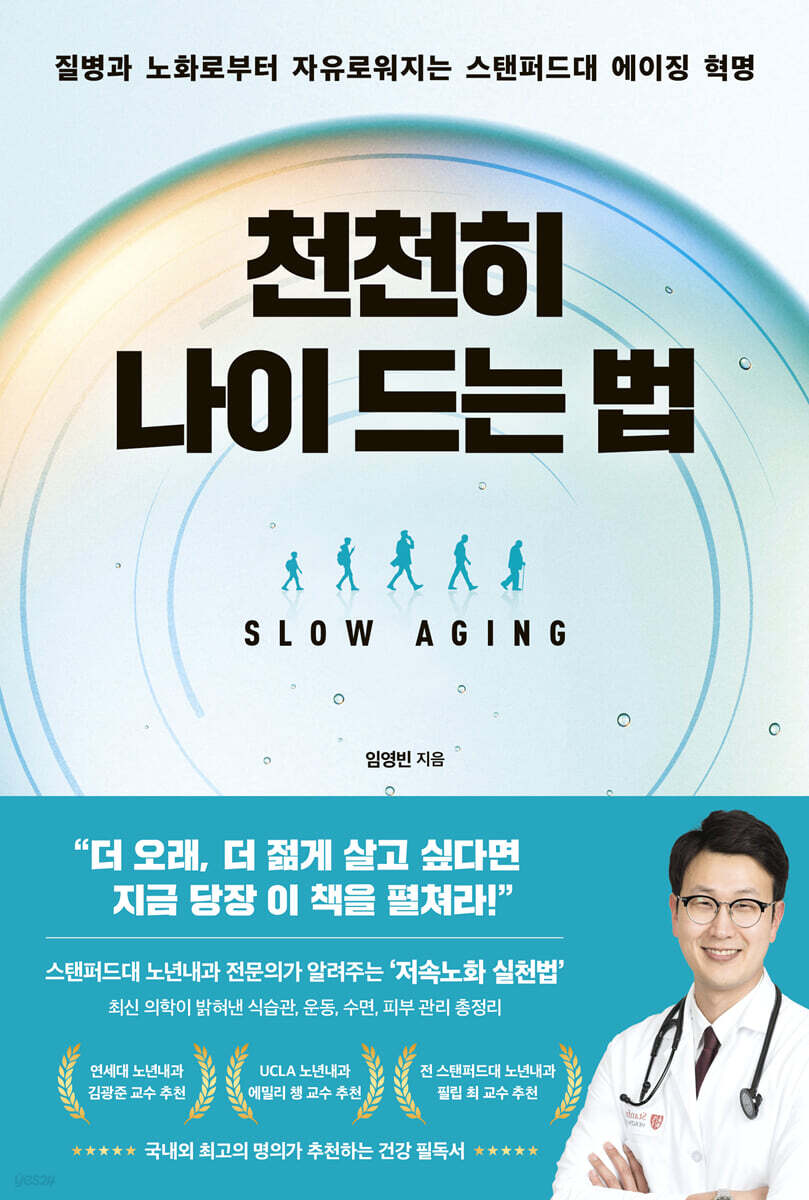
How to age slowly
 |
Description
Book Introduction
★ Professor Kim Kwang-jun of the Department of Geriatrics at Yonsei University and Professor Emily Chang of the Department of Geriatrics at UCLA ★
★ Highly recommended by Professor Philip Choi, former geriatrician at Stanford University ★
Must-read health books recommended by top doctors from home and abroad
“If you want to live longer and younger, open this book right now!”
A Stanford University geriatrician shares tips for slowing aging.
A comprehensive guide to diet, exercise, sleep, and skin care, as revealed by cutting-edge medical research.
With growing interest in slow aging, Dr. Youngbin Lim, a geriatrician who has treated patients at UCLA and Stanford University Hospital, has published a book detailing scientifically-based methods for slow aging.
Thanks to advances in medicine, we have moved beyond simply judging someone's age based on their appearance to an era where we can objectively measure the rate of aging.
There are people whose actual age is 60 but whose biological age, which indicates their health and degree of aging, is 40, and there are also cases where it is the opposite.
We all want to live a life that is younger and healthier than our actual age - that is, to age slowly and live a vibrant life for as long as possible.
Director Lim Young-bin, who says that what geriatrics deals with is not simply 'aging', but the choices and directions within that process, presents specific and practical methods in this book that lead to a life of 'extended vitality' rather than simply extending lifespan, based on scientifically verified medical knowledge.
He first suggests a treatment plan through lifestyle changes and the cause of chronic inflammation, which is the root of all diseases and the main culprit of accelerated aging.
Furthermore, it explains the importance of maximal oxygen uptake (VO2), which represents physical fitness, and how to improve it. It analyzes the impact of muscle on aging and quality of life, and provides practical guidelines for improving both.
It also covers a wide range of daily routines for living a long and healthy life, including the eating habits and sleep methods of long-lived people that many people miss.
By understanding the aging process, anyone can not only slow down the aging process but also feel younger than yesterday.
If you dream of a healthier and more vibrant life, open this book now.
★ Highly recommended by Professor Philip Choi, former geriatrician at Stanford University ★
Must-read health books recommended by top doctors from home and abroad
“If you want to live longer and younger, open this book right now!”
A Stanford University geriatrician shares tips for slowing aging.
A comprehensive guide to diet, exercise, sleep, and skin care, as revealed by cutting-edge medical research.
With growing interest in slow aging, Dr. Youngbin Lim, a geriatrician who has treated patients at UCLA and Stanford University Hospital, has published a book detailing scientifically-based methods for slow aging.
Thanks to advances in medicine, we have moved beyond simply judging someone's age based on their appearance to an era where we can objectively measure the rate of aging.
There are people whose actual age is 60 but whose biological age, which indicates their health and degree of aging, is 40, and there are also cases where it is the opposite.
We all want to live a life that is younger and healthier than our actual age - that is, to age slowly and live a vibrant life for as long as possible.
Director Lim Young-bin, who says that what geriatrics deals with is not simply 'aging', but the choices and directions within that process, presents specific and practical methods in this book that lead to a life of 'extended vitality' rather than simply extending lifespan, based on scientifically verified medical knowledge.
He first suggests a treatment plan through lifestyle changes and the cause of chronic inflammation, which is the root of all diseases and the main culprit of accelerated aging.
Furthermore, it explains the importance of maximal oxygen uptake (VO2), which represents physical fitness, and how to improve it. It analyzes the impact of muscle on aging and quality of life, and provides practical guidelines for improving both.
It also covers a wide range of daily routines for living a long and healthy life, including the eating habits and sleep methods of long-lived people that many people miss.
By understanding the aging process, anyone can not only slow down the aging process but also feel younger than yesterday.
If you dream of a healthier and more vibrant life, open this book now.
- You can preview some of the book's contents.
Preview
index
Recommendation
Prologue: Those Who Design the Speed and Direction of Aging
Chapter 1: How We Age
People who bring back youth
Is aging a disease?
We age significantly twice in our lifetime.
How fast am I aging?
A generation that ages faster and is more prone to cancer
On and off genetic switches
Habits that bring youth
Chapter 2: People Who Live Long and Disease-Free: Start by Addressing Chronic Inflammation
8 Causes of Accelerated Aging
It's all due to chronic inflammation
Why does chronic inflammation occur?
The #1 Cause of Disease and Aging: Avoid Blood Sugar Spikes
The #2 Cause of Disease and Aging: What Happens When You Eat High-Fat Foods
The #3 Culprit of Disease and Aging: Escape the Ultra-Processed Food Swamp
Get rid of the inflammation
Chapter 3: A Vibrant Life Begins in the Heart
An old man with the heart of a 40-year-old
Good stamina = high VO2 max
The effect of maximal oxygen uptake on mortality
What is my VO2 max?
Anyone can regain their strength
The best exercise for slow aging
Zone Two Training, Here's How
Chapter 4: Habits for Building Muscle Assets
What happens when you have no muscle
The biggest reason the body ages
How to Wake Up Your Muscles 1: Leucine
How to Wake Up Your Muscles 2: Strength Training
suffer from butt amnesia
3 Ways to Build Your Butt Muscles
It all starts with evil
Find your balance
Chapter 5: Healthy People's Longevity Table
Finding the best diet
Why We Recommend the Mediterranean Diet
Is fasting really necessary?
When the protective membrane inside the body breaks down
Gut microbiota imbalance and dementia
The Secret of Long-Living People
How to eat probiotics well
Benefits of fermented foods
How to take prebiotics correctly
30 Plant Challenges
Foods to avoid
Three meals a day for slow aging
Chapter 6: Sleep Determines the Quality of Life
Sleep is the real medicine
Sleep and Aging
People who sleep well and healthily
Why can't I sleep?
The Amazing Power of Sleep Habits
Two stages of sleep management
Knowing Your Circadian Rhythm Can Help You Sleep Better: Regulating Light and Melatonin
Increase Sleep Pressure: Using Adenosine
I sleep well when it's a little cold
Things that disturb sleep
Chapter 7 How to Turn Back the Age of Your Skin
Scientific Skin Care Routine
What ages your skin
Retinol to maintain skin elasticity
Take collagen peptides
Skin needs moisture
Sunscreen is a must
Why does the face sag?
Aging and hair loss
Epilogue Your life will definitely change.
main
Prologue: Those Who Design the Speed and Direction of Aging
Chapter 1: How We Age
People who bring back youth
Is aging a disease?
We age significantly twice in our lifetime.
How fast am I aging?
A generation that ages faster and is more prone to cancer
On and off genetic switches
Habits that bring youth
Chapter 2: People Who Live Long and Disease-Free: Start by Addressing Chronic Inflammation
8 Causes of Accelerated Aging
It's all due to chronic inflammation
Why does chronic inflammation occur?
The #1 Cause of Disease and Aging: Avoid Blood Sugar Spikes
The #2 Cause of Disease and Aging: What Happens When You Eat High-Fat Foods
The #3 Culprit of Disease and Aging: Escape the Ultra-Processed Food Swamp
Get rid of the inflammation
Chapter 3: A Vibrant Life Begins in the Heart
An old man with the heart of a 40-year-old
Good stamina = high VO2 max
The effect of maximal oxygen uptake on mortality
What is my VO2 max?
Anyone can regain their strength
The best exercise for slow aging
Zone Two Training, Here's How
Chapter 4: Habits for Building Muscle Assets
What happens when you have no muscle
The biggest reason the body ages
How to Wake Up Your Muscles 1: Leucine
How to Wake Up Your Muscles 2: Strength Training
suffer from butt amnesia
3 Ways to Build Your Butt Muscles
It all starts with evil
Find your balance
Chapter 5: Healthy People's Longevity Table
Finding the best diet
Why We Recommend the Mediterranean Diet
Is fasting really necessary?
When the protective membrane inside the body breaks down
Gut microbiota imbalance and dementia
The Secret of Long-Living People
How to eat probiotics well
Benefits of fermented foods
How to take prebiotics correctly
30 Plant Challenges
Foods to avoid
Three meals a day for slow aging
Chapter 6: Sleep Determines the Quality of Life
Sleep is the real medicine
Sleep and Aging
People who sleep well and healthily
Why can't I sleep?
The Amazing Power of Sleep Habits
Two stages of sleep management
Knowing Your Circadian Rhythm Can Help You Sleep Better: Regulating Light and Melatonin
Increase Sleep Pressure: Using Adenosine
I sleep well when it's a little cold
Things that disturb sleep
Chapter 7 How to Turn Back the Age of Your Skin
Scientific Skin Care Routine
What ages your skin
Retinol to maintain skin elasticity
Take collagen peptides
Skin needs moisture
Sunscreen is a must
Why does the face sag?
Aging and hair loss
Epilogue Your life will definitely change.
main
Detailed image

Into the book
I approach my patients the same way.
For example, an 88-year-old woman was able to walk without a cane in just three months, and a 71-year-old woman's HbA1c level dropped from 6.5% to 5.6%, clearing the criteria for diabetes, after adjusting her diet and exercise habits.
Another 68-year-old woman was able to get a good night's sleep after stopping the sleeping pills she had been taking for 10 years.
The patients I met at the Stanford Senior Clinic are still vivid in my memory.
They were a vivid example of 'slow aging,' and if I hadn't met them, I would never have realized the potential of treatment designed to counter the flow of age.
He always came to the clinic with clear eyes and in sportswear, and he always put into practice any new health habits he heard.
Behind these changes was the delicate and continuous care of Stanford University faculty.
Rather than a drug-centered prescription, it helps change the very structure of life through listening and guidance.
Through them, we have seen that it is possible to go beyond simply 'living longer' and to age with maximum energy and function.
--- From the "Prologue"
Using cutting-edge technology to analyze molecular-level changes in their bodies, the researchers discovered that there are two major turning points in the aging process, around ages 44 and 60.
At each of these turning points, dramatic, invisible changes occur in our bodies.
For example, around age 44, the way your body processes things like fat and alcohol, and the way it maintains and regulates cardiovascular function, begins to change.
Also, as we reach age 60, the focus shifts to the function of our immune system and how our body handles sugar.
These changes didn't happen overnight, but they're significant enough to explain why health risks are skyrocketing right now.
The important message this study conveys is that aging is by no means a random process.
Aging follows a specific pattern, one we are only just beginning to understand.
By studying these changes, scientists hope to develop ways to prevent or even reverse age-related diseases.
Imagine this.
A future where 60 is not a time of accelerated aging, but rather a starting point for maintaining a vibrant and healthy life for the next several decades.
--- From "Chapter 1: How We Grow Old"
Over time, as this damage accumulates, the body's ability to heal or respond to new threats gradually diminishes, eventually leading to the immune system becoming "overworked."
Just as workers who don't get enough rest become increasingly inefficient, an overloaded immune system also becomes less effective, weakening its ability to defend against infections and increasing the risk of autoimmune diseases.
Chronic inflammation also negatively impacts gene expression, accelerating aging.
When inflammation persists for a long time, immune cells continuously produce inflammatory molecules, which spread throughout the body and disrupt DNA methylation patterns throughout the body.
It can also negatively affect enzymes that regulate DNA methylation, pushing cells into a more aged state.
This kind of small but persistent inflammation puts cells in a constant state of stress, which ultimately accelerates aging over time.
Furthermore, chronic inflammation that begins at the cellular level gradually leads to organ-specific diseases.
--- From "Chapter 2: People Who Live Long Without Disease: Start by Addressing Chronic Inflammation"
So why is Zone 2 training so beneficial for health and aging? The biggest benefit of Zone 2 training is that it regenerates mitochondria.
Mitochondria are well known as organelles responsible for energy production in eukaryotic organisms.
The reason why the field of longevity medicine focuses so much on mitochondria is that as we age, the number of mitochondria decreases and their function declines, which is closely related to aging.
Additionally, abnormal mitochondria can release large amounts of reactive oxygen species, damaging cells and damaging telomeres at the ends of chromosomes in cells, leading to premature aging.
Telomeres are called the 'clock of life' and are attracting attention as a key to suppressing aging.
Mitochondrial abnormalities can affect brain cells, leading to dementia or Parkinson's disease; the pancreas, to diabetes; and the heart, to cardiovascular disease.
Such mitochondrial dysfunction is associated with functional decline in all organs, and recently, mitochondrial dysfunction has been identified as a cause of cancer and various autoimmune diseases.
--- From “Chapter 3: A Vibrant Life Begins in the Heart”
Living in Los Angeles, I spend at least an hour a day sitting in the driver's seat, and I also sit when I'm doing medical procedures or organizing charts.
What's interesting is that when you treat patients with hip amnesia, they all say that their calves are stiff and cramp up easily.
Among these people, there are those who walk 7,000 or 10,000 steps a day as part of their walking exercise, but since they walk without activating their hip muscles, they only end up straining their calves.
If you have a cramp in your calf at night, it will keep you awake and your sleep quality will also suffer.
Small hip muscles are also strongly associated with diabetes.
If the gluteal muscles, which should be the largest in our bodies, are not large enough, errors in sugar metabolism can occur, leading to insulin resistance and pre-diabetes. Weak gluteal muscles not only reduce our quality of life, but can also affect our lifespan.
A 2020 study found that for every 1cm increase in thigh circumference, the risk of all-cause mortality increased by 4% and the risk of cardiovascular disease mortality increased by 6%.
This study was conducted as a result of an epidemiological survey of 20,000 people over 15 years to find a correlation between thigh circumference and mortality.
Thigh circumference is closely related to the buttock muscles.
It's rare to find someone with thick thighs and a small butt, and these two muscles are always worked together.
--- From "Chapter 4: Habits for Building Muscle Assets"
Professor Justin Sonnenburg and his team at Stanford University School of Medicine began testing stool in California and gradually expanded the scope of their study, collecting stool samples in Peru, Tanzania, and Nepal.
As a result, while the guts of Californians who lived in cities and followed a Western-style diet contained about 250 types of microorganisms, the guts of hunter-gatherers in Peru and Tanzania contained a whopping 750 types of microorganisms.
Meanwhile, the guts of partially urbanized Nepalese farmers contained approximately 450 microorganisms.
Professor Sonnenberg likened this result to a forest.
The gut microbiome of urban dwellers is in a state of reduced diversity, much like a deforested forest, which has important implications for modern people's health and gut microbiome balance.
Authorities in gut microbiome research unanimously emphasize the diversity of microorganisms.
The more diverse the gut microbiome, the more capable and resilient the microbial community becomes, because even if a particular microbe fails to perform its role, others can compensate.
A diverse gut microbiome operates much more stably than an environment with only a small number of bacteria.
--- From "Chapter 5: Longevity Tables for Healthy People"
Finally, note the start (black triangles) and end (blue triangles) of melatonin secretion.
If you receive enough natural light, melatonin is secreted immediately when the sun sets, but if you live under artificial light, melatonin secretion is delayed as it gradually gets darker.
So when does melatonin secretion end? In the group exposed to natural light, melatonin levels decline relatively quickly after waking, while in the group exposed to artificial light, melatonin continues to be secreted for several hours after waking.
If we examine the melatonin secretion patterns of modern people living in cities, we will see a pattern similar to the group above in the graph.
Because melatonin is not completely eliminated in the morning, you feel uneasy when you wake up.
In this way, you can get good quality sleep by controlling environmental factors such as natural light without sleeping pills.
For example, an 88-year-old woman was able to walk without a cane in just three months, and a 71-year-old woman's HbA1c level dropped from 6.5% to 5.6%, clearing the criteria for diabetes, after adjusting her diet and exercise habits.
Another 68-year-old woman was able to get a good night's sleep after stopping the sleeping pills she had been taking for 10 years.
The patients I met at the Stanford Senior Clinic are still vivid in my memory.
They were a vivid example of 'slow aging,' and if I hadn't met them, I would never have realized the potential of treatment designed to counter the flow of age.
He always came to the clinic with clear eyes and in sportswear, and he always put into practice any new health habits he heard.
Behind these changes was the delicate and continuous care of Stanford University faculty.
Rather than a drug-centered prescription, it helps change the very structure of life through listening and guidance.
Through them, we have seen that it is possible to go beyond simply 'living longer' and to age with maximum energy and function.
--- From the "Prologue"
Using cutting-edge technology to analyze molecular-level changes in their bodies, the researchers discovered that there are two major turning points in the aging process, around ages 44 and 60.
At each of these turning points, dramatic, invisible changes occur in our bodies.
For example, around age 44, the way your body processes things like fat and alcohol, and the way it maintains and regulates cardiovascular function, begins to change.
Also, as we reach age 60, the focus shifts to the function of our immune system and how our body handles sugar.
These changes didn't happen overnight, but they're significant enough to explain why health risks are skyrocketing right now.
The important message this study conveys is that aging is by no means a random process.
Aging follows a specific pattern, one we are only just beginning to understand.
By studying these changes, scientists hope to develop ways to prevent or even reverse age-related diseases.
Imagine this.
A future where 60 is not a time of accelerated aging, but rather a starting point for maintaining a vibrant and healthy life for the next several decades.
--- From "Chapter 1: How We Grow Old"
Over time, as this damage accumulates, the body's ability to heal or respond to new threats gradually diminishes, eventually leading to the immune system becoming "overworked."
Just as workers who don't get enough rest become increasingly inefficient, an overloaded immune system also becomes less effective, weakening its ability to defend against infections and increasing the risk of autoimmune diseases.
Chronic inflammation also negatively impacts gene expression, accelerating aging.
When inflammation persists for a long time, immune cells continuously produce inflammatory molecules, which spread throughout the body and disrupt DNA methylation patterns throughout the body.
It can also negatively affect enzymes that regulate DNA methylation, pushing cells into a more aged state.
This kind of small but persistent inflammation puts cells in a constant state of stress, which ultimately accelerates aging over time.
Furthermore, chronic inflammation that begins at the cellular level gradually leads to organ-specific diseases.
--- From "Chapter 2: People Who Live Long Without Disease: Start by Addressing Chronic Inflammation"
So why is Zone 2 training so beneficial for health and aging? The biggest benefit of Zone 2 training is that it regenerates mitochondria.
Mitochondria are well known as organelles responsible for energy production in eukaryotic organisms.
The reason why the field of longevity medicine focuses so much on mitochondria is that as we age, the number of mitochondria decreases and their function declines, which is closely related to aging.
Additionally, abnormal mitochondria can release large amounts of reactive oxygen species, damaging cells and damaging telomeres at the ends of chromosomes in cells, leading to premature aging.
Telomeres are called the 'clock of life' and are attracting attention as a key to suppressing aging.
Mitochondrial abnormalities can affect brain cells, leading to dementia or Parkinson's disease; the pancreas, to diabetes; and the heart, to cardiovascular disease.
Such mitochondrial dysfunction is associated with functional decline in all organs, and recently, mitochondrial dysfunction has been identified as a cause of cancer and various autoimmune diseases.
--- From “Chapter 3: A Vibrant Life Begins in the Heart”
Living in Los Angeles, I spend at least an hour a day sitting in the driver's seat, and I also sit when I'm doing medical procedures or organizing charts.
What's interesting is that when you treat patients with hip amnesia, they all say that their calves are stiff and cramp up easily.
Among these people, there are those who walk 7,000 or 10,000 steps a day as part of their walking exercise, but since they walk without activating their hip muscles, they only end up straining their calves.
If you have a cramp in your calf at night, it will keep you awake and your sleep quality will also suffer.
Small hip muscles are also strongly associated with diabetes.
If the gluteal muscles, which should be the largest in our bodies, are not large enough, errors in sugar metabolism can occur, leading to insulin resistance and pre-diabetes. Weak gluteal muscles not only reduce our quality of life, but can also affect our lifespan.
A 2020 study found that for every 1cm increase in thigh circumference, the risk of all-cause mortality increased by 4% and the risk of cardiovascular disease mortality increased by 6%.
This study was conducted as a result of an epidemiological survey of 20,000 people over 15 years to find a correlation between thigh circumference and mortality.
Thigh circumference is closely related to the buttock muscles.
It's rare to find someone with thick thighs and a small butt, and these two muscles are always worked together.
--- From "Chapter 4: Habits for Building Muscle Assets"
Professor Justin Sonnenburg and his team at Stanford University School of Medicine began testing stool in California and gradually expanded the scope of their study, collecting stool samples in Peru, Tanzania, and Nepal.
As a result, while the guts of Californians who lived in cities and followed a Western-style diet contained about 250 types of microorganisms, the guts of hunter-gatherers in Peru and Tanzania contained a whopping 750 types of microorganisms.
Meanwhile, the guts of partially urbanized Nepalese farmers contained approximately 450 microorganisms.
Professor Sonnenberg likened this result to a forest.
The gut microbiome of urban dwellers is in a state of reduced diversity, much like a deforested forest, which has important implications for modern people's health and gut microbiome balance.
Authorities in gut microbiome research unanimously emphasize the diversity of microorganisms.
The more diverse the gut microbiome, the more capable and resilient the microbial community becomes, because even if a particular microbe fails to perform its role, others can compensate.
A diverse gut microbiome operates much more stably than an environment with only a small number of bacteria.
--- From "Chapter 5: Longevity Tables for Healthy People"
Finally, note the start (black triangles) and end (blue triangles) of melatonin secretion.
If you receive enough natural light, melatonin is secreted immediately when the sun sets, but if you live under artificial light, melatonin secretion is delayed as it gradually gets darker.
So when does melatonin secretion end? In the group exposed to natural light, melatonin levels decline relatively quickly after waking, while in the group exposed to artificial light, melatonin continues to be secreted for several hours after waking.
If we examine the melatonin secretion patterns of modern people living in cities, we will see a pattern similar to the group above in the graph.
Because melatonin is not completely eliminated in the morning, you feel uneasy when you wake up.
In this way, you can get good quality sleep by controlling environmental factors such as natural light without sleeping pills.
--- From “Chapter 6: Sleep Determines the Quality of Life”
Publisher's Review
Understanding the aging pattern can help you feel younger than yesterday!
Stanford's Aging Revolution: Freedom from Disease and Aging
Dr. Youngbin Lim, a geriatric medicine specialist, treated numerous patients as a resident at UCLA Hospital and a fellow at Stanford University Hospital.
In particular, at the Stanford Senior Clinic, I experienced a medical environment where doctors spent more than 30 minutes on each patient to thoroughly examine their overall lifestyle habits and discuss causes and solutions with the patient and their family.
Through this process, I have witnessed tangible improvements in patients' health, and this book, "How to Age Slowly," is an extension of that experience.
As interest in aging and health grows, we are flooded with information about what to eat and what not to do. However, simply following trends without proper understanding can be counterproductive.
In this book, the author, drawing on his medical knowledge and extensive clinical experience, explains the mechanisms of aging and the systems of our bodies in a way that anyone can easily understand and apply to their own lives.
The main cause of all diseases and aging
Start by addressing chronic inflammation.
The author emphasizes that most factors that cause accelerated aging, such as smoking, drinking, excessive body fat, high inflammation levels, and diabetes, are linked to 'inflammatory aging.'
This refers to a condition in which the body's immune response is not completely turned off, but continues subtly, causing chronic damage throughout the body.
This chronic inflammation accelerates biological aging at a level that is difficult to perceive, ultimately accelerating the onset of various age-related diseases.
At first, it is so subtle that it is not noticeable, but over time, it gradually weakens the function of cells and tissues, slowly aging and weakening the body.
So why and how does this chronic inflammation progress? In this book, the author explains the process in an easy-to-understand way, detailing its impact on health and longevity.
Furthermore, it specifically points out how we can improve our eating, moving, and sleeping habits to prevent this.
From 'Life Extension' to 'Vitality Extension'
Easy-to-follow slow-aging habits and exercises for everyone
We often say, 'I have good physical strength.'
What exactly does it mean to be physically fit? Medically, fitness is defined by a number called "maximal oxygen uptake."
This refers to the maximum amount of oxygen that an exerciser can absorb and utilize in their body in one minute.
A recent study found that people in the top 2% of their VO2 max had an 80% lower overall mortality rate than those in the bottom 25%.
What is more surprising is that mortality from all causes, not just cardiopulmonary mortality, has decreased.
This means that aerobic exercise improves cardiopulmonary function, reducing mortality from various causes, including cardiovascular disease, cancer, illness, and falls.
In this book, the author explains the scientific basis for the direct link between maximal oxygen uptake and healthy lifespan through numerous studies and clinical data.
In addition, we will introduce in detail the principles and practice of 'Zone Two Training', the optimal slow-aging exercise method that can effectively improve the maximal oxygen uptake (VO2) of the reader, along with a method to measure it on one's own.
The author emphasizes 'muscle strength' as another key element of a vibrant life.
Sarcopenia, which comes with aging, is identified as a major cause of threatening daily function, and to prevent it, it is advised that adequate protein intake, especially a diet rich in leucine, be combined with strength training.
In this book, he emphasizes the importance of the hip muscles, which hold the center of our body, and the grip strength, which is an indicator of muscle strength, and introduces specific exercises to strengthen them.
It also covers practical exercises to develop a sense of balance, and presents a realistic and scientifically based guide to healthy aging.
From now on, let's eat properly and sleep smartly.
Your healthy lifespan will increase by 20 years.
Recently, diets that aim for slow aging, such as the Mediterranean diet and the Mind diet, are gaining attention worldwide.
The author points out the common characteristics of these diets and further emphasizes the 'diversity of gut microbes', which we have overlooked, as the key to a longevity diet.
What happens to our bodies when our gut microbiome becomes imbalanced? Recent scientific studies have demonstrated that a disruption in gut microbiome balance increases the risk of not only metabolic and immune diseases, but also neurodegenerative diseases like Alzheimer's.
Accordingly, the author provides detailed information on the characteristics and efficacy of dietary habits that increase the diversity of intestinal microorganisms.
Additionally, we suggest specific ways to make your diet healthier by highlighting the importance of consuming plant-based foods, such as the 'Plant 30 Challenge', which is spreading worldwide.
The author emphasizes that 'sleeping well' is the starting point for all health management.
He has been treating patients with insomnia for a long time and he asserts that he has never had a case where the quality of sleep was not improved.
This book clearly explains the fundamental structures of sleep, including sleep pressure and the operating principles of circadian rhythms, and provides specific guidance on how to achieve deep, restorative sleep by regulating the actions of melatonin and adenosine in daily life.
'How can I live healthier and more dignified lives?'
The most practical answer to your question: Professor Kim Gwang-jun of the Department of Geriatrics at Yonsei University.
This book, based on extensive clinical experience, persuasively conveys that anyone can achieve a life of "aging slowly."
“In outpatient care, medications are only 10% of the equation, and the remaining 90% is about lifestyle.” This is what the author repeatedly emphasizes to his patients and is the core message of this book.
The real key to staying young and healthy lies in our daily habits.
As Professor Kim Gwang-jun of Yonsei University's Department of Geriatrics, who strongly recommended this book, said, this book presents the most realistic method that anyone can understand and put into practice to answer the fundamental question of geriatric medicine: "How can we live longer, healthier, and more dignified lives?"
Now, let's take a step toward a life of slow aging together, following the author's guidance.
Stanford's Aging Revolution: Freedom from Disease and Aging
Dr. Youngbin Lim, a geriatric medicine specialist, treated numerous patients as a resident at UCLA Hospital and a fellow at Stanford University Hospital.
In particular, at the Stanford Senior Clinic, I experienced a medical environment where doctors spent more than 30 minutes on each patient to thoroughly examine their overall lifestyle habits and discuss causes and solutions with the patient and their family.
Through this process, I have witnessed tangible improvements in patients' health, and this book, "How to Age Slowly," is an extension of that experience.
As interest in aging and health grows, we are flooded with information about what to eat and what not to do. However, simply following trends without proper understanding can be counterproductive.
In this book, the author, drawing on his medical knowledge and extensive clinical experience, explains the mechanisms of aging and the systems of our bodies in a way that anyone can easily understand and apply to their own lives.
The main cause of all diseases and aging
Start by addressing chronic inflammation.
The author emphasizes that most factors that cause accelerated aging, such as smoking, drinking, excessive body fat, high inflammation levels, and diabetes, are linked to 'inflammatory aging.'
This refers to a condition in which the body's immune response is not completely turned off, but continues subtly, causing chronic damage throughout the body.
This chronic inflammation accelerates biological aging at a level that is difficult to perceive, ultimately accelerating the onset of various age-related diseases.
At first, it is so subtle that it is not noticeable, but over time, it gradually weakens the function of cells and tissues, slowly aging and weakening the body.
So why and how does this chronic inflammation progress? In this book, the author explains the process in an easy-to-understand way, detailing its impact on health and longevity.
Furthermore, it specifically points out how we can improve our eating, moving, and sleeping habits to prevent this.
From 'Life Extension' to 'Vitality Extension'
Easy-to-follow slow-aging habits and exercises for everyone
We often say, 'I have good physical strength.'
What exactly does it mean to be physically fit? Medically, fitness is defined by a number called "maximal oxygen uptake."
This refers to the maximum amount of oxygen that an exerciser can absorb and utilize in their body in one minute.
A recent study found that people in the top 2% of their VO2 max had an 80% lower overall mortality rate than those in the bottom 25%.
What is more surprising is that mortality from all causes, not just cardiopulmonary mortality, has decreased.
This means that aerobic exercise improves cardiopulmonary function, reducing mortality from various causes, including cardiovascular disease, cancer, illness, and falls.
In this book, the author explains the scientific basis for the direct link between maximal oxygen uptake and healthy lifespan through numerous studies and clinical data.
In addition, we will introduce in detail the principles and practice of 'Zone Two Training', the optimal slow-aging exercise method that can effectively improve the maximal oxygen uptake (VO2) of the reader, along with a method to measure it on one's own.
The author emphasizes 'muscle strength' as another key element of a vibrant life.
Sarcopenia, which comes with aging, is identified as a major cause of threatening daily function, and to prevent it, it is advised that adequate protein intake, especially a diet rich in leucine, be combined with strength training.
In this book, he emphasizes the importance of the hip muscles, which hold the center of our body, and the grip strength, which is an indicator of muscle strength, and introduces specific exercises to strengthen them.
It also covers practical exercises to develop a sense of balance, and presents a realistic and scientifically based guide to healthy aging.
From now on, let's eat properly and sleep smartly.
Your healthy lifespan will increase by 20 years.
Recently, diets that aim for slow aging, such as the Mediterranean diet and the Mind diet, are gaining attention worldwide.
The author points out the common characteristics of these diets and further emphasizes the 'diversity of gut microbes', which we have overlooked, as the key to a longevity diet.
What happens to our bodies when our gut microbiome becomes imbalanced? Recent scientific studies have demonstrated that a disruption in gut microbiome balance increases the risk of not only metabolic and immune diseases, but also neurodegenerative diseases like Alzheimer's.
Accordingly, the author provides detailed information on the characteristics and efficacy of dietary habits that increase the diversity of intestinal microorganisms.
Additionally, we suggest specific ways to make your diet healthier by highlighting the importance of consuming plant-based foods, such as the 'Plant 30 Challenge', which is spreading worldwide.
The author emphasizes that 'sleeping well' is the starting point for all health management.
He has been treating patients with insomnia for a long time and he asserts that he has never had a case where the quality of sleep was not improved.
This book clearly explains the fundamental structures of sleep, including sleep pressure and the operating principles of circadian rhythms, and provides specific guidance on how to achieve deep, restorative sleep by regulating the actions of melatonin and adenosine in daily life.
'How can I live healthier and more dignified lives?'
The most practical answer to your question: Professor Kim Gwang-jun of the Department of Geriatrics at Yonsei University.
This book, based on extensive clinical experience, persuasively conveys that anyone can achieve a life of "aging slowly."
“In outpatient care, medications are only 10% of the equation, and the remaining 90% is about lifestyle.” This is what the author repeatedly emphasizes to his patients and is the core message of this book.
The real key to staying young and healthy lies in our daily habits.
As Professor Kim Gwang-jun of Yonsei University's Department of Geriatrics, who strongly recommended this book, said, this book presents the most realistic method that anyone can understand and put into practice to answer the fundamental question of geriatric medicine: "How can we live longer, healthier, and more dignified lives?"
Now, let's take a step toward a life of slow aging together, following the author's guidance.
GOODS SPECIFICS
- Date of issue: May 19, 2025
- Page count, weight, size: 272 pages | 464g | 145*215*17mm
- ISBN13: 9791158513160
- ISBN10: 115851316X
You may also like
카테고리
korean


korean

![GQ KOREA Mark (Monthly): December [2025]](http://librairie.coreenne.fr/cdn/shop/files/8ef265dbbfbf186523ed75ba7319009d.jpg?v=1765340328&width=3840)


