

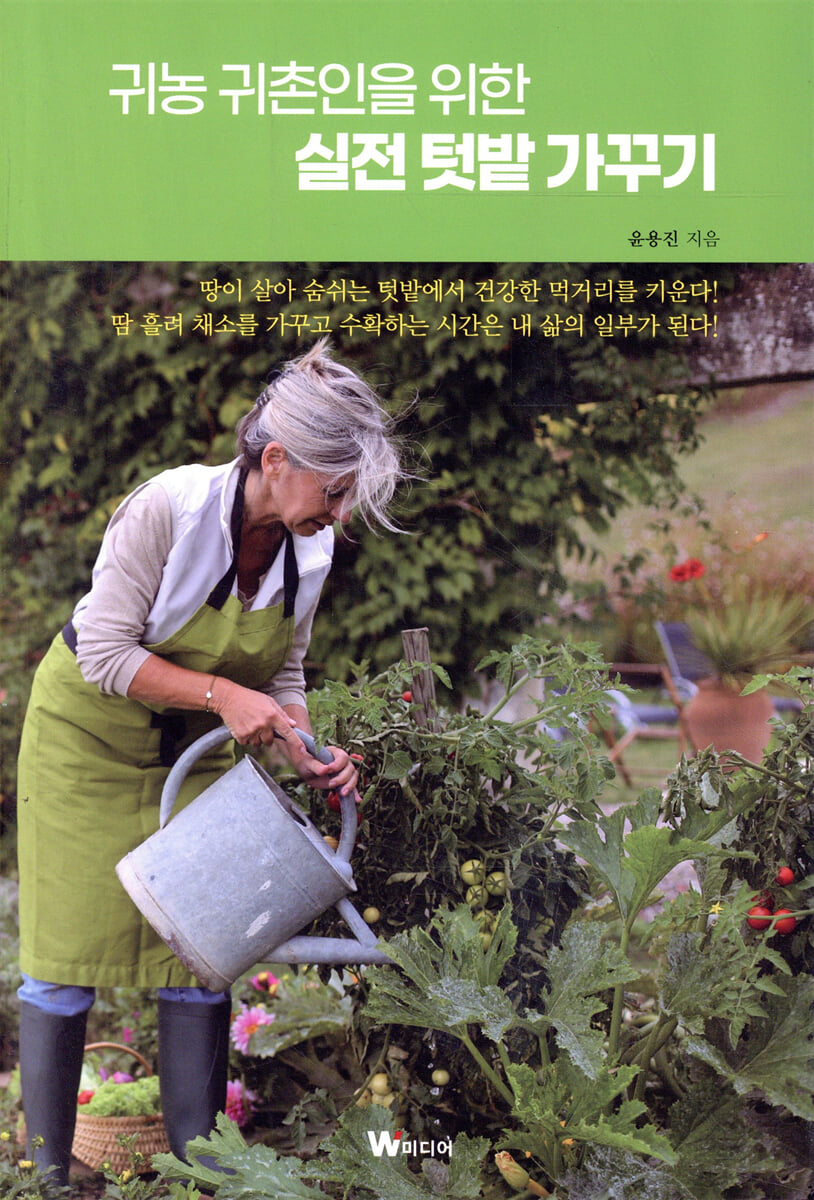
Practical gardening for those returning to farming and rural life
 |
Description
Book Introduction
Farmers must constantly learn and strive to understand the language of their crops.
The author says that when city-dwelling acquaintances visit his house, most of them spend more time in the garden than inside the house.
The author's life of eating healthy vegetables grown in the garden every day, working hard, and living a simple life in nature may be the life that many people dream of these days.
On a warm spring day, if you go out to the garden early in the morning, the fresh green sprouts and the fragrant smell of the soil will create a refreshing start to the day.
A small seed grows into life with warm sunlight, fertile soil, and the hands of a diligent farmer.
Even a young sprout that was weak at first gradually grows and expresses its will with its body.
For example, if a tomato plant lacks calcium, the center of the fruit will turn black, and if there is too much nitrogen, the leaves will dry.
If boron is deficient, another stem will grow from the tip of the flower stalk.
However, a farmer who does not know how to communicate with his garden crops can only watch them fall apart without knowing what is happening.
So even if you have a small garden, farmers must constantly learn and work to understand the language of their crops.
Only after all that hard work and effort does the garden give us an abundance of food.
The author says that when city-dwelling acquaintances visit his house, most of them spend more time in the garden than inside the house.
The author's life of eating healthy vegetables grown in the garden every day, working hard, and living a simple life in nature may be the life that many people dream of these days.
On a warm spring day, if you go out to the garden early in the morning, the fresh green sprouts and the fragrant smell of the soil will create a refreshing start to the day.
A small seed grows into life with warm sunlight, fertile soil, and the hands of a diligent farmer.
Even a young sprout that was weak at first gradually grows and expresses its will with its body.
For example, if a tomato plant lacks calcium, the center of the fruit will turn black, and if there is too much nitrogen, the leaves will dry.
If boron is deficient, another stem will grow from the tip of the flower stalk.
However, a farmer who does not know how to communicate with his garden crops can only watch them fall apart without knowing what is happening.
So even if you have a small garden, farmers must constantly learn and work to understand the language of their crops.
Only after all that hard work and effort does the garden give us an abundance of food.
- You can preview some of the book's contents.
Preview
index
preface
Chapter 1/ Preparation - Gardening AtoZ
1/ Farming begins with making soil.
1) Making soil good for farming
2) Spread limestone
3) Creating a flower bed
2/ Things to consider when planting crops in your garden
1) Direct sowing or seedling preparation
2) When to plant seedlings
3) Determine the location of the plant
4) Rotation
5) Filtering
6) Soil acidity
7) Planting distance
8) Mulching (covering the soil surface)
9) Installing supports or nets
3/ Preparing farm equipment
4/ Sowing time by crop
5/ Preparing seedlings
1) Should I sow directly, make seedlings, or buy seedlings and plant them?
2) How to make seedlings
3) What do cucumbers, pumpkins, and watercress have in common?
4) Preventing damage from continuous cropping
6/ How to install supports for each crop
1) One-line installation method
2) Two-line installation method
3) X-shaped installation method
4) How to install the network
5) Trapezoidal installation method
7/ Irrigation - How to Water Your Garden
8/ Fertilizer use must be reduced.
1) Types of fertilizers sold on the market
2) Difference between compost and fertilizer
3) What kind of fertilizer should I buy to grow vegetables in my garden?
4) Role of fertilizer components
5) The secret behind the numbers on fertilizer bags
9/ Pesticide use must be reduced.
1) Making natural agricultural materials
2) Making natural herbicides
3) Making egg yolk oil
10/ Reducing pest damage
1) How to get rid of aphids
2) Ant removal method
3) How to remove snails
Chapter 2/ Practical - Cultivation Methods for Each Crop
1.
pea
2.
potato
3.
Bok choy
4.
Colabi
5.
carrot
6.
Cho Seok-jam/ Taek-ran
7.
Lettuce, wrap vegetables (mustard greens, crown daisy)
8.
broccoli
9.
bit
10.
green onions, scallions
11.
Turnip
12.
peanut
13.
Toran
14.
kidney bean
15.
corner
16.
Auk
17.
Perilla leaves, perilla
18.
ginger
19.
Pumpkin, pumpkin, old pumpkin
20.
Washcloth
21.
pepper
22.
tomato
23.
egg plant
24.
cucumber
25.
bell peppers, paprika
26.
watermelon
27.
sweet potato
28.
Frostweed, soybeans
29.
Melon, cantaloupe
30.
Kimchi cabbage
31.
Kimchi radish
32.
gat
33.
spinach
34.
onion
35.
garlic
36.
chives
37.
asparagus
38.
Deodeok
39.
jujube tree
40.
grapevine
Going out words
Chapter 1/ Preparation - Gardening AtoZ
1/ Farming begins with making soil.
1) Making soil good for farming
2) Spread limestone
3) Creating a flower bed
2/ Things to consider when planting crops in your garden
1) Direct sowing or seedling preparation
2) When to plant seedlings
3) Determine the location of the plant
4) Rotation
5) Filtering
6) Soil acidity
7) Planting distance
8) Mulching (covering the soil surface)
9) Installing supports or nets
3/ Preparing farm equipment
4/ Sowing time by crop
5/ Preparing seedlings
1) Should I sow directly, make seedlings, or buy seedlings and plant them?
2) How to make seedlings
3) What do cucumbers, pumpkins, and watercress have in common?
4) Preventing damage from continuous cropping
6/ How to install supports for each crop
1) One-line installation method
2) Two-line installation method
3) X-shaped installation method
4) How to install the network
5) Trapezoidal installation method
7/ Irrigation - How to Water Your Garden
8/ Fertilizer use must be reduced.
1) Types of fertilizers sold on the market
2) Difference between compost and fertilizer
3) What kind of fertilizer should I buy to grow vegetables in my garden?
4) Role of fertilizer components
5) The secret behind the numbers on fertilizer bags
9/ Pesticide use must be reduced.
1) Making natural agricultural materials
2) Making natural herbicides
3) Making egg yolk oil
10/ Reducing pest damage
1) How to get rid of aphids
2) Ant removal method
3) How to remove snails
Chapter 2/ Practical - Cultivation Methods for Each Crop
1.
pea
2.
potato
3.
Bok choy
4.
Colabi
5.
carrot
6.
Cho Seok-jam/ Taek-ran
7.
Lettuce, wrap vegetables (mustard greens, crown daisy)
8.
broccoli
9.
bit
10.
green onions, scallions
11.
Turnip
12.
peanut
13.
Toran
14.
kidney bean
15.
corner
16.
Auk
17.
Perilla leaves, perilla
18.
ginger
19.
Pumpkin, pumpkin, old pumpkin
20.
Washcloth
21.
pepper
22.
tomato
23.
egg plant
24.
cucumber
25.
bell peppers, paprika
26.
watermelon
27.
sweet potato
28.
Frostweed, soybeans
29.
Melon, cantaloupe
30.
Kimchi cabbage
31.
Kimchi radish
32.
gat
33.
spinach
34.
onion
35.
garlic
36.
chives
37.
asparagus
38.
Deodeok
39.
jujube tree
40.
grapevine
Going out words
Publisher's Review
● Small garden farming method to grow healthy food for my family
The author has been recording what he has learned and experienced from those around him while farming for the past 15 years in his 'Agricultural Journal', and has selected and included in this book the most vital information that beginner farmers really need.
The author, who was from the city and had no basic knowledge of farming, included in the book even the most detailed farming methods that one would not know before actually farming, especially the parts that he had regretted and found difficult because he did not know them.
There are already many books on farming methods on the market, but most of them are guides for large-scale farming.
Although the basics of farming are the same, it is not possible to blindly purchase expensive, large-scale, specialized agricultural supplies when farming on a small scale.
Therefore, the farming methods introduced by the author in the book are easy to follow for people who run small-scale gardens.
Tending a garden is like caring for a child.
This book, which contains the author's accumulated farming information from his continuous learning and efforts to grow healthy food for his family, is expected to serve as a milestone for novice farmers who have just returned to the countryside and started farming.
Farming is also something you see as much as you know!
Just as a 'wrong answer notebook' is necessary for learning, failure cases also provide valuable information in farming.
It seems like the days when anyone could not farm because they didn't know how are over.
If you search the Internet, you will find all kinds of information.
Of course, not all of that information is correct, but it can at least be used as a reference, and if you need more accurate information, you can look up professional materials created by the Rural Development Administration.
Even with so much information flowing in, strangely, farming doesn't go as planned.
I clearly did as I was told according to the model answer, but the farming is not going well.
Just as learning requires a 'mistake notebook', failure cases also provide valuable information in farming.
However, while model answers are easy to find, failure cases are difficult to find.
Failure cases are something you can't write about unless you actually fail.
Although it is my own opinion, the experience of failure where I 'failed even though I clearly did it right' may be more necessary information for beginner farmers.
In fact, if you look at the agricultural journals the author has kept over the past 15 years, it seems that there weren't many crops that could be grown easily without failure.
It becomes obvious later on, but there were many cases where farming was ruined because people didn't know the obvious at first.
There is a bit of a difference between the farming methods I have experienced through actual sweat and the theories I learned from books.
Moreover, these days, we are always faced with unpredictable variables such as abnormal climate.
● Things to consider when growing garden crops - Basic knowledge about crop cultivation
The 40 or so garden crops described in the book are common vegetables that we can commonly find around us.
However, if you are thinking about growing a crop for the first time in the future, you can open the book and refer to 'Things to Consider When Growing Vegetable Garden Crops'.
If you know the basics of crop cultivation, you can apply it even if it is your first time growing a crop, and you will be able to harvest enough to keep up with others.
But no matter how hard I try, farming is difficult without the help of heaven.
Due to abnormal weather, late frosts may occur and sudden hail may fall.
It's hard to predict how the weather will change again this year.
Despite the hardships of living in such a harsh environment, farmers adapt to nature and live in harmony with it.
It's been a tough year, but spring brings new hope and a fresh start.
● The feast of life unfolding in a small garden is a time of healing for body and mind!
The book contains the author's meticulously documented farming methods and countless failures he has experienced over the past 15 years while personally farming.
The author, who retired early in his mid-40s and returned to the countryside, farms for self-sufficiency, so he avoids using pesticides and fertilizers whenever possible.
Although the marketability may be a little low, it is a healthy food, so my family can eat it, share it with people around me, and even make a little money by trading directly with people in the city.
Above all, the time spent growing and harvesting vegetables, sweating directly, becomes a precious part of life.
Although it is a small garden, he said that each day spent watching the crops grow was a time of healing for both body and mind.
The author has been recording what he has learned and experienced from those around him while farming for the past 15 years in his 'Agricultural Journal', and has selected and included in this book the most vital information that beginner farmers really need.
The author, who was from the city and had no basic knowledge of farming, included in the book even the most detailed farming methods that one would not know before actually farming, especially the parts that he had regretted and found difficult because he did not know them.
There are already many books on farming methods on the market, but most of them are guides for large-scale farming.
Although the basics of farming are the same, it is not possible to blindly purchase expensive, large-scale, specialized agricultural supplies when farming on a small scale.
Therefore, the farming methods introduced by the author in the book are easy to follow for people who run small-scale gardens.
Tending a garden is like caring for a child.
This book, which contains the author's accumulated farming information from his continuous learning and efforts to grow healthy food for his family, is expected to serve as a milestone for novice farmers who have just returned to the countryside and started farming.
Farming is also something you see as much as you know!
Just as a 'wrong answer notebook' is necessary for learning, failure cases also provide valuable information in farming.
It seems like the days when anyone could not farm because they didn't know how are over.
If you search the Internet, you will find all kinds of information.
Of course, not all of that information is correct, but it can at least be used as a reference, and if you need more accurate information, you can look up professional materials created by the Rural Development Administration.
Even with so much information flowing in, strangely, farming doesn't go as planned.
I clearly did as I was told according to the model answer, but the farming is not going well.
Just as learning requires a 'mistake notebook', failure cases also provide valuable information in farming.
However, while model answers are easy to find, failure cases are difficult to find.
Failure cases are something you can't write about unless you actually fail.
Although it is my own opinion, the experience of failure where I 'failed even though I clearly did it right' may be more necessary information for beginner farmers.
In fact, if you look at the agricultural journals the author has kept over the past 15 years, it seems that there weren't many crops that could be grown easily without failure.
It becomes obvious later on, but there were many cases where farming was ruined because people didn't know the obvious at first.
There is a bit of a difference between the farming methods I have experienced through actual sweat and the theories I learned from books.
Moreover, these days, we are always faced with unpredictable variables such as abnormal climate.
● Things to consider when growing garden crops - Basic knowledge about crop cultivation
The 40 or so garden crops described in the book are common vegetables that we can commonly find around us.
However, if you are thinking about growing a crop for the first time in the future, you can open the book and refer to 'Things to Consider When Growing Vegetable Garden Crops'.
If you know the basics of crop cultivation, you can apply it even if it is your first time growing a crop, and you will be able to harvest enough to keep up with others.
But no matter how hard I try, farming is difficult without the help of heaven.
Due to abnormal weather, late frosts may occur and sudden hail may fall.
It's hard to predict how the weather will change again this year.
Despite the hardships of living in such a harsh environment, farmers adapt to nature and live in harmony with it.
It's been a tough year, but spring brings new hope and a fresh start.
● The feast of life unfolding in a small garden is a time of healing for body and mind!
The book contains the author's meticulously documented farming methods and countless failures he has experienced over the past 15 years while personally farming.
The author, who retired early in his mid-40s and returned to the countryside, farms for self-sufficiency, so he avoids using pesticides and fertilizers whenever possible.
Although the marketability may be a little low, it is a healthy food, so my family can eat it, share it with people around me, and even make a little money by trading directly with people in the city.
Above all, the time spent growing and harvesting vegetables, sweating directly, becomes a precious part of life.
Although it is a small garden, he said that each day spent watching the crops grow was a time of healing for both body and mind.
GOODS SPECIFICS
- Publication date: March 19, 2022
- Page count, weight, size: 283 pages | 532g | 153*225*18mm
- ISBN13: 9791189172411
- ISBN10: 1189172410
You may also like
카테고리
korean


korean

![GQ KOREA Mark (Monthly): December [2025]](http://librairie.coreenne.fr/cdn/shop/files/8ef265dbbfbf186523ed75ba7319009d.jpg?v=1765340328&width=3840)


