

Mishima's Tokyo
 |
Description
Book Introduction
100th anniversary of Yukio Mishima's birth
Between fascination and embarrassment
Walking the Backside of Tokyo, as Yukio Mishima Walked
A labyrinthine life and literature along six walking paths
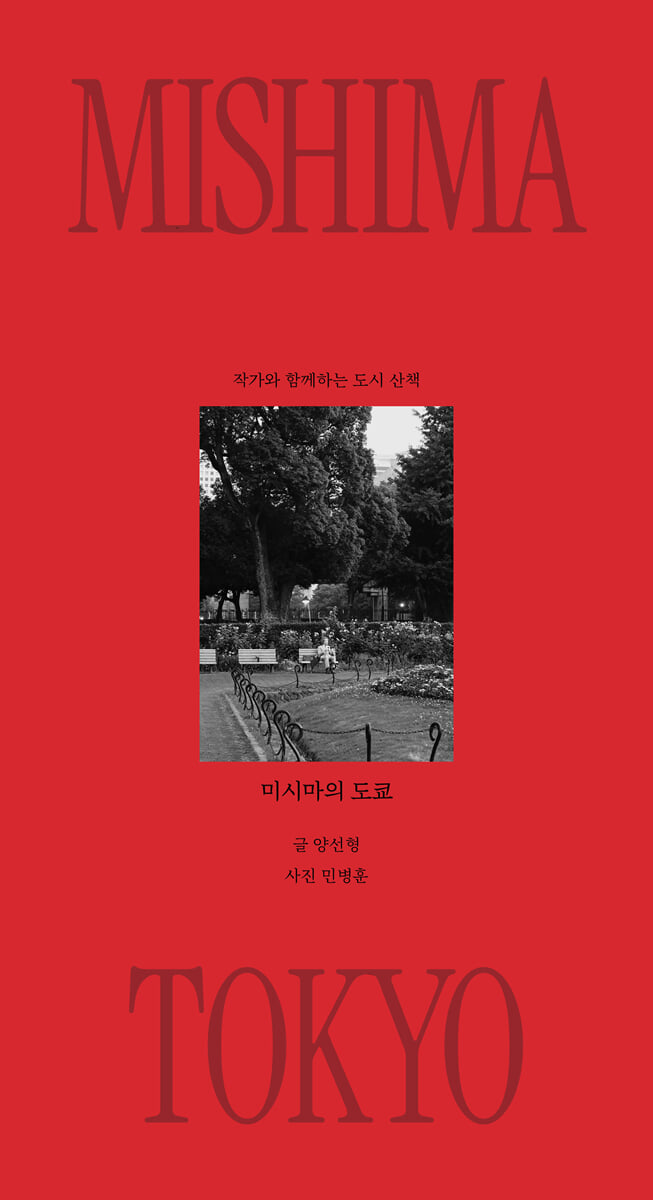
In the second book of the "City Walk" series, "Mishima's Tokyo," a novelist's walk through the city, young novelist Yang Seon-hyeong introduces the other side of Tokyo that she witnessed while following the faint traces left behind by Yukio Mishima.
Yang Seon-hyeong, a reader before becoming a novelist, embarks on a six-part walking tour, carrying with her the questions she has held since becoming fascinated by Mishima's novels as a child.
We will find answers to these questions by examining the life and literary history of Yukio Mishima, who was born and raised in Tokyo 100 years ago.
The 50 photographs taken by novelist Min Byeong-hun, who accompanied us, perfectly capture the essence of summer in Tokyo.
Additionally, we have enriched the book by introducing twelve “Books to Walk with” and seven “Writers to Walk with.”
Aesthete, bodybuilder, far-right writer, queer, suicidal and perpetrator of hara-kiri.
The adjectives used to describe the novelist Yukio Mishima leave the reader in a maze.
For readers who have read the representative works 『Confession of a Mask』 and 『The Temple of the Golden Pavilion』 and are contemplating beauty, works such as 『Patriotism』 and the 『Sea of Abundance』 series leave questions and mysteries.
What led the sickly boy, who had been exploring beauty in a dark room, to take such an extreme final action that it became known as the "Mishima Incident"?
The six walking trails follow the life of a novelist and man named Yukio Mishima.
The trajectory he created while writing countless works from boyhood to youth, middle age, and death is a solid knot that makes it impossible to separate himself from literature.
Author Yang Seon-hyeong reads the representative novels he left behind at each important juncture in his life, as well as novels not yet translated into Korean, while walking, searching for clues to the complex knot.
At the end of this difficult walk, readers will finally be able to find their own adjectives to describe "Yukio Mishima."
Between fascination and embarrassment
Walking the Backside of Tokyo, as Yukio Mishima Walked
A labyrinthine life and literature along six walking paths
In the second book of the "City Walk" series, "Mishima's Tokyo," a novelist's walk through the city, young novelist Yang Seon-hyeong introduces the other side of Tokyo that she witnessed while following the faint traces left behind by Yukio Mishima.
Yang Seon-hyeong, a reader before becoming a novelist, embarks on a six-part walking tour, carrying with her the questions she has held since becoming fascinated by Mishima's novels as a child.
We will find answers to these questions by examining the life and literary history of Yukio Mishima, who was born and raised in Tokyo 100 years ago.
The 50 photographs taken by novelist Min Byeong-hun, who accompanied us, perfectly capture the essence of summer in Tokyo.
Additionally, we have enriched the book by introducing twelve “Books to Walk with” and seven “Writers to Walk with.”
Aesthete, bodybuilder, far-right writer, queer, suicidal and perpetrator of hara-kiri.
The adjectives used to describe the novelist Yukio Mishima leave the reader in a maze.
For readers who have read the representative works 『Confession of a Mask』 and 『The Temple of the Golden Pavilion』 and are contemplating beauty, works such as 『Patriotism』 and the 『Sea of Abundance』 series leave questions and mysteries.
What led the sickly boy, who had been exploring beauty in a dark room, to take such an extreme final action that it became known as the "Mishima Incident"?
The six walking trails follow the life of a novelist and man named Yukio Mishima.
The trajectory he created while writing countless works from boyhood to youth, middle age, and death is a solid knot that makes it impossible to separate himself from literature.
Author Yang Seon-hyeong reads the representative novels he left behind at each important juncture in his life, as well as novels not yet translated into Korean, while walking, searching for clues to the complex knot.
At the end of this difficult walk, readers will finally be able to find their own adjectives to describe "Yukio Mishima."
- You can preview some of the book's contents.
Preview
index
Ⅰ.
Prologue: Preparing for a Walk
Concept of a walk
Fascination and embarrassment
Yukio Mishima and I
Confessions of a Mask: The Origins of Mishima's Sensibility
Ⅱ.
Tokyo walk
The start of the walk: First, to Narita Airport
#Walking path 1.
The boy who yearns for tragedy
1.
Mishima's birthplace
2.
Shinjuku Park
3.
Meiji Shrine
4.
Gakushuin Elementary School
#Walking path 2.
masked youth
5.
Gakushuin Secondary School
6.
University of Tokyo campus
7.
Nihonbashi Street / Area around the Ministry of Finance
#Walking path 3.
Wandering and Love
8.
Jinbocho Bookstore Street / Komiyama Bookstore
9.
Cafe Milonga Nueva
10.
Ginza-Yurakucho Street / Miyoshi Bridge
11.
Hibiya Park / Ueno Park
#Walking path 4.
From darkness to sun
+ Mishima and the Sun, the Period of Self-Reform
12.
Magome Literary Village / Yukio Mishima's Residence
13.
Lake Yamanaka / Yukio Mishima Literature Museum
#Walking path 5.
Moonmuyangdo: Towards the End
+ The 2.26 Incident and "Patriotism", Mishima's Emperorism
14.
Yokohama Motomachi / Motomachi Park
15.
Yokohama Foreign Cemetery
16.
Yasuda Auditorium
17.
Shibuya Ward Nabeshima Shoto Park / Former Marquis Maeda Western-style Residence
#Walking path 6.
death
18.
Kamakura Kotokuin
19.
Yuigahama Beach
20.
To the restaurant Sugen
21.
Ichigaya Memorial Hall, Ministry of Defense of Japan / Yukio Mishima Grave
Ⅲ.
Epilogue
Ⅳ.
References
Prologue: Preparing for a Walk
Concept of a walk
Fascination and embarrassment
Yukio Mishima and I
Confessions of a Mask: The Origins of Mishima's Sensibility
Ⅱ.
Tokyo walk
The start of the walk: First, to Narita Airport
#Walking path 1.
The boy who yearns for tragedy
1.
Mishima's birthplace
2.
Shinjuku Park
3.
Meiji Shrine
4.
Gakushuin Elementary School
#Walking path 2.
masked youth
5.
Gakushuin Secondary School
6.
University of Tokyo campus
7.
Nihonbashi Street / Area around the Ministry of Finance
#Walking path 3.
Wandering and Love
8.
Jinbocho Bookstore Street / Komiyama Bookstore
9.
Cafe Milonga Nueva
10.
Ginza-Yurakucho Street / Miyoshi Bridge
11.
Hibiya Park / Ueno Park
#Walking path 4.
From darkness to sun
+ Mishima and the Sun, the Period of Self-Reform
12.
Magome Literary Village / Yukio Mishima's Residence
13.
Lake Yamanaka / Yukio Mishima Literature Museum
#Walking path 5.
Moonmuyangdo: Towards the End
+ The 2.26 Incident and "Patriotism", Mishima's Emperorism
14.
Yokohama Motomachi / Motomachi Park
15.
Yokohama Foreign Cemetery
16.
Yasuda Auditorium
17.
Shibuya Ward Nabeshima Shoto Park / Former Marquis Maeda Western-style Residence
#Walking path 6.
death
18.
Kamakura Kotokuin
19.
Yuigahama Beach
20.
To the restaurant Sugen
21.
Ichigaya Memorial Hall, Ministry of Defense of Japan / Yukio Mishima Grave
Ⅲ.
Epilogue
Ⅳ.
References
Detailed image

Into the book
But at the time, I received a great deal of comfort from the speaker, who was caught up in the passion of a reckless confession, unlike when I heard sweet and affectionate words.
A persistent and lonely comfort felt in the presence of a human being who desperately struggles to find words to describe himself.
--- p.29
In reality, we spend energy trying to appear more normal, but in literature, we spend energy trying to appear more strange.
Literature would be a galaxy of individual subjects created in this way.
--- p.79
The young Mishima failed in both death and writing his will, but the older Mishima succeeded in both.
To summarize Mishima's life in a simple way, he was a stubborn man who, despite the failures of his childhood and youth, tried again in his adulthood and ultimately achieved his goals.
--- p.92
What does literature make possible?
Isn't literature a hand suddenly reaching out from beyond the veil of time?
I shake hands with Mishima and exchange greetings, but his real face still seems hidden behind a flowing veil of black letters floating densely.
--- p.106
Is the Hibiya Park I'm walking through now the H Park that appears in Mishima's novel?
I wandered around the park, looking around.
I vividly remember Yuichi trembling as he was caught trying to escape into the darkness of the park from the gaze of “that race” who had captured and followed him.
Where did they go?
I wandered around the border between the two Hibiya Parks.
Visiting places in books must be something like that.
--- p.161
He finally breaks free from the imperfect medium of language and uses his own death as a medium to send a compelling message to reality.
Rather than embodying the form of beauty in language, we seek to become the form of beauty, and rather than being an expresser of beauty, we advance as the embodiment of beauty.
He gets closer to everything that was unreachable.
It is self-evident that there is death at the end of it.
A persistent and lonely comfort felt in the presence of a human being who desperately struggles to find words to describe himself.
--- p.29
In reality, we spend energy trying to appear more normal, but in literature, we spend energy trying to appear more strange.
Literature would be a galaxy of individual subjects created in this way.
--- p.79
The young Mishima failed in both death and writing his will, but the older Mishima succeeded in both.
To summarize Mishima's life in a simple way, he was a stubborn man who, despite the failures of his childhood and youth, tried again in his adulthood and ultimately achieved his goals.
--- p.92
What does literature make possible?
Isn't literature a hand suddenly reaching out from beyond the veil of time?
I shake hands with Mishima and exchange greetings, but his real face still seems hidden behind a flowing veil of black letters floating densely.
--- p.106
Is the Hibiya Park I'm walking through now the H Park that appears in Mishima's novel?
I wandered around the park, looking around.
I vividly remember Yuichi trembling as he was caught trying to escape into the darkness of the park from the gaze of “that race” who had captured and followed him.
Where did they go?
I wandered around the border between the two Hibiya Parks.
Visiting places in books must be something like that.
--- p.161
He finally breaks free from the imperfect medium of language and uses his own death as a medium to send a compelling message to reality.
Rather than embodying the form of beauty in language, we seek to become the form of beauty, and rather than being an expresser of beauty, we advance as the embodiment of beauty.
He gets closer to everything that was unreachable.
It is self-evident that there is death at the end of it.
--- p.332
Publisher's Review
A dangerously beautiful and problematic writer
The entrance to the secret path to Mishima
For Yukio Mishima, the writer who was born in Tokyo 100 years ago and passed away 55 years ago, Tokyo was the backdrop of his life and, soon, the backdrop of his literature.
Places like the bustling Shibuya Scramble Crossing, the Ginza district filled with flashy buildings, Ueno Park brimming with things to see, and the Jimbocho Book Street where you can explore traces of the past are places that any tourist visiting Tokyo has likely visited or heard of at least once.
These places also appear in the Tokyo walk with Mishima.
From well-known landmarks to ordinary mansions hidden deep in alleys, to schools frequented by middle school students in uniforms, this book introduces the hidden side of Tokyo we know: "Mishima's Tokyo."
The six-part walking trail is a chronicle of Yukio Mishima's life.
On a walk along the path of his life, both the author and the reader wander through the maze of life and literature he created.
Each walk depicts a boy who snooped around his classmates who were running around with their faces hidden behind books, a law student who fiercely built his own literary theory while writing a will, a young man who passed through Hibiya Park at night and headed to a gay bar, and a healthy bodybuilder who sought his own beauty under the sun.
The words that run through the long walk are beauty and death.
We take a walk, tracing the anguish of those who yearn for absolute beauty but cannot reach it, and the shadow of death left on countless works by those who had a premonition of death early on.
For the author, this is a matter of building a ‘precarious bridge between birth and death.’
My trip to Tokyo and "Reading Mishima" were a process of honestly looking into the various aspects of this unsettling truth.
At the same time, I wanted to understand, from a contemporary perspective, why this writer, with all his complexities and risks, remains at the center of intense literary fascination.
- From the text
From Reader to Novelist: Mishima as Witnessed by Yang Seon-hyeong
A record of unavoidable shaking
But at the time, I received a great deal of comfort from the speaker, who was caught up in the passion of a reckless confession, unlike when I heard sweet and affectionate words.
A persistent and lonely comfort felt in the presence of a human being who desperately struggles to find words to describe himself.
I, too, began writing in that comfort, and it remains a value that only literature can provide.
- From the text
Author Yang Seon-hyeong, who was an avid reader before writing novels, begins her walk by explaining 『Yukio Mishima』 with a mixture of fascination and embarrassment.
The admiration and comfort I felt while reading Mishima's novel at a time when I was around the same age as the narrator in "Confessions of a Mask" was a powerful experience for the author.
This book is a passionate record of one person's life as experienced by the reader and author from the perspective of a novelist.
The author does not avoid the reasons for the uncomfortable yet beautiful sensation felt in Mishima's novels, but closely examines them.
We examine what kind of "mask" Mishima created in "Confessions of a Mask," why the protagonist in "The Temple of the Golden Pavilion" had to burn the "Golden Pavilion," and why the relationship between "the one who sees" and "the one who is seen" in "Gold" was so important to Mishima.
He also does not avoid uncomfortable questions, such as how the aesthetics of death that permeated his entire life emerged and what the reasons were for his final choice of ‘seppuku’.
On that walk, the author observes Mishima's speakers, alienated from beauty that can never be achieved, and reads the incomprehensible path of Mishima, who loved "death" and left behind records of premonitions throughout his life.
The conversation with Mishima, who praised the spirit of fighting and confrontation, was close to a melee.
As a meeting between novelists, this book is a dialogue and experiment that identifies Mishima's dangerous contradictions hidden beneath his unpleasant emotions and approaches them through the medium of a novel.
The series "Confessions of a Mask," "The Temple of the Golden Pavilion," and "The Sea of Abundance"
Yasunari Kawabata, Osamu Dazai, Kenzaburo Oe, etc.
Meet twelve works and Mishima's literary comrades.
At the beginning of each walking trail, twelve books to accompany your walk and seven authors to walk with serve as faithful literary walking guides.
From Mishima's debut work, "The Forest in Bloom," written when he was sixteen, to the "Sea of Abundance" series, which he completed on the last day of his life, the author has separately introduced works that are important to each aspect of his life, allowing readers to review them in advance before taking a walk.
In addition to representative works translated into Korean, such as 『Confessions of a Mask』, 『The Temple of the Golden Pavilion』, 『Gold』, and 『Spring Snow』, which are covered in depth in the book, untranslated novels such as 『The Sound of Waves』 and prose collections such as 『Cultural Defense Theory』 and 『Novel Reader』 are also introduced, allowing a comprehensive examination of the entire world of Mishima's literature.
It also introduces writers who influenced and were influenced by Mishima.
I imagine what the boy Mishima must have read and admired from Oscar Wilde.
It points out how he is similar to and different from Georges Bataille, whose writings on beauty and death resonated greatly with him.
Mishima's position in Japanese literary circles can be understood through the descriptions of Yasunari Kawabata, who led Mishima into the literary world, Osamu Dazai, with whom he was mentally opposed and conscious, and Kenzaburo Oe, with whom he worked in the literary world in his later years but whose views were polar opposites.
The 50 photos included were taken by novelist Min Byeong-hun, who accompanied us on our walk around Tokyo.
It vividly and metaphorically shows the unfamiliar scenery of Tokyo that the reader has never seen before.
The entrance to the secret path to Mishima
For Yukio Mishima, the writer who was born in Tokyo 100 years ago and passed away 55 years ago, Tokyo was the backdrop of his life and, soon, the backdrop of his literature.
Places like the bustling Shibuya Scramble Crossing, the Ginza district filled with flashy buildings, Ueno Park brimming with things to see, and the Jimbocho Book Street where you can explore traces of the past are places that any tourist visiting Tokyo has likely visited or heard of at least once.
These places also appear in the Tokyo walk with Mishima.
From well-known landmarks to ordinary mansions hidden deep in alleys, to schools frequented by middle school students in uniforms, this book introduces the hidden side of Tokyo we know: "Mishima's Tokyo."
The six-part walking trail is a chronicle of Yukio Mishima's life.
On a walk along the path of his life, both the author and the reader wander through the maze of life and literature he created.
Each walk depicts a boy who snooped around his classmates who were running around with their faces hidden behind books, a law student who fiercely built his own literary theory while writing a will, a young man who passed through Hibiya Park at night and headed to a gay bar, and a healthy bodybuilder who sought his own beauty under the sun.
The words that run through the long walk are beauty and death.
We take a walk, tracing the anguish of those who yearn for absolute beauty but cannot reach it, and the shadow of death left on countless works by those who had a premonition of death early on.
For the author, this is a matter of building a ‘precarious bridge between birth and death.’
My trip to Tokyo and "Reading Mishima" were a process of honestly looking into the various aspects of this unsettling truth.
At the same time, I wanted to understand, from a contemporary perspective, why this writer, with all his complexities and risks, remains at the center of intense literary fascination.
- From the text
From Reader to Novelist: Mishima as Witnessed by Yang Seon-hyeong
A record of unavoidable shaking
But at the time, I received a great deal of comfort from the speaker, who was caught up in the passion of a reckless confession, unlike when I heard sweet and affectionate words.
A persistent and lonely comfort felt in the presence of a human being who desperately struggles to find words to describe himself.
I, too, began writing in that comfort, and it remains a value that only literature can provide.
- From the text
Author Yang Seon-hyeong, who was an avid reader before writing novels, begins her walk by explaining 『Yukio Mishima』 with a mixture of fascination and embarrassment.
The admiration and comfort I felt while reading Mishima's novel at a time when I was around the same age as the narrator in "Confessions of a Mask" was a powerful experience for the author.
This book is a passionate record of one person's life as experienced by the reader and author from the perspective of a novelist.
The author does not avoid the reasons for the uncomfortable yet beautiful sensation felt in Mishima's novels, but closely examines them.
We examine what kind of "mask" Mishima created in "Confessions of a Mask," why the protagonist in "The Temple of the Golden Pavilion" had to burn the "Golden Pavilion," and why the relationship between "the one who sees" and "the one who is seen" in "Gold" was so important to Mishima.
He also does not avoid uncomfortable questions, such as how the aesthetics of death that permeated his entire life emerged and what the reasons were for his final choice of ‘seppuku’.
On that walk, the author observes Mishima's speakers, alienated from beauty that can never be achieved, and reads the incomprehensible path of Mishima, who loved "death" and left behind records of premonitions throughout his life.
The conversation with Mishima, who praised the spirit of fighting and confrontation, was close to a melee.
As a meeting between novelists, this book is a dialogue and experiment that identifies Mishima's dangerous contradictions hidden beneath his unpleasant emotions and approaches them through the medium of a novel.
The series "Confessions of a Mask," "The Temple of the Golden Pavilion," and "The Sea of Abundance"
Yasunari Kawabata, Osamu Dazai, Kenzaburo Oe, etc.
Meet twelve works and Mishima's literary comrades.
At the beginning of each walking trail, twelve books to accompany your walk and seven authors to walk with serve as faithful literary walking guides.
From Mishima's debut work, "The Forest in Bloom," written when he was sixteen, to the "Sea of Abundance" series, which he completed on the last day of his life, the author has separately introduced works that are important to each aspect of his life, allowing readers to review them in advance before taking a walk.
In addition to representative works translated into Korean, such as 『Confessions of a Mask』, 『The Temple of the Golden Pavilion』, 『Gold』, and 『Spring Snow』, which are covered in depth in the book, untranslated novels such as 『The Sound of Waves』 and prose collections such as 『Cultural Defense Theory』 and 『Novel Reader』 are also introduced, allowing a comprehensive examination of the entire world of Mishima's literature.
It also introduces writers who influenced and were influenced by Mishima.
I imagine what the boy Mishima must have read and admired from Oscar Wilde.
It points out how he is similar to and different from Georges Bataille, whose writings on beauty and death resonated greatly with him.
Mishima's position in Japanese literary circles can be understood through the descriptions of Yasunari Kawabata, who led Mishima into the literary world, Osamu Dazai, with whom he was mentally opposed and conscious, and Kenzaburo Oe, with whom he worked in the literary world in his later years but whose views were polar opposites.
The 50 photos included were taken by novelist Min Byeong-hun, who accompanied us on our walk around Tokyo.
It vividly and metaphorically shows the unfamiliar scenery of Tokyo that the reader has never seen before.
GOODS SPECIFICS
- Date of issue: August 25, 2025
- Page count, weight, size: 356 pages | 350g | 110*202*24mm
- ISBN13: 9791194067078
- ISBN10: 1194067077
You may also like
카테고리
korean


korean

![GQ KOREA Mark (Monthly): December [2025]](http://librairie.coreenne.fr/cdn/shop/files/8ef265dbbfbf186523ed75ba7319009d.jpg?v=1765340328&width=3840)


