

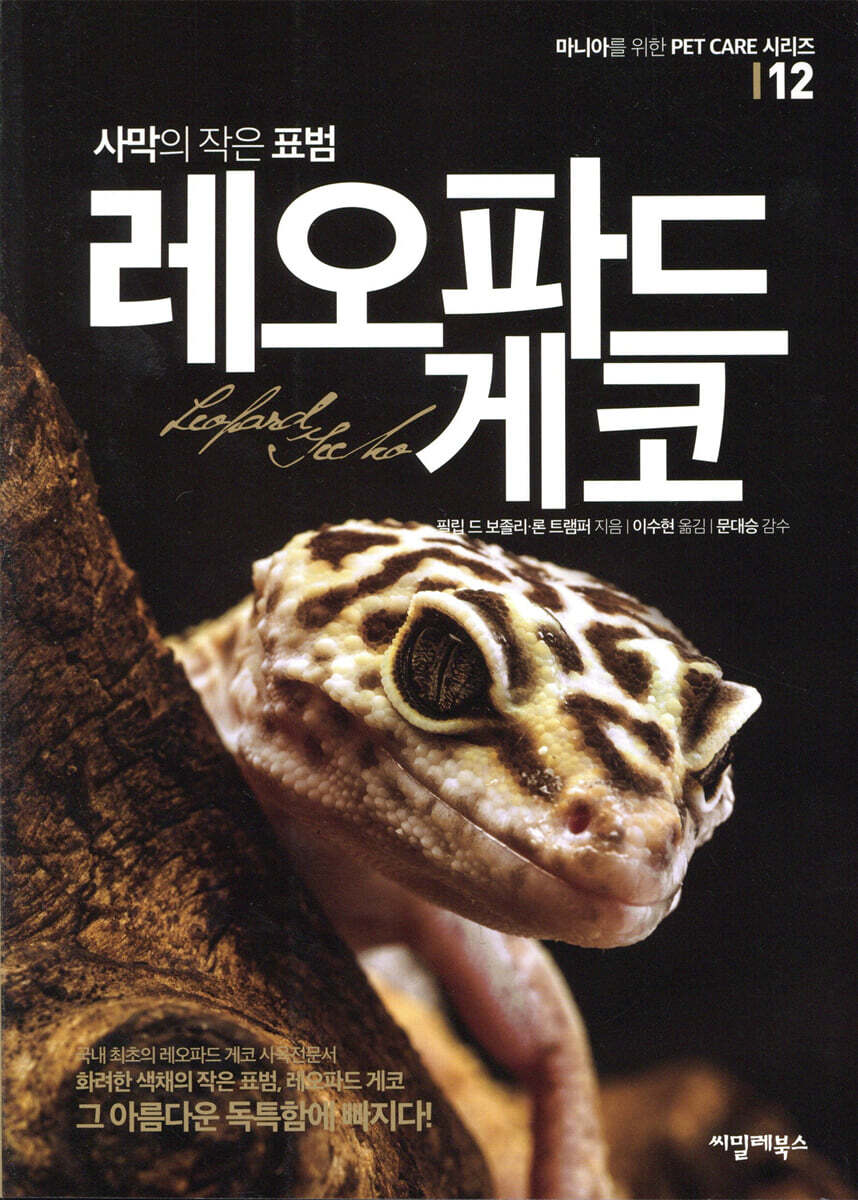
Leopard gecko, the small desert leopard
 |
Description
Book Introduction
The 12th installment in the 'Pet Care Series for Enthusiasts', 'Leopard Gecko: The Little Leopard of the Desert' is a leopard gecko care manual based on the original 'The Leopard Gecko Manual' (Advanced Vivarium Systems), which was chosen and acclaimed by the world's largest number of readers.
This book is written in an interesting and easy-to-read format, with the author's know-how and various breeding information gained from breeding and researching leopard geckos for decades. You will be able to learn everything about leopard gecko breeding.
"The Leopard Gecko: The Little Leopard of the Desert" contains all the information that any leopard gecko keeper should know, and with its abundant photos and easy-to-understand introduction, it will be of great help to all leopard gecko enthusiasts who want to learn more about leopard geckos.
This book is written in an interesting and easy-to-read format, with the author's know-how and various breeding information gained from breeding and researching leopard geckos for decades. You will be able to learn everything about leopard gecko breeding.
"The Leopard Gecko: The Little Leopard of the Desert" contains all the information that any leopard gecko keeper should know, and with its abundant photos and easy-to-understand introduction, it will be of great help to all leopard gecko enthusiasts who want to learn more about leopard geckos.
- You can preview some of the book's contents.
Preview
index
Chapter 1: Biological Characteristics of Leopard Geckos
Section 1 Definition and Origin of the Leopard Gecko
Definition of the Leopard Gecko | Academic Classification of the Leopard Gecko | Taxonomic Characteristics of the True Eyelid Gecko Family | Current Status of Leopard Gecko Captivity
Section 2 Leopard Gecko Ecology
Leopard Gecko Habitat | Leopard Gecko Size and Lifespan | Leopard Gecko Growth | Leopard Gecko Foraging | Leopard Gecko Sex | Leopard Gecko Reproduction
Section 3 Leopard Gecko Behavior and Habits
Climbing the enclosure | Hiding | Yelling | Tail biting | Tail wagging | Tongue flicking | Solitary life | Notorious territoriality | Mating and courtship | Responses to the external environment
Chapter 2: Leopard Gecko Care Basics
Section 1 Leopard Geckos as Pets
Available in a variety of patterns and colors | Easy to adopt | Ideal size | Relatively easy to care for | Unique personality | Easy to handle
Section 2 Considerations Before Keeping a Leopard Gecko
Time required for management | Cost of adoption | Long lifespan and life cycle of breeders | Problems related to salmonella
Section 3 Leopard Gecko Selection Method
Check health and appearance | Check CB, WC | Check management status | Check distribution point
Section 4 Choosing the right object for you
Selection of gender | Selection of number of animals to breed | Selection of morph | Selection of size (age)
Chapter 3: Setting Up a Leopard Gecko Enclosure
Section 1 Supplies needed to set up a pen
Vivarium | Flooring (sand/tiles and flat stones/gravel/newspaper, kitchen towels, non-woven fabric/reptile carpet) | Lighting | Heat source (reptile heating mat/lamp/lock heater) | Hideaway | Other vivarium supplies
Section 2 Naturalistic Vivarium Design
Choosing a Vivarium Enclosure | Landscaping and Structures | Living Plants | Lighting and Heat Sources | Housing with Other Animals
Chapter 4 General Leopard Gecko Care
Section 1 Management of pens and breeding environments
Lighting Management | Temperature Management | Humidity Management | Cleaning Management | Safety Management
Section 2 Feeding and Nutrition Management
Types of food (crickets/mealworms/waxworms/silkworms/dubia cockroaches/insects collected from the wild) | Selection and preparation of diet | Feeding method | Feeding time | Feeding frequency | Feeding amount | Hydration supply | Vitamin/mineral supplement supply | Loading and dusting
Section 3 Molting and Tail Loss
The beginning and cycle of molting | Causes and countermeasures for molting failure | Causes and countermeasures for caudal autotomy
Chapter 5 Leopard Gecko Health and Disease
Section 1 Signs and Prevention of Disease
Signs of an unhealthy animal | Stress and disease | Routine checkups for disease prevention | Finding and diagnosing a veterinarian who can treat your pet
Section 2 Common Diseases and Treatment Options
Hypocalcemia (metabolic bone disease) | Gastrointestinal disease | Coccidiosis | Bacterial and internal parasitic infections | Toe and skin infections | Stomatitis | Respiratory infections | Digestive tract strictures | Egg binding | Genital prolapse | Injuries due to fighting
Chapter 6 Leopard Gecko Breeding
Section 1: How to tell the sex of a leopard gecko
Gender distinction by head size | Gender distinction by developmental differences | Gender distinction by presence or absence of hemipenis
Section 2 Preparation before breeding
Isolation of males and females before breeding | Rearing to a breeding size | Appropriate time for breeding | Condition of the reggae before breeding | Methods and selection of breeding | Diet for the breeding period | Requirements for successful breeding
Section 3 The Process of Reproduction
Mating | Spawning | Egg box setup | Egg collection and transfer | Artificial hatching | Egg management | Post-hatching fluid management
Section 4 Incubation Temperature and Gender Determination
Sex determination by incubation temperature | Incubation period and possible incubation temperature | High incubation temperature and female behavior | Influence of incubation temperature and heritability on pigmentation
Section 5 Professional Breeding
Selection of breeding populations | Value of males | Maintaining records | Management of breeding populations
Chapter 7 Major Species of Leopard Geckos
Section 1 Classification of Morphs
The Birth of the Designer Leopard Gecko | The Selection of New Morphs | The Diversity and Side Effects of Selective Breeding
Section 2 Morphing by Pattern
Normal | Jungle | Striped | Reverse Stripe | Patternless
Section 3 Morph by Color
High Yellow|Orange/Tangerine|RAPTOR|White|Lavender|Ghost|Melanistic|Amelanistic|Leucistic|Snow
Appendix: Various species of eyelid geckos
Section 1 African Fat-Tailed Gecko
Biological characteristics | Adapting to a new environment | Creating a cage environment | Feeding | Breeding African fat-tailed geckos
Section 2 Other Eyelid Geckos
African Clawed Gecko | Japanese Leopard Gecko | Malaysian Cat Gecko | Central American Banded Gecko | Tucson Banded Gecko & Texas Banded Gecko
Section 1 Definition and Origin of the Leopard Gecko
Definition of the Leopard Gecko | Academic Classification of the Leopard Gecko | Taxonomic Characteristics of the True Eyelid Gecko Family | Current Status of Leopard Gecko Captivity
Section 2 Leopard Gecko Ecology
Leopard Gecko Habitat | Leopard Gecko Size and Lifespan | Leopard Gecko Growth | Leopard Gecko Foraging | Leopard Gecko Sex | Leopard Gecko Reproduction
Section 3 Leopard Gecko Behavior and Habits
Climbing the enclosure | Hiding | Yelling | Tail biting | Tail wagging | Tongue flicking | Solitary life | Notorious territoriality | Mating and courtship | Responses to the external environment
Chapter 2: Leopard Gecko Care Basics
Section 1 Leopard Geckos as Pets
Available in a variety of patterns and colors | Easy to adopt | Ideal size | Relatively easy to care for | Unique personality | Easy to handle
Section 2 Considerations Before Keeping a Leopard Gecko
Time required for management | Cost of adoption | Long lifespan and life cycle of breeders | Problems related to salmonella
Section 3 Leopard Gecko Selection Method
Check health and appearance | Check CB, WC | Check management status | Check distribution point
Section 4 Choosing the right object for you
Selection of gender | Selection of number of animals to breed | Selection of morph | Selection of size (age)
Chapter 3: Setting Up a Leopard Gecko Enclosure
Section 1 Supplies needed to set up a pen
Vivarium | Flooring (sand/tiles and flat stones/gravel/newspaper, kitchen towels, non-woven fabric/reptile carpet) | Lighting | Heat source (reptile heating mat/lamp/lock heater) | Hideaway | Other vivarium supplies
Section 2 Naturalistic Vivarium Design
Choosing a Vivarium Enclosure | Landscaping and Structures | Living Plants | Lighting and Heat Sources | Housing with Other Animals
Chapter 4 General Leopard Gecko Care
Section 1 Management of pens and breeding environments
Lighting Management | Temperature Management | Humidity Management | Cleaning Management | Safety Management
Section 2 Feeding and Nutrition Management
Types of food (crickets/mealworms/waxworms/silkworms/dubia cockroaches/insects collected from the wild) | Selection and preparation of diet | Feeding method | Feeding time | Feeding frequency | Feeding amount | Hydration supply | Vitamin/mineral supplement supply | Loading and dusting
Section 3 Molting and Tail Loss
The beginning and cycle of molting | Causes and countermeasures for molting failure | Causes and countermeasures for caudal autotomy
Chapter 5 Leopard Gecko Health and Disease
Section 1 Signs and Prevention of Disease
Signs of an unhealthy animal | Stress and disease | Routine checkups for disease prevention | Finding and diagnosing a veterinarian who can treat your pet
Section 2 Common Diseases and Treatment Options
Hypocalcemia (metabolic bone disease) | Gastrointestinal disease | Coccidiosis | Bacterial and internal parasitic infections | Toe and skin infections | Stomatitis | Respiratory infections | Digestive tract strictures | Egg binding | Genital prolapse | Injuries due to fighting
Chapter 6 Leopard Gecko Breeding
Section 1: How to tell the sex of a leopard gecko
Gender distinction by head size | Gender distinction by developmental differences | Gender distinction by presence or absence of hemipenis
Section 2 Preparation before breeding
Isolation of males and females before breeding | Rearing to a breeding size | Appropriate time for breeding | Condition of the reggae before breeding | Methods and selection of breeding | Diet for the breeding period | Requirements for successful breeding
Section 3 The Process of Reproduction
Mating | Spawning | Egg box setup | Egg collection and transfer | Artificial hatching | Egg management | Post-hatching fluid management
Section 4 Incubation Temperature and Gender Determination
Sex determination by incubation temperature | Incubation period and possible incubation temperature | High incubation temperature and female behavior | Influence of incubation temperature and heritability on pigmentation
Section 5 Professional Breeding
Selection of breeding populations | Value of males | Maintaining records | Management of breeding populations
Chapter 7 Major Species of Leopard Geckos
Section 1 Classification of Morphs
The Birth of the Designer Leopard Gecko | The Selection of New Morphs | The Diversity and Side Effects of Selective Breeding
Section 2 Morphing by Pattern
Normal | Jungle | Striped | Reverse Stripe | Patternless
Section 3 Morph by Color
High Yellow|Orange/Tangerine|RAPTOR|White|Lavender|Ghost|Melanistic|Amelanistic|Leucistic|Snow
Appendix: Various species of eyelid geckos
Section 1 African Fat-Tailed Gecko
Biological characteristics | Adapting to a new environment | Creating a cage environment | Feeding | Breeding African fat-tailed geckos
Section 2 Other Eyelid Geckos
African Clawed Gecko | Japanese Leopard Gecko | Malaysian Cat Gecko | Central American Banded Gecko | Tucson Banded Gecko & Texas Banded Gecko
Publisher's Review
Leopard geckos are currently the most popular species of pet lizard and are highly recommended by many reptile experts as a beginner lizard for beginners.
Even beginners with no experience breeding them can breed them relatively easily, and even now, hobbyists and professional breeders continue to showcase leopard gecko morphs in a variety of colors and patterns.
However, even though it is a species recommended for beginner breeders, it is not advisable to breed it without thorough prior preparation.
In order to raise a leopard gecko healthily for a long time and enjoy its unique beauty, it is important to know the individual's characteristics and habits in advance, and it is very important to understand its habitat and ecology and acquire the correct knowledge.
Although acquiring prior knowledge is very important, it has not been easy for both novice and experienced breeders to access accurate and correct information because there has been no breeding book that provides proper information.
The 12th installment of the 'Mania Series', 'The Leopard Gecko, the Small Leopard of the Desert', is Korea's first leopard gecko breeding book that systematically organizes the practical breeding know-how and specialized information that leopard gecko breeders are curious about based on the author's long-term breeding experience and research. It will be a very useful resource not only for mania but also for beginners and professional breeders who are just starting to breed leopard geckos.
Even beginners with no experience breeding them can breed them relatively easily, and even now, hobbyists and professional breeders continue to showcase leopard gecko morphs in a variety of colors and patterns.
However, even though it is a species recommended for beginner breeders, it is not advisable to breed it without thorough prior preparation.
In order to raise a leopard gecko healthily for a long time and enjoy its unique beauty, it is important to know the individual's characteristics and habits in advance, and it is very important to understand its habitat and ecology and acquire the correct knowledge.
Although acquiring prior knowledge is very important, it has not been easy for both novice and experienced breeders to access accurate and correct information because there has been no breeding book that provides proper information.
The 12th installment of the 'Mania Series', 'The Leopard Gecko, the Small Leopard of the Desert', is Korea's first leopard gecko breeding book that systematically organizes the practical breeding know-how and specialized information that leopard gecko breeders are curious about based on the author's long-term breeding experience and research. It will be a very useful resource not only for mania but also for beginners and professional breeders who are just starting to breed leopard geckos.
GOODS SPECIFICS
- Date of issue: March 20, 2015
- Page count, weight, size: 232 pages | 476g | 152*210*14mm
- ISBN13: 9788997242061
- ISBN10: 8997242067
You may also like
카테고리
korean


korean

![GQ KOREA Mark (Monthly): December [2025]](http://librairie.coreenne.fr/cdn/shop/files/8ef265dbbfbf186523ed75ba7319009d.jpg?v=1765340328&width=3840)


