

Naming Grief
 |
Description
Book Introduction
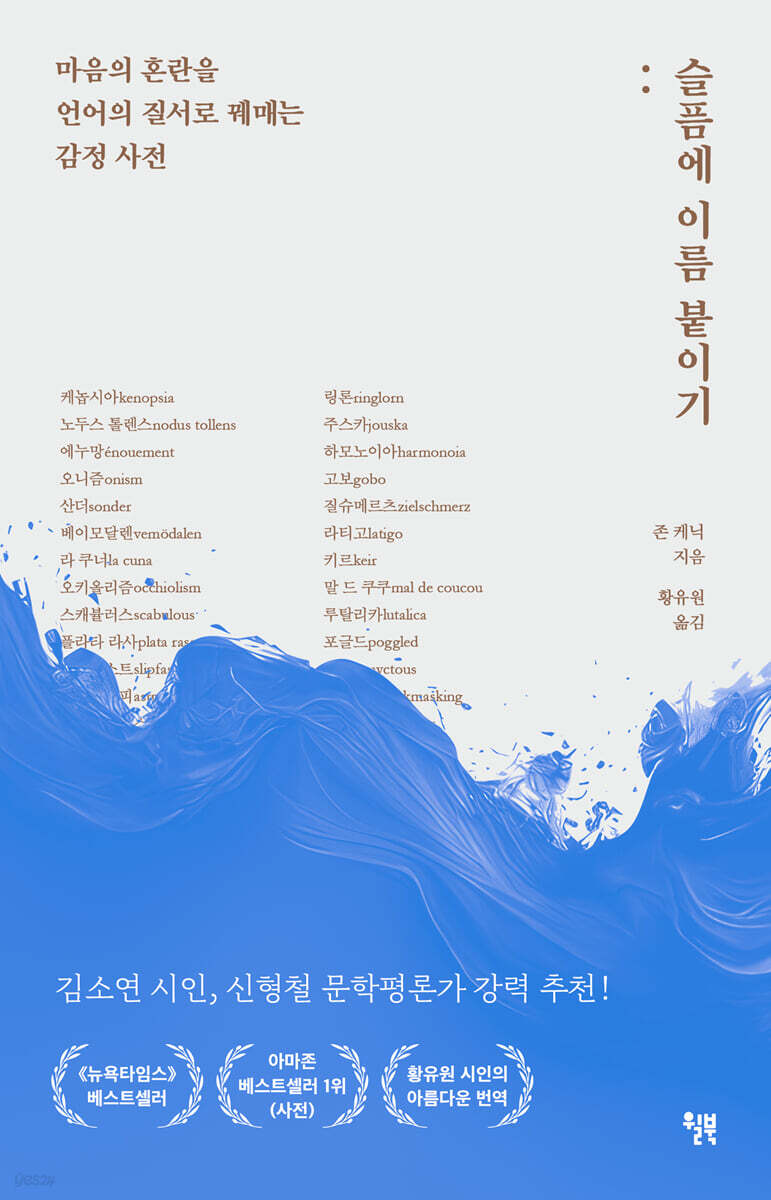
★ A massive project to name confusing and subtle emotions—a dictionary of new words completed after 12 years ★ Highly recommended by Shin Hyeong-cheol and Kim So-yeon! Poet Hwang Yu-won's beautiful translation. ★ #1 Amazon Bestseller (Dictionary), New York Times Bestseller 'Sonder', 'kenopsia', 'des vu'... These words have been passed around for years, and although they are neither official words in the dictionary nor trendy words, those who have once learned them all say, "What would have happened if we didn't have these powerful words?" The 'Naming Sadness' project, which names the subtle feelings that clearly exist within us, even if they are ambiguous. The book, "Naming Sadness," which is a compilation of "emotional neologisms" collected over a decade for that project, has been published in dictionary format. You can find over 300 new words that carefully name subtle feelings, such as 'Sander', which means the realization that 'I too am an extra in someone's life', and 'Kenopsis', which refers to the atmosphere of a once bustling but now quiet place. The experience of turning page after page of this list of new words, created with such extensive linguistic knowledge and delicate sensibility, is wondrous and poetic. It could also be said to be a collection of poems about emotions that we have all felt, knowingly or unknowingly. This book, which received a recommendation from poet Kim So-yeon, who said, “A book to keep within reach for the rest of your life,” and a rave review from critic Shin Hyeong-cheol, who said, “A silent consolation for the suffering of others and an intelligent linguistic prescription for one’s own sorrow,” began as a personal blog called “Naming Sadness.” It grew into a YouTube channel called "Dictionary of Obscure Sorrows," which received praise from celebrities like novelist John Green and Beyoncé, as well as major media outlets, and is now being published as a book, a full 12 years after the project began. Some of the new words in this book have become so popular that you can actually hear them being used in cafes, on buses, or in the seats next to you at the cinema. Hwang Yu-won, the translator and poet who translated this book into Korean, recommends, “Don’t read this book all at once, but rather take your time and imagination and read it little by little in various situations and spaces.” If you keep it within reach and open it to any page at any time, it will “slowly open up new sensations, spaces, and landscapes to us.” |
- You can preview some of the book's contents.
Preview
index
Recommendation
Translator's Note
About this book
1.
Between life and dreams
2.
Inner Wilderness
3.
Montage of Charm
4.
Faces in the Crowd
5.
Boats sailing against the waves
6.
Roll the dice
Neologisms
About gratitude
A word of advice
Search
Translator's Note
About this book
1.
Between life and dreams
2.
Inner Wilderness
3.
Montage of Charm
4.
Faces in the Crowd
5.
Boats sailing against the waves
6.
Roll the dice
Neologisms
About gratitude
A word of advice
Search
Detailed image
.jpg)
Into the book
"Naming Sadness" is a list of new words that express emotions.
The mission of this book is to shed light on the fundamental strangeness of human existence—all the pains, anxieties, moods, joys, and impulses that hum beneath the surface of everyday life.
--- p.14 From “About This Book”
In language, everything is possible.
That means there are no emotions that cannot be translated.
There is no sorrow so vague as to be indefinable.
We just have to do it.
--- p.17 From “About This Book”
The soothing sound of a running dishwasher.
The steady, motherly whoosh of the dishwasher somehow seems to put us in a state of complete peace, as if we've never had to do anything alone.
--- p.29 From "'plata rasa'"
An emptiness in the mind that can never be filled; an endless hunger for more food, more praise, more attention, more affection, more joy, more sex, more money, more hours of sunshine, more life.
--- p.53 From "'Hawkghough'"
The fatigue of feeling stuck with the same old problems, the same old worries and anxieties that have plagued you for decades.
It makes me want to throw away the tedious pain and dig up some new pain that might be buried in the backyard of my heart.
--- p.74 From "Altschmerz"
Feeling lonely at having to keep secrets to yourself.
--- p.99 From "'Hiddled'"
I wish people would put aside their polite manners for a moment and indulge in each other's physical side first.
--- p.122 From "Zverism"
The feeling of regret as you look around at a space filled with loved ones, knowing full well that it is now filled with warmth and laughter, but knowing that it will not last forever.
--- p.130 From "'Etherness'"
Activities you've admired since childhood, like riding a motorcycle, reading, taking photos, or cooking, but then lose interest when you encounter the fanatics obsessed with the craft.
--- p.158 From "'Amuse-douche'"
Time is strange money.
How you spend or waste it is your freedom, but no matter how frugally you try to spend the rest of your life, it will only be a small, micropayment, one coin at a time, one heartbeat at a time, ticking away.
This means you have no way of knowing how much time you have left.
You may soon be using up your last coin.
The mission of this book is to shed light on the fundamental strangeness of human existence—all the pains, anxieties, moods, joys, and impulses that hum beneath the surface of everyday life.
--- p.14 From “About This Book”
In language, everything is possible.
That means there are no emotions that cannot be translated.
There is no sorrow so vague as to be indefinable.
We just have to do it.
--- p.17 From “About This Book”
The soothing sound of a running dishwasher.
The steady, motherly whoosh of the dishwasher somehow seems to put us in a state of complete peace, as if we've never had to do anything alone.
--- p.29 From "'plata rasa'"
An emptiness in the mind that can never be filled; an endless hunger for more food, more praise, more attention, more affection, more joy, more sex, more money, more hours of sunshine, more life.
--- p.53 From "'Hawkghough'"
The fatigue of feeling stuck with the same old problems, the same old worries and anxieties that have plagued you for decades.
It makes me want to throw away the tedious pain and dig up some new pain that might be buried in the backyard of my heart.
--- p.74 From "Altschmerz"
Feeling lonely at having to keep secrets to yourself.
--- p.99 From "'Hiddled'"
I wish people would put aside their polite manners for a moment and indulge in each other's physical side first.
--- p.122 From "Zverism"
The feeling of regret as you look around at a space filled with loved ones, knowing full well that it is now filled with warmth and laughter, but knowing that it will not last forever.
--- p.130 From "'Etherness'"
Activities you've admired since childhood, like riding a motorcycle, reading, taking photos, or cooking, but then lose interest when you encounter the fanatics obsessed with the craft.
--- p.158 From "'Amuse-douche'"
Time is strange money.
How you spend or waste it is your freedom, but no matter how frugally you try to spend the rest of your life, it will only be a small, micropayment, one coin at a time, one heartbeat at a time, ticking away.
This means you have no way of knowing how much time you have left.
You may soon be using up your last coin.
--- p.222 From "'tichloch'"
Publisher's Review
A dictionary of the most beautiful words that name indescribable emotions
These days, you can occasionally come across the word 'sonder' in English-speaking conversations.
It is a word that means “the realization that in a story where each anonymous person passing by in front of you is the main character, you are just an extra existing in the background.”
It is a word that combines the French word sonder (to measure depth) and the English word wonder (to be surprised, to be amazed).
Even for people who are fairly fluent in English, this will probably be the first time they've heard of it.
Of course.
This is a new word that didn't exist originally.
Let's look at another word for a moment.
How about kenopsia, which means "the atmosphere of a normally bustling place, now deserted and quiet"? It describes the feeling you might experience in a school hallway in the evening, a dark office on the weekend, or a trade fair during the off-season.
It comes from κεν? meaning 'emptiness' and -οψ?α meaning 'spring'.
Debut (des vu) means “to realize that this moment will be remembered,” and those who are perceptive will realize that the root of this word is deja vu.
The word order is reversed because it means 'to remember while experiencing'.
People who have recently started using these new words frequently say that they would not have known how to express their feelings without them.
These words, which have been circulated for several years, are not actually official words listed in the dictionary.
It cannot be found even in the venerable Oxford Dictionary.
Because all the words were invented by a young man.
While most neologisms are not created intentionally and their origins are often unknown, the authors of the words created in the "Naming Sadness" project since 2009 are clear.
The protagonist is John Kennick, who began 'finding the right language for emotions' over the course of 12 years, first on his personal blog and later through YouTube and books.
"Naming Sadness," the culmination of a decade-long "emotional neologism project," is a book where you can encounter over 300 neologisms that meticulously name ambiguous feelings, like the "sand" we saw earlier.
It is not only a list of new words created with extensive linguistic knowledge and delicate sensibilities, but also a collection of emotions we have all felt.
It is truly vast, wondrous and poetic.
The Steve Jobs of the language world, infinitely expanding the linguistic palette.
As Wittgenstein said, “The limits of my language are the limits of my world.” John Kennick points out that this is precisely the problem.
“Language is so fundamental to our cognition that we fail to recognize the inherent flaws in language itself.” Meanwhile, Steve Jobs is said to have said this.
Most people just avoid walls to avoid hitting them, or they just get on with their lives.
But then I realized that this world was made up of people who weren't any smarter than most people.
Now is the time to reach out and touch that wall, and for everyone to realize that they have the power to change it.
Author John Kennick reportedly felt the same way.
In other words, because we cannot fully express the emotions we feel in words, we must touch the vessel and expand its scope.
So he created new words by moving between dead and living languages.
If language becomes a barrier, I think we can just expand the radius infinitely.
But the goal of this book is not to introduce as many new words as possible to the world.
We must realize that the language we use has its limitations, and that we must not just ignore the feelings that cannot be expressed in words, but rather try to express them in some way.
Then we will be able to understand not only ourselves but also humanity more deeply.
Because the essays in this book were created over a long period of time, they touch our hearts one by one, just like poems do.
“I think a lot of people feel trapped because of the way we use words.
We forget that words are made up.
It's not just my words, all words are made up.
We are simply stuck with a vocabulary that fails to connect us with others.
The more seriously we take words, the closer we become to each other.
Let me say this again: words do not have meaning.
Meaning is something we have.
One of my favorite philosophers, Bill Watterson, said this:
Creating a life that reflects your values and satisfies your soul is a rare achievement.
Creating meaning in your own life is not easy, but it is possible.
And that suffering will be happier.”
-John Kennick, from a TED talk
#1 Amazon Bestseller (Dictionary) * New York Times Bestseller
Recommended by literary critic Shin Hyeong-cheol and poet Kim So-yeon!
“A solid sadness that can be felt precisely.
“This is definitely a book I will have to keep within my reach for the rest of my life.” (Poet Kim So-yeon)
“Naming Sorrow” was translated by Hwang Yu-won, a poet and translator who is most sensitive to and knowledgeable about language.
He says the book “draws a faint line between us, so different, so isolated, so like dots in a vast universe.”
This is enough to make this book worthwhile.
Although this book is in the form of a dictionary, it is also like a long poem, allowing us to “enter for a moment (...) into the mind of a stranger.”
In particular, the long essays interspersed throughout the book demonstrate John Kennick's exceptional linguistic sense and delicate perspective on the world.
Poet Kim So-yeon, who previously wrote 『Dictionary of the Heart』 and delicately captured the ‘nuances of the heart,’ said that reading this book “felt like finding a shoe that fits my feet perfectly.”
Critic Shin Hyeong-cheol, who also wrote “Sadness: Studying Sadness,” mentions Judith Louise Herman and Spinoza, and describes a pyramid of emotions, and admires John Kennick, who moves back and forth between them and creates works “with appropriate words and precise metaphors.”
The "Naming Grief" project, which started on a personal blog, first gained popularity online and was later made into a YouTube video, earning praise from novelist John Green and Beyoncé.
Some of his videos have garnered over a million views, and his new words can now be heard in real life.
When you're walking down the street, looking out the window, or trying to fall asleep in bed, and you're overcome with indescribable emotions, open this book.
Filling in the gaps of imperfect language, this book restores the original meaning of 'sadness' and provides a deeper understanding of humanity.
Let's discover a world of infinite possibilities inherent in language and delicate emotions never before seen.
These days, you can occasionally come across the word 'sonder' in English-speaking conversations.
It is a word that means “the realization that in a story where each anonymous person passing by in front of you is the main character, you are just an extra existing in the background.”
It is a word that combines the French word sonder (to measure depth) and the English word wonder (to be surprised, to be amazed).
Even for people who are fairly fluent in English, this will probably be the first time they've heard of it.
Of course.
This is a new word that didn't exist originally.
Let's look at another word for a moment.
How about kenopsia, which means "the atmosphere of a normally bustling place, now deserted and quiet"? It describes the feeling you might experience in a school hallway in the evening, a dark office on the weekend, or a trade fair during the off-season.
It comes from κεν? meaning 'emptiness' and -οψ?α meaning 'spring'.
Debut (des vu) means “to realize that this moment will be remembered,” and those who are perceptive will realize that the root of this word is deja vu.
The word order is reversed because it means 'to remember while experiencing'.
People who have recently started using these new words frequently say that they would not have known how to express their feelings without them.
These words, which have been circulated for several years, are not actually official words listed in the dictionary.
It cannot be found even in the venerable Oxford Dictionary.
Because all the words were invented by a young man.
While most neologisms are not created intentionally and their origins are often unknown, the authors of the words created in the "Naming Sadness" project since 2009 are clear.
The protagonist is John Kennick, who began 'finding the right language for emotions' over the course of 12 years, first on his personal blog and later through YouTube and books.
"Naming Sadness," the culmination of a decade-long "emotional neologism project," is a book where you can encounter over 300 neologisms that meticulously name ambiguous feelings, like the "sand" we saw earlier.
It is not only a list of new words created with extensive linguistic knowledge and delicate sensibilities, but also a collection of emotions we have all felt.
It is truly vast, wondrous and poetic.
The Steve Jobs of the language world, infinitely expanding the linguistic palette.
As Wittgenstein said, “The limits of my language are the limits of my world.” John Kennick points out that this is precisely the problem.
“Language is so fundamental to our cognition that we fail to recognize the inherent flaws in language itself.” Meanwhile, Steve Jobs is said to have said this.
Most people just avoid walls to avoid hitting them, or they just get on with their lives.
But then I realized that this world was made up of people who weren't any smarter than most people.
Now is the time to reach out and touch that wall, and for everyone to realize that they have the power to change it.
Author John Kennick reportedly felt the same way.
In other words, because we cannot fully express the emotions we feel in words, we must touch the vessel and expand its scope.
So he created new words by moving between dead and living languages.
If language becomes a barrier, I think we can just expand the radius infinitely.
But the goal of this book is not to introduce as many new words as possible to the world.
We must realize that the language we use has its limitations, and that we must not just ignore the feelings that cannot be expressed in words, but rather try to express them in some way.
Then we will be able to understand not only ourselves but also humanity more deeply.
Because the essays in this book were created over a long period of time, they touch our hearts one by one, just like poems do.
“I think a lot of people feel trapped because of the way we use words.
We forget that words are made up.
It's not just my words, all words are made up.
We are simply stuck with a vocabulary that fails to connect us with others.
The more seriously we take words, the closer we become to each other.
Let me say this again: words do not have meaning.
Meaning is something we have.
One of my favorite philosophers, Bill Watterson, said this:
Creating a life that reflects your values and satisfies your soul is a rare achievement.
Creating meaning in your own life is not easy, but it is possible.
And that suffering will be happier.”
-John Kennick, from a TED talk
#1 Amazon Bestseller (Dictionary) * New York Times Bestseller
Recommended by literary critic Shin Hyeong-cheol and poet Kim So-yeon!
“A solid sadness that can be felt precisely.
“This is definitely a book I will have to keep within my reach for the rest of my life.” (Poet Kim So-yeon)
“Naming Sorrow” was translated by Hwang Yu-won, a poet and translator who is most sensitive to and knowledgeable about language.
He says the book “draws a faint line between us, so different, so isolated, so like dots in a vast universe.”
This is enough to make this book worthwhile.
Although this book is in the form of a dictionary, it is also like a long poem, allowing us to “enter for a moment (...) into the mind of a stranger.”
In particular, the long essays interspersed throughout the book demonstrate John Kennick's exceptional linguistic sense and delicate perspective on the world.
Poet Kim So-yeon, who previously wrote 『Dictionary of the Heart』 and delicately captured the ‘nuances of the heart,’ said that reading this book “felt like finding a shoe that fits my feet perfectly.”
Critic Shin Hyeong-cheol, who also wrote “Sadness: Studying Sadness,” mentions Judith Louise Herman and Spinoza, and describes a pyramid of emotions, and admires John Kennick, who moves back and forth between them and creates works “with appropriate words and precise metaphors.”
The "Naming Grief" project, which started on a personal blog, first gained popularity online and was later made into a YouTube video, earning praise from novelist John Green and Beyoncé.
Some of his videos have garnered over a million views, and his new words can now be heard in real life.
When you're walking down the street, looking out the window, or trying to fall asleep in bed, and you're overcome with indescribable emotions, open this book.
Filling in the gaps of imperfect language, this book restores the original meaning of 'sadness' and provides a deeper understanding of humanity.
Let's discover a world of infinite possibilities inherent in language and delicate emotions never before seen.
GOODS SPECIFICS
- Date of issue: May 18, 2024
- Page count, weight, size: 312 pages | 408g | 135*210*20mm
- ISBN13: 9791155817193
- ISBN10: 1155817192
You may also like
카테고리
korean


korean

![GQ KOREA Mark (Monthly): December [2025]](http://librairie.coreenne.fr/cdn/shop/files/8ef265dbbfbf186523ed75ba7319009d.jpg?v=1765340328&width=3840)


