

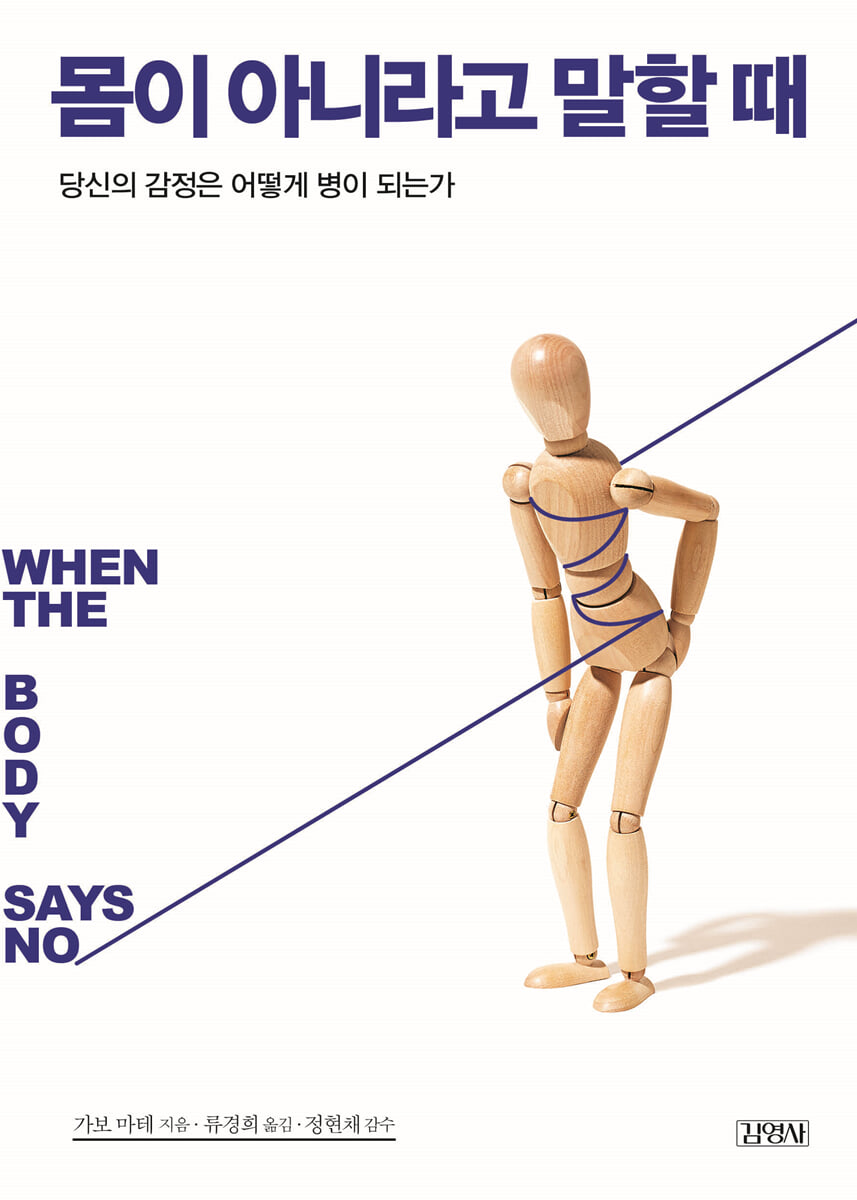
When you say it's not your body
 |
Description
Book Introduction
“Your emotions change the cells in your body!”
Everyone has probably experienced a combination of emotional pain and physical pain at least once.
When we try to satisfy the needs of others by suppressing our own emotions, confusion between self and non-self arises in our minds, and our immune cells start to attack our own bodies.
This rebellion manifests itself in a variety of ways, from asthma to rheumatoid arthritis, Alzheimer's disease, and cancer.
Featuring interviews with hundreds of patients, including the genius cellist Jacqueline du Pré, the great physicist Stephen Hawking, baseball player Lou Gehrig, President Ronald Reagan, and First Lady Betty Ford, the author suggests a painful but essential journey to discover the innate wisdom that exists within us.
Everyone has probably experienced a combination of emotional pain and physical pain at least once.
When we try to satisfy the needs of others by suppressing our own emotions, confusion between self and non-self arises in our minds, and our immune cells start to attack our own bodies.
This rebellion manifests itself in a variety of ways, from asthma to rheumatoid arthritis, Alzheimer's disease, and cancer.
Featuring interviews with hundreds of patients, including the genius cellist Jacqueline du Pré, the great physicist Stephen Hawking, baseball player Lou Gehrig, President Ronald Reagan, and First Lady Betty Ford, the author suggests a painful but essential journey to discover the innate wisdom that exists within us.
- You can preview some of the book's contents.
Preview
index
A letter to our readers
1.
The Bermuda Triangle of Medicine
- People who can't say no
2.
Cello Requiem for Me
- A girl who was too kind to be honest about her feelings
3.
Is there such a thing as good stress?
- Why we need to learn how to process emotions
4.
The high price of burying emotions
- From Lou Gehrig to Stephen Hawking, ALS
5.
Why did the former First Lady get cancer?
- People who are not good enough no matter how good they are
6.
You have your place in my life too, Mom.
- A history of breast cancer passed down through generations
7.
The tragedy of a comedian who wanted to care for everyone
- Stress, hormones, oppression, and cancer
8.
Something good happened with this disease.
- The Truth About Life Revealed by Prostate Cancer
9.
Are there personality traits that make you more prone to cancer?
- A woman who had to take care of her parents even after they died
10.
55 percent solution
- Physiological phenomena that appear in the placebo effect
11.
It's all her fault
- Women's Guide to Overcoming Irritable Bowel Syndrome
12.
I'm going to die from the head down
- An Alzheimer's patient who felt the opposite of what was said
13.
The boundary that separates me from others
- The ability to express anger given by ankylosing spondylitis
14.
The Biology of Interpersonal Relationships
- What stress does an asthma attack indicate?
15.
Biology of Deficiency
- The gap of love from physical intimacy to close separation
16.
Stress that has persisted across generations
- Why I don't need to blame my parents
17.
The Biology of Faith
- The physiological function of emotions is more powerful than genes
18.
The power of negative thinking
- Take off your rose-colored glasses and face the truth.
19.
The 7 As for Healing
- A journey toward light, from recognition to confirmation
Help information
Acknowledgements
annotation
Search
1.
The Bermuda Triangle of Medicine
- People who can't say no
2.
Cello Requiem for Me
- A girl who was too kind to be honest about her feelings
3.
Is there such a thing as good stress?
- Why we need to learn how to process emotions
4.
The high price of burying emotions
- From Lou Gehrig to Stephen Hawking, ALS
5.
Why did the former First Lady get cancer?
- People who are not good enough no matter how good they are
6.
You have your place in my life too, Mom.
- A history of breast cancer passed down through generations
7.
The tragedy of a comedian who wanted to care for everyone
- Stress, hormones, oppression, and cancer
8.
Something good happened with this disease.
- The Truth About Life Revealed by Prostate Cancer
9.
Are there personality traits that make you more prone to cancer?
- A woman who had to take care of her parents even after they died
10.
55 percent solution
- Physiological phenomena that appear in the placebo effect
11.
It's all her fault
- Women's Guide to Overcoming Irritable Bowel Syndrome
12.
I'm going to die from the head down
- An Alzheimer's patient who felt the opposite of what was said
13.
The boundary that separates me from others
- The ability to express anger given by ankylosing spondylitis
14.
The Biology of Interpersonal Relationships
- What stress does an asthma attack indicate?
15.
Biology of Deficiency
- The gap of love from physical intimacy to close separation
16.
Stress that has persisted across generations
- Why I don't need to blame my parents
17.
The Biology of Faith
- The physiological function of emotions is more powerful than genes
18.
The power of negative thinking
- Take off your rose-colored glasses and face the truth.
19.
The 7 As for Healing
- A journey toward light, from recognition to confirmation
Help information
Acknowledgements
annotation
Search
Into the book
Jacqueline Mary du Pre, a British cellist of extraordinary talent, died of complications from multiple sclerosis in 1987 at the age of 43.
People often cried at Jackie's concerts.
Her rapport with the audience was, in one person's words, "breathtaking, leaving the entire audience in a state of enchantment."
Her figure, with her hair fluttering and her body swaying, was closer to the dazzlingness of rock and roll than the restraint of classical music.
For her entire life before becoming ill, Jackie had kept her feelings hidden from her mother.
Hillary recounts a chilling childhood memory of Jackie whispering to her in a voice thick with emotion, “Don’t tell Mom, Sister… but when I grow up, I won’t be able to walk or move.”
How are we to understand this chilling self-prophecy?
---From "Cello Requiem for Me"
In Canada, amyotrophic lateral sclerosis (ALS) patient Sue Rodriguez gained national recognition for her determined legal fight for euthanasia rights.
… Sue Rodriguez's deeply troubled interpersonal history suggests that she was never truly in control of her own life.
She never once reached her true self, living only performing the roles given to her.
The anguished question she posed to the court and the public—“Who is in charge of my life?”—summarized her entire life.
When Sue Rodriguez was first diagnosed with ALS and felt devastated, she compared her hopeless situation to the supposed advantages of fellow ALS patient Stephen Hawking.
“She received several pamphlets from the palliative care unit.
But those pamphlets talked about patients who were 'surrounded by loving families' or who found joy in 'spiritual life.'
She thought, 'What kind of loving family is this?'
'What is a spiritual life? You live the life of a genius like Stephen Hawking.
But for me, for someone like me, if I can't move my body, I have no life.'"
---From "The High Price of Burying Emotions"
In his youth, Stephen Hawking was able to use an invisible talent that most ALS patients do not have.
As long as Jane accepted her self-abandoning attitude and accepted the one-sided flow of energy from wife to husband, their relationship was fine.
They loved each other.
But Jane eventually felt consumed.
She felt herself completely drained, desiccated, “a lonely, vulnerable, easily broken, empty shell,” and on the verge of suicide.
Hawking still only thought of himself and responded to Jane's struggle for independence with contempt and the anger of a child abandoned by her mother.
Eventually, his wife gave up her job to a nurse who even left her husband to marry this scientist.
In fact, Jane already had another lover.
It was this relationship that allowed Jane to continue to support Stephen during the couple's final years of marriage.
---From "The High Price of Burying Emotions"
If I had to name one person who would most likely omit honest childhood information from a questionnaire filled out by breast cancer patients, it would be former First Lady Betty Ford.
"Have I ever been a person of any significance in this world? I don't think I ever believed I was.
My work with Martha Graham wasn't a great success—I had talent as a dancer, but I wasn't a great dancer—and my confidence was always wavering.
I couldn't admit that people liked me for who I was.
Plus, I felt inferior because I didn't even have a bachelor's degree... ... short education.
A person who will never become a dancer like Anna Pavlova.
A daughter who can't even keep up with her mother's example.
“I was frustrated comparing myself to impossible ideals.”
People often cried at Jackie's concerts.
Her rapport with the audience was, in one person's words, "breathtaking, leaving the entire audience in a state of enchantment."
Her figure, with her hair fluttering and her body swaying, was closer to the dazzlingness of rock and roll than the restraint of classical music.
For her entire life before becoming ill, Jackie had kept her feelings hidden from her mother.
Hillary recounts a chilling childhood memory of Jackie whispering to her in a voice thick with emotion, “Don’t tell Mom, Sister… but when I grow up, I won’t be able to walk or move.”
How are we to understand this chilling self-prophecy?
---From "Cello Requiem for Me"
In Canada, amyotrophic lateral sclerosis (ALS) patient Sue Rodriguez gained national recognition for her determined legal fight for euthanasia rights.
… Sue Rodriguez's deeply troubled interpersonal history suggests that she was never truly in control of her own life.
She never once reached her true self, living only performing the roles given to her.
The anguished question she posed to the court and the public—“Who is in charge of my life?”—summarized her entire life.
When Sue Rodriguez was first diagnosed with ALS and felt devastated, she compared her hopeless situation to the supposed advantages of fellow ALS patient Stephen Hawking.
“She received several pamphlets from the palliative care unit.
But those pamphlets talked about patients who were 'surrounded by loving families' or who found joy in 'spiritual life.'
She thought, 'What kind of loving family is this?'
'What is a spiritual life? You live the life of a genius like Stephen Hawking.
But for me, for someone like me, if I can't move my body, I have no life.'"
---From "The High Price of Burying Emotions"
In his youth, Stephen Hawking was able to use an invisible talent that most ALS patients do not have.
As long as Jane accepted her self-abandoning attitude and accepted the one-sided flow of energy from wife to husband, their relationship was fine.
They loved each other.
But Jane eventually felt consumed.
She felt herself completely drained, desiccated, “a lonely, vulnerable, easily broken, empty shell,” and on the verge of suicide.
Hawking still only thought of himself and responded to Jane's struggle for independence with contempt and the anger of a child abandoned by her mother.
Eventually, his wife gave up her job to a nurse who even left her husband to marry this scientist.
In fact, Jane already had another lover.
It was this relationship that allowed Jane to continue to support Stephen during the couple's final years of marriage.
---From "The High Price of Burying Emotions"
If I had to name one person who would most likely omit honest childhood information from a questionnaire filled out by breast cancer patients, it would be former First Lady Betty Ford.
"Have I ever been a person of any significance in this world? I don't think I ever believed I was.
My work with Martha Graham wasn't a great success—I had talent as a dancer, but I wasn't a great dancer—and my confidence was always wavering.
I couldn't admit that people liked me for who I was.
Plus, I felt inferior because I didn't even have a bachelor's degree... ... short education.
A person who will never become a dancer like Anna Pavlova.
A daughter who can't even keep up with her mother's example.
“I was frustrated comparing myself to impossible ideals.”
---From "Why Did the Former First Lady Get Cancer?"
Publisher's Review
“Your emotions change the cells in your body!”
Interviews with hundreds of patients about their lives, from asthma to cancer.
A controversial work that delves into the physiology of emotions that are more powerful than DNA!
“The tendency to satisfy the needs of others before considering one’s own is a common pattern among people with chronic illness.
This type of coping style means that self-boundaries become blurred and confusion between self and non-self occurs on a psychological level.
The same confusion follows at the cellular, tissue, and body levels.
“If the immune cells that rebel against themselves are not destroyed or rendered harmless, they will attack the body’s own tissues.”
-From "When the Body Says No", p. 309
Why did a child have to become the guardian of his parents?
The author of this book, Gabor Mate, is a Holocaust survivor.
He spent his first years in Budapest under Nazi rule, where most of his family was killed or exiled by the Nazis.
The author, who spent his childhood facing extreme pain every day, had to become his own guardian.
He made it his nature to suppress his emotions, endure pain, and be considerate of his parents' suffering.
Although the author is an internist, he has published various books related to human psychology, such as 'Attachment Relationships Between Parents and Children,' 'Attention Deficit Disorder,' and 'Addiction,' and this was due to his reflection on and healing of his own emotions.
In this book, the author says that if you don't change your self-sacrificing coping style as an adult, your body will reject it and attack you.
Mental wounds manifest in many ways, from asthma to rheumatoid arthritis, Alzheimer's disease, and cancer.
This book features interviews and detailed reflections on the lives and experiences of hundreds of patients, including the genius cellist Jacqueline du Pré, baseball player Lou Gehrig, the great physicist Stephen Hawking, President Ronald Reagan, and First Lady Betty Ford. The author suggests a painful but essential journey to discover the innate wisdom that resides within us all.
The mechanism by which your emotions create illness
A key word in the mechanism by which emotional pain creates physical illness is ‘the biology of belief.’
Through their relationships with their parents, children determine whether the world is lovable and acceptable, or a hostile object that must be kept in a perpetual state of hypervigilance.
What a child perceives about the world is stored in the memory of the cells.
When these influences become chronic stress, the developing nervous system receives repeated electrical, hormonal, and chemical messages that the world is unsafe and even hostile.
What is perceived in this way is programmed into our cells at the molecular level.
Molecular biologist Bruce Lipton calls this process the “biology of belief.”
All the wrong unconscious beliefs like “I always have to be strong”, “It’s not right for me to be angry”, “I have to take responsibility for the whole world” are just misunderstandings created during this process.
The human potential ensures that the biology of these beliefs, even if deeply rooted physiologically, is not irreversible.
Whether you choose traditional medicine, alternative therapies, Eastern healing practices, or psychotherapy, the key to healing is the individual's active, free, and informed choice.
We must be free from external situations that are full of stress.
But that is only possible if I first free myself from the oppression of the deeply ingrained 'biology of belief'.
The power of expression that ankylosing spondylitis gives you
Sometimes, the signals your body sends you can provide positive wisdom.
Robert, a union activist with ankylosing spondylitis, says his condition has given him the ability to express his anger.
“I have an advantage over other people when it comes to getting angry.
I never yell at anyone.
Just by taking a deep breath, I can clearly convey my intentions to the other person.
One of the advantages of ankylosing spondylitis is that it causes the ribs to harden, so both the front and back ribs become fixed.
To make your voice stronger or control how you speak, you need to breathe with your diaphragm.
Normal people cannot breathe there.
Because of my illness, I have to breathe with my diaphragm.
This state allows me to better regulate my emotions and steer the conversation in my favor.”
Some research points to the intriguing possibility that the painful inflammation of rheumatoid arthritis may be protective.
Joint flexibility was associated with a reduction in stressful events one week later.
“These results have important clinical implications,” the researchers concluded.
“The dynamic interrelationship between social conflict-causing events and joint pain explains the homeostatic system by which negative social relationships are regulated through the exacerbation of disease.”
In other words, the recurrence of the disease forces patients to avoid stressful interpersonal relationships.
It means that it is not a body.
Why We Don't Need to Blame Our Parents
This book, which seeks the cause of physical illness in childhood emotional experiences, says that there is no need to blame parents for having dark emotional experiences.
This book explains that trauma and stress are inherited.
This phenomenon of inherited trauma is evident in numerous cases, including “Natalie, who has multiple sclerosis, whose older brother was an alcoholic and died of throat cancer, her younger sister was schizophrenic, her uncles and aunts were alcoholics, her maternal grandfather was an alcoholic, and her son has ADHD and struggles with drug addiction.”
If we understand that the family history of trauma is passed down through generations, then blaming parents becomes a meaningless concept.
Journalist and author Lance Morrow succinctly captured the essence of stress, which has been passed down through generations:
“Generations are boxes within boxes.
Within your mother's violence, you discover another box containing your grandfather's violence.
And inside that other box (which you suspect, but don't know for sure) you might find a box with some sinister, secret energy.
“Stories and stories continue to unfold over time.” John Bowlby, a British psychiatrist who scientifically explained the importance of attachment in infancy and childhood, said, “Once you recognize this fact, the thought of seeing your parents as bad people quickly disappears.”
A book for all those who feel pain in body and mind
In the international bestseller Tuesdays with Morrie, Morrie Schwartz, a terminally ill ALS patient, strives to prove that "dying" is not synonymous with "useless."
But a question arises.
The question is why it was necessary to prove it.
No human being is 'useless', whether a helpless baby, a helpless patient, or a dying adult.
The point is not to prove that 'dying people are useful,' but to reject the plausible notion that 'you need to be useful to be valued.'
We don't have to sacrifice ourselves for others by becoming someone we are not.
Although many diseases, from asthma to cancer, are covered and hundreds of clinical cases are presented, this book is not just for patients suffering from physical illness.
Everyone has probably experienced both mental pain and physical pain at least once.
When we avoid emotional pain, our bodies begin to attack themselves.
Although psychology books are in the spotlight, there are few books that explain the pain signals the body sends in a way that is accessible to the general public.
I recommend readers to read it.
Interviews with hundreds of patients about their lives, from asthma to cancer.
A controversial work that delves into the physiology of emotions that are more powerful than DNA!
“The tendency to satisfy the needs of others before considering one’s own is a common pattern among people with chronic illness.
This type of coping style means that self-boundaries become blurred and confusion between self and non-self occurs on a psychological level.
The same confusion follows at the cellular, tissue, and body levels.
“If the immune cells that rebel against themselves are not destroyed or rendered harmless, they will attack the body’s own tissues.”
-From "When the Body Says No", p. 309
Why did a child have to become the guardian of his parents?
The author of this book, Gabor Mate, is a Holocaust survivor.
He spent his first years in Budapest under Nazi rule, where most of his family was killed or exiled by the Nazis.
The author, who spent his childhood facing extreme pain every day, had to become his own guardian.
He made it his nature to suppress his emotions, endure pain, and be considerate of his parents' suffering.
Although the author is an internist, he has published various books related to human psychology, such as 'Attachment Relationships Between Parents and Children,' 'Attention Deficit Disorder,' and 'Addiction,' and this was due to his reflection on and healing of his own emotions.
In this book, the author says that if you don't change your self-sacrificing coping style as an adult, your body will reject it and attack you.
Mental wounds manifest in many ways, from asthma to rheumatoid arthritis, Alzheimer's disease, and cancer.
This book features interviews and detailed reflections on the lives and experiences of hundreds of patients, including the genius cellist Jacqueline du Pré, baseball player Lou Gehrig, the great physicist Stephen Hawking, President Ronald Reagan, and First Lady Betty Ford. The author suggests a painful but essential journey to discover the innate wisdom that resides within us all.
The mechanism by which your emotions create illness
A key word in the mechanism by which emotional pain creates physical illness is ‘the biology of belief.’
Through their relationships with their parents, children determine whether the world is lovable and acceptable, or a hostile object that must be kept in a perpetual state of hypervigilance.
What a child perceives about the world is stored in the memory of the cells.
When these influences become chronic stress, the developing nervous system receives repeated electrical, hormonal, and chemical messages that the world is unsafe and even hostile.
What is perceived in this way is programmed into our cells at the molecular level.
Molecular biologist Bruce Lipton calls this process the “biology of belief.”
All the wrong unconscious beliefs like “I always have to be strong”, “It’s not right for me to be angry”, “I have to take responsibility for the whole world” are just misunderstandings created during this process.
The human potential ensures that the biology of these beliefs, even if deeply rooted physiologically, is not irreversible.
Whether you choose traditional medicine, alternative therapies, Eastern healing practices, or psychotherapy, the key to healing is the individual's active, free, and informed choice.
We must be free from external situations that are full of stress.
But that is only possible if I first free myself from the oppression of the deeply ingrained 'biology of belief'.
The power of expression that ankylosing spondylitis gives you
Sometimes, the signals your body sends you can provide positive wisdom.
Robert, a union activist with ankylosing spondylitis, says his condition has given him the ability to express his anger.
“I have an advantage over other people when it comes to getting angry.
I never yell at anyone.
Just by taking a deep breath, I can clearly convey my intentions to the other person.
One of the advantages of ankylosing spondylitis is that it causes the ribs to harden, so both the front and back ribs become fixed.
To make your voice stronger or control how you speak, you need to breathe with your diaphragm.
Normal people cannot breathe there.
Because of my illness, I have to breathe with my diaphragm.
This state allows me to better regulate my emotions and steer the conversation in my favor.”
Some research points to the intriguing possibility that the painful inflammation of rheumatoid arthritis may be protective.
Joint flexibility was associated with a reduction in stressful events one week later.
“These results have important clinical implications,” the researchers concluded.
“The dynamic interrelationship between social conflict-causing events and joint pain explains the homeostatic system by which negative social relationships are regulated through the exacerbation of disease.”
In other words, the recurrence of the disease forces patients to avoid stressful interpersonal relationships.
It means that it is not a body.
Why We Don't Need to Blame Our Parents
This book, which seeks the cause of physical illness in childhood emotional experiences, says that there is no need to blame parents for having dark emotional experiences.
This book explains that trauma and stress are inherited.
This phenomenon of inherited trauma is evident in numerous cases, including “Natalie, who has multiple sclerosis, whose older brother was an alcoholic and died of throat cancer, her younger sister was schizophrenic, her uncles and aunts were alcoholics, her maternal grandfather was an alcoholic, and her son has ADHD and struggles with drug addiction.”
If we understand that the family history of trauma is passed down through generations, then blaming parents becomes a meaningless concept.
Journalist and author Lance Morrow succinctly captured the essence of stress, which has been passed down through generations:
“Generations are boxes within boxes.
Within your mother's violence, you discover another box containing your grandfather's violence.
And inside that other box (which you suspect, but don't know for sure) you might find a box with some sinister, secret energy.
“Stories and stories continue to unfold over time.” John Bowlby, a British psychiatrist who scientifically explained the importance of attachment in infancy and childhood, said, “Once you recognize this fact, the thought of seeing your parents as bad people quickly disappears.”
A book for all those who feel pain in body and mind
In the international bestseller Tuesdays with Morrie, Morrie Schwartz, a terminally ill ALS patient, strives to prove that "dying" is not synonymous with "useless."
But a question arises.
The question is why it was necessary to prove it.
No human being is 'useless', whether a helpless baby, a helpless patient, or a dying adult.
The point is not to prove that 'dying people are useful,' but to reject the plausible notion that 'you need to be useful to be valued.'
We don't have to sacrifice ourselves for others by becoming someone we are not.
Although many diseases, from asthma to cancer, are covered and hundreds of clinical cases are presented, this book is not just for patients suffering from physical illness.
Everyone has probably experienced both mental pain and physical pain at least once.
When we avoid emotional pain, our bodies begin to attack themselves.
Although psychology books are in the spotlight, there are few books that explain the pain signals the body sends in a way that is accessible to the general public.
I recommend readers to read it.
GOODS SPECIFICS
- Date of issue: September 7, 2015
- Page count, weight, size: 520 pages | 700g | 150*210*35mm
- ISBN13: 9788934972020
- ISBN10: 8934972025
You may also like
카테고리
korean


korean

![GQ KOREA Mark (Monthly): December [2025]](http://librairie.coreenne.fr/cdn/shop/files/8ef265dbbfbf186523ed75ba7319009d.jpg?v=1765340328&width=3840)


