

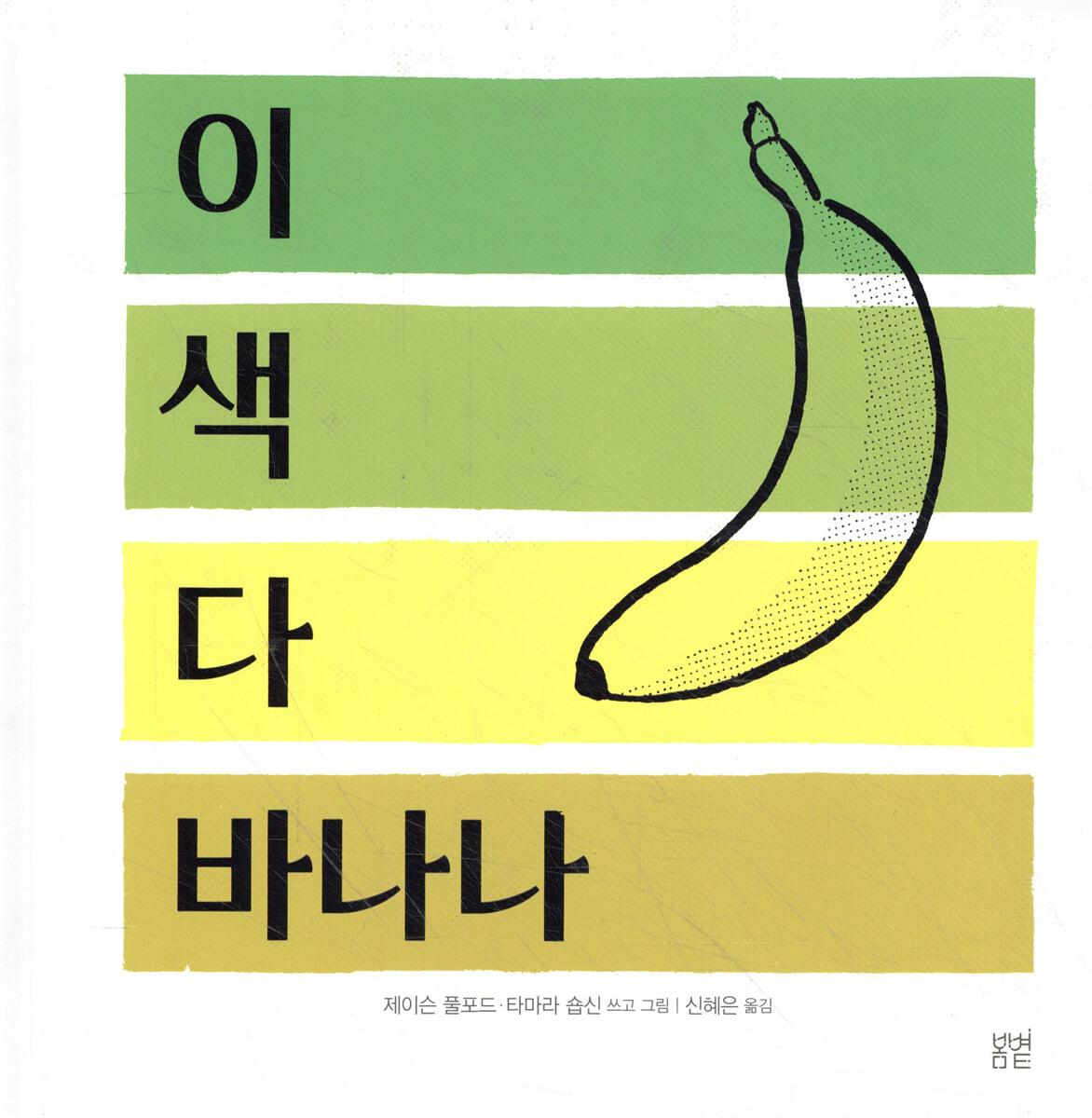
All these colors are bananas
 |
Description
Book Introduction
Apples aren't always red
Have you ever seen clouds during a storm?
At sunset?
Are clouds always white?
Dogs all have different colors.
Everything in the world has different colors.
You, me, us.
Have you ever seen clouds during a storm?
At sunset?
Are clouds always white?
Dogs all have different colors.
Everything in the world has different colors.
You, me, us.
- You can preview some of the book's contents.
Preview
Detailed image

Publisher's Review
Were carrots originally purple?
If you ask, 'What color is a carrot?', everyone will answer orange.
If you ask again, "Is it really orange?", they will be puzzled and say, "Why are you asking that?"
Nowadays, people know carrots as orange.
But carrots were originally purple.
In the days when purple carrots were common, the occasional white and orange carrots were known to be mutant varieties.
However, in the late 16th century, orange carrots were bred in the Netherlands.
Orange carrots, improved in the Netherlands, became widely popular because they were tasty and large.
People today take orange carrots for granted.
Of course, pink, purple, white, yellow, and other carrots are still produced today.
The only thing we eat mostly is orange carrots.
As such, there are representative colors that can create stereotypes about an appearance.
But if you think about it a little more or look into it, you'll see that there are many different colors.
A picture book has been published that expands horizons of thought by going beyond stereotypes through various colors.
This picture book, "Bananas of All Colors," tells those who think "Apples are red and bananas are yellow" that "There are other colors too!"
Authors Jason Fulford and Tamara Shopshin collaborated with the Whitney Museum of American Art to publish the picture book, This Color Banana.
This is the first domestic translation to be published, and the original book is on display at the Open Library of the Modern Children's Book Museum.
During the process of creating this book, I heard several times that many readers owned the original copy of this book.
This is because the book is written in easy-to-understand English and is colorful, so anyone can easily understand what the book is trying to say.
What kind of book was "This Color Banana," the first translated and published book in Korea, that made it so popular from the original?
Not all apples are red
“The monkey’s butt is red, if it’s red, it’s an apple, if it’s tasty, it’s a banana~” This is a nursery rhyme I’ve heard since I was little.
The monkey's butt and the apple are representative of the color red.
It is engraved in my mind like that, but in the picture book “This Color Banana”, it says from the first chapter, “Apples are not always red.”
If you look at apples around the world, you'll find pink apples, golden apples, and green apples.
On the right page, the apples appear in a variety of colors.
There are cloudy pear colors, dark greens, and purples.
This picture book suggests that we don't get stuck on red apples, but rather embrace the many different colors that apples come in.
When you open the next chapter, it says, 'The grass is not always green.'
The various colors that grass can produce, such as yellow, dark green, blue, and purple, are spread out.
What about clouds? They're usually white, but if you look at the sky during a storm or at sunset, you can see different colors.
At midnight, the clouds are dark gray or black.
Most people know that there are more than just red roses.
There are white roses, light pink roses, and scarlet roses.
Fire also comes in many colors.
There are bluish, ivory, and brown ones.
Fire is dangerous, so don't touch it; just look at it.
But you can touch the soil.
I recommend that you touch it, roll it, and check the color of the dirt on your clothes.
The color of the soil also varies greatly depending on the region and location.
Are all ice colors the same? Don't just imagine the ice in your freezer.
Imagine the color of a frozen winter lake.
Some emus lay dark green eggs.
Even the eggs of a magpie are blue.
Chicken eggs also come in a variety of colors, including white, blue, and light brown.
Dogs also come in different colors depending on their breed, and mixed breed dogs are born with more free colors.
It is common to see bananas gradually turning brown when you eat them.
You can tell when it's time to eat a banana by looking at its color, which changes from bluish to yellowish and then blackish.
Finally, let's talk about human skin color.
We do not use the terms yellow, white, or black.
It just says that your skin color is different from other people's as you read this book.
And I suggest you put your hand behind the blank square on the right page.
There are many colors surrounding the empty square hole, so my skin color stands out among them.
This naturally brings to mind the many people around the world with different skin colors.
You will experience a movement and expansion of thoughts.
Revisiting the 'reality' that exists within various 'appearances'
Translator Shin Hye-eun, who teaches early childhood education at a university and studies the psychology of picture books, said that she experienced a mental breakdown as soon as she saw this book.
It made me think about what is 'visible' and 'invisible', and I was shocked to think, 'What have we been seeing and recognizing until now?'
《This Color Banana》 is a book that makes you seriously think about what 'reality' exists within various 'appearances'.
The consideration of appearance and reality also applies to experiments with children.
It's like putting a dog mask on a cat and asking, "Is this a cat or a dog?"
The story that started with color reaches into philosophical thinking.
So the translator says that the book "This Color Banana" leads not only to an understanding of the world, but also to an awareness of myself and us.
When you see a field of yellow flowers and ask what kind of flower it is and hear the answer, "rabbit grass," your first thought is, "Oh, that's not the rabbit grass I know."
This book helps us loosen the boundaries of rigid preconceptions and embrace different appearances and colors.
This small, compact picture book offers us countless suggestions: flexible thinking, expanding our thinking, and breaking down boundaries.
By the end of this book, when you've put your hands on it, you'll have a new perspective on everything in the world you've been casually observing.
This experience is a very big and weighty reward for a small picture book to provide.
Color play with children
The picture book "This Color is a Banana" is a great book for children to play with colors.
By showing the various color charts in the book, you can discover new colors for fruits, vegetables, objects, and animals that are not in the book, and you can also try drawing apples, bananas, puppies, etc. that appear in the book and coloring them with various colors.
The endless play of colors is probably the active reading method that the two authors who created this book really wanted their readers to have.
Translator's Introduction to the Book
When I first saw this book, I thought, 'Oh, what have I been reading all this time?'
This book made me think about what is 'visible' and what is 'invisible'.
I recently discovered that there are pink carrots.
“Oh my, the carrots are pink? Not orange?” he said in surprise.
I had the same reaction 20 years ago when I heard that the yellow flowers in full bloom in the fields on my way to Yosemite National Park in the United States were clovers.
“Are you saying that is a rabbit grass flower?
“The rabbit grass flowers are white…” The duck I met in Florida didn’t look like a duck at all, it looked exactly like a duck dinosaur, so I couldn’t believe it even when I saw it with my own eyes.
Even now, I think about what ‘reality’ exists within various ‘appearances’.
Appearance and reality also apply to experiments with children.
They put a dog mask on a cat and ask, “Is this a cat or a dog?”
Ultimately, it leads to an awareness of not only the world, but also of myself and us.
What do we seek and see in appearance and reality? _Inviter to Change, Shin Hye-eun
If you ask, 'What color is a carrot?', everyone will answer orange.
If you ask again, "Is it really orange?", they will be puzzled and say, "Why are you asking that?"
Nowadays, people know carrots as orange.
But carrots were originally purple.
In the days when purple carrots were common, the occasional white and orange carrots were known to be mutant varieties.
However, in the late 16th century, orange carrots were bred in the Netherlands.
Orange carrots, improved in the Netherlands, became widely popular because they were tasty and large.
People today take orange carrots for granted.
Of course, pink, purple, white, yellow, and other carrots are still produced today.
The only thing we eat mostly is orange carrots.
As such, there are representative colors that can create stereotypes about an appearance.
But if you think about it a little more or look into it, you'll see that there are many different colors.
A picture book has been published that expands horizons of thought by going beyond stereotypes through various colors.
This picture book, "Bananas of All Colors," tells those who think "Apples are red and bananas are yellow" that "There are other colors too!"
Authors Jason Fulford and Tamara Shopshin collaborated with the Whitney Museum of American Art to publish the picture book, This Color Banana.
This is the first domestic translation to be published, and the original book is on display at the Open Library of the Modern Children's Book Museum.
During the process of creating this book, I heard several times that many readers owned the original copy of this book.
This is because the book is written in easy-to-understand English and is colorful, so anyone can easily understand what the book is trying to say.
What kind of book was "This Color Banana," the first translated and published book in Korea, that made it so popular from the original?
Not all apples are red
“The monkey’s butt is red, if it’s red, it’s an apple, if it’s tasty, it’s a banana~” This is a nursery rhyme I’ve heard since I was little.
The monkey's butt and the apple are representative of the color red.
It is engraved in my mind like that, but in the picture book “This Color Banana”, it says from the first chapter, “Apples are not always red.”
If you look at apples around the world, you'll find pink apples, golden apples, and green apples.
On the right page, the apples appear in a variety of colors.
There are cloudy pear colors, dark greens, and purples.
This picture book suggests that we don't get stuck on red apples, but rather embrace the many different colors that apples come in.
When you open the next chapter, it says, 'The grass is not always green.'
The various colors that grass can produce, such as yellow, dark green, blue, and purple, are spread out.
What about clouds? They're usually white, but if you look at the sky during a storm or at sunset, you can see different colors.
At midnight, the clouds are dark gray or black.
Most people know that there are more than just red roses.
There are white roses, light pink roses, and scarlet roses.
Fire also comes in many colors.
There are bluish, ivory, and brown ones.
Fire is dangerous, so don't touch it; just look at it.
But you can touch the soil.
I recommend that you touch it, roll it, and check the color of the dirt on your clothes.
The color of the soil also varies greatly depending on the region and location.
Are all ice colors the same? Don't just imagine the ice in your freezer.
Imagine the color of a frozen winter lake.
Some emus lay dark green eggs.
Even the eggs of a magpie are blue.
Chicken eggs also come in a variety of colors, including white, blue, and light brown.
Dogs also come in different colors depending on their breed, and mixed breed dogs are born with more free colors.
It is common to see bananas gradually turning brown when you eat them.
You can tell when it's time to eat a banana by looking at its color, which changes from bluish to yellowish and then blackish.
Finally, let's talk about human skin color.
We do not use the terms yellow, white, or black.
It just says that your skin color is different from other people's as you read this book.
And I suggest you put your hand behind the blank square on the right page.
There are many colors surrounding the empty square hole, so my skin color stands out among them.
This naturally brings to mind the many people around the world with different skin colors.
You will experience a movement and expansion of thoughts.
Revisiting the 'reality' that exists within various 'appearances'
Translator Shin Hye-eun, who teaches early childhood education at a university and studies the psychology of picture books, said that she experienced a mental breakdown as soon as she saw this book.
It made me think about what is 'visible' and 'invisible', and I was shocked to think, 'What have we been seeing and recognizing until now?'
《This Color Banana》 is a book that makes you seriously think about what 'reality' exists within various 'appearances'.
The consideration of appearance and reality also applies to experiments with children.
It's like putting a dog mask on a cat and asking, "Is this a cat or a dog?"
The story that started with color reaches into philosophical thinking.
So the translator says that the book "This Color Banana" leads not only to an understanding of the world, but also to an awareness of myself and us.
When you see a field of yellow flowers and ask what kind of flower it is and hear the answer, "rabbit grass," your first thought is, "Oh, that's not the rabbit grass I know."
This book helps us loosen the boundaries of rigid preconceptions and embrace different appearances and colors.
This small, compact picture book offers us countless suggestions: flexible thinking, expanding our thinking, and breaking down boundaries.
By the end of this book, when you've put your hands on it, you'll have a new perspective on everything in the world you've been casually observing.
This experience is a very big and weighty reward for a small picture book to provide.
Color play with children
The picture book "This Color is a Banana" is a great book for children to play with colors.
By showing the various color charts in the book, you can discover new colors for fruits, vegetables, objects, and animals that are not in the book, and you can also try drawing apples, bananas, puppies, etc. that appear in the book and coloring them with various colors.
The endless play of colors is probably the active reading method that the two authors who created this book really wanted their readers to have.
Translator's Introduction to the Book
When I first saw this book, I thought, 'Oh, what have I been reading all this time?'
This book made me think about what is 'visible' and what is 'invisible'.
I recently discovered that there are pink carrots.
“Oh my, the carrots are pink? Not orange?” he said in surprise.
I had the same reaction 20 years ago when I heard that the yellow flowers in full bloom in the fields on my way to Yosemite National Park in the United States were clovers.
“Are you saying that is a rabbit grass flower?
“The rabbit grass flowers are white…” The duck I met in Florida didn’t look like a duck at all, it looked exactly like a duck dinosaur, so I couldn’t believe it even when I saw it with my own eyes.
Even now, I think about what ‘reality’ exists within various ‘appearances’.
Appearance and reality also apply to experiments with children.
They put a dog mask on a cat and ask, “Is this a cat or a dog?”
Ultimately, it leads to an awareness of not only the world, but also of myself and us.
What do we seek and see in appearance and reality? _Inviter to Change, Shin Hye-eun
GOODS SPECIFICS
- Publication date: May 28, 2022
- Format: Hardcover book binding method guide
- Pages, weight, size: 24 pages | 404g | 191*191*14mm
- ISBN13: 9791190704557
- ISBN10: 1190704552
- KC Certification: Certification Type: Conformity Confirmation
You may also like
카테고리
korean


korean

![GQ KOREA Mark (Monthly): December [2025]](http://librairie.coreenne.fr/cdn/shop/files/8ef265dbbfbf186523ed75ba7319009d.jpg?v=1765340328&width=3840)


