

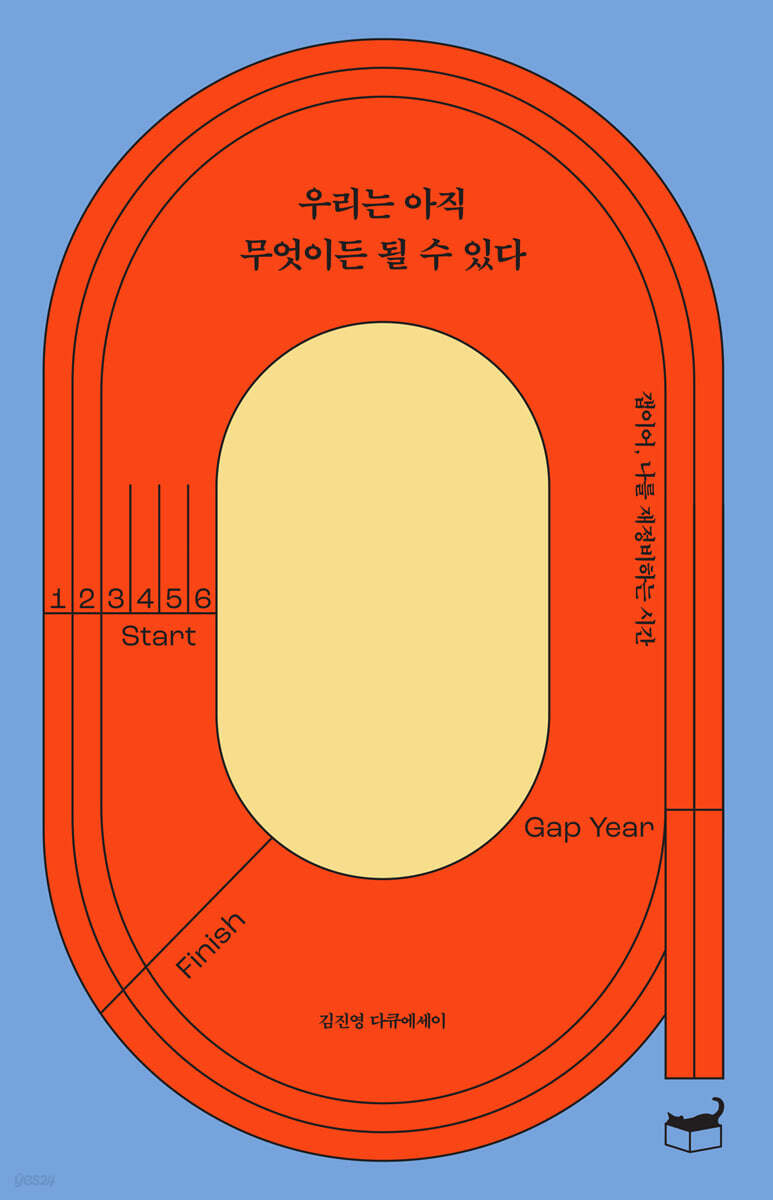
We can still be anything
 |
Description
Book Introduction
“Am I going in the direction I want to go?” For me, I took a break from work to work more healthily and enjoyably. A 'gap year' is not a time to take a break for a new job or start a business, but rather a time to stop working and reorganize myself to ask myself if I am living well and if I am guiding my career and life in the direction I want. The author meets and interviews people who are taking gap years in various ways, asking them what gap years mean to working people and what they have experienced, and thinking together about ways to work sustainably without alienating themselves. That time when you may fear that your career will be cut short and meaningless. First, how did those who took a gap year use that time in their work and life? This book is a 'documentary essay' that follows this. |
- You can preview some of the book's contents.
Preview
index
Prologue.
The day I came down from the track
If I could name this time
Scene 1.
Can we live without producing?
Interview with Dasom Lee
Scene 2.
Do I really have to run until I surpass my limit?
Yang Ja-un Interview
Insert cut.
Zeroing in on work and life
Scene 3.
Can work and life be separated?
Interview with Kim Min-ji
Scene 4.
Am I going in the direction I want to go?
Heo Yun Interview
Insert cut.
Light Up The Sky
Scene 5.
In what kind of environment do I thrive?
Interview with Kwak Sae-mi and Kim Seok-min
Insert cut.
Between gap year and freelancing
Scene 6.
What does it mean to be good at something?
Interview with Jo Eun-hye
Insert cut.
Out of Seoul
Epilogue.
Time to do nothing
Note 1.
Questions to Help You Take a Gap Year
Note 2.
Content to help you take a gap year
The day I came down from the track
If I could name this time
Scene 1.
Can we live without producing?
Interview with Dasom Lee
Scene 2.
Do I really have to run until I surpass my limit?
Yang Ja-un Interview
Insert cut.
Zeroing in on work and life
Scene 3.
Can work and life be separated?
Interview with Kim Min-ji
Scene 4.
Am I going in the direction I want to go?
Heo Yun Interview
Insert cut.
Light Up The Sky
Scene 5.
In what kind of environment do I thrive?
Interview with Kwak Sae-mi and Kim Seok-min
Insert cut.
Between gap year and freelancing
Scene 6.
What does it mean to be good at something?
Interview with Jo Eun-hye
Insert cut.
Out of Seoul
Epilogue.
Time to do nothing
Note 1.
Questions to Help You Take a Gap Year
Note 2.
Content to help you take a gap year
Detailed image

Into the book
I don't think it's a question of whether or not to take a gap year, but rather the very fact that you're even considering it is a form of momentum.
I think we definitely need time to reflect on our feelings.
I think one way to examine your heart is through a gap year.
--- p.56
Taking a gap year taught me how to relax and feel ready to work again.
--- p.57
I felt like the decisions I had made in the past were not really my own but were determined by the expectations and opinions of those around me.
(...) I also wanted to take time to look back on my work and life and think about my future direction.
--- p.110
As my career progressed, I realized that I couldn't afford to make mistakes or fail.
I was trying so hard not to fall, but when I did fall, I got hurt worse.
I realized it only after I got hurt.
The competitiveness and pride of a person who has fallen many times is no longer in not falling.
It was the skill of falling well, the resilience to quickly shake off the fall and get back up again.
--- p.112
Gap year is like a rest stop on the road.
While skipping rest stops might get you to your destination a little faster, it also puts you at a greater risk of accidents on long drives.
Wouldn't it be nice to stop at a rest stop to satisfy your hunger, catch up on some sleep, and take in the scenery you missed while running?
I think that time will give me the strength to complete the rest of the journey.
--- p.121
I wish I could take a gap year when I no longer feel like I'm growing and feeling stagnant.
There are things that can only be seen objectively when you step away from what you're engrossed in.
I think it's necessary to step away from a life where work is the default and check whether I'm running in the right direction.
--- p.121
I think the best thing I did was not to just worry about whether this was right for me, but to just give it a try.
Whether it was a gap year or a job change, I think the choices I made by taking action rather than worrying about it have made me who I am today.
--- p.145
Even after 20 years, I still worry about my career path.
When you're in your 20s, you think you won't have any more worries when you turn 30, and when you're in your 30s, you think you won't have any more worries about work when you turn 40.
But while working, don't you have to worry about your career path for the rest of your life?
--- p.149
There is no such thing as a 100-point job or a 100-point job from the beginning.
Rather, I think that by going through various jobs and companies, I can continuously discover and fill in the gaps in my career compared to my dream career or the shortcomings of my workplace.
--- p.149
I think there are things you can't see when you're running, when you're on the track.
Only by taking a little time away from work can I get to know myself, how I work, and what I really like and excel at about my work.
--- p.150
It was so great that my worries about how I would live after my gap year were for naught, and I still love it.
Whether it's travel or life, I've learned that preparing doesn't always mean you're prepared for everything.
Now I just do whatever comes to mind.
My attitude towards life has really changed a lot.
--- p.186
I think that while taking a gap year, I became more autonomous and proactive in how I spent my time.
Now I have to create my own work, and in order to continue doing what I want to do, I have to 'find out' what I want to do.
--- p.187
If you're going to continue working, I think the sooner this time comes, the better.
I believe that my current experience will help me live a better life, whether it be in my future career or in my future life.
--- p.187
What worried me the most was whether I would become 'zero', but nothing has disappeared.
I think we definitely need time to reflect on our feelings.
I think one way to examine your heart is through a gap year.
--- p.56
Taking a gap year taught me how to relax and feel ready to work again.
--- p.57
I felt like the decisions I had made in the past were not really my own but were determined by the expectations and opinions of those around me.
(...) I also wanted to take time to look back on my work and life and think about my future direction.
--- p.110
As my career progressed, I realized that I couldn't afford to make mistakes or fail.
I was trying so hard not to fall, but when I did fall, I got hurt worse.
I realized it only after I got hurt.
The competitiveness and pride of a person who has fallen many times is no longer in not falling.
It was the skill of falling well, the resilience to quickly shake off the fall and get back up again.
--- p.112
Gap year is like a rest stop on the road.
While skipping rest stops might get you to your destination a little faster, it also puts you at a greater risk of accidents on long drives.
Wouldn't it be nice to stop at a rest stop to satisfy your hunger, catch up on some sleep, and take in the scenery you missed while running?
I think that time will give me the strength to complete the rest of the journey.
--- p.121
I wish I could take a gap year when I no longer feel like I'm growing and feeling stagnant.
There are things that can only be seen objectively when you step away from what you're engrossed in.
I think it's necessary to step away from a life where work is the default and check whether I'm running in the right direction.
--- p.121
I think the best thing I did was not to just worry about whether this was right for me, but to just give it a try.
Whether it was a gap year or a job change, I think the choices I made by taking action rather than worrying about it have made me who I am today.
--- p.145
Even after 20 years, I still worry about my career path.
When you're in your 20s, you think you won't have any more worries when you turn 30, and when you're in your 30s, you think you won't have any more worries about work when you turn 40.
But while working, don't you have to worry about your career path for the rest of your life?
--- p.149
There is no such thing as a 100-point job or a 100-point job from the beginning.
Rather, I think that by going through various jobs and companies, I can continuously discover and fill in the gaps in my career compared to my dream career or the shortcomings of my workplace.
--- p.149
I think there are things you can't see when you're running, when you're on the track.
Only by taking a little time away from work can I get to know myself, how I work, and what I really like and excel at about my work.
--- p.150
It was so great that my worries about how I would live after my gap year were for naught, and I still love it.
Whether it's travel or life, I've learned that preparing doesn't always mean you're prepared for everything.
Now I just do whatever comes to mind.
My attitude towards life has really changed a lot.
--- p.186
I think that while taking a gap year, I became more autonomous and proactive in how I spent my time.
Now I have to create my own work, and in order to continue doing what I want to do, I have to 'find out' what I want to do.
--- p.187
If you're going to continue working, I think the sooner this time comes, the better.
I believe that my current experience will help me live a better life, whether it be in my future career or in my future life.
--- p.187
What worried me the most was whether I would become 'zero', but nothing has disappeared.
--- p.216
Publisher's Review
You who are working, don't you ever want to stop?
Don't you want to take a break?
Wouldn't you like to stop and reorganize your work and life?
As a working person, every 365 days cannot be the same.
There are good days, hard days, and days when you just want to give up.
But you may encounter a moment that is a little different from such an ordinary day.
Those moments when I can't go anywhere and can't even see an exit, when I can't do anything anymore, like wringing out a dry towel, and when I'm so caught up in the pace of work that I feel alienated from my own life.
This may be burnout, but it's a moment of choice that inevitably comes to anyone who works, even if it's not.
What choices can we make then?
“Freelancers also have time to prepare for starting a business,
It's not a time to prepare for a job change, but a time to think about work and life.
A time to focus on my thoughts and values.
If there was a name for this time,
“Wouldn’t it be great if everyone could use this time a little more freely?”
'Gap year' originally meant a time for young people in Europe and the United States to deviate from their established track before entering university or right before getting a job and experience volunteering, backpacking, internships, etc. to figure out what they want to do with their lives.
It is an opportunity to open up all possibilities and reflect on the relationship between the world and myself.
This book begins with the idea that office workers might also need this kind of time.
I think we need time to look back on our careers and lives in a situation where nothing is set in stone and anything can happen.
The author of 『We Can Still Be Anything』(hereafter referred to as 『Woo.A.Mu』), Jinyoung Kim, was an office worker himself and loved his work more than anyone else, but he had no choice but to stop due to burnout.
The author meets and interviews people who have taken gap years in various forms, and ponders the meaning and value of work in life, as well as ways to work sustainably while protecting oneself.
This book is a 'documentary essay' that captures that process.
“gap year”
To continue doing what you love,
To work healthier and more happily
How to spend your time alone in a variety of ways other than changing jobs
This book contains interviews with seven people who are taking a gap year or have taken one.
People with varying years of experience and occupations, from those in their 3rd to 20th year, chose gap years for various reasons, including burnout, feeling lost, wanting to adjust their pace, and thinking about their next career.
Author and interviewer Jinyoung Kim meets with them to ask them why they quit their jobs, why they chose a gap year over a new job, how they spend their time, and what perspectives they gained on themselves and their work through that time.
This process is like a road movie about finding my relationship with work and the meaning of work.
“When I’m running, when I’m on the track,
I think there are things that are invisible.
I need to get away from work for a bit to myself,
How I work, and how I feel at work
“You can find out what elements you really like and are good at.”
At this point, I'm starting to wonder.
Could the world view this so-called "gap year" as a career break? Isn't stopping work too risky? The interviewees shared the same concerns.
Will I be able to work again after my gap year? Will my life be ruined? Will I drift downstream on a raft? Will I fall behind my colleagues and friends?
But everyone who has taken a gap year says the same thing.
It was so good that my worries were for nothing.
It was okay not to run, not to stop, not to take another route.
During that time, I was able to regain the direction in life and work that I had lost, the joy of work, and my own pace.
“A gap year is like a rest stop on the road.
While skipping rest stops might get you to your destination a little faster, it also puts you at a greater risk of accidents on long drives.
Wouldn't it be nice to stop at a rest stop to satisfy your hunger, catch up on some sleep, and take in the scenery you missed while running?
I think that time will give me the strength to complete the rest of the journey.”
This is not to say that you should quit your job or take a gap year to rest unconditionally.
This book aims to show you that when you feel lost in your work and life, when you don't know where to go, when you feel like there's no way forward, you can choose to get off the track and recalibrate your direction and speed.
And to those who have decided to choose that time, we offer courage and encouragement through the words of those who have already gone through that time.
Don't worry.
Because we are infinite beings and can be anything.
Don't you want to take a break?
Wouldn't you like to stop and reorganize your work and life?
As a working person, every 365 days cannot be the same.
There are good days, hard days, and days when you just want to give up.
But you may encounter a moment that is a little different from such an ordinary day.
Those moments when I can't go anywhere and can't even see an exit, when I can't do anything anymore, like wringing out a dry towel, and when I'm so caught up in the pace of work that I feel alienated from my own life.
This may be burnout, but it's a moment of choice that inevitably comes to anyone who works, even if it's not.
What choices can we make then?
“Freelancers also have time to prepare for starting a business,
It's not a time to prepare for a job change, but a time to think about work and life.
A time to focus on my thoughts and values.
If there was a name for this time,
“Wouldn’t it be great if everyone could use this time a little more freely?”
'Gap year' originally meant a time for young people in Europe and the United States to deviate from their established track before entering university or right before getting a job and experience volunteering, backpacking, internships, etc. to figure out what they want to do with their lives.
It is an opportunity to open up all possibilities and reflect on the relationship between the world and myself.
This book begins with the idea that office workers might also need this kind of time.
I think we need time to look back on our careers and lives in a situation where nothing is set in stone and anything can happen.
The author of 『We Can Still Be Anything』(hereafter referred to as 『Woo.A.Mu』), Jinyoung Kim, was an office worker himself and loved his work more than anyone else, but he had no choice but to stop due to burnout.
The author meets and interviews people who have taken gap years in various forms, and ponders the meaning and value of work in life, as well as ways to work sustainably while protecting oneself.
This book is a 'documentary essay' that captures that process.
“gap year”
To continue doing what you love,
To work healthier and more happily
How to spend your time alone in a variety of ways other than changing jobs
This book contains interviews with seven people who are taking a gap year or have taken one.
People with varying years of experience and occupations, from those in their 3rd to 20th year, chose gap years for various reasons, including burnout, feeling lost, wanting to adjust their pace, and thinking about their next career.
Author and interviewer Jinyoung Kim meets with them to ask them why they quit their jobs, why they chose a gap year over a new job, how they spend their time, and what perspectives they gained on themselves and their work through that time.
This process is like a road movie about finding my relationship with work and the meaning of work.
“When I’m running, when I’m on the track,
I think there are things that are invisible.
I need to get away from work for a bit to myself,
How I work, and how I feel at work
“You can find out what elements you really like and are good at.”
At this point, I'm starting to wonder.
Could the world view this so-called "gap year" as a career break? Isn't stopping work too risky? The interviewees shared the same concerns.
Will I be able to work again after my gap year? Will my life be ruined? Will I drift downstream on a raft? Will I fall behind my colleagues and friends?
But everyone who has taken a gap year says the same thing.
It was so good that my worries were for nothing.
It was okay not to run, not to stop, not to take another route.
During that time, I was able to regain the direction in life and work that I had lost, the joy of work, and my own pace.
“A gap year is like a rest stop on the road.
While skipping rest stops might get you to your destination a little faster, it also puts you at a greater risk of accidents on long drives.
Wouldn't it be nice to stop at a rest stop to satisfy your hunger, catch up on some sleep, and take in the scenery you missed while running?
I think that time will give me the strength to complete the rest of the journey.”
This is not to say that you should quit your job or take a gap year to rest unconditionally.
This book aims to show you that when you feel lost in your work and life, when you don't know where to go, when you feel like there's no way forward, you can choose to get off the track and recalibrate your direction and speed.
And to those who have decided to choose that time, we offer courage and encouragement through the words of those who have already gone through that time.
Don't worry.
Because we are infinite beings and can be anything.
GOODS SPECIFICS
- Date of issue: January 25, 2022
- Page count, weight, size: 260 pages | 366g | 128*200*15mm
- ISBN13: 9791160807974
- ISBN10: 1160807973
You may also like
카테고리
korean


korean

![GQ KOREA Mark (Monthly): December [2025]](http://librairie.coreenne.fr/cdn/shop/files/8ef265dbbfbf186523ed75ba7319009d.jpg?v=1765340328&width=3840)


