

Night at the Museum
 |
Description
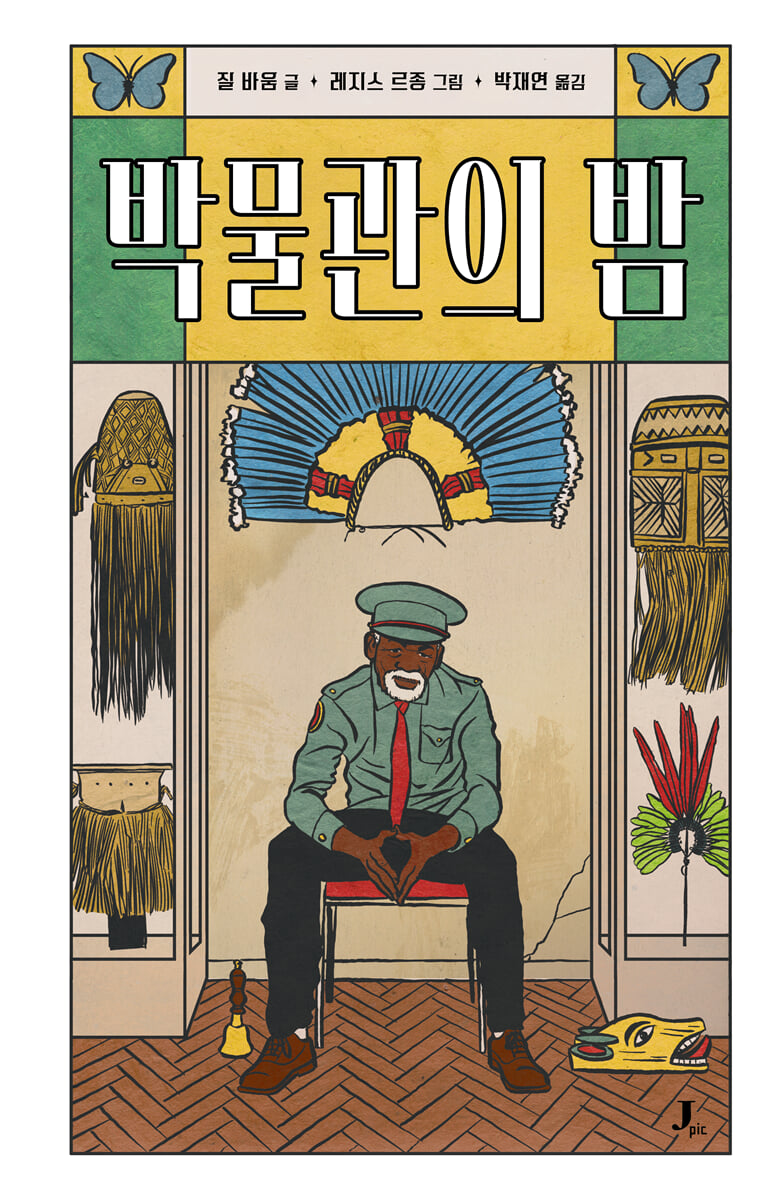
Book Introduction
Adults and children can enjoy reading it together.
We live in an age where everyone from 0 to 100 years old reads picture books, but there are picture books that only children enjoy, and there are also picture books that only people in their 20s can enjoy.
Rarely, there are picture books that can be enjoyed by children from 0 to 100 years old.
This is exactly what the exciting suspense picture book “Night at the Museum” is all about.
Children will be anxious and wonder what will happen to the culprit, while adult readers will think long and hard about the meaning of the incident.
In France, it was made into a play and is said to be popular.
He has won awards such as the Bologna Ragazzi Award and the Belgian Children's Literature Critics Association Children's Literature Award.
We live in an age where everyone from 0 to 100 years old reads picture books, but there are picture books that only children enjoy, and there are also picture books that only people in their 20s can enjoy.
Rarely, there are picture books that can be enjoyed by children from 0 to 100 years old.
This is exactly what the exciting suspense picture book “Night at the Museum” is all about.
Children will be anxious and wonder what will happen to the culprit, while adult readers will think long and hard about the meaning of the incident.
In France, it was made into a play and is said to be popular.
He has won awards such as the Bologna Ragazzi Award and the Belgian Children's Literature Critics Association Children's Literature Award.
- You can preview some of the book's contents.
Preview
Detailed image

Publisher's Review
When night falls, where do museum artifacts sleep? Most people probably think of darkened exhibition halls or locked storage rooms.
It's familiar to see them standing motionless in glass cases for a thousand years.
But French writer Gilles Baum and illustrator Régis Lezonc present a very different picture in Night at the Museum.
The story begins with museum curator Edson Arantes ringing a bell as he approaches the last visitors.
He makes an unexpected proposal.
“The museum is now closed.
But before you go, take home one of your favorite exhibits.”
Moments later, the museum is engulfed in flames and collapses.
But the relics do not disappear.
Rather, they are embraced by people and dispersed throughout the city, starting new lives.
Statues are placed in front of small shops, colorful jars occupy a corner of an alley, and masks are used in children's games.
Artifacts that have left their display cases are no longer 'treasures' that can't be reached, but rather become something that everyone encounters in their daily lives.
This ingenious idea didn't just pop up out of nowhere.
The starting point was a massive fire at the National Museum in Rio de Janeiro, Brazil, in 2018.
Latin America's largest natural history and anthropology museum was reduced to ashes in an instant, with approximately 20 million items lost.
The oldest human skeleton in the Americas, 'Luzia', the dinosaur fossil 'Maxacalisaurus' unique to Brazil, the largest insect specimen of 5 million in Latin America, and even the last recording of an indigenous language that has already disappeared...
It was not just a simple exhibit, but a precious memory that testified to the identity of humanity and Brazil.
This fire was virtually a 'disaster foretold'.
Cuts in funding, aging power plants, broken fire systems…
The museum staff's warnings were ignored, and the 'palace of knowledge' ultimately fell victim to state indifference and neglect.
The dedication to “Night at the Museum” reads:
“In memory of the National Museum of Rio de Janeiro.”
The caretaker in the picture book does not move the artifact to a safe place.
Instead, we give them to people.
This scene reads as a weighty metaphor for the act of returning art, long monopolized by the state and its institutions, to the bosom of the community.
In fact, Europe's famous museums are products of the imperialist era.
The Louvre and the British Museum displayed artifacts brought from the colonies as “national treasures” to show off their power.
The shadows of splendid exhibits have always been looted with traces of plunder and inequality.
So, discussions on the return of cultural assets are still ongoing.
In "Night at the Museum," the burned-out buildings and scattered artifacts read like a scene where such monopolistic structures are collapsing and art is returning to people's daily lives.
It is not the end, but the liberation of art and a new beginning.
"If the library near your house closed, could you bring one of your most treasured books?" "Who originally owned the dinosaur fossils in the museum?" "When does art shine brighter - when it's on display, or when it's embedded in people's daily lives?" This picture book naturally prompts young readers to ask these questions, and adults to reflect on the nature of art and institutions.
Can art, confined to museum displays, come alive more vividly in our alleys, classrooms, and plazas?
Why the Museum Guardian's Name is Pele
It is also significant that the manager's name is 'Edson Arantes'.
That's the real name of Brazilian soccer legend Pele.
From a boy from a slum to a world star, Pelé is a symbol of Brazil's most democratic culture: football.
The author gives the last caretaker the name of Pele, conveying that art is not the exclusive property of a certain class or institution, but is something for the public to enjoy.
Museums today are said to be open to everyone, but in reality this is not the case.
Expensive admission fees, concentrated location in the city center, cultural barriers such as ‘you see as much as you know’…
Many things still stand in the way of many people.
Museums around the world today are seeking answers to this question in their own ways.
Recently, Korean museums have become a hot topic, to the point of being called 'museum hip'.
The National Museum of Korea has become a hot spot for the younger generation for an unexpected reason.
Thanks to [K-Pop Demon Hunters], which combines animation and idol culture.
When the world of relics and idols was connected through 'Kedeheon', the museum was instantly transformed into a living stage.
Fans took photos with the exhibition hall as the backdrop, consumed artifacts like characters in the story, and expanded their experiences through social media.
This is not just an event; it shows the way forward for museums today.
Now, the audience is no longer a passive observer.
Participate, share, and create new meaning in your experiences.
The scene in "Night at the Museum" where artifacts are scattered into everyday life is also being realized in a different way in Korean museums.
《Night at the Museum》shows a museum that has been burned down, but it also creates new imaginations from its ashes.
This is not to say that museums are doomed, but rather to re-examine their meaning and begin again.
These suggestions are an interesting and somewhat unfamiliar fantasy for children, and a reflection that makes adults look back on the shadows of institutions and power.
The question raised by “Night at the Museum” has a clear message.
Ultimately, art must breathe into all of our lives.
Park Jae-yeon (translator, professor, Department of Cultural Contents, Ajou University)
◎ Awards and Books
Prix Libbylit 2021 - Mention du Jury (Special Mention by the Jury)
Children's literature award hosted by the Belgian Association of Children's Literature Critics (IBBY Belgique francophone).
2021 Jury Special Mention
Selection Ricochet (Ricochet Selected Books)
Officially listed on the list of recommended books by Ricochet (Institut francais de l'education - Centre national de la litterature pour la jeunesse), a French youth and children's literature platform.
Bologna Ragazzi Award Winner (2022 Ragazzi Award Fiction Category Special Mention)
◎ Readers' Praise
“I cried first while reading it to him.
“The lights in the museum were off, but I could feel the warmth of humanity.” (we****21)
“It was really great to have a conversation with my child while reading Professor Park Jae-yeon’s explanation at the back of the book.” (esd****)
“My husband, who was reading to the child, said, ‘Isn’t this a book for adults?’” (jh****2)
"The artwork is stunning! Regis Lejong's vibrant colors complement the emotional tone of the story." (mo*****)
“Once you turn the last page, that’s when the story begins.
“A book that children and adults can read together and share about ‘what is lost and what comes back to life.’” (hah******)
It's familiar to see them standing motionless in glass cases for a thousand years.
But French writer Gilles Baum and illustrator Régis Lezonc present a very different picture in Night at the Museum.
The story begins with museum curator Edson Arantes ringing a bell as he approaches the last visitors.
He makes an unexpected proposal.
“The museum is now closed.
But before you go, take home one of your favorite exhibits.”
Moments later, the museum is engulfed in flames and collapses.
But the relics do not disappear.
Rather, they are embraced by people and dispersed throughout the city, starting new lives.
Statues are placed in front of small shops, colorful jars occupy a corner of an alley, and masks are used in children's games.
Artifacts that have left their display cases are no longer 'treasures' that can't be reached, but rather become something that everyone encounters in their daily lives.
This ingenious idea didn't just pop up out of nowhere.
The starting point was a massive fire at the National Museum in Rio de Janeiro, Brazil, in 2018.
Latin America's largest natural history and anthropology museum was reduced to ashes in an instant, with approximately 20 million items lost.
The oldest human skeleton in the Americas, 'Luzia', the dinosaur fossil 'Maxacalisaurus' unique to Brazil, the largest insect specimen of 5 million in Latin America, and even the last recording of an indigenous language that has already disappeared...
It was not just a simple exhibit, but a precious memory that testified to the identity of humanity and Brazil.
This fire was virtually a 'disaster foretold'.
Cuts in funding, aging power plants, broken fire systems…
The museum staff's warnings were ignored, and the 'palace of knowledge' ultimately fell victim to state indifference and neglect.
The dedication to “Night at the Museum” reads:
“In memory of the National Museum of Rio de Janeiro.”
The caretaker in the picture book does not move the artifact to a safe place.
Instead, we give them to people.
This scene reads as a weighty metaphor for the act of returning art, long monopolized by the state and its institutions, to the bosom of the community.
In fact, Europe's famous museums are products of the imperialist era.
The Louvre and the British Museum displayed artifacts brought from the colonies as “national treasures” to show off their power.
The shadows of splendid exhibits have always been looted with traces of plunder and inequality.
So, discussions on the return of cultural assets are still ongoing.
In "Night at the Museum," the burned-out buildings and scattered artifacts read like a scene where such monopolistic structures are collapsing and art is returning to people's daily lives.
It is not the end, but the liberation of art and a new beginning.
"If the library near your house closed, could you bring one of your most treasured books?" "Who originally owned the dinosaur fossils in the museum?" "When does art shine brighter - when it's on display, or when it's embedded in people's daily lives?" This picture book naturally prompts young readers to ask these questions, and adults to reflect on the nature of art and institutions.
Can art, confined to museum displays, come alive more vividly in our alleys, classrooms, and plazas?
Why the Museum Guardian's Name is Pele
It is also significant that the manager's name is 'Edson Arantes'.
That's the real name of Brazilian soccer legend Pele.
From a boy from a slum to a world star, Pelé is a symbol of Brazil's most democratic culture: football.
The author gives the last caretaker the name of Pele, conveying that art is not the exclusive property of a certain class or institution, but is something for the public to enjoy.
Museums today are said to be open to everyone, but in reality this is not the case.
Expensive admission fees, concentrated location in the city center, cultural barriers such as ‘you see as much as you know’…
Many things still stand in the way of many people.
Museums around the world today are seeking answers to this question in their own ways.
Recently, Korean museums have become a hot topic, to the point of being called 'museum hip'.
The National Museum of Korea has become a hot spot for the younger generation for an unexpected reason.
Thanks to [K-Pop Demon Hunters], which combines animation and idol culture.
When the world of relics and idols was connected through 'Kedeheon', the museum was instantly transformed into a living stage.
Fans took photos with the exhibition hall as the backdrop, consumed artifacts like characters in the story, and expanded their experiences through social media.
This is not just an event; it shows the way forward for museums today.
Now, the audience is no longer a passive observer.
Participate, share, and create new meaning in your experiences.
The scene in "Night at the Museum" where artifacts are scattered into everyday life is also being realized in a different way in Korean museums.
《Night at the Museum》shows a museum that has been burned down, but it also creates new imaginations from its ashes.
This is not to say that museums are doomed, but rather to re-examine their meaning and begin again.
These suggestions are an interesting and somewhat unfamiliar fantasy for children, and a reflection that makes adults look back on the shadows of institutions and power.
The question raised by “Night at the Museum” has a clear message.
Ultimately, art must breathe into all of our lives.
Park Jae-yeon (translator, professor, Department of Cultural Contents, Ajou University)
◎ Awards and Books
Prix Libbylit 2021 - Mention du Jury (Special Mention by the Jury)
Children's literature award hosted by the Belgian Association of Children's Literature Critics (IBBY Belgique francophone).
2021 Jury Special Mention
Selection Ricochet (Ricochet Selected Books)
Officially listed on the list of recommended books by Ricochet (Institut francais de l'education - Centre national de la litterature pour la jeunesse), a French youth and children's literature platform.
Bologna Ragazzi Award Winner (2022 Ragazzi Award Fiction Category Special Mention)
◎ Readers' Praise
“I cried first while reading it to him.
“The lights in the museum were off, but I could feel the warmth of humanity.” (we****21)
“It was really great to have a conversation with my child while reading Professor Park Jae-yeon’s explanation at the back of the book.” (esd****)
“My husband, who was reading to the child, said, ‘Isn’t this a book for adults?’” (jh****2)
"The artwork is stunning! Regis Lejong's vibrant colors complement the emotional tone of the story." (mo*****)
“Once you turn the last page, that’s when the story begins.
“A book that children and adults can read together and share about ‘what is lost and what comes back to life.’” (hah******)
GOODS SPECIFICS
- Date of issue: November 14, 2025
- Format: Hardcover book binding method guide
- Page count, weight, size: 40 pages | 372g | 210*305*10mm
- ISBN13: 9791194834045
- ISBN10: 1194834043
- KC Certification: Certification Type: Conformity Confirmation
You may also like
카테고리
korean


korean

![GQ KOREA Mark (Monthly): December [2025]](http://librairie.coreenne.fr/cdn/shop/files/8ef265dbbfbf186523ed75ba7319009d.jpg?v=1765340328&width=3840)


