

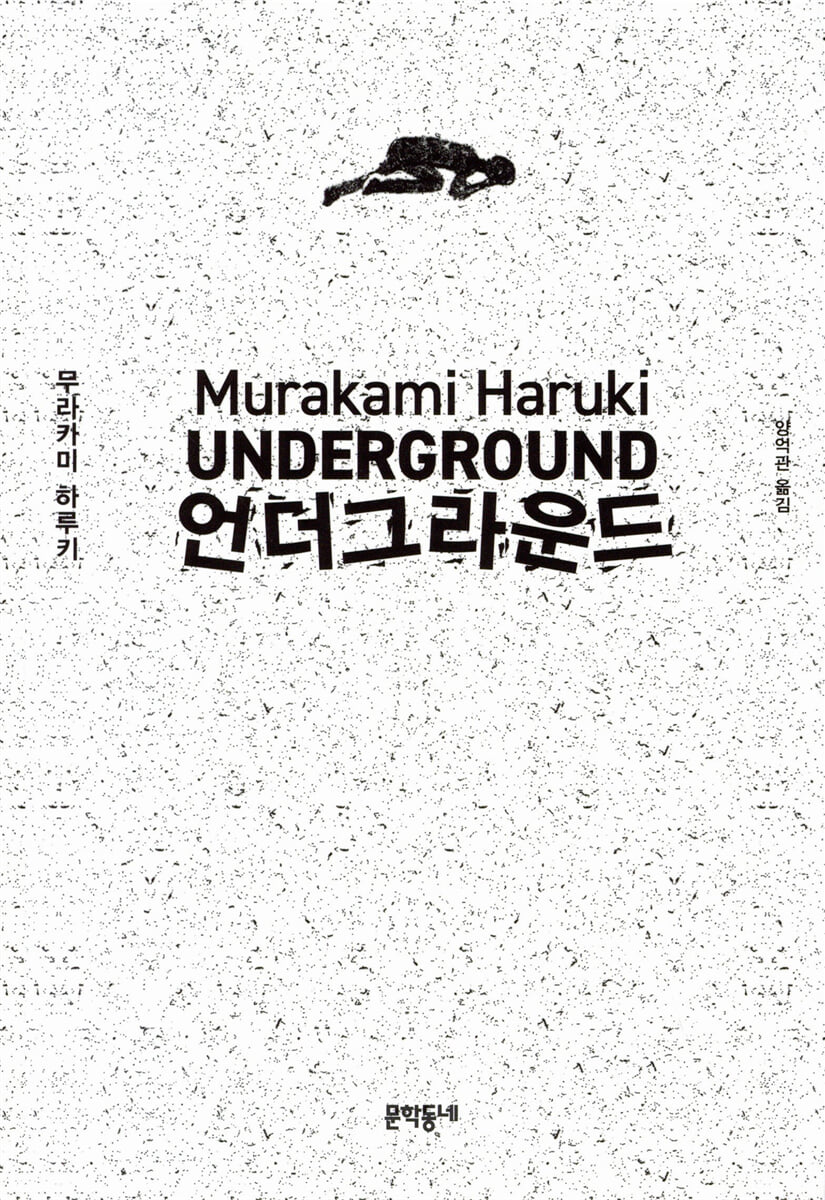
Underground
 |
Description
Book Introduction
What on earth happened underground in Tokyo on March 20, 1995?
The Aum Shinrikyo incident, in which sarin gas was released on a subway station, causing thousands of casualties
A masterpiece of modern documentary literature, based on a year-long investigation into the victims!
A reportage by Haruki Murakami about the Aum Shinrikyo subway sarin gas attack that shocked Japan in the 1990s.
This work, which contains interviews with victims of the sarin gas attack that Haruki Murakami personally met, is a work of such great significance that Haruki Murakami himself called it a turning point in his literature.
The calm yet shocking recollections and confessions of ordinary people suddenly exposed to a disaster that struck without warning resonate with a great resonance that matches its overwhelming volume.
It's Monday.
A bright, early spring morning.
The wind is still cold, so all the pedestrians are wearing coats.
Yesterday was Sunday, and tomorrow is the vernal equinox holiday, which means it's the middle of the holiday season.
Some people might think, 'I just want to rest today.'
But due to various circumstances, you could not rest.
So you wake up in the morning like you always do, wash your face, eat breakfast, get dressed, and go to the station.
And as always, I take the crowded tram to work.
It was a morning no different from any other.
It was just another day in your life, one that didn't need to be distinguished from any other day.
Until five disguised men poked a plastic bag containing a strange liquid with the sharp end of an umbrella sharpened with a grinder… … .
Rather than attempting to analyze the specific background and social impact of the subway sarin gas attack, Haruki Murakami focuses on the daily lives of each victim, naturally transporting the reader into the scene of that morning, which was no different from any other day until the moment the incident occurred.
By telling the stories of the victims' backgrounds and lives, it breathes life into each and every one of them, who had been labeled as "victims," and restores their original personalities.
When you finally hear the weighty and compelling resonance created by these faceless beings coming together one by one, you will understand why Haruki chose to depict the Aum Shinrikyo Sarin attack in the unfamiliar format of interviews rather than novels, his specialty.
The Aum Shinrikyo incident, in which sarin gas was released on a subway station, causing thousands of casualties
A masterpiece of modern documentary literature, based on a year-long investigation into the victims!
A reportage by Haruki Murakami about the Aum Shinrikyo subway sarin gas attack that shocked Japan in the 1990s.
This work, which contains interviews with victims of the sarin gas attack that Haruki Murakami personally met, is a work of such great significance that Haruki Murakami himself called it a turning point in his literature.
The calm yet shocking recollections and confessions of ordinary people suddenly exposed to a disaster that struck without warning resonate with a great resonance that matches its overwhelming volume.
It's Monday.
A bright, early spring morning.
The wind is still cold, so all the pedestrians are wearing coats.
Yesterday was Sunday, and tomorrow is the vernal equinox holiday, which means it's the middle of the holiday season.
Some people might think, 'I just want to rest today.'
But due to various circumstances, you could not rest.
So you wake up in the morning like you always do, wash your face, eat breakfast, get dressed, and go to the station.
And as always, I take the crowded tram to work.
It was a morning no different from any other.
It was just another day in your life, one that didn't need to be distinguished from any other day.
Until five disguised men poked a plastic bag containing a strange liquid with the sharp end of an umbrella sharpened with a grinder… … .
Rather than attempting to analyze the specific background and social impact of the subway sarin gas attack, Haruki Murakami focuses on the daily lives of each victim, naturally transporting the reader into the scene of that morning, which was no different from any other day until the moment the incident occurred.
By telling the stories of the victims' backgrounds and lives, it breathes life into each and every one of them, who had been labeled as "victims," and restores their original personalities.
When you finally hear the weighty and compelling resonance created by these faceless beings coming together one by one, you will understand why Haruki chose to depict the Aum Shinrikyo Sarin attack in the unfamiliar format of interviews rather than novels, his specialty.
- You can preview some of the book's contents.
Preview
index
preface
Chiyoda Line
Izumi Kiyoka
Masaru Yuasa
Minoru Miyata
Toshiaki Toyota
Akiko Nozaki
Tomoko Takatsuki
Izutsu Mitsuteru
Aya Gajaguchi
Hideki Sono
Psychiatrist Kanzo Nakano
Maruonuchi Line (bound for Ogikubo)
Arima Mitsuo
Genji Ohashi (1)
Genji Ohashi (2)
Soichi Inagawa
Sumio Nishimura
Koichi Sakata
Akashi Tatsuo
Akashi Shizuko
Attorney Yuji Nakamura
Chiyoda Line
Izumi Kiyoka
Masaru Yuasa
Minoru Miyata
Toshiaki Toyota
Akiko Nozaki
Tomoko Takatsuki
Izutsu Mitsuteru
Aya Gajaguchi
Hideki Sono
Psychiatrist Kanzo Nakano
Maruonuchi Line (bound for Ogikubo)
Arima Mitsuo
Genji Ohashi (1)
Genji Ohashi (2)
Soichi Inagawa
Sumio Nishimura
Koichi Sakata
Akashi Tatsuo
Akashi Shizuko
Attorney Yuji Nakamura
Publisher's Review
The Aum Shinrikyo incident, in which sarin gas was released on a subway station, causing thousands of casualties
A masterpiece of modern documentary literature, based on a year-long investigation into the victims.
It's Monday.
A bright, early spring morning.
The wind is still cold, so all the pedestrians are wearing coats.
Yesterday was Sunday, and tomorrow is the vernal equinox holiday, which means it's the middle of the holiday season.
Some people might think, 'I just want to rest today.'
But due to various circumstances, you could not rest.
So you wake up in the morning like you always do, wash your face, eat breakfast, get dressed, and go to the station.
And as always, I take the crowded tram to work.
It was a morning no different from any other.
It was just another day in your life, one that didn't need to be distinguished from any other day.
Until five disguised men poked a plastic bag containing a strange liquid with the sharp end of an umbrella sharpened with a grinder… …
_From "Underground"
The Tokyo subway sarin attack occurred around 8:00 a.m. on March 20, 1995, when sarin, a deadly chemical that damages the central nervous system, was sprayed on five subway cars on the Marunouchi, Hibiya, and Chiyoda lines passing through central Tokyo, killing 12 people and seriously injuring over 5,000.
The subway, which transports millions of people every day and serves as the citizens' feet, has suddenly turned into a 'streetcar from hell' that spreads toxic gases at high speed.
In Japan, once known as "the safest country in the world," a terrorist attack using chemical weapons in the middle of Tokyo during weekday commuting hours was an unprecedented event. Furthermore, the fact that an unspecified number of ordinary citizens were indiscriminately attacked shocked not only the Japanese people at the time but also the entire world.
Two days after the incident, the police conducted a forced search of the new religious group Aum Shinrikyo and arrested the suspects. The truth of the incident was that the Aum Shinrikyo cult, which had already caused controversy with the murder of lawyer Sakamoto and his family, had committed a large-scale terrorist attack to avoid police investigation.
Later, through statements from former believers and those involved in the sarin gas incident, the life and various criminal plans within the Aum Shinrikyo sect were revealed, causing considerable controversy once again.
In 2006, the cult leader Shoko Asahara was sentenced to death, and two suspects who were never arrested are still wanted.
The truth about Aum Shinrikyo, which shook Japan in the 1990s
Haruki Murakami is on the hunt!
Yasuo Hayashi, the death row inmate who killed the most people in the subway sarin attack and then escaped and was later caught, joined Aum Shinrikyo for no reason and was brainwashed into committing murder.
He was an extremely ordinary person, but he got caught up in the flow, committed a serious crime, and when he came to his senses, he became a death row inmate, not knowing when his life would end.
I spent years pondering the meaning of that situation, imagining the horror of being left alone on the far side of the moon as if it were my own story.
That became the starting point of 『1Q84』.
_From an interview with the Yomiuri Shimbun
Haruki Murakami, who was living in the United States at the time, said that he heard about the incident while returning to Japan for a while, and that one day, reading an interview with the victim's family in a magazine became the decisive factor in his decision to write a book about the subway sarin gas attack.
The interview and reporting work that took place over a year, from early January to late December 1996, to complete "Underground" began with compiling a list of approximately 700 victims whose names had been revealed in newspapers and magazines, and then contacting approximately 140 of them to request interviews.
However, even before the wounds of the incident had fully healed, the victims, who had already suffered greatly from the media, were reluctant to give interviews, and even after they did give interviews, they faced numerous difficulties, such as requesting changes or deletions to the content.
Ultimately, the testimonies of 62 people, including the victims' families and medical personnel, were compiled into a book.
Not only am I afraid to take the subway, I'm afraid to even walk down the street now.
Tomoko Takatsuki (then 26 years old)
It was painful.
Still, I bought milk.
It's really strange.
Koichi Sakata (then 50 years old)
The first thought that came to my mind was, 'I don't have to go to school today.'
Yusuke Takeda (15 years old at the time)
In "Underground," we cannot find any analytical analysis of the specific background and social impact of the subway sarin gas attack.
Of course, it is far from the typical mass media method of digging up sensational and provocative backstories.
Instead, it focuses on the daily lives of each victim, naturally taking the reader into the scene of that morning, which was no different from any other day until the moment the incident occurred.
The long and detailed stories of the victims' backgrounds and lives, which continue until the full-scale recollection of the sarin gas incident, breathe life into each and every one of them, who were simply labeled "victims" in other reports, and restore their original personalities.
The interview, which was written almost raw, can sometimes read as tautology, but each word they utter as they recall what they had experienced in common, perhaps the most shocking event of their lives, comes together like puzzle pieces to paint a large picture.
When we finally hear the weighty and compelling resonance created by these faceless beings coming together one by one, we can understand why Haruki chose to depict the Aum Shinrikyo Sarin attack in the unfamiliar format of an interview rather than a novel, his specialty.
I wanted to break away from fixed schemas as much as possible.
Because each and every passenger on the subway that morning had a unique face, a life, a life, a family, joy, conflict, drama, contradictions and dilemmas, and a story that synthesizes them all.
There's no way it won't happen.
Because that person is none other than you and me.
_From "Underground"
Why did Haruki Murakami write "1Q84"?
A turning point in Haruki Murakami's literature, recording a truth that seems false!
About a year after the publication of "Underground," Haruki Murakami began a series titled "Post Underground," interviewing Aum Shinrikyo members in the same way.
Can we truly define Aum Shinrikyo, a monster born of the ills of modern society, and the dark underbelly of the social context that inevitably created it, as merely evil? "At the Promised Place," a series of two interviews with eight former and current Aum Shinrikyo believers and renowned psychologist Hayao Kawai, offers a valid answer to this question.
I asked them all, “Do you regret joining Aum Shinrikyo?”
Almost all of them unanimously said, “No, I don’t regret it.
“I don’t think it was a waste of time,” he replied.
Why is that? The answer is simple.
Because there clearly existed there a pure value that could never be obtained in this world.
Even if it eventually turned into a nightmare, the dazzling and warm memories of those early days, radiating from that light, remain vivid in their minds, and cannot be easily replaced by anything else.
_From "At the Promised Place"
By presenting a different perspective on the sarin gas incident, "At the Promised Place" paradoxically shows how dangerous the simple equation of "victim = perpetrator" that we have commonly encountered is.
In the afterword to "Underground," Haruki Murakami compares the Aum Shinrikyo cult, which committed the crime of poisoning terrorism, to the unidentified monster "Yamikuro" that appears in "Hard-Boiled Wonderland and the End of the World." However, as in his previous work, by interviewing the people involved and listening to their voices, one can realize that they are by no means absolutely evil.
From a human perspective, most of them were people with an unusually sensitive and reflective side from childhood, and even after becoming adults, they continued to seriously question and worry about their own existence and society. For them, Aum Shinrikyo offered a path to peace at just the right time.
The fact that many of Aum Shinrikyo's followers were among the so-called elite of society, such as doctors and lawyers, is also proof that Aum Shinrikyo fulfilled a role that society had not yet achieved.
Just as we cannot lump all the victims together and view them as one entity, the fact that those who appear to be perpetrators also have individual personalities and stories gives us the opportunity to look at this incident from a new perspective.
The long and arduous two-year period of work from “Underground” to “The Place Promised in Our Times” had a great influence on author Haruki Murakami in many ways.
The question of what the standards for defining ethics and good and evil in modern society are has become a major topic.
Such questions were directly reflected in the novel 『1Q84』, which was later published, and the new religious groups ‘Pioneer’ and ‘Leader’ that appear in the work were described in many ways as reminiscent of the Aum Shinrikyo cult and Shoko Asahara, which became a topic of conversation from the time of publication.
He also says that this work played a significant role not only in conceptualizing the content but also in reaffirming his identity and position as a mid-career writer who has written numerous bestsellers.
It would not be an exaggeration to say that the overwhelming writing skills, insight that penetrates the other side of social phenomena, and value as a modern-day documentary literature that can be felt simultaneously in both works are yet another literary achievement of Haruki Murakami.
Fifteen years ago, I might have declined the Jerusalem Prize.
But unlike before, I didn't refuse because I had a sense of responsibility inside me.
I think I started feeling that way after writing 『Underground』.
After I finished that task, I realized that I had to put in some effort to do the things I had to do and take on, even if I didn't like them or felt like it.
- From an interview with “The Thinker”
A masterpiece of modern documentary literature, based on a year-long investigation into the victims.
It's Monday.
A bright, early spring morning.
The wind is still cold, so all the pedestrians are wearing coats.
Yesterday was Sunday, and tomorrow is the vernal equinox holiday, which means it's the middle of the holiday season.
Some people might think, 'I just want to rest today.'
But due to various circumstances, you could not rest.
So you wake up in the morning like you always do, wash your face, eat breakfast, get dressed, and go to the station.
And as always, I take the crowded tram to work.
It was a morning no different from any other.
It was just another day in your life, one that didn't need to be distinguished from any other day.
Until five disguised men poked a plastic bag containing a strange liquid with the sharp end of an umbrella sharpened with a grinder… …
_From "Underground"
The Tokyo subway sarin attack occurred around 8:00 a.m. on March 20, 1995, when sarin, a deadly chemical that damages the central nervous system, was sprayed on five subway cars on the Marunouchi, Hibiya, and Chiyoda lines passing through central Tokyo, killing 12 people and seriously injuring over 5,000.
The subway, which transports millions of people every day and serves as the citizens' feet, has suddenly turned into a 'streetcar from hell' that spreads toxic gases at high speed.
In Japan, once known as "the safest country in the world," a terrorist attack using chemical weapons in the middle of Tokyo during weekday commuting hours was an unprecedented event. Furthermore, the fact that an unspecified number of ordinary citizens were indiscriminately attacked shocked not only the Japanese people at the time but also the entire world.
Two days after the incident, the police conducted a forced search of the new religious group Aum Shinrikyo and arrested the suspects. The truth of the incident was that the Aum Shinrikyo cult, which had already caused controversy with the murder of lawyer Sakamoto and his family, had committed a large-scale terrorist attack to avoid police investigation.
Later, through statements from former believers and those involved in the sarin gas incident, the life and various criminal plans within the Aum Shinrikyo sect were revealed, causing considerable controversy once again.
In 2006, the cult leader Shoko Asahara was sentenced to death, and two suspects who were never arrested are still wanted.
The truth about Aum Shinrikyo, which shook Japan in the 1990s
Haruki Murakami is on the hunt!
Yasuo Hayashi, the death row inmate who killed the most people in the subway sarin attack and then escaped and was later caught, joined Aum Shinrikyo for no reason and was brainwashed into committing murder.
He was an extremely ordinary person, but he got caught up in the flow, committed a serious crime, and when he came to his senses, he became a death row inmate, not knowing when his life would end.
I spent years pondering the meaning of that situation, imagining the horror of being left alone on the far side of the moon as if it were my own story.
That became the starting point of 『1Q84』.
_From an interview with the Yomiuri Shimbun
Haruki Murakami, who was living in the United States at the time, said that he heard about the incident while returning to Japan for a while, and that one day, reading an interview with the victim's family in a magazine became the decisive factor in his decision to write a book about the subway sarin gas attack.
The interview and reporting work that took place over a year, from early January to late December 1996, to complete "Underground" began with compiling a list of approximately 700 victims whose names had been revealed in newspapers and magazines, and then contacting approximately 140 of them to request interviews.
However, even before the wounds of the incident had fully healed, the victims, who had already suffered greatly from the media, were reluctant to give interviews, and even after they did give interviews, they faced numerous difficulties, such as requesting changes or deletions to the content.
Ultimately, the testimonies of 62 people, including the victims' families and medical personnel, were compiled into a book.
Not only am I afraid to take the subway, I'm afraid to even walk down the street now.
Tomoko Takatsuki (then 26 years old)
It was painful.
Still, I bought milk.
It's really strange.
Koichi Sakata (then 50 years old)
The first thought that came to my mind was, 'I don't have to go to school today.'
Yusuke Takeda (15 years old at the time)
In "Underground," we cannot find any analytical analysis of the specific background and social impact of the subway sarin gas attack.
Of course, it is far from the typical mass media method of digging up sensational and provocative backstories.
Instead, it focuses on the daily lives of each victim, naturally taking the reader into the scene of that morning, which was no different from any other day until the moment the incident occurred.
The long and detailed stories of the victims' backgrounds and lives, which continue until the full-scale recollection of the sarin gas incident, breathe life into each and every one of them, who were simply labeled "victims" in other reports, and restore their original personalities.
The interview, which was written almost raw, can sometimes read as tautology, but each word they utter as they recall what they had experienced in common, perhaps the most shocking event of their lives, comes together like puzzle pieces to paint a large picture.
When we finally hear the weighty and compelling resonance created by these faceless beings coming together one by one, we can understand why Haruki chose to depict the Aum Shinrikyo Sarin attack in the unfamiliar format of an interview rather than a novel, his specialty.
I wanted to break away from fixed schemas as much as possible.
Because each and every passenger on the subway that morning had a unique face, a life, a life, a family, joy, conflict, drama, contradictions and dilemmas, and a story that synthesizes them all.
There's no way it won't happen.
Because that person is none other than you and me.
_From "Underground"
Why did Haruki Murakami write "1Q84"?
A turning point in Haruki Murakami's literature, recording a truth that seems false!
About a year after the publication of "Underground," Haruki Murakami began a series titled "Post Underground," interviewing Aum Shinrikyo members in the same way.
Can we truly define Aum Shinrikyo, a monster born of the ills of modern society, and the dark underbelly of the social context that inevitably created it, as merely evil? "At the Promised Place," a series of two interviews with eight former and current Aum Shinrikyo believers and renowned psychologist Hayao Kawai, offers a valid answer to this question.
I asked them all, “Do you regret joining Aum Shinrikyo?”
Almost all of them unanimously said, “No, I don’t regret it.
“I don’t think it was a waste of time,” he replied.
Why is that? The answer is simple.
Because there clearly existed there a pure value that could never be obtained in this world.
Even if it eventually turned into a nightmare, the dazzling and warm memories of those early days, radiating from that light, remain vivid in their minds, and cannot be easily replaced by anything else.
_From "At the Promised Place"
By presenting a different perspective on the sarin gas incident, "At the Promised Place" paradoxically shows how dangerous the simple equation of "victim = perpetrator" that we have commonly encountered is.
In the afterword to "Underground," Haruki Murakami compares the Aum Shinrikyo cult, which committed the crime of poisoning terrorism, to the unidentified monster "Yamikuro" that appears in "Hard-Boiled Wonderland and the End of the World." However, as in his previous work, by interviewing the people involved and listening to their voices, one can realize that they are by no means absolutely evil.
From a human perspective, most of them were people with an unusually sensitive and reflective side from childhood, and even after becoming adults, they continued to seriously question and worry about their own existence and society. For them, Aum Shinrikyo offered a path to peace at just the right time.
The fact that many of Aum Shinrikyo's followers were among the so-called elite of society, such as doctors and lawyers, is also proof that Aum Shinrikyo fulfilled a role that society had not yet achieved.
Just as we cannot lump all the victims together and view them as one entity, the fact that those who appear to be perpetrators also have individual personalities and stories gives us the opportunity to look at this incident from a new perspective.
The long and arduous two-year period of work from “Underground” to “The Place Promised in Our Times” had a great influence on author Haruki Murakami in many ways.
The question of what the standards for defining ethics and good and evil in modern society are has become a major topic.
Such questions were directly reflected in the novel 『1Q84』, which was later published, and the new religious groups ‘Pioneer’ and ‘Leader’ that appear in the work were described in many ways as reminiscent of the Aum Shinrikyo cult and Shoko Asahara, which became a topic of conversation from the time of publication.
He also says that this work played a significant role not only in conceptualizing the content but also in reaffirming his identity and position as a mid-career writer who has written numerous bestsellers.
It would not be an exaggeration to say that the overwhelming writing skills, insight that penetrates the other side of social phenomena, and value as a modern-day documentary literature that can be felt simultaneously in both works are yet another literary achievement of Haruki Murakami.
Fifteen years ago, I might have declined the Jerusalem Prize.
But unlike before, I didn't refuse because I had a sense of responsibility inside me.
I think I started feeling that way after writing 『Underground』.
After I finished that task, I realized that I had to put in some effort to do the things I had to do and take on, even if I didn't like them or felt like it.
- From an interview with “The Thinker”
GOODS SPECIFICS
- Date of issue: December 1, 2010
- Format: Hardcover book binding method guide
- Page count, weight, size: 736 pages | 712g | 128*188*40mm
- ISBN13: 9788954613361
- ISBN10: 8954613365
You may also like
카테고리
korean


korean

![GQ KOREA Mark (Monthly): December [2025]](http://librairie.coreenne.fr/cdn/shop/files/8ef265dbbfbf186523ed75ba7319009d.jpg?v=1765340328&width=3840)


