

The Very Very Hungry Caterpillar
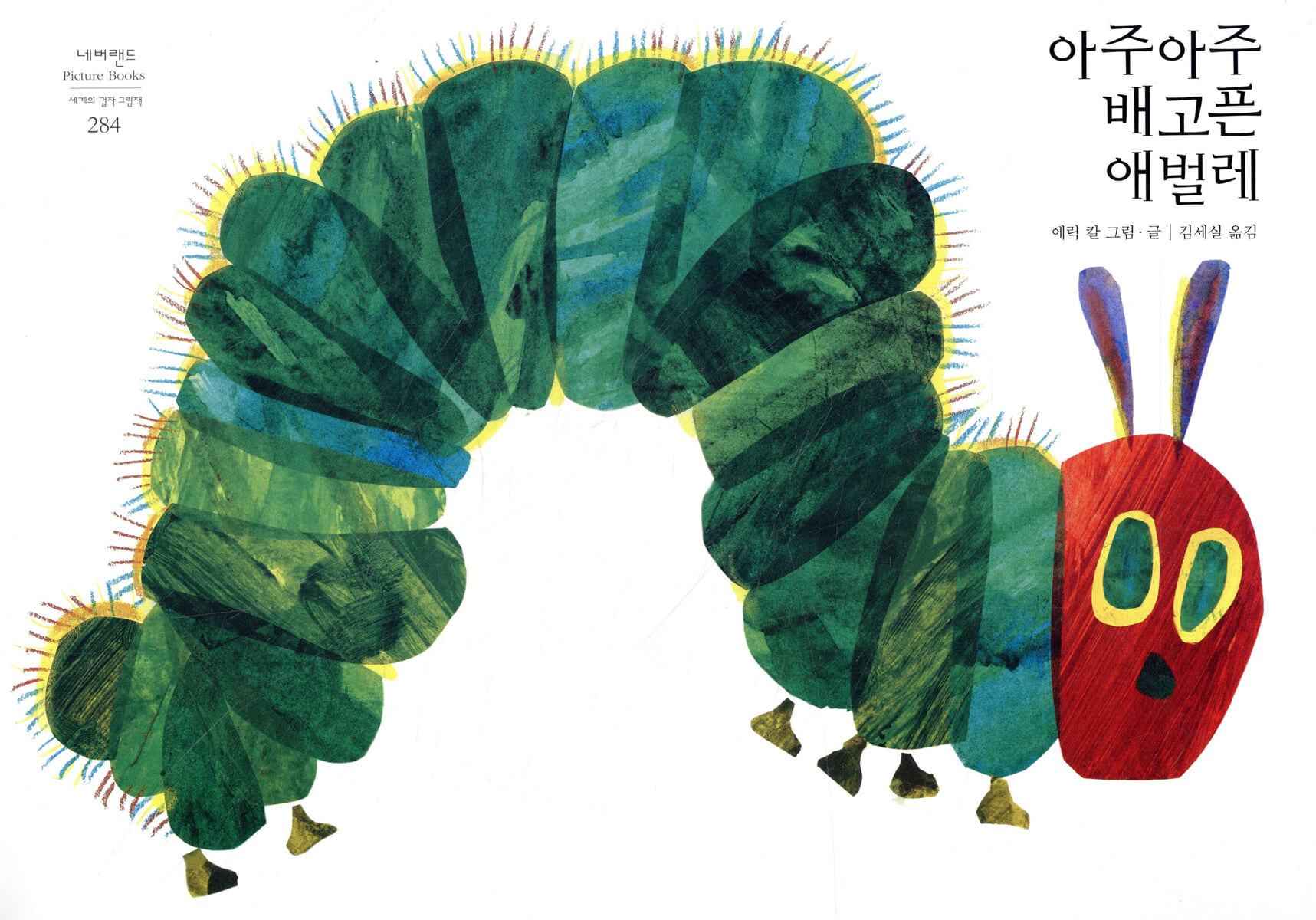 |
Description
Book Introduction
Translated into over 70 languages worldwide and with cumulative sales exceeding 55 million copies, The Very, Very Hungry Caterpillar is undoubtedly Eric Carle's masterpiece and a steady seller in the picture book industry.
The caterpillars in Eric Carle's work, expressed in bold colors and a unique collage technique using cut-and-painted tissue paper, immediately capture the attention of children. Tiny caterpillars hatch from tiny eggs and grow little by little from Monday to Friday, eating food such as apples, plums, and pears. On Saturday, the caterpillar eats chocolate cake and ice cream and becomes ill, but on Sunday, it eats leaves, which are its perfect food, and enters the cocoon. After two weeks, the caterpillar emerges from the cocoon and finally emerges into the world as a butterfly. The story of a tiny caterpillar growing into a butterfly with large, beautiful wings gives children dreams and hope. While reading the book, children will identify with the caterpillar and watch with interest as it eats food and grows. And when the caterpillar finally becomes a butterfly, it rejoices and cheers as if it had become a butterfly itself. Children who read this book will feel excited and hopeful that they, too, will grow steadily like the caterpillar in the picture book and one day become wonderful adults. |
- You can preview some of the book's contents.
Preview
Detailed image

Publisher's Review
■ Artist for Children, Eric Carle
Eric Carle (1929-2021), born in Syracuse, New York, is a children's book artist known for his bold colors and unique collage techniques.
After studying graphic art at the Stuttgart School of Visual Arts in Germany, he returned to New York and worked as a graphic designer for The New York Times, where he was noticed by author Bill Martin Jr. and began working on picture books.
Most of Eric Carle's works begin with small creatures living in nature, such as caterpillars, spiders, ladybugs, fireflies, and seeds.
As a child, Karl developed an interest in nature while walking through meadows and forests with his father, and that interest later became the most important theme and premise that permeated his works.
Eric Carle's works, written with an appreciation for nature and a love for animals big and small, instill in children a sense of awe for nature.
What makes Eric Carle's books so profound and consistently meaningful is his genuine interest in children, their emotions and interests, their creativity and intellectual development.
-Anne Benedeus (editor of The Very, Very Hungry Caterpillar)
Eric Carle said that we should pay attention to the period when a child leaves home and goes to school for the first time.
Because it is a time when the enormous gap unfolds, from the world of home and safety, play and sensation, to the world of reason and abstraction, order and discipline.
Carl wrote his book in the hope that it would serve as a tool to bridge that gap.
Carl's book is half toy (house) and half book (school), mixing play devices like punching, shape picking, and flaps with counting, days of the week, types of fruit, natural history information, and other educational elements.
Eric Carle's hope that children would grow through reading, playing, and enjoying his books is evident throughout his books.
■ A story about a caterpillar's growth that conveys dreams and hope to children.
Eric Carle, known as a master of modern picture books, is an author who captures the pure world of children and nature with his signature bright colors.
If you had to pick the most beloved picture book of his countless works, it would undoubtedly be "The Very, Very Hungry Caterpillar." Translated into over 70 languages and selling over 55 million copies worldwide, "The Very, Very Hungry Caterpillar" is undoubtedly Eric Carle's masterpiece and a steady seller in the picture book industry.
The caterpillars in Eric Carle's work, expressed in bold colors and a unique collage technique using cut-and-painted tissue paper, immediately capture the attention of children.
Tiny caterpillars hatch from tiny eggs and grow little by little from Monday to Friday, eating food such as apples, plums, and pears.
On Saturday, the caterpillar eats chocolate cake and ice cream and becomes ill, but on Sunday, it eats leaves, which are its perfect food, and enters the cocoon.
After two weeks, the caterpillar emerges from the cocoon and finally emerges into the world as a butterfly.
The story of a tiny caterpillar growing into a butterfly with large, beautiful wings gives children dreams and hope.
While reading the book, children will identify with the caterpillar and watch with interest as it eats food and grows.
And when the caterpillar finally becomes a butterfly, it rejoices and cheers as if it had become a butterfly itself.
Children who read this book will feel excited and hopeful that they, too, will grow steadily like the caterpillar in the picture book and one day become wonderful adults.
■ A picture book that lets you enjoy an interesting story and play.
"The Very, Very Hungry Caterpillar" is not only an interesting story, but also has another special element that makes it captivating for children.
It is a small hole in the bookshelf that is gradually getting longer and where the caterpillar in the picture passed by after eating food.
Children can play with the book as a toy by putting their fingers through the small holes or passing yarn through them like a caterpillar.
Also, as you turn the pages of the book, which gradually become longer, you intuitively realize that the food the caterpillar eats is increasing.
Eric Carle's unique design sense allows children to develop their intellectual skills while reading picture books with interest and curiosity.
This playbook format, which Eric Carle attempted in The Very, Very Hungry Caterpillar, became the most characteristic feature of his later works.
■ Various lessons contained in the story of the very, very hungry caterpillar
This book is packed with a wealth of learning material, from the days of the week, numbers, food, and even the life cycle of a butterfly. Starting on Sunday, children can follow the caterpillar through Monday, Tuesday, and back to Sunday, naturally learning the names of the days. They can also practice counting from one to five by counting fruits like one apple, two pears, and three plums.
You will learn the names of the various foods that caterpillars eat, and you will also naturally learn about the life cycle of a butterfly as you watch the caterpillar hatch from an egg and go through a cocoon to transform into a butterfly.
By putting your finger in the hole and wiggling it around, and saying onomatopoeia and mimetic words like “square, square, yum yum” in a realistic way, you can feel the fun of speaking and even increase your vocabulary.
Eric Carle (1929-2021), born in Syracuse, New York, is a children's book artist known for his bold colors and unique collage techniques.
After studying graphic art at the Stuttgart School of Visual Arts in Germany, he returned to New York and worked as a graphic designer for The New York Times, where he was noticed by author Bill Martin Jr. and began working on picture books.
Most of Eric Carle's works begin with small creatures living in nature, such as caterpillars, spiders, ladybugs, fireflies, and seeds.
As a child, Karl developed an interest in nature while walking through meadows and forests with his father, and that interest later became the most important theme and premise that permeated his works.
Eric Carle's works, written with an appreciation for nature and a love for animals big and small, instill in children a sense of awe for nature.
What makes Eric Carle's books so profound and consistently meaningful is his genuine interest in children, their emotions and interests, their creativity and intellectual development.
-Anne Benedeus (editor of The Very, Very Hungry Caterpillar)
Eric Carle said that we should pay attention to the period when a child leaves home and goes to school for the first time.
Because it is a time when the enormous gap unfolds, from the world of home and safety, play and sensation, to the world of reason and abstraction, order and discipline.
Carl wrote his book in the hope that it would serve as a tool to bridge that gap.
Carl's book is half toy (house) and half book (school), mixing play devices like punching, shape picking, and flaps with counting, days of the week, types of fruit, natural history information, and other educational elements.
Eric Carle's hope that children would grow through reading, playing, and enjoying his books is evident throughout his books.
■ A story about a caterpillar's growth that conveys dreams and hope to children.
Eric Carle, known as a master of modern picture books, is an author who captures the pure world of children and nature with his signature bright colors.
If you had to pick the most beloved picture book of his countless works, it would undoubtedly be "The Very, Very Hungry Caterpillar." Translated into over 70 languages and selling over 55 million copies worldwide, "The Very, Very Hungry Caterpillar" is undoubtedly Eric Carle's masterpiece and a steady seller in the picture book industry.
The caterpillars in Eric Carle's work, expressed in bold colors and a unique collage technique using cut-and-painted tissue paper, immediately capture the attention of children.
Tiny caterpillars hatch from tiny eggs and grow little by little from Monday to Friday, eating food such as apples, plums, and pears.
On Saturday, the caterpillar eats chocolate cake and ice cream and becomes ill, but on Sunday, it eats leaves, which are its perfect food, and enters the cocoon.
After two weeks, the caterpillar emerges from the cocoon and finally emerges into the world as a butterfly.
The story of a tiny caterpillar growing into a butterfly with large, beautiful wings gives children dreams and hope.
While reading the book, children will identify with the caterpillar and watch with interest as it eats food and grows.
And when the caterpillar finally becomes a butterfly, it rejoices and cheers as if it had become a butterfly itself.
Children who read this book will feel excited and hopeful that they, too, will grow steadily like the caterpillar in the picture book and one day become wonderful adults.
■ A picture book that lets you enjoy an interesting story and play.
"The Very, Very Hungry Caterpillar" is not only an interesting story, but also has another special element that makes it captivating for children.
It is a small hole in the bookshelf that is gradually getting longer and where the caterpillar in the picture passed by after eating food.
Children can play with the book as a toy by putting their fingers through the small holes or passing yarn through them like a caterpillar.
Also, as you turn the pages of the book, which gradually become longer, you intuitively realize that the food the caterpillar eats is increasing.
Eric Carle's unique design sense allows children to develop their intellectual skills while reading picture books with interest and curiosity.
This playbook format, which Eric Carle attempted in The Very, Very Hungry Caterpillar, became the most characteristic feature of his later works.
■ Various lessons contained in the story of the very, very hungry caterpillar
This book is packed with a wealth of learning material, from the days of the week, numbers, food, and even the life cycle of a butterfly. Starting on Sunday, children can follow the caterpillar through Monday, Tuesday, and back to Sunday, naturally learning the names of the days. They can also practice counting from one to five by counting fruits like one apple, two pears, and three plums.
You will learn the names of the various foods that caterpillars eat, and you will also naturally learn about the life cycle of a butterfly as you watch the caterpillar hatch from an egg and go through a cocoon to transform into a butterfly.
By putting your finger in the hole and wiggling it around, and saying onomatopoeia and mimetic words like “square, square, yum yum” in a realistic way, you can feel the fun of speaking and even increase your vocabulary.
GOODS SPECIFICS
- Publication date: June 27, 2022
- Format: Hardcover book binding method guide
- Page count, weight, size: 36 pages | 412g | 303*217*9mm
- ISBN13: 9791165799892
- ISBN10: 1165799898
- KC Certification: Certification Type: Conformity Confirmation
You may also like
카테고리
korean


korean

![GQ KOREA Mark (Monthly): December [2025]](http://librairie.coreenne.fr/cdn/shop/files/8ef265dbbfbf186523ed75ba7319009d.jpg?v=1765340328&width=3840)


