

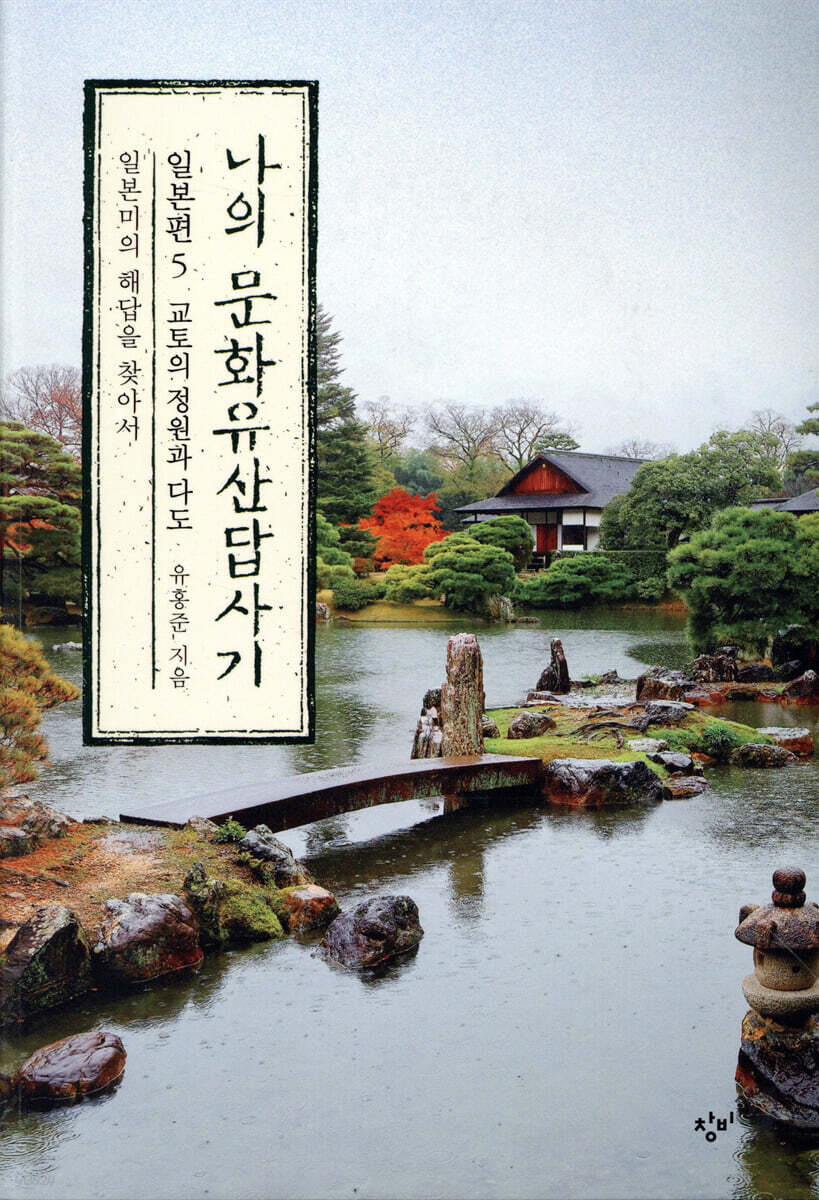
My Cultural Heritage Tour Japan Part 5: Kyoto's Gardens and Tea Ceremony
 |
Description
Book Introduction
Yoo Hong-jun's fresh perspective reveals the roots and essence of Japanese culture.
The 2020 revised edition of "My Cultural Heritage Tour" Japan Edition has been published!
Starting with the first volume, "Namdo Exploration No. 1" in 1993, and continuing with the seventh volume, "Jeju" in 2012, "Where is Dolhareubang, the Sensei Gwang?" in Jeju, Yoo Hong-jun's "My Cultural Heritage Exploration," which has been loved by 3.3 million readers for 20 years and recorded as the first million-seller in Korean humanities, is now heading to Japan in search of "Korean culture in Japan" and "the essence of Japanese culture."
The Japan edition of 'Research Report' began with the intention of approaching the issue of past history, which has been a major topic in Korea-Japan relations, from a cultural-historical perspective. It searches for traces of Korea's cultural influence on Japan and explores the process by which Japanese culture blossomed on that basis.
The author, who is well-versed in art history and cultural heritage, argues that it is future-oriented to shed the one-sided historical perceptions and complexes of Korea and Japan and to understand history from a bilateral perspective, and even from an East Asian perspective.
If the domestic edition of 'Dapjagi' contributed to promoting the cultural heritage of our country and encouraging appreciation for it, the recently published Japanese edition confirms the cultural excellence of our ancestors through Japan's cultural heritage and awakens us to the true nature of cultures that develop through mutual exchange and intermingling.
The Japanese edition of 'Dapsagi' has been consistently loved by many readers since its first publication in 2013.
However, many people said that the book was too large and heavy to be used as a practical guide for overseas field trips.
Accordingly, the new format applied from the ‘Dapsagi’ mountain temple pilgrimage section was also used in this revised Japanese edition, and the length of each volume was adjusted to re-edit it into 5 volumes.
The newly reborn "Travelogue" Japan edition, with its smaller size and hand-held design, is a vivid storybook that alleviates the regret of Japan, a place that has become difficult to visit recently for various reasons. It will approach readers as a guide that faithfully captures the historical awareness that forms the foundation of Korea-Japan relations, especially the consideration of cultural influence and exchange.
The 2020 revised edition of "My Cultural Heritage Tour" Japan Edition has been published!
Starting with the first volume, "Namdo Exploration No. 1" in 1993, and continuing with the seventh volume, "Jeju" in 2012, "Where is Dolhareubang, the Sensei Gwang?" in Jeju, Yoo Hong-jun's "My Cultural Heritage Exploration," which has been loved by 3.3 million readers for 20 years and recorded as the first million-seller in Korean humanities, is now heading to Japan in search of "Korean culture in Japan" and "the essence of Japanese culture."
The Japan edition of 'Research Report' began with the intention of approaching the issue of past history, which has been a major topic in Korea-Japan relations, from a cultural-historical perspective. It searches for traces of Korea's cultural influence on Japan and explores the process by which Japanese culture blossomed on that basis.
The author, who is well-versed in art history and cultural heritage, argues that it is future-oriented to shed the one-sided historical perceptions and complexes of Korea and Japan and to understand history from a bilateral perspective, and even from an East Asian perspective.
If the domestic edition of 'Dapjagi' contributed to promoting the cultural heritage of our country and encouraging appreciation for it, the recently published Japanese edition confirms the cultural excellence of our ancestors through Japan's cultural heritage and awakens us to the true nature of cultures that develop through mutual exchange and intermingling.
The Japanese edition of 'Dapsagi' has been consistently loved by many readers since its first publication in 2013.
However, many people said that the book was too large and heavy to be used as a practical guide for overseas field trips.
Accordingly, the new format applied from the ‘Dapsagi’ mountain temple pilgrimage section was also used in this revised Japanese edition, and the length of each volume was adjusted to re-edit it into 5 volumes.
The newly reborn "Travelogue" Japan edition, with its smaller size and hand-held design, is a vivid storybook that alleviates the regret of Japan, a place that has become difficult to visit recently for various reasons. It will approach readers as a guide that faithfully captures the historical awareness that forms the foundation of Korea-Japan relations, especially the consideration of cultural influence and exchange.
- You can preview some of the book's contents.
Preview
index
Introducing the book: In search of answers to Japanese beauty
Part 1: Gardens and Teahouses of the Momoyama Period
The Path of Philosophy and Namseonsa Temple: If you ask about the differences between Japanese and Korean gardens
Urasenke and Daitokuji Temple: This is how the Japanese tea ceremony was perfected.
Part 2: The Edo Period's Igu (Residence Palace)
Katsura Palace: "Beautiful Silence," or the Answer to Japanese Beauty
Suhakwon Lee Gung: A Humanistic Spirit Makes a Difference in Gardens
Part 3 And the rest of the story
Kyoto Manbo: As I See It, As I Feel It, As I Think It
Korea in Kyoto: The sun sets on the ten-mile plain of the Kamo River
Concluding the Japan Travelogue: Hoping to Be a Partner in the Creation of East Asian Culture
supplement
Stories of Japan's customs and ancient history for readers of travelogues
UNESCO World Heritage Sites in Kyoto
Field Trip Schedule
Part 1: Gardens and Teahouses of the Momoyama Period
The Path of Philosophy and Namseonsa Temple: If you ask about the differences between Japanese and Korean gardens
Urasenke and Daitokuji Temple: This is how the Japanese tea ceremony was perfected.
Part 2: The Edo Period's Igu (Residence Palace)
Katsura Palace: "Beautiful Silence," or the Answer to Japanese Beauty
Suhakwon Lee Gung: A Humanistic Spirit Makes a Difference in Gardens
Part 3 And the rest of the story
Kyoto Manbo: As I See It, As I Feel It, As I Think It
Korea in Kyoto: The sun sets on the ten-mile plain of the Kamo River
Concluding the Japan Travelogue: Hoping to Be a Partner in the Creation of East Asian Culture
supplement
Stories of Japan's customs and ancient history for readers of travelogues
UNESCO World Heritage Sites in Kyoto
Field Trip Schedule
Publisher's Review
In search of the answer to Japanese beauty
The Japanese edition of 『My Cultural Heritage Tour』 was planned as an extension of the domestic edition of 『My Cultural Heritage Tour』 and as a new chapter, encompassing the experiences and achievements of Professor Yoo Hong-jun, who has been traveling to various parts of Japan to find traces of Korean culture in Japan whenever he had time for nearly 30 years.
If the travel journey that started in Kyushu in Volume 1, went through Asuka and Nara in Volume 2, and Kyoto in Volumes 3 and 4 focused on culturally exploring the influence of the civilization brought by the Korean Peninsula on Japanese history from ancient times to the Middle Ages, this book, the third volume of the Kyoto series and the final installment of the travelogue to Japan, is structured as a journey to find the essence and answer to Japanese beauty by visiting the historical sites where Japan's unique culture blossomed with the influence of the Korean Peninsula as a foundation, with Kyoto, the ancient capital of Japan, as the stage.
In this fifth volume of the Japan edition, we will visit two representative royal villas built in Kyoto, the most popular tourist destination for domestic tourists and a place where the essence of Japanese history and culture is encapsulated, and experience the various aspects of these famous gardens, which can be said to be the answer to the beauty of Japanese gardens.
And the remaining story, rather than being limited to relics and ruins, presents a clue for reflection that we as Koreans should deeply contemplate by looking for traces of our history engraved throughout Kyoto's modern appearance.
From Goryeo Buddhist paintings to the poetic monuments of Yun Dong-ju and Jeong Ji-yong, this field trip traces the long history of cultural exchange between Korea and Japan, engraved in Japan. Through this journey, we will confirm the cultural excellence of our ancestors, look back on the history of cultural exchange between Korea and Japan, and seek a desirable future for Korea-Japan relations.
In addition, as an appendix at the end of the book, ‘Stories of Japanese Customs and Ancient History for Readers of the Travelogue’ was prepared, providing an overview of Japanese history.
In particular, the ancient history of Japan is organized into historical and cultural periods in a clear and meticulous manner, making it easy for even readers who are not familiar with Japanese history to understand.
Through them, we gain a new understanding of our history and culture.
Professor Yoo Hong-jun's field trip does not stop at confirming history through historical and cultural heritage and confirming the aesthetic value of relics and artifacts.
Only when we reflect on our own perspectives on cultural heritage through the lens of our own experiences can we truly complete a Yoo Hong-jun-style field trip.
Therefore, the travelogue to Japan does not necessarily stop at looking into ‘their history’ but continues to look back on ‘our story’.
In the fifth and final volume of the Japanese edition of 'Dapjigi', we will learn about the essence of Japanese aesthetics summarized as 'wabi-sabi' through the tea ceremony, tea rooms, and gardens that developed into Japan's unique tea culture.
And by visiting two representative royal villas, we will experience the various aspects of these famous gardens, which are said to be the answer to the beauty of Japanese gardens.
And the remaining story, rather than being limited to relics and ruins, presents a clue for reflection that we as Koreans should deeply contemplate by looking for traces of our history engraved throughout Kyoto's modern appearance.
Unlike Japanese gardens that recreate nature in an artificial space, Korean gardens are a testament to the beauty of nature and artificiality blending together; the story of how the simple Joseon tea bowl was re-evaluated as the best tea bowl in Japanese tea ceremony; and the fact that the foundation for modern Japanese Confucianism was laid through the literary exchange of the Joseon Tongsinsa. These are facts that come to us today through Japan, and they broaden our perspective not only on Japanese culture but also on our own culture.
A balanced perspective born from an accurate understanding of one another allows us to see Japan as a country, free from cultural superiority or historical complexes.
In that sense, the travelogue of Japan with Professor Yoo Hong-jun is not simply a guidebook or travelogue of Japan, but a must-read for understanding Japan, a theory of Japanese culture essential for our times, and, furthermore, a humanistic reflection that allows us to reflect on ourselves and our culture.
Suggestions for a Partnership in East Asian Cultural Creation
In particular, the message conveyed by the Japan edition of "My Cultural Heritage Tour," the first edition of which was completed in 2015 ahead of the 50th anniversary of Korea-Japan diplomatic relations, provides important implications for the future of desirable Korea-Japan relations.
Professor Yoo Hong-jun points out that, looking at the long history of Korea and Japan, it cannot be said that the relationship between the two countries was all that bad, and that in the 2,300 years of Korea-Japan relations, the only times when the happy coexistence between the two countries collapsed were during the seven years of the Imjin and Jeongyu Wars and the 100 years of modern times.
However, the current conflict between Korea and Japan stems from the unfortunate history of the recent past not being properly resolved and healed, and so the solution to this must also be sought there.
What he should look back on is the historical experience of 500 years ago when Joseon and Japan resolved past issues and moved toward normalizing relations.
In order to resume diplomatic relations between Joseon and Japan, which had been interrupted by the Imjin War, a 30-year process of settling past issues was necessary.
In the process, Japan showed an acknowledgment of its past wrongdoings, and Korea made active efforts to repatriate Koreans.
What is needed most for friendly relations between Korea and Japan is trust between the two countries, and this can be achieved through honest acknowledgment of past wrongdoings and resolution of the damage caused.
Professor Yoo Hong-jun expects that when this happens, the long history of cultural exchange between Korea and Japan will serve as a foundation for the two countries to become close partners in cultural creation as proud "cultural shareholder nations" in East Asia.
The Japanese edition of 『My Cultural Heritage Tour』 was planned as an extension of the domestic edition of 『My Cultural Heritage Tour』 and as a new chapter, encompassing the experiences and achievements of Professor Yoo Hong-jun, who has been traveling to various parts of Japan to find traces of Korean culture in Japan whenever he had time for nearly 30 years.
If the travel journey that started in Kyushu in Volume 1, went through Asuka and Nara in Volume 2, and Kyoto in Volumes 3 and 4 focused on culturally exploring the influence of the civilization brought by the Korean Peninsula on Japanese history from ancient times to the Middle Ages, this book, the third volume of the Kyoto series and the final installment of the travelogue to Japan, is structured as a journey to find the essence and answer to Japanese beauty by visiting the historical sites where Japan's unique culture blossomed with the influence of the Korean Peninsula as a foundation, with Kyoto, the ancient capital of Japan, as the stage.
In this fifth volume of the Japan edition, we will visit two representative royal villas built in Kyoto, the most popular tourist destination for domestic tourists and a place where the essence of Japanese history and culture is encapsulated, and experience the various aspects of these famous gardens, which can be said to be the answer to the beauty of Japanese gardens.
And the remaining story, rather than being limited to relics and ruins, presents a clue for reflection that we as Koreans should deeply contemplate by looking for traces of our history engraved throughout Kyoto's modern appearance.
From Goryeo Buddhist paintings to the poetic monuments of Yun Dong-ju and Jeong Ji-yong, this field trip traces the long history of cultural exchange between Korea and Japan, engraved in Japan. Through this journey, we will confirm the cultural excellence of our ancestors, look back on the history of cultural exchange between Korea and Japan, and seek a desirable future for Korea-Japan relations.
In addition, as an appendix at the end of the book, ‘Stories of Japanese Customs and Ancient History for Readers of the Travelogue’ was prepared, providing an overview of Japanese history.
In particular, the ancient history of Japan is organized into historical and cultural periods in a clear and meticulous manner, making it easy for even readers who are not familiar with Japanese history to understand.
Through them, we gain a new understanding of our history and culture.
Professor Yoo Hong-jun's field trip does not stop at confirming history through historical and cultural heritage and confirming the aesthetic value of relics and artifacts.
Only when we reflect on our own perspectives on cultural heritage through the lens of our own experiences can we truly complete a Yoo Hong-jun-style field trip.
Therefore, the travelogue to Japan does not necessarily stop at looking into ‘their history’ but continues to look back on ‘our story’.
In the fifth and final volume of the Japanese edition of 'Dapjigi', we will learn about the essence of Japanese aesthetics summarized as 'wabi-sabi' through the tea ceremony, tea rooms, and gardens that developed into Japan's unique tea culture.
And by visiting two representative royal villas, we will experience the various aspects of these famous gardens, which are said to be the answer to the beauty of Japanese gardens.
And the remaining story, rather than being limited to relics and ruins, presents a clue for reflection that we as Koreans should deeply contemplate by looking for traces of our history engraved throughout Kyoto's modern appearance.
Unlike Japanese gardens that recreate nature in an artificial space, Korean gardens are a testament to the beauty of nature and artificiality blending together; the story of how the simple Joseon tea bowl was re-evaluated as the best tea bowl in Japanese tea ceremony; and the fact that the foundation for modern Japanese Confucianism was laid through the literary exchange of the Joseon Tongsinsa. These are facts that come to us today through Japan, and they broaden our perspective not only on Japanese culture but also on our own culture.
A balanced perspective born from an accurate understanding of one another allows us to see Japan as a country, free from cultural superiority or historical complexes.
In that sense, the travelogue of Japan with Professor Yoo Hong-jun is not simply a guidebook or travelogue of Japan, but a must-read for understanding Japan, a theory of Japanese culture essential for our times, and, furthermore, a humanistic reflection that allows us to reflect on ourselves and our culture.
Suggestions for a Partnership in East Asian Cultural Creation
In particular, the message conveyed by the Japan edition of "My Cultural Heritage Tour," the first edition of which was completed in 2015 ahead of the 50th anniversary of Korea-Japan diplomatic relations, provides important implications for the future of desirable Korea-Japan relations.
Professor Yoo Hong-jun points out that, looking at the long history of Korea and Japan, it cannot be said that the relationship between the two countries was all that bad, and that in the 2,300 years of Korea-Japan relations, the only times when the happy coexistence between the two countries collapsed were during the seven years of the Imjin and Jeongyu Wars and the 100 years of modern times.
However, the current conflict between Korea and Japan stems from the unfortunate history of the recent past not being properly resolved and healed, and so the solution to this must also be sought there.
What he should look back on is the historical experience of 500 years ago when Joseon and Japan resolved past issues and moved toward normalizing relations.
In order to resume diplomatic relations between Joseon and Japan, which had been interrupted by the Imjin War, a 30-year process of settling past issues was necessary.
In the process, Japan showed an acknowledgment of its past wrongdoings, and Korea made active efforts to repatriate Koreans.
What is needed most for friendly relations between Korea and Japan is trust between the two countries, and this can be achieved through honest acknowledgment of past wrongdoings and resolution of the damage caused.
Professor Yoo Hong-jun expects that when this happens, the long history of cultural exchange between Korea and Japan will serve as a foundation for the two countries to become close partners in cultural creation as proud "cultural shareholder nations" in East Asia.
GOODS SPECIFICS
- Date of issue: September 20, 2020
- Page count, weight, size: 288 pages | 456g | 147*214*16mm
- ISBN13: 9788936478025
- ISBN10: 8936478028
You may also like
카테고리
korean


korean

![GQ KOREA Mark (Monthly): December [2025]](http://librairie.coreenne.fr/cdn/shop/files/8ef265dbbfbf186523ed75ba7319009d.jpg?v=1765340328&width=3840)


