

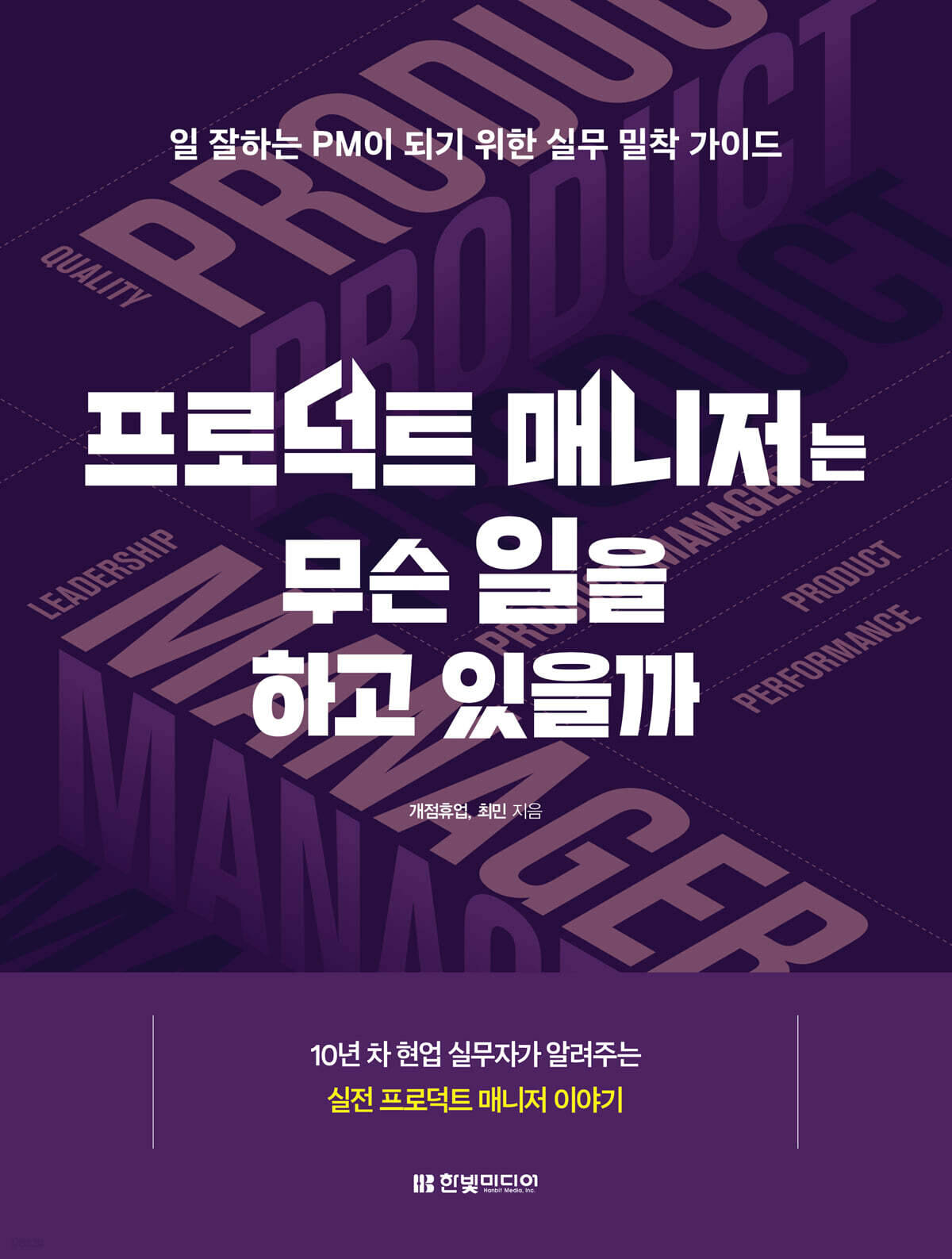
What does a product manager do?
 |
Description
Book Introduction
A Practical Guide to Product Management from a 10-Year Experienced Practitioner
As IT companies grow, roles that require thinking about what products to develop and why to contribute to the company's vision and strategy have become necessary.
That role is said to be performed by a product manager.
But what exactly is a product manager, what do they do, and what skills should they have?
This book is a practical guide to product management, filled with the practical experience and know-how of a 10-year veteran.
Explains what a product manager is, what he or she does, and the role and necessity of the position.
It thoroughly explains the role of a product manager throughout the entire product lifecycle, from product strategy development to implementation, testing and deployment, operation, and post-implementation.
For aspiring product managers or junior product managers seeking expertise, this course teaches practical work practices and how to reduce trial and error.
The author's diverse experience and the friendly explanation of the overall work, as if from a senior colleague, help you quickly adapt to the actual work.
Additionally, it introduces core competencies and self-development methods to become an excellent product manager.
As IT companies grow, roles that require thinking about what products to develop and why to contribute to the company's vision and strategy have become necessary.
That role is said to be performed by a product manager.
But what exactly is a product manager, what do they do, and what skills should they have?
This book is a practical guide to product management, filled with the practical experience and know-how of a 10-year veteran.
Explains what a product manager is, what he or she does, and the role and necessity of the position.
It thoroughly explains the role of a product manager throughout the entire product lifecycle, from product strategy development to implementation, testing and deployment, operation, and post-implementation.
For aspiring product managers or junior product managers seeking expertise, this course teaches practical work practices and how to reduce trial and error.
The author's diverse experience and the friendly explanation of the overall work, as if from a senior colleague, help you quickly adapt to the actual work.
Additionally, it introduces core competencies and self-development methods to become an excellent product manager.
- You can preview some of the book's contents.
Preview
index
CHAPTER 1 Products and Product Teams
_1.1 Product Definition
__1.1.1 Products in the IT industry
__1.1.2 Product classification and examples
_1.2 Product manufacturing process
__1.2.1 Procedures and Step-by-Step Tasks
__1.2.2 Product Implementation Methodologies, Agile and Waterfall
_1.3 People who make products
__1.3.1 Sprint
__1.3.2 Product Team and Related Departments
__1.3.3 Product Team Organization
CHAPTER 2 What a Product Manager Does
_2.1 Definition of Product Manager
__2.1.1 History of Product Management in Korea
__2.1.2 Scope of Work of a Product Manager
_2.2 Product Manager Career Path
__2.2.1 Product Manager Competencies
__2.2.2 Designing a Career Path
CHAPTER 3 Requirements Definition and Screen Design
_3.1 Definition of a plan
__3.1.1 Requirements Definition and Screen Design
__3.1.2 Readers and Context of the Proposal
__3.1.3 Ideal Plan
_3.2 Defining requirements and setting indicators
__3.2.1 Components of the Requirements Definition Document
__3.2.2 Basics of Product Metrics
_3.3 User Story and Screen Design
__3.3.1 Definition of User Stories
__3.3.2 Screen Design and Components
CHAPTER 4 PRODUCT IMPLEMENTATION
_4.1 Implementation process and tasks for each person in charge
__4.1.1 Implementation Process Flow
__4.1.2 Design and Markup
__4.1.3 Front-end and back-end development
_4.2 Sprint Operation
__4.2.1 Backlog and Sprint Management
__4.2.2 Schedule and Document Management
_4.3 Situational Response
__4.3.1 Changes to the plan contents
__4.3.2 Schedule Delay
CHAPTER 5 TESTING AND Deployment
_5.1 Test Scenario
__5.1.1 Definition and Purpose of Test Scenarios
__5.1.2 Test Scenario Essentials
_5.2 Deployment Scenario
__5.2.1 Definition and Purpose of Deployment Scenarios
__5.2.2 Distribution Process
__5.2.3 Deployment Scenario Essentials
CHAPTER 6 After Product Implementation
_6.1 Check the indicators
__6.1.1 Things to prepare in advance
__6.1.2 Finding Improvements/Abnormalities
_6.2 Reflection and Report
__6.2.1 Purpose and format of retrospective
__6.2.2 Purpose and format of the report
CHAPTER 7 OPERATION
_7.1 Continuous Operation and Monitoring
__7.1.1 Operations Management
__7.1.2 Check service-related issues
__7.1.3 CS response
_7.2 Fault Monitoring and Response
__7.2.1 Disability Definition and Coping Process
__7.2.2 Disability Precautions
__7.2.3 Response after a failure occurs
_7.3 Collaboration in the Operational Phase
__7.3.1 Collaborating with the Operations Organization
__7.3.2 Collaborating with the Development Organization
CHAPTER 8 COMMUNICATION IN THE WORK ENVIRONMENT
_8.1 Definition and Importance of Communication
__8.1.1 Definition of Communication
__8.1.2 The Importance of Communication
_8.2 The Challenge of Communication
__8.2.1 Different communication styles
__8.2.2 Inducing organizational consensus and accepting negative feedback
__8.2.3 Failure to build consensus
_8.3 Guidelines for Effective Communication
__8.3.1 Open attitude and constructive orientation
__8.3.2 Methodology that can be implemented immediately
__8.3.3 Personal Communication Principles
_8.4 Special characteristics of remote work
__8.4.1 Differences from office work
__8.4.2 A methodology that can be implemented immediately
CHAPTER 9: The Role and Self-Development of Product Managers
_9.1 The Importance of Self-Development
__9.1.1 Self-development that I need
__9.1.2 A company that suits me
_9.2 The Role of the Product Manager
__9.2.1 Troubleshooting
__9.2.2 Persuasion and Collaboration
__9.2.3 Acquisition
__9.2.4 Completed
_9.3 Organizational Expectations for Product Managers
__9.3.1 Organizational Culture
__9.3.2 Expected scope of work by organizational structure
__9.3.3 How to find the company I want to work for
_9.4 What should I study?
__9.4.1 Development
__9.4.2 Data Analysis
__9.4.3 Product Design
CHAPTER 10 THE ROLE OF THE LEADER
_10.1 Product Manager Leadership
__10.1.1 Product Team Optimization
__10.1.2 Trust Capital in the Product Team
__10.1.3 Metacognition about Leadership
_10.2 Introduction to Situational Leadership
__10.2.1 Differences between leaders and managers
__10.2.2 Hershey and Blanchard's Situational Leadership Model
_10.3 Leadership that Starts Small
__10.3.1 Analysis of myself and the organization
__10.3.2 A methodology that can be implemented immediately
_1.1 Product Definition
__1.1.1 Products in the IT industry
__1.1.2 Product classification and examples
_1.2 Product manufacturing process
__1.2.1 Procedures and Step-by-Step Tasks
__1.2.2 Product Implementation Methodologies, Agile and Waterfall
_1.3 People who make products
__1.3.1 Sprint
__1.3.2 Product Team and Related Departments
__1.3.3 Product Team Organization
CHAPTER 2 What a Product Manager Does
_2.1 Definition of Product Manager
__2.1.1 History of Product Management in Korea
__2.1.2 Scope of Work of a Product Manager
_2.2 Product Manager Career Path
__2.2.1 Product Manager Competencies
__2.2.2 Designing a Career Path
CHAPTER 3 Requirements Definition and Screen Design
_3.1 Definition of a plan
__3.1.1 Requirements Definition and Screen Design
__3.1.2 Readers and Context of the Proposal
__3.1.3 Ideal Plan
_3.2 Defining requirements and setting indicators
__3.2.1 Components of the Requirements Definition Document
__3.2.2 Basics of Product Metrics
_3.3 User Story and Screen Design
__3.3.1 Definition of User Stories
__3.3.2 Screen Design and Components
CHAPTER 4 PRODUCT IMPLEMENTATION
_4.1 Implementation process and tasks for each person in charge
__4.1.1 Implementation Process Flow
__4.1.2 Design and Markup
__4.1.3 Front-end and back-end development
_4.2 Sprint Operation
__4.2.1 Backlog and Sprint Management
__4.2.2 Schedule and Document Management
_4.3 Situational Response
__4.3.1 Changes to the plan contents
__4.3.2 Schedule Delay
CHAPTER 5 TESTING AND Deployment
_5.1 Test Scenario
__5.1.1 Definition and Purpose of Test Scenarios
__5.1.2 Test Scenario Essentials
_5.2 Deployment Scenario
__5.2.1 Definition and Purpose of Deployment Scenarios
__5.2.2 Distribution Process
__5.2.3 Deployment Scenario Essentials
CHAPTER 6 After Product Implementation
_6.1 Check the indicators
__6.1.1 Things to prepare in advance
__6.1.2 Finding Improvements/Abnormalities
_6.2 Reflection and Report
__6.2.1 Purpose and format of retrospective
__6.2.2 Purpose and format of the report
CHAPTER 7 OPERATION
_7.1 Continuous Operation and Monitoring
__7.1.1 Operations Management
__7.1.2 Check service-related issues
__7.1.3 CS response
_7.2 Fault Monitoring and Response
__7.2.1 Disability Definition and Coping Process
__7.2.2 Disability Precautions
__7.2.3 Response after a failure occurs
_7.3 Collaboration in the Operational Phase
__7.3.1 Collaborating with the Operations Organization
__7.3.2 Collaborating with the Development Organization
CHAPTER 8 COMMUNICATION IN THE WORK ENVIRONMENT
_8.1 Definition and Importance of Communication
__8.1.1 Definition of Communication
__8.1.2 The Importance of Communication
_8.2 The Challenge of Communication
__8.2.1 Different communication styles
__8.2.2 Inducing organizational consensus and accepting negative feedback
__8.2.3 Failure to build consensus
_8.3 Guidelines for Effective Communication
__8.3.1 Open attitude and constructive orientation
__8.3.2 Methodology that can be implemented immediately
__8.3.3 Personal Communication Principles
_8.4 Special characteristics of remote work
__8.4.1 Differences from office work
__8.4.2 A methodology that can be implemented immediately
CHAPTER 9: The Role and Self-Development of Product Managers
_9.1 The Importance of Self-Development
__9.1.1 Self-development that I need
__9.1.2 A company that suits me
_9.2 The Role of the Product Manager
__9.2.1 Troubleshooting
__9.2.2 Persuasion and Collaboration
__9.2.3 Acquisition
__9.2.4 Completed
_9.3 Organizational Expectations for Product Managers
__9.3.1 Organizational Culture
__9.3.2 Expected scope of work by organizational structure
__9.3.3 How to find the company I want to work for
_9.4 What should I study?
__9.4.1 Development
__9.4.2 Data Analysis
__9.4.3 Product Design
CHAPTER 10 THE ROLE OF THE LEADER
_10.1 Product Manager Leadership
__10.1.1 Product Team Optimization
__10.1.2 Trust Capital in the Product Team
__10.1.3 Metacognition about Leadership
_10.2 Introduction to Situational Leadership
__10.2.1 Differences between leaders and managers
__10.2.2 Hershey and Blanchard's Situational Leadership Model
_10.3 Leadership that Starts Small
__10.3.1 Analysis of myself and the organization
__10.3.2 A methodology that can be implemented immediately
Detailed image

Publisher's Review
· Are you curious about product managers?
·A practical guide to becoming a product manager, from a product manager who's a different kind of person.
You've probably heard the word "PM" at least once in the IT industry these days. PM stands for Product Manager, and typically serves as a key leader responsible for leading the entire project lifecycle.
This book, written by a product manager with 10 years of experience, explains in one volume what a product manager is, their role, and how they work in the field, based on their own experience.
We provide practical know-how you won't find anywhere else, practical skills, and essential competencies to become a successful product manager.
Because the authors share their experiences as product managers, reading this book will help you adapt to the real world more quickly.
It also covers self-development methods to develop the skills needed for a product manager and how to analyze job postings to find the right company for you.
If you're curious about what makes a good product manager, this is the book for you!
Who is this book for?
- Future PM/PO interested in a product manager position
- Junior product managers with 3-5 years of experience who are looking for expertise
- Everyone who creates digital products (product planners, UXers, developers, engineers, designers, marketers)
Structure of this book
· Chapter 1_Products and Product Teams
Let's look at expressions commonly used in the IT industry in accordance with work procedures.
Even if the same term is used, it may be used differently depending on the organization.
This chapter explains what each term means and why it is used that way.
· Chapter 2_What a Product Manager Does
Let's take a brief history of the role that encompasses planning or product management tasks.
Learn about what the product team does and how the product manager's job duties change accordingly.
Additionally, we will examine what specific capabilities each organization requires to become an excellent product manager.
· Chapter 3_Requirements Definition and Screen Design
We will examine the processes involved in creating products in the field and the problems that frequently occur.
Creating a product requires decisions at every step.
Products are not created solely by individual decisions.
Because it is carried out through agreement among members, the agreed results are recorded and shared.
We cover the decision-making sequence for products considered standard business procedures and examples of the documentation required at each step.
· Chapter 4_Product Implementation
Describes the overall flow of product implementation.
It explains which parts of the product are implemented and in what order, and what the most important areas for collaboration and confirmation are with each person in charge as a product manager.
We also cover the role that product managers play in running sprints, particularly during product implementation.
Additionally, we will look at the types of unexpected situations that may arise throughout the implementation process and how to deal with them.
· Chapter 5_Testing and Deployment
It is explained by dividing it into ‘test scenario’ and ‘deployment scenario’.
The test scenario focuses on the preliminary preparations required for testing before deployment, and the deployment scenario describes the scenario organization and actual deployment process for carrying out actual service deployment.
· Chapter 6_After Product Implementation
This article outlines what product managers need to prepare to collect and extract product-related metrics data, and briefly introduces the key points that can be confirmed through such metrics.
It also covers retrospectives and reports immediately following the product launch.
· Chapter 7_Operation
Product service operations have a different level of complexity than creating products.
We must always consider interactions with 'users' who have emerged as new stakeholders.
This chapter covers the general items that a product manager must take care of to ensure continuous or emergency (outage) operation of a service.
· Chapter 8_Communication in the Work Environment
It explains why communication is important, what specific difficulties communication faces in an organization, and how to induce communication methods to create an ideal organizational culture.
· Chapter 9_The Role and Self-Development of a Product Manager
Product managers don't need to have every skill set.
Depending on the product you are making and the organization you belong to, the skills you need will vary, and you just need to put in as much effort as necessary.
A product manager is someone who manages not only the product but also the team.
We'll explore why this role is important for junior product managers and what they can do to develop this skill.
· Chapter 10_The Role of a Leader
The best product managers identify and fulfill the capabilities and roles that their organization and products require.
That's how you can be your best as a product manager.
We explore what it takes to become the leader your organization and team want you to be.
·A practical guide to becoming a product manager, from a product manager who's a different kind of person.
You've probably heard the word "PM" at least once in the IT industry these days. PM stands for Product Manager, and typically serves as a key leader responsible for leading the entire project lifecycle.
This book, written by a product manager with 10 years of experience, explains in one volume what a product manager is, their role, and how they work in the field, based on their own experience.
We provide practical know-how you won't find anywhere else, practical skills, and essential competencies to become a successful product manager.
Because the authors share their experiences as product managers, reading this book will help you adapt to the real world more quickly.
It also covers self-development methods to develop the skills needed for a product manager and how to analyze job postings to find the right company for you.
If you're curious about what makes a good product manager, this is the book for you!
Who is this book for?
- Future PM/PO interested in a product manager position
- Junior product managers with 3-5 years of experience who are looking for expertise
- Everyone who creates digital products (product planners, UXers, developers, engineers, designers, marketers)
Structure of this book
· Chapter 1_Products and Product Teams
Let's look at expressions commonly used in the IT industry in accordance with work procedures.
Even if the same term is used, it may be used differently depending on the organization.
This chapter explains what each term means and why it is used that way.
· Chapter 2_What a Product Manager Does
Let's take a brief history of the role that encompasses planning or product management tasks.
Learn about what the product team does and how the product manager's job duties change accordingly.
Additionally, we will examine what specific capabilities each organization requires to become an excellent product manager.
· Chapter 3_Requirements Definition and Screen Design
We will examine the processes involved in creating products in the field and the problems that frequently occur.
Creating a product requires decisions at every step.
Products are not created solely by individual decisions.
Because it is carried out through agreement among members, the agreed results are recorded and shared.
We cover the decision-making sequence for products considered standard business procedures and examples of the documentation required at each step.
· Chapter 4_Product Implementation
Describes the overall flow of product implementation.
It explains which parts of the product are implemented and in what order, and what the most important areas for collaboration and confirmation are with each person in charge as a product manager.
We also cover the role that product managers play in running sprints, particularly during product implementation.
Additionally, we will look at the types of unexpected situations that may arise throughout the implementation process and how to deal with them.
· Chapter 5_Testing and Deployment
It is explained by dividing it into ‘test scenario’ and ‘deployment scenario’.
The test scenario focuses on the preliminary preparations required for testing before deployment, and the deployment scenario describes the scenario organization and actual deployment process for carrying out actual service deployment.
· Chapter 6_After Product Implementation
This article outlines what product managers need to prepare to collect and extract product-related metrics data, and briefly introduces the key points that can be confirmed through such metrics.
It also covers retrospectives and reports immediately following the product launch.
· Chapter 7_Operation
Product service operations have a different level of complexity than creating products.
We must always consider interactions with 'users' who have emerged as new stakeholders.
This chapter covers the general items that a product manager must take care of to ensure continuous or emergency (outage) operation of a service.
· Chapter 8_Communication in the Work Environment
It explains why communication is important, what specific difficulties communication faces in an organization, and how to induce communication methods to create an ideal organizational culture.
· Chapter 9_The Role and Self-Development of a Product Manager
Product managers don't need to have every skill set.
Depending on the product you are making and the organization you belong to, the skills you need will vary, and you just need to put in as much effort as necessary.
A product manager is someone who manages not only the product but also the team.
We'll explore why this role is important for junior product managers and what they can do to develop this skill.
· Chapter 10_The Role of a Leader
The best product managers identify and fulfill the capabilities and roles that their organization and products require.
That's how you can be your best as a product manager.
We explore what it takes to become the leader your organization and team want you to be.
GOODS SPECIFICS
- Date of issue: January 6, 2023
- Page count, weight, size: 244 pages | 500g | 170*225*14mm
- ISBN13: 9791169210645
- ISBN10: 1169210643
You may also like
카테고리
korean


korean

![ELLE 엘르 스페셜 에디션 A형 : 12월 [2025]](http://librairie.coreenne.fr/cdn/shop/files/b8e27a3de6c9538896439686c6b0e8fb.jpg?v=1766436872&width=3840)


