

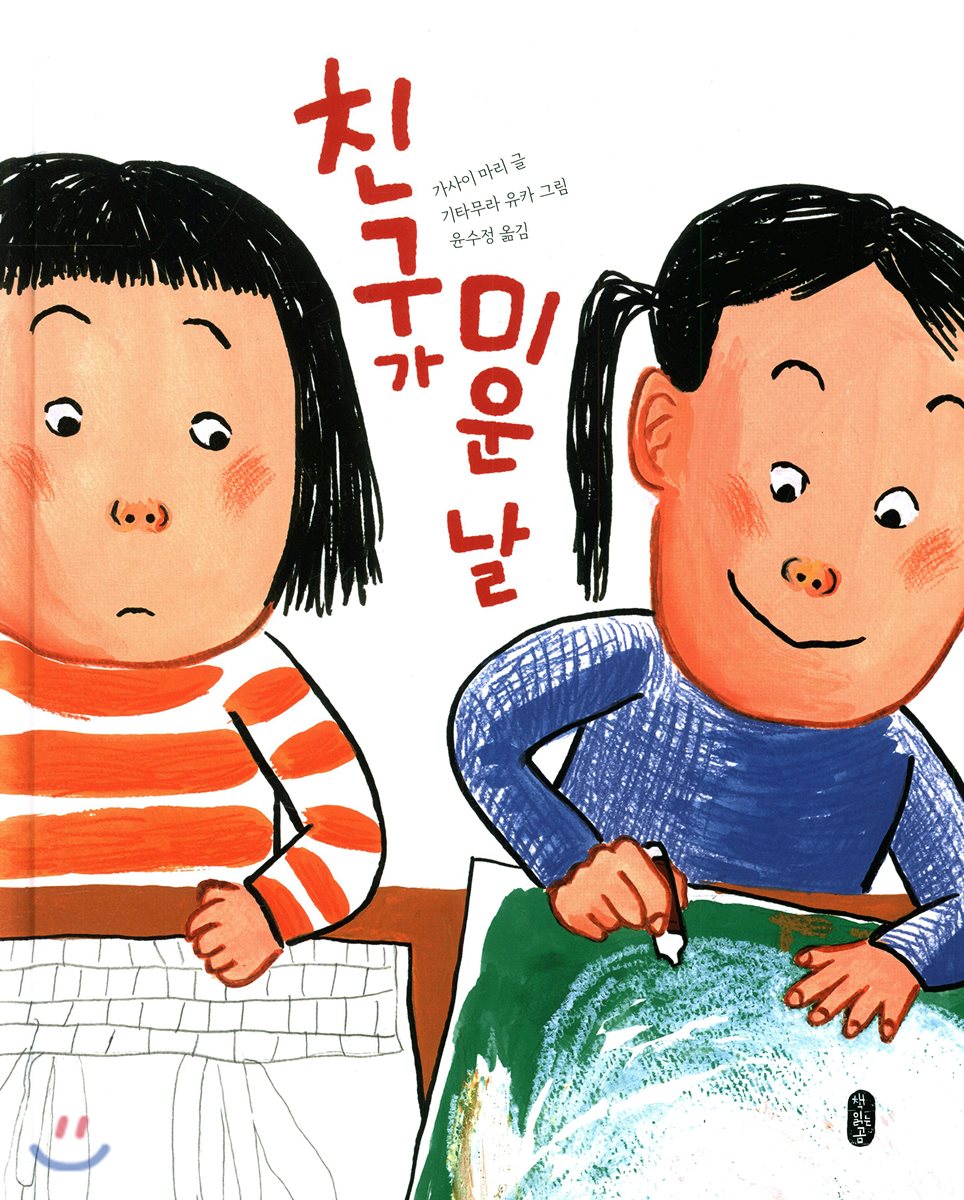
The day I hate my friend
 |
Description
Book Introduction
A vivid portrayal of children's daily lives through a solid narrative and detailed emotional portrayal.
Mari Gasai, the author of this book, is a widely loved author of picture books that delicately express the hearts of children.
He wrote and illustrated nearly 100 books over 25 years, and his works “Lies” and “Story of a Moonlit Night” were included in Japanese textbooks.
This book, through the voice of one of the main characters, honestly and frankly describes the complex and subtle emotional movements children experience in their relationships with friends, such as resentment, anxiety, hatred, and jealousy.
Enhancing this voice are the paintings of Yuka Kitamura, one of Japan's most notable newcomers.
Although the drawing is innocent enough to look like a child's, the vivid portrayal of Hana's fluctuating heart and Yu-u's reaction to it makes us think again about what makes a well-drawn picture book illustration.
Mari Gasai, the author of this book, is a widely loved author of picture books that delicately express the hearts of children.
He wrote and illustrated nearly 100 books over 25 years, and his works “Lies” and “Story of a Moonlit Night” were included in Japanese textbooks.
This book, through the voice of one of the main characters, honestly and frankly describes the complex and subtle emotional movements children experience in their relationships with friends, such as resentment, anxiety, hatred, and jealousy.
Enhancing this voice are the paintings of Yuka Kitamura, one of Japan's most notable newcomers.
Although the drawing is innocent enough to look like a child's, the vivid portrayal of Hana's fluctuating heart and Yu-u's reaction to it makes us think again about what makes a well-drawn picture book illustration.
- You can preview some of the book's contents.
Preview
Detailed image
Publisher's Review
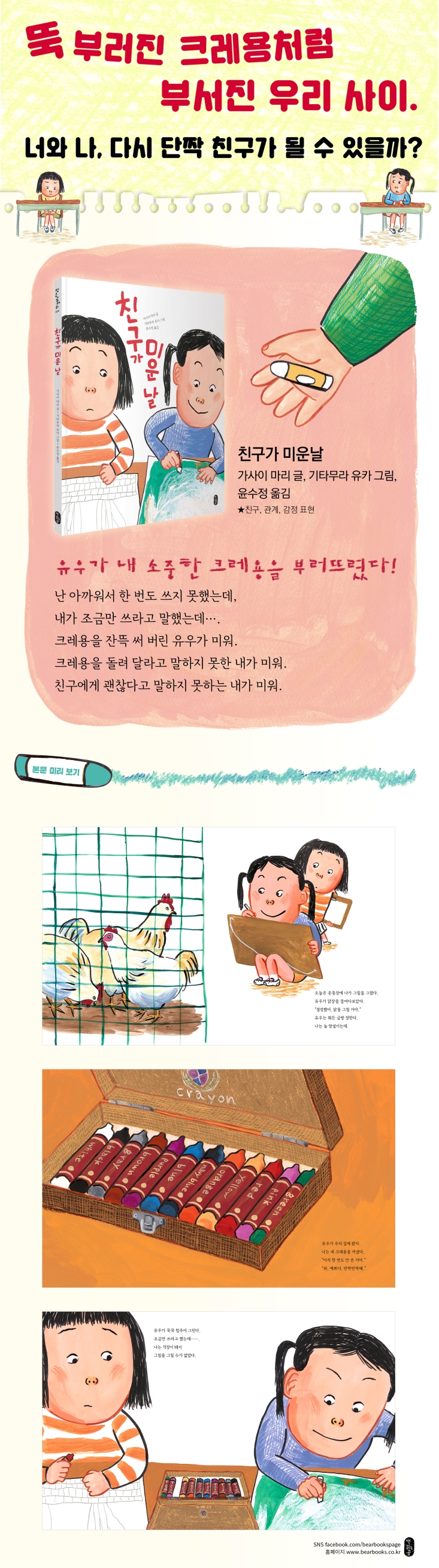
Our relationship is shattered like a broken crayon.
Can you and I be best friends again?
Yuu broke my precious crayon!
I never used it because I felt bad about it,
I told you to use only a little bit… .
I hate Yuga for using up all the crayons.
I hate myself for not telling you to give me back my crayons.
I hate myself for not being able to tell my friends that it's okay.
A picture book that delicately soothes the hearts of children experiencing conflict with their best friends.
"The Day I Hate My Friend" is a book that delicately depicts the psychology of a child who experiences conflict with his best friend.
Even the closest of friends sometimes have differences of opinion.
Rather, the closer you are to each other, the more often you end up not saying what you need to say because you are too considerate of each other.
Every time that happens, subtle emotions like hatred, jealousy, and resentment build up in my heart without me knowing it.
Relationships are a difficult issue for both children and adults.
The main characters of this book, Hana and Yu, are inseparable best friends.
Today we decided to do drawing homework together at Hanane's house.
One of them took out a new crayon that he had been saving.
I wanted to show my friend the pretty crayons in the nice wooden box, and I also wanted to show them off secretly.
But Yu, who was busy drawing, asks to borrow a white crayon.
I need to color a big chicken, but I've used up all of mine.
I'm hesitating to buy one of these crayons because I haven't used it yet because I feel bad about it.
But I can't help it because it's my best friend's request.
One of them is so worried about the crayons he borrowed that he can't draw.
I was nervously watching Yuu as he pressed down hard to color, when suddenly the crayon broke.
Yu pauses for a moment, then gets lost in the painting again.
After finishing the drawing, Yuga returns the crayons to Hana, thanking her.
But one thing I can't say is,
I kept my mouth shut until Yuu packed his bags and went back.
That night, hatred builds up in one's heart.
I hate Yu for using up all the crayons, I hate myself for not asking for them back sooner, and I hate myself for not being able to draw and becoming distant from my friends because of those crayons.
Reconciliation is confessing your feelings honestly and listening to your friend's heart.
Because I love and care for my friends, there are times when I can't be honest.
Even if you don't like what your friend says or does, there are times when you hold it in because you don't want to upset them.
But I can't hide my frustration, and I'm at a loss as to how to resolve the increasingly awkward situation.
Even if it seems like you've drifted apart for a while, if you have faith in each other, your hearts will always be connected again.
This kind of trust comes from honestly accepting each other as they are.
At first, I was so angry and upset with Yu that I didn't even say hello or talk to him for several days.
When Yuu's classmates heard that he was going to submit his drawing of a white chicken to an art contest, all of them congratulated him, but Hana just hung her head and remained silent.
Yuu, seeing this, jumps up and shouts at them not to show his picture.
Because it's a picture of one precious crayon broken.
Hana, who found out that Yuu was as upset and sorry as she was, loudly suggested that she submit a drawing of Yuu to the contest.
A shy person who always speaks in a whisper mustered up his courage.
The two, who had been hiding their feelings, become close friends again.
In this way, when maintaining relationships with others, it is most important to honestly convey your feelings.
Just as each person has a different appearance, each person's heart is also different.
Even the closest of friends may not know how I feel.
Moreover, the heart is invisible, so if you don't express it in words, it is difficult for the other person to immediately understand.
When you want to convey your true feelings to others, you don't need expensive gifts or eloquence.
All it takes is a little courage to speak up and an honest confession.
And after telling my story, I should listen to what the other person has to say.
Through this kind of give and take, we can build healthier and stronger relationships with each other.
If you're having a conflict with a friend right now, find the courage to confess your true feelings.
Be honest about what upset you, why you said or did what you did, and how you felt when your friend drifted away.
And listen to your friend's sincerity.
You will definitely feel relieved and happy, like Hana and Yu running side by side with bright smiles again.
A vivid portrayal of children's daily lives through a solid narrative and detailed emotional portrayal.
Mari Gasai, the author of this book, is a widely loved author of picture books that delicately express the hearts of children.
He wrote and illustrated nearly 100 books over 25 years, and his works “Lies” and “Story of a Moonlit Night” were included in Japanese textbooks.
This book, through the voice of one of the main characters, honestly and frankly describes the complex and subtle emotional movements children experience in their relationships with friends, such as resentment, anxiety, hatred, and jealousy.
Enhancing this voice are the paintings of Yuka Kitamura, one of Japan's most notable newcomers.
Although the drawing is innocent enough to look like a child's, the vivid portrayal of Hana's fluctuating heart and Yu-u's reaction to it makes us think again about what makes a well-drawn picture book illustration.
Can you and I be best friends again?
Yuu broke my precious crayon!
I never used it because I felt bad about it,
I told you to use only a little bit… .
I hate Yuga for using up all the crayons.
I hate myself for not telling you to give me back my crayons.
I hate myself for not being able to tell my friends that it's okay.
A picture book that delicately soothes the hearts of children experiencing conflict with their best friends.
"The Day I Hate My Friend" is a book that delicately depicts the psychology of a child who experiences conflict with his best friend.
Even the closest of friends sometimes have differences of opinion.
Rather, the closer you are to each other, the more often you end up not saying what you need to say because you are too considerate of each other.
Every time that happens, subtle emotions like hatred, jealousy, and resentment build up in my heart without me knowing it.
Relationships are a difficult issue for both children and adults.
The main characters of this book, Hana and Yu, are inseparable best friends.
Today we decided to do drawing homework together at Hanane's house.
One of them took out a new crayon that he had been saving.
I wanted to show my friend the pretty crayons in the nice wooden box, and I also wanted to show them off secretly.
But Yu, who was busy drawing, asks to borrow a white crayon.
I need to color a big chicken, but I've used up all of mine.
I'm hesitating to buy one of these crayons because I haven't used it yet because I feel bad about it.
But I can't help it because it's my best friend's request.
One of them is so worried about the crayons he borrowed that he can't draw.
I was nervously watching Yuu as he pressed down hard to color, when suddenly the crayon broke.
Yu pauses for a moment, then gets lost in the painting again.
After finishing the drawing, Yuga returns the crayons to Hana, thanking her.
But one thing I can't say is,
I kept my mouth shut until Yuu packed his bags and went back.
That night, hatred builds up in one's heart.
I hate Yu for using up all the crayons, I hate myself for not asking for them back sooner, and I hate myself for not being able to draw and becoming distant from my friends because of those crayons.
Reconciliation is confessing your feelings honestly and listening to your friend's heart.
Because I love and care for my friends, there are times when I can't be honest.
Even if you don't like what your friend says or does, there are times when you hold it in because you don't want to upset them.
But I can't hide my frustration, and I'm at a loss as to how to resolve the increasingly awkward situation.
Even if it seems like you've drifted apart for a while, if you have faith in each other, your hearts will always be connected again.
This kind of trust comes from honestly accepting each other as they are.
At first, I was so angry and upset with Yu that I didn't even say hello or talk to him for several days.
When Yuu's classmates heard that he was going to submit his drawing of a white chicken to an art contest, all of them congratulated him, but Hana just hung her head and remained silent.
Yuu, seeing this, jumps up and shouts at them not to show his picture.
Because it's a picture of one precious crayon broken.
Hana, who found out that Yuu was as upset and sorry as she was, loudly suggested that she submit a drawing of Yuu to the contest.
A shy person who always speaks in a whisper mustered up his courage.
The two, who had been hiding their feelings, become close friends again.
In this way, when maintaining relationships with others, it is most important to honestly convey your feelings.
Just as each person has a different appearance, each person's heart is also different.
Even the closest of friends may not know how I feel.
Moreover, the heart is invisible, so if you don't express it in words, it is difficult for the other person to immediately understand.
When you want to convey your true feelings to others, you don't need expensive gifts or eloquence.
All it takes is a little courage to speak up and an honest confession.
And after telling my story, I should listen to what the other person has to say.
Through this kind of give and take, we can build healthier and stronger relationships with each other.
If you're having a conflict with a friend right now, find the courage to confess your true feelings.
Be honest about what upset you, why you said or did what you did, and how you felt when your friend drifted away.
And listen to your friend's sincerity.
You will definitely feel relieved and happy, like Hana and Yu running side by side with bright smiles again.
A vivid portrayal of children's daily lives through a solid narrative and detailed emotional portrayal.
Mari Gasai, the author of this book, is a widely loved author of picture books that delicately express the hearts of children.
He wrote and illustrated nearly 100 books over 25 years, and his works “Lies” and “Story of a Moonlit Night” were included in Japanese textbooks.
This book, through the voice of one of the main characters, honestly and frankly describes the complex and subtle emotional movements children experience in their relationships with friends, such as resentment, anxiety, hatred, and jealousy.
Enhancing this voice are the paintings of Yuka Kitamura, one of Japan's most notable newcomers.
Although the drawing is innocent enough to look like a child's, the vivid portrayal of Hana's fluctuating heart and Yu-u's reaction to it makes us think again about what makes a well-drawn picture book illustration.
GOODS SPECIFICS
- Date of issue: June 4, 2018
- Format: Hardcover book binding method guide
- Page count, weight, size: 44 pages | 219g | 210*280*15mm
- ISBN13: 9791158360948
- ISBN10: 1158360940
- KC Certification: Certification Type: Conformity Confirmation
You may also like
카테고리
korean


korean

![GQ KOREA Mark (Monthly): December [2025]](http://librairie.coreenne.fr/cdn/shop/files/8ef265dbbfbf186523ed75ba7319009d.jpg?v=1765340328&width=3840)


