

Inside and out
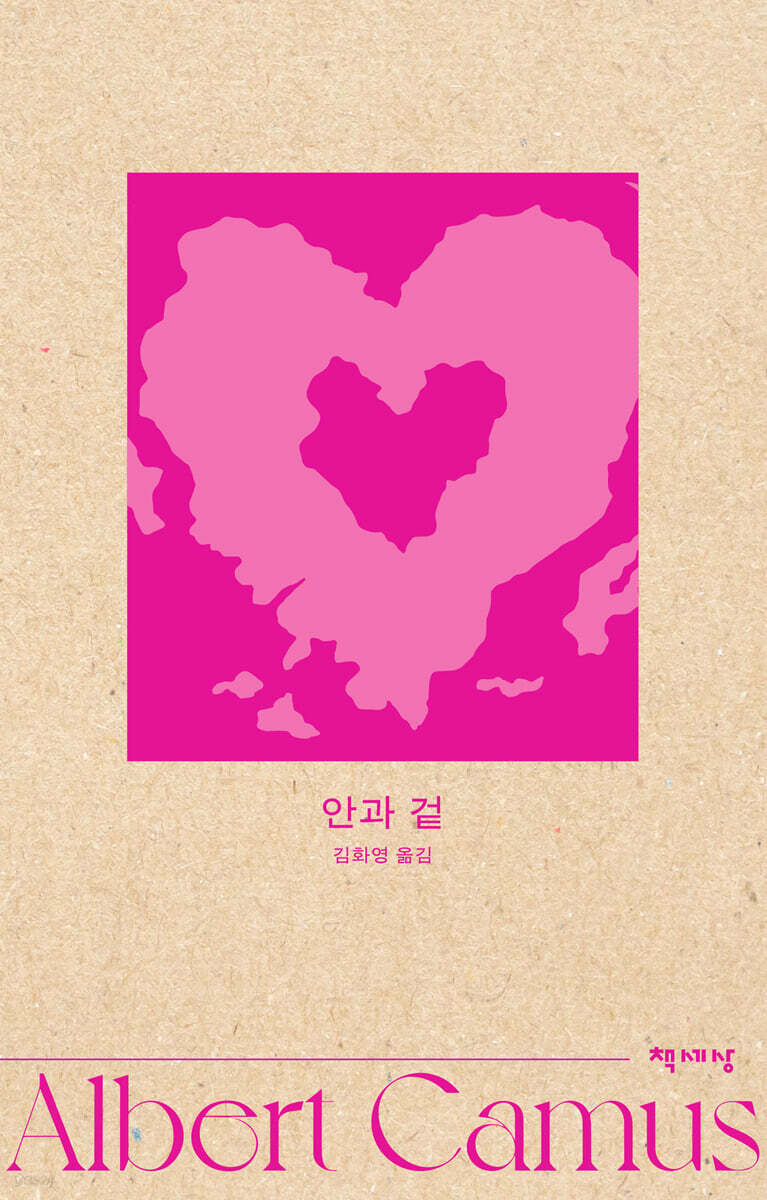 |
Description
Book Introduction
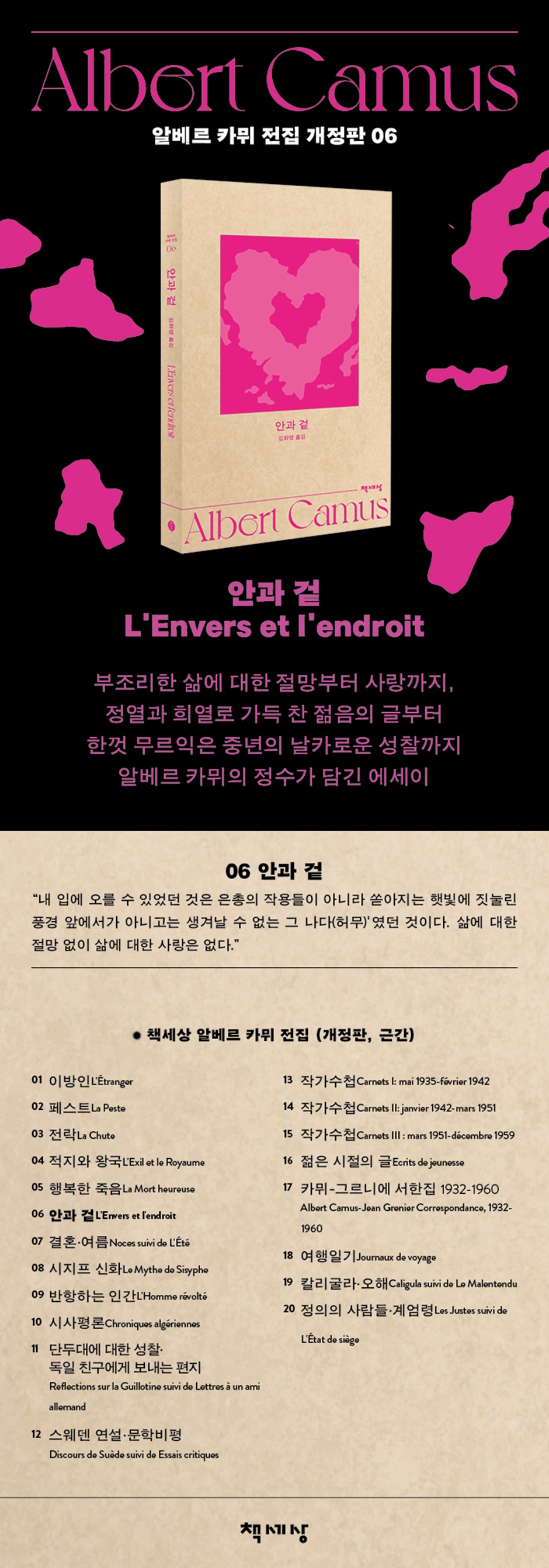
'Book World Camus Complete Works Revised Edition' Volume 6.
This is the first published collection of prose among Camus's works, written in 1935-1936 when he was in his early twenties.
Here, in 1958, Camus, now middle-aged, added a 'Preface' looking back on his younger days.
From despair over the absurdity of life to love, from the passion and joy of youthful writing to the sharp reflections of mature middle age, this work captures the essence of Albert Camus.
Some translations and expressions have been corrected in the previous comprehensively revised edition, bringing new life to the translated version.
This is the first published collection of prose among Camus's works, written in 1935-1936 when he was in his early twenties.
Here, in 1958, Camus, now middle-aged, added a 'Preface' looking back on his younger days.
From despair over the absurdity of life to love, from the passion and joy of youthful writing to the sharp reflections of mature middle age, this work captures the essence of Albert Camus.
Some translations and expressions have been corrected in the previous comprehensively revised edition, bringing new life to the translated version.
- You can preview some of the book's contents.
Preview
index
introduction
irony
Between positive and negative
Death in the soul
Love of Life
Inside and out
Commentary: On the Inside and the Outside
Author's chronology
Translator's Note (2024)
Translator's Note (1998)
irony
Between positive and negative
Death in the soul
Love of Life
Inside and out
Commentary: On the Inside and the Outside
Author's chronology
Translator's Note (2024)
Translator's Note (1998)
Detailed image
Into the book
As I reread Inside and Out for this reprint after so many years, I find myself instinctively saying, "Yes, this is it," despite the awkward writing on some pages.
This, that old woman, that silent mother, poverty, the light pouring over the Italian olive trees, the lonely but human love, all that I believe speaks the truth to my own eyes.
--- p.22 From the "Preface"
In the dream of life, here is a man who, having discovered his truths on the land of death and then lost them all, after countless wars and cries, the frenzy of justice and love, and further suffering, finally returns to that peaceful homeland where death itself is a happy silence.
And here again… yes, at least I know for sure that even in this hour of exile, nothing can prevent me from dreaming that the work of man is nothing but a long journey, through the circuitous paths of art, to rediscover those two or three simple, great images that first opened my heart.
--- p.29 From the "Preface"
Could all of this be incompatible? The astonishing truth.
On the one hand, there is the woman who was abandoned to go to the movies, the old man who no one listens to, the death for which no atonement can be made, and on the other hand, all the light that fills this world.
What if we took all of this together? It's a story of three similar yet different destinies.
Death comes to everyone, but it is a death that is unique to each person.
Anyway, even so, the sun warms our bones.
--- p.47 From "Irony"
Yes, everything is simple.
It is humans who make everything complicated.
Don't talk nonsense to us.
Instead of saying of a death row inmate, "He is paying for his crimes against society," we should say, "Now his head will be cut off."
It doesn't seem like there's much of a difference.
But there are some differences.
And there are people in the world who prefer to look their fate straight in the eye.
--- pp.65-66 From "Between Positive and Negative"
Of course I haven't changed.
But now I'm no longer lonely.
In Prague, I was trapped between walls and suffocated.
Here, the world unfolded before my eyes.
I was projected around me, filling this entire universe with figures that resembled me.
I haven't talked about the sun yet.
Just as it took me a long time to understand my attachment and love for the world of poverty in which I spent my childhood, it is only now that I can begin to grasp, even if only a little, the lessons that the sun and the land of my birth have to offer.
--- pp.83-84 From “Death in the Soul”
Yes, that's right.
The language of these places resonated deeply within me not because it answered my questions, but because it rendered them useless.
What I could say was not the works of grace, but the 'Nada (emptiness)' that could not have arisen except in front of a landscape crushed by the pouring sunlight.
There is no love of life without despair of life.
--- p.96 From “Love for Life”
One person observes, while the other digs his own grave.
How can we separate them from each other? How can we separate humanity from its absurdity? But here lies the smiling heaven.
The sunlight is swell.
Is summer coming soon? But the eyes and voices of those we love are here.
I hold the world with all my gestures, and I hold humanity with all my compassion and gratitude.
Between the inside and the outside of the world, I don't want to choose either side, and I don't like others to choose either.
This, that old woman, that silent mother, poverty, the light pouring over the Italian olive trees, the lonely but human love, all that I believe speaks the truth to my own eyes.
--- p.22 From the "Preface"
In the dream of life, here is a man who, having discovered his truths on the land of death and then lost them all, after countless wars and cries, the frenzy of justice and love, and further suffering, finally returns to that peaceful homeland where death itself is a happy silence.
And here again… yes, at least I know for sure that even in this hour of exile, nothing can prevent me from dreaming that the work of man is nothing but a long journey, through the circuitous paths of art, to rediscover those two or three simple, great images that first opened my heart.
--- p.29 From the "Preface"
Could all of this be incompatible? The astonishing truth.
On the one hand, there is the woman who was abandoned to go to the movies, the old man who no one listens to, the death for which no atonement can be made, and on the other hand, all the light that fills this world.
What if we took all of this together? It's a story of three similar yet different destinies.
Death comes to everyone, but it is a death that is unique to each person.
Anyway, even so, the sun warms our bones.
--- p.47 From "Irony"
Yes, everything is simple.
It is humans who make everything complicated.
Don't talk nonsense to us.
Instead of saying of a death row inmate, "He is paying for his crimes against society," we should say, "Now his head will be cut off."
It doesn't seem like there's much of a difference.
But there are some differences.
And there are people in the world who prefer to look their fate straight in the eye.
--- pp.65-66 From "Between Positive and Negative"
Of course I haven't changed.
But now I'm no longer lonely.
In Prague, I was trapped between walls and suffocated.
Here, the world unfolded before my eyes.
I was projected around me, filling this entire universe with figures that resembled me.
I haven't talked about the sun yet.
Just as it took me a long time to understand my attachment and love for the world of poverty in which I spent my childhood, it is only now that I can begin to grasp, even if only a little, the lessons that the sun and the land of my birth have to offer.
--- pp.83-84 From “Death in the Soul”
Yes, that's right.
The language of these places resonated deeply within me not because it answered my questions, but because it rendered them useless.
What I could say was not the works of grace, but the 'Nada (emptiness)' that could not have arisen except in front of a landscape crushed by the pouring sunlight.
There is no love of life without despair of life.
--- p.96 From “Love for Life”
One person observes, while the other digs his own grave.
How can we separate them from each other? How can we separate humanity from its absurdity? But here lies the smiling heaven.
The sunlight is swell.
Is summer coming soon? But the eyes and voices of those we love are here.
I hold the world with all my gestures, and I hold humanity with all my compassion and gratitude.
Between the inside and the outside of the world, I don't want to choose either side, and I don't like others to choose either.
--- p.105 From “Inside and Out”
Publisher's Review
Albert Camus, the intellectual of the 20th century
Experience the spirit of absurdity and rebellion vividly conveyed to modern readers of the 21st century!
In the 20th century, after two world wars, the world was left materially devastated, and the belief that science and reason could benefit humanity collapsed, leaving many people feeling disillusioned with life.
Camus acknowledged the finiteness of life ('absurdity'), but recommended 'rebellion' that affirms life as fiercely as possible within its boundaries.
In the 21st century, material abundance has increased and science and reason have advanced, but with materialism and social conflict deepening, many people still feel disillusioned with life.
That is why Camus's 'rebellious optimism' of the 20th century is still relevant to modern readers of the 21st century.
From the passionate youth of Camus to the intellectual of middle age,
From love of life to despair, "Inside and Out" is sharply depicted.
Inside and Out is the earliest published collection of prose among Camus's works, written in 1935-1936 when he was in his early twenties.
In 1958, about 20 years later, Camus revisited his first written account.
The young Camus is gone, and now we are left with a middle-aged, world-renowned Nobel Prize-winning author.
Middle-aged Camus republished the book "Inside and Out", which he had written in his youth, after writing a detailed preface.
It contains extremely literary sentences that capture the intense thoughts of the young Camus.
In fact, this work vividly portrays the concept of absurdity that runs through Camus's works, and you can encounter the passionate prose of Camus in his 20s, who became even stronger after overcoming his difficult childhood.
Kim Hwa-young, a Camus researcher and translator of Camus's complete works, said this.
“Inside and Out” is the starting point and source of all of Camus’s works.
“It is impossible to understand Camus without understanding this work.”
The original, the complete, the fundamental!
The Complete Works of Albert Camus, a book that contains everything about Camus.
The most complete way to experience Camus's essence would be to read his works in French, but this is realistically difficult for Korean readers.
The complete works of Albert Camus, published by Chaeksesang, were translated by Professor Kim Hwa-young, Korea's foremost Camus expert, and the Pleiades edition of the complete works (Œuvres completes) published by the French publisher Gallimard, recognized as the definitive edition of Camus's works, was used as the script, focusing on fully conveying the world of Camus's works to Korean readers.
Among the complete works of Camus translated into many languages around the world, the edition published by Professor Emeritus Kim Hwa-young's Chaeksesang is the only one in which a single translator translated all the volumes.
In 1987, Book World signed an exclusive publishing contract with France's Gallimard for the complete works of Albert Camus, and published a total of 20 volumes of the complete works of Albert Camus over 23 years, from "Marriage and Summer" (1987) to "Current Affairs Review" (2009), translated by Professor Kim Hwa-young, Korea's leading Camus expert.
Since Camus's posthumous copyright expired in 2011, various domestic publishers have published his representative works in various translations. However, as of 2024, only Chaeksesang has published a complete collection of his works.
Experience the spirit of absurdity and rebellion vividly conveyed to modern readers of the 21st century!
In the 20th century, after two world wars, the world was left materially devastated, and the belief that science and reason could benefit humanity collapsed, leaving many people feeling disillusioned with life.
Camus acknowledged the finiteness of life ('absurdity'), but recommended 'rebellion' that affirms life as fiercely as possible within its boundaries.
In the 21st century, material abundance has increased and science and reason have advanced, but with materialism and social conflict deepening, many people still feel disillusioned with life.
That is why Camus's 'rebellious optimism' of the 20th century is still relevant to modern readers of the 21st century.
From the passionate youth of Camus to the intellectual of middle age,
From love of life to despair, "Inside and Out" is sharply depicted.
Inside and Out is the earliest published collection of prose among Camus's works, written in 1935-1936 when he was in his early twenties.
In 1958, about 20 years later, Camus revisited his first written account.
The young Camus is gone, and now we are left with a middle-aged, world-renowned Nobel Prize-winning author.
Middle-aged Camus republished the book "Inside and Out", which he had written in his youth, after writing a detailed preface.
It contains extremely literary sentences that capture the intense thoughts of the young Camus.
In fact, this work vividly portrays the concept of absurdity that runs through Camus's works, and you can encounter the passionate prose of Camus in his 20s, who became even stronger after overcoming his difficult childhood.
Kim Hwa-young, a Camus researcher and translator of Camus's complete works, said this.
“Inside and Out” is the starting point and source of all of Camus’s works.
“It is impossible to understand Camus without understanding this work.”
The original, the complete, the fundamental!
The Complete Works of Albert Camus, a book that contains everything about Camus.
The most complete way to experience Camus's essence would be to read his works in French, but this is realistically difficult for Korean readers.
The complete works of Albert Camus, published by Chaeksesang, were translated by Professor Kim Hwa-young, Korea's foremost Camus expert, and the Pleiades edition of the complete works (Œuvres completes) published by the French publisher Gallimard, recognized as the definitive edition of Camus's works, was used as the script, focusing on fully conveying the world of Camus's works to Korean readers.
Among the complete works of Camus translated into many languages around the world, the edition published by Professor Emeritus Kim Hwa-young's Chaeksesang is the only one in which a single translator translated all the volumes.
In 1987, Book World signed an exclusive publishing contract with France's Gallimard for the complete works of Albert Camus, and published a total of 20 volumes of the complete works of Albert Camus over 23 years, from "Marriage and Summer" (1987) to "Current Affairs Review" (2009), translated by Professor Kim Hwa-young, Korea's leading Camus expert.
Since Camus's posthumous copyright expired in 2011, various domestic publishers have published his representative works in various translations. However, as of 2024, only Chaeksesang has published a complete collection of his works.
GOODS SPECIFICS
- Date of issue: June 5, 2024
- Page count, weight, size: 160 pages | 128*200*20mm
- ISBN13: 9791159317835
- ISBN10: 1159317836
You may also like
카테고리
korean


korean

![GQ KOREA Mark (Monthly): December [2025]](http://librairie.coreenne.fr/cdn/shop/files/8ef265dbbfbf186523ed75ba7319009d.jpg?v=1765340328&width=3840)


