

replica
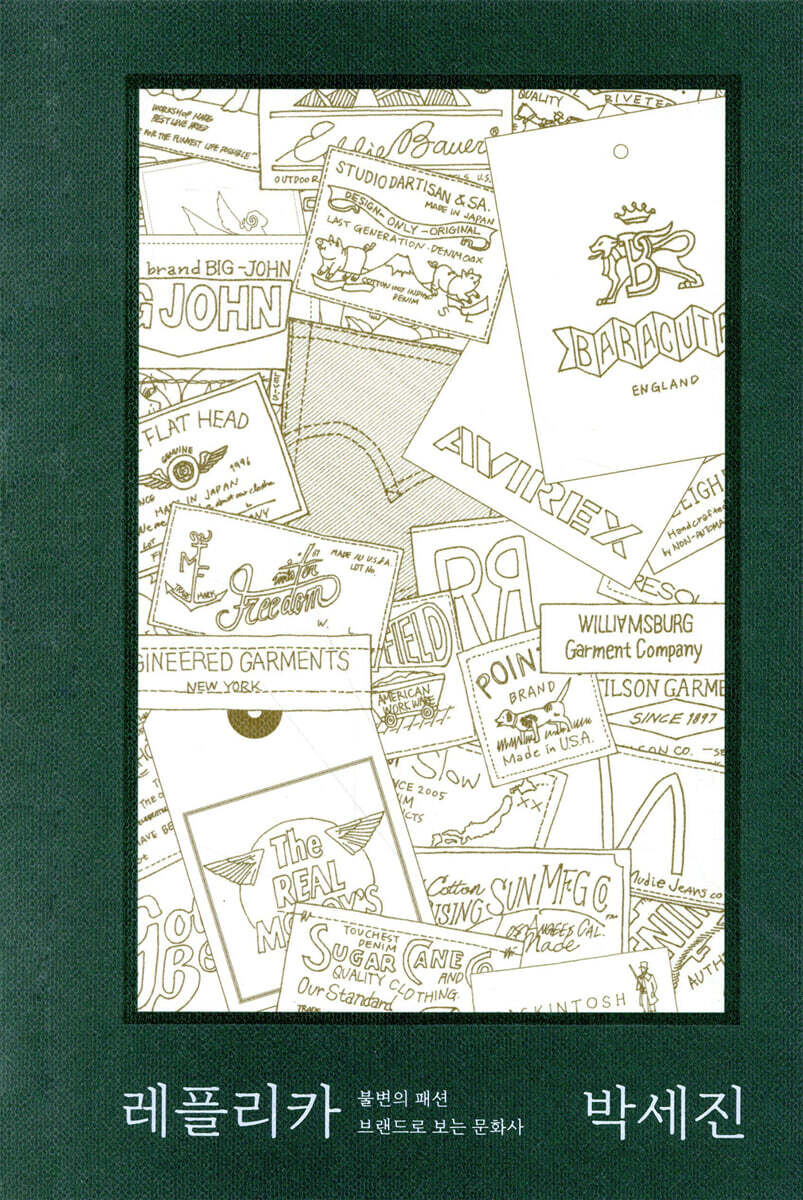 |
Description
Book Introduction
Praise the past, not the future
I'm more enthusiastic about the old than the new.
Taking pride in local businesses instead of globalization
About fashion and its culture
What is a replica?
The term "replica" in this book refers to a fashion culture that originated in Japan with the goal of perfectly reproducing certain jeans that were released before the 1970s.
Although the method is similar to the sophisticated illegal copying common in the clothing industry, this jeans reproduction culture differs greatly in its obsession with capturing not only the fabric and manufacturing method of the time, but also the production techniques and facilities such as factory machinery, as well as the culture and society of the time, beyond the design.
Starting with jeans, replicas expanded to include workwear, outdoor wear, military clothing, and more around the same time, and are now leading a trend in menswear.
I'm more enthusiastic about the old than the new.
Taking pride in local businesses instead of globalization
About fashion and its culture
What is a replica?
The term "replica" in this book refers to a fashion culture that originated in Japan with the goal of perfectly reproducing certain jeans that were released before the 1970s.
Although the method is similar to the sophisticated illegal copying common in the clothing industry, this jeans reproduction culture differs greatly in its obsession with capturing not only the fabric and manufacturing method of the time, but also the production techniques and facilities such as factory machinery, as well as the culture and society of the time, beyond the design.
Starting with jeans, replicas expanded to include workwear, outdoor wear, military clothing, and more around the same time, and are now leading a trend in menswear.
- You can preview some of the book's contents.
Preview
index
preface
prolog
1.
Native Original
Clothing for the Underclass | Solutions | Workwear, Military Uniforms, and Sportswear | Rediscovering Heritage | The Value of Heritage Brands
[Brand Story]
Filson | Eddie Bauer | Carhartt | Spiwak | Red Wing | Pointer Brand | Schott NYC | Golden Bear Sportswear | Mackintosh | Barbour | Baracuta
2.
American casual in Japan
A Brief History of Jeans | The History of Japanese Jeans | American Casual in Japan | The Evolution of American Fashion in the 1970s | The Denim Hunter and the Birth of Vintage Replica Jeans | Uniqlo Jeans: The Realm of Taste Built by Vintage Replica
[Brand Story]
Big John | Studio Datisan | Resolute & Denim | Evisu | Full Count | Warehouse | Momotaro | The Flat Head | The Real McCoy | Sugar Cane | Capital | Oslow | Walkers | Nakata Store
3.
new trend
Japanese Fashion Transcending America | The Invasion of Japanese Jeans | Consumers and Producers of American Jeans Culture
[Brand Story]
Levi's | Double RL | Avirex & Cockpit USA | Mr. Freedom | Engineered Garments | Rising Sun & Company | Left Field NYC | Raleigh Denim | Williamsburg Garments | Nudie Jeans | Naked & Famous | W'menswear
Epilogue
※ Additional information
Waterproof fabric | Melton wool, your outdoor companion | Fatigue pants | Selvedge denim and weaving methods | Cone Mills in North Carolina | Ring spun | Hank and rope dyeing | Natural indigo | Selvedge denim, indigo dyeing, human rights and environmental issues | Twill | Zimbabwean cotton | Boro | Union Special sewing machines | Sanforize, Unsanforize | A one-man selvedge denim brand
prolog
1.
Native Original
Clothing for the Underclass | Solutions | Workwear, Military Uniforms, and Sportswear | Rediscovering Heritage | The Value of Heritage Brands
[Brand Story]
Filson | Eddie Bauer | Carhartt | Spiwak | Red Wing | Pointer Brand | Schott NYC | Golden Bear Sportswear | Mackintosh | Barbour | Baracuta
2.
American casual in Japan
A Brief History of Jeans | The History of Japanese Jeans | American Casual in Japan | The Evolution of American Fashion in the 1970s | The Denim Hunter and the Birth of Vintage Replica Jeans | Uniqlo Jeans: The Realm of Taste Built by Vintage Replica
[Brand Story]
Big John | Studio Datisan | Resolute & Denim | Evisu | Full Count | Warehouse | Momotaro | The Flat Head | The Real McCoy | Sugar Cane | Capital | Oslow | Walkers | Nakata Store
3.
new trend
Japanese Fashion Transcending America | The Invasion of Japanese Jeans | Consumers and Producers of American Jeans Culture
[Brand Story]
Levi's | Double RL | Avirex & Cockpit USA | Mr. Freedom | Engineered Garments | Rising Sun & Company | Left Field NYC | Raleigh Denim | Williamsburg Garments | Nudie Jeans | Naked & Famous | W'menswear
Epilogue
※ Additional information
Waterproof fabric | Melton wool, your outdoor companion | Fatigue pants | Selvedge denim and weaving methods | Cone Mills in North Carolina | Ring spun | Hank and rope dyeing | Natural indigo | Selvedge denim, indigo dyeing, human rights and environmental issues | Twill | Zimbabwean cotton | Boro | Union Special sewing machines | Sanforize, Unsanforize | A one-man selvedge denim brand
Detailed image

Into the book
Replica, the Hidden Joy in Fashion and Clothing
The replica production method, based on the 'joyful suffering of buying', values each individual's unique individuality and differs greatly from the traditional fashion industry's perspective on fashion, which prioritizes leading the latest trends.
Consumers who pay high prices for clothes that properly embody the old fashioned style are also different from traditional fashion consumers.
Replica clothing has many contradictions, such as being much more crude, uncomfortable, and prone to fading compared to modern, high-tech clothing.
Still, the reason people seek out replica jeans is because they are a place for precise reproduction, like a diorama of plastic models, and a place where craftsmen work.
Well-made doesn't just mean good quality; it also means restoration skills, old-fashioned manufacturing methods, and the people who move between them.
Unlike traditional fashion, which relies on the designer's taste, the replica industry allows consumers to gauge how well a product has been restored and how much depth the maker has put into it.
In other words, you can actively evaluate and judge the value of the product you want to purchase.
…
The taste for handmade products and old objects has been around for a long time.
What has changed is that those with these tastes are a younger generation that craves new and sophisticated things, and are beginning to digest old things in a sophisticated way.
In this way, vintage replica fashion has become a widespread trend, attracting a wide range of tastes, from those who appreciate the rough and tumble appeal of denim to the latest types of street fashion.
The replica production method, based on the 'joyful suffering of buying', values each individual's unique individuality and differs greatly from the traditional fashion industry's perspective on fashion, which prioritizes leading the latest trends.
Consumers who pay high prices for clothes that properly embody the old fashioned style are also different from traditional fashion consumers.
Replica clothing has many contradictions, such as being much more crude, uncomfortable, and prone to fading compared to modern, high-tech clothing.
Still, the reason people seek out replica jeans is because they are a place for precise reproduction, like a diorama of plastic models, and a place where craftsmen work.
Well-made doesn't just mean good quality; it also means restoration skills, old-fashioned manufacturing methods, and the people who move between them.
Unlike traditional fashion, which relies on the designer's taste, the replica industry allows consumers to gauge how well a product has been restored and how much depth the maker has put into it.
In other words, you can actively evaluate and judge the value of the product you want to purchase.
…
The taste for handmade products and old objects has been around for a long time.
What has changed is that those with these tastes are a younger generation that craves new and sophisticated things, and are beginning to digest old things in a sophisticated way.
In this way, vintage replica fashion has become a widespread trend, attracting a wide range of tastes, from those who appreciate the rough and tumble appeal of denim to the latest types of street fashion.
--- From the text
Publisher's Review
Designers and managers are not the main characters
A slightly different story about fashion and clothing
Until now, the fashion industry has been led by designers or professional managers.
However, around 1980, a new trend was forming in the Japanese and French fashion world.
Brands began to emerge that were run by producers, that is, clothing craftsmen and manufacturing factories, rather than designers or professional managers.
This trend gained momentum, especially in Japan.
Today, more than 30 years later, producer-centric brands have grown into a major force driving the fashion industry.
At first glance, the clothes from the brands introduced in this book look similar.
It only covers a few types of models that were completed in the past, such as military uniforms from World War II, workwear from that period, and sweatshirts from the 1940s and 1960s.
There are even brands whose goal is to create clothes that are identical to old designs from the past.
This movement seems contradictory, given that fashion originally aims to be individualistic, that is, different from others.
However, in this flow, the ‘region’ and ‘method’ in which the clothes were made became an element that revealed the brand’s identity and value, just like the designer’s name or brand logo.
Moreover, that identity is not an abstract concept, but rather a factory actually in operation in places like Okayama, Japan or North Carolina, USA, and skilled workers who have been working in one field for decades.
Beyond Made in USA and Made in Japan,
The era of Made in Brooklyn, Made in Okayama
Until now, clothing producers and manufacturers have been overshadowed by designers and managers, but the new trend toward valuing production has created a space for them to step forward.
Thanks to this, the traditional clothing manufacturing industry, which was considered a so-called sunset industry, has re-emerged in the fashion world in a new form.
《Replica》 sheds light on producer-centric brands that have successfully created a third realm by bridging the gap between high-end and mass-market fashion, and delves into the culture and history they and their consumers have created together.
Why replica now?
Starting in 2010, a menswear craze swept the world.
Korean men who have been influenced by this are also breaking away from the old man who wears anything.
As the number of men who care about their appearance increases, the term "grooming tribe" has emerged, and the related industry has expanded.
This can be felt through the development of related markets, such as the large-scale expansion of men's clothing select shops in department stores over the past five years, the stabilization of men's select shops, and the entry of 1LDK, a leading Japanese select shop, into Seoul.
《Replica》 looks into Japan's replica culture, which played a pivotal role in the global spread of menswear at this point in time.
Focusing on Japanese brands, which currently account for the largest share of men's clothing stores in Korea, and American and British heritage brands, we explore why and how the reverence for craftsmanship and heritage, the most important sentiments and keys to taste in menswear, emerged.
In this process, we will examine the reasons why work clothes and military uniforms, which were far from fashionable at the time, became established as fashion items today, and through this, we will learn why men's fashion today pursues standards and attitudes that are different from individuality and style.
Features and composition of 《Replica》
Old textiles, old materials, and old dyeing methods are imperfect methods that are greatly influenced by human hands and the environment.
Today's fabrics and manufacturing methods are extremely inefficient compared to the mass production of uniform quality at lower costs.
However, due to these imperfect characteristics and environmental factors, each product produces a slightly different finished product.
In addition, traditional materials such as cotton, linen, wool, and leather have the characteristic of easily wearing out and showing the wear process compared to today's new materials.
Replica fashion is a world for people who are interested in this very point.
It is a concept that goes beyond making and buying clothes and includes the experience of them becoming worn out.
A one-of-a-kind piece of clothing in the world that contains your own history.
This is the motto of replica fashion.
That's why top replica brands meticulously design the aging process through factors like fabric thickness, stitching methods, and rivet gloss.
《Replica》 is the first book in Korea to compile replica fashion culture and information.
We introduce another way to enjoy fashion through the story of clothes created by the tenacity of vintage 'geek' creators, artisans who take boundless pride in their work, and the high standards of equally discerning consumers.
Exploring the identities of various replica brands, we learn that clothing is not simply a fashion item or a functional tool, but a companion to life, a canvas and a business card inscribed with an individual's life and attitude.
Therefore, this book provides various information to not only those who have a deep interest in related fashion culture or brands, but also readers who are unfamiliar with the related culture, to gain a different perspective on attitudes toward daily life, the concept of fashion, and the way of wearing clothes.
Through stories from one side of the fashion world over the past 30 years, we guide you into another world of joy hidden in fashion and clothing.
Includes over 40 carefully selected heritage and replica brand stories.
This book is largely divided into three chapters.
Chapter 1 examines the early American brands that can be considered the prototypes of replica fashion and the culture of the time, while Chapter 2 covers the existence of Japanese jeans enthusiasts, including vintage denim hunters who led replica fashion and culture, centered in Osaka and Okayama, and the replica brands and culture they created.
The final three chapters discuss a new trend of creating originality based on the replica method.
We introduce the unique fun and history of each brand by covering around 40 representative brands.
Most of the brands listed are easily accessible domestically.
Furthermore, for readers who want more in-depth information, we have created a separate chapter called 'Additional Information'.
We aim to help you understand more easily by organizing specialized clothing-related knowledge and terms that are difficult to cover in the text, such as selvage fabric and boro manufacturing methods, types of waterproof fabrics, fussy pants, and melton wool.
A slightly different story about fashion and clothing
Until now, the fashion industry has been led by designers or professional managers.
However, around 1980, a new trend was forming in the Japanese and French fashion world.
Brands began to emerge that were run by producers, that is, clothing craftsmen and manufacturing factories, rather than designers or professional managers.
This trend gained momentum, especially in Japan.
Today, more than 30 years later, producer-centric brands have grown into a major force driving the fashion industry.
At first glance, the clothes from the brands introduced in this book look similar.
It only covers a few types of models that were completed in the past, such as military uniforms from World War II, workwear from that period, and sweatshirts from the 1940s and 1960s.
There are even brands whose goal is to create clothes that are identical to old designs from the past.
This movement seems contradictory, given that fashion originally aims to be individualistic, that is, different from others.
However, in this flow, the ‘region’ and ‘method’ in which the clothes were made became an element that revealed the brand’s identity and value, just like the designer’s name or brand logo.
Moreover, that identity is not an abstract concept, but rather a factory actually in operation in places like Okayama, Japan or North Carolina, USA, and skilled workers who have been working in one field for decades.
Beyond Made in USA and Made in Japan,
The era of Made in Brooklyn, Made in Okayama
Until now, clothing producers and manufacturers have been overshadowed by designers and managers, but the new trend toward valuing production has created a space for them to step forward.
Thanks to this, the traditional clothing manufacturing industry, which was considered a so-called sunset industry, has re-emerged in the fashion world in a new form.
《Replica》 sheds light on producer-centric brands that have successfully created a third realm by bridging the gap between high-end and mass-market fashion, and delves into the culture and history they and their consumers have created together.
Why replica now?
Starting in 2010, a menswear craze swept the world.
Korean men who have been influenced by this are also breaking away from the old man who wears anything.
As the number of men who care about their appearance increases, the term "grooming tribe" has emerged, and the related industry has expanded.
This can be felt through the development of related markets, such as the large-scale expansion of men's clothing select shops in department stores over the past five years, the stabilization of men's select shops, and the entry of 1LDK, a leading Japanese select shop, into Seoul.
《Replica》 looks into Japan's replica culture, which played a pivotal role in the global spread of menswear at this point in time.
Focusing on Japanese brands, which currently account for the largest share of men's clothing stores in Korea, and American and British heritage brands, we explore why and how the reverence for craftsmanship and heritage, the most important sentiments and keys to taste in menswear, emerged.
In this process, we will examine the reasons why work clothes and military uniforms, which were far from fashionable at the time, became established as fashion items today, and through this, we will learn why men's fashion today pursues standards and attitudes that are different from individuality and style.
Features and composition of 《Replica》
Old textiles, old materials, and old dyeing methods are imperfect methods that are greatly influenced by human hands and the environment.
Today's fabrics and manufacturing methods are extremely inefficient compared to the mass production of uniform quality at lower costs.
However, due to these imperfect characteristics and environmental factors, each product produces a slightly different finished product.
In addition, traditional materials such as cotton, linen, wool, and leather have the characteristic of easily wearing out and showing the wear process compared to today's new materials.
Replica fashion is a world for people who are interested in this very point.
It is a concept that goes beyond making and buying clothes and includes the experience of them becoming worn out.
A one-of-a-kind piece of clothing in the world that contains your own history.
This is the motto of replica fashion.
That's why top replica brands meticulously design the aging process through factors like fabric thickness, stitching methods, and rivet gloss.
《Replica》 is the first book in Korea to compile replica fashion culture and information.
We introduce another way to enjoy fashion through the story of clothes created by the tenacity of vintage 'geek' creators, artisans who take boundless pride in their work, and the high standards of equally discerning consumers.
Exploring the identities of various replica brands, we learn that clothing is not simply a fashion item or a functional tool, but a companion to life, a canvas and a business card inscribed with an individual's life and attitude.
Therefore, this book provides various information to not only those who have a deep interest in related fashion culture or brands, but also readers who are unfamiliar with the related culture, to gain a different perspective on attitudes toward daily life, the concept of fashion, and the way of wearing clothes.
Through stories from one side of the fashion world over the past 30 years, we guide you into another world of joy hidden in fashion and clothing.
Includes over 40 carefully selected heritage and replica brand stories.
This book is largely divided into three chapters.
Chapter 1 examines the early American brands that can be considered the prototypes of replica fashion and the culture of the time, while Chapter 2 covers the existence of Japanese jeans enthusiasts, including vintage denim hunters who led replica fashion and culture, centered in Osaka and Okayama, and the replica brands and culture they created.
The final three chapters discuss a new trend of creating originality based on the replica method.
We introduce the unique fun and history of each brand by covering around 40 representative brands.
Most of the brands listed are easily accessible domestically.
Furthermore, for readers who want more in-depth information, we have created a separate chapter called 'Additional Information'.
We aim to help you understand more easily by organizing specialized clothing-related knowledge and terms that are difficult to cover in the text, such as selvage fabric and boro manufacturing methods, types of waterproof fabrics, fussy pants, and melton wool.
GOODS SPECIFICS
- Date of issue: February 9, 2018
- Format: Hardcover book binding method guide
- Page count, weight, size: 204 pages | 420g | 140*210*20mm
- ISBN13: 9791156757337
- ISBN10: 1156757339
You may also like
카테고리
korean


korean

![GQ KOREA Mark (Monthly): December [2025]](http://librairie.coreenne.fr/cdn/shop/files/8ef265dbbfbf186523ed75ba7319009d.jpg?v=1765340328&width=3840)


