

The Power of Ashtanga Yoga
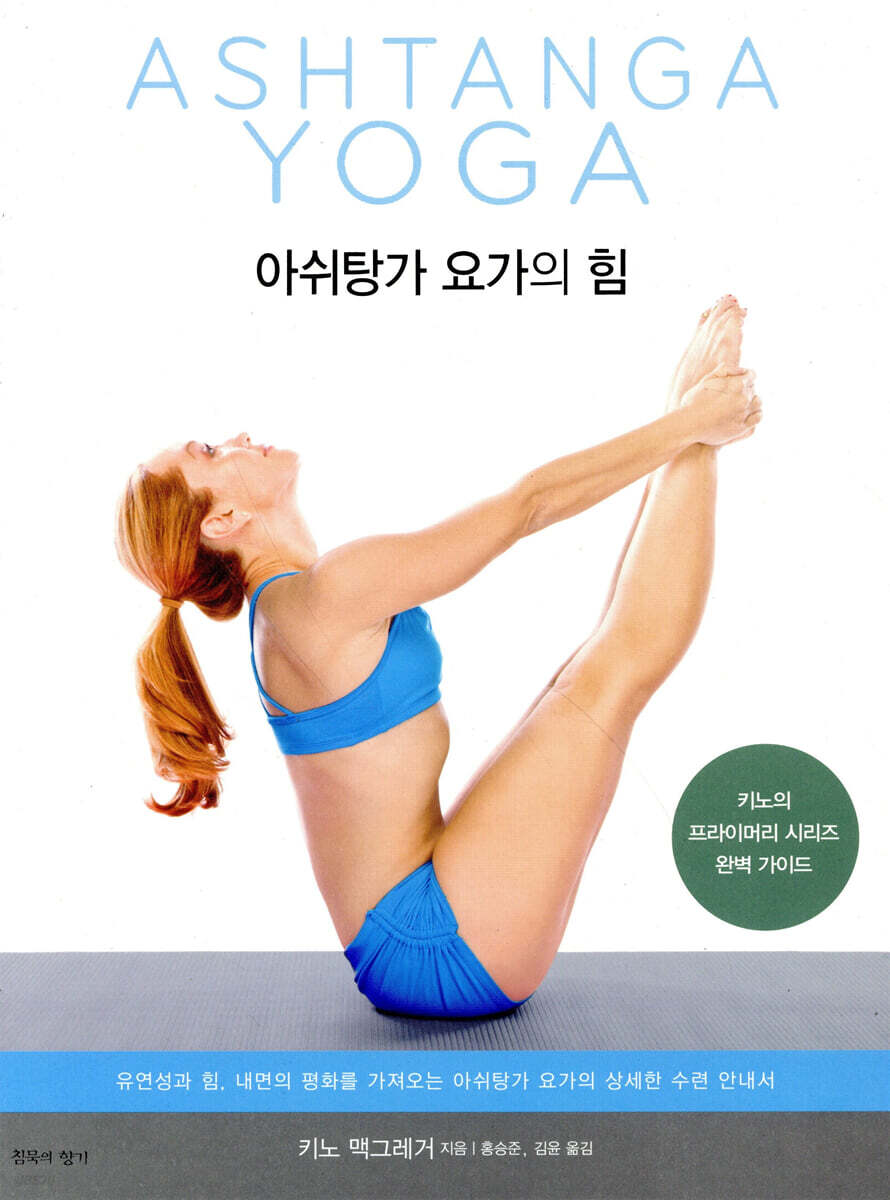 |
Description
Book Introduction
Named the best next-generation yoga teacher by Yoga Journal
World star, Kino McGregor
The Complete Guide to Ashtanga Yoga, Primary Series
A comprehensive guide that explains the practice and philosophy of Ashtanga Yoga in an accessible yet profound way.
Ashtanga Yoga is a graceful and dynamic yoga style that flows like water based on Vinyasa, which connects movement and breathing. It is a representative yoga practice that has recently experienced explosive growth.
Ashtanga yoga practice has many beneficial effects, including improving flexibility and strength, bringing inner peace, and promoting a healthy and harmonious body and mind.
This book contains all the knowledge and know-how needed to practice Ashtanga yoga by Kino McGregor, who was selected by Yoga Journal as one of the 21 best next-generation yoga instructors in the United States.
For beginners who find it difficult to maintain proper posture, we teach relaxed postures and methods so that they can practice easily and safely. For experts and instructors, we provide the wealth of knowledge and know-how acquired through teaching and studying for over a decade.
Tips for preventing injuries are also included throughout.
It also faithfully explains yoga philosophy, theory, and terminology, making it an excellent and unique guide for practitioners and instructors who want to understand Ashtanga Yoga more deeply and broadly.
World star, Kino McGregor
The Complete Guide to Ashtanga Yoga, Primary Series
A comprehensive guide that explains the practice and philosophy of Ashtanga Yoga in an accessible yet profound way.
Ashtanga Yoga is a graceful and dynamic yoga style that flows like water based on Vinyasa, which connects movement and breathing. It is a representative yoga practice that has recently experienced explosive growth.
Ashtanga yoga practice has many beneficial effects, including improving flexibility and strength, bringing inner peace, and promoting a healthy and harmonious body and mind.
This book contains all the knowledge and know-how needed to practice Ashtanga yoga by Kino McGregor, who was selected by Yoga Journal as one of the 21 best next-generation yoga instructors in the United States.
For beginners who find it difficult to maintain proper posture, we teach relaxed postures and methods so that they can practice easily and safely. For experts and instructors, we provide the wealth of knowledge and know-how acquired through teaching and studying for over a decade.
Tips for preventing injuries are also included throughout.
It also faithfully explains yoga philosophy, theory, and terminology, making it an excellent and unique guide for practitioners and instructors who want to understand Ashtanga Yoga more deeply and broadly.
- You can preview some of the book's contents.
Preview
index
Acknowledgements
Preface: How to Use This Book
Part 1 Theory
1.
History and Traditions of Ashtanga Yoga
2.
Core elements of practice: breathing, posture, and gaze
3.
Eating habits suitable for Ashtanga Yoga
4.
A Spiritual Journey Through Asana: Yoga Beyond Postures
Part 2 Training
5.
Sun Salutation: Where It All Begins
6.
Standing Posture: Building the Foundation
7.
Sitting Pose: Growing the Lotus
8.
Backbend: Open your chest
9.
Closing pose: Entering inner space
10.
Power: The Yoga of True Power
Appendix A: Mantras
Appendix B: Sanskrit Vinyasa Sequence
Appendix C: Primary Series Diagram
Glossary of Terms
References
Preface: How to Use This Book
Part 1 Theory
1.
History and Traditions of Ashtanga Yoga
2.
Core elements of practice: breathing, posture, and gaze
3.
Eating habits suitable for Ashtanga Yoga
4.
A Spiritual Journey Through Asana: Yoga Beyond Postures
Part 2 Training
5.
Sun Salutation: Where It All Begins
6.
Standing Posture: Building the Foundation
7.
Sitting Pose: Growing the Lotus
8.
Backbend: Open your chest
9.
Closing pose: Entering inner space
10.
Power: The Yoga of True Power
Appendix A: Mantras
Appendix B: Sanskrit Vinyasa Sequence
Appendix C: Primary Series Diagram
Glossary of Terms
References
Detailed image


Into the book
Ashtanga Yoga is not just a series of exercises followed in a set order.
This yoga practice is a body awareness technique that helps you experience deeper peace, more vitality, better health, and greater happiness.
No matter where you are on the yoga path, the one thing to always remember is to listen to your body and respect your limitations, whether physical, mental, or emotional.
The inner journey is not something that can be rushed, and one of the most important lessons to learn from yoga is patience and acceptance.
If at any time you feel extreme discomfort, take a break and step back a bit.
Remember that you have plenty of time to learn what you absolutely need to learn… … .
--- pp.17-18
The healing benefits of the physical practice of yoga are as easy to understand as the benefits of brushing your teeth daily.
As we use our bodies every day, sediments tend to accumulate in the internal spaces of our bodies.
If you don't cleanse these accumulated toxins and impurities, your body will gradually weaken.
Yoga poses twist, bend, and fold deep into the body to cleanse its interior, and the breath literally burns away any toxins that cling to it.
If we do not cleanse ourselves consistently through asana, our internal organs and neuromuscular system will gradually become slower and dull.
However, if you practice yoga consistently, your body can maintain a healthy level of flexibility.
In particular, the Ashtanga yoga practice systematically improves the strength and flexibility of the entire body without missing a single cell.
--- p.41
When practicing yoga and doing asanas with your breath, you may sometimes feel frustrated.
Because it takes sufficient skill to maintain calm and controlled breathing while performing complex and difficult movements.
When I first started practicing, I was more interested in getting into the right posture than in the invisible breathing.
It was only after many years that I was able to combine pranayama, or breath control, with my daily practice.
The turning point was when Pattabhi Jois personally taught me the pranayama method of Ashtanga yoga.
Since then, I have wanted to go to this powerful place in my breathing.
I finally understood that there is no true yoga without breathing, and now I am as inspired by my breathing as I am by my postures.
Even if you can achieve highly skilled poses, acrobatic movements, and handstands that seem to float in the air, if you don't consistently focus on the core of yoga—your breath—it's all just a technique.
--- pp.47-48
I'd like to give you one general tip on how to practice.
When we feel pain in a specific part of our body, we often react immediately with fear.
At times like that, rather than blindly trying to avoid the pain, try to stay in the state of mind where you experience the pain.
For example, if you feel pain, try to be as specific as possible about where the pain is occurring, what type of pain it is, and what emotions you are responding with.
Most of the time we perceive pain in a vague way, but the more specifically we become aware of where the pain is coming from and what it actually is, the less fearful we become and the better able we are to deal with the pain we experience in our practice and in our lives.
If you feel any pain in your joints, please leave immediately.
However, if your muscles are sore as they stretch, you can proceed cautiously, keeping alignment in mind.
--- pp.139-140
Strength in yoga practice is not simply a physical experience, such as building strong muscle mass.
The power gained through yoga practice is more about calming the mind and healing the body.
Many people think that yoga is all about flexibility and stretching.
While much of yoga practice involves making the body more flexible, the true essence of yoga is creating a balance of strength and flexibility in the body and mind.
--- p.224
When I first started practicing Ashtanga yoga, the jump through was one of the most exciting movements for me.
It was like a magical movement, so it seemed impossible to me.
I watched practitioners of all shapes and sizes begin in Adho Mukha Svanasana, bend their knees, leap into the air, and then, without touching the floor, come into a seated position between their arms.
I tried that move too, but at first my foot hit my arm during the move and I almost fell forward.
However, after learning some technique and anatomy, and practicing consistently with the help of a good teacher, I discovered an easy way to practice this technique by breaking it down into several parts.
If you follow this method, almost anyone can do it.
This yoga practice is a body awareness technique that helps you experience deeper peace, more vitality, better health, and greater happiness.
No matter where you are on the yoga path, the one thing to always remember is to listen to your body and respect your limitations, whether physical, mental, or emotional.
The inner journey is not something that can be rushed, and one of the most important lessons to learn from yoga is patience and acceptance.
If at any time you feel extreme discomfort, take a break and step back a bit.
Remember that you have plenty of time to learn what you absolutely need to learn… … .
--- pp.17-18
The healing benefits of the physical practice of yoga are as easy to understand as the benefits of brushing your teeth daily.
As we use our bodies every day, sediments tend to accumulate in the internal spaces of our bodies.
If you don't cleanse these accumulated toxins and impurities, your body will gradually weaken.
Yoga poses twist, bend, and fold deep into the body to cleanse its interior, and the breath literally burns away any toxins that cling to it.
If we do not cleanse ourselves consistently through asana, our internal organs and neuromuscular system will gradually become slower and dull.
However, if you practice yoga consistently, your body can maintain a healthy level of flexibility.
In particular, the Ashtanga yoga practice systematically improves the strength and flexibility of the entire body without missing a single cell.
--- p.41
When practicing yoga and doing asanas with your breath, you may sometimes feel frustrated.
Because it takes sufficient skill to maintain calm and controlled breathing while performing complex and difficult movements.
When I first started practicing, I was more interested in getting into the right posture than in the invisible breathing.
It was only after many years that I was able to combine pranayama, or breath control, with my daily practice.
The turning point was when Pattabhi Jois personally taught me the pranayama method of Ashtanga yoga.
Since then, I have wanted to go to this powerful place in my breathing.
I finally understood that there is no true yoga without breathing, and now I am as inspired by my breathing as I am by my postures.
Even if you can achieve highly skilled poses, acrobatic movements, and handstands that seem to float in the air, if you don't consistently focus on the core of yoga—your breath—it's all just a technique.
--- pp.47-48
I'd like to give you one general tip on how to practice.
When we feel pain in a specific part of our body, we often react immediately with fear.
At times like that, rather than blindly trying to avoid the pain, try to stay in the state of mind where you experience the pain.
For example, if you feel pain, try to be as specific as possible about where the pain is occurring, what type of pain it is, and what emotions you are responding with.
Most of the time we perceive pain in a vague way, but the more specifically we become aware of where the pain is coming from and what it actually is, the less fearful we become and the better able we are to deal with the pain we experience in our practice and in our lives.
If you feel any pain in your joints, please leave immediately.
However, if your muscles are sore as they stretch, you can proceed cautiously, keeping alignment in mind.
--- pp.139-140
Strength in yoga practice is not simply a physical experience, such as building strong muscle mass.
The power gained through yoga practice is more about calming the mind and healing the body.
Many people think that yoga is all about flexibility and stretching.
While much of yoga practice involves making the body more flexible, the true essence of yoga is creating a balance of strength and flexibility in the body and mind.
--- p.224
When I first started practicing Ashtanga yoga, the jump through was one of the most exciting movements for me.
It was like a magical movement, so it seemed impossible to me.
I watched practitioners of all shapes and sizes begin in Adho Mukha Svanasana, bend their knees, leap into the air, and then, without touching the floor, come into a seated position between their arms.
I tried that move too, but at first my foot hit my arm during the move and I almost fell forward.
However, after learning some technique and anatomy, and practicing consistently with the help of a good teacher, I discovered an easy way to practice this technique by breaking it down into several parts.
If you follow this method, almost anyone can do it.
--- pp.231-232
Publisher's Review
Ashtanga Yoga is a graceful and dynamic yoga style that flows like water based on Vinyasa, which connects movement and breathing. It is a representative yoga practice that has recently experienced explosive growth.
Ashtanga yoga practice develops flexibility and strength, brings inner peace, and promotes health and harmony in body and mind.
It has various beneficial effects, such as improving the body shape, curing various physical and mental disorders and problems, and making the mind clear and peaceful.
Moreover, it helps people discover their true selves through a harmonious lifestyle and spiritual practice, thereby achieving eternal freedom and peace.
Named the best next-generation yoga teacher by Yoga Journal
World star Kino McGregor
Kino McGregor is the founder of Ashtanga Yoga, Sri K.
She is one of 14 Americans certified to teach Ashtanga Yoga by Pattabhi Jois, and the youngest woman among them.
Yoga Journal, the world's largest yoga magazine, selected her as one of the 21 best next-generation yoga teachers in the United States.
She travels to over 20 countries every year, passionately teaching Ashtanga Yoga and guiding students.
She also teaches Ashtanga yoga online, reaching over 2 million followers on social media, and her YouTube channel (KinoYoga) has already surpassed 100 million views several years ago.
She has been practicing Ashtanga yoga for over 18 years and is currently in her fifth series.
She says that through yoga practice, not only has her mind and body become healthier, but her life itself has changed amazingly.
So, in the hope that other practitioners will experience the same magical transformation as I did through proper practice, I am sharing my vast knowledge and know-how about yoga and practice in a book, along with various photos.
The ultimate guide for both beginners and experts,
The Complete Guide to Ashtanga Yoga, Primary Series
Most of the books published so far on Ashtanga yoga practice simply explain which poses to take for each movement.
The problem with this method, however, is that for inexperienced beginners, it is not easy to assume such a posture, and sometimes it is very difficult.
Kino, who began training with an average body with neither great flexibility nor strength, kindly introduces a training method optimized for beginners, drawing on his own experience and mentoring countless trainees.
For example, for beginners who still have difficulty in maintaining proper posture, we provide various relaxed postures and methods for each asana.
While assuming a relaxed posture that is easy and safe to follow, the practitioner's body gradually prepares for the correct posture, and much of the beneficial effects of the posture can be enjoyed.
Beginners need to make proper use of relaxed postures and methods, as attempting to perform the poses hastily without being fully prepared can result in injury.
This book is packed with useful information for both experienced practitioners and leaders.
Author Kino generously shares throughout the book the know-how he has acquired through long-term training, in-depth research, and over 15 years of teaching experience.
Beyond asanas, the rich knowledge and explanations of anatomy, the inner body and energy, etc. can elevate your yoga practice and can be useful in guiding students.
We also provide detailed explanations of 'jump through' and 'jump back', which trainees find difficult, and teach easy methods that anyone can do.
The beneficial effects that can be obtained from each practice are also introduced for each asana, allowing for a concrete understanding of the effectiveness of asana practice.
For each asana, photos are provided showing the correct and relaxed postures, and where necessary, photos showing detailed postures are also provided.
In the appendix, the 'Sanskrit Vinyasa Count Order' for each asana is organized for reference, the 'Primary Series Illustration' provides photos of each asana for easy viewing, and the 'Glossary' provides a list of yoga terms for you to learn.
How to train healthily without injury
When practicing asanas, there are times when you may get injured.
However, injuries are not an inevitable part of training, and many can be prevented by knowing your body's limits and paying close attention.
Kino is very attentive to guiding you to train healthily and injury-free, and he provides detailed tips on how to prevent injuries.
For example, in Bhaddha Konasana, it advises:
“However, if you feel a burning or stinging sensation in your knee, it is a signal to back off, so do not go any deeper.
Placing a towel, yoga block, or extra pillow under both knees can help reduce pain.
However, if you feel a strong stimulation in your ankles, back muscles, hip joints, or inner thighs, it is a sign that this pose is working on the targeted areas.
“Let us continue to follow the posture with care, caution, and love.” (p. 170)
An in-depth explanation of yoga philosophy and theory.
This book consists of Part 1: Theory and Part 2: Practice.
Ashtanga yoga master Sri K.
Pattabhi Jois said:
“It is very important to understand the philosophy of yoga.
No practice is good without philosophy, and yoga practice is where yoga philosophy begins.
In fact, it's best to learn both together.”
Practicing only asanas will not deepen your understanding of yoga, and your practice will likely remain limited to the physical level.
Asana practice is only a part of yoga, not the whole of it. Yoga is a comprehensive system of practices that ultimately seeks to discover one's true self and achieve eternal freedom and peace.
In order to realize the true purpose of yoga, it is necessary to have a correct understanding of philosophy and theory.
So, in Part 1, Kino delves into the philosophy and theory of yoga, detailing the history and traditions of Ashtanga Yoga, the core elements of the practice—breathing, postures, and gaze—as well as the diet appropriate for yogis and the spiritual journey through asana.
Ashtanga yoga practice develops flexibility and strength, brings inner peace, and promotes health and harmony in body and mind.
It has various beneficial effects, such as improving the body shape, curing various physical and mental disorders and problems, and making the mind clear and peaceful.
Moreover, it helps people discover their true selves through a harmonious lifestyle and spiritual practice, thereby achieving eternal freedom and peace.
Named the best next-generation yoga teacher by Yoga Journal
World star Kino McGregor
Kino McGregor is the founder of Ashtanga Yoga, Sri K.
She is one of 14 Americans certified to teach Ashtanga Yoga by Pattabhi Jois, and the youngest woman among them.
Yoga Journal, the world's largest yoga magazine, selected her as one of the 21 best next-generation yoga teachers in the United States.
She travels to over 20 countries every year, passionately teaching Ashtanga Yoga and guiding students.
She also teaches Ashtanga yoga online, reaching over 2 million followers on social media, and her YouTube channel (KinoYoga) has already surpassed 100 million views several years ago.
She has been practicing Ashtanga yoga for over 18 years and is currently in her fifth series.
She says that through yoga practice, not only has her mind and body become healthier, but her life itself has changed amazingly.
So, in the hope that other practitioners will experience the same magical transformation as I did through proper practice, I am sharing my vast knowledge and know-how about yoga and practice in a book, along with various photos.
The ultimate guide for both beginners and experts,
The Complete Guide to Ashtanga Yoga, Primary Series
Most of the books published so far on Ashtanga yoga practice simply explain which poses to take for each movement.
The problem with this method, however, is that for inexperienced beginners, it is not easy to assume such a posture, and sometimes it is very difficult.
Kino, who began training with an average body with neither great flexibility nor strength, kindly introduces a training method optimized for beginners, drawing on his own experience and mentoring countless trainees.
For example, for beginners who still have difficulty in maintaining proper posture, we provide various relaxed postures and methods for each asana.
While assuming a relaxed posture that is easy and safe to follow, the practitioner's body gradually prepares for the correct posture, and much of the beneficial effects of the posture can be enjoyed.
Beginners need to make proper use of relaxed postures and methods, as attempting to perform the poses hastily without being fully prepared can result in injury.
This book is packed with useful information for both experienced practitioners and leaders.
Author Kino generously shares throughout the book the know-how he has acquired through long-term training, in-depth research, and over 15 years of teaching experience.
Beyond asanas, the rich knowledge and explanations of anatomy, the inner body and energy, etc. can elevate your yoga practice and can be useful in guiding students.
We also provide detailed explanations of 'jump through' and 'jump back', which trainees find difficult, and teach easy methods that anyone can do.
The beneficial effects that can be obtained from each practice are also introduced for each asana, allowing for a concrete understanding of the effectiveness of asana practice.
For each asana, photos are provided showing the correct and relaxed postures, and where necessary, photos showing detailed postures are also provided.
In the appendix, the 'Sanskrit Vinyasa Count Order' for each asana is organized for reference, the 'Primary Series Illustration' provides photos of each asana for easy viewing, and the 'Glossary' provides a list of yoga terms for you to learn.
How to train healthily without injury
When practicing asanas, there are times when you may get injured.
However, injuries are not an inevitable part of training, and many can be prevented by knowing your body's limits and paying close attention.
Kino is very attentive to guiding you to train healthily and injury-free, and he provides detailed tips on how to prevent injuries.
For example, in Bhaddha Konasana, it advises:
“However, if you feel a burning or stinging sensation in your knee, it is a signal to back off, so do not go any deeper.
Placing a towel, yoga block, or extra pillow under both knees can help reduce pain.
However, if you feel a strong stimulation in your ankles, back muscles, hip joints, or inner thighs, it is a sign that this pose is working on the targeted areas.
“Let us continue to follow the posture with care, caution, and love.” (p. 170)
An in-depth explanation of yoga philosophy and theory.
This book consists of Part 1: Theory and Part 2: Practice.
Ashtanga yoga master Sri K.
Pattabhi Jois said:
“It is very important to understand the philosophy of yoga.
No practice is good without philosophy, and yoga practice is where yoga philosophy begins.
In fact, it's best to learn both together.”
Practicing only asanas will not deepen your understanding of yoga, and your practice will likely remain limited to the physical level.
Asana practice is only a part of yoga, not the whole of it. Yoga is a comprehensive system of practices that ultimately seeks to discover one's true self and achieve eternal freedom and peace.
In order to realize the true purpose of yoga, it is necessary to have a correct understanding of philosophy and theory.
So, in Part 1, Kino delves into the philosophy and theory of yoga, detailing the history and traditions of Ashtanga Yoga, the core elements of the practice—breathing, postures, and gaze—as well as the diet appropriate for yogis and the spiritual journey through asana.
GOODS SPECIFICS
- Publication date: November 20, 2017
- Pages, weight, size: 283 pages | 874g | 210*280*17mm
- ISBN13: 9788989590699
- ISBN10: 8989590698
You may also like
카테고리
korean


korean

![GQ KOREA Mark (Monthly): December [2025]](http://librairie.coreenne.fr/cdn/shop/files/8ef265dbbfbf186523ed75ba7319009d.jpg?v=1765340328&width=3840)


