

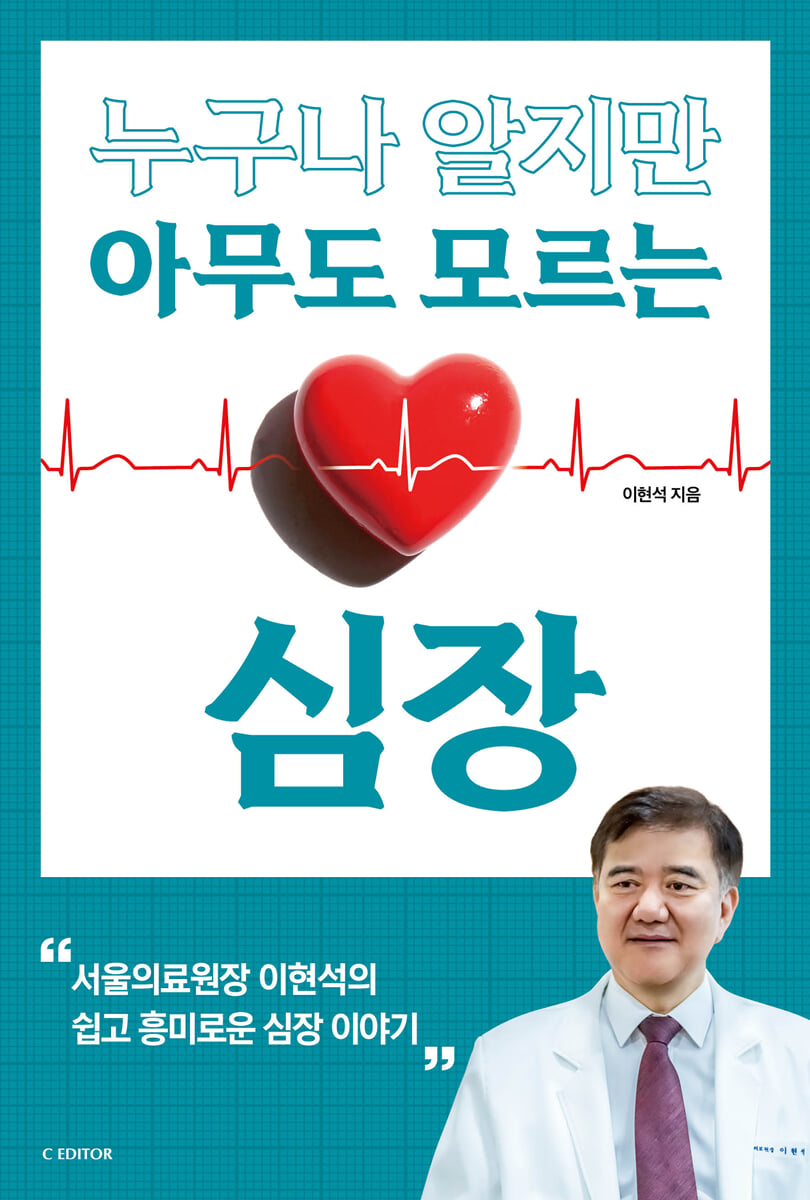
A heart that everyone knows but no one knows
 |
Description
Book Introduction
The heart beats more than 60 times per minute without stopping for a moment throughout life.
If the heart stops for just four minutes, the resulting brain damage is irreversible.
The problem is that heart disease is increasing every year.
Fortunately, if you understand the heart well and change your lifestyle habits, most diseases can be prevented, except for unavoidable cases such as congenital heart disease.
Also, even if you have a heart disease that is so severe that it is life-threatening, in most cases, you can live a normal life without any problems after surgery.
Dr. Lee Hyeon-seok, director of Seoul Medical Center, explains the heart and heart disease, which everyone knows about but is actually not well-known, in an easy-to-understand way.
If the heart stops for just four minutes, the resulting brain damage is irreversible.
The problem is that heart disease is increasing every year.
Fortunately, if you understand the heart well and change your lifestyle habits, most diseases can be prevented, except for unavoidable cases such as congenital heart disease.
Also, even if you have a heart disease that is so severe that it is life-threatening, in most cases, you can live a normal life without any problems after surgery.
Dr. Lee Hyeon-seok, director of Seoul Medical Center, explains the heart and heart disease, which everyone knows about but is actually not well-known, in an easy-to-understand way.
- You can preview some of the book's contents.
Preview
index
Recommendation
prolog
Part 1.
The cultural significance of the heart and the development of diagnosis
The heart, the 'organ of the mind'
A heart that works tirelessly without rest
How the Stethoscope Became a Doctor's Precious Ear
The story behind making blood pressure easy to measure
Can ultrasound, which humans cannot hear, determine our health status?
From 272 kilograms to wrist, the remarkable evolution of 'ECG'
One doctor's dedication saved millions.
Part 2.
Changing the concept of heart care
Roosevelt's Footprint in Heart Disease Research
Lies of the Three Kingdoms
Why Young Women Suddenly Collapse
When 'shock' is used as a medical term,
Opening the heart and performing surgery safely
ECMO, a cross between a heart-lung machine and an artificial heart
Part 3.
arrhythmia
If your heart beats suddenly, strongly, and quickly
Sometimes dangerous arrhythmias, atrial fibrillation
The worst arrhythmia, ventricular tachycardia
Part 4.
congenital heart disease
Unblock what's blocked, block what's open
A flower that bloomed amidst countless frustrations
If pulmonary hypertension is left untreated, it can be a serious problem.
A couple who met due to cardiomyopathy and hypertrophy
Part 5.
valvular disease
Does the heart also have rheumatism?
What happens when the valve narrows
If the valve does not close properly
Mechanical or Tissue Valve? That is the Question
Part 6.
coronary artery disease
When arteriosclerosis occurs in the coronary arteries
Myths and Truths About Angina
This is how angina is diagnosed
The disease that took the life of Doctor Zhivago
3 Steps to Angina Treatment
Part 7.
Other heart diseases
Is oral hygiene linked to heart health?
Heart Health Tips to Follow During Pregnancy
Postmenopausal heart disease is at risk
Can heart cancer develop?
Part 8.
A collapsing heart and heart failure
The heart also ages
Sudden Death and the 'Rule of 50'
Extreme Stress and Takotsubo Syndrome
Heart failure, which makes even daily life difficult, doesn't come on suddenly.
What is the first step in treating heart failure?
The heart also needs rehabilitation
Heart transplant surgery has many more advantages.
Part 9.
vascular disease
Aortic aneurysms: A more serious concern for those over 60
Aortic dissection, time is of the essence
Cerebral infarction and cerebral hemorrhage, which are similar but completely different
Modern society that invites stroke
Part 10.
To prevent heart disease
Can heart disease be inherited?
Cigarettes, the eternal 'enemy of the heart'
Obesity, the root of all evil
Ecstatic temptation, greasy food
To lower cholesterol
The Wrong Combination of Diabetes and Heart Disease
Excessive exercise is bad for your heart.
A good night's sleep is good for your heart.
Stress causes heart disease
The Power of the Mysterious Forest
prolog
Part 1.
The cultural significance of the heart and the development of diagnosis
The heart, the 'organ of the mind'
A heart that works tirelessly without rest
How the Stethoscope Became a Doctor's Precious Ear
The story behind making blood pressure easy to measure
Can ultrasound, which humans cannot hear, determine our health status?
From 272 kilograms to wrist, the remarkable evolution of 'ECG'
One doctor's dedication saved millions.
Part 2.
Changing the concept of heart care
Roosevelt's Footprint in Heart Disease Research
Lies of the Three Kingdoms
Why Young Women Suddenly Collapse
When 'shock' is used as a medical term,
Opening the heart and performing surgery safely
ECMO, a cross between a heart-lung machine and an artificial heart
Part 3.
arrhythmia
If your heart beats suddenly, strongly, and quickly
Sometimes dangerous arrhythmias, atrial fibrillation
The worst arrhythmia, ventricular tachycardia
Part 4.
congenital heart disease
Unblock what's blocked, block what's open
A flower that bloomed amidst countless frustrations
If pulmonary hypertension is left untreated, it can be a serious problem.
A couple who met due to cardiomyopathy and hypertrophy
Part 5.
valvular disease
Does the heart also have rheumatism?
What happens when the valve narrows
If the valve does not close properly
Mechanical or Tissue Valve? That is the Question
Part 6.
coronary artery disease
When arteriosclerosis occurs in the coronary arteries
Myths and Truths About Angina
This is how angina is diagnosed
The disease that took the life of Doctor Zhivago
3 Steps to Angina Treatment
Part 7.
Other heart diseases
Is oral hygiene linked to heart health?
Heart Health Tips to Follow During Pregnancy
Postmenopausal heart disease is at risk
Can heart cancer develop?
Part 8.
A collapsing heart and heart failure
The heart also ages
Sudden Death and the 'Rule of 50'
Extreme Stress and Takotsubo Syndrome
Heart failure, which makes even daily life difficult, doesn't come on suddenly.
What is the first step in treating heart failure?
The heart also needs rehabilitation
Heart transplant surgery has many more advantages.
Part 9.
vascular disease
Aortic aneurysms: A more serious concern for those over 60
Aortic dissection, time is of the essence
Cerebral infarction and cerebral hemorrhage, which are similar but completely different
Modern society that invites stroke
Part 10.
To prevent heart disease
Can heart disease be inherited?
Cigarettes, the eternal 'enemy of the heart'
Obesity, the root of all evil
Ecstatic temptation, greasy food
To lower cholesterol
The Wrong Combination of Diabetes and Heart Disease
Excessive exercise is bad for your heart.
A good night's sleep is good for your heart.
Stress causes heart disease
The Power of the Mysterious Forest
Publisher's Review
The heart, which weighs about 300 grams and is only the size of an adult's fist, beats more than 60 times per minute without stopping for a moment throughout one's life.
If the heart stops for just four minutes, the resulting brain damage is irreversible.
Perhaps that's why? While no organ in our body is unimportant, the heart holds a special significance among them.
The problem is that heart disease is on the rise due to the richer diet that has occurred as industrialization has progressed.
According to government statistics from 2023, the death rate per 100,000 people was 689, of which 64.8, or nearly 10 percent, were due to heart disease.
It has the second highest proportion after cancer.
Heart disease accounts for 14.9 percent of total medical expenses, ranking first even higher than cancer.
In this way, heart disease poses a huge threat to modern people.
Fortunately, heart disease has aspects that can be surprisingly easily understood if you approach it with a physics mindset.
Above all, if you understand the heart as an organ and change your lifestyle habits, most diseases can be prevented, except for unavoidable cases such as congenital heart disease.
Even in cases of severe heart disease that is life-threatening, most people can live a normal life without any problems after surgery.
Dr. Lee Hyun-seok, director of Seoul Medical Center and a cardiovascular and thoracic surgeon, has provided easy-to-understand explanations of questions and misconceptions that patients have had while seeing him in his clinic.
The author, who holds Korea's first doctorate in medical communication and has been contemplating ways to convey specialized medical knowledge to patients in an easily understandable manner, features numerous episodes in Parts 1 and 2 about pioneers who have contributed to the advancement of cardiology.
Part 3 onwards presents information on various heart diseases, including arrhythmia, congenital heart disease, valvular disease, coronary artery disease, heart failure, and vascular disease, in an interesting and easy-to-understand manner.
The final ten parts explain in detail how risk factors that everyone thinks are well-known, such as smoking, obesity, and cholesterol, act on our bodies and are therefore dangerous.
There is a saying that “If you understand the content, your thoughts will change, if your thoughts change, your actions will change, and if your actions change, your habits will change.”
Once you understand heart disease, you're more likely to change some of your previously unhealthy lifestyle habits.
Having accurate knowledge about the heart, something everyone thinks they know, but in fact, no one does.
It's the first step to a healthy heart.
If the heart stops for just four minutes, the resulting brain damage is irreversible.
Perhaps that's why? While no organ in our body is unimportant, the heart holds a special significance among them.
The problem is that heart disease is on the rise due to the richer diet that has occurred as industrialization has progressed.
According to government statistics from 2023, the death rate per 100,000 people was 689, of which 64.8, or nearly 10 percent, were due to heart disease.
It has the second highest proportion after cancer.
Heart disease accounts for 14.9 percent of total medical expenses, ranking first even higher than cancer.
In this way, heart disease poses a huge threat to modern people.
Fortunately, heart disease has aspects that can be surprisingly easily understood if you approach it with a physics mindset.
Above all, if you understand the heart as an organ and change your lifestyle habits, most diseases can be prevented, except for unavoidable cases such as congenital heart disease.
Even in cases of severe heart disease that is life-threatening, most people can live a normal life without any problems after surgery.
Dr. Lee Hyun-seok, director of Seoul Medical Center and a cardiovascular and thoracic surgeon, has provided easy-to-understand explanations of questions and misconceptions that patients have had while seeing him in his clinic.
The author, who holds Korea's first doctorate in medical communication and has been contemplating ways to convey specialized medical knowledge to patients in an easily understandable manner, features numerous episodes in Parts 1 and 2 about pioneers who have contributed to the advancement of cardiology.
Part 3 onwards presents information on various heart diseases, including arrhythmia, congenital heart disease, valvular disease, coronary artery disease, heart failure, and vascular disease, in an interesting and easy-to-understand manner.
The final ten parts explain in detail how risk factors that everyone thinks are well-known, such as smoking, obesity, and cholesterol, act on our bodies and are therefore dangerous.
There is a saying that “If you understand the content, your thoughts will change, if your thoughts change, your actions will change, and if your actions change, your habits will change.”
Once you understand heart disease, you're more likely to change some of your previously unhealthy lifestyle habits.
Having accurate knowledge about the heart, something everyone thinks they know, but in fact, no one does.
It's the first step to a healthy heart.
GOODS SPECIFICS
- Date of issue: August 20, 2025
- Page count, weight, size: 232 pages | 152*225*14mm
- ISBN13: 9791196071349
- ISBN10: 1196071349
You may also like
카테고리
korean


korean

![GQ KOREA Mark (Monthly): December [2025]](http://librairie.coreenne.fr/cdn/shop/files/8ef265dbbfbf186523ed75ba7319009d.jpg?v=1765340328&width=3840)


