

tie
 |
Description
Book Introduction
He is the most beloved essayist among Koreans.
Poet Picheon Deuk, who loves May and resembles it
Meet the new design and expanded content
Essay collection "Fate" and poetry collection "It's May Outside the Window"
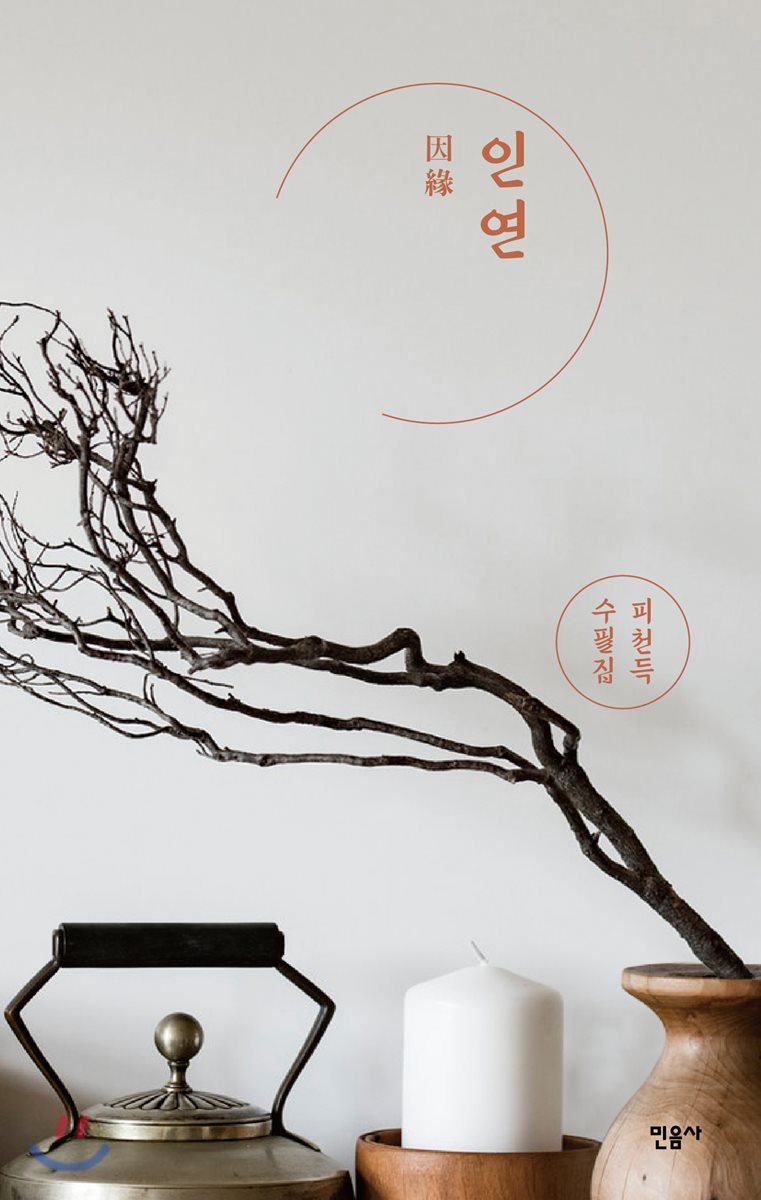
The essay collection 『Inyeon』 by Pi Cheon-deuk, the most beloved essayist among Koreans, and the revised edition of his only original poetry collection 『It's May Outside the Window』 have been published by Minumsa.
"Inyeon" is a famous prose piece that raised the level of Korean essay literature to a new level, and has long maintained its position as a synonym for lyrical and meditative essays.
In the Korean essay field, where classic works are scarce, "Inyeon" is a representative bestseller and an unrivaled steady seller that has been consistently loved by readers since its first publication in 1996.
Minumsa is presenting a newly refurbished collection of essays and poetry to commemorate the birthdays and anniversaries of May writers Picheon, who were born in May and passed away in May.
For existing readers, this will be an opportunity to re-examine the aesthetics of Picheon Deuk's literature, and for readers who have yet to read Picheon Deuk, this will be an opportunity to encounter 'the pleasant walking path called Picheon Deuk.'
Poet Picheon Deuk, who loves May and resembles it
Meet the new design and expanded content
Essay collection "Fate" and poetry collection "It's May Outside the Window"
The essay collection 『Inyeon』 by Pi Cheon-deuk, the most beloved essayist among Koreans, and the revised edition of his only original poetry collection 『It's May Outside the Window』 have been published by Minumsa.
"Inyeon" is a famous prose piece that raised the level of Korean essay literature to a new level, and has long maintained its position as a synonym for lyrical and meditative essays.
In the Korean essay field, where classic works are scarce, "Inyeon" is a representative bestseller and an unrivaled steady seller that has been consistently loved by readers since its first publication in 1996.
Minumsa is presenting a newly refurbished collection of essays and poetry to commemorate the birthdays and anniversaries of May writers Picheon, who were born in May and passed away in May.
For existing readers, this will be an opportunity to re-examine the aesthetics of Picheon Deuk's literature, and for readers who have yet to read Picheon Deuk, this will be an opportunity to encounter 'the pleasant walking path called Picheon Deuk.'
- You can preview some of the book's contents.
Preview
index
Part 1: Life is beautiful with small connections.
essay
New Year
Early spring
lark
spring
Letter from Father to Paris
May
Garden party
rose
Women's beauty
Mosi
water ski
dream
gift
flute player
There are too many
Depending on how you look at it
A woman's letter
toy
furniture
teardrop
Taste and style
Hoyt Collection
phone call
rural herbal medicine pharmacy
longevity
Chuseok of Hwangpo-tan
Awaiting letter
pin money
gold ring
move
Boston Symphony
Part 2 Seoyoung
mom
That day
brilliant times
To Seoyoung
One day
Seoyoung
Seoyoung goes to college
To my daughter
Seoyoung and Nanyoung
maternal uncle
tie
Yusuni
Dosan
To Mr. Dosan
Chunwon
Shakespeare
Tao Yuanming
Robert Frost 1
Robert Frost 2
Charles Lamb
Brook's patriotic poem
Women's hearts
Chiong
Portrait of a Scholar
Einstein
Part 3 My Beloved Life
My beloved life
taste
reflective glare
Pigajibyeon
story
sleep
Statue of Salvation
doodle
A silver coin
alcohol
pilgrimage
Secret Garden
travel props
Saturday
tender heart
invite
A Summer Night's Wanderer
pray
friendship
August 15, 1945
Hymn of Concord
To my friend's daughter who is getting married
The function of humor
Cultural Heritage Preservation
Year-end
later years
Preface: A Relationship with "Inyeon" / Park Jun (poet)
The Teacher Whose Life Was Like an Essay / Park Wan-seo (novelist)
To my beloved father / Pi Su-yeong
Author's chronology
essay
New Year
Early spring
lark
spring
Letter from Father to Paris
May
Garden party
rose
Women's beauty
Mosi
water ski
dream
gift
flute player
There are too many
Depending on how you look at it
A woman's letter
toy
furniture
teardrop
Taste and style
Hoyt Collection
phone call
rural herbal medicine pharmacy
longevity
Chuseok of Hwangpo-tan
Awaiting letter
pin money
gold ring
move
Boston Symphony
Part 2 Seoyoung
mom
That day
brilliant times
To Seoyoung
One day
Seoyoung
Seoyoung goes to college
To my daughter
Seoyoung and Nanyoung
maternal uncle
tie
Yusuni
Dosan
To Mr. Dosan
Chunwon
Shakespeare
Tao Yuanming
Robert Frost 1
Robert Frost 2
Charles Lamb
Brook's patriotic poem
Women's hearts
Chiong
Portrait of a Scholar
Einstein
Part 3 My Beloved Life
My beloved life
taste
reflective glare
Pigajibyeon
story
sleep
Statue of Salvation
doodle
A silver coin
alcohol
pilgrimage
Secret Garden
travel props
Saturday
tender heart
invite
A Summer Night's Wanderer
pray
friendship
August 15, 1945
Hymn of Concord
To my friend's daughter who is getting married
The function of humor
Cultural Heritage Preservation
Year-end
later years
Preface: A Relationship with "Inyeon" / Park Jun (poet)
The Teacher Whose Life Was Like an Essay / Park Wan-seo (novelist)
To my beloved father / Pi Su-yeong
Author's chronology
Publisher's Review
In a simple and innocent style, small surprises, small laughter,
The essence of Korean essay literature, singing of small joys.
"Inyeon" is a simple and unambiguous world, completed with Picheon Deuk's unique innocence, simple thoughts, and neat and clean prose.
In this revised edition, two more pieces, “A Waiting Letter” and “A Summer Night’s Wanderer,” were added to the previously included manuscripts.
If "A Waiting Letter" is a pattern of a longing heart that hoped for a letter while studying abroad in Shanghai, "A Wanderer on a Summer Night" depicts the scenery of a traveler standing on the road on a midsummer night like an epic poem.
In addition, it includes a preface by poet Park Jun, a memorial written by author Park Wan-seo during her lifetime, and a memorial written by author Pi Cheon-deuk's son, Dr. Pi Su-yeong, allowing readers to look at author Pi Cheon-deuk from various perspectives.
Poet Park Jun has a special affection for the poet Pi Cheon-deuk, to the point that he chose “Inyeon” as the book he read the most in an interview.
Poet Park Jun, who still reads 『Inyeon』 once every two months, tells of his special connection with 『Inyeon』 in his characteristically warm voice.
Author Park Wan-seo's writing is so affectionate that it makes one guess at the depth of the friendship the two authors shared during their lifetime.
We can also feel the thoughtfulness of Mr. Pi Cheon-deuk, who called in the writer Park Wan-seo, who was heartbroken after losing her son, and offered her deepest comfort without saying a single word.
A short poem for adults with a child in their heart.
"It's May Outside the Window" is the poet's only original poetry collection.
Although known to many as an essayist, Picheon Deuk began his literary career with poetry.
It was previously published under the title 'Life', but during the revision, the title was changed and the list of included poems was also changed.
This is because the image that best expresses 'life', which can be said to be the core idea of Picheon Deuk's literature, is May, and the work that best expresses the freshness of May is the poem "It's May Outside the Window."
The harmony between extremely restrained language and lingering poetry is exquisite in each piece.
It's May outside the window.
You are solving calculus
A moment too precious to even draw
The scent of lilacs is getting stronger
I guess you don't know yet
The leaves are shaped like a heart
-From "It's May Outside the Window"
Chapter 11 of the collection consists of additional psalms.
By including seven poems in total, including “Set Fire,” which has a strong character when participating, and “Sheep,” a poem with an animal motif from the early days, we were able to view Picheon Deuk’s poetry in a more comprehensive and colorful way.
The poetry collection "It's May Outside the Window," which is generally short and witty yet contains a profound worldview, is a remarkable collection of poems in that it demonstrates that economical language and emotional freedom can coexist.
Even in complex situations, he discovers the simplicity at the core and presents that simplicity to readers by visualizing it through the concept and image of a child.
The format, which combines a simple and kind heart with delicate feelings and advances into an abstract and beautiful world, creates an originality that combines Japanese haiku and the Anglo-American sonnet form, and sufficiently demonstrates the linguistic sense of a first-generation English scholar and intellectual who experienced the 20th century with his whole body.
In the preface
“Coral and pearls were my wishes.
But coral and pearls are deep down in the sea.
The waves are always rough and the bottom of the sea is scary.
I can't go far beyond the horizon, and I can't imagine wearing a wetsuit.
I just roll up my suit pants and stroll along, picking up shells and pebbles on the wet sand.
Because they are things that will be thrown away even if you pick them up, sometimes I feel sorry for them, and sometimes it seems like there are things that shine with a beautiful light.
Coral and pearls are my wishes.
But that is impossible.
“Just as a mother gives a pretty name to her not-so-pretty baby, I will call these pebbles and shells of mine ‘Coral and Pearl.’”
-Pichon Deuk
epilogue
“It starts with loneliness and sadness, but it ends with no one feeling lonely and no one feeling sad.
The teacher's unique innocence and simplicity shine brightest throughout the journey.
Thanks to that, I liked 'May' and often 'washed my face with cold water'.
I made a promise to myself that I would definitely go to Biwon someday, and I listened to my father's childhood story, who lost his mother at a young age like my teacher, without showing any sign of being bored.
And I also thought about writing an essay.”
-Park Jun (poet), from the preface
“The teacher was not prolific and wrote very little in his later years.
Nevertheless, I remember that my teacher was an active essayist until he passed away.
It may be because the teacher's life was as simple, as unselfish, as clean, and as free as his heart desired, like an essay.
I believe that the teacher's heaven will be like that too."
-Park Wan-seo (novelist), from the preface
The essence of Korean essay literature, singing of small joys.
"Inyeon" is a simple and unambiguous world, completed with Picheon Deuk's unique innocence, simple thoughts, and neat and clean prose.
In this revised edition, two more pieces, “A Waiting Letter” and “A Summer Night’s Wanderer,” were added to the previously included manuscripts.
If "A Waiting Letter" is a pattern of a longing heart that hoped for a letter while studying abroad in Shanghai, "A Wanderer on a Summer Night" depicts the scenery of a traveler standing on the road on a midsummer night like an epic poem.
In addition, it includes a preface by poet Park Jun, a memorial written by author Park Wan-seo during her lifetime, and a memorial written by author Pi Cheon-deuk's son, Dr. Pi Su-yeong, allowing readers to look at author Pi Cheon-deuk from various perspectives.
Poet Park Jun has a special affection for the poet Pi Cheon-deuk, to the point that he chose “Inyeon” as the book he read the most in an interview.
Poet Park Jun, who still reads 『Inyeon』 once every two months, tells of his special connection with 『Inyeon』 in his characteristically warm voice.
Author Park Wan-seo's writing is so affectionate that it makes one guess at the depth of the friendship the two authors shared during their lifetime.
We can also feel the thoughtfulness of Mr. Pi Cheon-deuk, who called in the writer Park Wan-seo, who was heartbroken after losing her son, and offered her deepest comfort without saying a single word.
A short poem for adults with a child in their heart.
"It's May Outside the Window" is the poet's only original poetry collection.
Although known to many as an essayist, Picheon Deuk began his literary career with poetry.
It was previously published under the title 'Life', but during the revision, the title was changed and the list of included poems was also changed.
This is because the image that best expresses 'life', which can be said to be the core idea of Picheon Deuk's literature, is May, and the work that best expresses the freshness of May is the poem "It's May Outside the Window."
The harmony between extremely restrained language and lingering poetry is exquisite in each piece.
It's May outside the window.
You are solving calculus
A moment too precious to even draw
The scent of lilacs is getting stronger
I guess you don't know yet
The leaves are shaped like a heart
-From "It's May Outside the Window"
Chapter 11 of the collection consists of additional psalms.
By including seven poems in total, including “Set Fire,” which has a strong character when participating, and “Sheep,” a poem with an animal motif from the early days, we were able to view Picheon Deuk’s poetry in a more comprehensive and colorful way.
The poetry collection "It's May Outside the Window," which is generally short and witty yet contains a profound worldview, is a remarkable collection of poems in that it demonstrates that economical language and emotional freedom can coexist.
Even in complex situations, he discovers the simplicity at the core and presents that simplicity to readers by visualizing it through the concept and image of a child.
The format, which combines a simple and kind heart with delicate feelings and advances into an abstract and beautiful world, creates an originality that combines Japanese haiku and the Anglo-American sonnet form, and sufficiently demonstrates the linguistic sense of a first-generation English scholar and intellectual who experienced the 20th century with his whole body.
In the preface
“Coral and pearls were my wishes.
But coral and pearls are deep down in the sea.
The waves are always rough and the bottom of the sea is scary.
I can't go far beyond the horizon, and I can't imagine wearing a wetsuit.
I just roll up my suit pants and stroll along, picking up shells and pebbles on the wet sand.
Because they are things that will be thrown away even if you pick them up, sometimes I feel sorry for them, and sometimes it seems like there are things that shine with a beautiful light.
Coral and pearls are my wishes.
But that is impossible.
“Just as a mother gives a pretty name to her not-so-pretty baby, I will call these pebbles and shells of mine ‘Coral and Pearl.’”
-Pichon Deuk
epilogue
“It starts with loneliness and sadness, but it ends with no one feeling lonely and no one feeling sad.
The teacher's unique innocence and simplicity shine brightest throughout the journey.
Thanks to that, I liked 'May' and often 'washed my face with cold water'.
I made a promise to myself that I would definitely go to Biwon someday, and I listened to my father's childhood story, who lost his mother at a young age like my teacher, without showing any sign of being bored.
And I also thought about writing an essay.”
-Park Jun (poet), from the preface
“The teacher was not prolific and wrote very little in his later years.
Nevertheless, I remember that my teacher was an active essayist until he passed away.
It may be because the teacher's life was as simple, as unselfish, as clean, and as free as his heart desired, like an essay.
I believe that the teacher's heaven will be like that too."
-Park Wan-seo (novelist), from the preface
GOODS SPECIFICS
- Date of issue: May 18, 2018
- Page count, weight, size: 300 pages | 120*190*20mm
- ISBN13: 9788937437496
- ISBN10: 893743749X
You may also like
카테고리
korean


korean

![GQ KOREA Mark (Monthly): December [2025]](http://librairie.coreenne.fr/cdn/shop/files/8ef265dbbfbf186523ed75ba7319009d.jpg?v=1765340328&width=3840)


