

UX×AI Insights
 |
Description
Book Introduction
Understanding the principles changes the results.
User experience that captivates users
The principle of ease of use, which reduces the cognitive burden on the user, has a trade-off with the principle of efficiency, which prioritizes quick task execution.
Additionally, consistency provides a good user experience and brand identity, but it also reduces the freedom of context.
In this way, various values that have developed from consideration for users can conflict with each other even while aiming for the same goal.
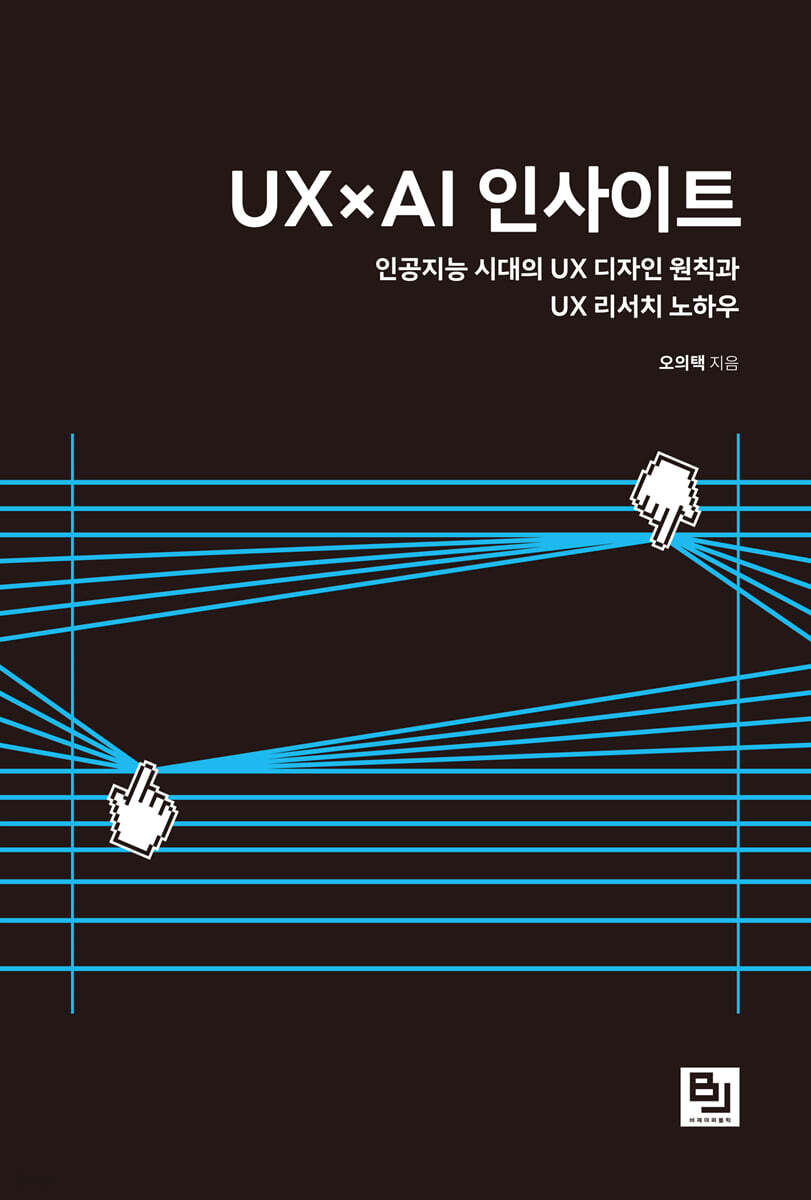
So, what choices should we make? Which tasks in our product are meaningful choices to automate in the age of AI? How can we integrate AI with a focus on user value? In "UX x AI Insights," the author, a UX researcher with 17 years of experience, logically organizes answers to these questions based on his expertise.
With this book, let's establish the answers and laws of user experience and broaden our perspective on services, products, and the users who will use them.
User experience that captivates users
The principle of ease of use, which reduces the cognitive burden on the user, has a trade-off with the principle of efficiency, which prioritizes quick task execution.
Additionally, consistency provides a good user experience and brand identity, but it also reduces the freedom of context.
In this way, various values that have developed from consideration for users can conflict with each other even while aiming for the same goal.
So, what choices should we make? Which tasks in our product are meaningful choices to automate in the age of AI? How can we integrate AI with a focus on user value? In "UX x AI Insights," the author, a UX researcher with 17 years of experience, logically organizes answers to these questions based on his expertise.
With this book, let's establish the answers and laws of user experience and broaden our perspective on services, products, and the users who will use them.
- You can preview some of the book's contents.
Preview
index
prolog
1 Definition of UX
2 UX design starts with understanding the user.
3 Artificial Intelligence and New User Experiences
4 UX Research for a Better Experience
Part 1: UX Design and Change in Everyday Life
_1 Efficiency UX that increases efficiency in busy daily life
__1.1 Shortening the access path
__1.2 Minimizing task execution steps
__1.3 Minimizing line of sight and physical movement
__1.4 Providing a more efficient experience with AI
__1.5 Should all tasks be designed efficiently?
_2 UX that makes product use easy
__2.1 Ease of use for predictability
__2.2 Minimizing the amount of information
__2.3 Visibility into current state
__2.4 Easy to understand phrases
__2.5 Providing an Easier Experience with AI
__2.6 Ease of Use vs. Efficiency
_3 Why is consistency important?
__3.1 Principle of Consistency
__3.2 Design that enhances consistency
__3.3 Consistency in AI Products
__3.4 Consistency vs. Usage Context
_4 Hero UX that prevents mistakes
__4.1 Preventing Human Error
__4.2 Recovery from human error
__4.3 Providing a Safer Experience with AI
__4.4 Safety vs. Efficiency
_5 Good UX that anyone can use
__5.1 Information that anyone can easily recognize
__5.2 An interface that anyone can operate
__5.3 Adjustable features to suit your abilities
__5.4 Providing an Experience Anyone Can Use with AI
__5.5 Accessibility vs. Usability
__5.6 Can UX for Seniors Be Successful in Business?
_6 The Basics of UX Design, PUI Design
__6.1 PUI suitable for the task
__6.2 Ergonomic Design
__6.3 Evolution of interfaces driven by AI
_7 Emotional design that provides enjoyment
__7.1 Emotions and Feelings
__7.2 Emotion and Design
__7.3 Providing a More Enjoyable Experience with AI
__7.4 Design that delights users
_8 Connected UX that provides a highly synergistic experience
__8.1 Easy connection method
__8.2 Smooth transition without interruption
__8.3 Synergy through connection
__8.4 A concise experience through integrated control
__8.5 The Relationship Between AI and Connectivity UX
Part 2: Artificial Intelligence and New User Experiences
_9 How to Use AI with User Value in Mind
__9.1 The Relationship Between AI and UX
__9.2 Which tasks should be automated?
__9.3 How to automate?
__9.4 Applying AI for User Value
_10 Customized UX just for me
__10.1 Customization based on personal preferences
__10.2 Personalized recommendations based on personal usage history
__10.3 Contextual Recommendations Based on Surrounding Environment
__10.4 Providing Experiences Fit for the Era of Personalization
_11 Automation UX that reduces user effort
__11.1 Automation of repetitive tasks
__11.2 Automation based on changes in surrounding environment and behavior
__11.3 Control over Automation
__11.4 Monitoring for Automation
__11.5 Building a Positive Partnership with AI
_12 Augmented UX that enhances users' capabilities
__12.1 Augmented UX that makes you smarter
__12.2 Augmented UX that makes you look and hear better
__12.3 Augmented UX that makes you more creative
__12.4 Providing New Experiences with Augmented Intelligence
_13 Ethical AI UX
__13.1 Transparency
__13.2 Data Privacy
__13.3 Fairness
__13.4 Stability
__13.5 Providing Ethical AI Experiences
_14 What UX should be considered for generative AI?
__14.1 What is generative AI?
__14.2 Generative AI and User Experience
__14.3 Providing Better Experiences with Generative AI
_15 UX Design of Conversational AI Agents
__15.1 Chatbot vs. Voicebot
__15.2 Conversational UX Design
__15.3 Persona Design
__15.4 Changes in UX Workspaces Due to Conversational AI Agents
_16 AI UX that interacts with users
__16.1 Definition of Personification
__16.2 How does personification affect UX?
__16.3 AI Personification Design Techniques
__16.4 Designing AI that Engages with Users
_17 The Future of AI UX as Seen Through Science Fiction Movies
__17.1 Science Fiction Films as a Methodology for Predicting the Future
__17.2 Predicting the Future of AI UX with Science Fiction Movies
__17.3 AI UX Issues to Consider in the Future
Part 3: UX Research for Better Experiences
_18 How should I write a user survey?
__18.1 Is user research really necessary?
__18.2 Types of User Research
__18.3 Classification and Use of User Research
__18.4 How to Increase the Reliability of User Research
__18.5 User-targeted vs. Expert-targeted Surveys
__18.6 UX Research Using AI
__18.7 Practical Considerations
_19 How to measure user experience?
__19.1 Components of User Experience and Evaluation Methods
__19.2 UX Evaluation of AI-Enabled Products
__19.3 Measurement Elements of Big Data Analysis
__19.4 UX Evaluation Criteria Suitable for Our Product
_20 Usability evaluation to improve products through vivid feedback
__20.1 What is a usability evaluation?
__20.2 Planning a Usability Evaluation
__20.3 Conducting a Usability Evaluation
__20.4 Improving Usability Evaluation through AI
__20.5 Utilizing Usability Evaluation
_21 Acceptance Survey to Reduce Development Risk
__21.1 Embracing Innovation
__21.2 What is an acceptance survey?
__21.3 Acceptance Survey vs. Usability Evaluation
__21.4 Limitations and Uses of Acceptance Surveys
_22 Survey to effectively verify user needs
__22.1 What is a survey?
__22.2 Selecting a Survey Method
__22.3 Developing a Questionnaire
__22.4 Conducting a Survey
_23 Digital ethnography: Understanding users through digital traces
__23.1 What is digital ethnography?
__23.2 Digital Ethnography Analysis Methods
__23.3 Improving Digital Ethnography through AI
_24 How should user experience data be analyzed?
__24.1 Quantitative Data Analysis
__24.2 Qualitative Data Analysis
__24.3 What is good data analysis?
1 Definition of UX
2 UX design starts with understanding the user.
3 Artificial Intelligence and New User Experiences
4 UX Research for a Better Experience
Part 1: UX Design and Change in Everyday Life
_1 Efficiency UX that increases efficiency in busy daily life
__1.1 Shortening the access path
__1.2 Minimizing task execution steps
__1.3 Minimizing line of sight and physical movement
__1.4 Providing a more efficient experience with AI
__1.5 Should all tasks be designed efficiently?
_2 UX that makes product use easy
__2.1 Ease of use for predictability
__2.2 Minimizing the amount of information
__2.3 Visibility into current state
__2.4 Easy to understand phrases
__2.5 Providing an Easier Experience with AI
__2.6 Ease of Use vs. Efficiency
_3 Why is consistency important?
__3.1 Principle of Consistency
__3.2 Design that enhances consistency
__3.3 Consistency in AI Products
__3.4 Consistency vs. Usage Context
_4 Hero UX that prevents mistakes
__4.1 Preventing Human Error
__4.2 Recovery from human error
__4.3 Providing a Safer Experience with AI
__4.4 Safety vs. Efficiency
_5 Good UX that anyone can use
__5.1 Information that anyone can easily recognize
__5.2 An interface that anyone can operate
__5.3 Adjustable features to suit your abilities
__5.4 Providing an Experience Anyone Can Use with AI
__5.5 Accessibility vs. Usability
__5.6 Can UX for Seniors Be Successful in Business?
_6 The Basics of UX Design, PUI Design
__6.1 PUI suitable for the task
__6.2 Ergonomic Design
__6.3 Evolution of interfaces driven by AI
_7 Emotional design that provides enjoyment
__7.1 Emotions and Feelings
__7.2 Emotion and Design
__7.3 Providing a More Enjoyable Experience with AI
__7.4 Design that delights users
_8 Connected UX that provides a highly synergistic experience
__8.1 Easy connection method
__8.2 Smooth transition without interruption
__8.3 Synergy through connection
__8.4 A concise experience through integrated control
__8.5 The Relationship Between AI and Connectivity UX
Part 2: Artificial Intelligence and New User Experiences
_9 How to Use AI with User Value in Mind
__9.1 The Relationship Between AI and UX
__9.2 Which tasks should be automated?
__9.3 How to automate?
__9.4 Applying AI for User Value
_10 Customized UX just for me
__10.1 Customization based on personal preferences
__10.2 Personalized recommendations based on personal usage history
__10.3 Contextual Recommendations Based on Surrounding Environment
__10.4 Providing Experiences Fit for the Era of Personalization
_11 Automation UX that reduces user effort
__11.1 Automation of repetitive tasks
__11.2 Automation based on changes in surrounding environment and behavior
__11.3 Control over Automation
__11.4 Monitoring for Automation
__11.5 Building a Positive Partnership with AI
_12 Augmented UX that enhances users' capabilities
__12.1 Augmented UX that makes you smarter
__12.2 Augmented UX that makes you look and hear better
__12.3 Augmented UX that makes you more creative
__12.4 Providing New Experiences with Augmented Intelligence
_13 Ethical AI UX
__13.1 Transparency
__13.2 Data Privacy
__13.3 Fairness
__13.4 Stability
__13.5 Providing Ethical AI Experiences
_14 What UX should be considered for generative AI?
__14.1 What is generative AI?
__14.2 Generative AI and User Experience
__14.3 Providing Better Experiences with Generative AI
_15 UX Design of Conversational AI Agents
__15.1 Chatbot vs. Voicebot
__15.2 Conversational UX Design
__15.3 Persona Design
__15.4 Changes in UX Workspaces Due to Conversational AI Agents
_16 AI UX that interacts with users
__16.1 Definition of Personification
__16.2 How does personification affect UX?
__16.3 AI Personification Design Techniques
__16.4 Designing AI that Engages with Users
_17 The Future of AI UX as Seen Through Science Fiction Movies
__17.1 Science Fiction Films as a Methodology for Predicting the Future
__17.2 Predicting the Future of AI UX with Science Fiction Movies
__17.3 AI UX Issues to Consider in the Future
Part 3: UX Research for Better Experiences
_18 How should I write a user survey?
__18.1 Is user research really necessary?
__18.2 Types of User Research
__18.3 Classification and Use of User Research
__18.4 How to Increase the Reliability of User Research
__18.5 User-targeted vs. Expert-targeted Surveys
__18.6 UX Research Using AI
__18.7 Practical Considerations
_19 How to measure user experience?
__19.1 Components of User Experience and Evaluation Methods
__19.2 UX Evaluation of AI-Enabled Products
__19.3 Measurement Elements of Big Data Analysis
__19.4 UX Evaluation Criteria Suitable for Our Product
_20 Usability evaluation to improve products through vivid feedback
__20.1 What is a usability evaluation?
__20.2 Planning a Usability Evaluation
__20.3 Conducting a Usability Evaluation
__20.4 Improving Usability Evaluation through AI
__20.5 Utilizing Usability Evaluation
_21 Acceptance Survey to Reduce Development Risk
__21.1 Embracing Innovation
__21.2 What is an acceptance survey?
__21.3 Acceptance Survey vs. Usability Evaluation
__21.4 Limitations and Uses of Acceptance Surveys
_22 Survey to effectively verify user needs
__22.1 What is a survey?
__22.2 Selecting a Survey Method
__22.3 Developing a Questionnaire
__22.4 Conducting a Survey
_23 Digital ethnography: Understanding users through digital traces
__23.1 What is digital ethnography?
__23.2 Digital Ethnography Analysis Methods
__23.3 Improving Digital Ethnography through AI
_24 How should user experience data be analyzed?
__24.1 Quantitative Data Analysis
__24.2 Qualitative Data Analysis
__24.3 What is good data analysis?
Detailed image
.jpg)
Publisher's Review
How to Make UX Design, Maintenance, and User Research More Effective
When we examine everyday products that provide good experiences through theoretical frameworks like psychology or ergonomics, we often discover secrets to user experience (UX) that meet users' needs.
In Part 1, we'll explore various UX design examples from everyday life, exploring how to provide users with a better experience. We'll also explore how AI is transforming everyday UX design.
In Part 2, we'll explore new UX advancements powered by AI.
This will explore how we can provide better experiences for users and what to consider when planning and designing AI-powered products.
In the final part, we'll explore the process of understanding user needs and building better products through UX research and data analysis. We'll explore UX research and data analysis methodologies such as usability testing, acceptance testing, surveys, and digital ethnography, and even explore how to leverage AI.
When we examine everyday products that provide good experiences through theoretical frameworks like psychology or ergonomics, we often discover secrets to user experience (UX) that meet users' needs.
In Part 1, we'll explore various UX design examples from everyday life, exploring how to provide users with a better experience. We'll also explore how AI is transforming everyday UX design.
In Part 2, we'll explore new UX advancements powered by AI.
This will explore how we can provide better experiences for users and what to consider when planning and designing AI-powered products.
In the final part, we'll explore the process of understanding user needs and building better products through UX research and data analysis. We'll explore UX research and data analysis methodologies such as usability testing, acceptance testing, surveys, and digital ethnography, and even explore how to leverage AI.
GOODS SPECIFICS
- Date of issue: July 7, 2025
- Page count, weight, size: 304 pages | 152*225*30mm
- ISBN13: 9791165923297
- ISBN10: 1165923297
You may also like
카테고리
korean


korean

![ELLE 엘르 스페셜 에디션 A형 : 12월 [2025]](http://librairie.coreenne.fr/cdn/shop/files/b8e27a3de6c9538896439686c6b0e8fb.jpg?v=1766436872&width=3840)


