

stem cells
 |
Description
Book Introduction
Everything You Need to Know About Stem Cells Through Film
Lowering the Barriers to Science with Cinematic Imagination
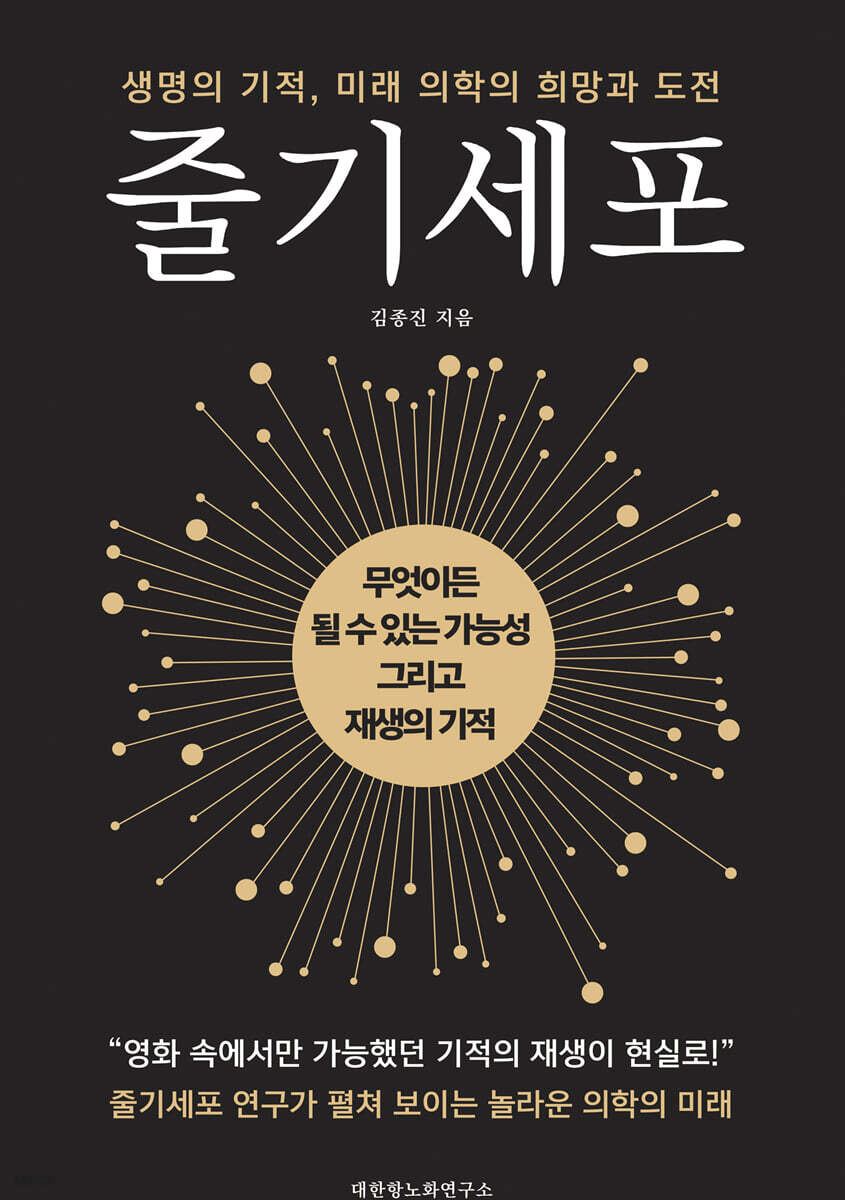
The Korea Anti-Aging Research Institute publishes "The Miracle of Life, the Hope and Challenge of Future Medicine, Stem Cells," by author Jongjin Kim.
An innovative approach that combines cinematic imagination and scientific fact to explore the present and future of stem cell technology.
A comprehensive guidebook covering everything from human cloning to regenerative medicine, covering cutting-edge life sciences.
The Korea Institute for Anti-Aging Research has published a new book by author Jongjin Kim titled "The Miracle of Life, Hope and Challenge of Future Medicine, Stem Cells."
This book is a unique science textbook that explains the complex realities of stem cell technology in an easy-to-understand way through various films such as [Blueprint], [The Island], and [Autumn in My Heart].
As an expert in stem cell research, the author harmoniously combines scientific evidence with cinematic imagination to guide general readers through cutting-edge life science technologies.
It provides a balanced perspective on all the questions stem cells pose, from the ethical issues surrounding human cloning to the realities of leukemia treatment and the potential for neural regeneration.
Lowering the Barriers to Science with Cinematic Imagination
The Korea Anti-Aging Research Institute publishes "The Miracle of Life, the Hope and Challenge of Future Medicine, Stem Cells," by author Jongjin Kim.
An innovative approach that combines cinematic imagination and scientific fact to explore the present and future of stem cell technology.
A comprehensive guidebook covering everything from human cloning to regenerative medicine, covering cutting-edge life sciences.
The Korea Institute for Anti-Aging Research has published a new book by author Jongjin Kim titled "The Miracle of Life, Hope and Challenge of Future Medicine, Stem Cells."
This book is a unique science textbook that explains the complex realities of stem cell technology in an easy-to-understand way through various films such as [Blueprint], [The Island], and [Autumn in My Heart].
As an expert in stem cell research, the author harmoniously combines scientific evidence with cinematic imagination to guide general readers through cutting-edge life science technologies.
It provides a balanced perspective on all the questions stem cells pose, from the ethical issues surrounding human cloning to the realities of leukemia treatment and the potential for neural regeneration.
- You can preview some of the book's contents.
Preview
index
Recommendation
prolog
■ Chapter 1: Stem Cells Appear on the Screen
■ Chapter 2: Leukemia Treatment, a Love That Risks Life
■ Chapter 3: Liver, Joints, Hair Loss… Regenerative Medicine Opens the Door to Everyday Treatment
■ Chapter 4 The 'Cloned Human' Debate: Science or Ethics?
■ Chapter 5 "Mickey 17": Clones and the Value of Life
■ Chapter 6 Parkinson's Disease, Dementia, and Brain Damage: Cutting-Edge Neuroregeneration
■ Chapter 7: Research Ethics and the Impact of the 'Whistleblower'
■ Chapter 8: What if the “era of popularizing stem cells” comes?
Epilogue
supplement
prolog
■ Chapter 1: Stem Cells Appear on the Screen
■ Chapter 2: Leukemia Treatment, a Love That Risks Life
■ Chapter 3: Liver, Joints, Hair Loss… Regenerative Medicine Opens the Door to Everyday Treatment
■ Chapter 4 The 'Cloned Human' Debate: Science or Ethics?
■ Chapter 5 "Mickey 17": Clones and the Value of Life
■ Chapter 6 Parkinson's Disease, Dementia, and Brain Damage: Cutting-Edge Neuroregeneration
■ Chapter 7: Research Ethics and the Impact of the 'Whistleblower'
■ Chapter 8: What if the “era of popularizing stem cells” comes?
Epilogue
supplement
Into the book
We have entered an era where the word "stem cell" is often heard in movies.
Just over 20 years ago, stem cell-related narratives were rarely covered in depth in the mass media.
But at some point, stem cells began to emerge as a key word in stories about incurable diseases, organ cloning, and even cloned humans.
--- p.30
The essence of stem cells lies in their ability to “self-proliferate” and “differentiate into specific tissue cells.”
For example, when a skin wound occurs, surrounding stem cells supply new cells to help the wound heal.
Adult stem cells hidden throughout the human body are usually dormant and become activated when damaged or needed.
--- p.55
This will provide an opportunity to gauge the gap between the illusion of "stem cells = cure-all" and the actual research field, and further examine why stem cells are emerging as such an important factor in modern medicine.
--- p.31
It emphasizes that the question of the 'reason for existence' faced by cloned humans ultimately leads to reflection on the meaning of existence for all of us.
--- p.128
The four principles of biomedical ethics—non-maleficence, beneficence, autonomy, and justice—serve as key ethical guidelines in medical research and clinical practice.
Just over 20 years ago, stem cell-related narratives were rarely covered in depth in the mass media.
But at some point, stem cells began to emerge as a key word in stories about incurable diseases, organ cloning, and even cloned humans.
--- p.30
The essence of stem cells lies in their ability to “self-proliferate” and “differentiate into specific tissue cells.”
For example, when a skin wound occurs, surrounding stem cells supply new cells to help the wound heal.
Adult stem cells hidden throughout the human body are usually dormant and become activated when damaged or needed.
--- p.55
This will provide an opportunity to gauge the gap between the illusion of "stem cells = cure-all" and the actual research field, and further examine why stem cells are emerging as such an important factor in modern medicine.
--- p.31
It emphasizes that the question of the 'reason for existence' faced by cloned humans ultimately leads to reflection on the meaning of existence for all of us.
--- p.128
The four principles of biomedical ethics—non-maleficence, beneficence, autonomy, and justice—serve as key ethical guidelines in medical research and clinical practice.
--- p.210
Publisher's Review
This book consists of a total of 8 chapters.
Chapter 1 analyzes stem cell clichés in movies, Chapter 2 discusses leukemia treatment and hematopoietic stem cell transplantation, Chapter 3 discusses everyday regenerative medicine, Chapters 4-5 discuss the human cloning debate, Chapter 6 discusses cutting-edge technologies in neural regeneration, Chapter 7 discusses research ethics, and Chapter 8 looks at the prospects for the era of popularizing stem cells.
In particular, this book goes beyond the dichotomy of "science versus ethics" and presents an integrated approach centered on the value of respect for life.
It has secured academic credibility by receiving recommendations from experts in various fields, including Dr. Jeong Jong-hwa, Professor Lee Gyu-je of Yonsei University, and Professor Song Bong-jun of Wonkwang University.
"Stem cell technology goes beyond mere medical innovation to offer profound insights into the human condition," the authors explain, "and I wanted to convey complex scientific concepts through the familiar medium of film."
The book presents the potential of stem cell technology while emphasizing the importance of research ethics and social responsibility.
It presents the right direction for science and technology through the message that "technological advancement must be in harmony with human dignity."
▶ Lowering the threshold of science through cinematic imagination
"Stem cell technology goes beyond mere medical innovation to offer profound insights into the human condition," the authors explain, "and I wanted to convey complex scientific concepts through the familiar medium of film."
Finding a Balance Between Science and Ethics
The book presents the potential of stem cell technology while emphasizing the importance of research ethics and social responsibility.
It presents the right direction for science and technology through the message that "technological advancement must be in harmony with human dignity."
What prompted me to write a book on the topic of stem cells was the dual nature of this technology.
On the one hand, it is a technology that offers hope for curing incurable diseases, but on the other hand, it raises ethical dilemmas like human cloning.
As I pondered how to convey this complexity to the general reader, I turned my attention to the medium of film.
From the screams of the cloned human Siri in "Blueprint," the suffering of a leukemia patient in "Autumn in My Heart," to the shock of the research ethics scandal in "The Whistleblower."
I found deep meaning in the fact that all of these stories were not mere fiction, but rather a reflection of the reality we face.
Through this book, I hope readers will understand the incredible potential of stem cell technology, while also hoping that it will develop in a way that is in harmony with humanity.
I wanted to convey the message that science should exist for humanity, and that we should actively participate in its development.
Chapter 1 analyzes stem cell clichés in movies, Chapter 2 discusses leukemia treatment and hematopoietic stem cell transplantation, Chapter 3 discusses everyday regenerative medicine, Chapters 4-5 discuss the human cloning debate, Chapter 6 discusses cutting-edge technologies in neural regeneration, Chapter 7 discusses research ethics, and Chapter 8 looks at the prospects for the era of popularizing stem cells.
In particular, this book goes beyond the dichotomy of "science versus ethics" and presents an integrated approach centered on the value of respect for life.
It has secured academic credibility by receiving recommendations from experts in various fields, including Dr. Jeong Jong-hwa, Professor Lee Gyu-je of Yonsei University, and Professor Song Bong-jun of Wonkwang University.
"Stem cell technology goes beyond mere medical innovation to offer profound insights into the human condition," the authors explain, "and I wanted to convey complex scientific concepts through the familiar medium of film."
The book presents the potential of stem cell technology while emphasizing the importance of research ethics and social responsibility.
It presents the right direction for science and technology through the message that "technological advancement must be in harmony with human dignity."
▶ Lowering the threshold of science through cinematic imagination
"Stem cell technology goes beyond mere medical innovation to offer profound insights into the human condition," the authors explain, "and I wanted to convey complex scientific concepts through the familiar medium of film."
Finding a Balance Between Science and Ethics
The book presents the potential of stem cell technology while emphasizing the importance of research ethics and social responsibility.
It presents the right direction for science and technology through the message that "technological advancement must be in harmony with human dignity."
What prompted me to write a book on the topic of stem cells was the dual nature of this technology.
On the one hand, it is a technology that offers hope for curing incurable diseases, but on the other hand, it raises ethical dilemmas like human cloning.
As I pondered how to convey this complexity to the general reader, I turned my attention to the medium of film.
From the screams of the cloned human Siri in "Blueprint," the suffering of a leukemia patient in "Autumn in My Heart," to the shock of the research ethics scandal in "The Whistleblower."
I found deep meaning in the fact that all of these stories were not mere fiction, but rather a reflection of the reality we face.
Through this book, I hope readers will understand the incredible potential of stem cell technology, while also hoping that it will develop in a way that is in harmony with humanity.
I wanted to convey the message that science should exist for humanity, and that we should actively participate in its development.
GOODS SPECIFICS
- Date of issue: May 28, 2025
- Page count, weight, size: 274 pages | 148*210*20mm
- ISBN13: 9791199271708
- ISBN10: 1199271705
You may also like
카테고리
korean


korean

![GQ KOREA Mark (Monthly): December [2025]](http://librairie.coreenne.fr/cdn/shop/files/8ef265dbbfbf186523ed75ba7319009d.jpg?v=1765340328&width=3840)


