

Every time I fight, I become transparent
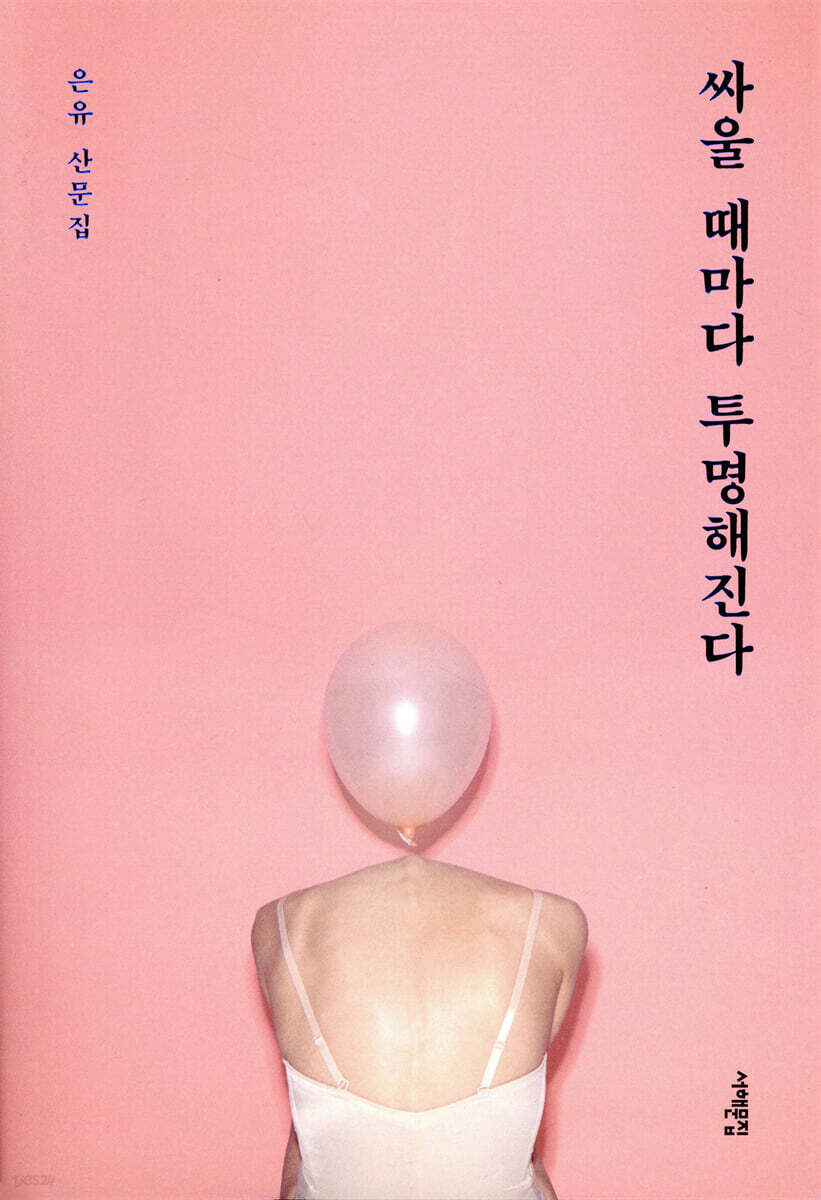 |
Description
Book Introduction
I swallowed my day's worth of tears today too
A woman who often cries about work, relationships, marriage, and roles speaks
Eun-yu is a subcontracted writer who started eating 'writing rice' without even going to college, and a working-class woman who got married early and had to earn a living as a wife and mother, as well as take care of housework and childcare.
The author, who was selected as the 'Most Notable Writer of the Year' for two consecutive years in 2015 (Channel Yes) and 2016 (Sisa In) for her works 'The Front Line of Writing' and 'Words of Writing', wrote 'whenever life becomes hard and words become tangled', while acknowledging herself as she multiplies into numerous beings such as a mother, wife, daughter, and working woman from the age of thirty-five to forty-five.
The new book, "Every Time We Fight, We Become Transparent," is a story of a woman's struggle to face the everyday frustrations that defy language and to express them.
I tried to speak according to the feminist proposition of 'tell your story as long as you exist', and so the diary of the past ten years, in which fights were inevitable, unfolds sometimes painfully, sometimes eloquently, and sometimes plainly and humorously.
The squalid daily life felt on the kitchen sink, and the few drops of awakening obtained by refining it, reveal the silhouette of reality that is obscured by positive words without reservation.
It is necessary to find strength in positivity, but there are more times when you have to swallow the day's frustration without positivity.
Through metaphorical prose that honestly and openly exposes the prejudices, discrimination, loneliness, and despair that clearly exist in all aspects of a woman's life—work, dating, marriage, childbirth, childcare—I hope to awaken to my inner femininity and attempt to speak more closely to my own emotions.
―When life became too much for me and I was at the peak of my exhaustion, I wrote.
The patriarchal language that defines a person solely by his or her work and roles and evaluates life by achievements and goals could not fully explain me.
I wanted to put out the words that were floating around in my body somewhere.
I didn't want to take it out as much as I wanted to take it out.
Even though it was a sadness that was unique to me, I didn't want it to be generalized as some kind of petty sadness the moment I put it into words.
They say that when we keep our mouths shut, it's not because we have nothing to say, but because we don't know how to say everything we want to say.
One spring day, when the desire to speak and the inability to speak, the desire for words and the impediment to speech, collided, I was already writing something. (p. 9)
A woman who often cries about work, relationships, marriage, and roles speaks
Eun-yu is a subcontracted writer who started eating 'writing rice' without even going to college, and a working-class woman who got married early and had to earn a living as a wife and mother, as well as take care of housework and childcare.
The author, who was selected as the 'Most Notable Writer of the Year' for two consecutive years in 2015 (Channel Yes) and 2016 (Sisa In) for her works 'The Front Line of Writing' and 'Words of Writing', wrote 'whenever life becomes hard and words become tangled', while acknowledging herself as she multiplies into numerous beings such as a mother, wife, daughter, and working woman from the age of thirty-five to forty-five.
The new book, "Every Time We Fight, We Become Transparent," is a story of a woman's struggle to face the everyday frustrations that defy language and to express them.
I tried to speak according to the feminist proposition of 'tell your story as long as you exist', and so the diary of the past ten years, in which fights were inevitable, unfolds sometimes painfully, sometimes eloquently, and sometimes plainly and humorously.
The squalid daily life felt on the kitchen sink, and the few drops of awakening obtained by refining it, reveal the silhouette of reality that is obscured by positive words without reservation.
It is necessary to find strength in positivity, but there are more times when you have to swallow the day's frustration without positivity.
Through metaphorical prose that honestly and openly exposes the prejudices, discrimination, loneliness, and despair that clearly exist in all aspects of a woman's life—work, dating, marriage, childbirth, childcare—I hope to awaken to my inner femininity and attempt to speak more closely to my own emotions.
―When life became too much for me and I was at the peak of my exhaustion, I wrote.
The patriarchal language that defines a person solely by his or her work and roles and evaluates life by achievements and goals could not fully explain me.
I wanted to put out the words that were floating around in my body somewhere.
I didn't want to take it out as much as I wanted to take it out.
Even though it was a sadness that was unique to me, I didn't want it to be generalized as some kind of petty sadness the moment I put it into words.
They say that when we keep our mouths shut, it's not because we have nothing to say, but because we don't know how to say everything we want to say.
One spring day, when the desire to speak and the inability to speak, the desire for words and the impediment to speech, collided, I was already writing something. (p. 9)
- You can preview some of the book's contents.
Preview
index
Author's Note
Part 1.
The "duty" of being a woman: Becoming transparent every time you fight
The glass of water that holds my life was shaken for a moment.
Every time I fight, I become transparent
That's because I haven't had a child before
Women's Dinner
Because she's my daughter
Kim Je-dong's words
Bonbun and Jeon Hye-rin
Sometimes being a mother is
Go into the tears
Mom who doesn't cook
People who don't know what they're doing
The crazy bitch said to run away
Mail from the Leisure Department
Flower Cart's Notes on Famous Quotes
Owner of an old-fashioned mother's home
When I was sick, you were sick too, Mom
Mom and watermelon
Life Lessons from a Military Mom
Part 2.
The 'Question' of Existence: There Are Different Clothes Needed at Every Stage of Life
I kept thinking about it
I will be misunderstood
Anyone who has suffered for a long time will know
There are clothes needed for every stage of life.
Like an art gallery that doesn't hang paintings
I want to live as long as I can
I don't want to do that
Forty years of self-harvesting from my own body
Time to match the knot
Write on the road
Don't look at yourself too long
Life is sometimes lonely, often painful, and sometimes makes you miss it.
My life isn't that sad
There is countless pain in the world.
For the growing noise
My heart is full for no reason
Cherry and Fish: The Ontology of Being Together
Part 3.
The 'Meaning' of Love: All Love Is a Business
Now, it's barely time to miss anyone
Never love
All love is a business that leaves a mark
If you write, you spit it out, and if you run, you swallow it.
The continent called you
I forgot how to talk to him
I lay down where he was lying
Part 4.
The 'value' of work: Should I open a bottle of Bacchus?
It's better to do something bad
The flower season is short, but life is longer than expected.
A Struggling Labor Day Eve
Would you like a bottle of Bacchus?
A precious child of another family
A love like a pincushion
I wanted to jump over the fence
talking nude model
Cloud Sentinel
How scary are all the firsts in the world
Why are you curious about that?
I only hated living
What did the author say?
Can I celebrate the end of print anniversary?
Part 1.
The "duty" of being a woman: Becoming transparent every time you fight
The glass of water that holds my life was shaken for a moment.
Every time I fight, I become transparent
That's because I haven't had a child before
Women's Dinner
Because she's my daughter
Kim Je-dong's words
Bonbun and Jeon Hye-rin
Sometimes being a mother is
Go into the tears
Mom who doesn't cook
People who don't know what they're doing
The crazy bitch said to run away
Mail from the Leisure Department
Flower Cart's Notes on Famous Quotes
Owner of an old-fashioned mother's home
When I was sick, you were sick too, Mom
Mom and watermelon
Life Lessons from a Military Mom
Part 2.
The 'Question' of Existence: There Are Different Clothes Needed at Every Stage of Life
I kept thinking about it
I will be misunderstood
Anyone who has suffered for a long time will know
There are clothes needed for every stage of life.
Like an art gallery that doesn't hang paintings
I want to live as long as I can
I don't want to do that
Forty years of self-harvesting from my own body
Time to match the knot
Write on the road
Don't look at yourself too long
Life is sometimes lonely, often painful, and sometimes makes you miss it.
My life isn't that sad
There is countless pain in the world.
For the growing noise
My heart is full for no reason
Cherry and Fish: The Ontology of Being Together
Part 3.
The 'Meaning' of Love: All Love Is a Business
Now, it's barely time to miss anyone
Never love
All love is a business that leaves a mark
If you write, you spit it out, and if you run, you swallow it.
The continent called you
I forgot how to talk to him
I lay down where he was lying
Part 4.
The 'value' of work: Should I open a bottle of Bacchus?
It's better to do something bad
The flower season is short, but life is longer than expected.
A Struggling Labor Day Eve
Would you like a bottle of Bacchus?
A precious child of another family
A love like a pincushion
I wanted to jump over the fence
talking nude model
Cloud Sentinel
How scary are all the firsts in the world
Why are you curious about that?
I only hated living
What did the author say?
Can I celebrate the end of print anniversary?
Detailed image
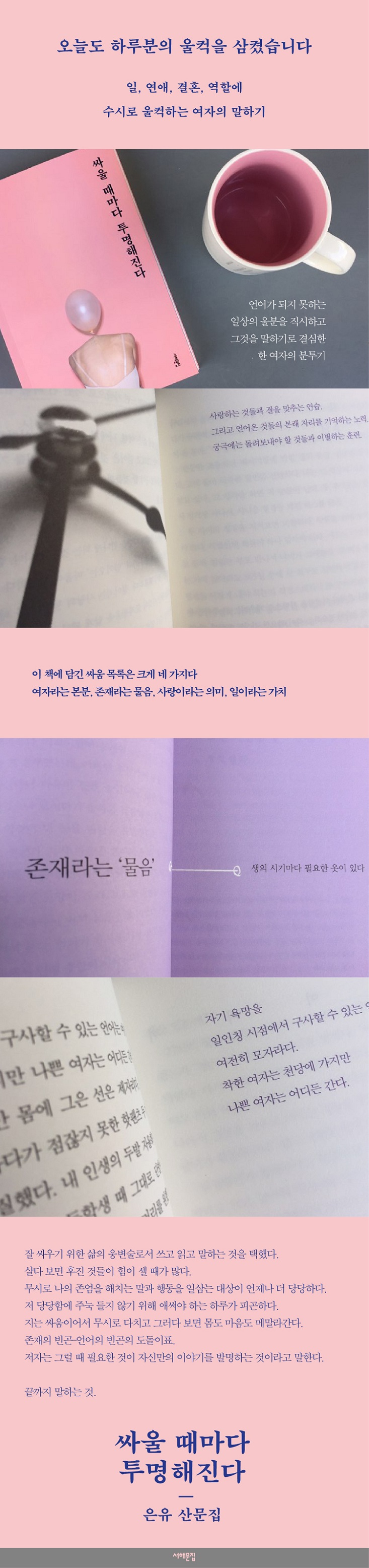
Into the book
Marriage and divorce are just ways to ruin relationships.
As Plato said, nothing is beautiful or ugly in itself.
It is the beauty of practice that makes it beautiful, and it is the meanness of practice that makes it ugly.
Divorce seems to be like that too.
There are ugly divorces and beautiful divorces.
So, it is neither something to be recommended nor something to be rejected.
It's just a painful choice, a process that builds a rational framework for your entire life.
At some point in life, the water that contains life is shaken violently.
That's all.
--- p.24~25
role.
The flower of roles, the role of mother.
As expected, ‘role’ does not require thinking.
It is possible without a soul.
When I enter the front door, I become a mother and automatically go back and forth from the front door to the kitchen, from the kitchen to the dining table, and from the dining table to the refrigerator, like a train passing on rails.
Without thinking, just do it as you normally would and without any problems.
How can you call this noble motherhood?
It's just a saying made up by people who don't want to get their hands dirty.
It's a shabby and tedious chore.
It's not that I hate being a mother.
I hate the excessive burden of being a mother.
I don't feel like myself when I'm playing the role of a mother.
Just Bobsuni, just an old lady.--- p.52
The phrase "crazy bitch running around" is violent.
Because the existence of the crazy guys who drove the crazy woman crazy was omitted. --- p.75
The more innocent manipulation prevails over silent survival, the more twisted life becomes.
As poet Lee Jang-wook says, “I will be misunderstood” and “I will eventually avoid myself.”
Life is a tedious process of constructing verbs rather than fixing them with nouns.
That's why, even if you're misunderstood all your life, if you pursue the truth of the moment and live by fulfilling the task at hand, life will change, little by little. --- p.118
There is a country of invisible people.
Because our imagination about life doesn't surpass our knowledge of our profession, we don't know ourselves and our stories disappear.
The narrative of a so-called normal life, represented by a male, heterosexual, Seoul native, graduate of a prestigious university, and professional, is fiercely distributed through the mass media and word of mouth, while the further one deviates from it, the more difficult it is to construct a narrative of life.
Disabled women instructors rarely have the opportunity to share their experiences, thoughts, and feelings, and even when they do, they are met with misunderstanding or pity.
However, if people do not tell others about themselves, it is difficult for them to know themselves and they cannot position themselves in society.
It is to become an erased being.
As Plato said, nothing is beautiful or ugly in itself.
It is the beauty of practice that makes it beautiful, and it is the meanness of practice that makes it ugly.
Divorce seems to be like that too.
There are ugly divorces and beautiful divorces.
So, it is neither something to be recommended nor something to be rejected.
It's just a painful choice, a process that builds a rational framework for your entire life.
At some point in life, the water that contains life is shaken violently.
That's all.
--- p.24~25
role.
The flower of roles, the role of mother.
As expected, ‘role’ does not require thinking.
It is possible without a soul.
When I enter the front door, I become a mother and automatically go back and forth from the front door to the kitchen, from the kitchen to the dining table, and from the dining table to the refrigerator, like a train passing on rails.
Without thinking, just do it as you normally would and without any problems.
How can you call this noble motherhood?
It's just a saying made up by people who don't want to get their hands dirty.
It's a shabby and tedious chore.
It's not that I hate being a mother.
I hate the excessive burden of being a mother.
I don't feel like myself when I'm playing the role of a mother.
Just Bobsuni, just an old lady.--- p.52
The phrase "crazy bitch running around" is violent.
Because the existence of the crazy guys who drove the crazy woman crazy was omitted. --- p.75
The more innocent manipulation prevails over silent survival, the more twisted life becomes.
As poet Lee Jang-wook says, “I will be misunderstood” and “I will eventually avoid myself.”
Life is a tedious process of constructing verbs rather than fixing them with nouns.
That's why, even if you're misunderstood all your life, if you pursue the truth of the moment and live by fulfilling the task at hand, life will change, little by little. --- p.118
There is a country of invisible people.
Because our imagination about life doesn't surpass our knowledge of our profession, we don't know ourselves and our stories disappear.
The narrative of a so-called normal life, represented by a male, heterosexual, Seoul native, graduate of a prestigious university, and professional, is fiercely distributed through the mass media and word of mouth, while the further one deviates from it, the more difficult it is to construct a narrative of life.
Disabled women instructors rarely have the opportunity to share their experiences, thoughts, and feelings, and even when they do, they are met with misunderstanding or pity.
However, if people do not tell others about themselves, it is difficult for them to know themselves and they cannot position themselves in society.
It is to become an erased being.
--- p.170
Publisher's Review
“Good girls go to heaven, but bad girls go everywhere.”
From a woman who never fought to a woman who fights
There are four main categories of fights in this book.
The duty of being a woman, the question of existence, the meaning of love, the value of work.
Every time my sense of life hardened, each word I wrote down became a tentacle that reawakened my senses.
As my senses became more acute, the list of fights grew.
They say existence flows.
Those who did not fight became those who fought, and with each fight, questions were born.
In Part 1 [The Difference Between Women], “I wrote this while eating the food my mother made.
It tells the story of a woman's life, which is established as a 'cooking being', following a set procedure, like a simple greeting of "I am giving this book to my mother because it was written by her."
Why does happiness always have to remain in a state of deferred fulfillment for Mom? Why did Mom never get to enjoy a big, good watermelon as much as she wanted? Why is it a problem when Kim Je-dong tells a man to just listen to a woman? Why does one side have to suffer for the comfort of the other?
The article, which follows the question of what kind of nights a young mother who gave birth to a child alone and abandoned her child spends, raises fundamental doubts about the burden placed on women.
―We still lack the language to express our own desires from a first-person perspective.
As the saying goes, "Good girls go to heaven, bad girls go everywhere." While the taboos of everyday life may be transgressed, the lines drawn on the body remain in place. (p. 36)
―Duty is like a bad dream that never leaves a woman's life.
I too have experienced unpleasant intrusions into my daily life, anytime, anywhere.
The student's text has a graduation, but the woman's text does not. (Page 48)
Part 2 [The Question of Existence] talks about how to build relationships without conflict with oneself in the effort to expand existence.
Why did I, a commercial high school graduate who works as a writer, become an extraordinary person? Why is it so difficult to find one's place as a being who changes names, changes jobs, and works every day? In the following article, the author says that finding one's place is not about living according to others' expectations, but about holding on to the things that should not be taken away while living, and accepting even the incomprehensibility of life.
―A change of heart or a change of mind is always an event that comes as a leap forward, but it is also a natural law of life.
I did the same.
The moment when the wings that took me anywhere and protected me from the wind and rain inevitably became uncomfortable and stuffy came.
My mom did it, my lover did it, my friend did it, my coworker did it.
Some music, some books did that.
Time has done so.
Just as each stage of life requires different clothes, colors, and tastes, relationships also change to suit the individual's body type. (p. 130)
―It is an unreasonable desire to try to fill the gaps in life or the emptiness of existence with people.
So maybe that's why we need music and why we need books.
I see myself living, relying on the flesh-like words that those silent beings hold.
I am getting further and further away from how to relate to people and how to love people.
I just hope we can get close enough that we don't have to be attached.
Suddenly, I feel sorry for the soul that lives like that. (Page 154)
In Part 3 [The Meaning of Love], the author presents a theory of praise for active love, saying that love is a new way of life, not a religion, and that any kind of love is ultimately a profitable business, through questions such as, “How can one live a long life without love?”, “Is it possible to stay by someone’s side for a lifetime without love?”, and “Is it love to mix flesh and words?”
―Isn't the choice to throw one's existence into adventurous love rather than a safe life a history of love that deserves to be respected and preserved, just as much as the ordinary life that transcends the turbulent waves of a disjointed relationship? (p. 198)
―If you wait for a love that is as soft as a café latte foam and as moist and sweet as a cheesecake, love will never be there.
Create healthy love by embracing and supporting someone's life.
If you avoid reality and block it with your ideas, your opportunities will gradually decrease.
The idea that it will be difficult to love someone who is divorced, sick, or poor is just an opinion, a guess, and a statistic.
If we break through to reality, there may be another truth within it.
Nietzsche did the same.
Degeneration occurs in places where there is no soul to give.
All love is a business that leaves a residue.
I wholeheartedly support this proposition. (p. 205)
In Part 4 [The Value of Work], we ask how many precious children's labor will keep the streets of pleasure rolling? Is a world where philosophers and restaurant workers are respected as equal professionals a distant dream?
Why does the world become engulfed in the sorrow of the many working like slaves for a handful of powerful people?
Through questions such as how can a world be possible where pain recognizes pain and existence does not harass existence, it talks about a life for food, a day like an art of enduring tension at the border between work and life, and the loneliness of buying and selling labor.
―A word that contains the hardships of all working people.
Should I pour a bottle? Living means continually pouring something inside me. (p. 247)
―I desperately want to make a living, but I worry about getting caught up in it.
Heidegger said that "anxiety" arises when we fear that the everydayness of the world we inhabit will collapse. I fear that the everydayness of the world I inhabit will become more solidified. (p. 269)
How to escape the poverty of existence - the poverty of language?
The author chose writing, reading, and speaking as a life skill to fight well.
As we live, there are many times when backward things become powerful without context.
The person who speaks and acts in a way that harms my dignity is always more dignified.
Be strong.
I'm tired of the days when I have to work harder not to be intimidated by that confidence.
It's a losing battle, so you get hurt and your body and mind become worn out.
The poverty of being - a metaphor for the poverty of language.
The author says that what is needed in such cases is to invent one's own story.
Speaking till the end.
If you begin to recognize the problems in your life and express them fully, it will ultimately not become a dark cliff for you or for each other.
The depths of life that cannot be overcome with just “the terrible talent of comforting oneself with clichés,” as Nietzsche said.
What we need on this floor is not a pretty, light blanket, but a thick, warm cotton blanket.
If every day is a roller coaster ride, trying to fulfill your triple-quadruple personality as a daughter, mother, wife, and worker, and if you want to put aside your doubts about your own existence and have infinitely transparent confidence, this book will be a thick cotton ball for you, the internal fuel you need to fight.
From a woman who never fought to a woman who fights
There are four main categories of fights in this book.
The duty of being a woman, the question of existence, the meaning of love, the value of work.
Every time my sense of life hardened, each word I wrote down became a tentacle that reawakened my senses.
As my senses became more acute, the list of fights grew.
They say existence flows.
Those who did not fight became those who fought, and with each fight, questions were born.
In Part 1 [The Difference Between Women], “I wrote this while eating the food my mother made.
It tells the story of a woman's life, which is established as a 'cooking being', following a set procedure, like a simple greeting of "I am giving this book to my mother because it was written by her."
Why does happiness always have to remain in a state of deferred fulfillment for Mom? Why did Mom never get to enjoy a big, good watermelon as much as she wanted? Why is it a problem when Kim Je-dong tells a man to just listen to a woman? Why does one side have to suffer for the comfort of the other?
The article, which follows the question of what kind of nights a young mother who gave birth to a child alone and abandoned her child spends, raises fundamental doubts about the burden placed on women.
―We still lack the language to express our own desires from a first-person perspective.
As the saying goes, "Good girls go to heaven, bad girls go everywhere." While the taboos of everyday life may be transgressed, the lines drawn on the body remain in place. (p. 36)
―Duty is like a bad dream that never leaves a woman's life.
I too have experienced unpleasant intrusions into my daily life, anytime, anywhere.
The student's text has a graduation, but the woman's text does not. (Page 48)
Part 2 [The Question of Existence] talks about how to build relationships without conflict with oneself in the effort to expand existence.
Why did I, a commercial high school graduate who works as a writer, become an extraordinary person? Why is it so difficult to find one's place as a being who changes names, changes jobs, and works every day? In the following article, the author says that finding one's place is not about living according to others' expectations, but about holding on to the things that should not be taken away while living, and accepting even the incomprehensibility of life.
―A change of heart or a change of mind is always an event that comes as a leap forward, but it is also a natural law of life.
I did the same.
The moment when the wings that took me anywhere and protected me from the wind and rain inevitably became uncomfortable and stuffy came.
My mom did it, my lover did it, my friend did it, my coworker did it.
Some music, some books did that.
Time has done so.
Just as each stage of life requires different clothes, colors, and tastes, relationships also change to suit the individual's body type. (p. 130)
―It is an unreasonable desire to try to fill the gaps in life or the emptiness of existence with people.
So maybe that's why we need music and why we need books.
I see myself living, relying on the flesh-like words that those silent beings hold.
I am getting further and further away from how to relate to people and how to love people.
I just hope we can get close enough that we don't have to be attached.
Suddenly, I feel sorry for the soul that lives like that. (Page 154)
In Part 3 [The Meaning of Love], the author presents a theory of praise for active love, saying that love is a new way of life, not a religion, and that any kind of love is ultimately a profitable business, through questions such as, “How can one live a long life without love?”, “Is it possible to stay by someone’s side for a lifetime without love?”, and “Is it love to mix flesh and words?”
―Isn't the choice to throw one's existence into adventurous love rather than a safe life a history of love that deserves to be respected and preserved, just as much as the ordinary life that transcends the turbulent waves of a disjointed relationship? (p. 198)
―If you wait for a love that is as soft as a café latte foam and as moist and sweet as a cheesecake, love will never be there.
Create healthy love by embracing and supporting someone's life.
If you avoid reality and block it with your ideas, your opportunities will gradually decrease.
The idea that it will be difficult to love someone who is divorced, sick, or poor is just an opinion, a guess, and a statistic.
If we break through to reality, there may be another truth within it.
Nietzsche did the same.
Degeneration occurs in places where there is no soul to give.
All love is a business that leaves a residue.
I wholeheartedly support this proposition. (p. 205)
In Part 4 [The Value of Work], we ask how many precious children's labor will keep the streets of pleasure rolling? Is a world where philosophers and restaurant workers are respected as equal professionals a distant dream?
Why does the world become engulfed in the sorrow of the many working like slaves for a handful of powerful people?
Through questions such as how can a world be possible where pain recognizes pain and existence does not harass existence, it talks about a life for food, a day like an art of enduring tension at the border between work and life, and the loneliness of buying and selling labor.
―A word that contains the hardships of all working people.
Should I pour a bottle? Living means continually pouring something inside me. (p. 247)
―I desperately want to make a living, but I worry about getting caught up in it.
Heidegger said that "anxiety" arises when we fear that the everydayness of the world we inhabit will collapse. I fear that the everydayness of the world I inhabit will become more solidified. (p. 269)
How to escape the poverty of existence - the poverty of language?
The author chose writing, reading, and speaking as a life skill to fight well.
As we live, there are many times when backward things become powerful without context.
The person who speaks and acts in a way that harms my dignity is always more dignified.
Be strong.
I'm tired of the days when I have to work harder not to be intimidated by that confidence.
It's a losing battle, so you get hurt and your body and mind become worn out.
The poverty of being - a metaphor for the poverty of language.
The author says that what is needed in such cases is to invent one's own story.
Speaking till the end.
If you begin to recognize the problems in your life and express them fully, it will ultimately not become a dark cliff for you or for each other.
The depths of life that cannot be overcome with just “the terrible talent of comforting oneself with clichés,” as Nietzsche said.
What we need on this floor is not a pretty, light blanket, but a thick, warm cotton blanket.
If every day is a roller coaster ride, trying to fulfill your triple-quadruple personality as a daughter, mother, wife, and worker, and if you want to put aside your doubts about your own existence and have infinitely transparent confidence, this book will be a thick cotton ball for you, the internal fuel you need to fight.
GOODS SPECIFICS
- Date of publication: December 26, 2016
- Page count, weight, size: 296 pages | 440g | 140*205*20mm
- ISBN13: 9788974838225
- ISBN10: 8974838222
You may also like
카테고리
korean


korean

![GQ KOREA Mark (Monthly): December [2025]](http://librairie.coreenne.fr/cdn/shop/files/8ef265dbbfbf186523ed75ba7319009d.jpg?v=1765340328&width=3840)


