

Complete cure for shoulder pain
 |
Description
Book Introduction
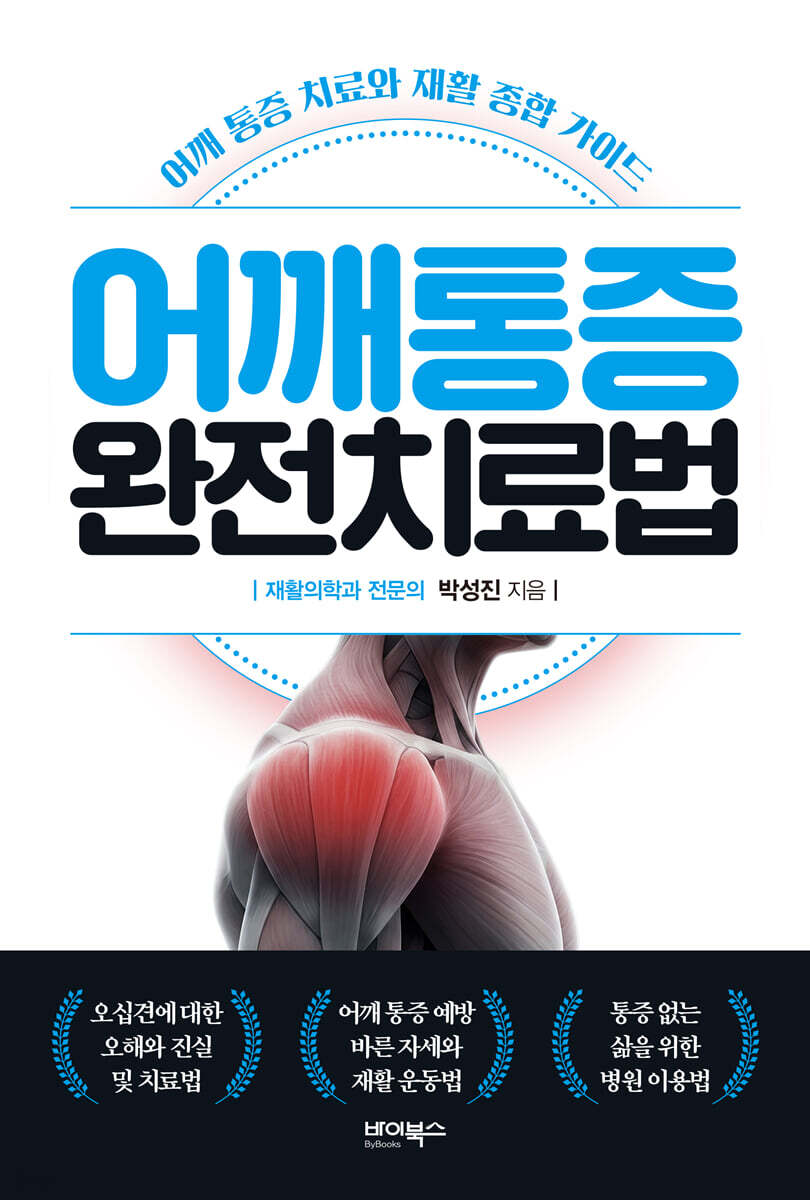
A comprehensive guide to shoulder pain treatment and rehabilitation.
Park Seong-jin, a rehabilitation medicine specialist and director of the Shoulder Pain Rehabilitation Research Institute, who has been listening to the voices of patients suffering from shoulder pain for 20 years and is still struggling to achieve the best results, presents "Complete Shoulder Pain Treatment", a comprehensive guide to shoulder pain treatment and rehabilitation.
Although he has already written and translated several books, he has explained to patients who are suffering from shoulder pain that keeps them awake and causes them pain in their daily lives the causes of pain, diagnosis, types and characteristics of treatment at hospitals, and even rehabilitation exercises that they can do on their own.
For patients and doctors to work together to achieve treatment, patients must also be aware of their symptoms and treatment options.
Therefore, this book is a must-read not only for patients suffering from shoulder pain, but also for doctors.
The author's efforts will not stop until the day when there is no more shoulder pain through smooth treatment.
Park Seong-jin, a rehabilitation medicine specialist and director of the Shoulder Pain Rehabilitation Research Institute, who has been listening to the voices of patients suffering from shoulder pain for 20 years and is still struggling to achieve the best results, presents "Complete Shoulder Pain Treatment", a comprehensive guide to shoulder pain treatment and rehabilitation.
Although he has already written and translated several books, he has explained to patients who are suffering from shoulder pain that keeps them awake and causes them pain in their daily lives the causes of pain, diagnosis, types and characteristics of treatment at hospitals, and even rehabilitation exercises that they can do on their own.
For patients and doctors to work together to achieve treatment, patients must also be aware of their symptoms and treatment options.
Therefore, this book is a must-read not only for patients suffering from shoulder pain, but also for doctors.
The author's efforts will not stop until the day when there is no more shoulder pain through smooth treatment.
- You can preview some of the book's contents.
Preview
index
Recommended Reading _ A Compass for Patients Suffering from Shoulder Pain
Let's start _ with our shoulders back and confidence!
1.
Understanding the shoulder joint in 3D
Jipijigi Baekjeonbultae | Five shoulder joints? | Flexible and sophisticated shoulder joints are not built to be strong | Bones, ligaments, muscles, and tendons that support the shoulder joint | The main culprits of shoulder pain | Causes of shoulder pain: trauma vs. disease | Annoying shoulder pain, what's the diagnosis? | Shoulder pain, self-diagnosis checklist | Three-year-old posture lasts until eighty, good posture can quickly become irrelevant. How can we achieve good posture? How to make good posture a habit? | The MZ generation suffers from sore shoulders, and those in their 40s are no longer in their bodies. The MZ generation damages their shoulders from excessive exercise. Manage from the onset of degenerative changes. | When to see a doctor for shoulder pain vs. when not to | Neglecting shoulder pain can lead to depression. | An MRI diagnosed with a rotator cuff tear, should I get surgery? | My shoulder and shoulder blades hurt, but is it my neck? | Which hospital is best for shoulder pain patients? | 8 effective ways for shoulder pain patients to use hospitals.
[References]
2.
Shoulder myofascial pain syndrome
Modern people's posture is collapsing · Correct posture rehabilitation exercises | Myofascial pain syndrome, why on earth? · Causes of myofascial pain syndrome | Bad posture is the main culprit, causing stiffness and pain without any injuries · Undesirable postures that cause myofascial pain syndrome · Characteristics of myofascial pain syndrome | Fingers are better than MRI, be careful of imitations · Diagnosis of myofascial pain syndrome · Conditions that look similar but should be treated separately | 7 treatments for myofascial pain syndrome · Treatment of myofascial pain syndrome | What's wrong with my age? Relieve hunched neck and hunched shoulders with injections | Can saline solution solve the pain? · Treatment for patients complaining of discomfort after surgery · The one most important treatment
[References]
[My Medical Philosophy: Bringing Studying to Life, Maximizing Cure!]
3.
frozen shoulder
Two people whose quality of life plummeted due to frozen shoulder and then recovered. Treatment by patients and doctors. What is frozen shoulder? Where does the term "frozen shoulder" come from? | Frozen shoulder treatment costs my taxes. | The number of patients with frozen shoulder is increasing day by day. | Major symptoms of frozen shoulder, 3 self-check points. | Frozen shoulder, beware of similar diseases. | 3 major shoulder diseases. | Frozen shoulder, why and who is prone to it? | Causes of frozen shoulder: primary vs. secondary. | Frozen shoulder, who is prone to it? | Frozen shoulder, can it be diagnosed through a physical examination alone? | There is no such thing as a hit without a target. | Can frozen shoulder be diagnosed through a shoulder examination alone? | What tests are needed when frozen shoulder is suspected? | Frozen shoulder, does it get better over time? | Does frozen shoulder resolve with time? · The 3 stages of the natural course of frozen shoulder. | Frozen shoulder treatment, self-rehabilitation + hospital treatment. | Exercise rehabilitation is the cure.
5 Stretching Techniques · 5 Self-Help Stretches for Frozen Shoulder | 6 Hospital-Based Treatments for Frozen Shoulder · 6 Treatments for Frozen Shoulder | 8 Questions and 8 Answers on Frozen Shoulder: Myths and Truths | Frozen Shoulder: A Summary
[References]
4.
calcific tendonitis
What is calcific tendonitis of the shoulder? Helpful knowledge about calcific tendonitis for patients | Calcific tendonitis: Why? Who is prone to it? What are the symptoms? Who is prone to calcific tendonitis? Symptoms of calcific tendonitis | Differentiating between calcific tendonitis, frozen shoulder, and rotator cuff tears | Differences between calcific tendonitis and other conditions | How is calcific tendonitis of the shoulder diagnosed? | Hard chalk-like lime vs. soft toothpaste-like lime · Ultrasound is my old friend | The life of calcific tendonitis: When does it get better? · The three stages of calcific tendonitis and their characteristics | Calcific tendonitis: 4 ways to get rid of it without surgery and 2 ways to prevent it | Calcific tendonitis: 6 questions and 6 answers: misconceptions and truths
[References]
[Communicating with patients through five books, five translations, and YouTube broadcasts]
5.
shoulder impingement syndrome
What is the rotator cuff? | What is shoulder impingement syndrome? · Characteristics and treatment of subacromial impingement syndrome | When does shoulder impingement syndrome hurt? · Shoulder pain arch to test the pain of shoulder impingement syndrome | Shoulder impingement syndrome, 3 main causes · 3 factors that cause subacromial impingement syndrome · Structural cause of shoulder impingement syndrome - hook-shaped acromion | How is shoulder impingement syndrome diagnosed? | Sometimes a physical examination is more important than an MRI.
Back to the Basics! | 4 Non-Surgical Treatments for Shoulder Impingement Syndrome · Early Treatment Methods for Shoulder Impingement Syndrome · Types of Non-Surgical Treatments for Shoulder Impingement Syndrome | Shoulder Pain That Wasn't Severe, But Required Surgery
[References]
6.
Rotator cuff tendon rupture
What is a rotator cuff tendon tear? How can we protect the supraspinatus tendon, which is the most commonly torn tendon? | Symptoms of tendon tears, and who is prone to them? 4 causes · The difference between acute and chronic · 4 causes of rotator cuff tears | 3 risk factors for tendon tears | How are tendon tears diagnosed? What types of tears are there? · 4 types of rotator cuff tendon tears | Useful ultrasound findings of tendon tears | Treatment of tendon ruptures: non-surgical vs. surgical · Considerations when choosing between surgical and non-surgical treatment · Ultimately, the patient's opinion is important | Non-surgical treatment of partial-thickness and full-thickness tears · Optimal, patient-tailored treatment is necessary | Non-surgical medication, anti-inflammatory injection therapy, regenerative injection therapy · Solutions for partial-thickness rotator cuff tears | 3 rehabilitation exercises to save the rotator cuff · Stretching exercises for the shoulder joint and muscles · Scapular stabilization exercises · Rotator cuff muscle strengthening exercises | Tendon Rupture: 6 Situations When Surgery Should Be Considered | When Surgery Should Be Considered for Rotator Cuff Tendon Rupture | Grandma Jeong, in her mid-80s, Missed the Right Time for Rotator Cuff Repair | Tendon Rupture Treatments, Summary
[References]
[I love skiing]
7.
Rehabilitation after rotator cuff surgery
The belly button is bigger than the stomach · Success is achieved when the patient, doctor, and rehabilitation team become one | Goals and principles of rehabilitation after suture surgery · Rehabilitation exercise therapy must consider the individual characteristics of the patient | When is the timing of rehabilitation after surgery? Early rehabilitation vs. delayed rehabilitation · The pros and cons of early and delayed rehabilitation, which are still being debated | Uninvited guests after suture surgery: re-rupture vs. stiffness · The risks of re-rupture and stiffness and how to deal with them | Can steroid injections be administered after suture surgery? · Steroid injections should be used sparingly | 5 stages of rehabilitation exercise therapy during the recovery period of the shoulder joint after rotator cuff surgery (6-month course) · Rehabilitation exercise therapy program after rotator cuff surgery
[References]
8.
Shoulder pain after stroke
What is a stroke? · Rehabilitation treatment cases for paralyzed arms and legs due to cerebral infarction | Risk factors and prevention of stroke · Why stroke occurs: Cerebrovascular disease · Cerebrovascular disease that even young people cannot be at ease with | 5 situations in which a stroke requires a visit to the emergency room and 10 types of stroke aftereffects · 10 types of stroke aftereffects | Early rehabilitation is the answer to stroke aftereffects · The golden time for stroke rehabilitation | Hemiplegic shoulder pain · What is hemiplegic shoulder pain? · 4 diseases that cause hemiplegic shoulder pain and their treatments
[References]
In conclusion, I decided to live as a doctor who searches for bundles.
Let's start _ with our shoulders back and confidence!
1.
Understanding the shoulder joint in 3D
Jipijigi Baekjeonbultae | Five shoulder joints? | Flexible and sophisticated shoulder joints are not built to be strong | Bones, ligaments, muscles, and tendons that support the shoulder joint | The main culprits of shoulder pain | Causes of shoulder pain: trauma vs. disease | Annoying shoulder pain, what's the diagnosis? | Shoulder pain, self-diagnosis checklist | Three-year-old posture lasts until eighty, good posture can quickly become irrelevant. How can we achieve good posture? How to make good posture a habit? | The MZ generation suffers from sore shoulders, and those in their 40s are no longer in their bodies. The MZ generation damages their shoulders from excessive exercise. Manage from the onset of degenerative changes. | When to see a doctor for shoulder pain vs. when not to | Neglecting shoulder pain can lead to depression. | An MRI diagnosed with a rotator cuff tear, should I get surgery? | My shoulder and shoulder blades hurt, but is it my neck? | Which hospital is best for shoulder pain patients? | 8 effective ways for shoulder pain patients to use hospitals.
[References]
2.
Shoulder myofascial pain syndrome
Modern people's posture is collapsing · Correct posture rehabilitation exercises | Myofascial pain syndrome, why on earth? · Causes of myofascial pain syndrome | Bad posture is the main culprit, causing stiffness and pain without any injuries · Undesirable postures that cause myofascial pain syndrome · Characteristics of myofascial pain syndrome | Fingers are better than MRI, be careful of imitations · Diagnosis of myofascial pain syndrome · Conditions that look similar but should be treated separately | 7 treatments for myofascial pain syndrome · Treatment of myofascial pain syndrome | What's wrong with my age? Relieve hunched neck and hunched shoulders with injections | Can saline solution solve the pain? · Treatment for patients complaining of discomfort after surgery · The one most important treatment
[References]
[My Medical Philosophy: Bringing Studying to Life, Maximizing Cure!]
3.
frozen shoulder
Two people whose quality of life plummeted due to frozen shoulder and then recovered. Treatment by patients and doctors. What is frozen shoulder? Where does the term "frozen shoulder" come from? | Frozen shoulder treatment costs my taxes. | The number of patients with frozen shoulder is increasing day by day. | Major symptoms of frozen shoulder, 3 self-check points. | Frozen shoulder, beware of similar diseases. | 3 major shoulder diseases. | Frozen shoulder, why and who is prone to it? | Causes of frozen shoulder: primary vs. secondary. | Frozen shoulder, who is prone to it? | Frozen shoulder, can it be diagnosed through a physical examination alone? | There is no such thing as a hit without a target. | Can frozen shoulder be diagnosed through a shoulder examination alone? | What tests are needed when frozen shoulder is suspected? | Frozen shoulder, does it get better over time? | Does frozen shoulder resolve with time? · The 3 stages of the natural course of frozen shoulder. | Frozen shoulder treatment, self-rehabilitation + hospital treatment. | Exercise rehabilitation is the cure.
5 Stretching Techniques · 5 Self-Help Stretches for Frozen Shoulder | 6 Hospital-Based Treatments for Frozen Shoulder · 6 Treatments for Frozen Shoulder | 8 Questions and 8 Answers on Frozen Shoulder: Myths and Truths | Frozen Shoulder: A Summary
[References]
4.
calcific tendonitis
What is calcific tendonitis of the shoulder? Helpful knowledge about calcific tendonitis for patients | Calcific tendonitis: Why? Who is prone to it? What are the symptoms? Who is prone to calcific tendonitis? Symptoms of calcific tendonitis | Differentiating between calcific tendonitis, frozen shoulder, and rotator cuff tears | Differences between calcific tendonitis and other conditions | How is calcific tendonitis of the shoulder diagnosed? | Hard chalk-like lime vs. soft toothpaste-like lime · Ultrasound is my old friend | The life of calcific tendonitis: When does it get better? · The three stages of calcific tendonitis and their characteristics | Calcific tendonitis: 4 ways to get rid of it without surgery and 2 ways to prevent it | Calcific tendonitis: 6 questions and 6 answers: misconceptions and truths
[References]
[Communicating with patients through five books, five translations, and YouTube broadcasts]
5.
shoulder impingement syndrome
What is the rotator cuff? | What is shoulder impingement syndrome? · Characteristics and treatment of subacromial impingement syndrome | When does shoulder impingement syndrome hurt? · Shoulder pain arch to test the pain of shoulder impingement syndrome | Shoulder impingement syndrome, 3 main causes · 3 factors that cause subacromial impingement syndrome · Structural cause of shoulder impingement syndrome - hook-shaped acromion | How is shoulder impingement syndrome diagnosed? | Sometimes a physical examination is more important than an MRI.
Back to the Basics! | 4 Non-Surgical Treatments for Shoulder Impingement Syndrome · Early Treatment Methods for Shoulder Impingement Syndrome · Types of Non-Surgical Treatments for Shoulder Impingement Syndrome | Shoulder Pain That Wasn't Severe, But Required Surgery
[References]
6.
Rotator cuff tendon rupture
What is a rotator cuff tendon tear? How can we protect the supraspinatus tendon, which is the most commonly torn tendon? | Symptoms of tendon tears, and who is prone to them? 4 causes · The difference between acute and chronic · 4 causes of rotator cuff tears | 3 risk factors for tendon tears | How are tendon tears diagnosed? What types of tears are there? · 4 types of rotator cuff tendon tears | Useful ultrasound findings of tendon tears | Treatment of tendon ruptures: non-surgical vs. surgical · Considerations when choosing between surgical and non-surgical treatment · Ultimately, the patient's opinion is important | Non-surgical treatment of partial-thickness and full-thickness tears · Optimal, patient-tailored treatment is necessary | Non-surgical medication, anti-inflammatory injection therapy, regenerative injection therapy · Solutions for partial-thickness rotator cuff tears | 3 rehabilitation exercises to save the rotator cuff · Stretching exercises for the shoulder joint and muscles · Scapular stabilization exercises · Rotator cuff muscle strengthening exercises | Tendon Rupture: 6 Situations When Surgery Should Be Considered | When Surgery Should Be Considered for Rotator Cuff Tendon Rupture | Grandma Jeong, in her mid-80s, Missed the Right Time for Rotator Cuff Repair | Tendon Rupture Treatments, Summary
[References]
[I love skiing]
7.
Rehabilitation after rotator cuff surgery
The belly button is bigger than the stomach · Success is achieved when the patient, doctor, and rehabilitation team become one | Goals and principles of rehabilitation after suture surgery · Rehabilitation exercise therapy must consider the individual characteristics of the patient | When is the timing of rehabilitation after surgery? Early rehabilitation vs. delayed rehabilitation · The pros and cons of early and delayed rehabilitation, which are still being debated | Uninvited guests after suture surgery: re-rupture vs. stiffness · The risks of re-rupture and stiffness and how to deal with them | Can steroid injections be administered after suture surgery? · Steroid injections should be used sparingly | 5 stages of rehabilitation exercise therapy during the recovery period of the shoulder joint after rotator cuff surgery (6-month course) · Rehabilitation exercise therapy program after rotator cuff surgery
[References]
8.
Shoulder pain after stroke
What is a stroke? · Rehabilitation treatment cases for paralyzed arms and legs due to cerebral infarction | Risk factors and prevention of stroke · Why stroke occurs: Cerebrovascular disease · Cerebrovascular disease that even young people cannot be at ease with | 5 situations in which a stroke requires a visit to the emergency room and 10 types of stroke aftereffects · 10 types of stroke aftereffects | Early rehabilitation is the answer to stroke aftereffects · The golden time for stroke rehabilitation | Hemiplegic shoulder pain · What is hemiplegic shoulder pain? · 4 diseases that cause hemiplegic shoulder pain and their treatments
[References]
In conclusion, I decided to live as a doctor who searches for bundles.
Detailed image
Into the book
In particular, people in their 20s and 30s, when shoulder function is at its peak, often enjoy the thrill of participating in sports club activities, including extreme sports, and become enthusiasts who continue even when it hurts.
As a result, there are many cases of a vicious cycle in which the shoulder joint becomes unstable due to trauma, such as dislocation, labrum tear, and rotator cuff tear, which causes the shoulder joint to become dislocated again.
To build muscle, you need to exercise at a certain intensity, but if you do it too much, your body will be damaged rather than built.
So, many young people suffer from tendonitis, myositis, and in severe cases, stress fractures.
Didn't they say that too much of a good thing is as bad as too little?
I'm not saying you shouldn't exercise.
Exercise is essential for good health.
So, it would be good for young people to mix moderate and high intensity exercise appropriately and gradually increase the intensity and amount of exercise as their body can tolerate.
I think it would be better to do it with the intensity of 'geolna yut' rather than 'all or nothing'.
If you have moderate to severe pain after exercise and it does not improve even after a day or two of rest, you should rest more and if it still hurts, you should get an accurate diagnosis.
--- pp.47-48
The term 'fifty shoulder' has been used in Japan for a long time, so it is said that it is not awkward for Japanese doctors.
Frozen shoulder is a condition that is often seen in people in their 50s, and is described as slowly progressive arm and shoulder pain that resolves on its own without treatment.
People say that frozen shoulder is called longevity disease.
Perhaps because life expectancy was not long at the time, it was thought that if one suffered from frozen shoulder, one had lived a long life.
To be exact, there is no such thing as frozen shoulder.
Frozen shoulder (五十肩) literally means 'shoulder of a person in his 50s' and does not refer to a disease.
The correct name for the condition is frozen shoulder, adhesive capsulitis of the shoulder.
However, in this book, we will use the more familiar term, frozen shoulder, instead of the accurate but awkward term, frozen shoulder.
Frozen shoulder is a condition in which the joint capsule surrounding the shoulder joint shrinks, hardens, and thickens due to inflammation, causing shoulder pain and limited range of motion in the shoulder joint.
If I had to describe frozen shoulder in two keywords, they would be shoulder pain and limited range of motion.
The goal of treatment is to normalize the shoulder joint by reducing shoulder pain and inflammation and increasing range of motion.
--- pp.114-115
Even if it is a rotator cuff tear, treatment methods may vary depending on several factors, such as the degree of tear, the degree of muscle shrinkage, age, and underlying disease.
Therefore, doctors and patients must put their heads together and consider various circumstances to find a personalized treatment plan.
The patient's opinion is just as important as the expert doctor's opinion.
No matter how good or reasonable the treatment is, no treatment can be performed without the patient's consent.
For example, if a patient is extremely afraid of surgery or injections, they may have no choice but to choose other treatments.
From now on, I will explain by citing the literature of scholars so that patients diagnosed with rotator cuff tendon rupture can decide whether to consider non-surgical or surgical treatment.
If you've been diagnosed with a rotator cuff tear, you need to focus on whether or not you should have surgery.
As a result, there are many cases of a vicious cycle in which the shoulder joint becomes unstable due to trauma, such as dislocation, labrum tear, and rotator cuff tear, which causes the shoulder joint to become dislocated again.
To build muscle, you need to exercise at a certain intensity, but if you do it too much, your body will be damaged rather than built.
So, many young people suffer from tendonitis, myositis, and in severe cases, stress fractures.
Didn't they say that too much of a good thing is as bad as too little?
I'm not saying you shouldn't exercise.
Exercise is essential for good health.
So, it would be good for young people to mix moderate and high intensity exercise appropriately and gradually increase the intensity and amount of exercise as their body can tolerate.
I think it would be better to do it with the intensity of 'geolna yut' rather than 'all or nothing'.
If you have moderate to severe pain after exercise and it does not improve even after a day or two of rest, you should rest more and if it still hurts, you should get an accurate diagnosis.
--- pp.47-48
The term 'fifty shoulder' has been used in Japan for a long time, so it is said that it is not awkward for Japanese doctors.
Frozen shoulder is a condition that is often seen in people in their 50s, and is described as slowly progressive arm and shoulder pain that resolves on its own without treatment.
People say that frozen shoulder is called longevity disease.
Perhaps because life expectancy was not long at the time, it was thought that if one suffered from frozen shoulder, one had lived a long life.
To be exact, there is no such thing as frozen shoulder.
Frozen shoulder (五十肩) literally means 'shoulder of a person in his 50s' and does not refer to a disease.
The correct name for the condition is frozen shoulder, adhesive capsulitis of the shoulder.
However, in this book, we will use the more familiar term, frozen shoulder, instead of the accurate but awkward term, frozen shoulder.
Frozen shoulder is a condition in which the joint capsule surrounding the shoulder joint shrinks, hardens, and thickens due to inflammation, causing shoulder pain and limited range of motion in the shoulder joint.
If I had to describe frozen shoulder in two keywords, they would be shoulder pain and limited range of motion.
The goal of treatment is to normalize the shoulder joint by reducing shoulder pain and inflammation and increasing range of motion.
--- pp.114-115
Even if it is a rotator cuff tear, treatment methods may vary depending on several factors, such as the degree of tear, the degree of muscle shrinkage, age, and underlying disease.
Therefore, doctors and patients must put their heads together and consider various circumstances to find a personalized treatment plan.
The patient's opinion is just as important as the expert doctor's opinion.
No matter how good or reasonable the treatment is, no treatment can be performed without the patient's consent.
For example, if a patient is extremely afraid of surgery or injections, they may have no choice but to choose other treatments.
From now on, I will explain by citing the literature of scholars so that patients diagnosed with rotator cuff tendon rupture can decide whether to consider non-surgical or surgical treatment.
If you've been diagnosed with a rotator cuff tear, you need to focus on whether or not you should have surgery.
--- pp.251-252
Publisher's Review
Everything You Need to Know About Shoulder Pain Treatment and Rehabilitation
“I hope this book will give patients with shoulder pain the confidence that they can be cured.” - Ham Ik-byeong (Director of Ham Ik-byeong Dermatology Clinic)
“I firmly believe that this book, which contains his determination to effectively explain and communicate the disease to patients suffering from shoulder pain to achieve the best possible treatment outcome, will be helpful to patients as well.” - Yang Dong-chil (former ambassador to Finland)
“I highly recommend this book to anyone suffering from shoulder pain, as it achieves both the author’s stated goals of providing accurate information and facilitating smooth communication with patients.” - Park Yoon-gil (Professor, Department of Rehabilitation Medicine, Yonsei University College of Medicine)
“Finally, I hope this book will be of great help to patients suffering from shoulder pain in regaining their health and leading better lives.” - Park Chang-il (Professor Emeritus, Department of Rehabilitation Medicine, Yonsei University College of Medicine)
Park Seong-jin, a rehabilitation medicine specialist and director of the Shoulder Pain Rehabilitation Research Institute, who has been listening to the voices of patients suffering from shoulder pain for 20 years and is still struggling to achieve the best results, presents "Complete Shoulder Pain Treatment", a comprehensive guide to shoulder pain treatment and rehabilitation.
Although he has already written and translated several books, he has explained to patients who are suffering from shoulder pain that keeps them awake and causes them pain in their daily lives the causes of pain, diagnosis, types and characteristics of treatment at hospitals, and even rehabilitation exercises that they can do on their own.
As stated in the recommendation, it covers everything about shoulder pain treatment and rehabilitation to help patients suffering from shoulder pain regain their health and live better lives.
With this book, let's get rid of the annoying shoulder pain that plagues us regardless of age, such as shoulder myofascial pain syndrome, frozen shoulder, calcific tendonitis, shoulder impingement syndrome, rotator cuff tendon rupture, rehabilitation after rotator cuff surgery, and shoulder pain after stroke.
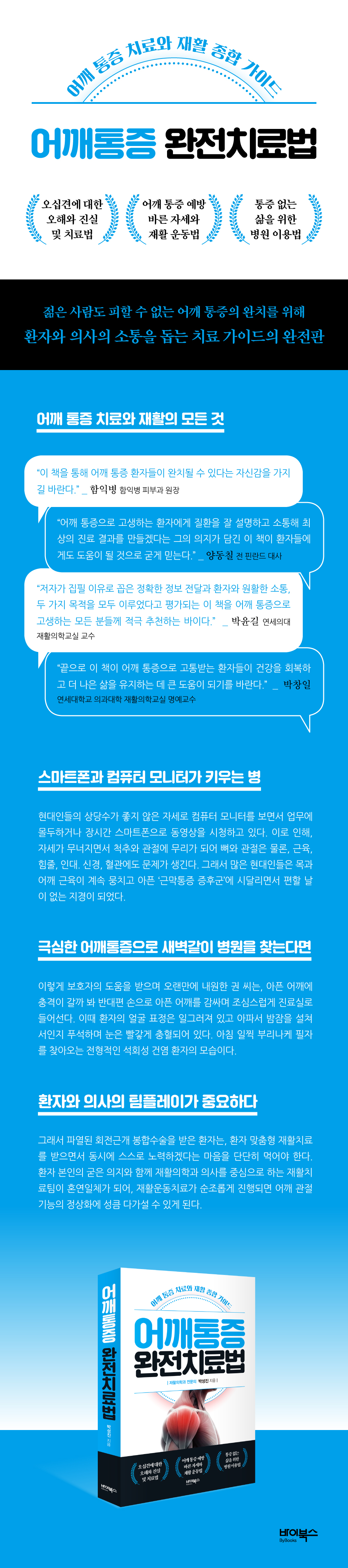
The disease caused by smartphones and computer monitors
“Many modern people are absorbed in their work while looking at computer monitors in poor posture or watching videos on their smartphones for long periods of time.
This causes the posture to collapse, putting strain on the spine and joints, as well as the bones and joints, as well as the muscles, tendons, and ligaments.
Problems also arise with nerves and blood vessels.
“So many modern people suffer from ‘myofascial pain syndrome,’ where the muscles in their neck and shoulders are constantly tense and painful, and they have no day to rest.”
Patients who complain of 'hard, stiff, painful, sore, and knotted muscles' should be strongly suspected of having myofascial pain syndrome, and the trigger points of myofascial pain should be identified one by one and then treated.
Treatment methods include ① prevention and relapse prevention measures, ② drug therapy, ③ heat, electricity, and physical therapy, ④ cold spray injection and passive muscle stretching, ⑤ manual therapy, ⑥ TPI (Trigger Point Injection), and ⑦ extracorporeal shock wave therapy (ESWT). Other treatments include massage, acupressure, radiofrequency therapy, and botulinum toxin injection.
But if I had to pick one of the most important treatments, it would be the 'correct posture rehabilitation exercise' that you can do on your own.
When we go about our daily lives or work, we usually put our hands in front of us, and it is rare for us to put our hands behind our backs.
If you do this, there is a high possibility that your torso will lean forward and your back will become hunched.
Therefore, if you practice 'correct posture rehabilitation exercises' from time to time, you can feel refreshed as your back and waist straighten and your neck becomes softer, and you can get away from myofascial pain syndrome, which can ultimately help with the health of your spine and joints.
If you visit the hospital at dawn due to severe shoulder pain
“Mr. Kwon, who has been visiting the hospital for the first time in a long time with the help of his guardian, enters the examination room cautiously, holding his sore shoulder with his other hand, worried that it might be shocked.
At this time, the patient's facial expression is distorted, and the pain is so bad that he or she cannot sleep at night, and his or her eyes are red and bloodshot.
“This is a typical picture of a patient with calcific tendonitis who comes to see me early in the morning, naked.”
The author explains to patients the 'birth, aging, illness, and death' of lime.
Calcific tendonitis occurs when calcium gradually builds up in the rotator cuff tendons, causing dull pain and limited range of motion at certain angles.
It is a painful but happy ending disease in which, over time, the calcium begins to dissolve in the tendons, causing sudden, severe pain for 3 to 4 days before gradually disappearing.
Treatment of calcification in the rotator cuff tendons is mostly non-surgical, with medication, physical therapy, injection therapy, extracorporeal shockwave therapy (ESWT), and needling lavage under ultrasound guidance as representative treatments.
It is said that it takes about 18 months for lime to be created and disappear.
So, even if it is a limestone that causes extreme pain, it will disappear over time.
With proper treatment and prevention, you can be free from pain.
Teamwork between patients and doctors is important.
“Therefore, patients who have undergone rotator cuff repair surgery for a torn tendon must receive personalized rehabilitation treatment while also being determined to work hard on their own.
“If the patient’s strong will and the rehabilitation treatment team centered around the rehabilitation medicine doctor work together as one, and the rehabilitation exercise therapy progresses smoothly, the shoulder joint function can be restored to normal.”
The principle of rehabilitation exercise therapy for smooth recovery is that it should be done considering the individual characteristics of the patient who underwent surgery.
Patient-tailored rehabilitation treatment is needed.
The specific content of the patient's rehabilitation exercise therapy is created through a medical team meeting that reflects the patient's overall condition.
Patients receive an explanation of the personalized rehabilitation exercise therapy program created in this way and communicate through questions and answers.
This is why 《Complete Treatment for Shoulder Pain》 aims to provide accurate information and smooth communication with patients.
For patients and doctors to work together to achieve treatment, patients must also be aware of their symptoms and treatment options.
Therefore, this book is a must-read not only for patients suffering from shoulder pain, but also for doctors.
The author's efforts will not stop until the day when there is no more shoulder pain through smooth treatment.
“I hope this book will give patients with shoulder pain the confidence that they can be cured.” - Ham Ik-byeong (Director of Ham Ik-byeong Dermatology Clinic)
“I firmly believe that this book, which contains his determination to effectively explain and communicate the disease to patients suffering from shoulder pain to achieve the best possible treatment outcome, will be helpful to patients as well.” - Yang Dong-chil (former ambassador to Finland)
“I highly recommend this book to anyone suffering from shoulder pain, as it achieves both the author’s stated goals of providing accurate information and facilitating smooth communication with patients.” - Park Yoon-gil (Professor, Department of Rehabilitation Medicine, Yonsei University College of Medicine)
“Finally, I hope this book will be of great help to patients suffering from shoulder pain in regaining their health and leading better lives.” - Park Chang-il (Professor Emeritus, Department of Rehabilitation Medicine, Yonsei University College of Medicine)
Park Seong-jin, a rehabilitation medicine specialist and director of the Shoulder Pain Rehabilitation Research Institute, who has been listening to the voices of patients suffering from shoulder pain for 20 years and is still struggling to achieve the best results, presents "Complete Shoulder Pain Treatment", a comprehensive guide to shoulder pain treatment and rehabilitation.
Although he has already written and translated several books, he has explained to patients who are suffering from shoulder pain that keeps them awake and causes them pain in their daily lives the causes of pain, diagnosis, types and characteristics of treatment at hospitals, and even rehabilitation exercises that they can do on their own.
As stated in the recommendation, it covers everything about shoulder pain treatment and rehabilitation to help patients suffering from shoulder pain regain their health and live better lives.
With this book, let's get rid of the annoying shoulder pain that plagues us regardless of age, such as shoulder myofascial pain syndrome, frozen shoulder, calcific tendonitis, shoulder impingement syndrome, rotator cuff tendon rupture, rehabilitation after rotator cuff surgery, and shoulder pain after stroke.
The disease caused by smartphones and computer monitors
“Many modern people are absorbed in their work while looking at computer monitors in poor posture or watching videos on their smartphones for long periods of time.
This causes the posture to collapse, putting strain on the spine and joints, as well as the bones and joints, as well as the muscles, tendons, and ligaments.
Problems also arise with nerves and blood vessels.
“So many modern people suffer from ‘myofascial pain syndrome,’ where the muscles in their neck and shoulders are constantly tense and painful, and they have no day to rest.”
Patients who complain of 'hard, stiff, painful, sore, and knotted muscles' should be strongly suspected of having myofascial pain syndrome, and the trigger points of myofascial pain should be identified one by one and then treated.
Treatment methods include ① prevention and relapse prevention measures, ② drug therapy, ③ heat, electricity, and physical therapy, ④ cold spray injection and passive muscle stretching, ⑤ manual therapy, ⑥ TPI (Trigger Point Injection), and ⑦ extracorporeal shock wave therapy (ESWT). Other treatments include massage, acupressure, radiofrequency therapy, and botulinum toxin injection.
But if I had to pick one of the most important treatments, it would be the 'correct posture rehabilitation exercise' that you can do on your own.
When we go about our daily lives or work, we usually put our hands in front of us, and it is rare for us to put our hands behind our backs.
If you do this, there is a high possibility that your torso will lean forward and your back will become hunched.
Therefore, if you practice 'correct posture rehabilitation exercises' from time to time, you can feel refreshed as your back and waist straighten and your neck becomes softer, and you can get away from myofascial pain syndrome, which can ultimately help with the health of your spine and joints.
If you visit the hospital at dawn due to severe shoulder pain
“Mr. Kwon, who has been visiting the hospital for the first time in a long time with the help of his guardian, enters the examination room cautiously, holding his sore shoulder with his other hand, worried that it might be shocked.
At this time, the patient's facial expression is distorted, and the pain is so bad that he or she cannot sleep at night, and his or her eyes are red and bloodshot.
“This is a typical picture of a patient with calcific tendonitis who comes to see me early in the morning, naked.”
The author explains to patients the 'birth, aging, illness, and death' of lime.
Calcific tendonitis occurs when calcium gradually builds up in the rotator cuff tendons, causing dull pain and limited range of motion at certain angles.
It is a painful but happy ending disease in which, over time, the calcium begins to dissolve in the tendons, causing sudden, severe pain for 3 to 4 days before gradually disappearing.
Treatment of calcification in the rotator cuff tendons is mostly non-surgical, with medication, physical therapy, injection therapy, extracorporeal shockwave therapy (ESWT), and needling lavage under ultrasound guidance as representative treatments.
It is said that it takes about 18 months for lime to be created and disappear.
So, even if it is a limestone that causes extreme pain, it will disappear over time.
With proper treatment and prevention, you can be free from pain.
Teamwork between patients and doctors is important.
“Therefore, patients who have undergone rotator cuff repair surgery for a torn tendon must receive personalized rehabilitation treatment while also being determined to work hard on their own.
“If the patient’s strong will and the rehabilitation treatment team centered around the rehabilitation medicine doctor work together as one, and the rehabilitation exercise therapy progresses smoothly, the shoulder joint function can be restored to normal.”
The principle of rehabilitation exercise therapy for smooth recovery is that it should be done considering the individual characteristics of the patient who underwent surgery.
Patient-tailored rehabilitation treatment is needed.
The specific content of the patient's rehabilitation exercise therapy is created through a medical team meeting that reflects the patient's overall condition.
Patients receive an explanation of the personalized rehabilitation exercise therapy program created in this way and communicate through questions and answers.
This is why 《Complete Treatment for Shoulder Pain》 aims to provide accurate information and smooth communication with patients.
For patients and doctors to work together to achieve treatment, patients must also be aware of their symptoms and treatment options.
Therefore, this book is a must-read not only for patients suffering from shoulder pain, but also for doctors.
The author's efforts will not stop until the day when there is no more shoulder pain through smooth treatment.
GOODS SPECIFICS
- Date of issue: June 20, 2025
- Page count, weight, size: 360 pages | 152*225*30mm
- ISBN13: 9791158773922
- ISBN10: 1158773927
You may also like
카테고리
korean


korean

![GQ KOREA Mark (Monthly): December [2025]](http://librairie.coreenne.fr/cdn/shop/files/8ef265dbbfbf186523ed75ba7319009d.jpg?v=1765340328&width=3840)


