

Lost Class
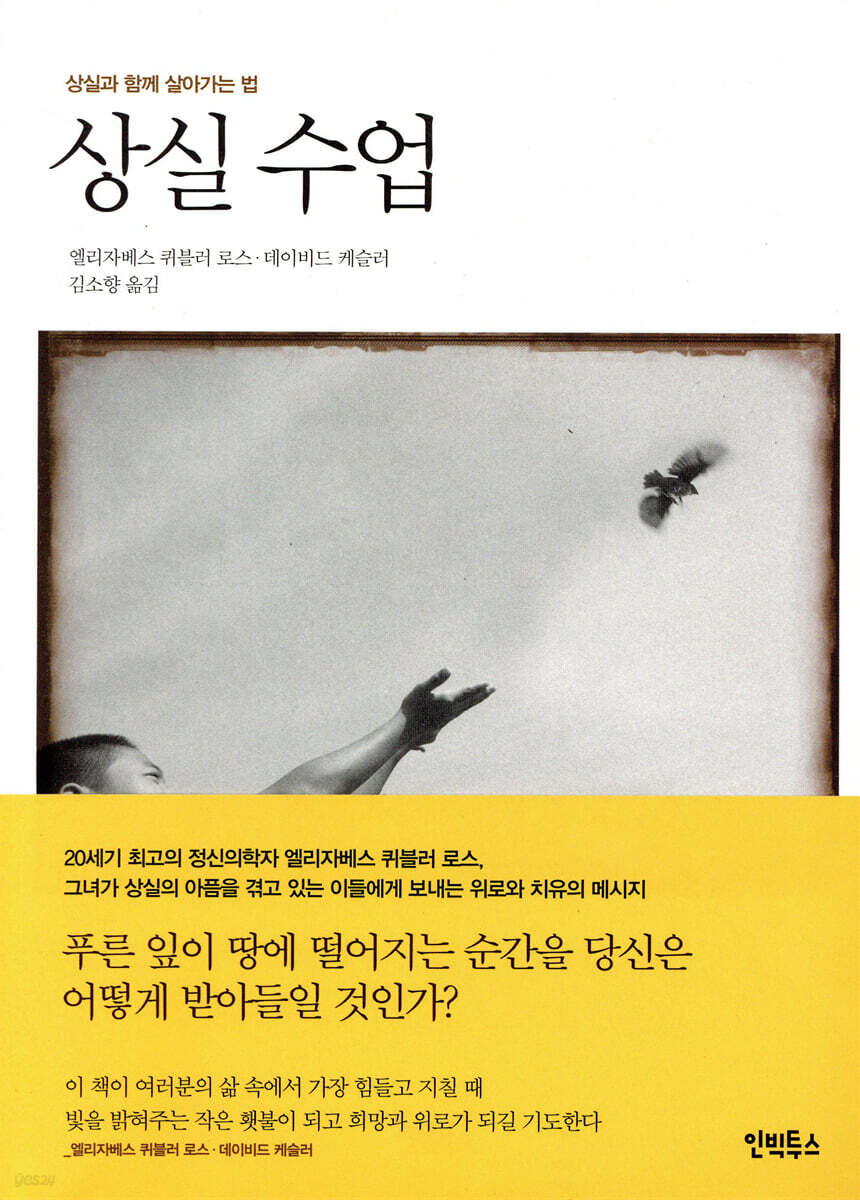 |
Description
Book Introduction
A message to those who have lost a loved one
A book for those who are experiencing the pain of loss.
The emptiness and deep sorrow that comes with the death of a loved one is incomparable to anything else.
Your world just stops.
But we must learn to live with the pain of loss, carrying the grief for those who have left.
"The Loss Lesson" is a message to those who have lost a loved one, and is a book for those who are experiencing the pain of loss.
It teaches us how to live with loss by healing mental and psychological wounds and providing practical help with death and bereavement.
This is not a book that explains the pain of loss as if it were understood without having experienced the grief and pain of loss.
The authenticity of this book lies in the way it concretely shows how those who have experienced the pain of loss navigate the sorrow and pain they encounter in their daily lives.
It shows from various angles that loss is not just about shock, pain, and tears, and details the stages of psychology and complex emotional states experienced after loss, such as denial, anger, guilt, guilt, compromise, despair, and acceptance.
The causes of loss also include a variety of cases, including cancer, heart attack, cerebral hemorrhage, rare diseases, as well as accidents, crime, terrorism, suicide, natural disasters, catastrophes, war, and Alzheimer's.
A book for those who are experiencing the pain of loss.
The emptiness and deep sorrow that comes with the death of a loved one is incomparable to anything else.
Your world just stops.
But we must learn to live with the pain of loss, carrying the grief for those who have left.
"The Loss Lesson" is a message to those who have lost a loved one, and is a book for those who are experiencing the pain of loss.
It teaches us how to live with loss by healing mental and psychological wounds and providing practical help with death and bereavement.
This is not a book that explains the pain of loss as if it were understood without having experienced the grief and pain of loss.
The authenticity of this book lies in the way it concretely shows how those who have experienced the pain of loss navigate the sorrow and pain they encounter in their daily lives.
It shows from various angles that loss is not just about shock, pain, and tears, and details the stages of psychology and complex emotional states experienced after loss, such as denial, anger, guilt, guilt, compromise, despair, and acceptance.
The causes of loss also include a variety of cases, including cancer, heart attack, cerebral hemorrhage, rare diseases, as well as accidents, crime, terrorism, suicide, natural disasters, catastrophes, war, and Alzheimer's.
- You can preview some of the book's contents.
Preview
index
Starting the book? At the door of farewell
1.
God only gives us as much pain as we can handle.
There is a saying that goes, 'If you can't stay up at night with what you've written, it will never keep anyone else up at night.'
Likewise, if this book doesn't truly make us cry, it won't be of any help to anyone.
2.
Make room for sadness
When anger arises, express it out loud.
Don't judge, don't even try to find meaning in it, just feel the anger.
Life is unfair anyway.
Death is also unfair.
So, how can one not be angry in the face of such an unfair loss?
3.
Cry until your tears run dry
But know this:
What you really need to avoid is forcing yourself to stop crying before all the tears you need to shed have been shed.
Don't stop crying for 20 minutes when you should be crying for 30 minutes.
Let all the tears flow out.
Then it will stop on its own.
4.
Do what the person who left did
When a loved one leaves, have you lost all meaning in being left behind? Do you want to know why you were left behind? Only God and the universe will tell you the answer, but one thing is certain.
The fact is that you are all left to 'live'.
5.
Lay down your right to love for love's sake
If you live a good and upright life, can you live without suffering in return?
But that expectation is shattered without a doubt.
To know love is to know how to quietly give up the right to love, and so to live life means to accept death.
6.
Give your body everything it needs.
It's done now.
That's enough.
Now you need time to look only at yourself.
It's time to go back and get in touch with yourself and pay attention to what emotional state you're in.
Slow down and just do whatever your body tells you to do.
7.
Know that there is no 'end' to sorrow
Every time the anniversary of that event comes around, the sadness you've been trying so hard to suppress will inevitably erupt again.
But remember.
No matter what experience you have, sadness is always hidden inside.
Sadly, death doesn't have even a single day of rest.
8.
Step into the depths of loss
Grief must be expressed outwardly.
Pain and sorrow can only be fully felt when expressed.
Write a letter to the person who left.
Pour out your confession about how miserable you are, how well you endure it, and how you have never forgotten me for a single day.
9.
Don't seek God's understanding
What if he had arrived home a little earlier? What if the kids hadn't gone out on that errand? What if he hadn't gone on that trip? What if he had gotten his regular checkups? But let me ask again.
'How will you accept the moment when a green leaf falls to the ground?'
10.
Loss is the greatest life lesson
Are you truly afraid of what you'll lose as you go through life? Yet, our lives are ultimately completed through a constant cycle of loss.
So, loss does not mean 'it's all over', but rather it becomes evidence that 'it's still going on'.
Elisabeth Kübler-Ross? The loss that became a part of my life.
David Kessler: Learning to Live with Loss
Translator's Note: Lessons on Loss Learned in the School of Life
1.
God only gives us as much pain as we can handle.
There is a saying that goes, 'If you can't stay up at night with what you've written, it will never keep anyone else up at night.'
Likewise, if this book doesn't truly make us cry, it won't be of any help to anyone.
2.
Make room for sadness
When anger arises, express it out loud.
Don't judge, don't even try to find meaning in it, just feel the anger.
Life is unfair anyway.
Death is also unfair.
So, how can one not be angry in the face of such an unfair loss?
3.
Cry until your tears run dry
But know this:
What you really need to avoid is forcing yourself to stop crying before all the tears you need to shed have been shed.
Don't stop crying for 20 minutes when you should be crying for 30 minutes.
Let all the tears flow out.
Then it will stop on its own.
4.
Do what the person who left did
When a loved one leaves, have you lost all meaning in being left behind? Do you want to know why you were left behind? Only God and the universe will tell you the answer, but one thing is certain.
The fact is that you are all left to 'live'.
5.
Lay down your right to love for love's sake
If you live a good and upright life, can you live without suffering in return?
But that expectation is shattered without a doubt.
To know love is to know how to quietly give up the right to love, and so to live life means to accept death.
6.
Give your body everything it needs.
It's done now.
That's enough.
Now you need time to look only at yourself.
It's time to go back and get in touch with yourself and pay attention to what emotional state you're in.
Slow down and just do whatever your body tells you to do.
7.
Know that there is no 'end' to sorrow
Every time the anniversary of that event comes around, the sadness you've been trying so hard to suppress will inevitably erupt again.
But remember.
No matter what experience you have, sadness is always hidden inside.
Sadly, death doesn't have even a single day of rest.
8.
Step into the depths of loss
Grief must be expressed outwardly.
Pain and sorrow can only be fully felt when expressed.
Write a letter to the person who left.
Pour out your confession about how miserable you are, how well you endure it, and how you have never forgotten me for a single day.
9.
Don't seek God's understanding
What if he had arrived home a little earlier? What if the kids hadn't gone out on that errand? What if he hadn't gone on that trip? What if he had gotten his regular checkups? But let me ask again.
'How will you accept the moment when a green leaf falls to the ground?'
10.
Loss is the greatest life lesson
Are you truly afraid of what you'll lose as you go through life? Yet, our lives are ultimately completed through a constant cycle of loss.
So, loss does not mean 'it's all over', but rather it becomes evidence that 'it's still going on'.
Elisabeth Kübler-Ross? The loss that became a part of my life.
David Kessler: Learning to Live with Loss
Translator's Note: Lessons on Loss Learned in the School of Life
Publisher's Review
Have you lost the meaning of being 'left behind' after a loved one leaves?
Do you want to know why you were left behind?
Only God and the universe can tell us the answer, but one thing is certain.
The fact is that you are all left to 'live'.
If this article doesn't really make us cry,
This book cannot be of any help to anyone else.
〈Loss Lessons〉 is a message to those who have lost a loved one.
This book is for those who are experiencing the pain of loss.
The emptiness and deep sorrow that comes with the death of a loved one is incomparable to anything else.
Your world just stops.
But we must learn to live with the pain of loss, carrying the grief for those who have left.
"The Loss Lesson" is a message to those who have lost a loved one, and is a book for those who are experiencing the pain of loss.
It teaches us how to live with loss by healing mental and psychological wounds through the stages of 'denial, anger, compromise, despair, and acceptance' and providing practical help for death and being left behind.
"The Loss Lesson" is not a book that attempts to explain the pain of loss as if it were understood by those who have not experienced the grief and pain of loss.
The authenticity of this book lies in the way it concretely shows how those who have experienced the pain of loss navigate the sorrow and pain they encounter in their daily lives.
The reality of loss, of having to let go of a loved one, brings deep psychological shock and despair.
This book, based on decades of experience and research in the hospice movement and death, provides detailed 'healing methods for overcoming the pain of loss through thorough, real-life cases' and provides spiritual comfort and practical help.
The sorrow and emptiness of those left behind are collectively called "loss," and the book offers deep empathy and a path forward for those grieving the loss, using real-life examples from those who have experienced it and the academic understanding and perspective of a leading expert in psychiatry and death studies, on how to view and overcome the deep wounds of "loss."
Furthermore, “The Loss Class” is a psychological and psychiatric treatment book that helps overcome the grief, anger, pain, depression, and helplessness of losing a loved one, and delivers a message of empathy and healing to many who have suffered various mental, psychological, and material losses.
"Loss Class" offers comfort to those grieving the loss of a loved one, and presents ways to overcome and live with loss through various examples, including specific examples of the realities faced after loss, disasters, and post-traumatic stress disorder.
"The Loss Lesson" shows from various angles that loss is not simply explained by shock, pain, and tears, and details the stages of psychology and complex emotional states experienced after loss, such as denial, anger, guilt, guilt, compromise, despair, and acceptance.
The causes of loss also include a variety of cases, including cancer, heart attack, cerebral hemorrhage, rare diseases, as well as accidents, crime, terrorism, suicide, natural disasters, catastrophes, war, and Alzheimer's.
Especially those who have lost their loved ones in a disaster are in a state of severe psychological shock.
The death toll from disasters is unparalleled, and these disasters leave behind massive casualties, loss of life, and widespread destruction.
The collective grief and anger over a disaster allows us to bond with strangers who have suffered similar losses.
Survivors, in their grief and sorrow, feel that they are alone in this strange, unwanted world.
If the disaster was man-made and deliberately caused, then the grief is filled with intense anger, as one curses the criminals who recklessly killed their loved ones.
The sorrow of the individual and society are combined into one.
Post-traumatic stress disorder (PTSD) is caused by a shocking and painful event that is outside the normal realm of human experience. PTSD is an emotional disorder in which the terrible event is replayed repeatedly through extreme excitement and extreme anxiety due to mental shock, making normal life impossible, and therefore requires professional treatment.
Anger at myself for not being able to prevent the loss, guilt at being the only one to survive, feeling like I was being punished, guilt that I should have died instead, prayers to die in the place of my loved one, I thought I had despaired enough, but despair sometimes pops up out of nowhere, and tears burst out for no reason.
This book argues that loss cannot be overcome, pain does not go away, and that mourning is an essential part of healing, so family and friends must carefully watch over the time when loss causes isolation from those around them.
No matter how much time is given or how complete life is, death is still a profound loss for humans.
They say that if you don't go through grief, you lose the opportunity to heal your soul, mind, and heart.
The fact that those who have left through dreams are still with us, that everyday events or visions that comfort us and give us hope in our weary lives, and that they are completely normal phenomena, are a great healing and comfort to those who are going through the pain of loss.
A funeral is a time to remember and commemorate the person who has passed away, so don't miss the opportunity to mourn. Take the time to fully feel and mourn the tens of thousands of emotions associated with everything you've shared with your loved one: travels, memorable places, movies, music, books, food, hobbies, and more.
Don't make the mistake of being left behind and being so caught up in your own grief that you fail to recognize the grief of your young children.
It is important to talk to your children about loss, remember, and mourn.
When you miss someone who has passed away very much, writing a letter can bring great comfort and solace, and can become a record of pain and healing.
Tell me how you are and how much you miss me.
On special anniversaries or special occasions, we should hold gatherings to remember the deceased and attend bereaved family gatherings to comfort each other.
After losing a loved one, you need time to rest and recover, and the most important thing to remember is to do only what you want and not do anything that does not benefit your soul and your loss.
Don't fall into guilt or deep disgust when you spend the compensation you received for the loss of a loved one, or when your husband asks you for sex on the day your son died of cancer. These are not insults to the memory, but acts of healing from a sense of futility and hurt.
The specific aspects of the various realities we face after loss, such as the pain of having to mark multiple anniversaries that remind us of the empty space left by the person who has passed away, and the heartache that comes from sorting through the belongings that are part of a loved one, evoke deep empathy for how to view and overcome the deep wounds of loss, and provide healing and hope for overcoming loss and starting life again.
The power of sorrow and mourning heals us,
It allows you to live your life with the person you lost.
That is the grace of sorrow, the miracle of sorrow.
Be sad enough.
Then a miraculous change will occur.
In the face of such a devastating loss, we end up blaming ourselves endlessly.
What if I had arrived home just a little earlier? What if the kids hadn't gone out on that errand? What if I hadn't gone on that trip? What if he had gotten regular checkups? What if I had paid more attention to her so she wouldn't feel lonely? Even though it's so late, we keep asking ourselves "what if?"
But everything was inevitable.
The author repeatedly emphasizes that the best thing to do is to regret as much as you can, hate yourself as much as you can, and cry as much as you can until you collapse.
Don't stop crying for 20 minutes when you should be crying for 30 minutes. Let all the tears flow out, and let your feet sink to the very bottom of your sorrow.
Tears that are not shed will not disappear and will remain in your body and soul, so it is said that you should shed all your tears of wailing.
It's impossible to live a perfect life without regrets, so forgive yourself.
At that moment, you truly did your best.
It takes a lot of time to rebuild a broken life, and the timing is different for everyone, and there is never an end to the grief for a loved one.
It's just that you have to learn how to live with loss.
Elisabeth Kübler-Ross, the greatest psychiatrist of the 20th century,
Her last book, "Lessons on Loss," which she completed just before her death.
Author Elisabeth Kübler-Ross, who had been paralyzed for nine years due to a stroke, was able to barely complete “A Lesson in Loss,” a spiritual and practical teaching on death and being left behind that she had personally researched for decades, while feeling her breathing quicken and her life force gradually fading away.
She speaks to those who are grieving the loss of a loved one:
It tells us that God is not so harsh that we cannot handle it, that we should not try too hard to escape despair, but at the same time, it tells us to 'please do not deny it and reveal it 100 percent' – the anger, the crying, the denial, the resentment, the self-reproach, the guilt, and the countless other emotions we feel when we lose a loved one.
This doesn't just apply to the end of life.
Our lives are ultimately completed through a constant repetition of losing something.
And then, after a long time, all these losses will come to you not as 'the end' but as evidence that 'life still goes on'.
Expand
Do you want to know why you were left behind?
Only God and the universe can tell us the answer, but one thing is certain.
The fact is that you are all left to 'live'.
If this article doesn't really make us cry,
This book cannot be of any help to anyone else.
〈Loss Lessons〉 is a message to those who have lost a loved one.
This book is for those who are experiencing the pain of loss.
The emptiness and deep sorrow that comes with the death of a loved one is incomparable to anything else.
Your world just stops.
But we must learn to live with the pain of loss, carrying the grief for those who have left.
"The Loss Lesson" is a message to those who have lost a loved one, and is a book for those who are experiencing the pain of loss.
It teaches us how to live with loss by healing mental and psychological wounds through the stages of 'denial, anger, compromise, despair, and acceptance' and providing practical help for death and being left behind.
"The Loss Lesson" is not a book that attempts to explain the pain of loss as if it were understood by those who have not experienced the grief and pain of loss.
The authenticity of this book lies in the way it concretely shows how those who have experienced the pain of loss navigate the sorrow and pain they encounter in their daily lives.
The reality of loss, of having to let go of a loved one, brings deep psychological shock and despair.
This book, based on decades of experience and research in the hospice movement and death, provides detailed 'healing methods for overcoming the pain of loss through thorough, real-life cases' and provides spiritual comfort and practical help.
The sorrow and emptiness of those left behind are collectively called "loss," and the book offers deep empathy and a path forward for those grieving the loss, using real-life examples from those who have experienced it and the academic understanding and perspective of a leading expert in psychiatry and death studies, on how to view and overcome the deep wounds of "loss."
Furthermore, “The Loss Class” is a psychological and psychiatric treatment book that helps overcome the grief, anger, pain, depression, and helplessness of losing a loved one, and delivers a message of empathy and healing to many who have suffered various mental, psychological, and material losses.
"Loss Class" offers comfort to those grieving the loss of a loved one, and presents ways to overcome and live with loss through various examples, including specific examples of the realities faced after loss, disasters, and post-traumatic stress disorder.
"The Loss Lesson" shows from various angles that loss is not simply explained by shock, pain, and tears, and details the stages of psychology and complex emotional states experienced after loss, such as denial, anger, guilt, guilt, compromise, despair, and acceptance.
The causes of loss also include a variety of cases, including cancer, heart attack, cerebral hemorrhage, rare diseases, as well as accidents, crime, terrorism, suicide, natural disasters, catastrophes, war, and Alzheimer's.
Especially those who have lost their loved ones in a disaster are in a state of severe psychological shock.
The death toll from disasters is unparalleled, and these disasters leave behind massive casualties, loss of life, and widespread destruction.
The collective grief and anger over a disaster allows us to bond with strangers who have suffered similar losses.
Survivors, in their grief and sorrow, feel that they are alone in this strange, unwanted world.
If the disaster was man-made and deliberately caused, then the grief is filled with intense anger, as one curses the criminals who recklessly killed their loved ones.
The sorrow of the individual and society are combined into one.
Post-traumatic stress disorder (PTSD) is caused by a shocking and painful event that is outside the normal realm of human experience. PTSD is an emotional disorder in which the terrible event is replayed repeatedly through extreme excitement and extreme anxiety due to mental shock, making normal life impossible, and therefore requires professional treatment.
Anger at myself for not being able to prevent the loss, guilt at being the only one to survive, feeling like I was being punished, guilt that I should have died instead, prayers to die in the place of my loved one, I thought I had despaired enough, but despair sometimes pops up out of nowhere, and tears burst out for no reason.
This book argues that loss cannot be overcome, pain does not go away, and that mourning is an essential part of healing, so family and friends must carefully watch over the time when loss causes isolation from those around them.
No matter how much time is given or how complete life is, death is still a profound loss for humans.
They say that if you don't go through grief, you lose the opportunity to heal your soul, mind, and heart.
The fact that those who have left through dreams are still with us, that everyday events or visions that comfort us and give us hope in our weary lives, and that they are completely normal phenomena, are a great healing and comfort to those who are going through the pain of loss.
A funeral is a time to remember and commemorate the person who has passed away, so don't miss the opportunity to mourn. Take the time to fully feel and mourn the tens of thousands of emotions associated with everything you've shared with your loved one: travels, memorable places, movies, music, books, food, hobbies, and more.
Don't make the mistake of being left behind and being so caught up in your own grief that you fail to recognize the grief of your young children.
It is important to talk to your children about loss, remember, and mourn.
When you miss someone who has passed away very much, writing a letter can bring great comfort and solace, and can become a record of pain and healing.
Tell me how you are and how much you miss me.
On special anniversaries or special occasions, we should hold gatherings to remember the deceased and attend bereaved family gatherings to comfort each other.
After losing a loved one, you need time to rest and recover, and the most important thing to remember is to do only what you want and not do anything that does not benefit your soul and your loss.
Don't fall into guilt or deep disgust when you spend the compensation you received for the loss of a loved one, or when your husband asks you for sex on the day your son died of cancer. These are not insults to the memory, but acts of healing from a sense of futility and hurt.
The specific aspects of the various realities we face after loss, such as the pain of having to mark multiple anniversaries that remind us of the empty space left by the person who has passed away, and the heartache that comes from sorting through the belongings that are part of a loved one, evoke deep empathy for how to view and overcome the deep wounds of loss, and provide healing and hope for overcoming loss and starting life again.
The power of sorrow and mourning heals us,
It allows you to live your life with the person you lost.
That is the grace of sorrow, the miracle of sorrow.
Be sad enough.
Then a miraculous change will occur.
In the face of such a devastating loss, we end up blaming ourselves endlessly.
What if I had arrived home just a little earlier? What if the kids hadn't gone out on that errand? What if I hadn't gone on that trip? What if he had gotten regular checkups? What if I had paid more attention to her so she wouldn't feel lonely? Even though it's so late, we keep asking ourselves "what if?"
But everything was inevitable.
The author repeatedly emphasizes that the best thing to do is to regret as much as you can, hate yourself as much as you can, and cry as much as you can until you collapse.
Don't stop crying for 20 minutes when you should be crying for 30 minutes. Let all the tears flow out, and let your feet sink to the very bottom of your sorrow.
Tears that are not shed will not disappear and will remain in your body and soul, so it is said that you should shed all your tears of wailing.
It's impossible to live a perfect life without regrets, so forgive yourself.
At that moment, you truly did your best.
It takes a lot of time to rebuild a broken life, and the timing is different for everyone, and there is never an end to the grief for a loved one.
It's just that you have to learn how to live with loss.
Elisabeth Kübler-Ross, the greatest psychiatrist of the 20th century,
Her last book, "Lessons on Loss," which she completed just before her death.
Author Elisabeth Kübler-Ross, who had been paralyzed for nine years due to a stroke, was able to barely complete “A Lesson in Loss,” a spiritual and practical teaching on death and being left behind that she had personally researched for decades, while feeling her breathing quicken and her life force gradually fading away.
She speaks to those who are grieving the loss of a loved one:
It tells us that God is not so harsh that we cannot handle it, that we should not try too hard to escape despair, but at the same time, it tells us to 'please do not deny it and reveal it 100 percent' – the anger, the crying, the denial, the resentment, the self-reproach, the guilt, and the countless other emotions we feel when we lose a loved one.
This doesn't just apply to the end of life.
Our lives are ultimately completed through a constant repetition of losing something.
And then, after a long time, all these losses will come to you not as 'the end' but as evidence that 'life still goes on'.
Expand
GOODS SPECIFICS
- Date of issue: May 10, 2014
- Page count, weight, size: 323 pages | 516g | 153*224*30mm
- ISBN13: 9791195275502
- ISBN10: 1195275501
You may also like
카테고리
korean


korean

![GQ KOREA Mark (Monthly): December [2025]](http://librairie.coreenne.fr/cdn/shop/files/8ef265dbbfbf186523ed75ba7319009d.jpg?v=1765340328&width=3840)


