

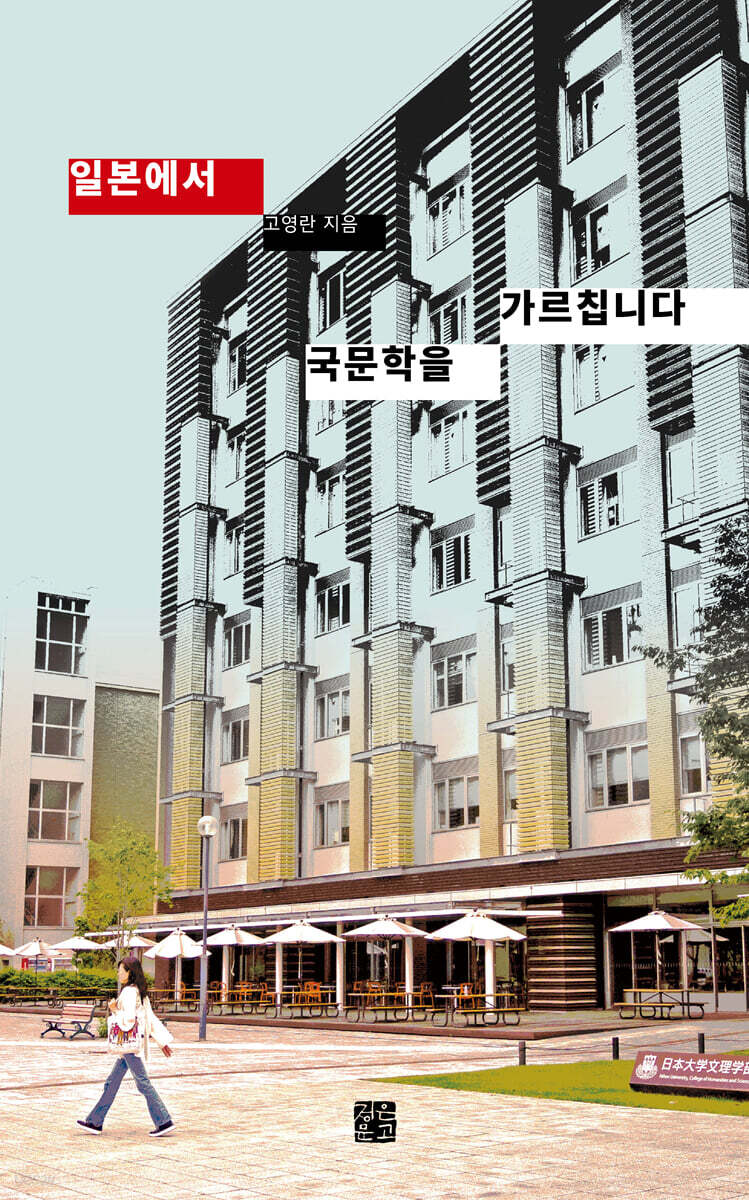
Teaching Korean literature in Japan
 |
Description
Book Introduction
“I teach Korean literature in Japan.”
Professor Koh Young-ran of the Department of Japanese Literature at Nihon University's 32 Years of Living in Tokyo
When I say that I work in the Department of Japanese Literature, Faculty of Arts and Sciences, Nihon University, people always ask me.
When you say "Korean literature," do you mean Korean literature? No, it's Japanese literature.
If you answer like this, they will immediately ask you again.
A foreigner teaching Japanese literature? Do you lecture in English? Did you graduate from college in the United States? Are you a Korean-American? No, the lectures are in Japanese.
Ah… … You’re a Zainichi Korean.
Every moment the same questions are asked and the same answers are repeated.
Whether in Japan or Korea, my self-introduction is never simple.
What questions would you like to ask the author, who is currently a professor of Korean literature in Japan?
What steps are required to become a professor in Japan?
How do the reading habits of Korean and Japanese students differ?
Do you also teach Korean literature to Japanese students?
Among Japanese literature, which author do you find particularly fascinating or study?
Are works written by Koreans in Japan Korean literature or Japanese literature?
What is the biggest difference you feel in your life in Japan?
What were some of the inconveniences of living as a Korean in Japanese society?
I wrote this with the hope that it will provide honest answers to your questions based on my 32 years of living in Japan.
Professor Koh Young-ran of the Department of Japanese Literature at Nihon University's 32 Years of Living in Tokyo
When I say that I work in the Department of Japanese Literature, Faculty of Arts and Sciences, Nihon University, people always ask me.
When you say "Korean literature," do you mean Korean literature? No, it's Japanese literature.
If you answer like this, they will immediately ask you again.
A foreigner teaching Japanese literature? Do you lecture in English? Did you graduate from college in the United States? Are you a Korean-American? No, the lectures are in Japanese.
Ah… … You’re a Zainichi Korean.
Every moment the same questions are asked and the same answers are repeated.
Whether in Japan or Korea, my self-introduction is never simple.
What questions would you like to ask the author, who is currently a professor of Korean literature in Japan?
What steps are required to become a professor in Japan?
How do the reading habits of Korean and Japanese students differ?
Do you also teach Korean literature to Japanese students?
Among Japanese literature, which author do you find particularly fascinating or study?
Are works written by Koreans in Japan Korean literature or Japanese literature?
What is the biggest difference you feel in your life in Japan?
What were some of the inconveniences of living as a Korean in Japanese society?
I wrote this with the hope that it will provide honest answers to your questions based on my 32 years of living in Japan.
- You can preview some of the book's contents.
Preview
index
Entering
Chapter 1: A World I've Never Seen Before: Becoming a Professor in Japan
Gwangju, Seoul, and Tokyo
My first time in Japan
Japanese Language Adaptation Instructor
Garlic smell and Korean wave
Chapter 2: Is life in Japan safe for foreigners?
PhD and employment
Is it advantageous for foreign writers to obtain a visa?
Are famous literary awards given solely based on the quality of the work?
English vs. Japanese
Chinese character cultural sphere
Chapter 3 Discrimination Surrounding Language
Letter Learning Exercise and Hate Speech
Single Ethnicity and Korean Literature
Name and identity
Female national writer
Why Nakajima Kyoko? Why the Library?
Chapter 4: A Society Coexisting with Newcomers
A bolt from the blue!
Building up culture
Distinguishing, becoming similar
Propaganda of the Publishing Empire
After undergoing surgery for a pituitary tumor
References
Chapter 1: A World I've Never Seen Before: Becoming a Professor in Japan
Gwangju, Seoul, and Tokyo
My first time in Japan
Japanese Language Adaptation Instructor
Garlic smell and Korean wave
Chapter 2: Is life in Japan safe for foreigners?
PhD and employment
Is it advantageous for foreign writers to obtain a visa?
Are famous literary awards given solely based on the quality of the work?
English vs. Japanese
Chinese character cultural sphere
Chapter 3 Discrimination Surrounding Language
Letter Learning Exercise and Hate Speech
Single Ethnicity and Korean Literature
Name and identity
Female national writer
Why Nakajima Kyoko? Why the Library?
Chapter 4: A Society Coexisting with Newcomers
A bolt from the blue!
Building up culture
Distinguishing, becoming similar
Propaganda of the Publishing Empire
After undergoing surgery for a pituitary tumor
References
Detailed image

Into the book
After graduating from Chonnam National University, he entered the graduate school of Japanese Language and Literature at Kyunghee University.
I was surprised to learn that students I met in graduate school practiced their conversation skills by repeatedly recording Japanese television dramas and variety shows.
The department office was filled with popular Japanese manga such as “City Hunter” and “Slam Dunk.”
--- p.24
My first trip to Japan was at the end of 1992.
At that time, the Department of Japanese Language and Literature at Kyunghee University had its students participate in the Magpie Project (かちがらす計?), hosted by the Earth Citizens Association (地球市民の?), an NPO located in Saga Prefecture, Kyushu.
The group helped Korean college students experience the Japanese New Year by spending the year-end and New Year holidays with ordinary families in Saga Prefecture.
As a teaching assistant in the Japanese Language Department, I led undergraduate students and participated in welcoming the New Year of 1993 in Saga Prefecture.
The place I was assigned to was a fishing village called Chinjeicho.
--- p.31
Although no one said it out loud, there was a considerable aversion to the smell of raw garlic, especially the smell of kimchi.
I was making kimchi stew with the windows open on a hot day, and suddenly I heard the sound of windows being slammed nervously here and there.
It was clear that if I added more, there would be a complaint from the landlord.
I didn't have the confidence to go back to looking for a new home once my contract was up, so I stopped making food that I was concerned about smelling.
--- p.54
In 2010, I became a full-time professor in the Department of Japanese Literature at Nihon University.
It was a greeting that was almost a miracle.
In 1994, when I came as an exchange student, all fourteen professors in our department were men.
It was in the 2000s that a female professor was appointed, and I was the fourth woman to do so.
The Department of Japanese Literature at Nihon University is relatively better.
At the time, the only foreigner who taught Japanese literature under the same conditions as native Japanese speakers was Professor Robert Campbell, a famous researcher of modern literature, and I was the first to learn about modern and contemporary Japanese literature.
--- p.68
“I am a novelist who writes in Japanese.
“Please issue me a long-term stay visa.”
Is this really possible in Japan? Do foreign novelists who write in Japanese have an advantage in visa issuance compared to other foreigners? There are certain requirements for foreigners applying for a work visa in Japan.
In addition to economic independence, you must prove how useful you are to society.
--- p.78
There are about 140 new students in the Department of Japanese Literature at Nihon University.
If you are a first-year homeroom teacher, you will attend orientation, call each student by name, and have them introduce themselves.
The student roster must clearly state how to read the student's name in hiragana.
It's not because I'm a foreigner.
Even my colleagues who were born and raised in Japan make sure to check how to pronounce the names of the students they are in charge of.
--- p.157
Given the potential for currency to spark diplomatic disputes, the reason Higuchi Ichiyo could become the face of Japan was because he died the year after the First Sino-Japanese War.
Higuchi Ichiyo was active as a writer for only about four years.
He died at the age of twenty-four, and was free from discriminatory views toward colonies such as Joseon, cooperation in wars of aggression, or socialist ideology.
--- p.178
Students are free to choose their own thesis text.
If you choose a text in your third year, you will receive almost personal tutoring for two years, and your partner will be in their early 20s.
Science fiction, light novels, girls' novels, coming-of-age novels, fairy tales, fantasy, and horror, which I didn't enjoy reading much before, are popular, and I'm more interested in contemporary novels than modern novels.
To guide them, you need to read not only the works but also related books and major papers to understand the flow.
What I still can't forget is Tetsuya Asada's "Mahjong Wanderings."
I admit that mahjong is well intertwined with the historical background of Japan's war of aggression and post-war economic growth, but having never played mahjong before, I found it really difficult to understand the mahjong board and scenes of playing mahjong visualized like a Go record.
I received special lessons from an acquaintance who likes mahjong.
How much I wanted to cry while reading the four volumes of the novel.
Some students chose novels that glorified the deaths of kamikaze pilots, such as Naoki Hakuta's "Eternal Zero."
Students who choose me as their thesis advisor are open-minded and committed to studying war issues diligently.
As it turned out, the student had mistaken this novel for a twist novel, and after meeting and discussing it several times over the course of six months, he changed it to a different novel.
During the nearly 15 years I have been guiding graduate theses, I have read, discussed, and guided many works that I would never have chosen.
Even today, there are always students who choose truly rare pieces that make them ask, “Where did you find this piece?”
It is thanks to these times that I can read and speak about novels of various genres.
Students are precious teachers who teach me literature.
Today, as always, the fight with them continues in the classroom.
--- pp.219-220
More interesting than the changing perception of Korea and the resulting outward Koreanization of the younger generation is the similarity in self-awareness among the relatively young generations of both countries.
Judging from the reactions of Japanese readers who enjoy reading Korean literature, Korean literature is not literature that came from a foreign country across the sea.
I project myself onto the characters and empathize with them as if it were my own story.
I gained confidence through Japanese readers who read “Kim Ji-young, Born 1982.”
--- p.225
“What’s important is the mindset to keep going even when you’re broken.”
This is a phrase written on an acrylic magnet that I found by chance in the stationery corner of Kyobo Bookstore in Jongno.
While writing this article, I searched the Internet.
‘Jungkeokma’, I learned another new word.
It's said to be a popular saying in Korea in 2022.
I put this magnet in a visible place and read it out loud quietly from time to time.
I was surprised to learn that students I met in graduate school practiced their conversation skills by repeatedly recording Japanese television dramas and variety shows.
The department office was filled with popular Japanese manga such as “City Hunter” and “Slam Dunk.”
--- p.24
My first trip to Japan was at the end of 1992.
At that time, the Department of Japanese Language and Literature at Kyunghee University had its students participate in the Magpie Project (かちがらす計?), hosted by the Earth Citizens Association (地球市民の?), an NPO located in Saga Prefecture, Kyushu.
The group helped Korean college students experience the Japanese New Year by spending the year-end and New Year holidays with ordinary families in Saga Prefecture.
As a teaching assistant in the Japanese Language Department, I led undergraduate students and participated in welcoming the New Year of 1993 in Saga Prefecture.
The place I was assigned to was a fishing village called Chinjeicho.
--- p.31
Although no one said it out loud, there was a considerable aversion to the smell of raw garlic, especially the smell of kimchi.
I was making kimchi stew with the windows open on a hot day, and suddenly I heard the sound of windows being slammed nervously here and there.
It was clear that if I added more, there would be a complaint from the landlord.
I didn't have the confidence to go back to looking for a new home once my contract was up, so I stopped making food that I was concerned about smelling.
--- p.54
In 2010, I became a full-time professor in the Department of Japanese Literature at Nihon University.
It was a greeting that was almost a miracle.
In 1994, when I came as an exchange student, all fourteen professors in our department were men.
It was in the 2000s that a female professor was appointed, and I was the fourth woman to do so.
The Department of Japanese Literature at Nihon University is relatively better.
At the time, the only foreigner who taught Japanese literature under the same conditions as native Japanese speakers was Professor Robert Campbell, a famous researcher of modern literature, and I was the first to learn about modern and contemporary Japanese literature.
--- p.68
“I am a novelist who writes in Japanese.
“Please issue me a long-term stay visa.”
Is this really possible in Japan? Do foreign novelists who write in Japanese have an advantage in visa issuance compared to other foreigners? There are certain requirements for foreigners applying for a work visa in Japan.
In addition to economic independence, you must prove how useful you are to society.
--- p.78
There are about 140 new students in the Department of Japanese Literature at Nihon University.
If you are a first-year homeroom teacher, you will attend orientation, call each student by name, and have them introduce themselves.
The student roster must clearly state how to read the student's name in hiragana.
It's not because I'm a foreigner.
Even my colleagues who were born and raised in Japan make sure to check how to pronounce the names of the students they are in charge of.
--- p.157
Given the potential for currency to spark diplomatic disputes, the reason Higuchi Ichiyo could become the face of Japan was because he died the year after the First Sino-Japanese War.
Higuchi Ichiyo was active as a writer for only about four years.
He died at the age of twenty-four, and was free from discriminatory views toward colonies such as Joseon, cooperation in wars of aggression, or socialist ideology.
--- p.178
Students are free to choose their own thesis text.
If you choose a text in your third year, you will receive almost personal tutoring for two years, and your partner will be in their early 20s.
Science fiction, light novels, girls' novels, coming-of-age novels, fairy tales, fantasy, and horror, which I didn't enjoy reading much before, are popular, and I'm more interested in contemporary novels than modern novels.
To guide them, you need to read not only the works but also related books and major papers to understand the flow.
What I still can't forget is Tetsuya Asada's "Mahjong Wanderings."
I admit that mahjong is well intertwined with the historical background of Japan's war of aggression and post-war economic growth, but having never played mahjong before, I found it really difficult to understand the mahjong board and scenes of playing mahjong visualized like a Go record.
I received special lessons from an acquaintance who likes mahjong.
How much I wanted to cry while reading the four volumes of the novel.
Some students chose novels that glorified the deaths of kamikaze pilots, such as Naoki Hakuta's "Eternal Zero."
Students who choose me as their thesis advisor are open-minded and committed to studying war issues diligently.
As it turned out, the student had mistaken this novel for a twist novel, and after meeting and discussing it several times over the course of six months, he changed it to a different novel.
During the nearly 15 years I have been guiding graduate theses, I have read, discussed, and guided many works that I would never have chosen.
Even today, there are always students who choose truly rare pieces that make them ask, “Where did you find this piece?”
It is thanks to these times that I can read and speak about novels of various genres.
Students are precious teachers who teach me literature.
Today, as always, the fight with them continues in the classroom.
--- pp.219-220
More interesting than the changing perception of Korea and the resulting outward Koreanization of the younger generation is the similarity in self-awareness among the relatively young generations of both countries.
Judging from the reactions of Japanese readers who enjoy reading Korean literature, Korean literature is not literature that came from a foreign country across the sea.
I project myself onto the characters and empathize with them as if it were my own story.
I gained confidence through Japanese readers who read “Kim Ji-young, Born 1982.”
--- p.225
“What’s important is the mindset to keep going even when you’re broken.”
This is a phrase written on an acrylic magnet that I found by chance in the stationery corner of Kyobo Bookstore in Jongno.
While writing this article, I searched the Internet.
‘Jungkeokma’, I learned another new word.
It's said to be a popular saying in Korea in 2022.
I put this magnet in a visible place and read it out loud quietly from time to time.
--- p.248
Publisher's Review
Beyond the prejudices and limitations of society
For readers who want to make their own path
For readers who want to overcome social limitations
Chapters 1 and 2 depict the author's journey from Japan as a researcher of Japanese literature to breaking through the thick walls of the conservative Japanese "Japanese literature" industry and being hired as a professor of Japanese literature.
This is the survival story of a Korean female scholar living as a professor in Japan without any school ties or regional connections.
Chapters 3 and 4 are about the various aspects of language felt in Japan (hate speech, etc.) and the process of learning how to live with the 'ordinary' 'majority' in a foreign country.
Nihon University, where the author works, does not offer a Korean studies major.
Even while teaching about colonial rule to such students, we do not create hostile relationships.
Although their relationship is tense, they do not shy away from difficult topics and speak out, coexisting with the middle class, the largest group in society, and finding solutions to their problems.
For readers who want to understand the rapidly increasing number of immigrants in Korean society
The author began living in Tokyo during a time when Korea was discriminated against as an underdeveloped country, and experienced the rise of Korean culture through the 2002 World Cup, the Korean Wave boom brought about by [Winter Sonata], and K-cultural content such as [Kim Ji-young, Born 1982] and K-pop.
The Japanese literary world has entered an era where it is taken for granted that non-native speakers of Japanese, newcomers like me, are winning all sorts of literary awards and becoming active.
From a cultural perspective, Japan appears to be moving toward a more open society, but it also delicately addresses how discrimination against immigrants is concealed and hurtful.
On June 22, 2024, the Japan Society of Social Literature hosted a symposium titled "Imagination Surrounding Immigration and Refugees - Between Acceptance and Exclusion."
This is because there is a growing recognition that immigration and refugee issues are important topics that researchers of modern and contemporary Japanese literature must discuss.
The author summarizes key issues related to immigration and refugees and proposes new directions for the study of Japanese literature.
For readers who want to make their own path
For readers who want to overcome social limitations
Chapters 1 and 2 depict the author's journey from Japan as a researcher of Japanese literature to breaking through the thick walls of the conservative Japanese "Japanese literature" industry and being hired as a professor of Japanese literature.
This is the survival story of a Korean female scholar living as a professor in Japan without any school ties or regional connections.
Chapters 3 and 4 are about the various aspects of language felt in Japan (hate speech, etc.) and the process of learning how to live with the 'ordinary' 'majority' in a foreign country.
Nihon University, where the author works, does not offer a Korean studies major.
Even while teaching about colonial rule to such students, we do not create hostile relationships.
Although their relationship is tense, they do not shy away from difficult topics and speak out, coexisting with the middle class, the largest group in society, and finding solutions to their problems.
For readers who want to understand the rapidly increasing number of immigrants in Korean society
The author began living in Tokyo during a time when Korea was discriminated against as an underdeveloped country, and experienced the rise of Korean culture through the 2002 World Cup, the Korean Wave boom brought about by [Winter Sonata], and K-cultural content such as [Kim Ji-young, Born 1982] and K-pop.
The Japanese literary world has entered an era where it is taken for granted that non-native speakers of Japanese, newcomers like me, are winning all sorts of literary awards and becoming active.
From a cultural perspective, Japan appears to be moving toward a more open society, but it also delicately addresses how discrimination against immigrants is concealed and hurtful.
On June 22, 2024, the Japan Society of Social Literature hosted a symposium titled "Imagination Surrounding Immigration and Refugees - Between Acceptance and Exclusion."
This is because there is a growing recognition that immigration and refugee issues are important topics that researchers of modern and contemporary Japanese literature must discuss.
The author summarizes key issues related to immigration and refugees and proposes new directions for the study of Japanese literature.
GOODS SPECIFICS
- Date of issue: October 27, 2025
- Page count, weight, size: 264 pages | 314g | 125*200*18mm
- ISBN13: 9791185153742
- ISBN10: 1185153748
You may also like
카테고리
korean


korean

![GQ KOREA Mark (Monthly): December [2025]](http://librairie.coreenne.fr/cdn/shop/files/8ef265dbbfbf186523ed75ba7319009d.jpg?v=1765340328&width=3840)


