

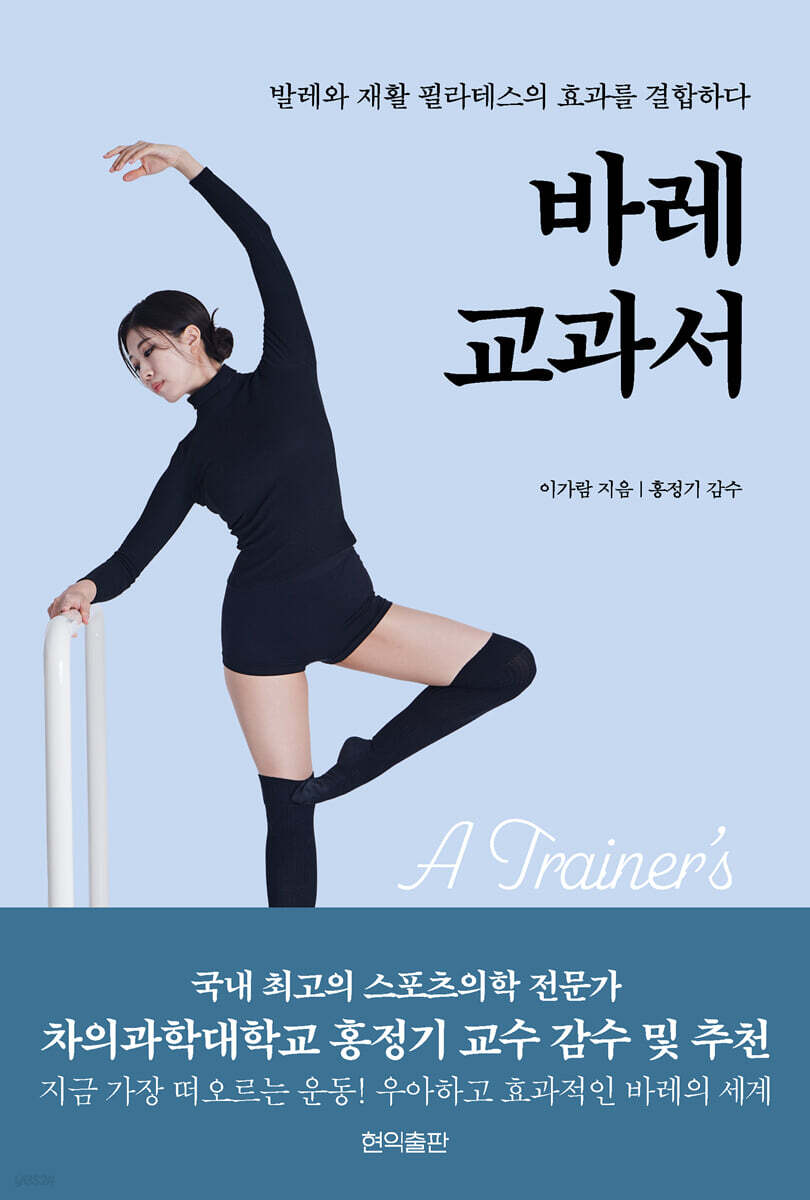
Barre textbook
 |
Description
Book Introduction
Pain-free, elegant movements, perfected with barre!
Supervised by Professor Hong Jeong-gi of Cha University, the godfather of Pilates!
A Basic Guide to Medical Barre, Combining Sports Medicine and Rehabilitation Pilates
The line between exercise and art is blurring! As more and more people learn ballet as a hobby, the number of people enjoying "barre," a new exercise method that applies the fundamental movements of ballet, is also increasing.
Barre, a fun and elegant hobby exercise that can also be used for rehabilitation and body shaping, is currently the trendiest exercise in the United States and Europe, and has become a popular exercise method in Korea as well, thanks to word of mouth from famous celebrities who are practicing it.
Ballet is a fitness program that combines the graceful and effective movements of ballet with Pilates, yoga, and strength training.
Music-based movements can be used to correct misaligned body alignment in a fun and elegant way, and effectively relieve pain caused by poor posture and incorrect movement.
This book systematically explains such a barre program by combining ballet and rehabilitative Pilates.
Rather than simply guiding movements, we have compiled an understanding of muscles and expert knowledge to help you understand the effects of each movement based on an anatomical understanding.
Understanding the use of movement extends beyond exercise to encompass the realm of therapy.
The most notable feature is that the instructor provides practical explanations that can be applied immediately in the field.
This book will enable instructors to gain a deeper and more accurate understanding of barre.
Supervised by Professor Hong Jeong-gi of Cha University, the godfather of Pilates!
A Basic Guide to Medical Barre, Combining Sports Medicine and Rehabilitation Pilates
The line between exercise and art is blurring! As more and more people learn ballet as a hobby, the number of people enjoying "barre," a new exercise method that applies the fundamental movements of ballet, is also increasing.
Barre, a fun and elegant hobby exercise that can also be used for rehabilitation and body shaping, is currently the trendiest exercise in the United States and Europe, and has become a popular exercise method in Korea as well, thanks to word of mouth from famous celebrities who are practicing it.
Ballet is a fitness program that combines the graceful and effective movements of ballet with Pilates, yoga, and strength training.
Music-based movements can be used to correct misaligned body alignment in a fun and elegant way, and effectively relieve pain caused by poor posture and incorrect movement.
This book systematically explains such a barre program by combining ballet and rehabilitative Pilates.
Rather than simply guiding movements, we have compiled an understanding of muscles and expert knowledge to help you understand the effects of each movement based on an anatomical understanding.
Understanding the use of movement extends beyond exercise to encompass the realm of therapy.
The most notable feature is that the instructor provides practical explanations that can be applied immediately in the field.
This book will enable instructors to gain a deeper and more accurate understanding of barre.
index
Modern people losing their movement
Chapter 1 Musculoskeletal Problems and Posture Measurement Techniques
Why Pain Persists Even After Exercise
- Sub-ideal posture and muscle imbalances
- Inactive core stabilization system
- Decreased proprioception and uncontrolled movements
- Fear and anxiety
Measurement of posture and proprioception
- Ideal alignment
- Posture observation
- One-legged standing test
Chapter 2 Classical Ballet and Barre Exercises
Strategies for Pain, Ballet
- Ballet, which began as a movement of nobles and developed
- Definition of medical barre
- The effects of medical barre
Chapter 3: Anatomy and Basic Principles of Barre Training
Basic Anatomy Concepts
- Anatomical posture
- Exercise aspect
- Anatomical direction and location
- Body movements
- skeleton, framework
- joints
- Muscles
- Types of muscle contraction
- Muscle antagonism
Medical Barre Basic Movement Principles
- Basic principles of ballet stance
- Foot posture
-Arm posture
- Body position and orientation
- Applied technology
- Starting position and precautions for barre training
Chapter 4 Pain and Medical Barre by Area
feet and ankles
- Structure of the foot and ankle
- Alignment of the feet and ankles
- Movements for flexible feet and stable ankles
knee
- Structure of the knee
- Knee alignment
- Movements to strengthen surrounding muscles for knee stability
hip joint
- Structure of the hip joint
- Hip mobility and turnout
- Isolated movements for hip pain
pelvis
- Structure of the pelvis
- Pelvic alignment
- Movements for pelvic balance
waist
- Structure of the spine and muscles related to the lower back
- Spinal alignment and pull-ups
- Gentle movements of the torso for back pain
etc.
- Structure of the thoracic spine and ribs
- Diaphragm and breathing
-Thoracic spine movements in various planes for back pain
shoulder
- Structure of the shoulder
- Scapulohumeral rhythm
- Stable and flexible fold bra for shoulder pain
head and neck
- Structure of the head and neck
- Cervical alignment and chin tuck
- Position your head for a comfortable neck
In conclusion
References
Chapter 1 Musculoskeletal Problems and Posture Measurement Techniques
Why Pain Persists Even After Exercise
- Sub-ideal posture and muscle imbalances
- Inactive core stabilization system
- Decreased proprioception and uncontrolled movements
- Fear and anxiety
Measurement of posture and proprioception
- Ideal alignment
- Posture observation
- One-legged standing test
Chapter 2 Classical Ballet and Barre Exercises
Strategies for Pain, Ballet
- Ballet, which began as a movement of nobles and developed
- Definition of medical barre
- The effects of medical barre
Chapter 3: Anatomy and Basic Principles of Barre Training
Basic Anatomy Concepts
- Anatomical posture
- Exercise aspect
- Anatomical direction and location
- Body movements
- skeleton, framework
- joints
- Muscles
- Types of muscle contraction
- Muscle antagonism
Medical Barre Basic Movement Principles
- Basic principles of ballet stance
- Foot posture
-Arm posture
- Body position and orientation
- Applied technology
- Starting position and precautions for barre training
Chapter 4 Pain and Medical Barre by Area
feet and ankles
- Structure of the foot and ankle
- Alignment of the feet and ankles
- Movements for flexible feet and stable ankles
knee
- Structure of the knee
- Knee alignment
- Movements to strengthen surrounding muscles for knee stability
hip joint
- Structure of the hip joint
- Hip mobility and turnout
- Isolated movements for hip pain
pelvis
- Structure of the pelvis
- Pelvic alignment
- Movements for pelvic balance
waist
- Structure of the spine and muscles related to the lower back
- Spinal alignment and pull-ups
- Gentle movements of the torso for back pain
etc.
- Structure of the thoracic spine and ribs
- Diaphragm and breathing
-Thoracic spine movements in various planes for back pain
shoulder
- Structure of the shoulder
- Scapulohumeral rhythm
- Stable and flexible fold bra for shoulder pain
head and neck
- Structure of the head and neck
- Cervical alignment and chin tuck
- Position your head for a comfortable neck
In conclusion
References
Into the book
There are people whose pain does not go away even after exercising hard.
What could be the reason? There are many reasons, including aging, injury, poor health, insufficient intensity considering one's condition, and lack of preparation and cool-down. However, the most important factors to consider are poor posture and inefficient movement.
Our human body has about 140 joints, including bones, joints, and muscles. It would be great if we could use them for a lifetime, but there is a limit to the lifespan of joints.
Joints that are overly or under-moved in the wrong way will degenerate quickly, which will lead to pain.
--- p.14 From “Why Pain Persists Even When You Exercise”
Today, ballet has become the foundation of all dance, and the fundamentals of ballet are considered very important even for those who practice other dance forms (Korean dance, modern dance, dance sport, figure skating, rhythmic gymnastics, etc.).
To make this traditional and scientific bar training more effective, it is necessary to have a thorough understanding of the basics, as well as the points of emphasis and importance that follow the sequence, and then practice them.
Barre training was created based on the characteristics of ballet and the principles of rehabilitation treatment, and in order to approach and teach it from a rehabilitation perspective, it is necessary to have a certain level of understanding of the characteristics of classical ballet.
--- p.33 From “Strategies Needed for Pain, Ballet”
The barre exercise being introduced in Korea is an exercise that anyone can enjoy, as if dancing, by supplementing the limb muscle strength not obtained through ballet using small equipment and rhythmic movements using music.
Through this, you will learn movements that are effective in improving core strength, balance, and range of motion.
--- p.34 From “Definition of Medical Barre”
In conclusion, anatomical knowledge can greatly improve the quality of exercise, prevent injuries, and aid in recovery.
If you are not feeling better after exercising or if you are experiencing persistent discomfort and pain, it is a good idea to familiarize yourself with basic anatomy and check which muscles you are using to move.
--- p.40 From “Basic Concepts of Anatomy”
One thing that makes a ballet dancer's posture noticeably different from that of an ordinary person is that the body is straight and the joints are open.
This is related to the principles of extroversion and full consciousness among the technical principles that originated from the birth of ballet.
All ballet postures and movements are always directed outward, meaning that the joints and muscles turn outward toward the body.
--- p.63 From “Basic Movement Principles of Medical Barre”
Because ballet involves the coordination of muscles throughout the body for balance and stability, it is effective in developing mobility and strength, which can increase the body's efficiency.
For this reason, the medical barre stance is based on the core principles of ballet.
What could be the reason? There are many reasons, including aging, injury, poor health, insufficient intensity considering one's condition, and lack of preparation and cool-down. However, the most important factors to consider are poor posture and inefficient movement.
Our human body has about 140 joints, including bones, joints, and muscles. It would be great if we could use them for a lifetime, but there is a limit to the lifespan of joints.
Joints that are overly or under-moved in the wrong way will degenerate quickly, which will lead to pain.
--- p.14 From “Why Pain Persists Even When You Exercise”
Today, ballet has become the foundation of all dance, and the fundamentals of ballet are considered very important even for those who practice other dance forms (Korean dance, modern dance, dance sport, figure skating, rhythmic gymnastics, etc.).
To make this traditional and scientific bar training more effective, it is necessary to have a thorough understanding of the basics, as well as the points of emphasis and importance that follow the sequence, and then practice them.
Barre training was created based on the characteristics of ballet and the principles of rehabilitation treatment, and in order to approach and teach it from a rehabilitation perspective, it is necessary to have a certain level of understanding of the characteristics of classical ballet.
--- p.33 From “Strategies Needed for Pain, Ballet”
The barre exercise being introduced in Korea is an exercise that anyone can enjoy, as if dancing, by supplementing the limb muscle strength not obtained through ballet using small equipment and rhythmic movements using music.
Through this, you will learn movements that are effective in improving core strength, balance, and range of motion.
--- p.34 From “Definition of Medical Barre”
In conclusion, anatomical knowledge can greatly improve the quality of exercise, prevent injuries, and aid in recovery.
If you are not feeling better after exercising or if you are experiencing persistent discomfort and pain, it is a good idea to familiarize yourself with basic anatomy and check which muscles you are using to move.
--- p.40 From “Basic Concepts of Anatomy”
One thing that makes a ballet dancer's posture noticeably different from that of an ordinary person is that the body is straight and the joints are open.
This is related to the principles of extroversion and full consciousness among the technical principles that originated from the birth of ballet.
All ballet postures and movements are always directed outward, meaning that the joints and muscles turn outward toward the body.
--- p.63 From “Basic Movement Principles of Medical Barre”
Because ballet involves the coordination of muscles throughout the body for balance and stability, it is effective in developing mobility and strength, which can increase the body's efficiency.
For this reason, the medical barre stance is based on the core principles of ballet.
--- p.65 From “Basic Principles of Ballet Stance”
Publisher's Review
“A popular training method that combines the best of ballet and rehabilitation Pilates!”
A book supervised by Professor Hong Jeong-gi of Cha University, an authority on Pilates research in Korea.
The barre's essence for proper alignment of body and mind!
Barre, whose name is similar to ballet, is also similar to yoga or Pilates.
Ballet technique is incorporated into every movement, making each movement feel like an elegant dance.
Ballet is a fusion fitness program that combines the graceful and effective movements of ballet with Pilates, yoga, and strength training.
It helps correct the body's misalignment and effectively relieves pain caused by poor posture and incorrect movement.
Anyone can enjoy it by supplementing limb muscle strength and using music to accompany the movements.
No need to run until you're out of breath, no need to lift heavy weights, and no need for complicated machines or equipment.
With just a barbell and a few props, you can achieve pain-free exercise with elegant movements.
It is impressive to be able to perform comfortable and delicate movements within the 'range of what I can do' without putting a strain on my body.
It is a fun and elegant exercise that can be done by people of all ages while providing significant exercise benefits and body shape correction. It helps restore the body's balance and enables pain-free movement.
This book focuses on conveying basic and systematic knowledge of barre while expanding the existing barre exercise method into the field of sports medicine.
Through photos that capture the most accurate scenes of barre movements, instructors can intuitively understand postures, and by incorporating the perspectives and methods of rehabilitation Pilates into each movement, they can achieve rehabilitation effects.
Additionally, it is designed to increase anatomical expertise related to barre by introducing the names and movements of each muscle part.
It also helps explain movement to members, as it explains why they need to move their bodies and provides solutions on how to move without pain.
Let's experience how to find balance and move correctly by expressing the rise, development, turn, and conclusion of movements with the body like a performance through barre!
Welcome, is this your first time at Barre?
We teach you how to move your fingertips, toes, and even your eyes perfectly.
A book that covers the fundamentals of “medical barre,” which combines sports medicine with barre!
“Because sustained force changes the structure and causes pain.
“If you don’t exercise in the right direction, it’s difficult to break free from the shackles of pain.”
The physical characteristics and extent of correction required vary from person to person.
Barre training allows for immediate feedback from the instructor to correct posture and movement, and is effective for people of all ages.
What makes barre different from other exercises the most is that it guides people with unnatural movements, from the fingertips and toes to eye contact.
Bad posture can lead to muscle tension and fatigue, and in severe cases, even pain.
For these people, barre provides a sense of stability in everyday life.
Even ordinary daily movements, such as greeting, extending a hand, or putting down a coffee cup, can be finely adjusted through barre, allowing for comfortable and elegant movements.
This book is well-structured and contains information on why pain persists even with exercise, tips for achieving ideal alignment and posture, basic anatomical concepts and planes of movement, bones and skeletons, joints, muscles, types of muscle contraction, causes of pain in each area, and a newly proposed 'medical barre' based on sports medicine.
This book is not just about teaching simple exercise movements, but also provides detailed information that will provide professional help to both the general public and instructors.
When we follow the latest exercise trends and exercise becomes a hobby, a therapy, and a part of our daily lives, we will become healthier and more beautiful.
We hope you'll find balance in your body through barre and discover a new training method that combines the fundamental principles of ballet with the techniques of sports medicine!
A book supervised by Professor Hong Jeong-gi of Cha University, an authority on Pilates research in Korea.
The barre's essence for proper alignment of body and mind!
Barre, whose name is similar to ballet, is also similar to yoga or Pilates.
Ballet technique is incorporated into every movement, making each movement feel like an elegant dance.
Ballet is a fusion fitness program that combines the graceful and effective movements of ballet with Pilates, yoga, and strength training.
It helps correct the body's misalignment and effectively relieves pain caused by poor posture and incorrect movement.
Anyone can enjoy it by supplementing limb muscle strength and using music to accompany the movements.
No need to run until you're out of breath, no need to lift heavy weights, and no need for complicated machines or equipment.
With just a barbell and a few props, you can achieve pain-free exercise with elegant movements.
It is impressive to be able to perform comfortable and delicate movements within the 'range of what I can do' without putting a strain on my body.
It is a fun and elegant exercise that can be done by people of all ages while providing significant exercise benefits and body shape correction. It helps restore the body's balance and enables pain-free movement.
This book focuses on conveying basic and systematic knowledge of barre while expanding the existing barre exercise method into the field of sports medicine.
Through photos that capture the most accurate scenes of barre movements, instructors can intuitively understand postures, and by incorporating the perspectives and methods of rehabilitation Pilates into each movement, they can achieve rehabilitation effects.
Additionally, it is designed to increase anatomical expertise related to barre by introducing the names and movements of each muscle part.
It also helps explain movement to members, as it explains why they need to move their bodies and provides solutions on how to move without pain.
Let's experience how to find balance and move correctly by expressing the rise, development, turn, and conclusion of movements with the body like a performance through barre!
Welcome, is this your first time at Barre?
We teach you how to move your fingertips, toes, and even your eyes perfectly.
A book that covers the fundamentals of “medical barre,” which combines sports medicine with barre!
“Because sustained force changes the structure and causes pain.
“If you don’t exercise in the right direction, it’s difficult to break free from the shackles of pain.”
The physical characteristics and extent of correction required vary from person to person.
Barre training allows for immediate feedback from the instructor to correct posture and movement, and is effective for people of all ages.
What makes barre different from other exercises the most is that it guides people with unnatural movements, from the fingertips and toes to eye contact.
Bad posture can lead to muscle tension and fatigue, and in severe cases, even pain.
For these people, barre provides a sense of stability in everyday life.
Even ordinary daily movements, such as greeting, extending a hand, or putting down a coffee cup, can be finely adjusted through barre, allowing for comfortable and elegant movements.
This book is well-structured and contains information on why pain persists even with exercise, tips for achieving ideal alignment and posture, basic anatomical concepts and planes of movement, bones and skeletons, joints, muscles, types of muscle contraction, causes of pain in each area, and a newly proposed 'medical barre' based on sports medicine.
This book is not just about teaching simple exercise movements, but also provides detailed information that will provide professional help to both the general public and instructors.
When we follow the latest exercise trends and exercise becomes a hobby, a therapy, and a part of our daily lives, we will become healthier and more beautiful.
We hope you'll find balance in your body through barre and discover a new training method that combines the fundamental principles of ballet with the techniques of sports medicine!
GOODS SPECIFICS
- Date of issue: February 28, 2025
- Page count, weight, size: 176 pages | 152*225*20mm
- ISBN13: 9791193217931
- ISBN10: 1193217938
You may also like
카테고리
korean


korean

![GQ KOREA Mark (Monthly): December [2025]](http://librairie.coreenne.fr/cdn/shop/files/8ef265dbbfbf186523ed75ba7319009d.jpg?v=1765340328&width=3840)


